
1. Background
Amphetamine-type stimulants (ATS), including amphetamine and methamphetamine, are among the most widely abused psychoactive substances worldwide, with a steadily increasing prevalence across diverse populations (1). These synthetic stimulants exert their effects primarily by enhancing the release and inhibiting the reuptake of monoamine neurotransmitters — dopamine, norepinephrine, and serotonin — resulting in increased alertness, euphoria, and appetite suppression (2). Chronic and repeated use, however, is associated with substantial psychiatric and medical morbidity, including psychotic symptoms, cognitive impairment, cardiovascular complications, and an elevated risk of premature mortality (3, 4).
Methamphetamine use has become a major public health concern in many regions, particularly in Middle Eastern countries such as Iran, where geographical proximity to major drug trafficking routes has contributed to increased availability and consumption (5). Recent national and regional reports indicate that stimulant use disorders represent a growing proportion of substance-related treatment admissions, with amphetamines ranking among the most frequently misused illicit substances (6, 7). Beyond physical harm, methamphetamine use has been linked to profound psychological, familial, social, and economic consequences, including increased rates of interpersonal violence, criminal activity, suicide, and social disintegration (8, 9).
Despite this growing burden, effective pharmacological treatments for stimulant use disorders remain limited. Unlike opioid, nicotine, or alcohol dependence — conditions for which several evidence-based medications are available — no pharmacotherapy has yet received regulatory approval for amphetamine or methamphetamine dependence (10). Psychosocial interventions, such as cognitive-behavioral therapy and contingency management, remain the cornerstone of treatment. However, high relapse rates, limited accessibility, and variable adherence highlight the need for adjunctive pharmacological strategies (11). Novel approaches, including brain stimulation techniques, are under investigation but remain largely experimental (12).
Among candidate medications, mirtazapine has gained attention due to its distinct pharmacodynamic profile and generally favorable tolerability (13). Mirtazapine is classified as a noradrenergic and specific serotonergic antidepressant (NaSSA). It antagonizes central presynaptic α2-adrenergic autoreceptors and heteroreceptors, thereby enhancing norepinephrine and serotonin release, and blocks 5-HT2 and 5-HT3 receptors, mechanisms that may contribute to anxiolytic and anti-craving effects (14). Importantly, mirtazapine modulates monoaminergic transmission within mesocorticolimbic circuits, which play a central role in reward processing, motivation, and substance-seeking behavior, making it a biologically plausible option for stimulant use disorders (15).
Preclinical evidence suggests that mirtazapine attenuates methamphetamine-induced conditioned place preference and reduces drug-seeking behavior in animal models (16). In clinical studies, mirtazapine has demonstrated potential benefits in reducing stimulant use and craving, particularly in individuals with comorbid depressive symptoms (17, 18). However, existing findings remain heterogeneous, and systematic reviews have reported modest or inconsistent effects on abstinence and depressive outcomes (19). Moreover, many prior trials have focused on narrowly defined subpopulations, limiting external validity and generalizability. These limitations underscore the need for well-designed, placebo-controlled trials in broader clinical settings.
Urine drug screening represents a cornerstone of outcome assessment in addiction research and clinical practice. Unlike self-reported substance use, urine testing provides an objective and biologically verifiable indicator of recent drug exposure, minimizing recall and reporting bias (20-24). For stimulant use disorders—where lapses may occur intermittently — repeated urine screening offers a sensitive method for monitoring treatment response over time.
2. Objectives
The present study aimed to evaluate the efficacy of mirtazapine on stimulant use as measured by longitudinal urine drug screening, as well as its effects on depressive symptoms and craving intensity, among individuals with amphetamine and methamphetamine use disorder attending addiction treatment centers in Ahvaz, Iran. By employing a randomized, double-blind, placebo-controlled design with repeated objective assessments, this study seeks to address key gaps in the existing literature and provide clinically relevant evidence on the potential role of mirtazapine as an adjunctive pharmacotherapy for stimulant use disorders.
3. Methods
3.1. Study Design and Setting
This study was a 12-week, double-blind, placebo-controlled, randomized clinical trial conducted at four public addiction treatment clinics (Golestan, Imam Khomeini, Sina, and Taleghani hospitals) and several private rehabilitation centers in Ahvaz, Iran. Both public and private centers routinely provide standard psychosocial counseling, and no structured behavioral intervention beyond routine care was systematically added or withheld for either group. The trial aimed to evaluate the efficacy of mirtazapine in reducing amphetamine and methamphetamine use, as measured by urine drug screening and clinical assessments.
3.2. Participants
A total of 84 male patients aged 18–60 years with a confirmed diagnosis of amphetamine or methamphetamine use disorder were recruited. Diagnosis was established by a board-certified psychiatrist using the Structured Clinical Interview for DSM-5 Disorders (SCID-5). All participants had at least one positive urine test for methamphetamine during screening and expressed a desire to reduce or cease stimulant use.
- Inclusion criteria: Physically stable, capable of providing informed consent, and free of clinically significant hepatic or renal dysfunction.
- Exclusion criteria: Major psychiatric comorbidities such as psychotic disorders, bipolar disorder, or clinically diagnosed severe major depressive disorder requiring immediate antidepressant or inpatient treatment.
3.2.1. Clarification on Depression Assessment
Severity of depression was determined solely based on clinical psychiatric assessment, rather than BDI-II scores, because elevated BDI-II scores may reflect substance-induced depressive symptoms. Participants with mild to moderate depressive symptoms were not excluded and were assessed longitudinally using the Beck Depression Inventory-II (BDI-II).
3.2.2. Correction of Previous Methods Statement
This replaces the earlier incorrect statement that participants with BDI-II ≥ 29 were excluded.
3.3. Randomization and Blinding
Participants were randomly assigned in a 1:1 ratio to either the mirtazapine group (n = 42) or the placebo group (n = 42) using a computer-generated randomization list prepared by an independent biostatistician. Allocation concealment was ensured using sequentially numbered, opaque, sealed medication packages prepared by the School of Pharmacy at Jundishapur University of Medical Sciences.
Both participants and outcome assessors were blinded to group allocation. Mirtazapine and placebo tablets were identical in appearance, taste, and packaging. Blinding integrity was maintained throughout the study, and no unblinding occurred prior to data analysis.
3.4. Intervention
- Intervention group: Oral mirtazapine 15 mg once daily at bedtime for the first week, followed by 30 mg daily (two 15 mg tablets) for the remaining 11 weeks.
- Placebo group: Matching tablets with an identical dosing schedule
- Participants were instructed to take the medication consistently each evening and not to double doses if a dose was missed.
Medication adherence was monitored through participant self-report and pill count verification, and adherence reminders were provided during follow-up visits.
3.5. Outcome Measures
Participants were evaluated at baseline and every two weeks for 12 weeks. Assessments included: Urine drug screening for amphetamine and methamphetamine, craving scores, Addiction Severity Index (ASI), depression scores using the Beck Depression Inventory-II (BDI-II), and vital signs, physical examination, and adverse event monitoring.
Urine samples were collected at six time points (weeks 2, 4, 6, 8, 10, and 12). Urine drug screening was performed using standard immunoassay techniques in certified clinical laboratories. Craving and depression scores were recorded at baseline and at weeks 4, 8, and 12. (Clarifies session-to-week mapping per)
3.6. Craving Questionnaire and Addiction Severity Index
3.6.1. Craving
Assessed using a standardized Methamphetamine Craving Questionnaire (MCQ – Persian version), a structured self-report instrument based on a Likert scale.
- Cronbach’s α > 0.80 in prior studies, indicating good internal consistency.
- Formal psychometric validation in Iranian populations is limited, but the instrument has acceptable reliability in Persian-speaking clinical settings.
3.6.2. Addiction Severity Index (ASI)
Semi-structured interview evaluating multiple domains of substance use and psychosocial functioning, validated internationally and considered the gold standard.
3.7. Sample Size Calculation
Sample size was calculated based on previous RCTs for stimulant use disorder pharmacological interventions.
- Minimum detectable between-group difference: 30% in urine drug screening outcomes.
- α = 0.05, β = 0.05 (power = 95%).
- Assumed intra-subject correlation coefficient for repeated measures: 0.5.
- Required sample size: 42 participants per group.
3.8. Statistical Analysis
Descriptive statistics (mean, SD, frequency, percentage) summarized demographic and clinical characteristics. Normality was assessed using the Kolmogorov–Smirnov test.
- Repeated-measures ANOVA with Greenhouse–Geisser correction assessed changes in craving and depression over time.
- Generalized linear mixed models (GLMM) analyzed longitudinal urine screening outcomes.
- Effect sizes and 95% confidence intervals were calculated for primary and secondary outcomes.
All analyses were conducted using SPSS version 24, with statistical significance set at P < 0.05.
3.9. Ethical Considerations
The study protocol was approved by the Ethics Committee of Jundishapur University of Medical Sciences. Written informed consent was obtained from all participants. Confidentiality and data protection were strictly maintained. The study adhered to the principles of the Declaration of Helsinki.
4. Results
A total of 84 male participants diagnosed with amphetamine or methamphetamine use disorder were enrolled and randomized into two groups: mirtazapine (n = 42) and placebo (n = 42). The flow of participants through the trial is illustrated in Figure 1.
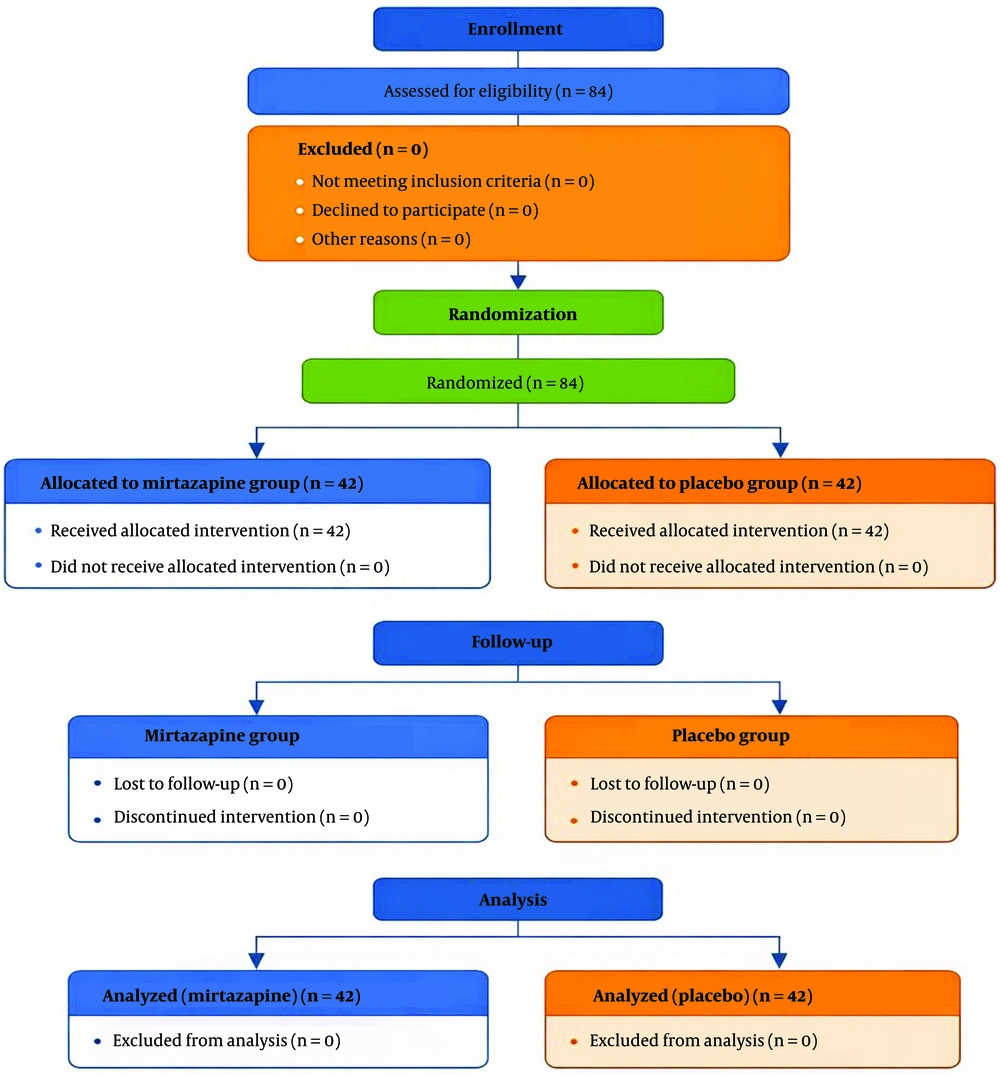
Figure 1.
CONSORT flow diagram of participant enrollment, randomization, follow-up, and analysis
The mean age of participants was 44.43 ± 9.95 years. Most participants were married (53.57%), had below-high-school diploma education (50%), were unemployed (53.6%), and resided in Ahvaz (96.4%) (Table 1).
Table 1.
Baseline Demographic Characteristics of Participants a
| Variables and Category | Values |
|---|---|
| Age (y) | 44.43 ± 9.95 |
| Marital status | |
| Single | 29 (34.52) |
| Married | 45 (53.57) |
| Widowed | 1 (1.19) |
| Divorced | 9 (10.71) |
| Education level | |
| Below Diploma | 42 (50) |
| Residence | |
| Ahvaz | 81 (96.4) |
| Employment | |
| Unemployed | 45 (53.6) |
a Values are as expressed as No. (%) or mean ± SD.
Regarding clinical history, 67.9 of participants had previously been admitted to rehabilitation centers, 59.5 reported a family history of substance addiction, and 75 had a history of opium use. Other substances, including hashish, heroin, and alcohol, were also reported. Nearly all participants (95.2) were regular smokers, indicating a high prevalence of polysubstance exposure (Table 2).
Table 2.
Clinical and Substance Use History
| Variables | Category | Values |
|---|---|---|
| Inpatient rehab history | Yes | 57 (67.9) |
| Family history of substance addiction | Yes | 50 (59.5) |
| Prior opium use | Yes | 63 (75) |
a Values are as expressed as No. (%).
Urine drug screening was conducted at six time points (baseline, weeks 2, 4, 6, 8, and 12). Session numbers correspond to weeks as follows: Session 1 = baseline/week 0; Session 2 = week 2; Session 3 = week 4; Session 4 = week 6; Session 5 = week 8; Session 6 = week 12. At baseline, all participants tested positive for amphetamines.
- By Session 3, 4.9 of the mirtazapine group and 2.4 of the placebo group tested negative (P = 0.85).
- By Session 6, 52.4 of participants in the mirtazapine group had negative results, compared to 9.5 in the placebo group (P = 0.007). Effect sizes for the primary outcome: ARR = 42.9 (95 CI: 25.3–60.5), RR = 5.5 (95 CI: 2.2–13.7), NNT = 2.3 (Table 3).
Table 3.
Urine Amphetamine Test Results Across Sessions
| Sessions and Groups | Positive (%) | Negative (%) | P-Value |
|---|---|---|---|
| 1 | - | ||
| Mirtazapine | 100 | 0 | |
| Placebo | 100 | 0 | |
| 3 | 0.85 | ||
| Mirtazapine | 95.1 | 4.9 | |
| Placebo | 97.6 | 2.4 | |
| 6 | 0.007 | ||
| Mirtazapine | 47.6 | 52.4 | |
| Placebo | 90.5 | 9.5 |
This table shows the percentage of positive and negative urine test results across Sessions 1 to 6. The mirtazapine group demonstrated a significant increase in abstinence over time.
Depression was assessed using the Beck Depression Inventory-II (BDI-II) at Sessions 1, 3, and 5. The exclusion criterion for severe depression was based solely on clinical psychiatric diagnosis; BDI-II scores were not used for exclusion (Figure 2).
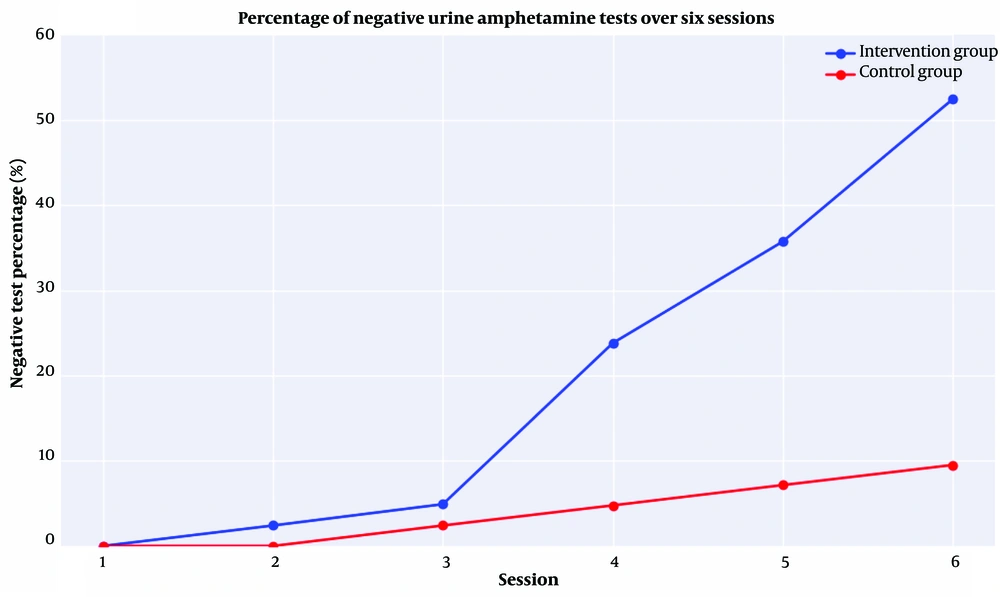
Figure 2.
Trend of negative urine amphetamine tests over six sessions
The mirtazapine group showed a marked reduction in mean BDI-II scores from 44.44 ± 13.37 at baseline (Session 1) to 34.78 ± 10.06 at Session 5. The placebo group decreased slightly from 46.44 ± 5.68 to 43.44 ± 6.06. Repeated-measures ANOVA revealed a significant group × time interaction (P = 0.04), indicating that mirtazapine contributed to a meaningful reduction in depressive symptoms among stimulant users (Table 4 and Figure 3).
Table 4.
Mean Depression Scores (BDI-II) Across Sessions
| Sessions and Groups | Mean ± SD |
|---|---|
| 1 | |
| Mirtazapine | 44.44 ± 13.37 |
| Placebo | 46.44 ± 5.68 |
| 3 | |
| Mirtazapine | 36.66 ± 7.05 |
| Placebo | 45.33 ± 11.06 |
| 5 | |
| Mirtazapine | 34.78 ± 10.06 |
| Placebo | 43.44 ± 6.06 |
This table now reflects longitudinal assessment; BDI-II scores were measured but not used for exclusion, correcting the previous contradiction.
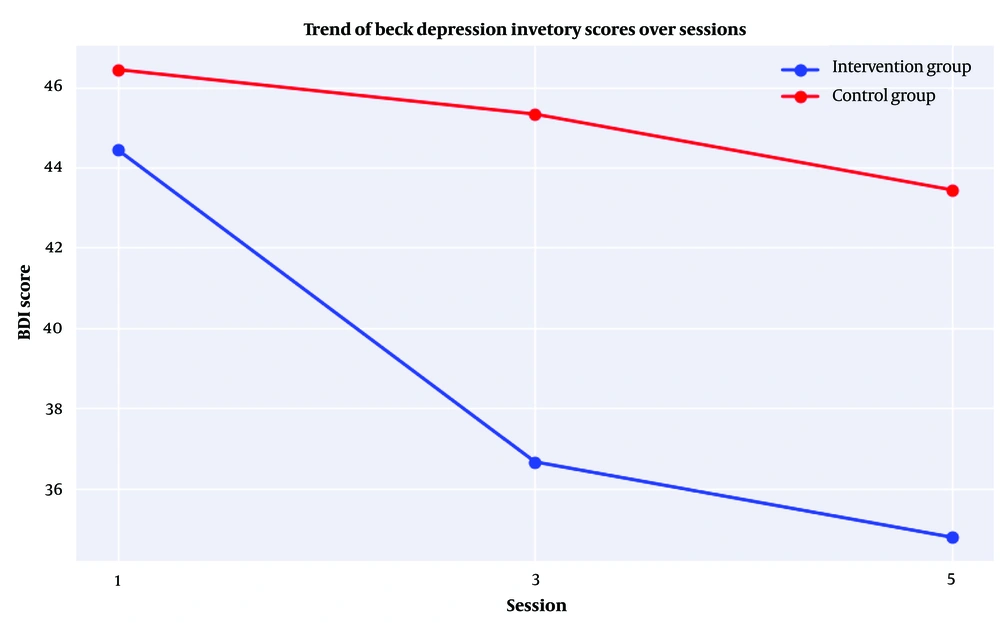
Figure 3.
Trend of depression scores over time
Craving intensity was measured at each session using the validated Persian Stimulant Craving Questionnaire (14 items; score range 14 - 140). This questionnaire was culturally adapted for Iranian stimulant users and demonstrated acceptable internal consistency (Cronbach’s α = 0.87). The mirtazapine group showed a steady decline in mean scores from 83.83 ± 17.48 at baseline to 70.77 ± 12.75 at Session 6, whereas the placebo group decreased slightly from 84.94 ± 9.70 to 80.25 ± 12.57. Repeated-measures analysis showed a significant group × time interaction (P < 0.001), confirming a robust effect of mirtazapine in reducing stimulant craving over 12 weeks (Table 5 and Figure 4).
Table 5.
Mean Craving Scores Across Sessions
| Groups | Mean ± SD |
|---|---|
| 1 | |
| Mirtazapine | 83.83 ± 17.48 |
| Placebo | 84.94 ± 9.70 |
| 6 | |
| Mirtazapine | 70.77 ± 12.75 |
| Placebo | 80.25 ± 12.57 |
This table summarizes craving scores for both groups. The mirtazapine group experienced a more pronounced reduction in craving intensity.
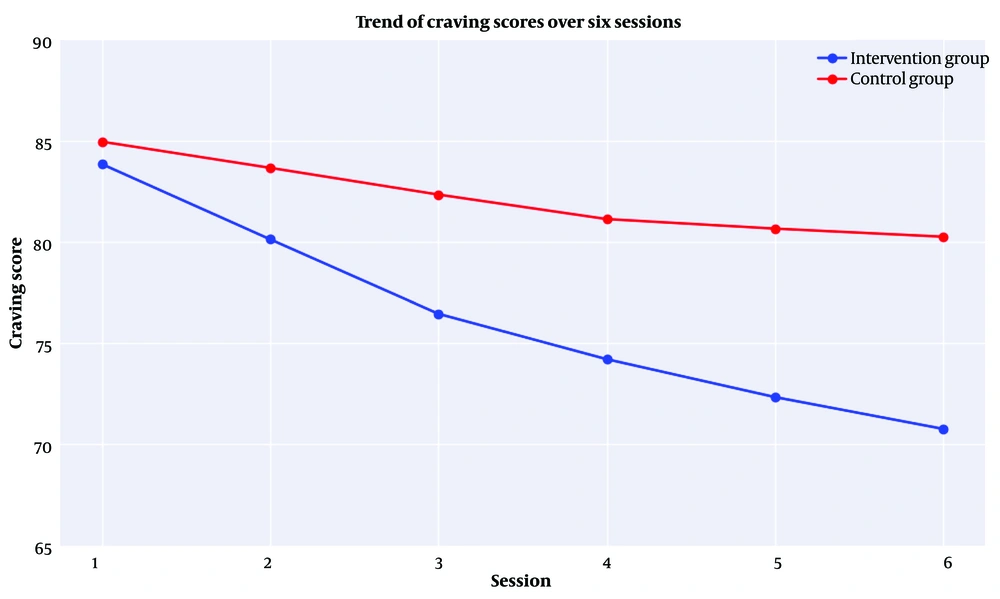
Figure 4.
Trend of craving scores over six sessions
4.1. Addiction Severity Index
At baseline, both groups had high composite scores across drug use, psychiatric, and family/social domains. Over 12 weeks:
- Mirtazapine group: significant improvement in drug use and psychiatric domains.
- Placebo group: minimal change.
- Family/social functioning: modest improvement in both groups.
These results suggest that mirtazapine reduces addiction severity beyond abstinence (Table 6).
Table 6.
ASI Scores Across Domains
| Domain | Mirtazapine | Placebo |
|---|---|---|
| Drug Use | ↓ Significant | ↓ Minimal |
| Psychiatric | ↓ Significant | ↓ Minimal |
| Family/Social | ↓ Modest | ↓ Modest |
Abbreviation: ASI Addiction Severity Index.
Adverse effects are reported separately in Table 7. All adverse effects were mild and transient; no serious adverse events or discontinuations occurred.
Table 7.
Frequency of Reported Adverse Effects a
| Symptom | Mirtazapine (n = 42) | Placebo (n = 42) |
|---|---|---|
| Drowsiness | 4 (9.5) | 0 (0) |
| Dry mouth | 0 (0) | 2 (4.76) |
| Appetite changes | 2 (4.76) | 0 (0) |
| Nausea | 1 (2.38) | 0 (0) |
| Constipation | 0 (0) | 0 (0) |
| Dizziness | 0 (0) | 0 (0) |
| Anxiety | 0 (0) | 0 (0) |
a Values are as expressed as No. (%).
5. Discussion
This study evaluated the efficacy of mirtazapine in reducing stimulant use, depressive symptoms, and craving intensity among individuals with amphetamine or methamphetamine use disorder. By session 6 (week 12), participants in the mirtazapine group had a significant increase in negative urine drug screens compared to the placebo group, indicating a meaningful reduction in substance use. These findings align with previous research highlighting the role of mirtazapine’s noradrenergic and serotonergic modulation in addiction treatment (25, 26). The observed abstinence trend supports the feasibility of mirtazapine as a pharmacological adjunct in stimulant use disorder care (27, 28).
Beyond its effect on abstinence, mirtazapine was associated with a significant reduction in depressive symptoms measured longitudinally using the BDI-II. Participants receiving mirtazapine demonstrated a marked decrease in BDI-II scores, whereas the placebo group showed minimal change. This reduction reflects treatment-related improvement, as participants were not excluded based on BDI-II scores, only on clinical psychiatric diagnosis.
Craving intensity also declined more substantially in the mirtazapine group, measured using the Persian Stimulant Craving Questionnaire (14 items; score range 14 - 140). Craving is a critical predictor of relapse, and its reduction is a key therapeutic target in addiction management (12, 29). The gradual but clinically relevant reduction in craving suggests that mirtazapine may stabilize mesolimbic circuits involved in motivation and reinforcement (17, 18).
Exploratory analyses indicated that baseline clinical depression severity was moderately correlated with craving reduction in the mirtazapine group. Participants with higher initial BDI-II scores tended to exhibit greater decreases in craving over time, suggesting that mood improvement may facilitate reductions in drug-seeking behavior. This relationship was not observed in the placebo group, highlighting the potential dual benefit of mirtazapine in patients with comorbid depressive symptoms (13, 17, 18).
Mirtazapine was well tolerated. Mild adverse effects, such as drowsiness and appetite changes, were reported separately, and no serious adverse events occurred. These findings are consistent with previous research on mirtazapine’s safety profile in psychiatric and addiction populations (28, 30).
Despite these promising results, several limitations should be noted. All participants were male, limiting generalizability to female populations. The sample size, although sufficient for moderate effects, may not detect subtle outcomes, and the follow-up period was limited to six sessions (12 weeks), preventing assessment of long-term outcomes. Additionally, exploratory analyses linking depression severity to craving reduction should be interpreted cautiously due to the limited sample size (12, 29, 31).
Overall, these findings contribute to a growing body of evidence supporting mirtazapine as a multifaceted agent in treating stimulant use disorders. Its combined effects on abstinence, mood improvement, and craving reduction suggest high therapeutic versatility, particularly in complex clinical scenarios (17, 18, 28, 32, 33). In contexts with limited access to comprehensive care, mirtazapine may serve as a practical and effective pharmacological option.
5.1. Conclusions
Mirtazapine appears to be an effective pharmacological option for individuals with amphetamine and methamphetamine use disorder. Its combined impact on abstinence, mood improvement, and craving reduction highlights its potential as a multifaceted treatment strategy. Given its favorable tolerability and mild side effect profile, mirtazapine could be integrated into addiction treatment programs, particularly where access to comprehensive care is limited. Future research should include larger, more diverse populations, longer follow-up periods, and combined pharmacological-behavioral interventions to confirm and extend these findings.
5.2. Limitations
Only male participants were included, limiting generalizability to females.
- Sample size may not detect subtle outcomes.
- Follow-up was restricted to six sessions (12 weeks), preventing long-term efficacy assessment.
- Exploratory analyses linking depression severity to craving reduction should be interpreted cautiously due to sample size.
Despite these limitations, the randomized, double-blind design, repeated objective assessments, and validated psychometric measures (BDI-II and Persian Craving Questionnaire) strengthen internal validity.