
1. Background
Inflammatory bowel disease (IBD) is a chronic inflammatory disorder of the gastrointestinal tract and is primarily classified into 2 forms: Ulcerative colitis, which affects the colon and rectum, and Crohn disease, which can affect any part of the digestive system. The global rise in IBD, driven by changing environmental factors and aging populations, has substantially increased its prevalence in recent decades. Inflammatory bowel disease, particularly ulcerative colitis (UC), develops through a complex interaction between genetic susceptibility and environmental factors that triggers chronic spontaneous inflammation and dysregulated immune responses, progressively damaging the colonic and rectal mucosa. Key clinical features include persistent abdominal cramping, unintentional weight loss, bloody stool, urgent bowel movements, and iron-deficiency anemia (1-3).
Multiple studies have demonstrated an association between inflammation and oxidative stress. Cytokines play a pivotal role in the immunopathogenesis of UC. Disruption of the balance between proinflammatory and anti-inflammatory cytokines leads to an excessive release of proinflammatory cytokines, including TNF-α, IL-1, and IL-6, resulting in tissue damage and disease. Proinflammatory cytokines contribute to reactive oxygen species (ROS) generation during the inflammatory process, thereby causing oxidative stress (2-4).
Oxidative stress also activates 2 interconnected regulatory proteins involved in anti-inflammatory and antioxidant responses: Nuclear factor erythroid 2-related factor 2 (Nrf2) and nuclear factor kappa B (NF-κB). After release from their associated inhibitory factors, these 2 regulatory proteins translocate to the nucleus. In the nucleus, the Nrf2-small Maf-antioxidant response element complex induces antioxidant detoxifying enzymes, including superoxide dismutase (SOD), glutathione S-transferase, glutathione peroxidase (GPx), catalase (CAT), and thioredoxin (4, 5). Superoxide dismutase converts superoxide to peroxide, which is inactivated by CAT and GPx. Nuclear factor kappa B comprises a family of transcription factors formed through homo- or heterodimerization of 5 different protein subunits, including p50, p52, p65 (RelA), c-Rel, and RelB. Nuclear factor kappa B promotes the expression of inflammatory genes, including iNOS, COX-2, and various cytokines (3, 4).
In recent years, natural compounds, particularly medicinal plants, have been increasingly used as preferred approaches for IBD treatment because of the adverse effects of chemical drugs. Natural products are also important sources of anti-inflammatory and antioxidant agents because of their secondary metabolites, such as flavonoids, phenols, and alkaloids (1, 3, 6-9). The Polygonaceae family has traditionally been used in Asia, Africa, South America, and the Middle East to treat inflammatory conditions, including arthritis, gastric ulcers, and some types of cancer (2, 3, 6, 10, 11). Plants from this family are also used as vegetables and flavoring agents. Chemical compounds in this family include flavonoids, such as avicularein, myricetin, quercetin, and kaempferol, and phenolic acids, such as gallic, chlorogenic, and caffeic acids, which have demonstrated anti-inflammatory and antioxidant properties (5, 6, 10).
Studies have shown that P. aviculare extracts, whether aqueous or alcoholic, exert significant anti-inflammatory effects in in vitro models by inhibiting the NF-κB pathway and reducing the expression of inflammatory genes (11). These effects are mainly attributed to dietary polyphenols. Dietary polyphenolic compounds have been proposed to contribute to the maintenance of human health and the prevention of chronic oxidative-inflammatory disorders (12, 13). However, limited information is available regarding the anti-inflammatory and antioxidant properties of P. aviculare extracts in in vivo models. It remains unclear whether consumption of PAP can inhibit the development of inflammation caused by IBD.
2. Objectives
This study investigated the effects of PAP consumption on inflammatory responses and oxidative stress in a mouse model using histological and gene expression analyses. The effects of PAP consumption on total colonic microbial count were also investigated.
3. Methods
3.1. Plant Preparation
Polygonum aviculare L. was collected from the southern part of the Zagros mountain range in Fars Province, Iran. The aerial parts were dried under natural conditions in the shade (1). The plant material was then ground into a fine powder and homogeneously mixed with standard dry mouse food at approximately 1.5% w/w (14.86 g of plant powder per kg of basic food).
3.2. Animal Model and Experimental Design
The sample size was determined by an a priori power analysis for 1-way analysis of variance (ANOVA) across 5 groups, assuming α = 0.05, 80% power, a standard deviation of 10 units, and an expected difference of 20 units. Based on these parameters, 6 to 8 mice per group (total n = 30 - 40) were required to ensure adequate statistical power while adhering to the 3Rs principles (Replacement, reduction, and refinement) (14). Therefore, 40 male BALB/c mice weighing approximately 29.18 g were used.
This study was conducted in accordance with international guidelines for laboratory animal use (NIH publication, 1996), with ethical approval granted by the Ethics Committee of Shahrekord University (IR.SKU.REC.1404.023). Animals were randomly divided into 5 equal groups (8 mice per group, with 4 mice housed per cage). Colitis was induced by intrarectal instillation of diluted acetic acid. The concentration range was 2% to 5% (v/v) acetic acid in saline (0.1 - 0.2 mL per mouse). A commonly used regimen is 3% acetic acid in 0.1 mL administered intrarectally, which produces moderate colitis, as described previously (15). Concentrations of 4% to 5% acetic acid produce more severe injury, and concentrations greater than 5% increase the risk of mortality. Different concentrations of acetic acid were used in this study to demonstrate the ability of PAP to reduce signs of induced colitis.
The groups were as follows: a negative control group without treatment (C-); a positive control group as the inflammation model (C+), which received 3% acetic acid intrarectally for 3 consecutive days and was fed standard food; a T1 group, which received 3% acetic acid intrarectally for 3 consecutive days (low dose) and was then fed food containing PAP for 8 consecutive days; a T2 group, which received 4% acetic acid intrarectally for 3 consecutive days (high dose) and was then fed the same diet as the T1 group; and a D group, which was first treated with 3% acetic acid and then with diclofenac (anti-inflammatory drug, 2.5 mg/kg orally for 3 consecutive days) and was then fed standard food (16). After 8 days, the mice were anesthetized using light ether and dissected under sterile conditions. Colon tissue and stool samples were collected and stored at -80°C. All sampling procedures were performed in compliance with health and ethical principles. Mouse weight was measured after acid treatment (day 3) and before dissection (day 12).
3.3. Microbial Total Count
Stool samples from the colon were transferred to sterile normal saline. Serial dilutions were prepared, and aliquots (1 mL of each dilution) were transferred to plates. Molten LB agar was added to the plates, mixed thoroughly, and incubated at 37°C for 24 hours.
3.4. Tissue Preparation and Histological Analysis
Colon tissue was divided into 3 portions: proximal, middle, and distal. The tissue portions were fixed in 4% paraformaldehyde in phosphate-buffered saline for 4 hours, embedded in paraffin, and processed using standard histological procedures (17). Tissue sections were stained with hematoxylin and eosin (H&E), as described previously (17), and images were acquired using standard light microscopy (Leica, Germany).
According to the guideline for evaluating intestinal inflammation, 4 grades were used to estimate the percentage of leukocyte infiltration: grade 0, no inflammatory cells in the lamina propria; grade 1, scattered cells in the lamina propria (mild); grade 2, countable inflammatory cells in the lamina propria; grade 3, moderate leukocyte infiltration; and grade 4, marked and dense infiltration (17, 18).
3.5. RNA Extraction, cDNA Synthesis, and Real-Time PCR
Total RNA was extracted from colon and rectal tissues using the YTA Total RNA Purification Mini Kit (Yekta Tajhiz Azma Company, Iran). Approximately 30 mg of tissue was used to prepare a tissue homogenate on ice in phosphate-buffered saline under sterile conditions. The homogenate was used for the extraction steps according to the kit instructions. The extracted RNA was immediately stored at -70°C.
cDNA synthesis was performed according to the protocol of the Yekta Tajhiz cDNA Synthesis Kit. Purified RNA (500 ng), oligo(dT)18 primer (50 μM), diethyl pyrocarbonate-treated water, 5X first-strand buffer, dNTPs (10 mM), RNasin (40 units/μL), and M-MLV were used for cDNA synthesis. The reaction was performed for 60 minutes at 42°C and terminated by placing the tubes at 70°C for 5 minutes. The cDNA was then stored at -20°C.
The expression of NF-κB, GPx, and CAT was measured using real-time PCR. ACTB (β-actin gene) was used as the reference gene. Primers were purchased from Aroon Gene Pars Company and are presented in Table 1. The SYBR Green kit (Yekta Tajhiz Azma, Iran) was used to measure gene expression. After the real-time PCR mixtures were prepared according to the manufacturer’s guidelines, PCR was performed using a real-time PCR machine (micPCR Bio Molecular Systems, Australia) under the following temperature program: preheating at 95°C for 5 minutes, followed by 40 cycles at 95°C for 5 seconds, 54.5°C for 10 seconds, and 72°C for 15 seconds.
Table 1.
List of Forward and Reverse Primers
| Primer | Sequence (5′→3′) | Target Gene | Target Length |
|---|---|---|---|
| FACTB2 | AGCCTTCCTTCTTGGGTATGG | β-actin | 110 |
| RACTB2 | CAGCACTGTGTTGGCATAGAGG | β-actin | 110 |
| Fnfkb | AGGACATGGTGGTTGGCTTTG | NF-κB | 122 |
| Rnfkb | CAGAAGTCCAGGATTATAGCC | NF-κB | 122 |
| FGPX3 | AATACCTTGAACTGAATGCAC | GPx | 111 |
| RGPX3 | GAGTTCTCGCCTGGCTCCTG | GPx | 111 |
| FCAT | GGAGCAGGTGCTTTTGGATAC | CAT | 110 |
| RCAT | GAGAATCGGACGGCAATAGG | CAT | 110 |
3.6. Statistical Analysis
All data were presented as mean ± SD for each group in GraphPad Prism. Comparisons among more than 2 groups were performed using 1-way ANOVA followed by the Tukey post hoc test for pairwise comparisons. A t-test was used to compare 2 groups, and P < 0.05 was considered statistically significant.
4. Results
Acetic acid–induced colitis (C+ group) caused weight loss. After 2 weeks, mice in the C+ group weighed significantly less than those in the C- group (P < 0.0001) (Figure 1). After 2 weeks, mice in the T1, T2, and D groups gained significantly more weight than those in the C+ group (P < 0.001, P < 0.05, and P < 0.01, respectively). Weight values did not differ significantly among the T1, T2, and D groups (P > 0.05).
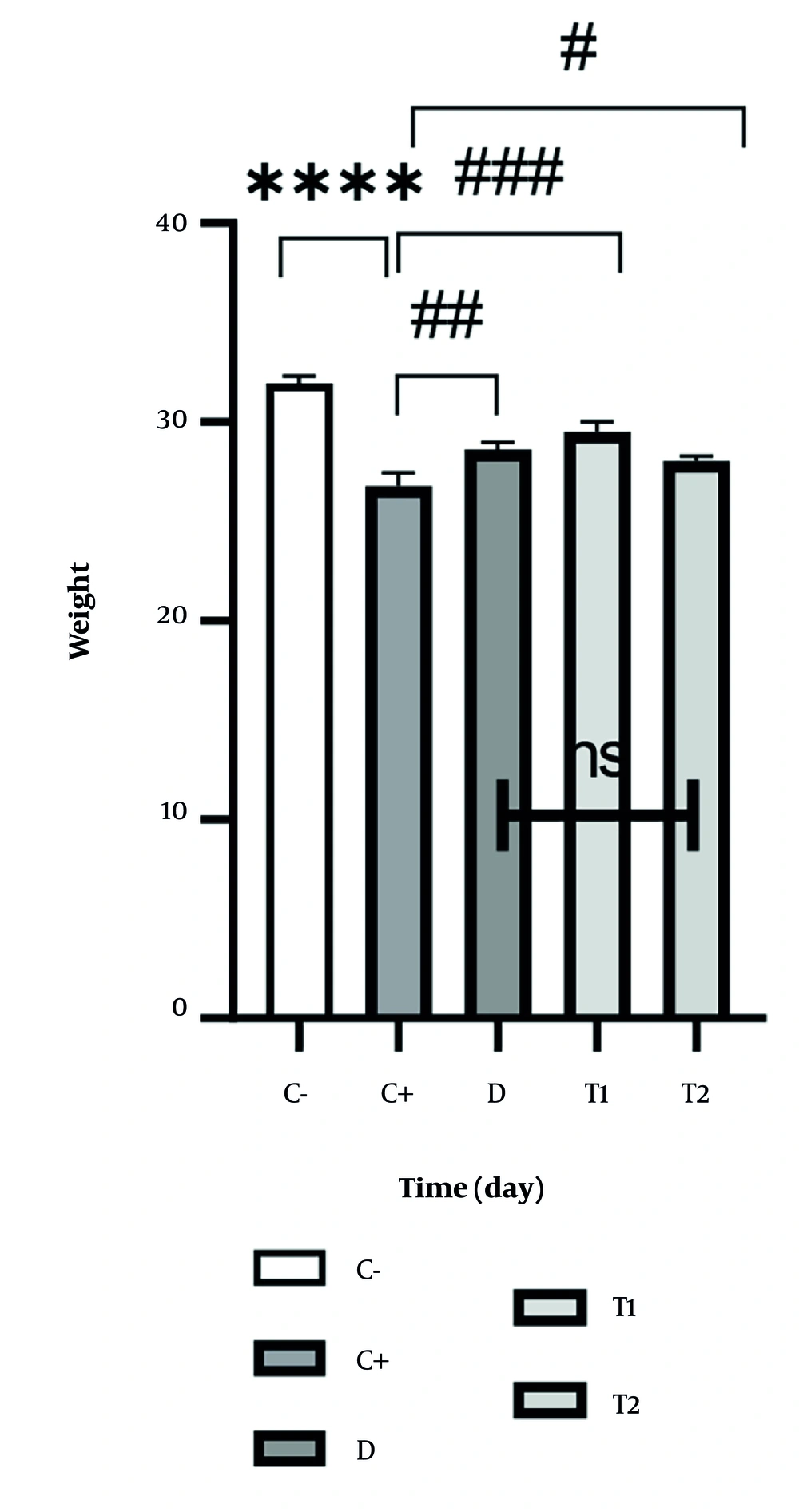
Figure 1.
Effects of acetic acid, PAP, or diclofenac administration on body weight values in different mouse groups. C- group, untreated; C+ group, acetic acid-treated, 3% v/v; T1, acetic acid-treated, 3% v/v and PAP-treated; T2, acetic acid-treated, 4% v/v and PAP-treated; D group, acetic acid-treated, 3% v/v and diclofenac-treated. ns indicates no significant difference (P > 0.05). # P < 0.05, ## P < 0.01, ### P < 0.001, and **** P < 0.0001.
Mice developed diarrhea and bloody stool after acetic acid treatment in the C+, T1, T2, and D groups. However, these signs were less severe in some mice in the T1 and D groups than in the C+ and T2 groups (data not shown).
The total intestinal microbial count in the C+ group (3 × 10⁵) was significantly lower than that in the C- group (5 × 10⁷; P < 0.05). However, the total number of microbes in the D group (3 × 10⁷) was higher than that in the T1 (3 × 10⁶) and T2 (1 × 10⁶) groups and was approximately similar to that in the C- group. Microscopic analysis of stool samples showed different types of Gram-negative and Gram-positive microbes (data not shown). Microbial diversity did not differ among the groups.
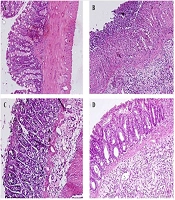
Colon tissues were examined macroscopically before H&E staining. Healthy tissue was free of inflammation, edema, and ulceration (data not shown). However, these signs were clearly observed in the C+ group and, to a lesser extent, in the T1, T2, and D groups (data not shown). Figure 2 shows H&E-stained colon sections. The colonic mucosal structure was normal in the C- group. Healthy colonic mucosa with colonic crypts and without inflammation was observed in the C- group (grade 0). The mucosal structure was destroyed in the C+ group. Severe inflammatory cell infiltration, consistent with chronic colitis with severe activity and crypt loss, was observed in this group (grade 4). The T1 group showed mild infiltration of inflammatory cells in the lamina propria, mild crypt destruction, loss of goblet cells, and cryptitis, representing chronic colitis with mild activity (grade 1). In contrast, the T2 group showed moderate infiltration of inflammatory cells in the mucosa, submucosa, and lamina propria (grade 3). In addition, greater crypt destruction and loss of goblet cells were observed in the T2 group than in the T1 group. The D group showed inflammatory cell infiltration similar to that in the T1 group (grade 1).
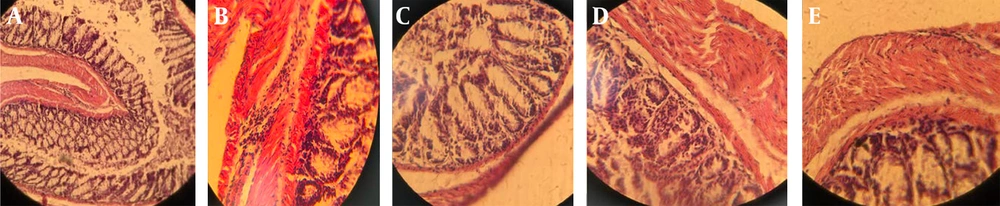
Figure 2.
Representative histological findings by H&E staining in 5 groups (original magnification, 40×). A, C- group (healthy); B, C+ group (acetic acid-treated, 3%); C, T1 group (acetic acid-treated, 3% v/v and PAP-treated); D, D group (acetic acid-treated, 3% v/v and diclofenac-treated); E, T2 group (acetic acid-treated, 4% v/v and PAP-treated).
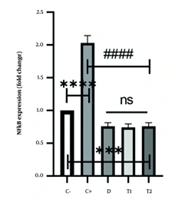
cDNA was synthesized from purified RNA and used for real-time PCR. The results showed that NF-κB was overexpressed in the C+ group compared with the C-, T1, T2, and D groups (P < 0.0001), whereas NF-κB expression was similar among the treated groups (T1, T2, and D groups; P > 0.05) (Figure 3). Thus, NF-κB expression significantly decreased in the T1, T2, and D groups compared with the C+ group (P < 0.0001).
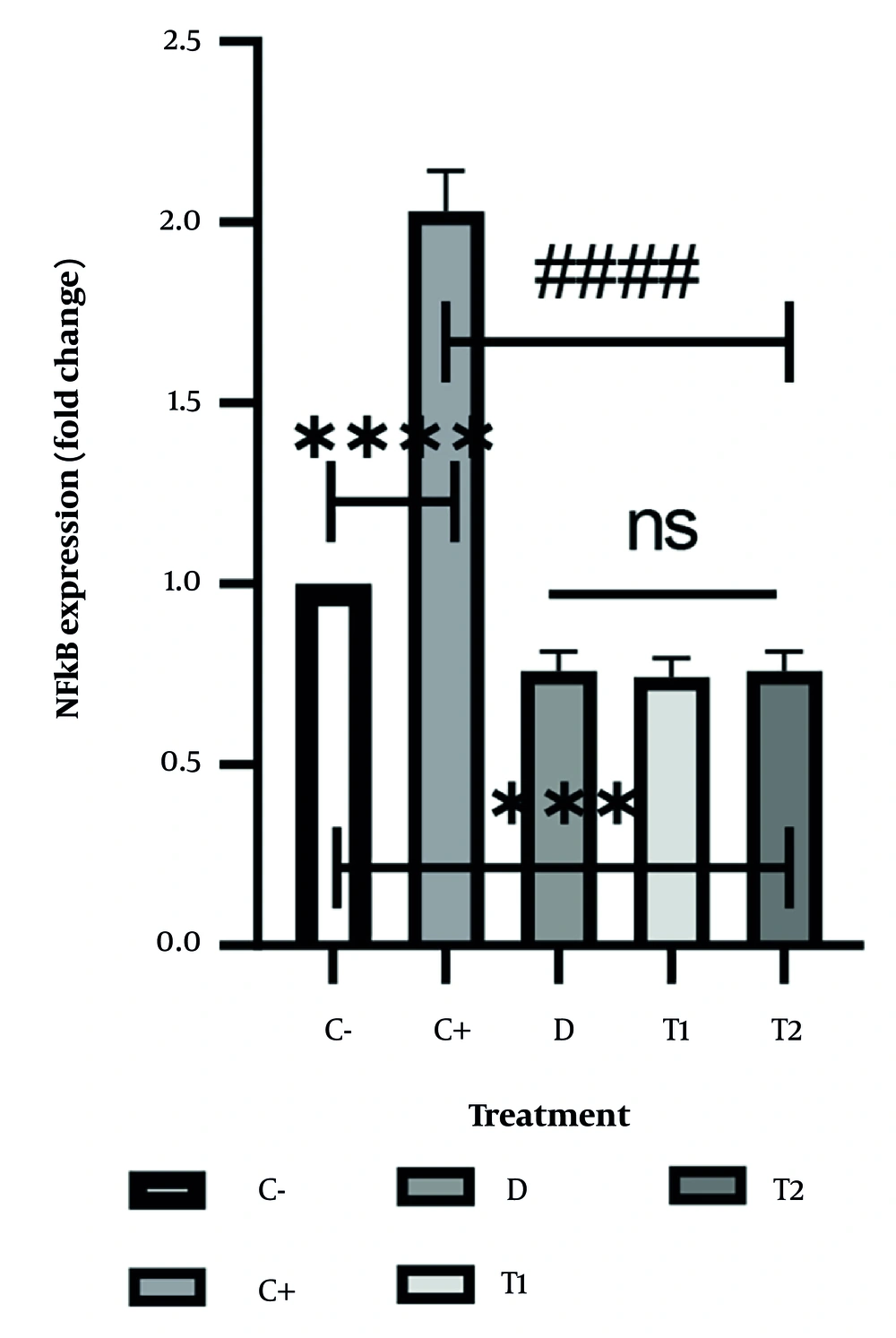
Figure 3.
Effects of acetic acid, PAP, or diclofenac administration on NF-κB gene expression in different mouse groups. C- group, untreated; C+ group, acetic acid-treated, 3%; T1, acetic acid-treated, 3% and PAP-treated; T2, acetic acid-treated, 4% and PAP-treated; D group, acetic acid-treated, 3% and diclofenac-treated. ns indicates no significant difference (P > 0.05); #### and ****, P < 0.0001; ***, P < 0.001.
In contrast, GPx expression was significantly reduced in the C+ group compared with the C- group (P < 0.01) (Figure 4). However, GPx expression significantly increased in the T1, T2, and D groups compared with the C- and C+ groups (P < 0.0001). GPx expression did not differ significantly among the T1, T2, and D groups (P > 0.05) (Figure 4).
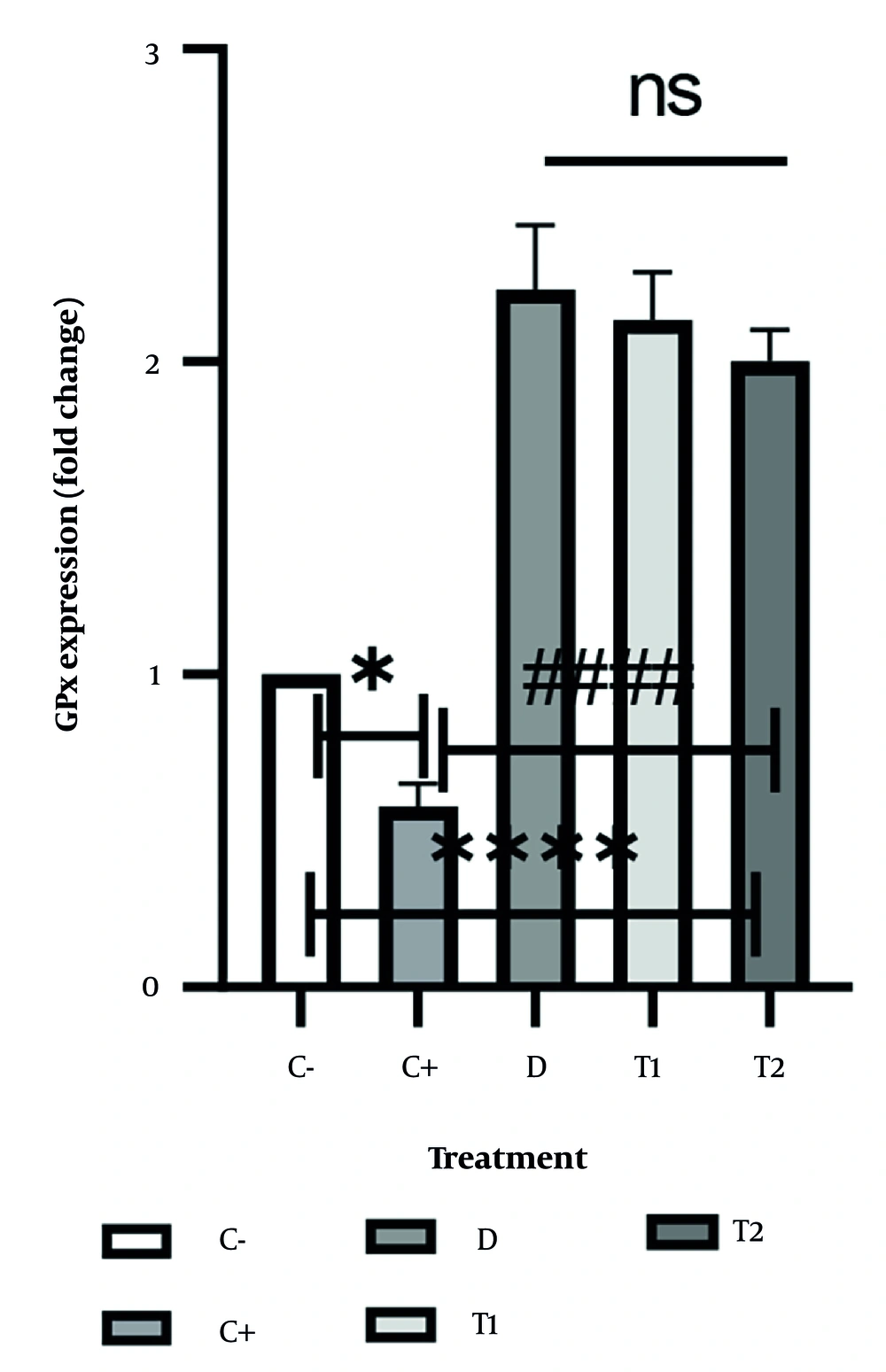
Figure 4.
Effects of acetic acid, PAP, or diclofenac administration on GPx gene expression in different mouse groups. C- group, untreated; C+ group, acetic acid-treated, 3%; T1, acetic acid-treated, 3% and PAP-treated; T2, acetic acid-treated, 4% and PAP-treated; D group, acetic acid-treated, 3% and diclofenac-treated. ns indicates no significant difference (P > 0.05). *, P < 0.05; **** and ####, P < 0.0001.
Similarly, CAT expression was significantly overexpressed in the T1, T2, and D groups compared with the C- and C+ groups (P < 0.0001) (Figure 5). However, the level of overexpression in the T2 group differed significantly from that in the D group (P < 0.01) but did not differ significantly from that in the T1 group (P > 0.05) (Figure 5).
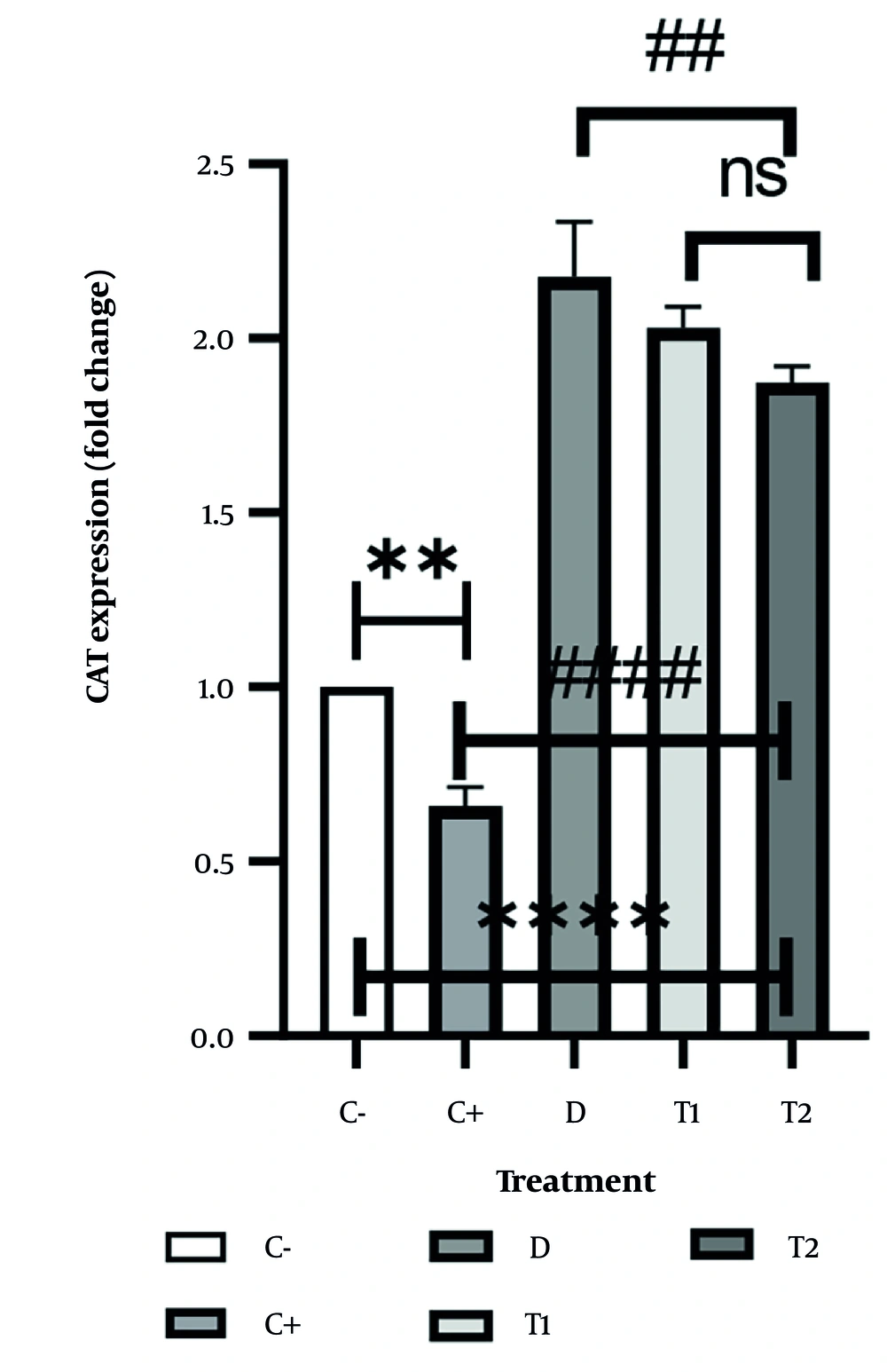
Figure 5.
Effects of acetic acid, PAP, or diclofenac administration on CAT gene expression in different mouse groups. C- group, untreated; C+ group, acetic acid-treated, 3%; T1, acetic acid-treated, 3% and PAP-treated; T2, acetic acid-treated, 4% and PAP-treated; D group, acetic acid-treated, 3% and diclofenac-treated. ns indicates no significant difference (P > 0.05). ## and **, P < 0.01; **** and ####, P < 0.0001.
5. Discussion
The present study investigated the effects of PAP on the progression of inflammation and antioxidant activity in an acetic acid-induced mouse model of colitis. The findings showed that PAP treatment exerted a favorable inhibitory effect on inflammation in colonic tissue. Polygonum aviculare powder reduced the macroscopic and microscopic signs of induced colitis and maintained the health status of the mice. Moreover, PAP reduced NF-κB expression, enhanced GPx and CAT expression, and maintained intestinal bacterial survival.
Ulcerative colitis, a major type of IBD, is a prevalent condition characterized by varying degrees of inflammation, colorectal involvement, and disease severity. Patients with UC have a higher incidence of colon cancer than the general population. The disease also imposes substantial socioeconomic burdens that significantly affect patients' quality of life (1). Treatment of IBD remains particularly challenging because of its heterogeneous nature, reflected in diverse etiological factors, pathological mechanisms, and clinical manifestations. Current therapeutic options show variable efficacy and safety profiles (3), with some treatments associated with serious adverse effects, especially when administered for extended periods. For example, diclofenac, a nonsteroidal anti-inflammatory drug, has been reported to cause colonic injury after long-term consumption (19). Therefore, future studies are recommended to use mesalamine (5-aminosalicylic acid), prednisolone, or dexamethasone as treatment agents.
Therapeutic intervention for UC is important when agents with favorable safety profiles, such as phytotherapeutic compounds derived from medicinal plants, are used. Herbal medicines are widely regarded as having distinct advantages, including improved safety parameters, demonstrated therapeutic effectiveness, broad accessibility, and superior cost-effectiveness compared with conventional pharmaceutical interventions. These characteristics contribute substantially to their increasing preference among patients managing chronic inflammatory conditions (2, 3). Polygonum aviculare L., known as the haft band plant in Iran, has been used against inflammatory disorders, such as IBD. The plant is also consumed as a vegetable and flavoring agent. It is used fresh and raw in salads or cooked foods.
Polygonum aviculare L. has anti-inflammatory properties and suppresses the NF-κB signaling pathway. Nuclear factor kappa B is a vital transcription factor in the inflammatory response. Our finding that PAP decreased NF-κB expression in the T1 and T2 groups is consistent with previous findings regarding the effect of P. aviculare alcoholic extract on NF-κB expression (11). Similarly, Polygonum hydropiper alcoholic extract greatly reduced NF-κB expression (20).
Gastric injury is associated with decreased activity of antioxidant enzymes, such as SOD, glutathione, and GPx, leading to the accumulation of ROS in gastric mucosal cells. Polygonum hydropiper alcoholic extract increased SOD, glutathione, and GPx activity (20). Moreover, P. aviculare L. demonstrated antioxidant activity linked to its ability to activate Nrf2 (11, 21). Our finding that PAP increased GPx and CAT expression in the T1 and T2 groups is consistent with the antioxidant potential of P. aviculare L.
Nuclear factor kappa B promotes the production of cytokines, such as TNF-α, IL-6, and IL-1, as well as many other cytokines that are crucial for cell signaling and communication during inflammation and immune responses. This suggests that reduced NF-κB expression could lead to a reduced immune response (11). However, the expression of these cytokines was not measured in the present study. Our finding of mild inflammatory cell infiltration in the T1 group compared with severe infiltration in the C+ group is consistent with previous findings on the effect of reduced NF-κB expression on the immune response (11). However, the T2 group, which received a high dose of acetic acid and the same dose of PAP, showed moderate inflammatory cell infiltration, which was greater than that in the T1 group but less than that in the C+ group. This finding indicates that the prevention of inflammatory signs by PAP is dose dependent. In addition, the presence of flavones, such as rutin, quercetin, and quercitrin, in Polygonum extract (20) may protect the gastric mucosa from damage. Therefore, further investigation of the individual ingredients of the plant extract would be beneficial.
Polygonum extracts containing polysaccharides may have protective effects on the colonic microbiota and modulate gut health, potentially through prebiotic activity that increases beneficial bacteria, such as Lactobacillus, and decreases harmful types, such as Bacteroides (22). In this study, treatment with acetic acid in the C+ group resulted in significant weight loss compared with the C- group (P < 0.0001). However, consumption of PAP or diclofenac significantly reduced the severe effect of acetic acid on body weight (P < 0.05). In the current study, the total gut microbial count significantly decreased in acid-treated mice compared with untreated mice (P < 0.05). Treatment with PAP moderately restored the microbial count in acid-treated mice in the T1 and T2 groups. This moderate effect may be related to the prebiotic activity of PAP. The microbial population-controlling effect was not observed in acid-diclofenac-treated mice. This finding may indicate the superiority of natural compounds over synthetic compounds in inhibiting inflammation.
Polygonum extracts, particularly from P. chinense L. and P. cuspidatum, have demonstrated antibacterial activity against various pathogens, such as Staphylococcus aureus (23, 24). It has been suggested that plant extracts can inhibit or kill pathogenic bacteria by disrupting the cell membrane or cell wall (23, 24). The antipathogenic effect of the plant extract indicates the potential benefits of consuming this plant for maintaining intestinal health. In addition, treatment of mice with PAP significantly increased body weight in the T1 and T2 groups compared with the C+ group, which received standard food (P < 0.05). Further research is needed to determine whether using PAP in the human diet as a therapeutic agent is beneficial for preventing the development of IBD and whether regular consumption as a prophylactic agent can prevent disease.
This study has several limitations. First, diclofenac is not recommended as a treatment in an acetic acid colitis model because it can worsen mucosal injury. However, a low dose of diclofenac (2.5 mg/kg) was used for short-term consumption, and no more severe damage than that observed in the C+ group was detected. Second, cytokine analysis was not conducted. It was expected that decreased NF-κB expression could decrease the expression of cytokines, such as TNF-α, IL-6, and IL-1. Third, microbiota analysis was not performed. These limitations should be addressed in future studies.
5.1. Conclusions
The results of this study showed that PAP prevented the development of inflammatory responses in a mouse model of induced colitis by decreasing NF-κB expression, increasing GPx and CAT expression, and restoring the intestinal microbiota. The anti-inflammatory effect was likely mediated by the flavonoid and phenol contents of PAP. The present findings suggest that using natural compounds to prevent inflammatory diseases may reduce the need to use synthetic compounds to treat inflammatory diseases in mouse models. However, further research is needed to confirm the preventive effect of Polygonum aviculare at the clinical level in humans and to accurately identify the involved molecular pathways.