Natural compounds derived from plants have served as invaluable resources for the prevention and treatment of a variety of human diseases, including cancer. Plant-based formulations have emerged as promising new sources for investigations of related molecular events. Detailed chemical analyses of certain botanical medicines have been performed to establish the safety and efficacy of these potential anti-cancer remedies (
22). As several anti-cancer phytochemicals can alter the function of key molecules regulating programmed cell death, plants with apoptosis-modulating potential may ultimately prove useful as new chemotherapeutics (
23). Considering the data on the in vitro cytotoxic activity of phenanthroindolizidine alkaloids from
V. hirundinaria (
16,
17) and the chemical similarity among plants in this genus,
V. pumilum was chosen for investigation of potential cytotoxic and apoptotic properties. To our knowledge, there are no reports to date in the literature about these effects of
V. pumilum. Nevertheless, the data from this study showed that a methanol extract of
V. pumilum as well as some of its sub-fractions imparted potent inhibitory effects on cell viability in HL-60 and K562 human leukemia cell lines.
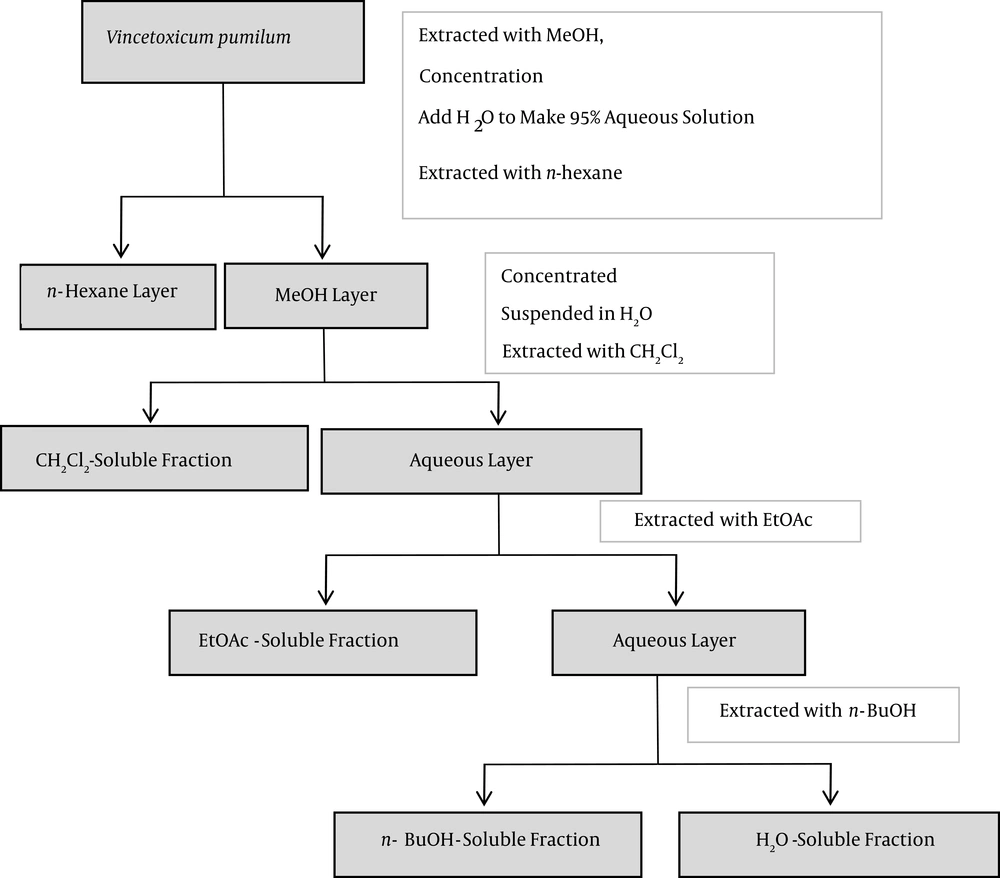
A cytotoxic evaluation of the entire extract could yield insights into the biological activity of any natural product, itself a complex mixture of variable components with different physicochemical properties. In our case, partitioning the
V. pumilum total methanol extract into the various n-hexane, CH
2Cl
2, EtOAc, n-BuOH, and H
2O sub-fractions separated the phytochemicals present, according to polarity (
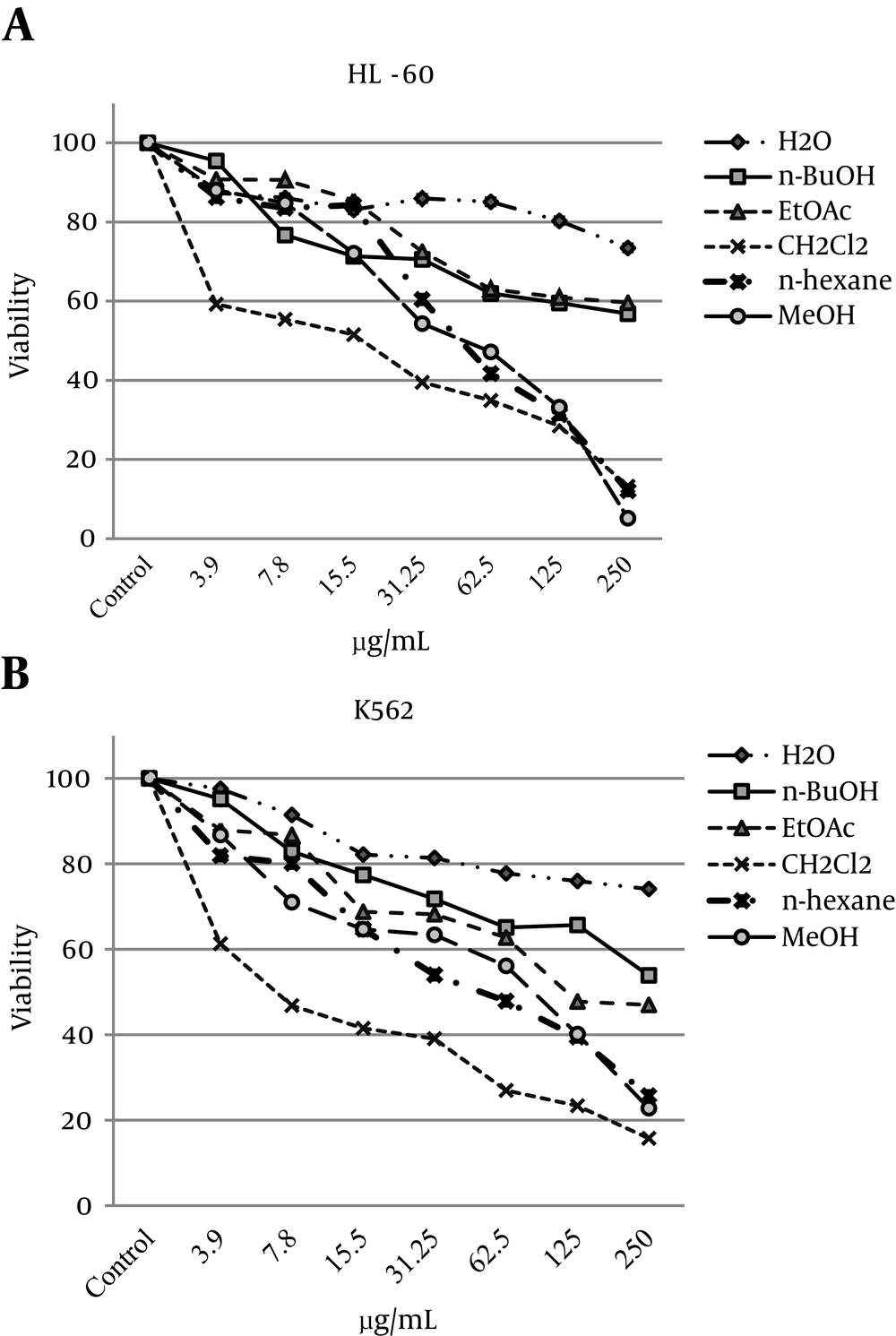
24). The fact that higher activity was seen with the parent
V. pumilum methanol extract and in the n-hexane and CH
2Cl
2 fractions suggested that non/semipolar compounds imparted the cytotoxic effects in the test cell lines. Low-polarity solvents yield extracts that are often successfully absorbed through the cell membrane (
15). As such, it would be expected that the low-polarity solvents effectively concentrated a majority of the cytotoxic compounds in the
V. pumilum materials in this study. Accordingly, the n-hexane and CH
2Cl
2 fractions did have the greatest level of cytotoxic activity.
Chemicals and plant extracts that can induce apoptosis are considered potential anti-cancer agents (
1). In this case, due to the findings with regard to potent cytotoxic activity in the various cell lines studied here, the n-hexane and CH
2Cl
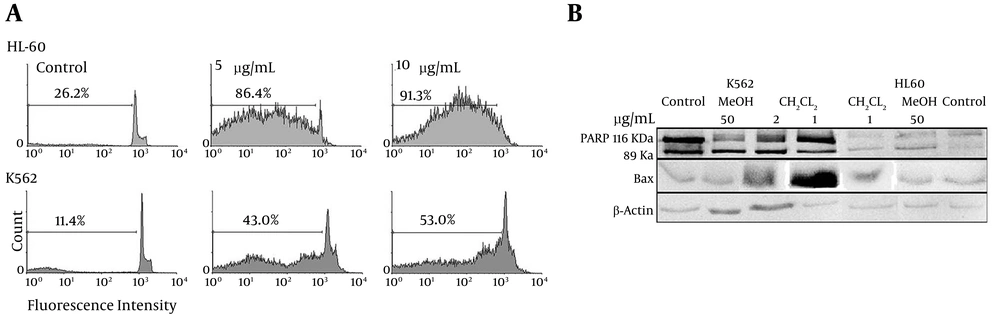
2 fractions were further evaluated for apoptotic activity. Apoptosis occurs through multiple events in cells. Caspases interact with other molecules and regulate their activation; effector caspases are activated as a consequence of initiator caspase activation. A clustering of interactions automatically cleaves targets of caspases, including nuclear lamins, ICAD/DFF45, PARP, and PAK2. Cleavage and inactivation of these and other target molecules ultimately results in fragmentation of DNA, resulting in the ability to detect a characteristic ‘DNA ladder’ in these cells. Because apoptotic cells lose small fragments of DNA and take up less stain, in terms of flow cytometric analysis, these cells will appear to the left of the G
1 peak when they are stained with a quantitative DNA-binding dye, such as PI (
20). In the present study, the CH
2Cl
2 fraction of
V. pumilum resulted in an increase in the overall percentage of sub-G
1 peaks in flow histograms, indicating that there had been an amplification of apoptosis in these cells.
The balance between pro-apoptotic and anti-apoptotic proteins in the outer layer of mitochondrial membranes regulates cellular apoptosis. Bax is a pro-apoptotic molecule up-regulated by the tumor suppressor protein p53, and has been shown to be involved in p53-mediated apoptosis. Interacting with Bax, p53 promotes its activation and insertion into the mitochondrial membrane (
17). Here, treatment with the methanol extract and the CH
2Cl
2 fraction of
V. pumilum effectively increased Bax protein levels in both cell lines in comparison to the control cells. In addition, each of these preparations also resulted in greater cleavage of cellular PARP. PARP is normally inactivated when cleaved into the 24 and 89 kDa segments (the DNA-binding and auto-modification domains, respectively) by caspases (primarily caspases 3 and 7 in vivo). Because DNA binding can still occur by the smaller fragment, its ability to dissociate from DNA is lost without the presence of the larger counterpart; this prevents intact PARP from accessing damage sites in DNA and triggering repairs as needed. With enough accumulated damage, programmed cell death, including possibly apoptosis, could then occur.
As noted earlier,
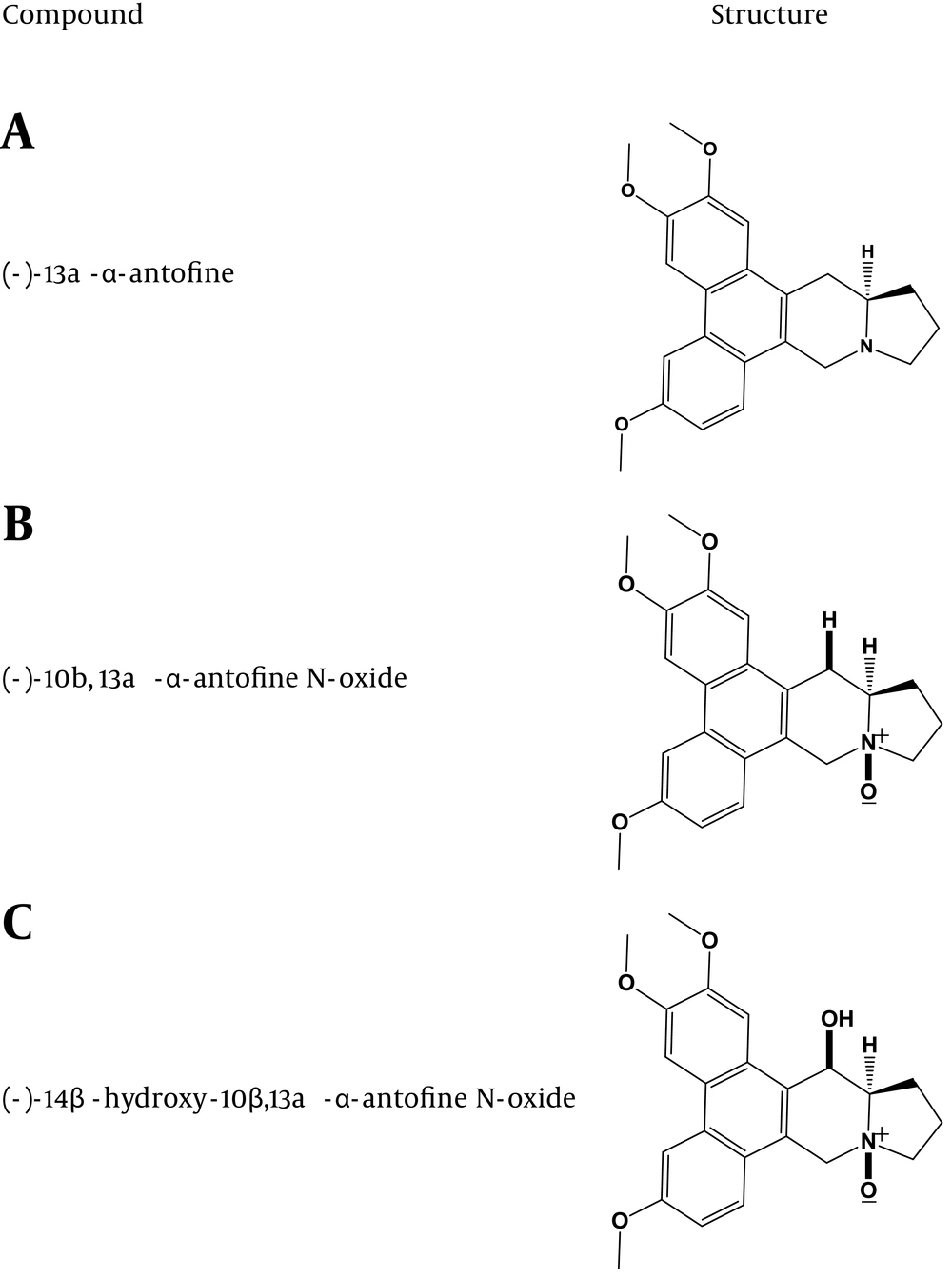
V. pumilum contains a myriad of constituents, including phenanthroindolizidine alkaloids, that have been postulated as imparting the cytotoxic properties seen in other members of the genus (
15-
17). As noted in Staerk et al. (2005) (
16), “it has been shown that the toxicity of phenanthroindolizidine alkaloids is due to inhibition of protein and nucleic acid synthesis.” Among the various agents in the methanol extract and the
n-hexane/CH
2Cl
2 fractions, it is likely that the alkaloids (-)-13a-α-antofine, (-)-10b,13a-α-antofine N-oxide, and (-)-14β-hydroxy-10β,13a-α-antofine N-oxide were the major components responsible for the effects observed in this study on cell viability in general and apoptosis induction in particular. This would be in keeping with results of earlier studies whose authors indicated that the presence of alkaloids such as antofine was important to impart potent anti-tumor cell activity (
25,
26). Interestingly, recent evidence has indicated that some of these alkaloids are also useful as anti-inflammatory agents capable of blocking the release of inflammatory mediators by cultured macrophages via effects on cell-signaling pathways (
27). Whether similar effects on signaling pathways are part of the mechanism(s) related to the
V. pumilum induction of apoptosis and overall cytotoxicity remains to be determined.
5.1. Conclusions
This study established for the first time that the herb V. pumilum imparted an inhibitory effect on cell viability and that this effect was mediated, at least in part, by the induction of apoptosis in human leukemia cells. Considering the important role of apoptosis-inducing agents in novel therapeutic strategies against cancer, the results confirmed our hypothesis that this natural product could have a potential useful role in the treatment of at least some types of cancer. Clearly, future research is necessary to better characterize the constituents of the active fractions in the current study, and to permit a better understanding of the mechanisms by which this natural product works. With that knowledge, more precise studies could then be designed to test for and control the toxicities of various fractions or the whole herb of V. pumilum prior to any wider use in clinical settings, including anti-cancer treatments.