1. Background
Recently, there has been growing interest in the area of research on natural compounds of plants displaying antioxidant, antimicrobial, and pharmaceutical activities which are used for humans and animals as food components or as specific pharmaceutics (1, 2). Today demands for less use of synthetic drugs and food preservatives/additives have increased around the world. Synthetic compounds are sometimes associated with adverse effects on the host, including allergic reactions, hypersensitivity, and immunity suppression, hence using alternative natural compounds with antimicrobial, antifungal, and antioxidant activities, such as essential oils and extracts from different plant species, has become an interesting solution for this problem (3, 4). The Ballota genus belongs to the Lamiaceae family (5). It has been reported that 33 to 35 species exist in the genus Ballota that are mainly distributed around the Mediterranean and Eurasia (6, 7). Ballota species have been widely used in traditional medicine as sedative, antispasmodic, diuretic, choleretic, and antihemorrhoidal agents (8). Several compounds have been reported in B. nigra, including terpenes, flavonoids, phenylpropanoids, and tannins (9). Ballota nigra (black horehound) is a perennial herb distributed in most areas of the world consisting of several subspecies, e.g., B. nigra subsp. nigra, B. nigra subsp. foetida, B. nigra subsp. uncinata, B. nigra subsp. anatolica, and B. nigra subsp. kurdica (10, 11). B. nigra has antiseptic, anti-inflammatory, antirheumatic, antioxidant, and antimicrobial effects. The main significance of B. nigra is its neurosedative activity. According to a review of the literature, the essential oil composition of B. nigra subsp. kurdica (Figure 1) as an endemic medicinal plant from Iran has not yet been determined, hence the first report of its chemical composition and antimicrobial activity has been presented in the present work to evaluate its potential as an antimicrobial agent in the future.
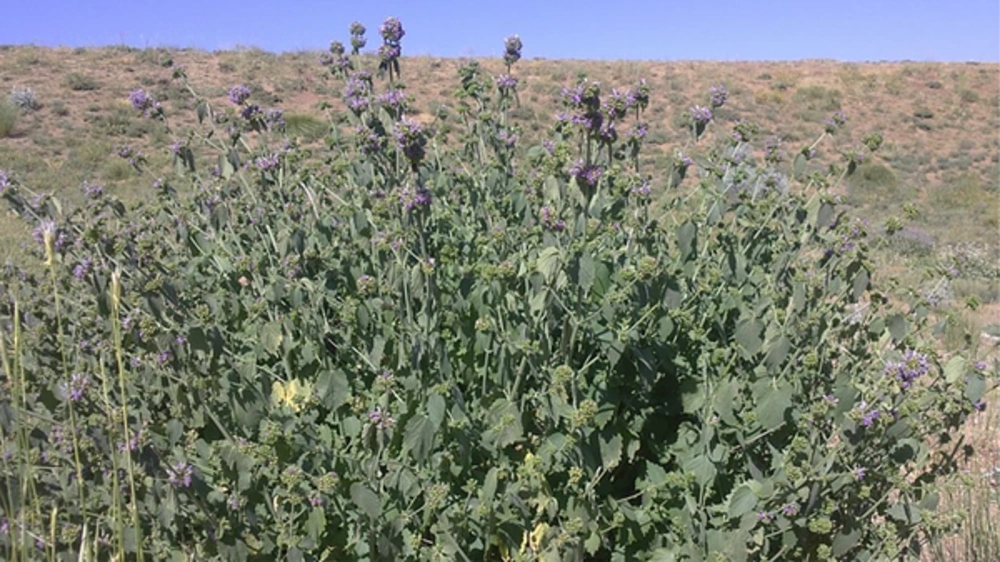
Figure 1.
Photograph of Ballota nigra subsp. kurdica Taken at the Time of Collection
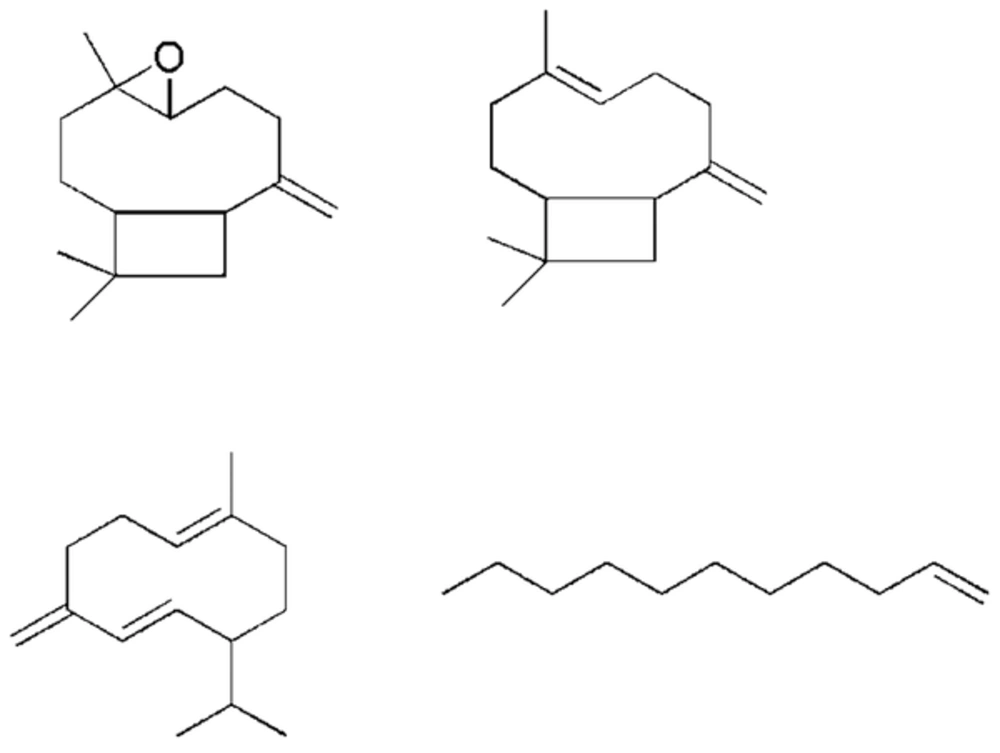
Figure 2.
The Structure of Major Compounds of the Essential Oil of Ballota nigra subsp. Kurdica
2. Objectives
The purpose of this study was to determine the chemical composition and antimicrobial properties of essential oils isolated from Ballota nigra subsp. kurdica.
3. Methods
3.1. Plant Material
In the present survey, the flowering aerial parts of B. nigra subsp. kurdica were collected in June 2013 from the Saral region in Divandarreh, Kurdistan province, located in western Iran. Voucher specimens were deposited at the Herbarium of the Research Institute of Forests and Rangeland Research by Hossein Maroufi, Sanadaj, Iran, under voucher no. (8515).
The flowers were air-dried in darkness at room temperature.
3.2. Essential Oil Isolation
The essential oil was extracted by hydrodistillation of air-dried flowers using a Clevenger-type apparatus for 3 hours. The essential oil was subsequently dehydrated via anhydrous sodium sulfate and stored in tightly closed dark vials at +4°C until injection.
3.3. Analysis of the Essential Oils
GC analysis was performed using a Thermoquest gas chromatograph with a flame ionization detector (FID). The analysis was performed using a fused silica capillary DB-5 column (60 m × 0.25 mm i.d.; film thickness 0.25 µm). Detector and injector temperatures were 250°C and 300°C respectively, and the carrier gas was nitrogen with a flow rate of 1 ml/min-1. The oven temperature was programmed from 60°C - 250°C at the rate of 5°C per minutes, and then was held isothermally for 10 minutes. The split ratio was 1/50. GC-MS analysis was performed using a Thermoquest-Finnigan gas chromatograph equipped with the above-mentioned column and coupled to a TRACE mass quadrapole analyzer. The analysis was carried out using a fused silica capillary DB-5 column (60 m × 0.25 mm i.d.; film thickness 0.25 µm). Helium was used as the carrier gas with an ionization voltage of 70 eV. Temperature programming conditions were as given for GC. Ion source and interface temperatures were 200°C and 250°C, respectively. Mass range was from m/z 43 - 456. The constituents of the essential oil were identified by calculation of their retention indices under the same chromatographic conditions for n-alkanes (C6 - C24) and the oil on a DB-5 column. Compounds were identified by comparing their mass spectra with those of the library or with authentic compounds, and for confirmed compounds, their GC retention indices were compared with authentic compounds or with those reported in the literature (12, 13). For quantification purposes, the relative area percentages obtained by GC-FID were used without the use of correction factors.
3.4. Antimicrobial Activity Assay
The antibacterial activity of the essential oil was determined by the disk diffusion method. Briefly, 0.1 ml of a suspension of the test microorganisms (108 cells ml-1) was spread on Mueller-Hinton Agar plates. Sterile 6 mm disks, each containing 10 µl of the essential oil, were placed on the microbial lawns. The plates were incubated at 37°C for 24 hours. The diameters of the zones of inhibition were measured and are reported in mm. Triplicate tests were performed in all experiments. The MIC values were determined using a broth microdilution assay. Serial two-fold dilutions of the essential oil were made in a Mueller–Hinton Broth containing 0.5% Tween 80. Fresh microbial suspensions prepared from overnight-grown cultures in the same media were added to give a final concentration of 5 × 10⁵ organisms ml-1. Controls of medium with microorganisms or the essential oil alone were included. Tetracycline and gentamicin were used as positive controls for Gram-positive and Gram-negative bacteria, respectively. The MIC of the essential oil and powdered antibiotics was defined as the lowest concentration that inhibited growth of microorganisms detected visually.
4. Results
4.1. Chemical Composition of the Essential Oil
Analytical results of the essential oil are shown in Table 1, along with the retention indices of the identified compounds, where all constituents are listed in order of their elution from the DB-5 column.
Table 1.
Composition of the Essential Oil of Ballota nigra subsp. kurdica From Western Iran (Identification Method: RI, MS)a
| Compounds | RI | % | Compounds | RI | % |
|---|---|---|---|---|---|
| n-Decane | 999 | 1.63 | trans-β- Farnesene | 1458 | 2.5 |
| Limonene | 1024 | 0.4 | Germacrene-D | 1484 | 7.64 |
| 1-Undecene | 1092 | 4.20 | β-Selinene | 1489 | 0.68 |
| Linalool | 1098 | 0.51 | Bicyclogermacrene | 1500 | 0.86 |
| n-Nonanal | 1108 | 0.55 | β-Bisabolene | 1505 | 1.01 |
| Camphor | 1143 | 0.2 | cis-α-Bisabolene | 1532 | 0.45 |
| Borneol | 1165 | 0.4 | Isoaromadendrene epoxide | 1579 | 3.25 |
| Tridecane-1 | 1291 | 2.81 | Caryophyllene oxide | 1582 | 39.43 |
| β-Bourbonene | 1387 | 0.52 | Virdiflorol | 1590 | 0.59 |
| trans-Caryophyllene | 1417 | 24.88 | Humulene epoxide | 1608 | 1.69 |
| α-Humulene | 1452 | 2.2 | Trans-Phytol | 1949 | 1.66 |
| Total | 98.06 |
aRI; retention indices relative to C8-C28 n-alkanes on DB-5. The components are listed in order of elution from the DB-5 column.
A total of 22 components were detected in the extracted essential oil, which constituted more than 98% of total essential oil. The 6 major compounds of the oil were caryophyllene oxide (39.43%), trans-caryophyllene (24.88%), germacrene D (7.64%), 1-undecene (4.2%), isoaromadendrene epoxide (3.25%), and tridecane-1 (2.81%). The classification of identified compounds showed that oxygenated sesquieterpene (45.8%) constituted the major part of the oil, followed by sesquiterpens hydrocarbons (41.0%), alkanes (8.8%), oxygenated diterpenes (1.7%), oxygenated monoterpenes (1.13%), and monoterpenes (0.4%).
4.2. Antimicrobial Activity of the Essential Oil
In vitro antibacterial activity of the essential oil was evaluated against six Gram-positive and Gram-negative bacteria (Staphylococcus aureus ATCC 25923, Enterococcus faecalis ATCC 15753, Bacillus subtilis ATCC 9372, Klebsiella pneumonia ATCC 3583, Pseudomonas aeruginosa ATCC 27852, and Escherichia coli ATCC 9763). The results of the antibacterial assay of the essential oil by the disc diffusion method and the MIC values indicated that the essential oil exhibited moderate to high antibacterial activity, especially against E. faecalis and S. aureus with a MIC value of 3.75mg ml-1 (Table 2).
Table 2.
Antibacterial Activity of the Essential Oil of Ballota nigra subsp. kurdicaa
| Microorganism | Essential Oil | Tetracycline, 30 μg disc-1 | Gentamicin, 30 μg disc-1 | |||
|---|---|---|---|---|---|---|
| IZb | MICc | IZ | MICc | IZ | MICc | |
| S. aureus | 22 ± 0.6 | 3.75 | 20 ± 0.4 | 3.2 | - | nt |
| E. faecalis | 23 ± 0.4 | 3.75 | 9 ± 0.3 | 6.5 | - | nt |
| B. subtilis | 15 ± 0.3 | 15 | 21 ± 0.7 | 3.2 | - | nt |
| K. pneumoniae | 10 ± 0.3 | > 10 | - | nt | 20 ± 0.8 | 3.3 |
| P. aeruginosa | 13 ± 0.4 | 15 | - | nt | 12 ± 0.5 | 6.4 |
| E. coli | 17 ± 0.5 | 7.5 | - | nt | 23 ± 0.6 | 3.2 |
aValues are expressed as mean ± SD.
bZone of inhibition in mm includes diameter of the disc 6 mm.
cMinimum inhibitory concentration (standard) values as mg ml-1, (-) inactive, (7 - 13) moderately active, (> 14) highly active; nt, not tested.
5. Discussion
The essential oil compositions of B. nigra subsp. kurdica showed a clear difference with what has been reported for B. nigra in other studies. The major compounds of the essential oils of Ballota nigra subsp. kurdica were caryophyllene oxide (39.43%), trans-caryophyllene (24.88%), germacrene D (7.64%), 1-undecene (4.2%), isoaromadendrene epoxide (3.25%), and tridecane-1 (2.81%). In B. nigra from northern Iran, the major components of the essential oil were caryophyllene oxide (7.9%), epi-α-muurolol (6.6%), δ-cadinene (6.5%), and α -cadinol (6.3%), which included 35 sesquiterpenoids (89.9%), one diterpenoid (0.1%), and 6 nonterpenoids (5.4%) (14). In B. nigra subsp. foetida, caryophyllene (25.1%) and germacrene D (24.2%) were the major compounds, while viridoflorol was absent in the essential oil and contained a higher percentage of sesquiterpenes hydrocarbons (60.3%) and two oxygenated sesquiterpenes, including trans-nerolidol (0.3%) and caryophyllene oxide (4.2%) (15). In B. nigra subsp. anatolica, the major components were germacrene D (18.1%), nerolidol-epoxy-acetate (15.4%), sclareol oxide (12.1%), linalyl acetate (11.5%), and β-caryophyllene (10.5%), which the oil was consisted of oxygenated sesquiterpenes (41.2%), sesquiterpenes hydrocarbons (32.5%), and oxygenated monoterpenes (18.1%) (16). Our results show that the essential oil compositions of B. nigra subsp. kurdica differ compared with other reported studies for B. nigra. The results indicate that caryophyllene oxide (39.43 %) and trans-caryophyllene (24.88 %) are two major compounds of the essential oil of Ballota nigra sp. kurdica, which constitute about 65% of the total essential oils. Caryophyllene is known for its anti-inflammatory, local anaesthetic, antifungal properties, and also its anticancer activity (17), hence based on the higher concentration of caryophyllene or its derivatives in Ballota nigra subsp. kurdica, it could be considered a good remedy source for treating related infections in the future.
Our results by the disc diffusion method and the MIC showed in vitro antibacterial activity of the essential oil against both Gram-positive and Gram-negative bacteria, including Staphylococcus aureus, Enterococcus faecalis, Bacillus subtilis, Klebsiella pneumonia, Pseudomonas aeruginosa, and Escherichia coli. The essential oil of Ballota nigra subsp. kurdica exhibited moderate to high antibacterial activity, especially against E. faecalis and S. aureus, both of which are important for human health (Table 2). E. faecalis is a frequent cause of many serious human infections, including urinary tract infections, endocarditis, bacteremia, and wound infections (18). S. aureus is a common cause of skin infections (e.g., abscesses), respiratory infections (e.g., sinusitis), and food poisoning. Based on the high antimicrobial activities of the essential oil of Ballota nigra subsp. kurdica against these two bacteria, it could be a good candidate for further studies aimed at overcoming related infections in humans or aimed at preserving food. Consistent with our results, the antimicrobial activities of different species of Ballota have been reported, e. g., B. nigra subsp. foetida, Ballotapseudodictamnus, and Ballotasaxatilis (19-22). Based on the antimicrobial activity of B. nigra subsp. kurdica essential oil and its new chemical composition, it would be promising to use it as a new source for identification of biologically active compounds. To our knowledge, this study can be considered the first detailed document on the phytochemical study and biological activities of B. nigra subsp. kurdica. Based on the antimicrobial activity of B. nigra subsp. kurdica essential oil, it can be considered a natural antimicrobial agent in food preservation.
In conclusion, we evaluated the chemical composition and antimicrobial activity of the essential oils of the flowers in Ballota nigra subsp. kurdica for the first time. We identified 22 compounds which were more than 98% of the total essential oil. The results show that the chemical composition of Ballota nigra subsp. kurdica differs from those reported for other B. nigra subspecies and showed moderate to high antimicrobial activity. Our results provide evidence for the potential of B. nigra subsp. kurdica essential oil as a natural antimicrobial agent to treat infections or to preserve food in the near future.