1. Background
Diagnosis and intervention in patients with acute ischemic stroke at emergency departments is vital to improve the outcome of patients. Studies have shown that stroke is the third leading cause of death after heart disease and cancer, and deaths occur every 3 to 4 minutes (1). According to the world health organization (WHO), a new case of stroke is diagnosed every 5 seconds. About 15 million cases of stroke are diagnosed each year and of these, 5 million die and five million develop permanent disabilities and become a social and family burden (2). The incidence of stroke has been studied in Iran and 103 in every 100 000 people has been reported (3). Several risk factors have been found for stroke, the most important of which include older age (75 to 84 years), high blood pressure, smoking, diabetes mellitus, increased cholesterol, increased body mass index (BMI), alcohol consumption, hyperhomocysteinemia, and vascular diseases (4). In order to definitively diagnose stroke, evaluations should be done quickly that include imaging (the most important test that must be performed within less than 24 hours after admission), blood tests, chest radiography, electrocardiography, and echocardiography (5).
All patients with stroke must be immediately transferred and treated at emergency centers. A timely referral could cause a reduction of 20% in morbidity and mortality of these patients (6). According to the cause of stroke, different therapies could be considered for this disease. The most commonly used drugs in these patients are thrombolytic medications, such as tissue plasminogen activator of recombinant (rtPA) and aspirin, to prevent stroke recurrence (6). However, in developing countries, such as Iran, the use of RtPA has been limited and mostly aspirin is used (7). Aspirin at a dose of 160 to 300 mg causes a reduction in morbidity and mortality of acute ischemic stroke, up to 48 hours after onset of stroke symptoms. However, the efficacy of aspirin has not been sufficient according to some studies; its consumption in patients with ischemic hemorrhagic could harm the patients (8). Minocycline is a tetracycline antibiotic that has anti-inflammatory, anti-apoptotic, and protective effects on nerve properties of cerebral ischemia models and neurodegenerative diseases. Studies have been conducted on the effectiveness of the drug in the recovery of patients with stroke, yet their results need further studies (9). Lamp et al. showed that minocycline caused a significant decrease in NIHSS (10). Kohler et al. showed that minocycline in stroke is a drug safe but not effective treatment option (11). Therefore, the purpose of this clinical trial was to evaluate the efficacy of minocycline in the recovery of patients with acute ischemic stroke.
2. Methods
2.1. Study Design
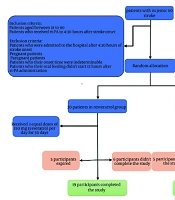
This double blind clinical trial was carried out on 42 patients with a history of stroke, referred to Imam and Golestan hospitals, Iran. The patients were clinically examined and evaluated by a physician. Patients’ vital signs were recorded in their files. Inclusion criteria included at least 18 years of age, clinical and radiological signs of ischemic stroke, and national institutes of health stroke scale (NIHSS) score of greater than 5. Exclusion criteria were a hemorrhagic stroke, evidence of cerebrovascular disease, brain tumor, demyelinating disease, inflammatory brain diseases, hypersensitivity to tetracycline, a history of acute or chronic kidney failure, swallowing problem, a history of debilitating disease of neurological patients, who were candidates for anticoagulant therapy, and stroke 24 hours ago. This study was approved by the ethical committee of Ahvaz Jundishapur University of Medical Sciences. All patients were provided with written informed consent forms and enrolled in this study.
2.2. Therapeutic Intervention
After referral of each patient to the emergency department, according to the above explanation, if they qualified for entering the study, an NIHSS was immediately taken and recorded. Then, routine treatment of stroke, including aspirin, was prescribed. The patients were divided to different treatment groups by the random back-off technique. In order to blind the study, without the knowledge of the drug and patient assignment to groups, the examiner performed exams and recorded the information. In the study group, in addition to aspirin, at a dose of 200 mg, oral minocycline was administered daily for 5 days. While the control group was given aspirin plus placebo. Next, assessment of the condition of patients was performed by measuring the NIHSS, 90 days after the intervention. If the patient showed side effects in response to minocycline, they were excluded and side effects were treated.
2.3. Statistical Analysis
With respect to 90% power, to detect a correlation as small as 0.25, with a type I error of 0.05, at least 42 samples were needed. At first, obtained data were analyzed by descriptive indicators, and then to compare quantities between the 2 groups, according to data normality, t-test, and Mann-Whitney was used. All statistical analyzes were performed using SPSS version 19. A significance level of less than 0.05 was considered as significant.
3. Results
In the group treated with minocycline (the case group), 1 patient due to hemorrhagic infarct during hospitalization, 1 patient due to a reaction to tetracycline, and 1 patient due to lack of cooperation, were excluded, and in total, 18 patients (55.5% female) were evaluated. Also, in the control group, 2 patients because of lack of referral and 1 patient because of death during the study were excluded. Finally, 18 patients (51.1% female) were studied. The mean age of the patients was 68 years. The gender distribution and mean age in both groups did not show statistically significant differences. In addition, records of the patients showed that the prevalence of hypertension, hyperlipidemia, and smoking in both groups was not statistically different. However, the prevalence of diabetes in patients receiving minocycline was significantly higher (Table 1).
Table 1.
Demographic and Clinical Characteristics of Cases and Controls
| Variables | Cases, n = 18 | Controls, n = 18 | P Value |
|---|---|---|---|
| Age | 69 ± 10.3 | 68 ± 10.3 | NS |
| Gender | |||
| Male | 8 (44.44%) | 7 (38.89%) | NS |
| Female | 10 (55.56%) | 11 (51.1%) | |
| Hypertension | 9 (50%) | 10 (55.56%) | NS (P = 0.108) |
| Hyperlipidemia | 5 (27.8%) | 6 (33.33%) | NS (P = 0.721) |
| Smoking | 6 (33.33%) | 4 (22.22%) | NS (P = 0.46) |
| Diabetes | 9 (50%) | 3 (16.67%) | P = 0.036 |
Abbreviation: NS; non significant.
The NIHSS before treatment in the case and control groups was respectively 9.5 and 10, the difference of which was not statistically significant. This rate at the end of the study (90 days after treatment) in the case group reached 6.1 and in the control group it reached 7.33. The reduction of NIHSS in both groups was statistically significant. Moreover, the reduction in the group receiving minocycline was more than the control group, yet this reduction was not statistically significant (P = 0.067) (Table 2).
Table 2.
Comparison of NIHSS in Cases and Controls, Before and After the Intervention
| NIHSS | Cases, n = 18 | Control, n = 18 | P Value |
|---|---|---|---|
| Before intervention (mean ± SD) | 9.55 ± 2.2 | 10 ± 2.1 | 0.548 |
| After 90 days (mean ± SD) | 6.11 ± 2.05 | 7.33 ± 1.8 | 0.067 |
Abbreviation: NIHSS;the national institutes of health stroke scale.
4. Discussion
Acute ischemic stroke is one of the most common causes of death and disability in patients, being a large burden for communities. Accurate and timely diagnosis and management of these patients in order to prevent progression and recurrence of the disease is very important (1-3). Despite advances in the treatment of patients, there are still many obstacles on the way to stop the progression of the disease and its treatment (8). Minocycline has been proposed recently as an effective drug in the treatment of neurodegenerative diseases, yet its role in stroke is still not well known (9). Therefore, the study examined the effects of minocycline as a complementary therapy alongside conventional therapies in patients with acute ischemic stroke.
The findings of this study show that minocycline after 90 days caused a significant decrease in NIHSS in patients with acute ischemic stroke. Similarly, 6 to 24 hours after onset of stroke, Lamp et al. prescribed a dose of 200 mg of minocycline per day for 5 days and evaluated its effect in reducing NIHSS compared to placebo in 151 patients (77 control vs. 71 cases). They showed that patients taking minocycline showed a significant decrease in NIHSS (10). This is despite the fact that in a pilot study, Kohler et al. studied the effect of an intravenous dose of minocycline 100 mg over 24 hours after stroke and every 12 hours, consecutively in the stroke patients, and showed that minocycline was a safe drug but not effective (11). It seems that because the dose used and route of administration in this study was different with the current study, this difference is justified. In addition, Yang et al. and Dong et al. have proved experimentally the effects of minocycline in the recovery of hypoxic brain damage (12, 13). In these studies, it has been shown that minocycline, through inhibition of HIF1A-dependent cellular response, maintained through the integrity of the blood-barrier brain through a SIRT-3/PHD-2-dependent pathway, could improve the damage caused by ischemia induction of autophagy (12, 13).
Furthermore, the findings of this study showed that while the reduction in NIHSS, in patients receiving minocycline along with aspirin was more than the control group (receiving aspirin alone), this difference was not statistically significant. In a similar study of 43 patients with stroke, Amiri Nikpour et al. investigated a 200-mg dose of minocycline along with 100 mg of aspirin compared with aspirin alone in changes of NIHSS, and in the studied patients during 90 days, NIHSS scores in patients treated with minocycline after 90 days was significantly lower than the control group (14). In addition, in a clinical trial, Srivastava et al. evaluated minocycline along with standard treatments (23 patients) compared with placebo (vitamin B) in patients with stroke. In this study, it was found that the use of minocycline alongside conventional treatments caused a significant reduction in NIHSS at 90 days compared with placebo (15). It seems that the difference between the current results with the results of previous studies is in the number of samples investigated, yet due to slight differences, this probability is also weak. Therefore, a study with a high sample size could confirm the current findings. In addition, the high prevalence rate of diabetes in the control group could be a confounding factor in reducing the effects of the drug in this study.
Overall, the findings of this study show that minocycline may be useful as a complementary therapy in improving the clinical condition of patients with acute ischemic stroke. Low sample size and lack of evaluation of other factors regarding the brain status of patients are among the limitations of this study. Therefore, it is suggested for future studies to increase their sample size and also consider other factors.