
1. Background
Sawmilling is one of the most traditional occupations in Nigeria (1). The primary wood products produced, used, and marketed in Nigeria are plywood, sawn wood, newsprint, particle board, and paper materials (2). A variety of human actions in sawmilling processes accentuates worker exposure to higher levels of risk (3). Noise pollution and unfavorable weather are physical threats, while mechanical hazards like being struck by or entangled in machinery and chemical hazards such as breathing in wood dust and chlorophenols are chemical threats (4). Cancer and respiratory problems are two negative effects associated with wood dust exposure. Wood dust's health effects include dermatitis, eye irritation, nose and throat irritation, and pulmonary system harm (5-7). Besides being stifling and restricted, the ambient air that sawmill workers breathed during work is full of particulates, making breathing difficult (8). According to several authors (9-11), exposure to wood dust from various wood species causes respiratory problems. In Ile-Ife, Nigeria, workers exposed to wood dust had a higher prevalence of respiratory symptoms (chest pain, sputum production), conjunctivitis, hearing loss, and skin irritation than the general population. Ige and Onadeko (12) discovered that employees exposed to wood dust have higher respiratory symptoms, eye and nose irritations, and skin inflammation rates than the control group in a study conducted in Oyo State, Nigeria.
Verifiable reports have shown that sawmillers in third-world countries are still highly susceptible to occupational dangers, even if some professions have created cutting-edge facilities to lessen workers' vulnerability to taxing activities (13). The Akure metropolis's sawmill industry consists of several modestly sized, privately owned sawmills without occupational health and safety regulations. There is no published data or documented information on the safety procedures and occupational risks/injuries among these workers.
2. Objectives
This study aims to assess employees' awareness of safety protocols and possible workplace risks and injuries to pinpoint the health issues (both respiratory and non-respiratory) that these workers experience.
3. Methods
3.1. Population
The cross-sectional study was conducted on saw millers in Akure metropolis, Akure Nigeria, who were from different marketing points: Ajikowo (85), Agagu Road (75), Ondo Road (135), Ondo Road area (125), Igbatoro Road (115), Oda Road (120), Cultural Center road (95), and Oba Ile road (50). Among the 800 saw millers, 304 participants were selected using multistage sampling. The exclusion criteria were passers-by and buyers of wood.
3.2. Ethical Considerations
The Health Research and Ethics Committee of the College of Health Sciences, Osun State University, Osogbo, Nigeria, accepted the protocol and granted ethical clearance for the study, which the Declaration of Helsinki conducted. In addition, all willing participants verbally agreed to participate in the study after being informed about the research. Those who gave their consent were interviewed after signing or thumbprinting in the case of illiterate participants. The respondents' confidentiality and privacy were strictly respected.
3.3. Research Instrument
The data were collected using a pre-tested with a Cronbach alpha score of 0.89 semi-structured questionnaires, divided into four segments viz: Section A – respondents’ socio-demographic characteristics. Section B – occupational history and exposure among respondents. Section C – respondents' knowledge of safety/protective devices and health hazards/injuries in the sawmilling industry. Section D deals with respondents' occupational health problems in the last month.
3.4. Anthropometric Measurements
The anthropometric measurements were taken using a Seca electronic bathroom weighing scale measuring weight in kilograms (kg) and a customized stadiometer measuring height. The weighing scale was standardized using weights every morning before measurements were taken, and the stadiometer was calibrated using a GPM anthropometer. The body mass index (BMI) was computed as body weight in kilograms divided by height in meters squared (kg/m2). An inelastic dressmaker’s tape was used to measure waist and hip circumferences.
3.5. Blood Pressure and Pulse Rate Measurement
The blood pressure (BP) was measured in millimeters of mercury (mmHg) and reported to the nearest 2 mmHg using a validated automated blood pressure monitor (Omron M6 Comfort; Omron Corporation). This equipment automatically displays the participants' pulse rate (PR) during the BP measurement process.
3.6. Respiratory Status Assessment
A standard field spirometer (SpirobankG MIR Model number: SNA23-048.06769), calibrated from 0.10 to 9.99 L and measured to the nearest 0.01 L, was employed to calculate the forced vital capacity (FVC) and forced expiratory volume (FEV1) in the first second. The forced expiratory ratio (FER), a calculated ratio expressed in %, was derived by dividing each participant’s FEV1 by their FVC to determine the possible presence of a restrictive or obstructive lung disease. The instrument was pre-calibrated and programmed to measure FEV1 and FVC before usage.
3.7. Data Management and Analysis
The surveys were carefully reviewed for accuracy following data collection. Version 23 of IBM statistical product and service solutions was used to analyze the collected data manually. Frequency tables, percentages, charts, and descriptive statistics (mean and standard deviation) were used to summarize the analyzed data. Inferential statistics were utilized for the bivariate analysis of the gathered data, namely chi-square (χ2). One-tailed P < 0.05 was used as the threshold for statistical significance for all inferential analyses.
4. Results
Following administration, completion, retrieval, and analysis of all 304 surveys, a 100% response rate was obtained.
4.1. Socio-demographic Characteristics of Respondents
The average age of the respondents was 42.0 ± 2.8 years, with the bulk being male — 262 (86.2%) and falling within the 40 - 59 age range. The majority 275 (90.5%) of the respondents were married, and 159 (52.3%) were Christians. Of the interviewees, 62 (20.4%) had postsecondary education, and 117 (45.1%) had only completed secondary school. Nearly 300 (98.7%) respondents were from Akure South Local Government Area of Ondo State, Nigeria. Table 1.
Table 1.
Respondents' Socio-demographic Characteristics
| Variables | No. (%) |
|---|---|
| Gender | |
| Male | 262 (86.2) |
| Female | 42 (13.8) |
| Total | 304 (100.0) |
| Age group (y) | |
| 20 - 39 | 113 (37.2) |
| 40 - 59 | 181 (59.5) |
| 60 and above | 10 (3.3) |
| Total | 304 (100.0) |
| Marital status | |
| Single | 20 (6.6) |
| Married | 275 (90.5) |
| Separated/divorced | 7 (2.3) |
| Widowed | 2 (0.7) |
| Total | 304 (100.0) |
| Religion | |
| Christianity | 159 (52.3) |
| Islam | 145 (47.7) |
| Total | 304 (100.0) |
| Local govt area | |
| Afijio LG Oyo State | 1 (0.3) |
| Akure South | 300 (98.7) |
| Akoko South West | 1 (0.3) |
| Ado Ekiti | 2 (0.7) |
| Total | 304 (100.0) |
| Level of education | |
| Primary and below | 105 (34.5) |
| Secondary education | 137 (45.1) |
| Tertiary education | 62 (20.4) |
| Total | 304 (100.0) |
4.2. Occupational History and Exposure of Respondents
In Table 2, barely more than half, 159 (52.3%) sawmillers worked more than 9 hours a day, and the majority, 296 (97.4%), worked more than five days a week. Most 237 (78%) of the respondents are involved in operation activities. The majority, 194 (63.8%) of the study participants received official tutelage for the job, and 296 (78.3%) were not engaged in any other time of job. About 175 (57.6%) of the respondents were currently smoking, and 159 (52.3%) were passive smokers. The following proportions of the respondents were exposed to various sources of smoke, including wood fire smoke – 99 (32.6%), coal fire smoke – 56 (18.4%), sawdust smoke – 286 (94.1%), and kerosene stove smoke – 294 (96.7%).
Table 2.
Occupational History and Exposure Among Respondents
| Variables | No. (%) |
|---|---|
| Working hours per day | |
| Less than 9 hours | 145 (47.7) |
| Above 9 hours | 159 (52.3) |
| Total | 304 (100.0) |
| Days worked per week | |
| Less than five days | 8 (2.6) |
| Above five days | 296 (97.4) |
| Total | 304 (100.0) |
| Category of Job | |
| Operation aspect | 237 (78.0) |
| Administrative aspect | 67 (22.0) |
| Total | 304 (100.0) |
| Were you formally trained for this job you are doing? | |
| Yes | 194 (63.8) |
| No | 110 (32) |
| Total | 304 (100.0) |
| Have you ever done any type of job before? | |
| Yes | 66 (21.7) |
| No | 238 (78.3) |
| Total | 304 (100.0) |
| Are you presently engaged in any other (part-time) job apart from this one you are doing? | |
| Yes | 8 (2.6) |
| No | 296 (97.4) |
| Total | 304 (100.0) |
| Are you currently smoking? | |
| Yes | 175 (57.6) |
| No | 129 (42.4) |
| Total | 304 (100.0) |
| Are you a past smoker? | |
| Yes | 38 (12.5) |
| No | 266 (87.5) |
| Total | 304 (100.0) |
| Are you a passive smoker? | |
| Yes | 159 (52.3) |
| No | 145 (47.7) |
| Total | 304 (100.0) |
| Are you exposed to wood dust smoke at work? | |
| Yes | 99 (32.6) |
| No | 205 (67.4) |
| Total | 304 (100.0) |
| Are you exposed to coal fire smoke? | |
| Yes | 56 (18.4) |
| No | 248 (81.6) |
| Total | 304 (100.0) |
| Are you exposed to sawdust smoke? | |
| Yes | 286 (94.1) |
| No | 18 (5.9) |
| Total | 304 (100.0) |
| Are you exposed to kerosene stove smoke? | |
| Yes | 294 (96.7) |
| No | 10 (3.3) |
| Total | 304 (100.0) |
4.3. Knowledge of Safety Practices and Occupational Hazards/Injuries Among Respondents
As shown in Table 3, 100 (32.9%) of the respondents have attended training on safety before, and the majority claimed that their training source is from the Ministry of Health. The majority, 221 (72.7%), can identify personal protective equipment (PPE), but only 104 (34.5%) use it. Reasons given by respondents for non-usage of PPE include non-availability 48 (24.1%), not necessary 57 (28.6%), inconvenient 5 (2.5%), forgetfulness 6 (3.1%), and other reason 83 (41.7%). Some of the common workplace hazards reported by respondents were noise 273 (89.8%), animal/insect bite 264 (86.8%), manual lifting of objects 221 (72.7%), heat 192 (63.2%), and wood dust and smoke 192 (63.2%). The respondents reported the following as some of the common injuries in the workplace: Bruises 292 (96.1%), lacerations 281 (92.4%), hearing impairment 281 (92.4%), fracture 262 (86.2%), electric shock 250 (82.2%), fainting attack 232 (76.3%), and burns 229 (75.3%). Some of the common respiratory and non-respiratory problems experienced in the workplace reported by the respondents were cough 285 (93.8%), phlegm production 288 (94.7%), chest pain 280 (92.1%), dyspnoea 249 (81.9%), skin problem 268 (88.2%), and red eye 271 (89.1%). According to Figure 1, 172 (57.0%) respondents have good erudition of workplace safety procedures and health risks/injuries, while 132 (44.0%) do not know enough.
Table 3.
Knowledge of Safety Practices and Workplace Hazards/Injuries Among Respondents
| Variables | No. (%) |
|---|---|
| Have you attended any training on safety before? | |
| Yes | 100 (32.9) |
| No | 204 (67.1) |
| Total | 304 (100.0) |
| If yes, above. Type of training and organizer. | |
| Preventing health hazards by the Ministry of Health. | 65 (65.0) |
| Effect of industrial gadgets by health agencies. | 14 (14.0) |
| Training on the importance of safety by medical personnel | 21 (21.0) |
| Total | 100 (100.0) |
| How many such training have you attended? | |
| 2 | 16 (5.3) |
| 5 | 36 (11.8) |
| 4 | 40 (13.2) |
| 3 | 4 (1.3) |
| 6 | 4 (1.3) |
| Total | 100 (100.0) |
| I can identify PPE when I see one. | |
| Yes | 221 (72.7) |
| No | 83 (27.3) |
| Total | 304 (100.0) |
| Usage of PPEs | |
| Yes | 105 (34.5) |
| No | 199 (65.5) |
| Total | 304 (100.0) |
| If no, state the reason for not using safety gadgets. | |
| Not available | 48 (24.1) |
| Not necessary | 57 (28.6) |
| Not convenient | 5 (2.5) |
| Forgetfulness | 6 (3.1) |
| Other reason | 83 (41.7) |
| Total | 199 (100.0) |
| Common hazards in the workplace | |
| Noise | 273 (89.8) |
| Heat | 192 (63.2) |
| Chemical | 121 (39.8) |
| Wood dust and smoke | 192 (63.2) |
| Fire | 128 (42.1) |
| Machine | 174 (57.2) |
| Electricity | 150 (49.3) |
| Manual lifting of objects | 221 (72.7) |
| Animal/insect bite | 264 (86.8) |
| Common injuries in the workplace | |
| Bruises | 292 (96.1) |
| Sprain | 280 (92.1) |
| Laceration | 281 (92.4) |
| Fracture | 262 (86.2) |
| Fainting attack | 232 (76.3) |
| Burns | 229 (75.3) |
| Electric shock | 250 (82.2) |
| Hearing impairment | 281 (92.4) |
| Common respiratory and non-respiratory problems in the workplace | |
| Cough | 285 (93.8) |
| Phlegm production | 288 (94.7) |
| Wheeze | 284 (93.4) |
| Chest pain | 280 (92.1) |
| Chest tightness | 252 (82.9) |
| Shortness of breath | 250 (82.2) |
| Dyspnoea | 249 (81.9) |
| Sneezing/running nose | 279 (91.8) |
| Skin problem | 268 (88.2) |
| Eyes problem/red eye | 271 (89.1) |
Abbreviation: PPE, personal protective equipment.
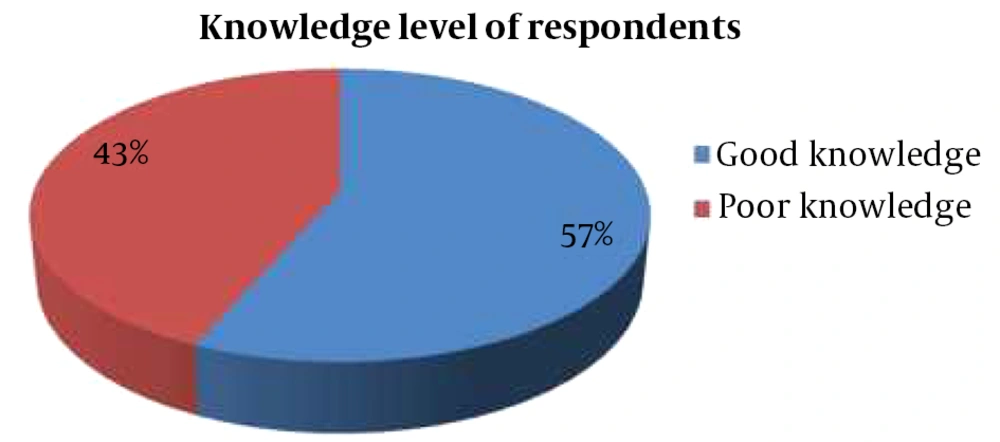
Figure 1.
Knowledge of respondents on safety/protective devices and occupational hazards/injuries in sawmilling industry
4.4. Occupational Health Problems Suffered by Respondents in the Last One Month
Respondents reported having suffered from some of the following common respiratory problems in the last month: Cough 158 (52.0%), phlegm production 149 (49.0%), wheezing 114 (37.5%), chest pain 63 (20.7%), and running nose 154 (50.7%) while non-respiratory problems encountered in the last one month were skin problem 100 (32.9%) and eyes problem 111 (36.5%). Other various occupational health challenges experienced by the respondents in the last month were sprain 18 (5.9%), bruises 108 (35.5%), lacerations 4 (1.3%), fractures 14 (4.6%), heat exhaustion 4 (1.3%), electric shock 3 (1.0%), and fainting attack 8 (2.6%) (Table 4). Of 304 respondents, 130 (43%) had previously suffered one type of illness or the other at work, while 174 (57%) had not (Figure 2).
Table 4.
Occupational Health Problems Suffered by Respondents in the Last One Month
| Variables | No. (%) |
|---|---|
| Respiratory problems | |
| Cough | 158 (52.0) |
| Phlegm production | 149 (49.0) |
| Wheeze | 114 (37.5) |
| Chest pain | 63 (20.7) |
| Chest tightness | 46 (15.1) |
| Shortness of breath | 47 (15.5) |
| Dyspnoea | 55 (18.1) |
| Sneezing/running nose | 154 (50.7) |
| Non-respiratory problems | |
| Skin problem | 100 (32.9) |
| Eyes problem/red eye | 111 (36.5) |
| Suffered from sprain | |
| Yes | 18 (5.9) |
| No | 286 (94.1) |
| Total | 304 (100.0) |
| Suffered from bruises | |
| Yes | 108 (35.5) |
| No | 196 (64.5) |
| Total | 304 (100.0) |
| Suffered from laceration | |
| Yes | 4 (1.3) |
| No | 300 (98.7) |
| Total | 304 (100.0) |
| Suffered from fracture | |
| Yes | 14 (4.6) |
| No | 290 (95.4) |
| Total | 304 (100.0) |
| Suffered from heat exhaustion | |
| Yes | 4 (1.3) |
| No | 300 (98.7) |
| Total | 304 (100.0) |
| Suffered from electric shock | |
| Yes | 3 (1.0) |
| No | 301 (99.0) |
| Total | 304 (100.0) |
| Suffered from fainting attack | |
| Yes | 8 (2.6) |
| No | 296 (97.4) |
| Total | 304 (100.0) |
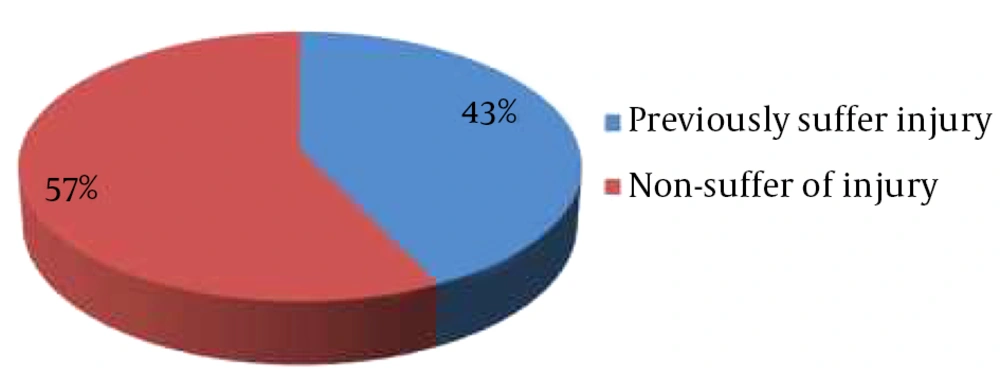
Figure 2.
Summarized score on injury suffered by respondents
4.5. Anthropometric Measurement and Vital Signs of Respondents
Table 5 depicts the respondents' BMI, blood pressure, pulse rate, and respiratory status measurements. A larger proportion of the respondents are obese 141 (46.4%) and overweight 131 (43.1%) from the BMI readings. The majority, 294 (96.7%) of the respondents have normal blood pressure, while a few, 10 (3.3%), are hypertensive. Likewise, most 281 (92.4%) respondents have normal pulse rate. Barely more than one-third, 119 (39.1%) of the respondents have a FER (%) lower than 70%, while 111 (36.5%) have respiratory rates outside the normal range (12 - 18 breaths per minute).
Table 5.
Parameter Measurements of Body Mass Index, Blood Pressure and Respiratory Function Test
| Variables | No. (%) |
|---|---|
| Using BMI | |
| Underweight | 1 (0.3) |
| Normal | 31 (10.2) |
| Overweight | 131 (43.1) |
| Obesity | 141 (46.4) |
| Total | 304 (100.0) |
| Blood Pressure | |
| Hypertension | 10 (3.3) |
| Normal blood pressure | 294 (96.7) |
| Total | 304 (100.0) |
| Pulse rate (beats per minute) | |
| Normal rate | 281 (92.4) |
| Abnormal rate | 23 (7.6) |
| Total | 304 (100.0) |
| FER (%) | |
| Greater than 70.00% | 185 (60.9) |
| Lesser than 70.00% | 119 (39.1) |
| Respiratory rate | |
| 12 - 18 breaths per minute | 193 (63.5) |
| Outside the range (12 - 18 breaths per minute) | 111 (36.5) |
Abbreviation: BMI, body mass index.
4.6. Relationship Between Respondents' Sociodemographic Characteristics and Their Summed Knowledge of Safety Procedures and Occupational Hazards and Accidents
Table 6 indicates the association between respondents’ socio-demographic variables and summarized knowledge of safety practices and workplace hazards/injuries. Knowledge of hazards and safety procedures was statistically correlated with socio-demographic factors, including job category, gender, and educational attainment.
Table 6.
Association Between Demographic Status and Summarized Knowledge of Safety Practices and Workplace Hazard/Injuries
| Variables | Good Knowledge a | Poor Knowledge a | Df | χ2 | P-Value |
|---|---|---|---|---|---|
| Age group (y) | 2 | 0.34 | 0.840 | ||
| 20 - 39 | 66 (58.4) | 47 (41.6) | |||
| 40 - 59 | 100 (55.2) | 81 (44.8) | |||
| ≥ 60 | 6 (60.0) | 4 (40.0) | |||
| Job category | 1 | 3.72 | 0.040 | ||
| Administrative aspect | 31 (46.3) | 36 (53.7) | |||
| Operation aspect | 141 (59.5) | 96 (40.5) | |||
| Gender | 1 | 8.64 | 0.003 | ||
| Male | 157 (59.9) | 105 (40.1) | |||
| Female | 15 (35.7) | 27 (64.3) | |||
| Religion | 1 | 2.6 | 0.107 | ||
| Christianity | 83 (52.2) | 76 (47.8) | |||
| Islam | 89 (61.4) | 56 (38.6) | |||
| Marital status | 3 | 4.20 | 0.240 | ||
| Single | 12 (60.0) | 8 (40.0) | |||
| Married | 152 (55.3) | 123 (44.7) | |||
| Separated/divorced | 6 (85.7) | 1 (14.3) | |||
| Widowed | 2 (100.0) | 0 (0.0) | |||
| Level of education | 4 | 32.14 | 0.0001 | ||
| Primary and below | 43 (41.0) | 62 (59.0) | |||
| Secondary education | 85 (62.0) | 52 (38.0) | |||
| Tertiary education | 44 (71.0) | 18 (29.0) |
a Values are expressed as No. (%).
4.7. Association Between Summarized Knowledge and Summarized Injury Occurrence Among Respondents
There is no association between summarized knowledge and summarized injury occurrence among respondents. However, according to Table 7, the percentage of those who had previously suffered injuries among those with good knowledge is reduced compared to those with poor knowledge.
5. Discussion
This study assessed the awareness of safety procedures, recognition of workplace hazards, and understanding of potential injuries among Akure sawmill workers. Most respondents, young adult males with a mean age of 42.0 ± 2.8 years, were predominantly engaged in operational activities, reflecting the physically demanding nature of the sawmilling occupation. Although the average ages of the study participants were higher than in similar studies in Kwara state and Opa Ile-Ife (14, 15), many had only completed secondary school, often through internships, which aligns with the occupation's unskilled nature (14, 16). The drawback of apprenticeship is that learners are constrained to the knowledge and methods of the mentors.
Regarding occupational history and exposure, participants worked longer hours than recommended safety standards, highlighting economic pressures and poverty in the nation (17). Sensitivity to workplace hazards such as smoke, sawdust, wood dust, and coal fire smoke was confirmed. Workplace exposure to wood dust and other similar compounds is a severe occupational risk that requires regular inspection and set guidelines (18). Although the majority (72.7%) of the participants in this study were knowledgeable about PPE, their use of PPE did not correspond to their knowledge, which was consistent with previous authors' observations (8, 19).
Major job dangers identified included noise (89.8%), heat (63.2%), wood dust and smoke (63.2%), machines (57.2%), physical lifting (72.7%), and animal or bug bites (86.8%) (4). Noise, recognized as a risk, was consistent with previous studies, and hearing loss emerged as a prevalent occupational ailment due to long-term exposure (3, 4). This result was in contrast to Osagbemi et al. (8), showing a lower percentage indicating nose as a risk. The respondents listed sprains, fractures, bruises, fatigue, fractures, and fainting attacks as common industrial injuries due to the respondents' constant manual lifting and handling of heavy goods. The results of earlier studies that addressed ergonomic risks have supported this claim (2-4). Only slightly more than half of the participants believed that machines were dangerous in their jobs, but this percentage was lower than in earlier research (13, 17). This knowledge gap could be attributed to sawmill workers learning more about the machines over time. Most participants agreed with Adeoye et al. (4) that animal and insect bites are a prevalent biological danger.
Some hazards like chemical exposure (39.8%), fire (42.1%), and electricity (49.3%) were less acknowledged. The report by Adeoye et al. (4) is consistent with the present respondents' minimal impression of chemical hazards in sawmills. Numerous studies have confirmed that being exposed to chemicals coming from exposed wood species surfaces can have dangerous effects (2, 9). Respondents identified electricity as a risk that could result in electric shock due to carelessly exposed and dangerously exposed cut-outs, wires, and fittings (4, 8) and burns brought on by fire dangers as a result of carelessly and indiscriminately burning a pile of wood dust in the open (4, 6). The overall categorization of respondents' knowledge of safety procedures and awareness of workplace dangers and injuries is shown in Figure 1. This study showed that over half (57%) of participants were strongly aware of safety procedures, workplace dangers, and injuries, which was greater than that reported by earlier authors (14, 15).
The frequency of certain illnesses and injuries among sawmill workers over the previous month was also evaluated. The respondents' top three most common respiratory illnesses were coughing, sneezing, running nose, and phlegm production. This result was consistent with what Fatusi and Erhabor (20) reported, who identified cough as a typical respiratory symptom among sawmill workers. Similar to Ige and Onadeko (12). The prevalence of chest pain as a common symptom was very low compared to similar studies (20, 21).
Anthropometric measurements and vital signs, including a high prevalence of overweight issues (90%) and respiratory problems in one-third of the respondents, revealed potential health concerns (22). Approximately two-fifths had a decreased FER, indicating potential obstructive airway issues linked to wood dust exposure (23).
Additionally, nine out of ten responders were either obese or had excess body weight. The hypertension and irregular pulse rate identified in a small number of employees may be caused by these disorders. Obesity has been identified as a major risk factor for the development of stroke, hypertension, asthma, coronary artery disease, and several cardiovascular disorders, according to various studies (24-26). Most study participants came from a low socioeconomic background and had little or no formal education. Numerous authors have noted that due to subpar sanitation, a breakdown in public health, and unfavorable environmental and working conditions, people from the lower strata of society are more susceptible to a variety of health issues. However, this finding aligned with prior descriptive studies demonstrating a substantial correlation between socio-demographic characteristics and self-reported occupational injuries (27, 28).
5.1. Conclusions
This survey indicated that respondents possess good knowledge of safety procedures and workplace risks. Despite awareness, many exhibit poor compliance with protective gear, leading to self-reported work-related injuries and health issues. Predominantly respiratory problems were reported in the past month, with some non-respiratory issues. Job type and education level significantly influenced safety knowledge and self-reported injuries. Sawmill workers in Akure experienced decreased respiratory function due to wood dust exposure and inadequate protective equipment. The majority of people dealing with obesity are at risk of various health issues.
Several recommendations emerge from the research to enhance the well-being and productivity of sawmill workers in Akure and nationwide. First, fostering collaboration between the National Union of Civil Engineering, Construction, Furniture, and Wood Workers (NUCECFWW) and government bodies like the Ministries of Labour & Productivity and Health is essential. This partnership should facilitate regular training sessions to educate sawmill workers on workplace hazards, proper use of PPE, and measures to prevent occupational injuries. Second, technological upgrades are crucial, including advanced equipment like fabric filters, exhaust ventilation devices, and noise abatement devices. Establishing training and innovation centers for technical skills is equally important. Third, promoting toolbox discussions between management and employees can prevent avoidable workplace injuries. Implementing safety procedures such as risk assessments and job safety analyses is imperative. Fourth, government agencies like the Environmental Protection Agency should routinely monitor atmospheric aerosols around sawmill sites to gauge occupational exposure levels. Finally, effective occupational health programs necessitate informed management and employees aware of wood dust's health and safety implications.