
1. Background
Physical alterations associated with aging are inevitable across the life course. Structural and functional changes affect the sensory, neuromuscular, and cognitive systems, which, in turn, impair essential lifelong skills (1). Sedentary lifestyles may further exacerbate these age-related declines and adversely affect executive function, body composition, and overall physical fitness (2). Evidence suggests that regular physical activity can enhance physiological capacity, help prevent cognitive decline, and provide emotional and psychological benefits for older adults (3). Older individuals who engage in regular exercise demonstrate higher physical fitness and wellness, stronger motivation, greater confidence in achieving personal goals, and a lower risk of chronic diseases (4). Furthermore, regular physical activity improves cognitive functions such as memory, attention, reasoning, and praxis (4-6). Given these findings, maintaining independence and autonomy in older adulthood is essential. The concept of active aging, introduced by the World Health Organization, emphasizes physical activity as an effective approach to reducing or preventing the negative consequences of aging and promoting healthier, more autonomous living among older adults (7).
According to Karr et al. (8), to optimize the benefits of training programs, it may be advantageous to combine cognitive training and physical activity within an intervention program. Square Step Exercise (SSE) is a training program that incorporates both cognitive and physical exercise components (9). SSE is a stepping exercise that is simple to perform in a group setting. It was developed as an inexpensive and straightforward training protocol with the primary goal of enhancing lower-body strength, agility, cognitive function, and functional skills (1). Its cognitive benefits are thought to occur because the movements require focus and spatial awareness for safe and effective performance. Its motor benefits may occur because the trainer can teach participants to shift their weight onto the tips or heels of their feet, thereby challenging static and dynamic balance, agility, and muscle strength (1, 10, 11). In addition, when SSE is conducted in a group setting, it may promote social relationships (1, 12) and may therefore improve communication skills in older adults. Communication skills are defined as the process by which an individual implements a set of goal-directed, interrelated, and situationally appropriate social behaviors that are learned and controlled (13). Previous studies have indicated that participation in group-based physical activity programs can influence communication and social interaction among older adults, although findings have been inconsistent. For instance, Sato et al. (14) and Arkkukangas et al. (15) reported improvements in verbal engagement and social participation after group exercise interventions. However, the evidence remains heterogeneous with respect to communication-related outcomes, and further research is needed to clarify the effectiveness of structured motor-cognitive interventions such as SSE on communication abilities. (16). These mixed results highlight the need for additional research to determine whether structured motor-cognitive activities such as SSE can enhance communication-related outcomes in older adults.
Communication skills are an essential element of healthy aging because they allow older adults to maintain social relationships, access needed resources and services, and preserve their independence. However, with aging, factors such as sensory impairments, cognitive decline, and limited social participation can negatively affect the quality and effectiveness of communication. These difficulties may lead to social isolation, reduce quality of life, and exacerbate psychological problems such as depression and anxiety. Group physical activities such as SSE may provide opportunities for social interaction in addition to motor and cognitive benefits and may strengthen communication skills in older adults. Therefore, improving or maintaining communication abilities in old age not only supports independence and motivation but also enables active participation in society and aligns with the overall goals of active and successful aging.
Another factor that may be influenced by SSE is physical literacy. Physical literacy is defined as the motivation, confidence, physical competence, knowledge, and understanding needed to value and participate in a physically active lifestyle (17). Studying the components of physical literacy in older adults and understanding how these components interact can help facilitate lifelong participation in and enjoyment of physical activities, thereby improving physical and mental health, preventing age-related injuries and diseases, improving quality of life, and increasing independence (18). Although physical literacy plays an important role in promoting positive health habits, little attention has been paid to its consequences in older populations. Older adults may be more physically literate than younger generations, but research in this population remains scarce (19).
Given the research background and the paucity of research on SSE and physical literacy among older adults, the present study was designed to investigate these dimensions in this population. SSE may help improve perceived physical literacy in older adults by increasing strength, balance, and flexibility. This may increase self-confidence and motivation for further physical activity. Examining the effect of SSE on physical literacy may help future research establish a new paradigm in exercise interventions for older adults, one that moves beyond isolated measures of fitness or cognition and addresses the broader capacities that enable older adults to lead active, independent, and social lives. This perspective is novel in the literature and highlights the potential of SSE not only as an educational tool but also as a pathway for fostering lifelong physical literacy in older populations.
Despite the reported motor (1, 11, 20, 21), cognitive (1, 4, 9, 20, 21), psychological (1, 21, 22), and social benefits (9, 21) of SSE in older adults, conflicting results persist. For example, in a systematic review and meta-analysis, Wang et al. (11) reported that SSE did not have beneficial effects on cognitive function in older adults. In addition, studies on the effects of SSE are limited, and further research is needed (23). Although most studies have emphasized the physical and cognitive outcomes of SSE, little is known about its influence on broader psychosocial domains, such as communication skills and perceived physical literacy. Therefore, the importance of the present study lies in its simultaneous targeting of three key areas in older adults: cognition, perceived physical literacy, and communication skills. Because declines in cognitive and physical abilities, as well as weaknesses in social interaction, are common consequences of aging, identifying multidimensional approaches to address these problems is essential. Given its combined nature, SSE may enhance self-confidence, motivation, and motor skills as components of physical literacy, in addition to improving cognitive functions such as attention and working memory. Despite growing interest in multidomain interventions for aging, no prior study has simultaneously examined the effects of SSE on cognitive, physical literacy, and communication outcomes. Exploring these interrelated domains may provide a more comprehensive understanding of how motor-cognitive training contributes to both physical and social aspects of healthy aging. In addition, performing these exercises in a group setting provides an opportunity for social interaction, which may improve communication skills and reduce social isolation. Therefore, the results of this study can both fill a gap in the scientific literature on the role of multidimensional interventions in aging and provide a basis for designing practical programs to improve quality of life in older adults.
2. Objectives
This study aimed to provide evidence on the role of SSE in supporting cognitive health, physical literacy, and communication skills, thereby informing strategies for healthy and active aging.
3. Methods
3.1. Study Design
This study was quasi-experimental and used a pretest-posttest design with a control group. It was applied in terms of purpose.
3.2. Participants
The sample included 27 older women (n = 17) and men (n = 10) aged 60 to 70 years (M = 62.63, SD = 2.44) from a nursing home in Tabriz city. Participants were selected purposively and randomly assigned to the experimental (n = 14) and control (n = 13) groups in equal numbers.
3.3. Apparatus and Task
3.3.1. Montreal Cognitive Assessment
The Montreal Cognitive Assessment (MoCA) was developed as a brief screening tool for diagnosing mild cognitive impairment. The tool is completed using a pencil and paper and takes approximately 10 minutes to administer. The maximum score is 30; scores of 26 or higher indicate no cognitive impairment, whereas scores below 26 suggest cognitive impairment. The psychometric properties of this scale have been verified in previous studies, and its validity and reliability have been confirmed (24, 25).
3.3.2. Communication Skills Questionnaire
The Communication Skills Questionnaire was designed by Queendom in 2004 to measure adult communication skills. Each of the 34 items is answered using a 5-point Likert scale ranging from always to never. This scale assesses 5 subcommunication abilities: listening skills, insight into the communication process, the ability to transmit and receive messages, emotional control, and assertive communication. The test-retest reliability and validity of this questionnaire have been reported to be high and acceptable (26).
3.3.3. Senior Perceived Physical Literacy Instrument
The Senior Perceived Physical Literacy Instrument (SPPLI) consists of 11 items rated on a 5-point Likert scale, from strongly disagree to strongly agree. It covers 3 components: Attitude toward physical activity, physical activity ability, and sociality around physical activity. Liu et al. examined the content validity, construct validity, and internal consistency of the instrument among 341 older adults in southern Taiwan and confirmed that the SPPLI is a valid and reliable tool for assessing physical literacy in older adults (27). In addition, based on the study by Hamidi et al. (28), the Persian SPPLI demonstrated good content validity, concurrent validity, and internal consistency.
3.4. Procedure
After receiving the ethics code IR.DU.REC.1404.004 from Damghan University, which was among the main requirements for conducting the study, participants who met the eligibility criteria were informed about the research procedures. Participants were fully informed about how the study steps would be conducted and, if willing, provided informed consent by signing a written consent form. The inclusion criteria were age older than 60 years, no specific physical or mental illness that would interfere with participation in the study, the ability to walk independently without assistance, the ability to understand and sign a written consent form to participate in the intervention, and no vision problems. Before the intervention, an initial medical screening, including a review of the participants' medical records, was conducted at the nursing home health center to identify suitable individuals for the study. During all stages of exercise, nursing home supervisors and researchers were present to prevent potential injuries. The exercise environment was also regularly assessed and secured by the researchers; for example, the floor was kept free of obstacles and slipperiness, and sufficient lighting and adequate space for movement were provided. To prevent fatigue in older adults, exercise intensity was gradually increased from easy to difficult. If symptoms such as severe fatigue, dizziness, or pain were observed, the exercise was discontinued. All participants had the right to withdraw voluntarily during the study without any negative consequences.
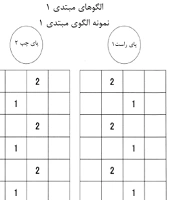
A pretest was then administered to participants in both the experimental and control groups. The experimental group participated in a 6-week SSE training period, with 3 sessions per week, each lasting 70 minutes. The control group continued its regular nursing home physical activities without any specific intervention. These activities included light stretching, short walks in the yard, and group recreational sessions 2 to 3 times per week, with each session lasting approximately 30 minutes. In the SSE sessions, the first 15 minutes included exercises such as slow walking and simple stretching movements. The next 45 minutes were dedicated to the main exercises based on SSE. The square step exercises were performed on a mat measuring 250 × 100 cm and divided into 45 squares. During training, exercise patterns were initially taught by an instructor; participants then memorized the patterns and performed them. After becoming familiar with the stepping patterns, participants were required to walk on their toes without stepping on the square lines. According to the degree of complexity, the 196 stepping patterns in SSE are divided into 8 levels: beginner 1 and 2, intermediate 1, 2, and 3, and advanced 1, 2, and 3 (20) (Figure 1).
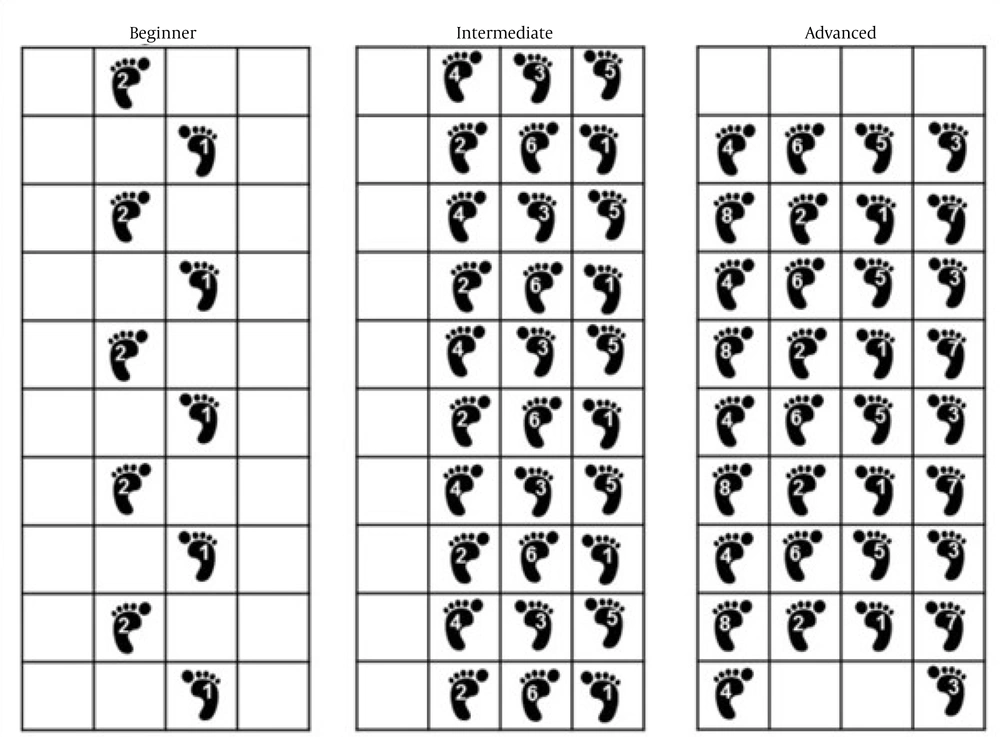
Figure 1.
Examples of various patterns related to square stepping exercise at three levels: Beginner, intermediate, and advanced.
In this study, based on the research duration, a total of 72 stepping patterns were performed across 6 levels: beginner 1 and 2; intermediate 1, 2, and 3; and advanced 1. Depending on difficulty, the number of patterns taught in each session varied between 3 and 5. Each stepping pattern was repeated 4 to 10 times according to participants' learning, and a 30-second rest period was included between successive stepping patterns. At the end of each session, 10 minutes of light stretching exercises were performed to cool down and return the body to its original state. After completion of the training intervention, participants were immediately asked to complete a posttest. All pretest and posttest assessments, including cognitive and functional tests, were conducted by trained, blinded raters. These raters were unaware of participants' allocation to the SSE intervention group or the control group; therefore, scoring and data recording were based solely on participants' actual performance, reducing the possibility of bias. To maintain blinding, the assessment sessions were conducted by separate individuals who had no knowledge of the participants' training program.
3.5. Data Analysis
Data were described using means and standard deviations. The normality of the data distribution was examined using the Shapiro-Wilk test, which confirmed normality (P > 0.05). In addition, independent t-test findings demonstrated that the dependent variables' pretest scores did not differ between the 2 groups (P > 0.05). The study hypotheses were then tested using 2 × 2 repeated measures analysis of variance and multivariate analysis of variance (MANOVA), with the significance level set at 0.05. SPSS software version 22 was used for all analyses.
4. Results
Descriptive statistics for the study variables are presented in Table 1.
Table 1.
Descriptive Statistics for the Study Variables a
| Variables | Experimental Group (n = 14) | Control Group (n = 13) | ||
|---|---|---|---|---|
| Pre-test | Post-test | Pre-test | Post-test | |
| Cognitive performance | 24.71 ± 1.73 | 25.50 ± 1.16 | 24.62 ± 2.29 | 23.23 ± 3.55 |
| Listening skill | 37.57 ± 3.76 | 37.93 ± 3.73 | 38.85 ± 4.08 | 38.46 ± 3.93 |
| Ability to transmit and receive messages | 40.21 ± 3.47 | 38.29 ± 7.03 | 39.23 ± 4.02 | 38.92 ± 3.63 |
| Insight into the communication process | 24.79 ± 3.04 | 24.93 ± 3.00 | 25.61 ± 1.94 | 25.38 ± 2.33 |
| Emotional control | 20.50 ± 2.35 | 20.79 ± 2.36 | 20.62 ± 2.10 | 20.77 ± 1.83 |
| Assertive communication | 18.86 ± 3.25 | 19.07 ± 3.02 | 20.15 ± 1.68 | 20.00 ± 1.78 |
| Attitude toward physical activity | 17.79 ± 3.83 | 18.86 ± 3.39 | 17.23 ± 3.09 | 17.46 ± 3.09 |
| Ability to do physical activity | 12.93 ± 1.44 | 14.14 ± 1.35 | 13.85 ± 2.03 | 14.23 ± 2.05 |
| Sociality around physical activity | 5.00 ± 1.88 | 6.14 ± 1.75 | 5.69 ± 1.55 | 6.00 ± 1.41 |
a Values are expressed as mean ± SD.
4.1. Data Analysis
Data are presented as means and standard deviations. Normality was assessed using the Shapiro-Wilk test, which confirmed a normal distribution (P > 0.05). In addition, independent t-test results indicated that the pretest scores of the dependent variables did not differ between the 2 groups (P > 0.05). The study hypotheses were tested using 2 × 2 repeated-measures analysis of variance and MANOVA, with the significance level set at 0.05. All analyses were conducted using SPSS software version 22.
4.2. Results
Descriptive statistics for the study variables are presented in Table 1.
A 2 × 2 repeated-measures analysis of variance was performed to assess the effect of SSE on participants' cognitive performance. The sphericity assumption was evaluated using Mauchly's test. Because there were only 2 measurement points (pretest and posttest), sphericity was automatically met, and no correction (e.g., Greenhouse-Geisser) was required. The results showed no significant main effect of time (Wilks' λ = 0.994, F (1, 25) = 0.146, p = 0.705, partial ƞ2 = 0.006), group (F (1, 25) = 1.101, p = 0.304, partial ƞ2 = 0.042), or the time × group interaction (Wilks' λ = 0.929, F (1, 25) = 1.920, p = 0.178, partial ƞ2 = 0.071), indicating that SSE did not significantly affect cognitive performance. Overall, these findings indicate that SSE did not produce significant improvements in cognitive performance in this sample.
MANOVA results also showed that the main effect of time (Wilks' λ = 0.775, F (5, 21) = 1.218, p = 0.335, partial ƞ2 = 0.225), the main effect of group (Wilks' λ = 0.917, F (5, 21) = 0.381, p = 0.856, partial ƞ2 = 0.083), and the time × group interaction (Wilks' λ = 0.693, F (5, 21) = 1.864, p = 0.144, partial ƞ2 = 0.307) were not significant for the components related to communication skills. However, for the components related to senior perceived physical literacy, MANOVA showed significant effects of time (Wilks' λ = 0.391, F (3, 23) = 11.919, p < 0.001, partial ƞ2 = 0.609) and the time × group interaction (Wilks' λ = 0.659, F (3, 23) = 3.964, p < 0.021, partial ƞ2 = 0.341), whereas the main effect of group was not significant (Wilks' λ = 0.939, F (3, 23) = 0.497, p = 0.688, partial ƞ2 = 0.061).
Follow-up univariate tests showed significant time × group differences across all 3 components: attitude toward physical activity (F (1, 25) = 5.125, p = 0.033, partial ƞ2 = 0.170), ability to do physical activity (F (1, 25) = 5.412, p = 0.028, partial ƞ2 = 0.178), and sociality around physical activity (F (1, 25) = 7.131, p = 0.013, partial ƞ2 = 0.222). Pairwise comparisons using the Bonferroni post hoc test indicated that, for all 3 components, the change over time (pretest to posttest) was significant in the experimental group (p < 0.001), whereas it was not significant in the control group (p > 0.05). Therefore, SSE was effective in improving senior perceived physical literacy among participants in the experimental group.
5. Discussion
The aim of the present study was to investigate the effect of SSE on cognition, perceived physical literacy, and communication skills in older adults. The findings showed that SSE had no significant effect on cognitive performance. In a systematic review and meta-analysis conducted by Wang et al. (11), motor-cognitive training programs, including SSE, produced limited or no significant improvements in global cognition among older adults. This finding is consistent with the present results and suggests that the cognitive benefits of SSE may depend on training duration, cognitive task complexity, or participant characteristics. In the study by Shellington et al. (29), SSE did not improve global cognitive functioning in older adults, which is also consistent with the present study.
Given that SSE challenges specific cognitive domains, including executive function, memory, and attention, it has been proposed that SSE enhances cognitive function (4). During SSE, participants must memorize, recall, and transform information to execute precise stepping patterns in the correct order while the instructor models them (11). Several studies have also reported that SSE improved cognitive function in older adults (1, 4, 20, 21), which is inconsistent with the results of the present study. One possible reason for this inconsistency may be differences in the number of training sessions. According to the principles of neuroplasticity, structural or functional brain changes usually occur as a result of long-term and repetitive training (30). In the present study, the 6-week intervention period may not have been sufficient to produce such changes. For example, the interventions in the studies by Eskandari et al. (20) and Teixeira et al. (4) lasted 12 and 16 weeks, respectively, whereas the intervention in the present study lasted 6 weeks. It is also possible that improvements in cognition may begin after the intervention period. Previous studies have shown that changes in cognition may be observed 6 months after an exercise intervention (31). In addition, according to embodied cognition theory, cognitive processes are stimulated only when motor activities are accompanied by sufficient mental challenges (32, 33). SSE training may have been perceived as cognitively simple for participants, especially in the early stages of the program.
In addition, the tools used to measure cognitive function vary across studies, which may be another reason for the inconsistent results. Overall, the potential effects of SSE on cognitive function require further investigation.
Another finding of the present study was that SSE did not affect communication skills in older adults. This result contrasts with studies by Kawabata et al. (9, 21), which reported that SSE enhanced social communication, as well as bonding and intimacy, among sedentary older and younger adults. Because SSE is typically performed in a group context, it may strengthen social interaction (12). Moreover, SSE has been shown to promote adherence through its social component, group motivation, and positive effects on social cohesion and emotional well-being (1). A possible explanation for this discrepancy may be the conceptual distinction between social connectedness or group cohesion and individual communication skills. Previous research has often used instruments such as the Physical Activity Group Environment Questionnaire to assess social interaction and group bonding, whereas the present study used a communication skills questionnaire focused on individual competencies, such as clarity of expression and listening. These domains may not be easily changed by short-term group physical activity. Another important factor that may have influenced these results is the sensitivity of the measurement instruments. Instruments such as the Queendom Communication Skills Test may be less responsive to short-term behavioral changes than measures of social cohesion (9). In addition, characteristics of the study sample, including baseline levels of communication skills, personality traits, and prior social participation, may have influenced the observed effects. Participants in the present study may have had limited opportunities or motivation to translate SSE group-based social participation into measurable improvements in personal communication skills. The duration and intensity of the intervention may also have contributed to the nonsignificant results. Shigematsu and Okura (12) emphasized that SSE, which is regularly conducted in group settings, can foster greater social interaction. However, short-term intervention periods may not be effective. Furthermore, the use of only a control group without specific physical activity may limit interpretation of the results, because improvements might have been observed simply from participation in any group activity, such as brisk walking, independent of the specific characteristics of SSE. Nevertheless, because only a limited number of studies have explored the effects of SSE on communication skills, comprehensive comparison with previous findings is not possible. Further research is therefore warranted.
Another important finding of the present study was that SSE had a positive effect on perceived physical literacy in older adults. Studying physical literacy with SSE represents a new and under-researched area in exercise and physical activity among older adults. Positioning SSE as a means of increasing physical literacy in older adults is innovative because it shifts the focus from short-term functional outcomes to a more holistic framework that emphasizes sustained motivation, self-confidence, and motor capacity. In addition, the concept of physical literacy, which has a positive effect on quality of life, is related to the ultimate goal of a quality program based on motivation, self-confidence, physical competence, knowledge, and understanding to value, take responsibility for maintaining purposeful physical activity, and participate in a wide range of activities throughout the life span (34, 35). The existence of multiple definitions of physical literacy makes it a somewhat controversial concept. However, the convergence and common ground across definitions emphasize emotional, physical, and cognitive characteristics, as well as the abilities necessary to participate in physical activities throughout the life cycle (36). Some studies show that physical literacy is a prerequisite for physical activity, whereas physical activity may improve the level of physical literacy. In other words, people without an understanding of physical literacy may not participate in physical activities, but participation in physical activities may improve their physical literacy (37). However, to the researchers' knowledge, no previous study has investigated the effect of SSE on perceived physical literacy in older adults. Therefore, the results of previous studies could not be compared with the present findings.
5.1. Conclusions
The results of this study showed that SSE significantly improved perceived physical literacy in older adults but did not produce significant changes in cognitive function or communication skills. These findings indicate that SSE can be used as a simple, safe, and low-cost motor-cognitive activity to enhance motivational components and motor competence in older adults. From a theoretical perspective, the present study provides the first evidence on the use of SSE to promote physical literacy in older adults and emphasizes the importance of structured motor experiences in maintaining motivation and physical participation in old age. At the same time, the lack of observed effects on cognition and communication skills may be due to the short duration of the intervention, the moderate intensity of the exercises, or the need for stronger cognitive and social elements in the program design.
To ascertain the therapeutic potential of SSE in a broader range of contexts, future studies should focus on randomized clinical trials that investigate its impact in populations with pre-existing disorders, such as individuals with mobility difficulties or moderate cognitive impairment. Identifying the optimal duration of interventions is also crucial for maximizing benefits and facilitating the recommendation of SSE. If this intervention is effective, it can be implemented in specialized elderly care centers, institutions, and associations. Based on the findings of this research, several recommendations are suggested: expanding research on physical literacy in older adults, using active control groups such as brisk walking, tai chi, or dance, extending intervention duration and follow-up, and matching interventions to participants' personality traits.
5.2. Limitations
The present study had several limitations that should be considered when interpreting the results. The relatively small sample size and the use of only an inactive control group limited the generalizability and comparability of the results. In addition, the reasons for dropping out of the study were not fully reported, and the analyses were not fully conducted using the intention-to-treat approach. Furthermore, insufficient alternative explanations were provided for the nonsignificant results. Accordingly, future studies should use larger sample sizes, active control groups such as brisk walking, fully report dropout reasons, use intention-to-treat analysis, and investigate possible factors affecting nonsignificant results to increase the validity and generalizability of the findings.