
1. Background
Memory is a cognitive process encompassing the dynamic mechanisms involved in the storage, maintenance, and retrieval of information derived from past experiences. It can be categorized into various types, including sensory memory, short-term memory, working memory, and long-term memory. Working memory receives and encodes new information from the environment and from activated long-term memory. It determines memory span, defined as the number of units an individual can recall immediately, and is recognized as a critical component of information processing (1). Notably, measurable differences in memory performance exist between neurotypical individuals and those with cognitive impairments. In this regard, Aminian et al. (2) showed that children with disabilities have poorer memory and conversational skills, which may influence cognitive functions such as memory. One group of individuals with intellectual disabilities is people with Down syndrome.
Down syndrome (DS) is a neurodevelopmental genetic disorder characterized by delays in motor and cognitive development (3, 4). DS is the most common genetic cause of learning disabilities, accounting for approximately 22% of cases on average. The intelligence quotient (IQ) of affected individuals typically ranges from 25 to 70, with only a small proportion reaching a mental age above 7 to 8 years. Cognitive functioning in individuals with DS is characterized by speech and language impairments. Researchers have suggested that individuals with intellectual disabilities, particularly those with DS, exhibit deficits in intellectual functioning (1). Numerous studies have demonstrated that memory span is reduced in individuals with DS compared with typically developing (TD) peers (1). In studies assessing verbal short-term memory, individuals with DS have shown impairments relative to healthy controls of the same chronological age (5). Despite extensive research on the verbal component of short-term memory development in DS, investigations of the visuospatial component of short-term memory in this population remain limited. Laws (6) and Carretti et al. (5) found that individuals with DS performed significantly better than a mental-age-matched control group on the Corsi Blocks task, a test of spatial working memory. In contrast, performance between the 2 groups did not differ significantly on a color memory task, which assesses visual working memory. Vicari, Bellucci, and Carlesimo (7), as cited in Carretti et al. (5), reported that individuals with DS exhibited poorer spatial and visual working memory than typically developing individuals. However, this difference disappeared after controlling for perceptual and visual abilities. In addition, Tajik et al. (8) showed that cognitive functions such as working memory are weaker in individuals with autism and that computerized cognitive training can support emotion regulation by improving working memory function.
Clinical group studies indicate that visuospatial working memory (VSWM) can be categorized according to the mode of stimulus presentation, in which items to be remembered are presented either simultaneously or sequentially (9). For instance, Pulina et al. (10) found that participants with DS performed worse on tasks involving simultaneous spatial working memory, whereas this deficit was not observed in sequential spatial tasks. Previous research has demonstrated that manipulating simultaneous versus sequential presentation is a critical variable when investigating spatial working memory (11). Specifically, Oi et al. (11) reported that performance on tasks with simultaneously presented stimuli was poorer than that on tasks with sequentially presented stimuli and that this difference increased significantly with age, reflecting a distinction between simultaneous and sequential processes in VSWM. Carretti et al. (12) examined VSWM in children with DS and Williams syndrome using tasks that required recall of locations presented either simultaneously or sequentially in a matrix. Both groups exhibited impairment in simultaneous tasks; however, performance was notably poorer in sequential tasks. Lanfranchi et al. (13) showed that individuals with DS have severe deficits in simultaneous VSWM, whereas other types of working memory, such as sequential working memory, are not as severely impaired. In addition, previous studies have indicated that individuals with DS retain VSWM capabilities, whereas individuals with Williams syndrome experience impairment in this domain (11).
Recent findings have suggested that distinguishing between simultaneous and sequential processes may facilitate a deeper understanding of VSWM. Given the established link between working memory and learning, investigating methods to enhance short-term memory performance appears essential. Moreover, the preschool years represent a critical developmental period marked by substantial increases in vocabulary acquisition, name learning, and comprehension of mathematical concepts.
2. Objectives
Although short-term memory deficits are well documented in children with DS, the differential effects of simultaneous versus sequential array presentation on memory performance remain underexplored. Given the critical role of short-term memory in learning and cognitive development, particularly in early childhood, clarifying these effects has important implications for designing effective educational interventions. By identifying the potential benefits of specific presentation formats, this research may inform targeted strategies to enhance memory capacity and learning outcomes in children with DS, thereby contributing to improved academic readiness and cognitive development. Based on the literature, we assumed that short-term memory performance would be higher under the simultaneous array condition than under the sequential condition in both groups. In addition, we assumed that TD children would perform better than children with DS in both simultaneous and sequential array presentation conditions.
3. Methods
3.1. Study Design
This cross-sectional study was conducted with a causal-comparative purpose, using a field method.
3.2. Subjects
Twenty-four children aged 8 to 12 years, including 12 children with DS and 12 TD children, participated in the present study using purposive convenience sampling. Participants were matched by chronological age. Recruiting children with DS is challenging because the population is limited and participation requires considerable effort from both the children and their families. Therefore, the researchers recruited all eligible and willing participants they could access within a specific time frame (February 19 to February 28, 2025) and geographic location (the Semnan City Rehabilitation Center). Inclusion criteria for children with DS were age, a clinical diagnosis of DS by a physician, the ability to follow simple instructions, an IQ between 50 and 70, independent walking ability, the ability to count numbers up to 25, knowledge of the alphabet, normal or corrected-to-normal vision, and right-handedness (4). TD children aged 8 to 12 years without developmental delay or physiological disorders were selected. The assumptions were as follows: chronological age, mean age, and age distribution were very similar between the 2 groups; observed memory differences reflected cognitive differences between TD and DS children rather than a specific deficit; and all children had normal hearing and vision. Ultimately, based on the study inclusion criteria, 12 children with DS and 12 TD children were selected as the final sample.
3.3. Apparatus and Task
3.3.1. Demographic Information Form
This form collected data on the child’s full name, date of birth, height, weight, and medical history.
3.3.2. Socioeconomic Status Questionnaire
Socioeconomic status (SES) was assessed across 4 components, including income level, economic class, housing price, and parental education, using a 5-point Likert scale from 1 (very low) to 5 (very high). Total scores ranged from 5 to 25. Reliability was acceptable, with a Cronbach α of 0.83 (14).
3.3.3. Peabody Picture Vocabulary Test
The Peabody Picture Vocabulary Test (PPVT) is a standardized measure of receptive vocabulary comprising 228 items organized into 19 sets of increasing difficulty. Reliability coefficients, including test-retest coefficients of 0.93 to 0.94 and Cronbach α values of 0.94 to 0.97, are well established for TD children (15). The PPVT has demonstrated validity for assessing language comprehension in DS, with significant correlations of r = 0.70 to 0.80 with mental age and other language measures (16).
3.3.4. Raven's Standard Progressive Matrices
Raven’s Standard Progressive Matrices (RSPM) measures general intelligence and abstract reasoning using 36 matrices. Each correct response is scored as 1, with scores ranging from 0 to 36. IQ scores of 50 to 70 indicate intellectual disability. Reliability coefficients range from 0.44 to 0.94, with a median of 0.73 (17, 18).
3.3.5. Short-Term Visuospatial Memory Test
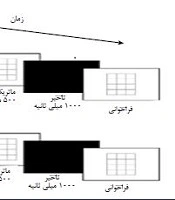
An adapted software-based task based on previous studies (9, 12) assessed simultaneous and sequential recall using a 4 × 4 matrix consisting of 16 cells, each 3 × 3 cm, on a 14-inch screen. In the simultaneous condition, all target coins appeared together for 1000 ms. In the sequential condition, coins appeared one at a time, each for 1000 ms. After a 1000-ms delay, participants recalled the coin locations. Scores reflected the total number of correct locations. Concurrent validity with an established visuospatial working memory test was acceptable (r = 0.55), and test-retest reliability was high (ICC = 0.91) (12).
3.4. Procedure
Before the study began, the parents of the children were informed about the purpose and procedures of the research. Upon arrival on the first day, parents signed the informed consent form and completed the SES questionnaire and participant information form for their child. Tasks were explained verbally and demonstrated in practice. On the first day, children completed the Peabody Picture Vocabulary Test, Fourth Edition, and Raven’s Standard Progressive Matrices. On the second day, the short-term visuospatial memory tasks were administered (9). Each task included a brief practice trial. All instructions and procedures for the memory tasks were scripted and identical for every participant. This ensured that the experimenter did not inadvertently provide more cues or encouragement in one condition than in the other. The laptop was positioned approximately 70 cm from the participant. The task began with a 16-cell matrix, with no coins appearing in the cells for 500 ms, followed by the items to be recalled. In the simultaneous array condition, the coins in the 16-cell matrix appeared simultaneously for 1000 ms. After viewing a black screen for 1000 ms, participants were asked to recall the cell locations in the simultaneous task trials. In the sequential array condition, a 16-cell matrix with no coins appearing in the cells was presented for 500 ms, followed by the items to be recalled. In each matrix, a coin appeared in 1 cell for 1000 ms, and the locations of subsequent coins appeared in the same order in subsequent matrices. Participants were asked to remember the location of each coin in the order in which it appeared in the sequential array and then to recall the locations within a matrix frame. The coin cell locations were randomly selected and were common between the simultaneous and sequential tasks. The number of cells filled with coins in the matrix gradually increased from 2 to 8. The total testing duration across both days was approximately 60 minutes and 50 trials. The order of the simultaneous and sequential array conditions was counterbalanced across participants. All participants took part in both conditions. The number of correct responses was considered response accuracy. To prevent physical overload and maintain optimal cognitive and physical functioning, sufficient breaks were provided between tests. Testing was conducted in a quiet, well-lit environment.
3.5. Data Analysis
Before the main analysis, all data were screened for outliers, missing values, and conformity to the assumptions of parametric statistics, including normality and sphericity, where appropriate. Descriptive statistics, including means and standard deviations, were calculated for response accuracy across conditions.
The normality of the data distribution was assessed using the Shapiro-Wilk test, and homogeneity of variances was examined using Levene’s test. To compare group performance on the short-term memory task, a mixed-design analysis of covariance (ANCOVA) was conducted. The model included group (DS versus TD) as a between-subjects factor; presentation type (simultaneous versus sequential) as a within-subjects factor; and their interaction. To control for potential confounding effects, Raven’s Progressive Matrices scores, as a measure of nonverbal reasoning, and PPVT scores, as a measure of receptive language, were entered as covariates. The dependent variable was accuracy, defined as the percentage of correct responses. The alpha level for statistical significance was set at P ≤ 0.05.
4. Results
Table 1 presents descriptive statistics (means and standard deviations) for age, height, weight, Peabody Picture Vocabulary Test scores, and socioeconomic status in children with DS and TD children.
Table 1.
Mean and Standard Deviation of Age, Height, Weight, PPVT-IV Scores, and Socioeconomic Status
| Variables and Groups | Mean ± SD |
|---|---|
| Age (y) | |
| DS children | 12.53 ± 1.34 |
| TD children | 12.05 ± 1.61 |
| Height (cm) | |
| DS children | 135.92 ± 6.15 |
| TD children | 118.23 ± 7.25 |
| Weight (kg) | |
| DS children | 37.08 ± 6.33 |
| TD children | 39.16 ± 5.67 |
| Peabody picture vocabulary test | |
| DS children | 99.83 ± 2.80 |
| TD children | 185.42 ± 3.31 |
| Raven intelligence test | |
| DS children | 68.12 ± 7.37 |
| TD children | 99.83 ± 9.72 |
| Socioeconomic status | |
| DS children | 18.01 ± 2.29 |
| TD children | 19.42 ± 2.77 |
A mixed-design ANCOVA was conducted to examine the effects of group (DS vs TD) and array type (simultaneous vs sequential) on short-term memory accuracy while controlling for nonverbal reasoning and receptive language ability. Preliminary checks confirmed that the assumptions of equality of covariance matrices (Box's M test, P > 0.05) and homogeneity of variances (Levene's test, P > 0.05) were met. The multivariate effect of the covariates was not significant (Wilks Λ, P > 0.05).
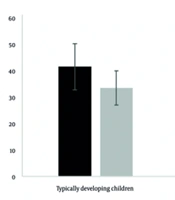
The analysis revealed a significant main effect of array type (F(1, 22) = 43.01, P = 0.001, η2 = 0.58), indicating higher accuracy in the simultaneous condition (M = 35.25, SD = 4.33) than in the sequential condition (M = 27.61, SD = 6.52). A significant main effect of group was also observed (F(1, 22) = 14.18, P = 0.008, η2 = 0.45); Bonferroni-corrected pairwise comparisons indicated that TD children (M = 37.79, SD = 5.77) outperformed children with DS (M = 24.33, SD = 7.87, P < 0.05).
These main effects were qualified by a significant array type × group interaction (F(1, 22) = 2.95, P = 0.04, η2 = 0.15). To decompose the interaction, simple-effects analyses were conducted. Paired-sample t tests revealed a significant advantage for simultaneous over sequential presentation in both the DS group (M difference = 4.33, t(11) = -4.53, P = 0.001) and the TD group (M difference = 8.08, t(11) = -5.23, P = 0.001). Independent-sample t tests showed that TD children outperformed their DS peers in both the simultaneous (M difference = 15.33, t(22) = 4.39, P = 0.001) and sequential conditions (M difference = 11.58, t(22) = -5.37, P = 0.001). The pattern of results is illustrated in Figure 1.

Figure 1.
Results of the percentage of correct Responses in simultaneous and sequential short-term memory tasks
5. Discussion
The present study investigated the effects of simultaneous versus sequential array presentation on short-term memory in children with DS and TD children. The findings showed that both groups demonstrated higher response accuracy under the simultaneous presentation condition, suggesting a general cognitive advantage of simultaneous over sequential encoding in visuospatial short-term memory. Although the DS group exhibited lower overall performance than the TD group across both conditions, the pattern of the presentation effect was consistent between groups. This comparable advantage implies that the benefit of simultaneous presentation is not syndrome-specific but instead reflects fundamental cognitive processes involved in visual encoding that are shared across populations.
Regarding presentation mode, the results demonstrated superior performance in simultaneous tasks compared with sequential tasks. As proposed by Rudkin, Pearson, and Logie (19), sequential visuospatial working memory tasks engage executive resources to a greater extent than simultaneous visuospatial working memory tasks. In the present study, participants in the sequential tasks were required to encode a series of items while simultaneously maintaining awareness of previously presented items. They may also have needed to mentally segment these items into visual patterns. Individuals with intellectual disabilities exhibit difficulties in executive processes (11). Therefore, performance in the sequential task may not have improved to the same extent as performance in the simultaneous task. Although children with DS demonstrated better performance under simultaneous presentation than under sequential presentation, this advantage was also observed in TD children, indicating a general effect of presentation format rather than a DS-specific benefit. These findings are consistent with those reported by Retzler et al. (9), Oi et al. (11), Mammarella et al. (20), and Bharti, Yadav, and Jaswal (21).
Bharti et al. (21) reported that the poorer performance observed with sequential presentation compared with simultaneous presentation may be because participants were never able to see the stimuli in relation to each other under sequential conditions. Participants were likely constructing a mental representation of the sequentially presented stimuli. However, constructing the pattern and mental representation is more difficult when relying on the spatial relationships between stimuli under sequential presentation conditions, as 1 stimulus disappears with the appearance of the next, leaving learners with insufficient time to retain previously presented stimuli in memory. Allen, Baddeley, and Hitch (22) argued that feature binding is fragile and susceptible to overwriting by sequential visual information, particularly for previously presented sequential items. Therefore, poorer performance under sequential conditions in the present study may be attributable to such an overwriting process, which hinders the formation of an overall spatial representation because subsequently presented items overwrite earlier ones. The findings of the present study, indicating that locations presented simultaneously were recalled better than those presented sequentially, support the notion that simultaneously presented spatial information promotes encoding and configuration that likely reduces memory-capacity demands (9). It can be concluded that the differences observed between simultaneous and sequential presentations are not due to superficial perceptual differences but instead arise from factors and processes that influence the organization of stimuli in visual working memory (22). Oi et al. (11) and Zhao and Vogel (23) demonstrated that adult participants performed better in sequential array presentation conditions than in simultaneous presentation conditions, with higher errors in detecting a specific color under simultaneous conditions. This finding contrasts with the results of the present study. The discrepancy may stem from differences in participant age groups, that is, children versus adults, and from differences in the memory task types used for simultaneous and sequential array presentations. Conversely, Ricker and Cowan (24) reported different findings, suggesting that sequential presentation allows each item to be examined without competition, which may facilitate consolidation of that item in memory and thereby create a stable perceptual trace that can subsequently be retrieved more easily. However, with simultaneous presentation, attention may be unevenly distributed among items. If items differ from one presentation to the next, repetitions may not be recognized, which could explain the lack of learning observed in VSWM tasks with simultaneous arrays.
The results also showed that response accuracy was higher in TD children than in children with DS under both simultaneous and sequential array conditions. These findings are consistent with those of Klotzbier et al. (4), Carretti et al. (12), Lanfranchi et al. (13), and Schott and Holfelder (25). The strategic deficits observed in individuals with DS may partly explain this outcome, as they may be unable to use patterns to aid recall of locations in simultaneous visuospatial memory tasks.
It is suggested that, at the beginning of the learning period, children with DS should initially be exposed to training with lower variability, such as simultaneous array presentation, to maintain motivation and help them overcome concerns about failure or inferiority, with the goal of eliciting error-correction processes and refining responses. As their experience, ability, and motivation increase, training involving higher variability, such as sequential array presentation, can be introduced.
The sample is not fully representative of the broader population of children with DS, who vary widely in genetic profile, such as trisomy 21 versus mosaicism or translocation, comorbid conditions, early intervention history, and educational exposure. All participants were from 1 city in Iran and had similar socioeconomic and educational environments. Cultural and linguistic factors, the Persian-speaking context, and healthcare-system factors may influence cognitive performance and access to early intervention, limiting extrapolation to children with DS in other countries or regions. Groups were matched by chronological age but not by mental age. Because mental age is typically 4 to 6 years lower in this DS cohort, the observed group differences may partly reflect developmental level rather than syndrome-specific visuospatial short-term memory profiles. This further restricts generalizability to studies that use mental-age-matched controls. Children attending a rehabilitation center are likely to have greater functional difficulties or more motivated families than the general DS population, potentially overestimating memory deficits. When nonverbal reasoning and receptive vocabulary were considered, the magnitude of group differences was reduced, indicating that general cognitive and language abilities contribute to short-term memory performance. This finding underscores the importance of interpreting group differences within a developmental framework rather than attributing them exclusively to syndrome-specific mechanisms. In addition, the groups differed significantly in nonverbal reasoning, Raven, and receptive vocabulary, PPVT. Although such differences are characteristic of DS, they may have influenced task performance. The observed group differences in short-term memory may therefore reflect broader disparities in general cognitive and language abilities rather than a DS-specific visuospatial memory deficit. Several limitations should be acknowledged. First, the small sample size, n = 12 per group, limits statistical power and the stability of effect estimates. Second, participants were recruited through convenience sampling from a single rehabilitation center in Iran, which may restrict the representativeness and generalizability of the findings to the broader and diverse population of children with DS. Consequently, these results should be considered preliminary. Replication with larger, multicenter samples is necessary. Third, although task difficulty was manipulated through varying set sizes, 2 to 8 items, the study was not designed to examine potential group × set size interactions. Because set size was not treated as an independent factor, differential effects of increasing task demands across groups cannot be ruled out. Future research should systematically manipulate task difficulty and ensure adequate power to detect whether group differences emerge or increase under higher cognitive load.
5.1. Conclusion
Although the superior performance on simultaneous arrays is clear, this finding should not be interpreted solely as a sequential memory deficit. The sequential task also requires auditory processing and phonological skills, which are known areas of difficulty in DS. Similarly, the overall performance gap relative to TD children, although consistent with previous research, likely reflects a confluence of factors beyond memory capacity, including language comprehension, processing speed, and executive function. Without controlling for these potential confounds, it is difficult to attribute group differences purely to short-term memory. Therefore, conclusions regarding syndrome-specific mechanisms should be drawn cautiously, and future studies should control for nonverbal reasoning and receptive language.