
1. Context
Developmental coordination disorder (DCD) is a motor-cognitive neurodevelopmental condition (1, 2, 3) that impairs motor coordination and adversely affects daily functioning and academic performance (4, 5). Children with DCD are often described as "clumsy," and the condition can negatively affect physical fitness, anxiety, and self-perceptions (6). Prevalence estimates range from 2% to 20% (7), with 5% to 6% most frequently cited (3). Iranian studies have reported prevalence rates of 2.7% to 9.4% (8, 9). DCD may become evident only when task demands exceed a child's capacity. Evidence supporting the effectiveness of early intervention remains limited (7). Because the causes of DCD are unclear, treatments often involve repetitive physical practice; however, physical practice alone is often inadequate. Effective interventions also require cognitive strategies and targeted feedback, with action observation (AO) and motor imagery (MI) being two commonly recommended approaches.
A cognitive neuroscience perspective highlights impairments in internal modeling, MI, timing control, and parietal-cerebellar mechanisms (7, 10, 11). Motor learning relies on internal representations, or schemas, shaped by sensory feedback and knowledge of outcomes. Both experiential and observational learning engage cognitive and social information processing (12) and depend on the mirror neuron system (MNS) within the frontoparietal network (13). MNS activity enables motor simulation and contributes to AO and MI (14).
Action observation activates sensorimotor networks and triggers motor resonance, an automatic visual-to-motor transformation (15). Electroencephalographic mu-rhythm desynchronization reflects activation of primary and secondary motor regions during execution, imagery, and observation (16, 17). Stronger frontoparietal mu coherence is associated with better imitation performance (18).
Internal modeling deficits (IMDs) in DCD impair predictive control by disrupting the comparison between efference copies and sensory feedback, thereby reducing the accuracy of real-time motor corrections (19, 20). Mismatches between predicted and actual feedback generate error signals; when these signals are inaccurate, movements may fail (21). Children with DCD show particular difficulty imitating unfamiliar gestures because of limited access to stored motor representations (19).
Action observation, imitation, and MI strongly influence motor learning, manual dexterity, and functional skills (19). Strengthening internal modeling through interventions that enhance motor simulation may improve motor performance (21). This review examines recent post-2017 cognitive neuroscience evidence supporting AO- and MI-based training for children with DCD and outlines future directions for optimizing these approaches.
The causes of DCD remain unclear; therefore, treatments often focus on repetitive physical practice. However, the cognitive approach, particularly the IMD hypothesis, provides a promising framework for understanding DCD and developing novel interventions. By using cognitive strategies and targeted feedback, such as AO, MI, or AOMI, this field of research is gaining momentum. This article reviews progress since 2017, evaluates achievements, and suggests future research directions.
2. Evidence Acquisition
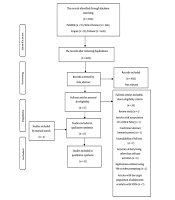
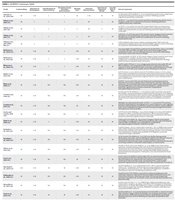
We conducted a comprehensive search of four electronic databases: PubMed, Google Scholar, ERIC, and ScienceDirect. The search used relevant keywords, including "DCD," "motor imagery," "action observation," "imitation," and "motor imagery + action observation." The most recent database search was performed in May 2024 and yielded 2,303 articles: 79 from PubMed, 1,983 from Google Scholar, 239 from ScienceDirect, and 2 from ERIC. After removing duplicates and applying the eligibility criteria, 31 articles were eligible for further review, as summarized in Table 1.
Table 1.
ROBINS-I Summary Table
| Study | Confounding | Selection of Participants | Classification of Interventions | Deviations from Intended Interventions | Missing Data | Outcome Measurement | Selection of Reported Result | Overall Risk of Bias | Notes/Comments |
|---|---|---|---|---|---|---|---|---|---|
| Abrams et al., 2024 (50) | M | L–M | L | L | M | L–M | M | M | 32 ASD and 32 DCD children (7 - 12 y) compared on praxis errors; small, non-randomized observational study; no assessor blinding; possible cognitive/comorbidity confounds. |
| Adams et al., 2018 (35) | M | L | L | L | L | M | L | M | 30 DCD (7 - 12 y) and 30 TD controls; goal-directed pointing task for motor imagery; small, non-randomized; no assessor blinding; potential cognitive/attention confounds. |
| Adams et al., 2017 (36) | M | L | L | L | L | M | L | M | 30 DCD (7 - 11 y) and 30 TD controls; longitudinal study assessing motor imagery (hand rotation) and anticipatory action planning (sword task); small, non-randomized; no assessor blinding; potential cognitive/attention confounds. |
| Adams et al., 2017 (37) | M | L | L | L | L | M | L | M | 33 DCD (6 - 11 y, 26 boys) and 33 TD controls; motor imagery (hand rotation), anticipatory action planning (sword task), and rapid online control (double-step reaching); small, non-randomized; no assessor blinding; standardized tasks. |
| Adams et al., 2017 (Pilot MI) (37) | M | L | L | L | L | M | L | M | 8 DCD children; pilot motor imagery training using C-VRFT task; non-randomized repeated measures; small feasibility sample; assessor blinding not reported; standardized tasks; focused on feasibility. |
| Barhoun et al., 2022 (44) | M | L–M | M | L | L–M | M | M | M | 35 young adults (TD and DCD); randomized, double-blind, sham-controlled crossover cTBS over PMC and SMA; motor and visual imagery tasks; standardized tasks; assessor blinding inherent; potential confounding from motor status and crossover design. |
| Barhoun et al., 2021 (38) | M | L–M | L | L | L–M | M | M | M | 57 young adults (22 DCD, 35 TD); motor imagery (hand rotation) and visual imagery (letter–number rotation) tasks; non-randomized group comparison; standardized tasks; potential confounding from strategy-based inclusion and participant exclusions. |
| Bhoyroo et al., 2019 (45) | M | L–M | L | L | L–M | M | M | M | 14 DCD and 18 TD boys (7 - 12 y); octagon grip selection task under MP and MIP conditions; non-randomized; MI instruction improved end-state comfort in DCD; standardized tasks; potential confounding from strategy differences and male-only sample; assessor blinding not reported. |
| Bieber et al., 2023 (19) | M | L–M | NA | NA | L–M | M | M | M | 21 DCD (mean 7 y 9 m, 16 boys) and 20 TD children (mean 7 y 8 m); action observation and imitation assessments plus motor performance and ADLs; non-randomized observational study; standardized assessments; potential confounding from unmeasured cognitive factors; some exclusions due to poor collaboration. |
| Blais et al., 2018 (27) | M | L–M | NA | NA | L–M | M | M | M | 10 DCD (~13.5 y) and 10 TD controls; bimanual coordination practice; behavioral (accuracy, stability, mirror movements) and EEG coherence measures; cross-sectional observational study; small sample; DCD showed learning difficulties and reduced inter-hemispheric communication; potential cognitive/maturational confounds; standardized neurophysiological measures. |
| Costini et al., 2018 (51) | M | L–M | NA | NA | L–M | M | M | M | 30 DCD and 30 TD children (~7 - 13 y); gesture tasks assessing conceptual knowledge, representational/non-representational gestures, and cognitive control; non-randomized observational study; group differences remained for representational transitive gestures after controlling for visuospatial skill; potential cognitive/perceptual confounds; standardized measures used. |
| Costini et al., 2017 (52) | M | L–M | NA | NA | M | M | M | M | Multiple-case observational study: 27 DCD (~7 - 13 y) and 100 TD controls; extensive praxis battery covering gestures, motor sequences, and cognitive domains; individualized classification of gestural deficits using modified t tests; novel comprehensive protocol with neuropsychological correlates; heterogeneous clinical profiles. |
| Fuchs and Caçola, 2018 (39) | M | L–M | NA | NA | L | M | M | M | 42 DCD and 51 TD children (7 - 12 y); motor imagery accuracy and vividness assessed via MIQ-C and FPIQ; DCD showed Ler MI accuracy but similar vividness; non-randomized observational study; standardized self-report measures; potential cognitive/motor confounds. |
| Hyde et al., 2018 (42) | M | L–M | L | L | L–M | M | M | M | 8 DCD and 21 TD adults (18 - 36 y); motor imagery-related corticospinal excitability via single-pulse TMS during hand laterality task; DCD showed reduced PMC excitability; non-randomized; standardized neurophysiological methods; small DCD sample. |
| Kashuk et al., 2017 (32) | M | L–M | NA | NA | L–M | M | M | M | 12 pDCD (mean ~24.5 y, 5 male) and 11 controls (~26.7 y); fMRI hand rotation task; similar behavioral performance, but pDCD showed reduced parieto-frontal and cerebellar activation with increasing rotation; cross-sectional non-randomized; small groups; probable DCD diagnosis; potential cognitive/strategy confounds. |
| Keating et al., 2023 (28) | M | L–M | NA | NA | L–M | M | M | M | 20 DCD and 19 TD children (8 - 12 y); EEG mu rhythm during action observation, execution, and non-biological motion; DCD showed reduced mu desynchronization and less movement differentiation; non-randomized observational study; standardized EEG; potential attention/co-occurring condition confounds; small sample; no intervention. |
| Kilroy et al., 2021 (29) | M | L–M | NA | NA | L–M | M | M | M | 30 ASD, 23 DCD, and 33 TD children (~8 - 17 y); fMRI action observation, imitation, and mentalizing tasks; ASD showed IFGop hypoactivity during observation, DCD and ASD shared some imitation hypoactivity; non-randomized observational study; standardized MRI; age/IQ matched; potential behavioral/cognitive confounds; some data excluded for head movement. |
| Lust et al., 2019 (18) | M | L–M | NA | NA | M | M | M | M | 15 DCD and 15 TD children (school-age); EEG mu desynchronization and fronto-parietal coherence during action observation and imitation; DCD showed reduced mu suppression and coherence modulation; non-randomized observational study; standardized EEG; small sample; potential cognitive/social confounds; some data excluded due to artifacts. |
| Marshall et al., 2020 (23) | L–M | L–M | M | M | L–M | M | M | M | 20 DCD children (7 - 11 y); randomized to AO + MI or control (unrelated videos); 90° visuomotor rotation task assessing completion time, eye movements, and kinematics; AO + MI improved adaptation; small RCT; blinding not reported; standardized measures used. |
| Nobusako et al., 2018 (53) | M | L–M | NA | NA | L–M | M | M | M | 29 pDCD and 42 TD children; visuomotor temporal integration and automatic imitation tasks; pDCD showed impaired delay-detection and reduced interference; observational study; clear group assignment; potential comorbid trait confounds; some non-normal data handled non-parametrically. |
| Reynolds et al., 2017 (30) | M | L–M | NA | NA | M | M | M | M | 10 DCD and 9 TD boys (~8 - 13 y); fMRI finger adduction/abduction tasks (observation, imagery, execution, imitation); DCD showed Ler behavioral performance, no major MNS differences, minor non-MNS hypoactivation; observational study; age-matched, ADHD/ASD excluded; some data loss; standardized fMRI measures. |
| Scott et al., 2023 (20) | M | L–M | M | M | L–M | M | M | M | 28 DCD children (7 - 12 y); home-based parent-led AOMI vs control; learning ADLs (shoelace tying, cutlery, buttoning, cup stacking) assessed pre-, post-, and retention; AOMI improved performance; randomized; participant blinding reported, assessor blinding not specified; standardized task measures. |
| Scott et al., 2020 (43) | M | L–M | L | L | L–M | M | M | M | 13 DCD and 12 TD children (~7 - 11 y); observational experimental task with AO, AOMI, and AO/MI-before-imitate conditions; imitation accuracy measured via kinematics; AOMI enhanced performance; non-randomized; clear instructions; potential cognitive confounds; no clinical intervention. |
| Scott et al., 2019 (31) | M | L–M | L | L | L–M | M | M | M | 12 DCD and 12 TD children (7 - 12 y); automatic imitation task with AO, MI, and AO + MI conditions; AO + MI increased imitation bias; no group differences; non-randomized observational study; small convenience sample; standardized instructions; potential cognitive/attention confounds. |
| Xavier et al., 2018 (49) | M | L–M | NA | NA | L–M | M | M | M | 85 children/adolescents (29 ASD, 17 DCD, 39 TD; 6 - 20 y); dynamic imitation task with virtual tightrope walker; ASD showed Ler synchronization and motor control; observational cross-sectional study; clear diagnostic criteria; some data excluded; age matching attempted. |
Abbreviations: M, moderate; L, low; NA, not applicable.
Using the ROBINS-I tool to assess the risk of bias across the included studies, most studies were rated as having a moderate overall risk of bias. Confounding factors were often rated as moderate because participant characteristics were heterogeneous, whereas participant selection was typically rated as low to moderate, primarily because of convenience sampling. Experimental manipulations, such as MI or AOMI, generally showed a low to moderate risk for intervention classification and deviations from intended interventions. Outcome measurement was usually rated as moderate because it involved objective assessments but sometimes included subjective task scoring. Missing data and selective reporting were mostly rated as low to moderate, suggesting that the literature provides valuable evidence but that the findings should be interpreted with caution.
Inclusion criteria required studies to include individuals with DCD; to test the effects of motor imitation-related approaches, such as AO, MI, imitation, or AOMI, or to be review or systematic review articles in this field; and to use a neurocognitive approach. Studies limited to typically developing individuals and articles not published in English were excluded. Studies that did not align with the specific research objectives, lacked relevance, were abstracts, conference papers, or dissertations, or did not compare DCD groups with typically developing (TD) groups were also excluded. This search aimed to identify studies and articles on DCD, based on a neurocognitive approach, focused on brain systems important for the development of movement skills from January 2017 to May 2024.
3. Results
3.1. Action Observation
Two mental training techniques frequently used with children with DCD are AO and MI. Action observation involves systematically watching human movement to support imitation, whereas MI is an internal process of generating and manipulating visual or kinesthetic representations of action. Both activate motor regions that are also engaged during execution and are considered forms of motor simulation (20, 22). Over the past decade, AO- and MI-based training has shown positive effects on motor outcomes in DCD (23).
Action observation engages the action-observation network (AON), a frontoparietal system that includes the inferior frontal gyrus (IFG), premotor cortex, and inferior parietal lobule (IPL), along with temporal regions such as the posterior middle temporal gyrus and posterior superior temporal sulcus. These regions support action perception, prediction, and goal inference (24). The MNS is considered a subset of the AON because it is activated during both action execution and action observation (25, 26).
Eight studies examined AO in DCD (19, 26, 27, 28, 29, 30, 31). Behavioral comparisons involved 33 children with DCD and 42 TD peers performing meaningful or nonmeaningful gestures and rhythmic tasks (19, 31). Neuroimaging studies using electroencephalography (EEG) or functional magnetic resonance imaging (fMRI) included 30 participants with DCD compared with 28 TD peers (28, 30), and 3 additional studies examined neural activation or communication patterns in 48 participants with DCD versus 58 TD participants (18, 27, 29).
Functional MRI findings indicate widespread AO-related activation, including the bilateral IFG, premotor cortex, superior parietal cortex, anterior cingulate cortex, lateral occipital areas, superior temporal sulcus, and cerebellum (29). No group differences during AO were found (29, 30), although children with DCD showed hypoactivity in supplementary and premotor areas during imitation tasks, consistent with motor impairments (29, 30). These regions overlap with those typically underactive during MI and imitation in DCD (20, 22, 29, 32).
Electroencephalography studies often measure mu desynchronization (8 - 12 Hz), an indicator of sensorimotor engagement during AO, MI, and execution (18, 25). Mu suppression reflects motor preparation and is typically measured over the somatosensory cortex (33). Children with DCD show reduced mu suppression and coherence during AO, suggesting weaker observational learning and MNS engagement (18, 28). Lower mu desynchronization correlates with poorer attention and motor skills (28).
However, fMRI findings (29, 30) do not show differences in MNS activation during AO tasks. Reynolds, Sophie, et al. (34) reported hypoactivation only in non-MNS regions, possibly because the tasks emphasized sequencing rather than motor simulation. Mu suppression is also not exclusive to the MNS and can occur during cognitive tasks involving language, empathy, MI, and intransitive movements (18). Topographical analyses confirm that mu originates from bilateral central areas, warranting caution in interpreting mu as a direct marker of MNS activity (18).
Observing everyday actions may inform new motor-teaching approaches for DCD (19). Motor coordination exercises can enhance accuracy and reorganize frontocentral activity, particularly in the right hemisphere; however, adolescents with DCD still show instability and difficulty inhibiting mirror movements because of reduced interhemispheric communication (27). Clinically, assessing AO proficiency may help identify learning barriers; Bieber et al. (19) developed a behavioral protocol to evaluate AO and imitation of meaningful and nonmeaningful gestures to support motor-teaching strategies.
3.2. Motor Imagery
According to the IMD hypothesis, motor difficulties in DCD stem from impaired predictive movement control (22, 32, 35, 36, 37). Disturbances in MI are considered strong evidence of this deficit (2, 22, 35, 36, 37, 38). Motor imagery involves mentally simulating actions and is functionally similar to motor execution (21, 22, 39). It reflects the internal representation of action dynamics and supports motor planning and learning (21, 39, 40), making it a sensitive index of internal modeling accuracy (39).
Sixteen studies examined MI in DCD. Three studies assessed 75 children aged 6 - 12 years (36, 39, 41), one included 22 adults aged 18 - 30 years (38), and three measured neural activity in 30 individuals aged 8 - 40 years (30, 32, 42). Five studies investigated MI training in 60 children (21, 31, 35, 37, 43), and one tested the effects of continuous theta burst stimulation in 10 children (44). Three were review articles (2, 45, 46).
Overall, individuals with DCD can use MI but show slower and less accurate performance (20, 22, 31, 35, 36, 39, 40, 42, 44, 45, 46, 47), and these difficulties persist into adulthood (38). They have basic internal modeling capacity (20, 22, 31, 35, 36, 38, 39, 40, 41, 42, 43, 44, 45, 46, 47, 48) but show delayed MI development (35, 41). Decreased speed and accuracy align with broader cognitive delays, including working memory, attention, and response inhibition (22, 41). However, MI skills improve with training (20, 21, 22, 36, 37, 39, 43). Thus, MI-based instructions may enhance predictive control (20, 22, 35) and motor planning (21).
Two approaches are commonly used: implicit MI, assessed through hand rotation or laterality tasks (32, 36, 38, 41, 44), and explicit MI, assessed through first-person imagined movement (35, 40) and tools such as MIQ variants (20, 31, 39, 40, 43) or the computerized visual rotation and finger-tapping task (35).
Supporting the IMD hypothesis, children show reduced performance in hand rotation tasks (32, 36, 41, 42, 44). These deficits appear specific to MI rather than general mental rotation (38). Whereas Hyde et al. (42) linked inefficient MI to reduced premotor cortex activity, Barhoun et al. (44) found that continuous theta burst stimulation to the premotor cortex or supplementary motor area did not alter MI task performance, suggesting limited involvement of the premotor cortex. Individuals with DCD also rely on compensatory neural strategies in simple MI tasks, showing hypoactivation in cerebellar and frontocerebellar networks, consistent with reduced coupling between motor planning and predictive control systems (32).
3.3. Imitation
Imitation refers to the ability to observe and reproduce pure, nonobject gestures (13, 19, 49). It plays a key role in observational learning (30), early communication, and social cognition and contributes to the development of self-awareness (49). Gestures may be meaningful, or symbolic, or nonmeaningful, or novel (13, 19, 30). Meaningful gestures depend on cognitive-linguistic representational skills and provide insight into both praxis and communicative competence. Nonmeaningful gestures require precise perceptual-motor processing and better reflect the child's praxis organization. Novel, nonmeaningful gesture imitation also aligns more directly with MNS functioning, as it tests true imitation rather than learned symbolic actions (13, 19).
Ten studies investigated imitation in DCD. Four examined praxis in 79 children aged 6 - 17 years (19, 50 - 52), two assessed automatic imitation in 36 participants aged 4 - 20 years (49, 53), and four explored MNS activation in 68 children aged 8 - 17 years (18, 28-30).
Praxis refers to planning and executing goal-directed actions and object manipulation (52, 54). Adult models include a conceptual system, involving semantic and sensorimotor knowledge, and a production system, involving gesture execution mechanisms (51). Abrams et al. (50), using a modified Florida Apraxia Battery, found that children with DCD showed more overall, temporal, and spatial errors than their TD peers in both meaningful and meaningless gesture imitation. DCD groups also exhibited heterogeneous gesture-production deficits (52), impaired visuospatial skills (51), and reduced interpersonal synchronization and motor coordination (49). These findings suggest that impaired AO and imitation may contribute to motor learning difficulties in DCD (19).
Visuomotor temporal integration, the ability to synchronize self-generated movement with visual input, and automatic imitation both depend on visuomotor processing, which is often disrupted in DCD. Deficits in these areas are linked to poor manual dexterity (53). Automatic imitation reflects MNS function, and reductions in this mechanism have been observed in DCD (53). Functional MRI findings are mixed: Reynolds, Billington, et al. (30) reported imitation deficits without differences in MNS activation during simple tapping, whereas Kilroy et al. (26) found IFGop hypoactivity during action imitation. EEG studies show reduced mu suppression in DCD during imitation (18), with both groups showing increased desynchronization from AO to execution (28). These results indicate that simple tasks such as finger tapping may not fully capture the motor learning and control difficulties experienced by children with DCD (18).
3.4. Combined Action Observation and Motor Imagery
Research suggests that physical practice alone may be insufficient for motor learning in children with DCD (20). Mental training strategies that target hypoactive neural regions have been proposed to enhance learning (20, 23). The IMD hypothesis helps explain motor planning problems in DCD, and training approaches that strengthen internal modeling may support motor learning (2, 20, 23, 43).
Combined action observation and motor imagery involves simultaneously observing a movement while imagining performing it (2, 20, 22, 31, 43). It enhances visuomotor adaptation (23) and improves motor skills in DCD (20, 31, 43, 55). AOMI may strengthen internal forward models (23) and facilitate skill acquisition by targeting neural deficits characteristic of DCD (22, 31, 43, 55).
Four original studies (20, 23, 31, 43) and two reviews (2, 22) examined AOMI in DCD. Overall, combined AOMI produced greater motor-system activation and better behavioral outcomes than AO or MI alone and activated underactive neural regions in DCD (20, 22). AOMI instructions significantly enhanced imitation of rhythmic pantomime actions compared with AO followed by MI, AO alone, MI alone, or natural imitation strategies. Specifically, combined AO and MI instructions produced a greater imitation bias (115%) than AO (109%) or MI (109%) alone. Intentional imitation produced the strongest effects overall, reaching 128% (31, 43). Scott et al. (20) further demonstrated that home-based, parent-led AOMI supports learning complex activities of daily living, such as shoelace tying and cup stacking. Among children who were unable to tie their shoelaces at baseline (n = 9 per group), 89% of those in the AOMI intervention group successfully learned the skill by the end of the study, compared with 44% of those in the control group. Marshall et al. (23) demonstrated that an AOMI intervention focused on a virtual radial Fitts task resulted in faster task completion, enhanced target-focused gaze behavior, and smoother movement kinematics compared with control conditions immediately after training. However, no significant after-effects were observed, suggesting limited retention or transfer.
Combined action observation and motor imagery therefore appears to be a promising technique for improving everyday rhythmical actions (22, 31), visuomotor adaptation and eye-hand coordination (23), and complex activities of daily living in children with or without DCD (20, 23). It may be especially effective for teaching skills not yet in a child's motor repertoire (20) and represents a strong option for parent-led interventions (20, 23), outperforming AO and MI when used independently.
4. Conclusions
This review highlights 31 studies indicating that children with DCD consistently demonstrate poorer motor imitation skills than TD peers, supporting the IMD hypothesis. These challenges in AO and imitation suggest potential neurological disruptions in internal modeling and the MNS, resulting in diverse motor learning difficulties. This hypothesis further suggests that interventions aimed at enhancing internal modeling, such as MI and AO, may improve motor performance in children with DCD.
Research indicates that children with DCD show significant impairments in internal modeling and the MNS (19, 20). Investigating neurocognitive mechanisms such as MI and AO, and integrating these approaches, may enhance understanding of the disorder. A systematic examination of these processes may clarify links between neurological deficits and behavioral outcomes and guide the development of targeted, mechanism-based interventions. Evidence supports the effectiveness of MI, AO, and combined AOMI training in improving motor performance in children with DCD. However, most studies rely on behavioral outcomes from small samples, and neuroimaging work has primarily compared children with DCD and TD children. Future research should examine how these interventions influence frontoparietal neural correlates of motor planning and preparatory attention.
Children with DCD face a range of motor challenges affecting fine and gross motor skills, praxis, physical fitness, psychological well-being, and participation in daily activities. Effective support requires tailored training programs that specifically target motor learning difficulties. Recent studies have shown that motor planning problems can be improved through approaches such as MI, AO, and AOMI. The existing evidence largely originates from a small number of studies, notably those conducted by Scott et al., with restricted participant pools, varied task conditions, and limited documentation of after-effects. Consequently, the applicability of these methodologies to children diagnosed with DCD requires further investigation and rigorous analysis. Current research gaps underscore the importance of exploring personalized training approaches, understanding how practice influences brain networks, and developing practical, evidence-based delivery protocols. Additional research is essential to strengthen the evidence base for MI, AO, and AOMI interventions in children with DCD.