Fulltext
The body of the article can be found in the PDF file.
Journal of Medical Education for Future Demands
Former Title: Journal of Medical Education | The Official Journal of School of Medical Education and Learning Technologies
Image Credit:J Med Edu
Authors
Background: Photo elicitation is a participatory learning tool. The process involves the elicitation of thoughts and ideas by introducing photos and videos to a group of people to carry out a group discussion and analysis. It has been used as a teaching-learning method in medical education. This technique was used in a community-based medical education rural setting during one of the social service camps for students.Methods: 100 students participated in the process. Two different photographs related to child development were shared through a social application. The images were at the center of the discussion, initiating and guiding the discussion taking place by stimulating the students’ minds and provoking them to think about possible inferences that could be drawn based on those images. Guided interactive discussion was used to explain the concepts related to child development.Results: Students involved in the process, found it to be an interesting and interactive teaching method.The method stimulated their thought processes and enabled free discussion. The concepts became easier to grasp, owing to their active participation, and led to a better understanding.Conclusion: Photo elicitation can be used, with some limitations, as an effective and interactive learning method with a large group in a rural setting as well. Simple social applications that are available, can be used to implement this method. However, the method used must be altered according to one’s conditions as the teaching-learning settings and context may vary.
© 2019, Author(s). This open-access article is available under the Creative Commons Attribution 4.0 (CC BY 4.0) International License (https://creativecommons.org/licenses/by/4.0/), which allows for unrestricted use, distribution, and reproduction in any medium, provided that the original work is properly cited.
Moemennasab M, Rahemi S, Ayatollahi A, Aeen M. The Effect Of Video-Based Instruction On Students' Cognitive Learning. J Med Edu. 2002;1(3):e104956. doi: https://doi.org/10.22037/jme.v1i3.948
Catherine P, Nambi S, Vivekkumar P, Natrajan N, PSL S. Barriers to Effective Utilization of Teaching-Learning Methods: A Qualitative Study Using Focus Group Discussions among First-Year Bachelor of Medicine, Bachelor of Surgery Students in a South Indian Medical College. J Med Edu. 2021;20(3):e117296. doi: https://doi.org/10.5812/jme.117296
Mohamadi S, Hosseiny SM, Hosseiny SS. The Role of Interactive E-Learning in Problem-Solving Skill and Independent Learning of Medical Students in Psychology Courses. Educ Res Med Sci. 2016;5(1):e79196. doi:
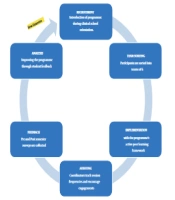
Tee CG, Hj Syed Aznal SS, Prasad APR, Lim WW, Yee YL, et al. Empowering Clinical Students Through Peer Learning in a Medical Program: What Works?. J Med Edu. 2022;21(1):e127655. doi: https://doi.org/10.5812/jme-127655
Sharp L, Karadzhov D, Langan-Martin J. The Curious Case of Blended Learning: An Evaluation of a Curriculum Innovation in the Global Mental Health Master’s Programme. J Med Edu. 2018;17(3):e105640. doi: https://doi.org/10.22037/jme.v17i3.22343
Last Update: 1 month ago
Last Update: 1 month ago
Last Update: 1 month ago
Last Update: 6 days ago
Last Update: 10 hours ago
Last Update: 4 days ago