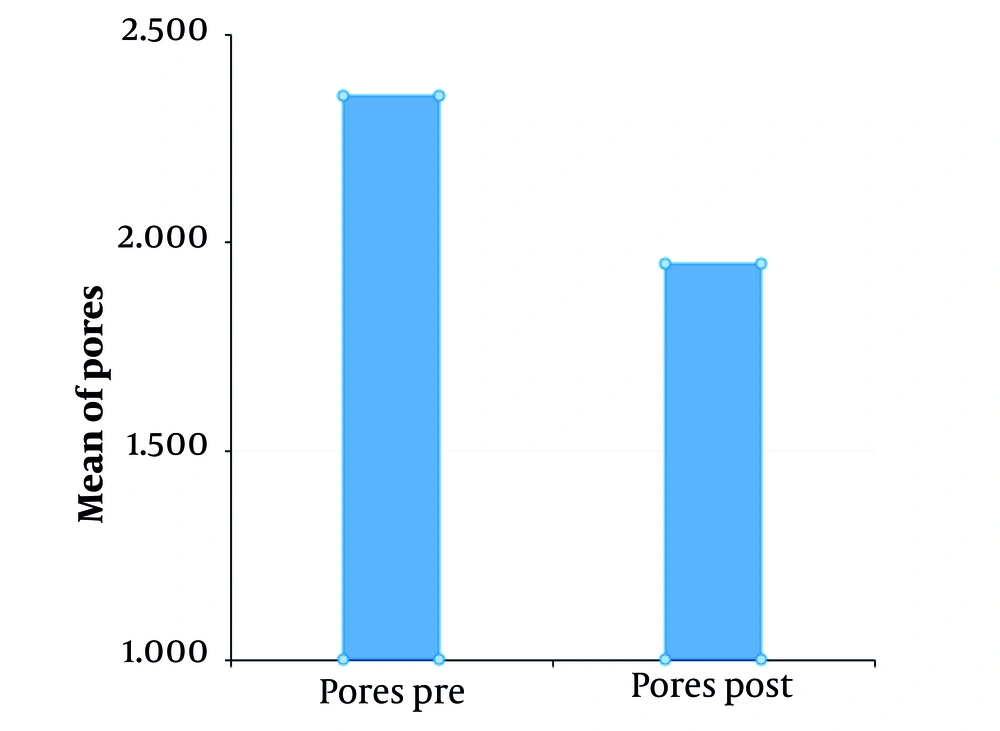
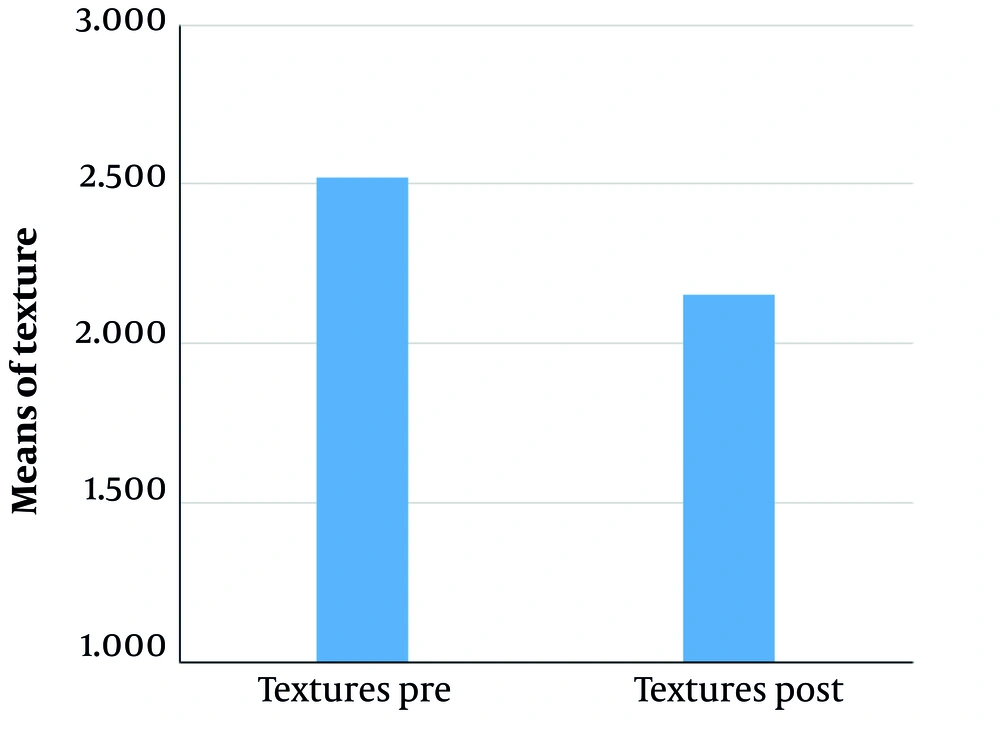
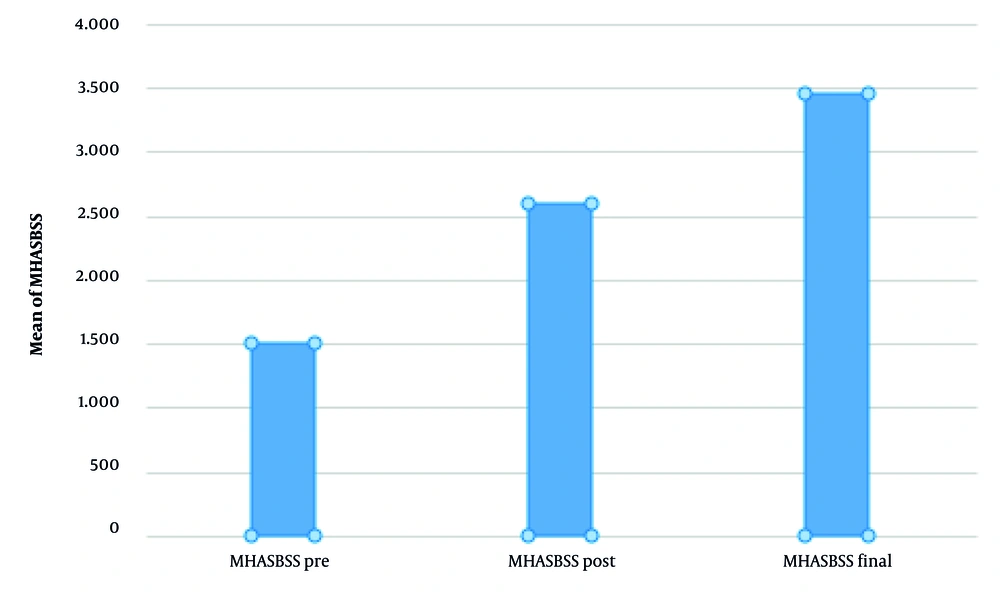
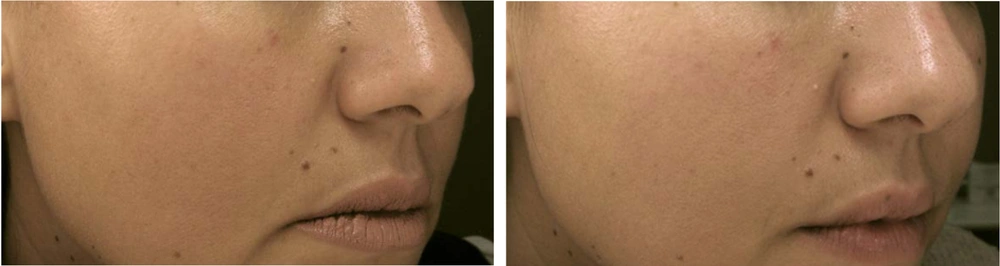
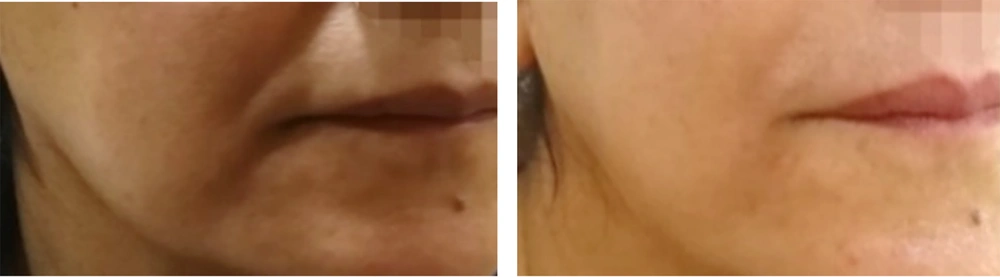
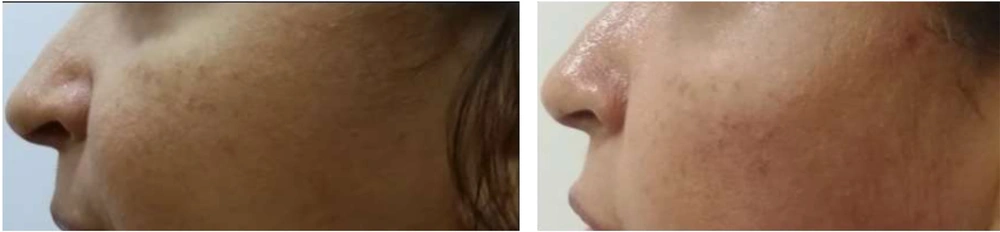
There are two ways to rate the outcome of aesthetic interventions: The objective method and the subjective one, which considers the treated person’s feeling about the overall result (
5). In the present study, VISIA analysis offered the objective tool, while the MHASBSS questionnaire provided the subjective one. As shown above, the total effect remarkably favored the usage of the studied HA molecule as a mesotherapeutic agent. This could be attributed to skin rejuvenation by injected HA components, as it has already been broadly evidenced by Jeon 2020, Bravo 2022, Keen 2017, and Salwowska 2016, demonstrating HA’s role in hydration and neocollagenesis (
4,
6-
8). The VISIA observation as well as the MHASBSS answering registration were concluded two months after the injections, emphasizing whether the cosmetic result was just temporary or prolonged, since it has been noted that although remarkable refinement of the skin usually follows mesotherapy, in a lot of cases it fades within the first couple of weeks (
9). As it was clearly noted, two months after mesotherapy injections, the HA molecule under investigation was shown to consistently maintain a prolonged, reliable cosmetic result. This was probably due to the innovative HA molecule’s ability to maintain a proper humid environment, promote various growth factors stimulation, and offer the necessary scaffold for cellular recruitment and adhesion, advancing overall dermal refreshment.
This study has limitations that contextualize its findings. The small sample size (n = 20) and focus on Caucasian females with Fitzpatrick type III-IV oily skin limit generalizability to broader populations. The absence of a control group, such as a placebo or alternative HA product, prevents definitive conclusions about the specific efficacy of the SCEDIS-MSCS HA formula relative to other treatments. The two-month follow-up may not capture long-term outcomes, as HA effects may wane or strengthen over time. Additionally, the VISIA system, while robust for surface metrics, may not detect deeper dermal changes (e.g., collagen density). These limitations are common in pilot studies, which prioritize feasibility and initial efficacy (
9).
To address these, future studies should include randomized controlled trials with placebo or comparator arms, larger and more diverse populations (including males and varied skin types), longer follow-up periods (6 - 12 months), and histological analyses to confirm neocollagenesis. Future research needs to build on these preliminary findings; a follow-up multicenter RCT is planned, incorporating a placebo control group (saline injections) and an active comparator (a standard HA mesotherapy product). The study will target a sample size of 100 participants (50% male, diverse skin types, Fitzpatrick I–VI), calculated to achieve 90% power to detect a 10% difference in texture improvement (α = 0.05). Follow-up assessments at 6 and 12 months will evaluate durability, with additional endpoints including skin hydration (via corneometry) and collagen density (via biopsy). This design will address the current study’s limitations, providing robust evidence for the SCEDIS-MSCS HA product’s efficacy and positioning it within the broader mesotherapy landscape.
Clinically, this HA product offers a non-invasive option for skin rejuvenation with minimal downtime, potentially benefiting aesthetic practices. The novel HA skin booster, utilizing SCEDIS-MSCS technology, significantly improved skin texture, pore size, and patient satisfaction, as evidenced by VISIA and MHASBSS data in this pilot study. These findings highlight its potential as an effective mesotherapy agent, with plans for a larger RCT to confirm and extend these results.