
1. Background
Psoriasis is a chronic, immune-mediated inflammatory disease that can occur at any age and is associated with a substantial clinical and psychosocial burden. Its prevalence varies considerably across geographic regions and populations (1). A systematic analysis conducted by the Global Psoriasis Atlas demonstrated marked geographic variation in psoriasis prevalence and highlighted substantial gaps in population-based epidemiological data worldwide (2). Therefore, country- and region-specific prevalence estimates should be interpreted cautiously when robust population-based data are unavailable (3).
Approximately 19% of individuals with psoriatic arthritis experience functional disability, which significantly impairs quality of life (4). Psoriasis is increasingly recognized as a systemic inflammatory disorder rather than an exclusively cutaneous disease. In addition to its visible skin manifestations, it can substantially impair physical, psychological, and social well-being and is associated with several comorbidities (5). Psoriatic arthritis (PsA) is an important inflammatory musculoskeletal manifestation of psoriasis, and early identification of patients at risk of progression from cutaneous psoriasis to PsA is clinically important, because delayed diagnosis may lead to irreversible joint damage and functional impairment. Accordingly, recent work has emphasized the early identification of clinical, imaging, serological, and molecular predictors of PsA development in patients with cutaneous psoriasis (6).
Treatment of psoriasis is individualized according to disease severity, affected sites, comorbidities, previous treatment response, and the impact of disease on quality of life. Available approaches include topical therapies, phototherapy, conventional systemic agents such as methotrexate, targeted oral therapies, and biologic agents. Biologic therapies target key inflammatory pathways involved in psoriasis, including tumor necrosis factor-alpha (TNF-α), interleukin (IL)-17, IL-12/23, and IL-23 (7). Adalimumab is a fully human monoclonal antibody directed against TNF-α and is an established systemic treatment for moderate-to-severe plaque psoriasis. Current evidence confirms the efficacy of biologic therapies in psoriasis; however, comparative analyses indicate that several newer IL-17- and IL-23-targeted agents achieve higher rates of complete or near-complete skin clearance than older TNF-α inhibitors (8).
The efficacy of adalimumab in moderate-to-severe plaque psoriasis has been established in randomized controlled trials, including comparisons with placebo and conventional systemic therapy. In the CHAMPION randomized controlled trial, adalimumab produced significantly higher PASI 75 response rates at Week 16 than methotrexate or placebo (9). Moreover, a pooled analysis of 3 double-blind, placebo-controlled trials demonstrated that adalimumab remained effective in patients who had previously received systemic therapies, including those who had failed prior systemic treatment (10). More recent randomized phase III evidence has continued to demonstrate substantial clinical responses with reference adalimumab in moderate-to-severe plaque psoriasis (11). Thus, the rationale for the present study was not to establish the efficacy of adalimumab de novo but to provide comparative clinical evidence in an Iranian population with treatment-refractory psoriasis.
2. Objectives
The objective of this randomized trial was to evaluate the efficacy and short-term safety of adalimumab compared with the study control treatment over 16 weeks, with changes in the Psoriasis Area and Severity Index (PASI), PASI 75 response, the Dermatology Life Quality Index (DLQI), and treatment-emergent adverse events assessed as clinical outcomes.
3. Methods
3.1. Randomized Controlled Trial Design
This randomized controlled trial (IRCT20120524009844N8) used a parallel-group design to assess the efficacy and safety of adalimumab versus standard care in adults with refractory psoriasis. The study was conducted at dermatology clinics affiliated with Tabriz University of Medical Sciences from January 2021 to January 2022. Ethical approval was obtained, and all participants provided written informed consent before enrollment. The study protocol was approved by the Ethics Committee of Tabriz University of Medical Sciences (IR.TBZMED.REC.1399.537).
3.2. Patients and Sampling
Eligible participants were adults aged 18 years or older with histologically confirmed psoriasis refractory to at least 1 systemic therapy for at least 1 year, with involvement of at least 5% of the body surface area. Additional inclusion criteria included stable disease for at least 6 months and no concurrent use of immunosuppressive agents or herbal supplements.
All participants were screened for latent tuberculosis (TB) before enrollment using a purified protein derivative (PPD) test and chest radiograph. Exclusion criteria included a history of neurologic symptoms suggestive of central nervous system demyelinating disease and a history of cancer or lymphoproliferative disease, except for successfully treated nonmelanoma skin cancer or localized carcinoma in situ of the cervix. Women of childbearing potential were required to use contraception.
The sample size was determined using the PASI 75 response rates reported by Saurat et al. (9), in which 79.6% of adalimumab-treated patients and 35.5% of methotrexate-treated patients achieved the outcome after 16 weeks. These proportions were entered into G Power v3.1 software with the following parameters: P1 = 0.796 (proportion for the adalimumab group); P2 = 0.355 (proportion for the methotrexate group); type I error rate (α) = 5% (2-sided); and power = 80% (corresponding to a type II error rate, β, of 20%). Based on these inputs, the calculation indicated that a total of 46 patients, 23 per group, would be required to detect the specified difference between groups with sufficient statistical power. However, to account for an anticipated dropout rate of 30%, the sample size was adjusted. Assuming that 70% of enrolled patients would complete the study, the final sample size was established as 66 patients.
3.3. Randomization
Randomization was performed using a computer-generated sequence with a 1:1 allocation ratio and block randomization (block size, 4) to ensure balanced group assignment. An independent statistician generated the sequence, which was concealed in sequentially numbered, opaque, sealed envelopes. Study coordinators enrolled eligible participants and assigned them to groups according to the predetermined sequence to minimize selection bias.
3.4. Blinding
Blinding of participants and clinicians was not feasible because of differences in the routes of administration (subcutaneous vs oral). However, outcome assessors and data analysts remained blinded to group assignment during PASI and DLQI scoring and statistical analyses to reduce measurement bias.
3.5. Interventions
Participants were randomly assigned in a 1:1 ratio to the intervention or control group. The intervention group received subcutaneous adalimumab at an initial dose of 80 mg, followed by 40 mg at Week 1 and 40 mg every 2 weeks thereafter through Week 16. The control group received oral methotrexate at a dose of 7.5 mg once weekly for 16 weeks under the supervision of the treating dermatologist. Treatment adherence in both groups was monitored using medication records and scheduled clinical follow-up visits.
3.6. Outcomes
The primary outcome was the change in the PASI score (1) from baseline to Week 16. Secondary outcomes included the DLQI score (12) at Week 16, the proportion of participants achieving a PASI 75 response (defined as at least 75% improvement from baseline), and the incidence of treatment-emergent adverse events (TEAEs).
3.7. Efficacy Evaluations
Disease severity was assessed monthly by trained dermatologists using the PASI score, which quantifies erythema, induration, scaling, and body surface area involvement on a scale from 0 to 72. Quality of life was measured at baseline and Week 16 using the Dermatology Life Quality Index (DLQI), a 10-item instrument with scores ranging from 0 (no impact) to 30 (maximum impact) (12). Clinical response was defined as achievement of PASI 75 or a minimal clinically important difference (MCID of at least 5) in DLQI scores.
3.8. Safety Evaluations
Safety was assessed throughout the 16-week study period. At each scheduled clinical visit, participants were evaluated for treatment-emergent adverse events (AEs), including infections, gastrointestinal symptoms, and injection-site reactions. Routine laboratory assessments, including hematological and hepatic function tests, were performed at baseline and Weeks 4, 8, 12, and 16. All reported AEs and serious adverse events (SAEs) were documented during follow-up.
3.9. Data Collection
Demographic data, treatment history, PASI and DLQI scores, and adverse events were systematically recorded using standardized case report forms. Double data-entry procedures were implemented to ensure accuracy and minimize transcription errors.
3.10. Statistical Analysis
Statistical analyses were performed using SPSS version 18. Continuous variables are presented as mean ± standard deviation, and categorical variables as frequency and percentage. The primary efficacy analysis compared Week 16 PASI scores between treatment groups using analysis of covariance (ANCOVA), with the treatment group as the fixed factor and baseline PASI score and sex as covariates. An analogous ANCOVA model was used for the Week 16 DLQI outcome, adjusting for baseline DLQI score and sex. Longitudinal changes in PASI scores from baseline through Months 1, 2, 3, and 4 were evaluated using repeated-measures analysis of variance, with the group-by-time interaction used to assess whether the pattern of change differed between groups. PASI 75 response rates were compared between groups using Fisher exact test, and treatment effects are additionally presented as relative risks and absolute risk differences with 95% confidence intervals. All randomized participants were included in the intention-to-treat analysis. Because complete outcome data were available for all 60 randomized participants, no imputation of missing values was required. All tests were 2-sided, and P < 0.05 was considered statistically significant.
4. Results
4.1. Patients
Six patients were excluded from the study based on predefined exclusion criteria, resulting in a final cohort of 60 individuals with refractory psoriasis. Participants were allocated to either the intervention or control group (Figure 1). No outcome data were missing; therefore, no imputation was required. The intervention group received adalimumab, whereas the control group received oral methotrexate at a dose of 7.5 mg once weekly.
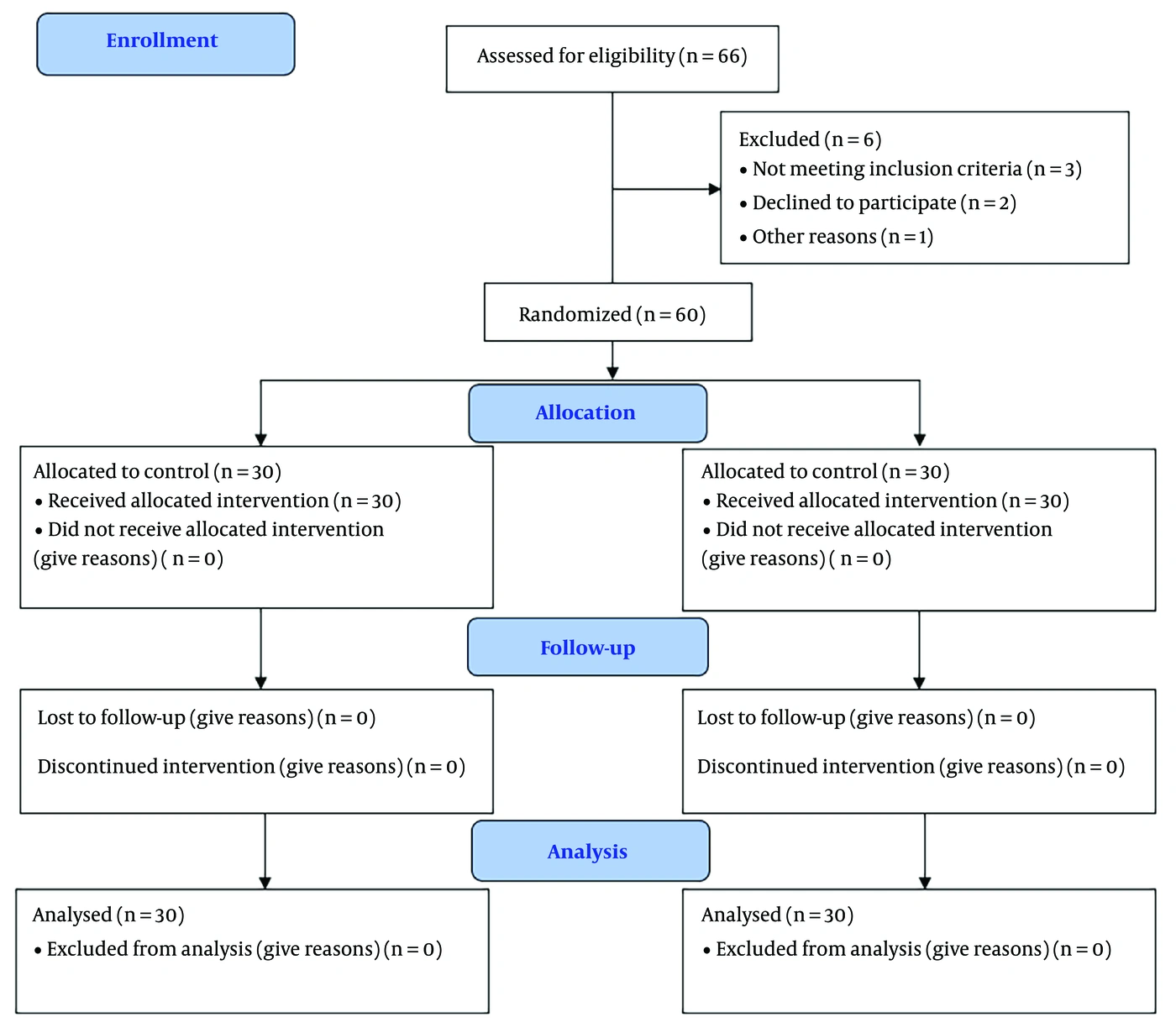
Figure 1.
Participant flow diagram
Baseline age and DLQI scores were similar between groups; however, an appreciable imbalance was observed in baseline disease severity and sex distribution. The mean baseline PASI score was higher in the intervention group than in the control group (42.52 ± 6.57 vs 26.84 ± 9.29), and males accounted for 63.3% and 33.3% of the intervention and control groups, respectively. Accordingly, baseline PASI and sex were included as covariates in the adjusted efficacy analysis. No participants were lost to follow-up, and all 60 randomized participants were included in the final analyses (Table 1).
Table 1.
Patient Demographic Information a
| Variables | Control Group (n = 30) | Intervention Group (n = 30) | P-Value |
|---|---|---|---|
| Age (y) | 35.83 ± 13.23 | 35.83 ± 11.48 | 0.999 |
| Gender | 0.038 | ||
| Male | 10 (33.3) | 19 (63.3) | |
| Female | 20 (66.7) | 11 (36.7) | |
| PASI Score Base | 26.84 ± 9.29 | 42.52 ± 6.57 | < 0.001 |
| DLQI Score Base | 23.53 ± 4.62 | 23.93 ± 7.25 | 0.800 |
a Values are expressed as mean ± standard deviation or No. (%). Continuous variables were compared using the independent-samples t test, and sex distribution was compared using Fisher exact test.
4.2. Efficacy
Figure 2 compares PASI scores between the control and intervention groups at baseline and at monthly intervals through Month 4. A statistically significant difference was observed between Month 4 and baseline in both groups (P = 0.001). PASI reductions were greater in the intervention group than in the control group. The control group had PASI scores of 18.50 ± 6.48, 13.72 ± 6.33, 11.71 ± 7.27, and 9.72 ± 8.23 at Months 1, 2, 3, and 4, respectively. The intervention group had PASI scores of 10.45 ± 7.60, 3.37 ± 2.32, 2.40 ± 1.74, and 1.73 ± 1.37 over the same periods.
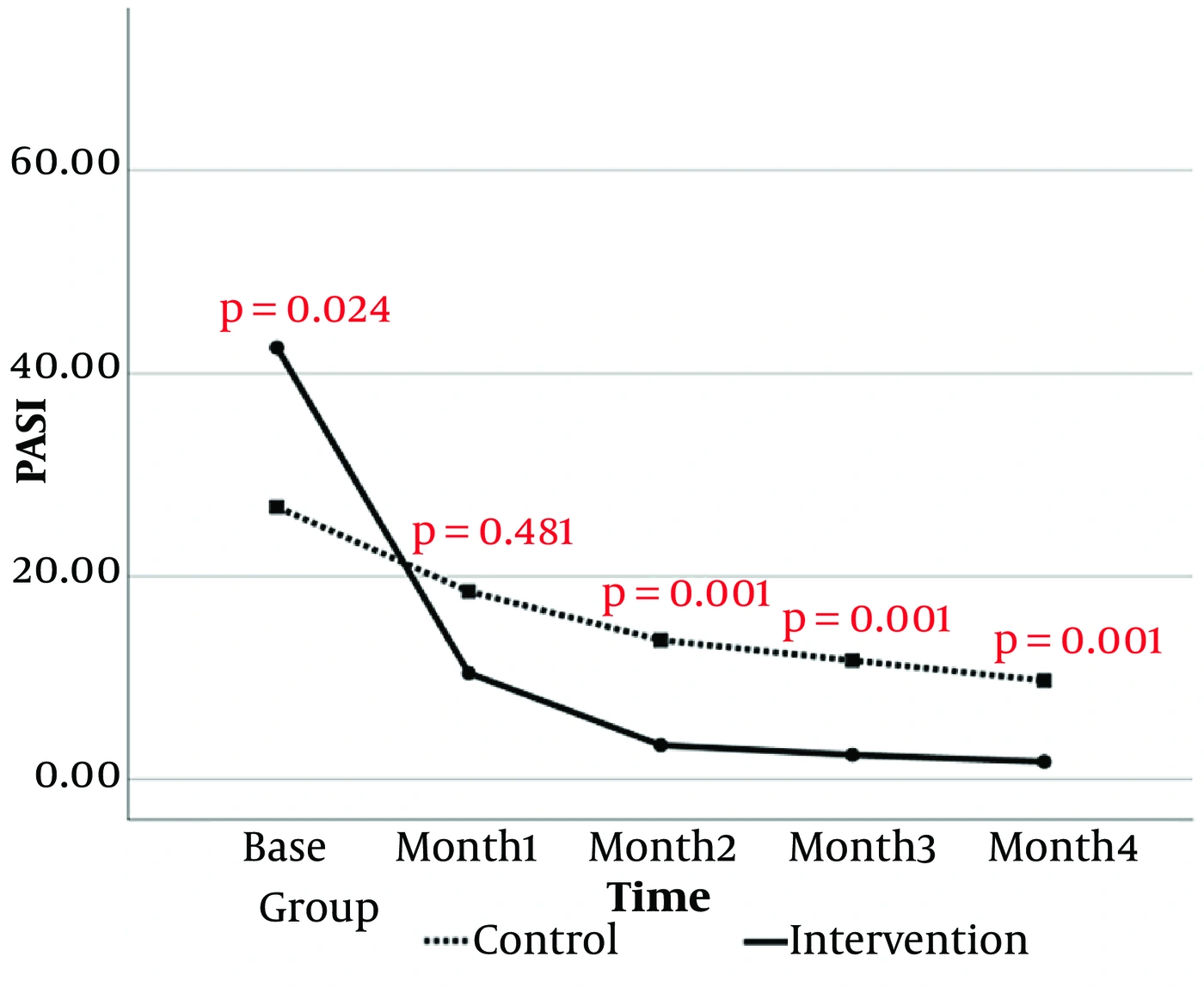
Figure 2.
Mean PASI Score changes over four months in intervention and control groups
Given the baseline imbalance in PASI severity and sex distribution, the primary between-group comparison at Week 16 was additionally evaluated using ANCOVA. After adjustment for baseline PASI score and sex, PASI remained significantly lower in the adalimumab group than in the control group, with an adjusted between-group mean difference of -8.51 points (95% CI, -13.12 to -3.90; P < 0.001; intervention minus control). Repeated-measures analysis across baseline and the 4 monthly assessments also demonstrated a significant group-by-time interaction (F[4,232] = 76.04; P < 0.001; partial η2 = 0.567), indicating that the reduction in PASI over time was significantly greater in the adalimumab group.
Figure 3 displays the proportion of patients achieving at least a 75% improvement in PASI, referred to as a PASI 75 response, at monthly assessments during the 16-week study. By the end of the study, 100% of patients in the intervention group achieved PASI 75, compared with 46.7% in the control group. This difference was highly statistically significant (P < 0.001). At Month 4, PASI 75 was achieved by 30 of 30 patients (100%) in the intervention group and 14 of 30 patients (46.7%) in the control group. This corresponded to an absolute difference of 53.3 percentage points (95% CI, 32.7 to 69.8) and a relative risk of 2.14 (95% CI, 1.46 to 3.14) in favor of adalimumab (Fisher exact P < 0.001).
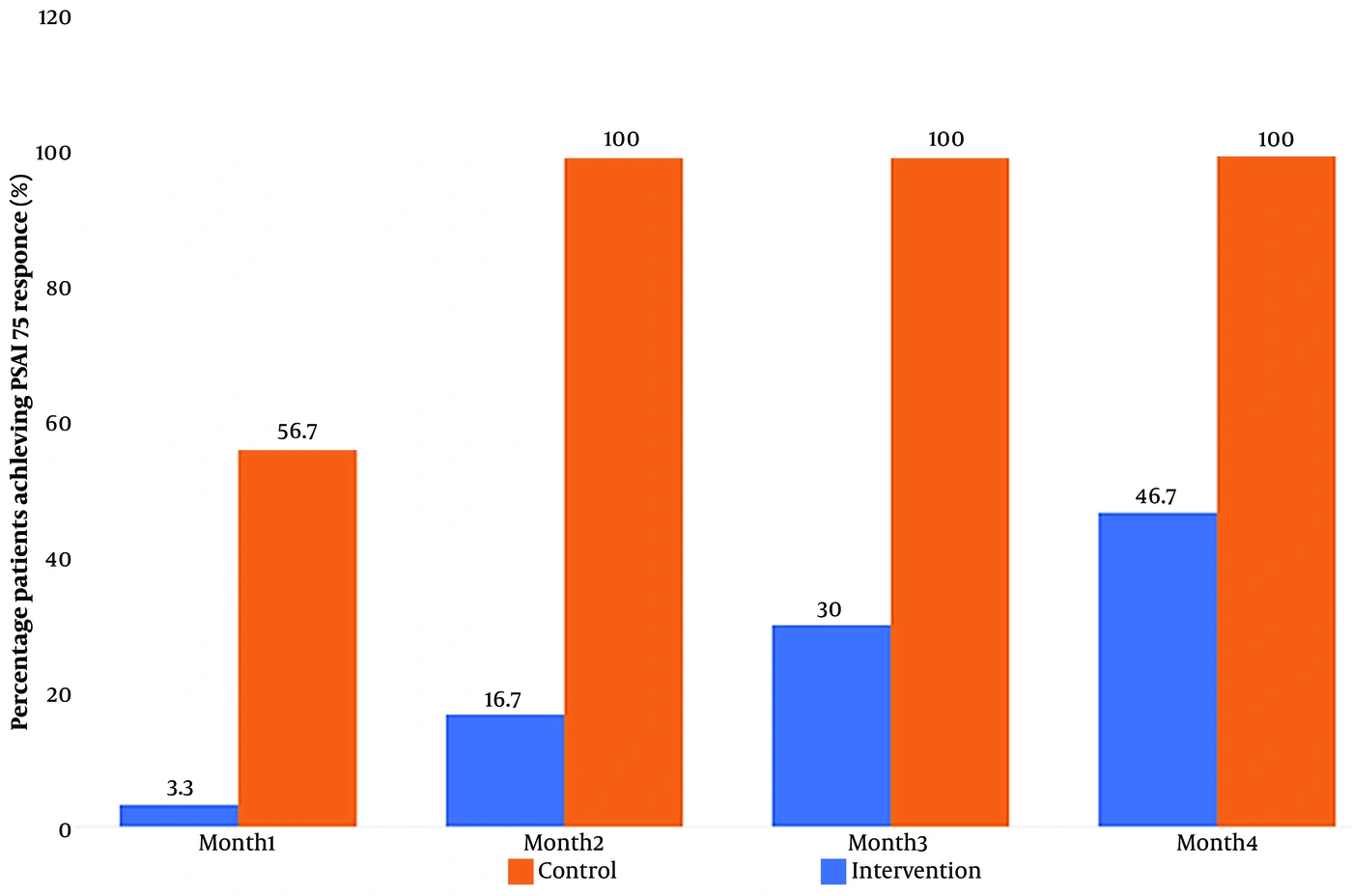
Figure 3.
Percentage of patients achieving 75% improvement in PASI response at months 1, 2, 3, and 4
The mean DLQI score at Month 4 was 14.40 ± 5.78 in the control group and 5.90 ± 2.79 in the intervention group. Both groups demonstrated a significant decrease in DLQI scores from the first to the fourth month. The intervention group had a significantly lower DLQI score than the control group at Month 4 (P = 0.001). In the baseline-adjusted analysis, the difference in DLQI at Week 16 remained statistically significant after adjustment for baseline DLQI score and sex. The adjusted mean difference between the intervention and control groups was -8.84 points (95% CI, -11.28 to -6.40; P < 0.001; intervention minus control), confirming greater improvement in dermatology-related quality of life in the adalimumab group.
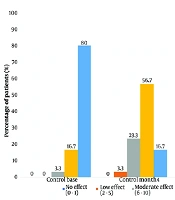
As described in the Methods section, DLQI scores were also analyzed qualitatively, with results presented in Figure 4. Both groups showed significant post-treatment improvements in quality of life, with the intervention group achieving superior outcomes (P = 0.001). Furthermore, patients with higher final PASI scores had significantly lower quality of life (P = 0.001).
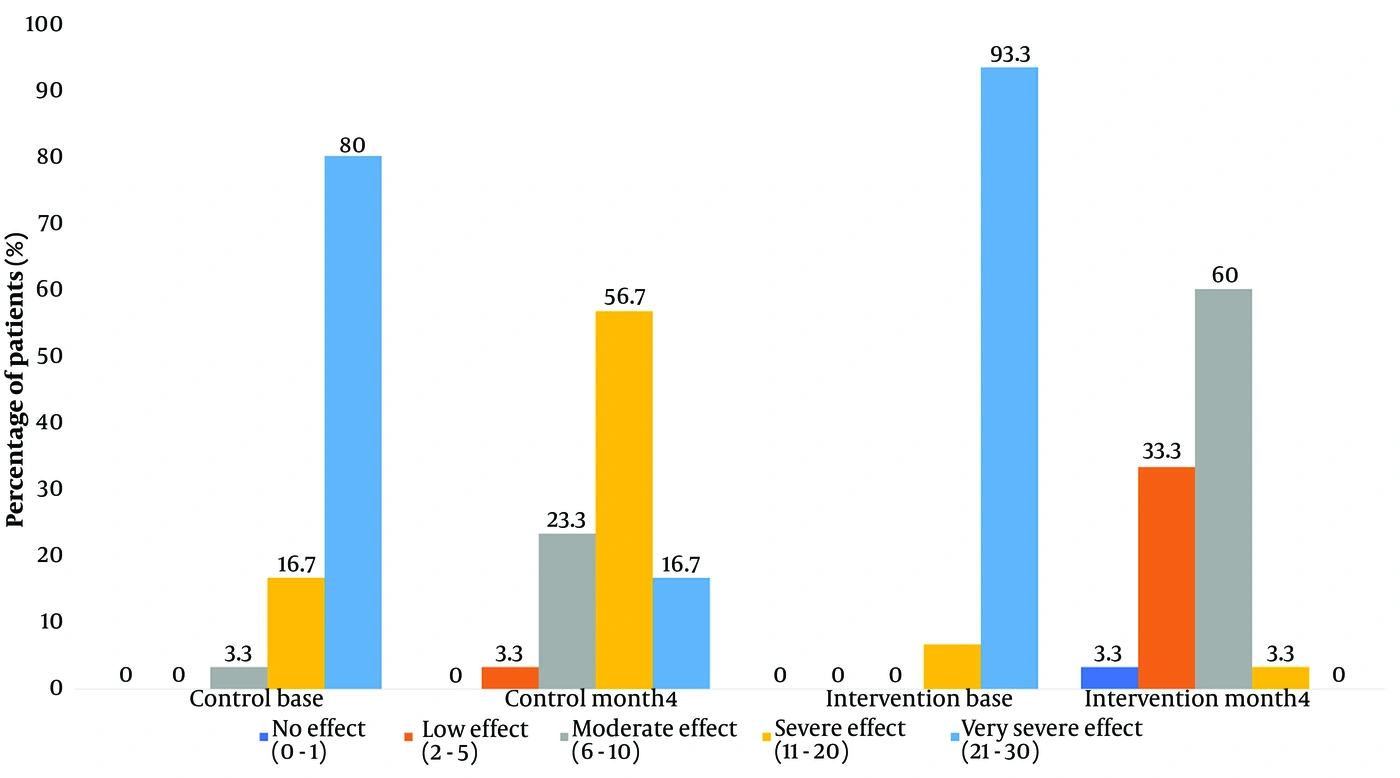
Figure 4.
Qualitative comparison of DLQI categories between intervention and control groups
4.3. Safety
No serious adverse events were reported in either treatment group during the 16-week study period. Adverse events were reported in 4 of 30 participants (13.3%) in the intervention group and 6 of 30 participants (20.0%) in the control group. In the intervention group, reported adverse events included injection-site pain in 2 participants, nausea in 1 participant, and increased blood triglyceride levels in 1 participant. In the control group, reported adverse events included nausea in 3 participants, dyspepsia in 2 participants, and increased blood triglyceride levels in 1 participant.
Injection-site pain in the intervention group was mild and transient, resolving within 24 hours. No participant discontinued treatment because of an injection-site reaction. Apart from the isolated increases in blood triglyceride levels described above, no clinically significant laboratory abnormalities were reported during the study period.
5. Discussion
This clinical trial included 60 patients with refractory psoriasis who were randomly assigned to either an intervention group or a control group. The intervention group received adalimumab, whereas the control group received oral methotrexate at a dose of 7.5 mg once weekly for 16 weeks. Patients were aged 18 to 61 years and had a nearly equal male-to-female ratio. In contrast to the study by Okhandiar et al. (13), our findings showed a different sex distribution. The use of biologic drugs in patients with moderate-to-severe plaque psoriasis has improved treatment safety, without accumulation of toxic substances in cells, and has increased treatment response (14). Adalimumab is an established TNF-α inhibitor for the systemic treatment of moderate-to-severe plaque psoriasis (15) and represents a significant advancement in the treatment of this condition.
The current investigation summarized temporal changes in PASI scores throughout the study. The intervention group, which received adalimumab, demonstrated a significant reduction in PASI scores from baseline to the 4-month assessment. Specifically, the baseline PASI score was 42.52 ± 6.57 and decreased markedly to 1.73 ± 1.37 by the end of the 16-week treatment period. This finding indicates that adalimumab effectively reduced lesion severity in patients with treatment-resistant psoriasis.
The control group also showed a significant reduction in PASI scores after treatment, although the intervention group experienced a more pronounced improvement. This observation corroborates findings reported by Gordon et al. (16), who reported PASI 75 at Week 12 in 53% of patients receiving every-other-week adalimumab and 80% of those receiving weekly dosing, compared with 4% receiving placebo. Our study did not achieve total lesion clearance, likely because of differences in the initial and subsequent dosing regimens; we initiated treatment with an 80-mg dose, whereas Gordon et al. initiated treatment with 120 mg.
Comparative analyses of the 2 groups at multiple time points indicated that PASI scores were significantly lower in the adalimumab group after 2, 3, and 4 months of treatment. Furthermore, a study by Asahina et al. (17) involving a Japanese cohort assessed the efficacy of a standard adalimumab regimen (40 mg) over 4 months, with 2 doses administered in the first month followed by monthly administration. Patients receiving adalimumab without concomitant psoriatic arthritis achieved significantly lower PASI scores than the control group. In contrast, individuals with psoriatic arthritis showed no statistically significant difference in PASI score reduction compared with the control group.
Importantly, the greater improvement observed with adalimumab was maintained after adjustment for the baseline imbalances in PASI severity and sex distribution, suggesting that the observed treatment effect was not explained by these baseline differences alone.
During the 16-week study period, no serious adverse events were observed in either treatment group. Mild adverse events occurred in both groups, affecting 13.3% of participants receiving adalimumab and 20.0% of participants in the control group. In the adalimumab group, reported events included transient injection-site pain, nausea, and increased blood triglyceride levels. Although these short-term findings did not identify serious safety events, they should be interpreted cautiously because the relatively small sample size and 16-week follow-up period were insufficient to evaluate uncommon, delayed, or long-term adverse events. This consideration is particularly relevant to TNF-α inhibitors, for which clinically important risks such as serious infections, tuberculosis reactivation, demyelinating disorders, malignancy, and cardiac complications require longer-term surveillance (18). Gkalpakiotis et al. (19) explored the long-term effects of adalimumab treatment on biomarkers in patients with psoriasis over 1 year. Their study found significant reductions in hs-CRP, interleukin 22, and E-selectin levels. These decreases indicate substantial suppression of systemic inflammation and correlate with the PASI findings. The efficacy findings in that study align with those of the present study.
Psoriasis has consequences that extend beyond objective skin involvement, affecting physical functioning, psychological well-being, social interactions, and overall quality of life. In the present study, the marked improvement in DLQI in the adalimumab group accompanied the reduction in psoriasis severity. Moreover, higher final PASI scores were associated with greater impairment in quality of life. This finding is consistent with the recent Global Healthcare Study on Psoriasis by Maul et al., which included 1,158 patients and demonstrated significant associations between PASI and DLQI across multiple geographic regions. Nevertheless, PASI and DLQI assess different dimensions of disease burden, and clinical severity should not be regarded as fully interchangeable with patient-reported quality of life (5, 20). Additionally, our study revealed a direct relationship between age and quality of life scores; specifically, quality of life tended to decline with age. These findings are consistent with the study conducted by McKenna et al. (21).
The therapeutic landscape of psoriasis also includes the investigation of nonbiologic and alternative approaches. For example, Ebrahimi et al. recently reported clinical improvement after topical treatment with an acylated quercetin formulation (InflAQ) in an individual patient with longstanding psoriasis vulgaris and subsequent erythrodermic psoriasis. Although this observation illustrates continuing interest in alternative therapeutic approaches for difficult-to-treat psoriasis, the evidence was derived from a single case report without a comparator and therefore cannot be directly compared with randomized evidence for systemic biologic therapies (22).
5.1. Limitations
This study has several limitations. First, it was a single-center trial with a relatively small sample size, which may limit the generalizability of the findings. Second, despite randomization, baseline imbalances were present in PASI severity and sex distribution. Although these variables were accounted for in adjusted analyses and the treatment effect remained statistically significant, residual confounding cannot be completely excluded. Third, the 16-week study period was relatively short and insufficient to evaluate uncommon, delayed, or long-term adverse events associated with adalimumab. Fourth, the control group received methotrexate at a relatively low dose; therefore, the magnitude of the observed between-group difference should be interpreted in the context of the comparator regimen. Finally, larger multicenter studies with longer follow-up and standardized comparator regimens are required to confirm the durability, generalizability, and long-term safety of these findings.
5.2. Conclusions
The findings of this study indicate that adalimumab was more effective than oral methotrexate at 7.5 mg once weekly in reducing psoriasis severity and improving quality of life among patients with treatment-refractory psoriasis over the 16-week study period. No serious adverse events were observed during the 16-week study period; however, longer follow-up and larger studies are required to characterize safety more comprehensively.