1. Background
Burns and related injuries are some of the most important causes of death and disability worldwide. Patients require rehabilitation, reconstruction, and physical and psychological support for years as well as a burn treatment. According to the statistics released in 2000, about 3.168 burns occur in every 10,000 people in Iran that among them 9.16 people are hospitalized and 4.10 die (1). In the developed countries such as the United States, about 5.2 million people have burn injuries each year that about 100,000 of them are hospitalized and more than 10% die due to the developed complications. It is noteworthy that the mortality rate caused by traffic accidents is higher than those of other accidents. Burns are usually divide to first, second, and third degrees according to their intensity. Second-degree burns damage the dermis layer of the skin and injure the entire layer of the epidermis. This type of burn is usually associated with blistering, oozing liquid, and extreme sensitivity to touch (2). Using natural compounds to heal the wound caused by burn are noticed due to the slow recovery process of this type of wound and patient's general inability (3). Sesame belongs to Pedaliaceae family and is a valuable old crop. The most useful part of sesame is its seed that nearly 75% of its mass consists of lipids and protein. The sesame oil is a high-quality oil and due to its high quality, aroma, and good taste, it is called the queen of oil seeds (4). Sesame oil contains about 5.1% lignans such as samin and seminole, which is responsible for its unique physiological and biochemical properties such as antioxidant, anti-mutagenic, and anti-inflammatory activities (5). In addition, a study conducted by Hirose et al., on mice showed that sesame samin feeding for four weeks reduced serum cholesterol levels (6). Pumpkin (Cucurbita moschata) is a kind of herbaceous plant belonging to Cucurbitaceae family. In traditional medicine, the fruit of this plant is used as a soothing, laxative, antipyretic agent and the flesh part of the plant is used as wound ointment, treating blisters, inflammation, and abscesses (7). The biologically active compounds of this plant include para-aminobenzoic acid, polysaccharides, proteins, peptides, and sterols. Alkaloid, palmitic acid, oleic, linoleic, and flavonoids are also abundant in pumpkin (1). The pumpkin seed is a rich source of Yaz protein, phytosterols, vitamins, antioxidants including tocopherol, polyunsaturated fatty acids, and minerals such as zinc. It is known that pumpkin seed oil is useful to treat benign prostatic hyperplasia and urinary tract abnormalities. In addition, pumpkin seeds inhibit aggregation and the formation of crystals in the bladder, thus it prevents bladder stone generation. Antioxidant property of the male and female pumpkin flower extract, the oil, and powder is proved. Phenolic compounds in pumpkin seed extract inhibit lipid peroxidation. These compounds also suppress free radicals (8). Antioxidants are compounds that in small amounts can protect cell membranes (9). Reestablishing balance between peroxide and antioxidant allows cells to recover their normal physiological action (10). According to numerous reports, these natural compounds such as essences and extracts of some plants have antioxidant properties (11) and also given that most plant compounds compared with chemical compounds in controlled amounts have less toxic side effects, the current study evaluated the effects of sesame oil and pumpkin. The current study also investigated the topical effect of both materials in various concentrations on burn wound of male mice in terms of histology and profiles of membrane proteins. The current experimental study aimed at evaluating the efficacy of pumpkin and sesame oil according to the index angiogenesis, granular tissue depth, the density of fibroblasts and inflammatory cells, and regenerative tissue integrity.
2. Methods
2.1. Experimental Animals
In the current study, 24 male albino mice weighing 25 - 30 g were used. The mice were kept in individual clean cages with free access to food and water, and all ethical standards related to the use of laboratory animals were observed. In order to prevent burn wound infection, tetracycline antibiotics were fed to mice orally and in the water-soluble form (12). Animals were randomly divided into six equal groups each with 4 mice. In order to make a mice model, each mouse was anesthetized and then a small burn was created. For this purpose, the mice were placed on a transparent package containing a high dose of inhaled ether. After anesthesia, mice were placed in prone position on the dissection pan and their back hair was shaved with a razor. Shaved area was disinfected with cotton dipped in ethanol and the back area of skin at the end of the spine near the tail was burned; a 2-cm coin heated for about three minutes with a spirit lamp and contacted with the skin for eight seconds and the same procedure with deep burn was made in thermal form (Figure 1).
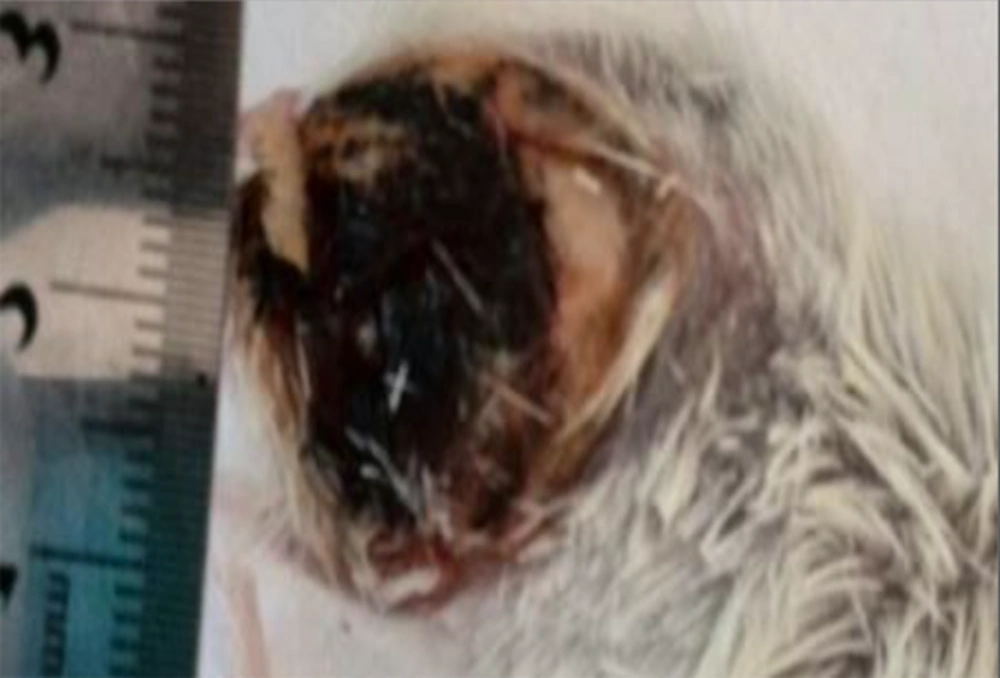
Figure 1.
Third-degree Burn in Male Mice
2.2. Experimental Groups
Daily topical treatments were performed once a day at certain hours. At the end of each week, a mouse from each group was randomly selected and dissected after inducing anesthesia according to ethical principles. Hair of the area treated after burning was shaved with a shaver and after taking a photo from the wound area, the area was separated by a scalpel blade to compare the amount and the quality of tightening and healing of the wound microscopically; 6-µm-thick samples was prepared after dehydration and providing paraffin templates and then, were stained using hematoxylin and eosin. The slices were provided in order to assess skin layer thickness, and measure and count the number and diameter of the hair follicles and shafts. Also, protein purification, malondialdehyde (MDA), and total antioxidant tests were performed on the samples based on the routine methods employed in the papers (13). Animal treatment lasted for 28 days.
2.3. Data Analysis
The data were analyzed with SPSS version 16.0. Quantitative variables were expressed as mean ± standard deviation (SD). The intergroup differences were assessed using ANOVA, and intragroup differences were evaluated by Tukey test; P < 0.05 was considered as the level of significance.
3. Results
3.1. Macroscopic Findings
After a period of treatment that confirmed complete tightening of the wound in the fifth group treated with a combination of all materials, macroscopic images of the wounds in the experimental group were observed. Also, healing and the tightening process of the wound in the fifth group were better than the control group and the four other groups. The group receiving topical treatment with a combination of sesame and pumpkin left less scar compared to the other experimental groups (Figure 2).
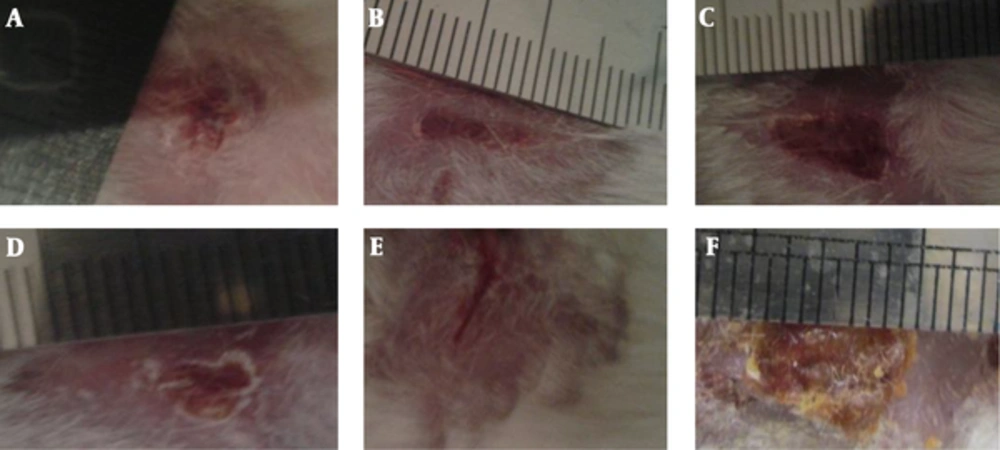
Figure 2.
Macroscopic images taken from the burn wounds 28 days after burning in the treatment groups. A, Sesamum 40%; B, Sesamum 30%; C, Cucurbita 40%; D, Cucurbita 40%; E, Sesamum 50% + Cucurbita 50%; F, Non-treated control group.
3.2. Microscopic Findings
Histopathological changes in the skin tissue of normal groups (F) and treated groups including 40% sesame oil (A), 30% sesame oil (B), 40% pumpkin (C), and 30% pumpkin (D) in addition to the combined group are shown in Figure 3. All the slides were prepared using the Mallory-Trichrome staining technique (Figure 3). The results showed that the combination of sesame oil and pumpkin in different concentrations affected the third-degree burn wounds considerably and treatment process was faster in this group than the control group and other groups treated with other mixtures and left fewer scars (Figure 3).
Table 1.
Experimental Solutions
| Sesamum, 30% | Sesamum, 40% | Cucurbita, 30% | Cucurbita, 40% | Sesamum, 50% | Cucurbita, 50% | |
|---|---|---|---|---|---|---|
| Control | - | - | - | - | - | - |
| 1 | + | |||||
| 2 | + | |||||
| 3 | + | |||||
| 4 | + | |||||
| 5 | + | + |
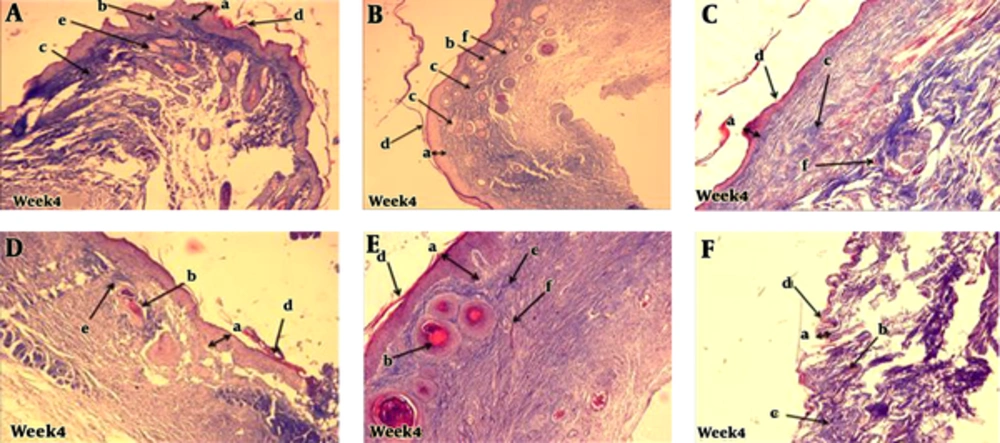
Figure 3.
Photomicrograph of skin samples belong to five treatment groups in Table 1 at the week four. Arrows on the figures indicate: (a) epithelial thickness, (b) thickness, density, orientation, and arrangement of collagen fibers, (c) keratinization amount, (d) sebaceous glands formation, (e) angiogenesis amount (f).
3.3. Evaluation of Total Antioxidant Review and MDA
Figure 4 shows the changes in MDA in the studied groups. MDA in the combined group was 5.0 ± 1.5 nM/mg protein that decreased significantly to 9.5 ± 0.3 nM/mg, compared with that of the control group (P < 0.05).
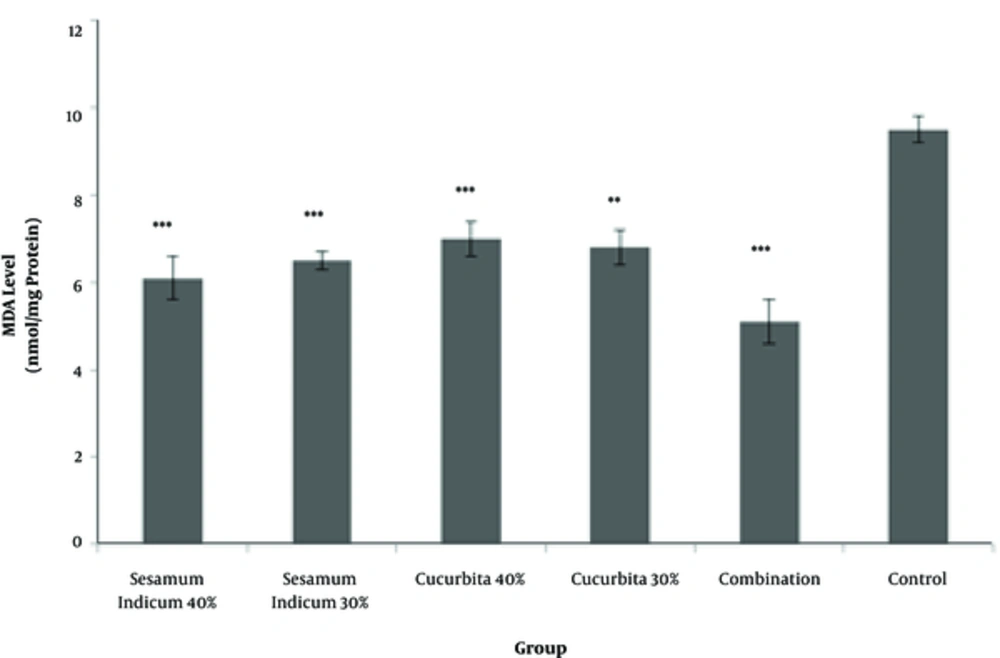
Figure 4.
Changes of MDA; data are expressed as mean ± SEM. *The graph expresses the total anti-oxidant amount of the samples. P < 0.05, **P < 0.01, ***P < 0.001.
Total antioxidant capacity increased significantly in the group treated with a combination of both materials compared with the control group (P < 0.05). The antioxidant capacity of the group treated with 40% pumpkin showed a highly significant reduction (P < 0.001) (Figure 5).
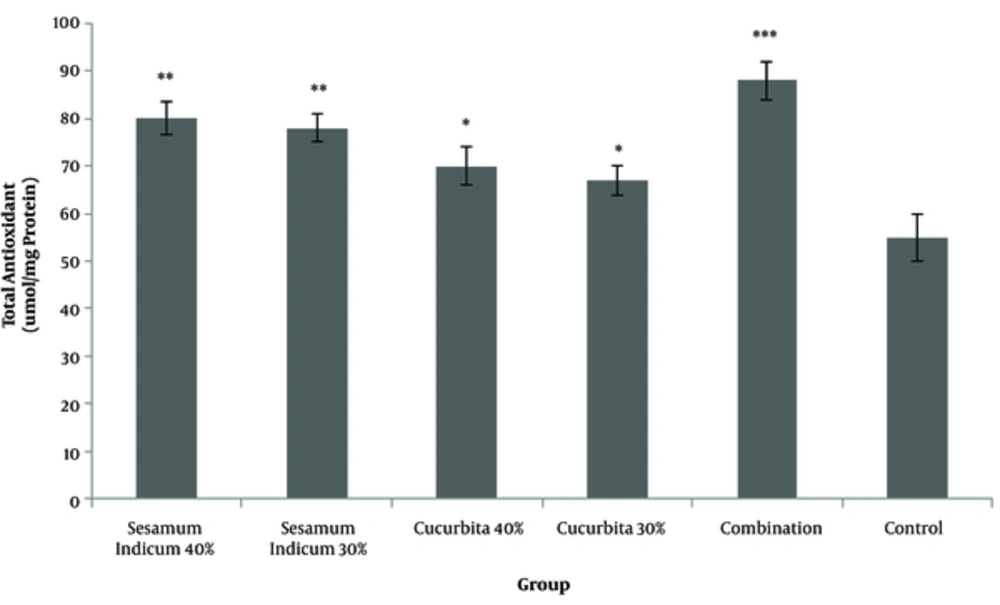
Figure 5.
The total antioxidant capacity of the treated skin samples. Data are shown as mean ± SEM. *P < 0.05, **P < 0.01, ***P < 0.001.
4. Discussion
The current study examined the effect of time limitation and the concentration of sesame oil and pumpkin on wounds healing and inflammation recovery caused by protein profile changes as well as the total antioxidant skin test and MDA test in male mice. The statistical findings of the current study showed that the most effective treatments were observed in the group treated with a combination of sesame oil and pumpkin in different concentrations after 28 days. In fact, a combination of sesame oil and pumpkin reduced the diameter of the wounds more than their separate applications (Figure 2). Studies on medicinal plants showed that antioxidants can have therapeutic effects on healing wounds and protect tissue against oxidative damages (14). Accordingly, it is suggested that due to vitamin E and phenolic compounds in pumpkin, this kitchen garden fruit can affect the wound healing process. Another study confirmed that the fatty acids are the important compounds of biological membranes that are very sensitive to oxidative stress (15). By which, lipid peroxidation impairs the membrane structure and other proteins as a result of releasing hydroperoxide as they potentially are toxic to cells (16). The antioxidants have an important role in the defense systems as they can protect human against damages caused by oxidants both directly or indirectly (17). In addition, the use of antioxidants in the diet and drug can provide a balance between the oxidant peroxidase. Besides the natural antioxidants such as vitamin E and beta-carotenes, synthetic antioxidants such as butylated hydroxyanisole (BHA), butylated hydroxytoluene (BHT), uric acid, selenium, and bilirubin can also affect peroxide formation. However, due to their toxicity and side effects, widespread use is still not allowed. Natural antioxidants from plant origins especially the edible plants have fewer side effects and can be effective in small amounts (18).
The current study, in order to identify a natural compound with antioxidant properties, investigated the effects of sesame oil and pumpkin on lipid peroxidation. Results showed that the combination of these two plants depends on the dose confirmed by MDA test. Sesame seed lipids mostly include neutral triglycerides with a small amount of phosphatide. Also, sesame oil includes high percentage (2.1%) of non-soap materials. Sesame oil triglyceride contains mostly three unsaturated (58%) and two unsaturated (36%) and a small amount of monounsaturated acids (6%). Approximately, 80% of saturated fatty acids in sesame oil are unsaturated. Oleic acid and linoleic acid are essential fatty acids and their amounts are approximately equal. Palmitic acid and stearic are saturated fatty acids of sesame oil. Sesamin and sezaminol in sesame seed have antioxidant and anti-cancer properties and are not found in any other oilseeds (19). Cell-cell and cell-matrix interaction in all phases of wound healing are necessary and set by several factors such as FGF (fibroblast growth factors), VEGF (vascular endothelial growth factor), Tunica vaginalis fluid, TGF (tumor growth factor)-β, IL (interleukin)-6, IL-1. A logical method for better treatment of burns is to block the inflammatory reaction resulting in the metabolic imbalance. As the first goal of treatment is rapid tightening, therefore, the drugs that modulate the inflammatory effects can be considered as appropriate treatments. Unsaturated fatty acids are precursors of many lipoic compounds that involve in inflammatory reactions. Also, N3 and N6 are involved in the formation of lipoic compounds. More importantly, N9 plays a crucial role in membrane phospholipid synthesis as the edema and fibrin clot become thinner and consequently the wounds are treated much faster (20). These fatty acids also induce expression of collagen type 3 and reduce the expression of cyclooxygenase 2. In addition, they can increase transcription of the interleukin 10, 17, and tumor necrosis factor (TNF)-α and that is why the fatty acids can directly affect wound regeneration. In another study found that oleic acid in pumpkin extract moderates immune response and inflammation in wounds (21). Fakhar Ebrahami evaluated the effect of sesame oil and calcium hydroxide on the recovery of the third-degree burn wounds. The results demonstrated that this compound in debridement had more effects than fibrinolysin ointment for debriding and showed a valuable effect on tissue rehabilitation (1). Tissue repair is affected by sesame oil according to Valacchi et al. (22).
The histology results of dermis showed that restoration of the epidermis and dermis were accelerated in all treatment groups compared with the control group also in all treated groups necrosis and edema reduction were observed. In samples treated with 40% dose of sesame, no significant necrosis was observed. Comparison of the treated groups showed that 30% and 40% sesame oil were more effective than the same dose of pumpkin, and the effect of sesame was similar to that of 40% pumpkin. In the combined treatment group, epidermis and dermis development were the same as the group treated with 40% sesame oil and recovery rate increased significantly in the group treated with a combination of materials compared with the group treated with 40% sesame oil (P < 0.05). According to the abovementioned items, it can be concluded that topical application of sesame oil and pumpkin on the wound bed have a significant effect on acceleration of tightening and healing, the recovery of layer and dermal appendages, and reduction of scars after the recovery of wounds caused by severe burns. However, more research is needed on the effect of these materials. Also, applying laboratory mice as an animal model and treating them with various concentrations of the combinations showed new horizons of research to evaluate applications of herbal traditional ingredients in physiology. Due to the physiological similarities between mice and the human body, the results of the current study can be generalized to human. On the other hand, synergistic effects of sesame oil and pumpkin in the current study represent a regimen to improve burn wounds healing in male mice. By conducting accurate clinical trial and toxicology studies, this combination can be also used to treat burn wounds in humans.