Journal of Semnan University of Medical Sciences
Image Credit:Koomesh
Outline
A Review of the Utilization of Honey Bee Products in the Treatment of Diseases: Medicinal Approach
Authors

Abstract
Background: Bee products, including honey, wax, pollen, propolis, royal jelly, and venom, hold significant economic importance in the food, pharmaceutical, and health sectors.
Objectives: This is due to their potential benefits and reduced side effects compared to traditional treatments. This study aims to review the medicinal and therapeutic uses of these bee products.
Methods: This review study employed a comprehensive search strategy, utilizing specialized keywords in reputable databases such as Magiran, SID, Google Scholar, Scopus, ISI, Pubmed, ISC, and others.
Results: Bee products have demonstrated efficacy in treating various ailments, including nervous system disorders, multiple sclerosis, shingles, rheumatism, arthritis, and depression. Honey has Powerful antibacterial and antifungal properties, making it effective in wound healing and as a natural antiseptic. Soothes coughs and sore throats, acts as a prebiotic, promoting gut health. Propolis exhibits strong antioxidant, anti-inflammatory, and antimicrobial properties, is effective in treating oral infections, skin conditions, and respiratory ailments, and boosts the immune system. Pollen, rich in vitamins, minerals, and antioxidants, enhances energy levels and reduces fatigue, supports immune function. Royal Jelly contains essential nutrients and bioactive compounds, which may improve cognitive function, reduce stress, and boost energy levels. Bee venom possesses anti-inflammatory and analgesic properties, used in apitherapy to treat conditions like arthritis and multiple sclerosis, and may have potential in cancer treatment.
Conclusion: Bee therapy emerges as a promising branch of biomedical science, offering relief from chemical drugs and conventional medical treatments. By harnessing the metabolic effects of compounds within bee products, human health can be preserved through their increased utilization in society.
Highlights
References
- 1.Hassanzadeh Ghort Tepe A, Sayidi D. [Honey Bee Breeding Guide, first edition of Agricultural Education Publication]. Alborz, Iran: Agricultural Research Education and Extension Organization, Deputy for Promotion Agricultural Education Publication,; 2015.
- 2.Faqihi R, Taha E. Apitherapy as an Alternative medicine: Article review. African J Biol Sci. 2022;18(2):43-57. https://doi.org/10.21608/ajbs.2022.251260.
- 3.Nainu F, Masyita A, Bahar MA, Raihan M, Prova SR, Mitra S, et al. Pharmaceutical Prospects of Bee Products: Special Focus on Anticancer, Antibacterial, Antiviral, and Antiparasitic Properties. Antibiotics (Basel). 2021;10(7). [PubMed ID:34356743]. [PubMed Central ID:PMC8300842]. https://doi.org/10.3390/antibiotics10070822.
- 4.Basa B, Belay W, Tilahun A, Teshale A. Review on medicinal value of honeybee products: Apitherapy. Adv Bio Res. 2016;10(4):236-47.
- 5.İzol E. The Place of Bee Products in Functional Medicine. Funct Med Part. 2023;2:11-6.
- 6.Männle H, Münstedt K. Application of Bee Products for Dermatological Problems. J Skin Stem Cell. 2020;7(1). https://doi.org/10.5812/jssc.103472.
- 7.El-Seedi HR, Khalifa SAM, El-Wahed AA, Gao R, Guo Z, Tahir HE, et al. Honeybee products: An updated review of neurological actions. Trends in Food Science & Technology. 2020;101:17-27. https://doi.org/10.1016/j.tifs.2020.04.026.
- 8.Şengül F, Vatansev H. Overview of apitherapy products: anti-cancer effects of bee venom used in apitherapy. Inter J Trad Complementary Med Res. 2021;2(1):36-48.
- 9.Martinello M, Mutinelli F. Antioxidant Activity in Bee Products: A Review. Antioxidants (Basel). 2021;10(1). [PubMed ID:33430511]. [PubMed Central ID:PMC7827872]. https://doi.org/10.3390/antiox10010071.
- 10.Yupanqui Mieles J, Vyas C, Aslan E, Humphreys G, Diver C, Bartolo P. Honey: An Advanced Antimicrobial and Wound Healing Biomaterial for Tissue Engineering Applications. Pharmaceutics. 2022;14(8). [PubMed ID:36015289]. [PubMed Central ID:PMC9414000]. https://doi.org/10.3390/pharmaceutics14081663.
- 11.Olaitan PB, Adeleke OE, Iyabo OO. Honey: a reservoir for microorganisms and an inhibitory agent for microbes. African health sci. 2007;7(3).
- 12.Yilmaz AC, Aygin D. Honey Dressing in Wound Treatment: A Systematic Review. Complement Ther Med. 2020;51:102388. [PubMed ID:32507418]. https://doi.org/10.1016/j.ctim.2020.102388.
- 13.Fukuda M, Kobayashi K, Hirono Y, Miyagawa M, Ishida T, Ejiogu EC, et al. Jungle honey enhances immune function and antitumor activity. Evid Based Complement Alternat Med. 2011;2011:908743. [PubMed ID:19141489]. [PubMed Central ID:PMC3137786]. https://doi.org/10.1093/ecam/nen086.
- 14.Zaidi M, Sharma J. Honey and its beneficial therapeutic effects: a review. J Pharmacogn Phytochem. 2019;8(4):1056-61.
- 15.Hameed Gatea A, Anatheil AH, Mohammed Ali A. Overview on Bee products in Skin care and Hair care. Mod Med Lab J. 2023;6(1):22-8. https://doi.org/10.30699/mmlj17.6.1.22.
- 16.Rabby MII, Hossain F, Islam MA, Islam AKMS, Akhi IJ, Akter F. Impact of supplemental vitamins and natural honey for treatment of COVID-19: A review. Braz J Pharmaceutical Sci. 2022;58. https://doi.org/10.1590/s2175-97902022e20607.
- 17.Aksoy B, Apaydın Cırık V. Consumption of Apitherapy Products by Late Adolescents Before and During the COVID-19 Pandemic: A Cross-Sectional and Comparative Descriptive Study. Mod Care J. 2024;21(4). https://doi.org/10.5812/mcj-145809.
- 18.Denisow B, Denisow-Pietrzyk M. Biological and therapeutic properties of bee pollen: a review. J Sci Food Agric. 2016;96(13):4303-9. [PubMed ID:27013064]. https://doi.org/10.1002/jsfa.7729.
- 19.Jannesar M, Shoushtari MS, Majd A, Pourpak Z. Bee pollen flavonoids as a therapeutic agent in allergic and immunological disorders. Iran J Allergy, Asthma Immunol. 2017:171-82.
- 20.Cheng PC, Wong G. Honey bee propolis: prospects in medicine. Bee World. 2015;77(1):8-15. https://doi.org/10.1080/0005772x.1996.11099278.
- 21.Zulhendri F, Felitti R, Fearnley J, Ravalia M. The use of propolis in dentistry, oral health, and medicine: A review. J Oral Biosci. 2021;63(1):23-34. [PubMed ID:33465498]. https://doi.org/10.1016/j.job.2021.01.001.
- 22.El-Gammal E, Nardo VD, Daaboul F, Tchernev G, Wollina U, Lotti J, et al. Apitherapy as a New Approach in Treatment of Palmoplantar Psoriasis. Open Access Maced J Med Sci. 2018;6(6):1059-61. [PubMed ID:29983801]. [PubMed Central ID:PMC6026437]. https://doi.org/10.3889/oamjms.2018.135.
- 23.Bhargava P, Mahanta D, Kaul A, Ishida Y, Terao K, Wadhwa R, et al. Experimental Evidence for Therapeutic Potentials of Propolis. Nutrients. 2021;13(8). [PubMed ID:34444688]. [PubMed Central ID:PMC8397973]. https://doi.org/10.3390/nu13082528.
- 24.Castaldo S, Capasso F. Propolis, an old remedy used in modern medicine. Fitoterapia. 2002;73 Suppl 1:S1-6. [PubMed ID:12495704]. https://doi.org/10.1016/s0367-326x(02)00185-5.
- 25.Murata K, Yatsunami K, Fukuda E, Onodera S, Mizukami O, Hoshino G, et al. Antihyperglycemic effects of propolis mixed with mulberry leaf extract on patients with type 2 diabetes. Alternative therapies in health and medicine. 2004;10(3):78-9.
- 26.Viuda-Martos M, Pérez-Alvarez JA, Fernández-López J. Royal Jelly: Health Benefits and Uses in Medicine. Bee Prod - Chemical Biol Prop; 2017. p. 199-218.
- 27.Sığ AK, Öz-Sığ Ö, Güney M. Royal jelly: a natural therapeutic? Ortadoğu Tıp Dergisi. 2019;11(3):333-41. https://doi.org/10.21601/ortadogutipdergisi.500434.
- 28.Kurek-Gorecka A, Gorecki M, Rzepecka-Stojko A, Balwierz R, Stojko J. Bee Products in Dermatology and Skin Care. Molecules. 2020;25(3). [PubMed ID:32012913]. [PubMed Central ID:PMC7036894]. https://doi.org/10.3390/molecules25030556.
- 29.Guo J, Wang Z, Chen Y, Cao J, Tian W, Ma B, et al. Active components and biological functions of royal jelly. J Funct Foods. 2021;82. https://doi.org/10.1016/j.jff.2021.104514.
- 30.Bellik Y. Bee Venom: Its Potential Use in Alternative Medicine. Anti-Infective Agents. 2015;13(1):3-16. https://doi.org/10.2174/2211352513666150318234624.
- 31.Abdela N, Jilo K. Bee venom and its therapeutic values: a review. Adv Life Sci Technol. 2016;44:18-22.
- 32.Fratini F, Cilia G, Turchi B, Felicioli A. Beeswax: A minireview of its antimicrobial activity and its application in medicine. Asian Pac J Trop Med. 2016;9(9):839-43. [PubMed ID:27633295]. https://doi.org/10.1016/j.apjtm.2016.07.003.
- 33.Gupta G, Anjali K. Environmentally Friendly Beeswax: Properties, Composition, Adulteration, and its Therapeutic Benefits. IOP Conf Series: Earth Environ Sci. 2023;1110(1). https://doi.org/10.1088/1755-1315/1110/1/012041.
Copyright
© 2025, Author(s). This open-access article is available under the Creative Commons Attribution 4.0 (CC BY 4.0) International License (https://creativecommons.org/licenses/by/4.0/), which allows for unrestricted use, distribution, and reproduction in any medium, provided that the original work is properly cited.
Similar Articles
The Therapeutic Effects of Bioactive Compounds in Honeybee Products
Hesami S, Khadem H. The Therapeutic Effects of Bioactive Compounds in Honeybee Products. J Inflamm Dis. 2024;22(6):e156139. doi:
Application of Bee Products for Dermatological Problems
Männle H, Münstedt K. Application of Bee Products for Dermatological Problems. J Skin Stem Cell. 2020;7(1):e103472. doi: https://doi.org/10.5812/jssc.103472
Evidence for Clinical Use of Honey in Wound Healing as an Anti-bacterial, Anti-inflammatory Anti-oxidant and Anti-viral Agent: A Review
Yaghoobi R, Kazerouni A, kazerouni O. Evidence for Clinical Use of Honey in Wound Healing as an Anti-bacterial, Anti-inflammatory Anti-oxidant and Anti-viral Agent: A Review. Jundishapur J Nat Pharm Prod. 2013;8(3):100-104. doi: https://doi.org/10.17795/jjnpp-9487
Antineoplastic Effects of Honey Bee Venom
Nabiuni M, Safaeinejad Z, Parivar K, Divsalar A, Nazari Z. Antineoplastic Effects of Honey Bee Venom. Zahedan J Res Med Sci. 2013;15(8):e92892. doi:
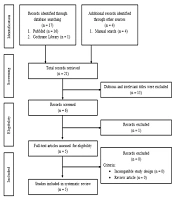
The Effectivity of Honey Bee Towards Mesenchymal Stem Cells Proliferation: A Systematic Review
Rosadi I, Muhammadiyah M, Az Zahra TF, Hariani N. The Effectivity of Honey Bee Towards Mesenchymal Stem Cells Proliferation: A Systematic Review. J Skin Stem Cell. 2023;10(1):e118960. doi: https://doi.org/10.5812/jssc-118960
- Scopus by DOI: 0
Last Update: 1 month ago
- Scopus by Title: 0
Last Update: 1 month ago
- Scopus by Title (Ref): 0
Last Update: 1 month ago
- CrossRef: 0
Last Update: 6 days ago
- OpenAlex: 0
Last Update: 11 hours ago
- OpenCitations: 0
Last Update: 4 days ago
