Free radicals and their role in the incidence of various diseases have attracted the attention of many researchers (
1). The animal body naturally responds to destructive effects of incoming free radicals in various ways. One of these methods is the use of antioxidants to neutralize the degrading nature of free radicals. The disruption of balance between the production of free radicals and antioxidant mechanisms leads to destructive conditions in the body known as oxidative stress (
2). Previous studies have shown that oxidative stress can severely damage various body biomolecules, including carbohydrates, lipids, proteins, and DNA of living cells (
3). Up to the present, various reasons have been reported to be causes behind increased oxidative stress in the human body. Stressful working conditions, smoking, inadequate nutrition and physical activity and training (T) are among the causes of increased oxidative stress in the blood. For example, it has been shown that the oxidative stress level in the blood of firefighters, military personnel and police officers is above normal as a result of their working conditions and therefore they are more prone to cardiovascular diseases (
4). Apoptosis is a physiological process in the body to remove old and worn-out cells or cells whose DNA is irreparably damaged (
5). Signals of apoptosis initiation in the cell include activation of a group of cysteine hydrolyzing enzymes known as caspases. Apart from apoptosis, caspases are a group of proteases that are involved in many other cell processes, such as cell differentiation (
6). One sign of increased oxidative stress in living cells is an increase in apoptosis-related signals such as caspase-3 and release of cytochrome-C from mitochondria in stressed cells (
7). Release of cytochrome-C from mitochondria activates caspase-9, resulting in caspase-3 activation and eventually apoptosis. Thus, increased oxidative stress indirectly induces apoptosis in healthy cells (
8). Despite numerous benefits of exercise in the prevention of neurological and cardiovascular diseases, it has been found that oxidative stress increases in the body after exercise (
9). Mitochondrial activity, when using muscles to supply the required energy, is the major cause of increased oxidative stress during exercise (
10). It should be noted, however, that the amount of oxidative stress produced is directly proportional to the intensity of pressure applied to the muscles and the duration of exercise (
11). In this vein, adding different antioxidants to the diet is recommended by many researchers for the maintenance of balance between free radicals and antioxidants and also due to the ability of cells to counter these dangerous compounds (
12). Given obstacles and difficulties associated with existing therapeutic and control methods, the need for new and effective treatments is quite evident. Coriander, known as Coriandrum sativum, belongs to the Apiaceae family (
13). The therapeutic potential of coriander seed (CS) extracts has been investigated in different studies. CS has been shown to have antimicrobial (
14), anti-cancer (
15) and rich antioxidant properties (
16). These therapeutic properties of CS are thought to be related to essential fatty acids extracted from different parts of the plant (
17). Previous studies have also shown that the extract of CS has a significant effect on the reduction of oxidative stress in the brain and testis of rats (
18).
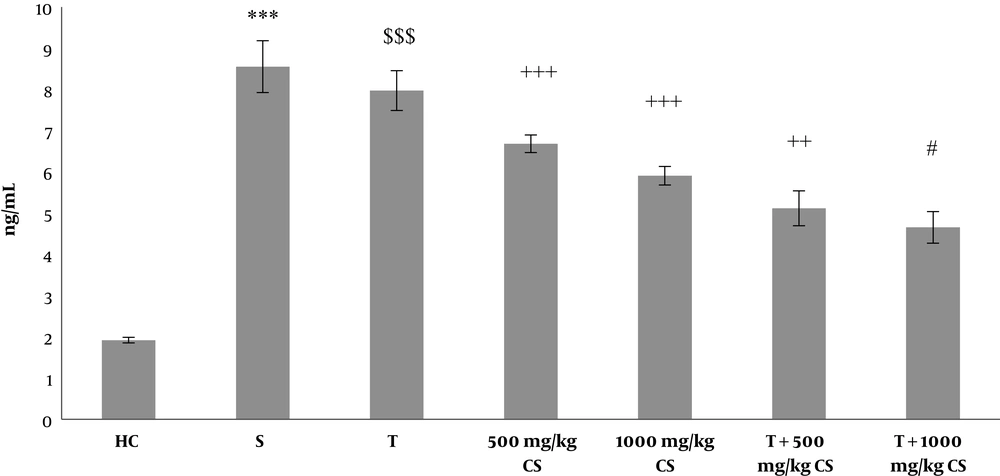
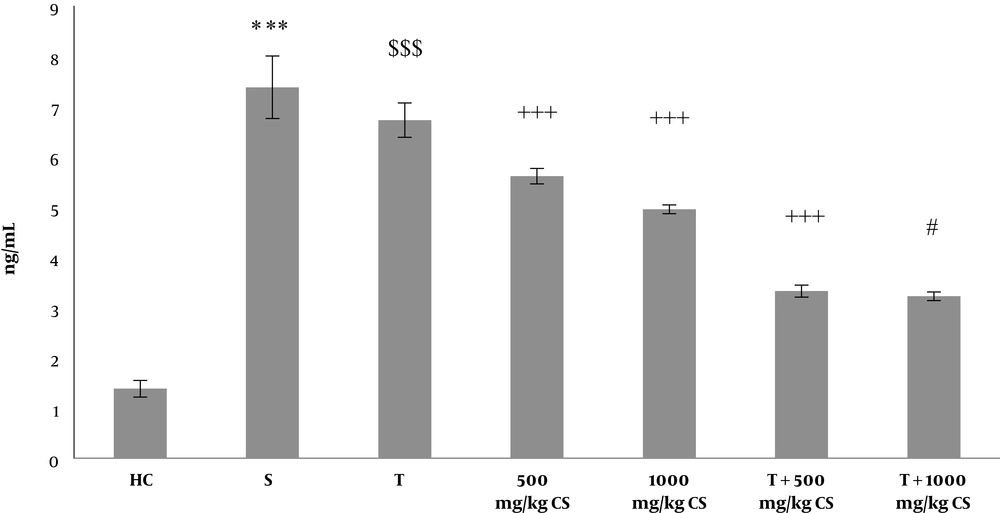
In previous studies, effects of T and CS consumption have been separately examined on apoptosis-related factors and various results have been reported. However, no study has been found to investigate the simultaneous effects of T and CS. Thus, the present study aimed to investigate the effects of T with CS consumption on caspase-3 and cytochrome-C in the heart tissue of hydrogen peroxide (H2O2) - poisoned rats.