
1. Introduction
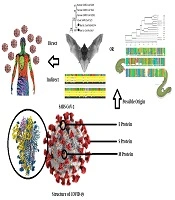
In late December 2019, the severe acute respiratory syndrome coronavirus 2 (SARS-CoV-2) infection, termed COVID-19, emerged initially in Wuhan, Hubei Province, China (1, 2). The COVID-19 infection spread rapidly and evolved into a pandemic, affecting all age groups (3), even newborns (4). The most common clinical manifestations of patients with COVID-19 are dry cough, fever, fatigue, myalgia, dyspnea, nasal congestion, sore throat, and runny nose (5). Furthermore, there are different uncommon presentations such as vomiting, abdominal pain, diarrhea, loss of appetite, taste or smell dysfunction, hemoptysis, and conjunctivitis (6).
Compared to adults, most children are only detected by laboratory analysis and remain asymptomatic (7). However, disease course in some young cases may be worse and cause Guillain-Barre syndrome or Kawasaki-like signs (8, 9). The COVID-19 may develop complications in patients, including acute respiratory distress syndrome (ARDS), acute kidney injury, secondary infection, heart failure, anemia, or even multiple organ failure (5, 10).
Respiratory system and lung involvement is a significant issue in COVID-19, which can be detected by chest computed tomography (11). Respiratory involvement can lead to low blood oxygen saturation, dyspnea, and respiratory failure and eventually requires mechanical ventilation, especially in those with comorbid conditions such as ischemic heart disease, chronic obstructive pulmonary disease (COPD), obesity, diabetes mellitus, post-surgery, and cancer (12, 13). Patients with COVID-19, especially severe cases, who require intensive care unit (ICU) admission and are treated with mechanical ventilation may develop complications such as ARDS, ventilator-associated pneumonia, and pulmonary embolism (14, 15). These complications result in prolonged mechanical ventilation, prolonged stay in ICUs, and, consequently, higher mortality (14).
Post-ICU syndrome may develop in patients who stay in the ICU for a long time, which is defined as a cognitive, physical, or mental disorder during their stay in the ICU, after ICU discharge, and in the follow-up of ICU patients (16). Survivors of COVID-19 experience cardiopulmonary deconditioning, critical illness myopathy, critical illness polyneuropathy, and reduced lung function (17). Moreover, they are significantly impaired in daily living activities. As most patients with COVID-19 suffer from physical, mental, and respiratory disorders and their daily lives are affected, cardiopulmonary rehabilitation is crucial for their treatment, attracting increasing attention (18-22). Some studies demonstrated that cardiopulmonary rehabilitation could improve the quality of life and short-term physical outcomes in patients with post-ICU syndrome (23-25).
In patients with mild disease, an appropriate cardiopulmonary rehabilitation program can maintain daily living activities and exercise capacity, and also in severe cases of the disease can lead to preventing weakness related to ICUs, improve pulmonary secretion clearance, and reduce the bedridden state side effects (26). Although a cardiopulmonary rehabilitation program is crucial for patients with COVID-19, the setting is still unclear. Therefore, we conducted this study to review the different rehabilitation programs and provide evidence of their effectiveness in treating patients with COVID-19.
2. Necessity of Cardiopulmonary Rehabilitation for COVID-19 Patients
Patients who have recovered from COVID-19, especially those admitted to the ICU, need rehabilitation to effectively reduce the risk of severe disability and prevent further deterioration (27). As novel nature of COVID-19, very little is known about the need for rehabilitation as well as long-term residual deficits. However, previous members of the coronaviridae family, such as Middle East respiratory syndrome (MERS) and severe acute respiratory syndrome (SARS), revealed that patients might develop mental, physical, and social disorders post-recovery, thereby requiring rehabilitation (28-31).
Several studies revealed that cardiopulmonary rehabilitation could reduce the risk of complications, mechanical ventilation time, readmission risk, mortality rate, and length of hospital stay and improve respiratory function (32-37). In fact, cardiopulmonary rehabilitation aims at physical recovery from an acute illness by managing acute and chronic respiratory conditions (38).
3. General Recommendations for Rehabilitation of COVID-19 Patients
Since COVID-19 is highly contagious, physicians should take adequate preventive measures and use appropriate personal protective equipment. Furthermore, during exercises and rehabilitation interventions, measures must be taken to eliminate or minimize the chance of aerosol production (39). On the other hand, due to the lack of personal protective equipment and minimizing contact, rehabilitation can be done through telemedicine and can be used to initiate self-supervised rehabilitation (40).
A previous study on the utilization of telemedicine and home rehabilitation programs found that they had similar effects to center-based programs (41). One of the most important principles in the rehabilitation of patients with COVID-19 is its individualization based on the patient's needs and attention to its comorbidities (42).
Any successful rehabilitation program would have to provide education. Since COVID-19 is an emerging condition, patients may need to be educated about the disease's complications and possible effects (17). According to the available instructions, rehabilitation can be performed in the most appropriate way for outpatient patients and throughout the patient's hospitalization, including the time of patient admission, ward care, and then after discharge (43).
4. Pulmonary Rehabilitation
Pulmonary rehabilitation reduces patients' symptoms and also improves the quality of life and functional ability in patients with respiratory disease. Patients with COVID-19, especially patients admitted to the ICU, due to respiratory muscle dysfunction, peripheral muscle dysfunction (due to fatigue, ICU neuropathy, reduction of lean body mass, and hypoxemia effects), and psychosocial factors (sleep disturbance, guilt, depression, and anxiety) require pulmonary rehabilitation (44). Although most studies have reported the use and effects of pulmonary rehabilitation in patients with COPD and asthma, some studies confirmed the use of pulmonary rehabilitation in pneumonia, SARS, and interstitial lung disease, along with evidence of using pulmonary rehabilitation in the early stages of COVID-19 (45-47).
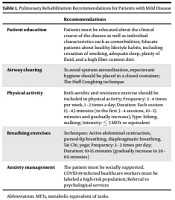
The majority of COVID-19 patients have a mild disease characterized as mild symptoms with no signs of pneumonia on imaging (48). In mild disease, patients were assigned to home care settings using telemedicine for rehabilitation. For patients with mild symptoms of COVID-19, the significant interventions of the rehabilitation program include activity guidance, breathing exercises, physical exercises, airway clearance, and education (17, 49, 50). Also, the diagnosis of COVID-19 causes a sense of fear in the patient, and as a result, anxiety management is one of the main components of rehabilitation in these patients (51). Furthermore, they should focus on general health recommendations, including smoking cessation, a balanced diet, and regular work and rest (17). Throughout the rehabilitation process, assessment and monitoring should be carried out. These recommendations for COVID-19 patients with mild disease are summarized in Table 1 (26, 52, 53).
Table 1.
Pulmonary Rehabilitation Recommendations for Patients with Mild Disease
| Recommendations | |
|---|---|
| Patient education | Patients must be educated about the clinical course of the disease as well as individual characteristics such as comorbidities; Educate patients about healthy lifestyle habits, including cessation of smoking, adequate sleep, plenty of fluid, and a high fiber content diet. |
| Airway clearing | To avoid sputum aerosolization, expectorant hygiene should be placed in a closed container; The Huff Coughing technique. |
| Physical activity | Both aerobic and resistance exercise should be included in physical activity; Frequency: 3 - 4 times per week, 1 - 2 times a day; Duration: Each session 15 - 45 minutes (in the first 3 - 4 sessions, 10 - 15 minutes and gradually increase); Type: Biking, walking; Intensity: ≤ 3 METs or equivalent. |
| Breathing exercises | Techniques: Active abdominal contraction, pursed-lip breathing, diaphragmatic breathing, Tai Chi, yoga; Frequency: 2 - 3 times per day; Duration: 10 - 15 minutes (gradually increase to 30 - 60 minutes). |
| Anxiety management | The patient must be socially supported; COVID-19-infected healthcare workers must be labeled a high-risk population; Referral to psychological services. |
Abbreviation: METs, metabolic equivalent of tasks.
Traditional Chinese medicine and adjuvant therapies, including acupuncture, aromatherapy, acupoint application, cupping, massage, and moxibustion, have been documented for patients with mild COVID-19 symptoms (54-57). COVID-19 patients developed moderate to severe disease in about 14% of cases, which is defined as symptomatic with a respiratory rate of > 30 beats per minute, resting oxygen saturation < 93% requiring hospitalization and monitoring (6, 48). Pulmonary rehabilitation of moderate and severe patients can be performed only when the patient's condition is assessed as stable. Moreover, to avoid exacerbation of respiratory failure or unnecessarily spreading the infection, pulmonary rehabilitation is not begun too soon in these patients (17). In addition to assessing the stability of the patient's condition, we must also consider pulmonary rehabilitation contraindications. The exclusion criteria are specified as follows (52):
• Body temperature > 38°C
• SpO2 ≤ 90%
• Blood pressure > 18/90 mmHg or < 90/60 mmHg
• Respiratory rate > 40 times per minute
• Heart rate > 120 beats per minute or < 40 beats per minute
• Initial symptom onset or diagnosis time ≤ 3 days
• Initial dyspnea onset ≤ 3 days
• New onset of myocardial ischemia or arrhythmia
• Chest imaging progression in 24 - 48 hours
• Altered level of consciousness
The two key purposes of pulmonary rehabilitation in moderate to severe patients are improving airway clearance and preventing the effects of immobility. Around 33.7% of COVID-19 patients have a high sputum production rate. Patients suffering from airway secretions benefit greatly from chest physiotherapy, enhancing cough effectiveness, improving mucociliary clearance, and encouraging efficient expectoration (58). There are five main strategies for chest physiotherapy to improve airway clearance, consisting of the following (26):
• Active cycle of breathing techniques: Patients should be actively involved in guided breathing control to reduce shortness of breath and stimulate airway secretions (59).
• Positioning: Every patient's best positioning for minimizing shortness of breath should be specific. For example, standing and leaning forward with arm support reduces shortness of breath and respiratory distress, especially in patients with COPD. During unilateral lung disease, a side-lying posture can enhance gas exchange by maximizing perfusion to the good lung (60).
• Controlled and huffing cough: These techniques are also used to enhance airway clearance and reduce coughing effort (61).
• Chest vibration and percussion: These techniques promote sputum expectoration, especially in patients with a lot of airway secretions (62).
• Flutter breathing: This device has a movable steel ball in a sealed pipe. The patient blows air into the pipe quickly, causing the steel ball to shake and generate a rhythmic airflow. Sputum in the airway can loosen due to flutter breathing (59).
Immobilization is another critical issue in the pulmonary rehabilitation of patients with moderate to severe disease. Early mobilization should be promoted once the medical situation has stabilized, including (26):
• Aerobic exercise: Aerobic exercises should have light intensity by using a level-surface walking, arm ergometer, and stationary bike. Depending on the patient's exercise tolerance, the duration of aerobic exercise will be cumulative, beginning from 5 - 10 minutes per practice session.
• Mobilization: If the patient has been medically stable, early mobilization, including level-surface ambulation, standing, unsupported sitting, stair climbing, and off-bed transferring, can be performed.
• Range of motion exercise: Active or active-assisted range of motion exercises are recommended for patients who may actively move their extremities to prevent soft tissue shortening and joint contracture as well as strengthen joint integrity.
In patients who have been on mechanical ventilation for a long time, diaphragm proteolysis can cause respiratory muscle weakness. In these patients, inspiratory and expiratory muscle exercise can begin with incentive spirometry and advance to inspiratory muscle training devices if accessible (63, 64). Patients who are recovered from ICU support will use the same techniques. Because of the deconditioning, that happens in the ICU, an emphasis on bed mobility and breathing exercises may be the first intervention for these patients. Sit-to-stand at bedside, over-head arm stretches, sliding legs into extension/flexion, and ankle pumps are some bed mobility movements (52).
5. Evidence for Pulmonary Rehabilitation of COVID-19 Patients
Some studies have looked at the effects of pulmonary rehabilitation in COVID-19 patients. Liu et al. (32) conducted a prospective, quasi-experimental study in China on pulmonary rehabilitation in patients with COVID-19 who had been weaned off mechanical ventilation and discharged from the hospital. Over the course of six weeks, respiratory function (FEV1/FVC), physical function, anxiety level, and quality of life of patients improved. Besides, they reported that depression had no significant improvement during the six weeks (32).
Daynes et al. conducted another study on 30 patients who underwent a 6-week, twice-supervised rehabilitation program post-COVID-19 (65). They demonstrated that rehabilitation following COVID-19 is feasible and significantly improves respiratory symptoms, exercise capacity, cognition, and fatigue (65). A prospective study of 99 post-COVID-19 patients who were referred for pulmonary rehabilitation in Switzerland revealed that comprehensive pulmonary rehabilitation results in significant improvement in the 6-min walk test (P < 0.001), the feeling thermometer (P < 0.001), and functional independence measurement (P < 0.001) (66).
6. Cardiac Rehabilitation
COVID-19 patients, like those infected with other coronaviridae, are at risk for cardiac complications, especially myocardial injury and arrhythmias (67-69). These complications may cause by hypotension, ACE2-receptor downregulation, hypoxia, and viral myocardial injury (70).
The American Heart Association (AHA) and the American Cardiology Association (ACC) also highly advocate cardiac rehabilitation for the care of patients with coronary artery disease and chronic heart failure (71). For cardiac rehabilitation, the British Association for Cardiovascular Prevention and Rehabilitation provides the six key components (72):
• Medical risk factor management
• Healthy behavior changes and education
• Lon-term management
• Psychological health
• Lifestyle risk management
• Audit and evaluation
Cardiac rehabilitation can reduce morbidity, mortality, and hospital admission while enhancing the quality of life, psychological well-being, and exercise capacity (72, 73). Depending on the complications and patients’ symptoms, a period of rest following infection will reduce the risk of myocarditis-related post-infection heart failure (53). Following reported myocarditis, patients must rest for 3 - 6 months before returning to high-level sport or physically challenging work (53). The length of rest is determined by the duration and severity of the infection, and the level of inflammation on cardiovascular magnetic resonance imaging and the left ventricular function at the time of onset. These patients should be re-evaluated periodically for the first two years (53).
7. Cardiopulmonary Rehabilitation Guidelines for COVID-19 Patients
Some consensus-based guidelines from different countries suggest feasible and practical rehabilitation methods for patients with COVID-19. In all these guidelines, the short-term goal of rehabilitation is to reduce shortness of breath and alleviate the patient's depression and anxiety, and the long-term goal is to improve the patient's quality of life, maintain the patient's performance to the maximum extent, and facilitate reintegration into society. Moreover, comprehensive assessments should be performed on patients prior to initiating the rehabilitation program. The recommendation guidelines by the UK, Turkish, Italian, Chinese, and multinational rehabilitation professionals are summarized in Table 2 (38, 49, 53, 74, 75).
Table 2.
Cardiopulmonary Rehabilitation Guidelines for Patients with COVID-19
| Guidelines | Country | Recommendations |
|---|---|---|
| Zheng et al. (19) | China | This clinical practice guideline explains WHO International Family Classifications approaches and framework to set up an expert consensus on rehabilitation of COVID-19 patients. |
| Rehabilitation measures in this framework are divided into four categories: preventive, palliative, health-promoting, and therapeutic care. | ||
| Health promotion and preventive care are mainly used for outpatient care (after discharge), while therapeutic care can be provided for inpatients. | ||
| PR comprises respiratory training, expectoration therapy, and thorax mobilizing exercise to relieve patients' complaints. | ||
| Body posture can affect the ventilation/perfusion ratio, diaphragm performance, and simplicity of breathing. | ||
| Cough expectoration is aided by adjustments in body posture, thoracic vibration, clapping, and active breathing. | ||
| Resistant breathing conditioning that is graded and gradual enhances breathing experience. | ||
| Exercise training such as aerobic, coordination, and balance training primarily improves the cardiopulmonary muscle and increases the compensatory ability of non-involved organs. | ||
| Aerobic, coordination, and balance training mainly improve the cardiopulmonary muscle while enhancing the compensatory capacity of non-involved organs. | ||
| Nevertheless, because of the cooperation between the physician and the physiotherapist, exercise training in COVID-19 should be thoroughly evaluated. | ||
| Kurtais Aytur et al. (75) | Turkey | This guideline clarifies PR principles for COVID-19 cases, taking into account the disease's contagiousness, suggestions for limiting a patient's interaction with physicians, and the evidence for PR's potential benefits. |
| Mild disease stage: PR is not recommended; PR is only recommended for patients with disabilities such as immobility, immunodeficiency, cardiac, chronic lung, and neurologic disease; General health recommendations, including cessation of smoking, taking protein, selenium, zinc, vitamin C, plenty of fluid, and high fiber content diet. | ||
| Mild pneumonia stage: Individualized PR (at home, single session) for COVID-19 mild pneumonia after stabilization of patient’s condition and virulence reduction; Special care for patients with disability that should be evaluated by a physical medicine and rehabilitation specialists; General health recommendations; It is suggested that patients undergo daily follow-up; Use personal protective equipment. | ||
| Severe pneumonia stage: Individualized PR after evaluation by physical medicine and rehabilitation specialists; Medical stability in these patients is a necessity; Discontinue PR if the patient's general health and pulmonary findings deteriorate; Use personal protective equipment. | ||
| Acute ARDS stage: PR is not recommended for COVID-19 patients at the ARDS stage; General rehabilitation cares such as joint range of motion, airway clearance, early mobilization, and bed positioning. | ||
| Barker-Davies et al. (53) | UK | The Stanford Hall consensus statement recommends a rehabilitation program for COVID-19 patients at an individual level, specific to cardiac, pulmonary, musculoskeletal, and psychological, based on the Likert scale agreement score (0 - 10). |
| PR recommendations: In post-COVID-19 patients, respiratory complications must be considered (Level of agreement: 95% CI: 8.92 - 9.85, mean score 9.38); The initial evaluation is advised early as possible based on patient’s mental and physical condition, normocapnic respiratory failure, degree of dysfunction, and safety issue (level of agreement: 95% CI: 8.48 to 9.52, mean score 9.00); In patients on oxygen therapy, low-intensity exercise must be addressed. Also, increase the exercise's intensity by evaluating the patient's symptoms (level of agreement: 95% CI: 8.23 to 9.57, mean score 8.90). | ||
| CR recommendations: In post-COVID-19 patients, cardiac complications must be considered (Level of agreement: 95% CI: 7.77 to 9.28, mean score 8.52); Depending on the patient's complications and symptoms, a rest period post-COVID-19 infection reduces the risk of heart failure secondary to myocarditis (Level of agreement: 95% CI: 8.70 to 9.68, mean score 9.19); Specific cardiac rehabilitation programs tailored to each individual's based on cardiac pathology (level of agreement: 95% CI: 9.03 to 9.82, mean score 9.43); Patients with confirmed myocarditis need a full 3-6 months of rest to return to high-level exercise or physical activity (level of agreement: 95% CI: 8.64 to 9.74, mean score 9.19); Patients with myocarditis who return to high-level exercise or physical activity should be re-evaluated periodically for the first two years (level of agreement: 95% CI: 8.65 to 9.44, mean score 9.05). | ||
| Thomas et al. (38) | Multinational | This guideline recommends instructions for the physiotherapy management of inpatients COVID-19 patients. |
| These recommendations include determining the need for physiotherapy, using the physiotherapy workforce, and physiotherapy treatments (PR and use of personal protective equipment) for patients with COVID-19. | ||
| Cardiopulmonary Rehabilitation Group of Chinese Society of Physical Medicine and Rehabilitation (49) | China | The Chinese Association of Rehabilitation Medicine outlines five recommendations for rehabilitation of elderly COVID-19 patients: |
| PR enhances depression, anxiety, and breathlessness, as well as quality of life and physical activity in COVID-19 inpatients. | ||
| PR is not recommended in critically ill patients. | ||
| Recommended PR teleconsultation for COVID-19 patients. | ||
| Safety measures must be observed for all personnel involved in PR. | ||
| During PR, regular monitoring is recommended. |
Abbreviation: CR, cardiac rehabilitation; PR, pulmonary rehabilitation; CI, confidence interval; ARDS, acute respiratory distress syndrome; WHO, World Health Organization.
8. Conclusions
Current knowledge recommends that cardiopulmonary rehabilitation must be provided along with the treatment process, whether the patient is at home or in the hospital. Furthermore, rehabilitation programs should be personalized to the different needs of the patient. Physicians' safety is essential in rehabilitation interventions, and contact isolation and personal protective equipment must be strictly observed. Finally, an appropriate rehabilitation program can reduce the length of hospital stay, and improve cardiopulmonary function, physical efficiency, and patients' quality of life.