
1. Background
Coronavirus disease 2019 (COVID-19) is a respiratory illness caused by the severe acute respiratory syndrome coronavirus 2 (SARS-CoV-2) virus that has impacted millions of individuals worldwide (1). This disease can range in severity and has the potential to lead to respiratory failure, which is the primary cause of mortality in COVID-19 patients (2). One common symptom of COVID-19 is dyspnea, a subjective sensation of difficulty in breathing, which can significantly hinder daily activities (3). Dyspnea is often accompanied by anxiety, further exacerbating respiratory symptoms and negatively impacting quality of life (4).
Research has shown that respiratory exercises can effectively alleviate dyspnea and anxiety in various respiratory conditions (5-8). Specifically, breathing exercises, such as diaphragmatic breathing, pursed-lips breathing, and paced breathing, have demonstrated improvements in respiratory function and anxiety reduction among patients with chronic obstructive pulmonary disease (COPD) and asthma (8, 9). Although several studies, including one particular study, have demonstrated an enhancement in aerobic capacity (VO2 max) among older women following combined exercise training (10), the efficacy of combined endurance breathing exercises in alleviating dyspnea and anxiety among COVID-19 patients remains uncertain and requires further investigation (11).
The objective of this study was to investigate the effectiveness of combined resistance and breathing exercises in alleviating dyspnea and anxiety among COVID-19 patients. The current hypothesis posits that the intervention group, which received combined resistance and breathing exercises in addition to their usual care, would exhibit greater improvements in dyspnea and anxiety than the control group, who solely received usual care, following a 4-week intervention period.
The findings of this study have important implications for the management of respiratory symptoms and anxiety in COVID-19 patients. If it is determined that combined resistance and breathing exercises are effective, they can be regarded as non-pharmacological interventions that can be readily incorporated into clinical practice. This intervention has the potential to decrease the reliance on medications and hospitalizations (12, 13).
2. Objectives
This study can provide valuable insights into the potential use of breathing exercises as a potential intervention for COVID-19 patients and might inform future clinical practice for managing respiratory symptoms and anxiety in this population.
3. Methods
3.1. Study Design
A non-blinded, randomized controlled trial was conducted to evaluate the effectiveness of combined resistance and breathing exercises in dyspnea and anxiety in COVID-19 patients. The trial was registered with Clinical Trials (IRCT20160716028948N2) and approved by the Ethics Committee of Qom University of Medical Sciences, Qom, Iran (IR.MUQ.REC.1400.149). All participants provided written informed consent before enrollment.
3.2. Participants
The patients diagnosed with COVID-19 and experiencing dyspnea and anxiety were recruited from a tertiary care hospital. The inclusion criteria were age ≥ 18 years, diagnosis of COVID-19 confirmed by a positive RT-PCR test, discharge from hospital, and ability to perform the resistance breathing exercises. The exclusion criteria were severe respiratory distress requiring mechanical ventilation, presence of other respiratory or cardiovascular diseases, and inability to perform the resistance and breathing exercises due to cognitive or physical impairment.
3.3. Sample Size Calculation
The sample size was calculated based on the primary outcome measure of change in dyspnea scale score (14). A sample size of 15 per group was calculated to detect a difference of 1 point in the dyspnea score between the intervention and control groups, with a power of 80% and a significance level of 0.05.
3.4. Randomization
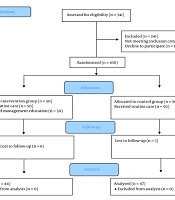
The participants were randomly assigned to either the intervention group or the control group using a computer-generated randomization sequence. Allocation concealment was ensured using sealed opaque envelopes.
3.5. Intervention
The intervention involved administering a combination of resistance and breathing exercises to the intervention group over a period of 4 weeks. These exercises included diaphragmatic breathing, pursed-lips breathing, and paced breathing. The participants were instructed to perform these exercises for 30 minutes each day in addition to their usual care. To ensure proper execution and supervision, a specialist in corrective movements demonstrated and supervised the exercises through a virtual network. Additionally, the participants were provided with video instruction to aid them in performing the exercises correctly.
The intervention also included a variety of exercises, such as active coughing (3 sets of 10 repetitions), chest volume donor exercises (horizontal opening, bending, away, and external rotation of the arms synchronized with each breathing cycle), and resistance exercises to strengthen respiratory muscles. The difficulty level of the exercises was customized to suit each individual patient’s condition. The exercises gradually progressed, starting with simpler ones and gradually advancing to more challenging ones.
3.6. Control Group
The control group did not receive any such intervention.
3.7. Outcome Measures
The study’s primary outcome measures were changes in the Borg dyspnea scale (15) score and cough frequency, which were assessed at the baseline and at the end of the 4-week intervention period. The Borg dyspnea scale is a validated 5-point instrument that assesses the severity of dyspnea and its impact on daily activities, with higher scores indicating more severe dyspnea. The psychometric evaluation of the Borg scale was conducted for the first time by Daneshmandi et al. in Iran, and the correlation coefficient of this scale and heart rate was 0.847. The reliability of this scale was also calculated to be 0.78 (16).
Cough frequency was measured as the number of coughs per day. The secondary outcome measure was the change in the Beck Anxiety Inventory (BAI) score, which is a validated tool for measuring anxiety in adolescents and adults. The Beck Anxiety Inventory is a self-report questionnaire consisting of 21 items (17), where the subject selects one of four options indicating the intensity of anxiety experienced in response to each statement. Higher scores on the scale indicate more severe anxiety. The participants were instructed to carefully read each statement and indicate the level of anxiety experienced in the past week until the present day. The four response options were "not at all," "mild," "moderate," and "severe," depending on the level of anxiety experienced. The psychometric investigation of the questionnaire was conducted in an Iranian study by Kaviani and Mousavi (2008), and the reliability (intraclass correlation coefficient [ICC] and Cronbach’s alpha were 0.72 and 0.92, respectively) (18). These outcome measures were used to assess the effectiveness of the intervention in reducing dyspnea and anxiety in COVID-19 patients.
3.8. Data Collection
Baseline demographic and clinical data were collected using a standardized questionnaire. Dyspnea and anxiety were measured using the Borg dyspnea scale and the BAI, respectively, at baseline and after 4 weeks.
3.9. Confounding Factors Control
In order to minimize the influence of other factors, there was no significant difference between the two groups in terms of age, gender, comorbidities, and dyspnea. Additionally, a stratified randomization process was implemented to ensure a balanced distribution of confounding variables.
3.10. Statistical Analysis
The data were analyzed using SPSS software (version 25). Descriptive statistics were used to summarize baseline characteristics. The assessment of normality was accomplished by employing the Kolmogorov-Smirnov test. Independent t-tests were used to compare continuous variables between the intervention and control groups. A P-value of less than 0.05 was considered statistically significant.
4. Results
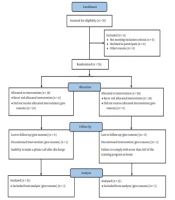
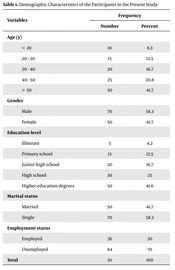
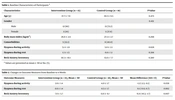
A total of 33 COVID-19 patients were enrolled in the study, with 15 participants in the intervention group and 18 participants in the control group. The mean age of the participants was 45.8 ± 12.4 years, and 40% were male. There were no significant differences in baseline demographic and clinical characteristics between the intervention and control groups (Table 1).
Table 1.
Baseline Characteristics of Participants a
| Characteristics | Intervention Group (n = 15) | Control Group (n = 18) | P-Value |
|---|---|---|---|
| Age (y) | 37.7 ± 7.9 | 39.5 ± 6.5 | 0.473 |
| Gender | 0.451 | ||
| Male | 12 (80) | 13 (72.2) | |
| Female | 3 (20) | 5 (27.8) | |
| Body mass index (kg/m2) | 26.6 ± 2.9 | 27.3 ± 2.7 | 0.298 |
| Comorbidities | 5 (33.3) | 6 (40.0) | |
| Dyspnea during activity | 5.1 ± 1.9 | 5.0 ± 2.1 | 0.628 |
| Dyspnea during rest | 1.3 ± 1.5 | 0.8 ± 1.1 | 0.398 |
| Beck Anxiety Inventory | 18.5 ± 10.1 | 15.6 ± 7.7 | 0.380 |
a Values are presented as mean ± SD or No. (%).
After 4 weeks of intervention, the intervention group showed a significant improvement in dyspnea during activity, compared to the control group (mean change in Borg dyspnea scale = -1.2 ± 0.8 versus 0.1 ± 0.3, P = 0.039). The mean dyspnea during activity score decreased significantly from 5.1 ± 1.9 to 2.8 ± 1.4 in the intervention group; nevertheless, it changed a little in the control group (5.0 ± 2.1 to 4.0 ± 1.7). Furthermore, the intervention group had a significant reduction in anxiety, compared to the control group (mean change in BAI score = -6.0 ± 2.1 versus -2.8 ± 3.2, P = 0.007). The mean BAI score decreased significantly from 18.5 ± 10.1 to 7.6 ± 5.7 in the intervention group; however, it changed from 15.6 ± 7.7 to 13.6 ± 6.1 in the control group. There was no significant difference in dyspnea during rest between the intervention and control (Table 2).
Table 2.
Changes in Outcome Measures from Baseline to 4 Weeks a
| Outcome Measures | Intervention Group (n = 15) | Control Group (n = 18) | Mean Difference (95% CI) | P-Value |
|---|---|---|---|---|
| Dyspnea during activity | 2.8 ± 1.4 | 4.0 ± 1.7 | -1.2 (-2.3, -0.1) | 0.039 |
| Dyspnea during rest | 0.6 ± 1.4 | 0.5 ± 1.7 | 0.1 (-0.6, 0.7) | 0.662 |
| Beck Anxiety Inventory | 7.6 ± 5.7 | 13.6 ± 6.1 | -6.0 (-10.2, -1.7) | 0.007 |
a Values are presented as mean ± SD.
There was no significant difference in cough frequency between the intervention and control groups (mean difference = -0.1 ± 0.5 days, P = 0.82). No adverse events were reported in either group during the study period.
5. Discussion
The results of this study indicated that a combination of resistance and breathing exercises can effectively alleviate dyspnea and anxiety in individuals diagnosed with COVID-19. The observed enhancement in dyspnea aligns with previous research that has consistently shown the positive impact of resistance and breathing exercises on respiratory function and the reduction of dyspnea in different respiratory conditions. The underlying physiological explanation for this improvement lies in the fact that breathing exercises enhance the functionality of respiratory muscles, increase flexibility in the ribcage, improve gas exchange, and potentially reduce pressure, respiratory rate, and stress levels (19-22). By incorporating both resistance and breathing exercises, this study offers a comprehensive approach to addressing dyspnea and anxiety in COVID-19 patients. These exercises have been proven effective in enhancing respiratory function and reducing dyspnea in various respiratory conditions, and their benefits extend to individuals battling COVID-19.
Similarly, the reduction in anxiety is consistent with previous studies that have shown the effectiveness of breathing exercises in reducing anxiety in patients with respiratory diseases. For instance, Öner Cengiz et al. (7) reported that deep breathing exercises with Triflo increased oxygen saturation (SpO2) levels, improved quality of life, and contributed to a decrease in dyspnea and anxiety levels in COVID-19 patients. Additionally, Kılıç et al.'s study (23) demonstrated that progressive relaxation exercises can reduce dyspnea and anxiety levels in individuals with COPD. Furthermore, Ahmadi et al.'s study (24) reported a positive effect of breathing exercises on increasing lung volumes and expansion, leading to improved oxygenation and proper distribution of oxygen to all parts of the body, which suggests that breathing exercises can increase lung function in individuals.
According to the literature, a study was conducted to evaluate the effectiveness of modified rehabilitation exercises, which included deep breathing, in patients with COVID-19. The study reported that exercise proved to be effective in reducing dyspnea (25). Another study focused on examining the impact of respiratory rehabilitation in elderly patients with COVID-19. The interventions included respiratory muscle training, cough exercises, diaphragmatic training, exercise stretching, and home exercises. The findings revealed a significant improvement in both the pulmonary function test and the exercise tolerance test (26). Moreover, Fulambarker et al. (27) showed that yoga breathing exercises led to improvements in the quality of life, vital capacity, maximum inspiratory pressure, and maximum expiratory pressure in individuals with COPD. These previous findings provide further support for the potential benefits of breathing exercises in managing respiratory symptoms and improving lung function in individuals with respiratory conditions (28, 29).
The statistical analysis revealed that there was no significant difference in cough frequency between the intervention and control. This finding suggests that the combined resistance and breathing exercises did not have a significant impact on cough frequency in COVID-19 patients. The lack of significant difference in the number of hospitalization days might be due to the relatively short duration of the study and the small sample size. However, it is important to note that cough frequency was only one of the outcome measures assessed in this study, and the intervention might have had an impact on other respiratory symptoms. Further research is needed to investigate the effectiveness of combined resistance and breathing exercises in other respiratory symptoms in COVID-19 patients.
The strengths of this study include the randomized controlled design, the use of validated outcome measures, and the supervision of the intervention by a specialist in corrective movements. One limitation of this study is the relatively small sample size, which might limit the generalizability of the findings. Additionally, the study was conducted over a relatively short period of only 4 weeks, and it is unclear whether the observed improvements in dyspnea and anxiety would be sustained over a longer follow-up period. Furthermore, the study did not include a follow-up assessment after the completion of the intervention, which might limit the understanding of the long-term effects of the intervention. Finally, the study did not assess the impact of combined resistance breathing exercises on other respiratory symptoms, such as cough and sputum production, which might be important outcomes to consider in future research.
5.1. Conclusions
This randomized controlled trial provides evidence that combined resistance breathing exercises can be an effective intervention for managing dyspnea and anxiety in COVID-19 patients. The results showed that the intervention group demonstrated significant improvements in dyspnea and anxiety, compared to the control group. However, further research is needed to confirm these findings and to investigate the long-term effects of combined resistance breathing exercises in COVID-19 patients.