
Middle East J Rehabil Health Stud

Image Credit:Middle East J Rehabil Health Stud

The Occurrence, Formation, Toxicology, and Analysis of Major Heat-Formed Contaminants in Foods: A Review

Author(s):
Mir-Michael MousaviMir-Michael MousaviMir-Michael Mousavi ORCID1, Mansour MahmoudpourMansour Mahmoudpour2, Zahra AbbaszadehZahra Abbaszadeh1, Anna AbdolshahiAnna AbdolshahiAnna Abdolshahi ORCID1,*
1Food Safety Research Center (salt), Semnan University of Medical Sciences, Semnan, Iran
2Faculty of Nutrition and Food Sciences, Tabriz University of Medical Sciences, Tabriz, Iran

Middle East Journal of Rehabilitation and Health Studies:Vol. 13, issue 2; e165342
Published online:Dec 09, 2025
Article type:Review Article
Received:Aug 12, 2025
Accepted:Nov 11, 2025
How to Cite:Mousavi M, Mahmoudpour M, Abbaszadeh Z, Abdolshahi A. The Occurrence, Formation, Toxicology, and Analysis of Major Heat-Formed Contaminants in Foods: A Review.Middle East J Rehabil Health Stud.2025;13(2):e165342.https://doi.org/10.5812/mejrh-165342.

Abstract

Context:

Food processing at high temperatures results in the formation of hazardous substances known as heat-formed contaminants.

Objectives:

These contaminants, such as acrylamide, 5-hydroxymethylfurfural (HMF), furan, chloropropanols, heterocyclic aromatic amines (HAAs), and polycyclic aromatic hydrocarbons (PAHs), have been associated with health risks. Given food safety concerns, monitoring the levels and occurrences of heat-formed contaminants in food is crucial for controlling dietary exposure.

Evidence Acquisition:

Relevant literature was selected by searching databases (Scopus, PubMed, and Web of Science) for this comprehensive review.

Results:

The major formation routes of heat-formed contaminants involve food preparation methods using heat, such as cooking, toasting, frying, and grilling. Implementing low-thermal food processing, along with increased awareness of the harmful effects, will help diminish the formation and intake of these carcinogenic compounds.

Conclusions:

This review focuses on the formation mechanisms, potential toxicity, and occurrence of major heat-formed contaminants in food, highlighting their importance as critical concerns. Furthermore, the most commonly used analytical methods for detecting these trace contaminants in food samples are discussed in the context of human health risk assessment.

1. Context

Thermal methodologies are commonly employed in the production of food items to ensure the creation of safe, edible products with extended shelf life and enhanced quality (1, 2). The utilization of frying, baking, toasting, roasting, and sterilization may yield both favorable and unfavorable consequences (3, 4). Some thermal procedures contribute to the generation of flavors and fragrances, as well as antimicrobial, antioxidant, and antiallergenic properties, and in vitro modulating activity (5-7).

Besides these favorable outcomes, it is crucial to carefully assess the generation of undesired by-products or sequences of thermal processing (8, 9). The loss of nutritional value, such as vitamins and essential amino acids during certain heat processing methods, is one of the main disadvantages (10-12). The most critical defect related to heated food is the formation of trace compounds during thermal processing at high temperatures or with long-term heating. These heat-formed contaminants are considered hazards due to their carcinogenicity, mutagenicity, and cytotoxicity. Major examples of such hazardous compounds include acrylamide, 5-hydroxymethylfurfural (HMF), furan, heterocyclic aromatic amines (HAAs), and polycyclic aromatic hydrocarbons (PAHs) (13, 14).

Given the high occurrence of these heat-formed contaminants in food and insufficient knowledge and attitudes to prevent their formation, continuous monitoring and risk assessment are crucial to guarantee safety. The present study reviews recent findings regarding the formation, occurrence, toxicity, and analysis of major heat-formed contaminants in food.

2. Acrylamide

2.1. Formation and Occurrence of Acrylamide in Food

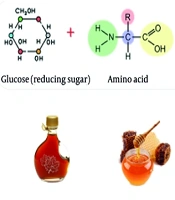
Acrylamide, an organic compound (CH2=CHC(O)NH2), can be formed by the hydration of acrylonitrile. This compound is generated in several heat-treated, carbohydrate-rich (starchy) foodstuffs, including bread, chips, potatoes, crisps, and coffee during high heat processing, above 120°C (248°F) (3, 15). Acrylamide formation occurs via a series of reactions between the amino acid asparagine and reducing sugars such as glucose. The Maillard reaction, in which free asparagine serves as the primary precursor, is the predominant pathway for acrylamide formation in foods following its detection therein (16, 17). Asparagine undergoes thermal decomposition, which proceeds via deamination and decarboxylation processes. However, the presence of a carbonyl source results in significantly elevated levels of acrylamide formation from asparagine (18). The occurrence of acrylamide is commonly reported in frequently ingested items like baked goods and deep-fried potatoes (French fries); other notable items include black olives, dried pears, dried plums, roasted barley tea, and peanuts (Figure 1). It should be noted that the formation of acrylamide is temperature-dependent, as it has not been reported in foods that have been boiled or in unheated foods (19, 20).
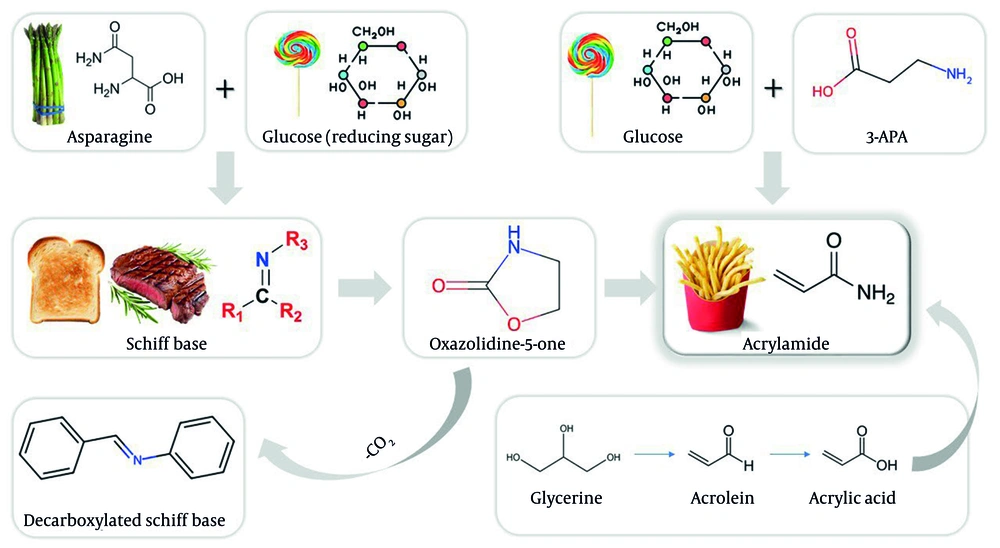
Acrylamide formation mechanism in heated food
Figure 1.

Acrylamide formation mechanism in heated food

2.2. Toxicology and Dietary Exposure of Acrylamide

Since 1994, the International Agency for Research on Cancer (IARC) has classified acrylamide as a carcinogenic compound. Various studies have confirmed that acrylamide acts as a multi-organ carcinogen, inducing tumor formation in numerous organs, including the skin, uterus, mammary gland, lung, brain, and others (9). The assessment of acrylamide consumption through diet has been estimated for various populations across the globe. A significant range of diversity has been observed among populations with respect to their dietary practices and the methods employed in food preparation and handling (21). Dybing et al. posited a mean daily consumption for adults in close proximity to 0.5 mg/kg body mass (22, 23). The World Health Organization (WHO) approximates a daily dietary uptake of acrylamide of 0.3 - 2.0 mg/kg body mass for the general population, and up to 5.1 mg/kg body mass. The daily intakes of acrylamide in adults and children are estimated at an average of 1 and 4 mg/kg body weight, respectively. The larger consumption of specific acrylamide-containing foods, such as potato crisps and French fries, by children could be attributed to their higher calorie intake relative to body weight. Children tend to consume more acrylamide than adults (22, 24). Heudorf et al. (2009) conducted an evaluation of the dietary intake of acrylamide in children using a biomarker based on the mercapturic acids concentration in urine samples (25).

3. 5-Hydroxymethylfurfural

3.1. Formation and Occurrence of 5-Hydroxymethylfurfural in Food

The HMF, a furanic compound named 5-(hydroxymethyl)furan-2-carbaldehyde or HMF, acts as an intermediary in diverse reactions. One such reaction is the Maillard reaction, while it can also be formed through caramelization, which occurs on sugars in acidic media and during thermal food processing (26). The procedure for the creation of HMF involves the identification of 3-deoxyosone as the principal intermediate. This intermediate arises from the 1,2-enolization and dehydration of glucose or fructose. Subsequently, the 3-deoxyosone undergoes additional dehydration and cyclization to produce HMF (Figure 2). Notably, HMF can be generated in acidic environments, and its content may notably increase at elevated temperatures during thermal treatments (27). The level of HMF present in foodstuffs is linked to the temperature used in carbohydrate-rich items, for instance, honey and caramel solutions. Notably, the concentrations of HMF in dried fruits and caramelized foods vary extensively and might surpass 1 g/kg. The HMF can also be generated in other foods, including malt, coffee, bakery products, vinegar, and fruit juices (28-30).
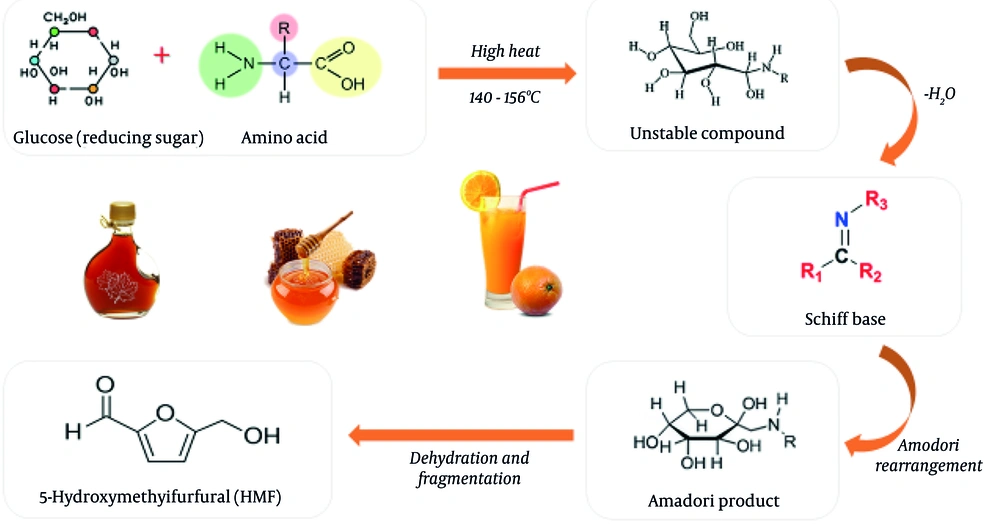
The formation of 5-hydroxymethylfurfural (HMF) in food products
Figure 2.

The formation of 5-hydroxymethylfurfural (HMF) in food products

3.2. Toxicology and Dietary Exposure of 5-Hydroxymethylfurfural

It has been observed that higher levels of HMF are related to irritation of the eyes, cytotoxicity, and afflictions of the respiratory system, skin problems, and mucous membranes. In rats, Ulbricht et al. have determined an LD₅₀ of 3.1 grams of HMF per kilogram body weight (31). In a distinct inquiry, the United States Environmental Protection Agency (1992) has approximated a lethal dose 50% (LD50) of 2.5 grams per kilogram for males and 2.5 - 5.0 grams per kilogram for females, in the case of acute oral exposure. The carcinogenic potential of HMF has been studied, indicating it could induce and elevate aberrant crypt foci (ACF, preneoplastic lesions) in rats’ colons (32, 33). Zhang et al. highlighted a significant dose-dependent elevation in ACF among rats subsequent to the ingestion of a sole dosage of HMF ranging from 0 - 300 mg/kg body weight (34).

Conversely, Surh et al. reported the emergence of skin papillomas via the administration of 10 - 25 mmol HMF to rats (35). The growth of lipomatous tumors in rats' kidneys via administration of HMF was stated by Schoenthal, Hard, and Gibbard in their research (36). The HMF has been recently identified as a carcinogen in multiple intestinal neoplasia in mice, resulting in progressive growth of adenomas. Additionally, in toxicology research based on a two-year gavage, it was found that HMF could result in rising hepatocellular adenomas in females (29, 32).

4. Furan

4.1. Formation and Occurrence of Furan in Food

Furan (C4H4O) is a heterocyclic aromatic contaminant generated from multiple routes, including those involving sugars, unsaturated fatty acids, and ascorbic acid. The most prominent reaction is the Maillard reaction, which leads to non-enzymatic browning during food cooking and processing. Additionally, simple foods may generate substantial quantities of furanic components (37, 38). Perez Locas and Yaylayan (2004) conducted research on the genesis of furan in systems containing sugars processed at a temperature of 250°C (11). High levels of furan were observed during the thermal processing of ascorbic acid and dehydroascorbic acid. However, by heating amino acids and sugars alone, the generation of significant amounts of furan is precluded (Figure 3).
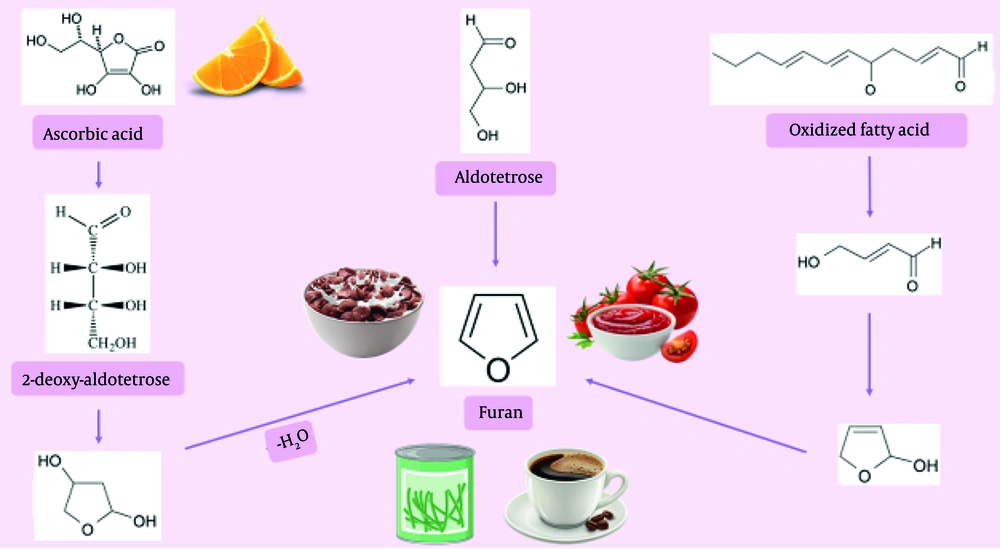
Furan formation from sugars, ascorbic acid, or fatty acid
Figure 3.

Furan formation from sugars, ascorbic acid, or fatty acid

Certain investigations have indicated that roasting temperature and the quantity of unsaturated fatty acids are directly associated with the emergence of furan (39-41). Reports exist regarding furan occurrences in some heat-processed foods packaged in cans and jars. The results of an investigation disclosed data for 334 specific food items, many of which were frequently purchased baby foods and infant formulae, meat, seafood, coffee, nourishing beverages, pasta condiments, fruit conserves, and alcoholic beverages. The analytical approach utilized was limited by a quantification threshold of roughly 5 mg/kg, or parts per billion, for the majority of foods. The highest concentration of furan was detected in vegetables, specifically beans, sweet potatoes, and squash, which were packaged in jars or cans. Moreover, a substantial quantity of furan, varying from 20 to 200 mg/kg, has been recorded in unconventionally sealed food products, such as crackers, chips, loaves of bread, potato chips, and toasted bread (42, 43).

4.2. Toxicology and Dietary Exposure of Furan

The European Food Safety Authority (EFSA) has stated that furan is evidently carcinogenic in both mice and rats. Additionally, the acquired data indicate that the carcinogenicity induced by furan may be attributed to a genotoxic mechanism (44). The assessment of furan's toxicity has revealed its remarkable capacity to induce carcinogenesis, with deleterious impacts on multiple bodily organs. The administration of low maximum doses of furan over a 13-week period resulted in weight loss, increased liver and kidney weights, decreased thymus weight, and toxic lesions in the liver and kidney of mice and rats, with severity increasing with dosage. Mortalities were observed in the rat species, with a larger percentage of males (90%) than females (40%) experiencing such incidences. However, no mortalities were noted among the mouse population, regardless of sex.

The administration of furan, at dosages of either 8 or 15 mg/kg body weight for a duration of 5 days per week over a course of 2 years, resulted in noteworthy weight loss at 15 mg/kg body weight and a significant increase in carcinomas and hepatocellular adenomas. Conversely, the implementation of higher maximum dosages (30 mg/kg furan via gavage 5 days per week) instigated cholangiocarcinoma of the liver in all 50 male rats. Furthermore, it was observed that 6 out of the total 40 rats subjected to furan dosage exhibited the presence of hepatocellular carcinomas after 9 months. Similarly, cholangiocarcinomas were found in all 10 male rats that continued to survive after 9 and 15 months (37, 45, 46).

5. Chloropropanols

5.1. Formation and Occurrence of Chloropropanols in Food

Chloropropanols, specifically 3-chloropropanediol (3-MCPD) and 2-chloropropanediol (2-MCPD), are contaminants that arise during the processing and production of specific food products due to the reaction between glycerol and hydrochloric acid. The process suggested for the formation of 3-MCPD and 2-MCPD is attributed to the interaction between hydrochloric acid and lipids. Specifically, the production of vegetable proteins and soy sauces by acid hydrolysis leads to the development of 3-MCPD and 1,3-dichloropropanol (1,3-DCP).

Research has demonstrated that various lipids, namely mono-, di-, and triacylglycerols, glycerol, triolein, and lecithin, possess the potential to function as precursors to the genesis of 3-MCPD and 2-MCPD following exposure to hydrochloric acid-induced heating. Additionally, investigations have disclosed that higher processing temperatures lead to the generation of these substances (47-49). Notifications regarding the presence of 2-MCPD in food were mostly confined to soy sauces and their corresponding products.

A monitoring study revealed that soy sauces contained 2-MCPD in quantities as high as 18 mg/kg, while other sauces contained up to approximately 9 mg/kg. In another study, significant amounts of both 2-MCPD and 3-MCPD were found across all tested samples of infant formulas. In China, an examination of soy sauces indicated that 2-MCPD was present in roughly 48% of samples (mean level of 0.01 mg/kg). A further survey revealed that the mean concentrations of 3-MCPD fatty acid esters in edible oils, fried foods, and baked confections were 0.862, 0.249, and 0.451 milligrams per kilogram, respectively (50, 51).

5.2. Toxicology and Dietary Exposure of Chloropropanols

Chloropropanols exhibit high gastrointestinal tract absorption rates and, at elevated doses, may elicit deleterious effects on the heart, liver, and kidneys. Nonetheless, a NOAEL dose of 2 mg/kg has been established for this compound (52). Limited records are available pertaining to the probable toxicity of these compounds. Nevertheless, various research has postulated that these substances possess the capacity to obstruct the glyceraldehyde-3-phosphate dehydrogenase enzyme, in addition to interfering with the glycolysis process. The development of 3-MCPD and 2-MCPD on the myocardium of rats has also been investigated, whereby it was found that cardiac muscle exhibited greater susceptibility to the toxicity of 3-MCPD. The aforementioned compounds have been observed to exhibit toxicity towards various other internal organs, with the kidney and testis being recognized as the primary organs targeted by the toxic effects of 3-MCPD (53, 54).

6. Heterocyclic Aromatic Amines

6.1. Formation and Occurrence of Heterocyclic Aromatic Amines in Food

The HAA are chemical compounds containing multi-ring aromatics with two different elements (one or more nitrogen atoms) and one amine group. The HAAs can be created during cooking (notably frying) of food items, especially meat, at high temperatures. The application of elevated temperatures for prolonged durations is crucial to the formation of HAAs. The non-polar group, which includes common pyridoindole or dipyridoimidazole moieties, is regularly allocated as pyrolysis yields of amino acids and is produced during thermal processing. The polar category, which includes the imidazoquinoxaline, imidazoquinoline, and imidazopyridine types, is produced from amino acids, carbohydrates, and creatinine at 150 to 250°C.

Recently, over 25 types of HAAs have been discovered and isolated in heated foods (55-57). Certain cooking methods have been correlated with decreased HAA formation; for instance, findings showed that the use of oven bags leads to a decrease in HAA content. Additionally, an investigation suggested that roasting meat at a temperature lower than 175°C and within 1.5 - 2 minutes resulted in lower levels of HAA. Furthermore, charcoal grilling methods resulted in the generation of higher levels of HAA compared to other cooking styles.

6.2. Toxicology and Dietary Exposure of Heterocyclic Aromatic Amines

The HAAs have been observed to display significant mutagenic and carcinogenic features. Humans are frequently exposed to these substances through both their diet and the environment. The IARC designates certain contaminants, namely 2-amino-3-methylimidazo[4,5-f]quinoline (IQ), as a potential human carcinogen (class 2A), and 2-amino-3,4-dimethylimidazo[4,5-f]quinoline (MeIQ) and 2-amino-3,8-dimethylimidazo[4,5-f]quinoxaline (MeIQx) as possible human carcinogens (class 2B). An epidemiological inquiry revealed that HAAs may be linked to an elevated risk of breast, prostate, colorectal, pancreatic, and other cancers (58-62).

7. Polycyclic Aromatic Hydrocarbons

7.1. Formation and Occurrence of Polycyclic Aromatic Hydrocarbons in Food

The PAHs are a significant type of environmental pollutant with aromatic rings consisting of five or six carbon atoms. Their formation takes place due to improper combustion of fossil fuels as well as during food processing, with smoked foods being the primary source of these compounds. It is noteworthy that raw foods, such as vegetables and fruits, can serve as a common source of PAHs, as they can absorb these compounds from soil, air, and water. The PAHs can also occur in foods through other processing methods such as drying, smoking, and packaging. Interestingly, some studies have reported the possibility of biodegrading PAHs in food by probiotic microorganisms, such as Bacillus velezensis and Lactobacillus brevis (14, 63-65).

7.2. Toxicology and Dietary Exposure of Polycyclic Aromatic Hydrocarbons

It is noteworthy that PAHs are recognized as the most significant group of chemical carcinogens. As such, the European Scientific Committee on Food evaluated the risk posed by 33 PAHs on December 4, 2002. The committee concluded that 15 PAHs, including benzo[a]anthracene, benzo[b]fluoranthene, benzo[j]fluoranthene, benzo[k]fluoranthene, benzo[a]pyrene, benzo[g,h,i]perylene, chrysene, cyclopenta[c,d]pyrene, dibenz[a,h]anthracene, dibenzo[a,e]pyrene, dibenzo[a,h]pyrene, dibenzo[a,i]pyrene, dibenzo[a,l]pyrene, indeno[1,2,3-cd]pyrene, and 5-methylchrysene, have clear genotoxicity (66-68).

Moreover, all these compounds, except benzo[g,h,i]perylene, are carcinogenic for animals. The committee also considered benzo[a]pyrene as a marker for the presence and effect of carcinogenic PAHs in food groups. Furthermore, on June 9, 2008, the EFSA approved an opinion titled "Polycyclic Aromatic Hydrocarbons in Food”. In this opinion, the EFSA determined that benzo[a]pyrene is not a reliable marker for the existence of PAHs in food. Therefore, they recommended four compounds, namely, benzo[a]pyrene, chrysene, benzo[a]anthracene, and benzo[b]fluoranthene, as the most appropriate indicators of PAHs in food (69, 70).

8. Analysis Methods for Heat-Formed Contaminants

The most considered analysis methods and conditions used for quantification of heat-formed contaminants in food are listed in Table 1. It was observed that chromatographic methodologies are the most commonly considered techniques for the determination of trace concentrations of food contaminants such as heat-formed compounds (Figure 4). Owing to the intricate nature of food matrices and the concentration of acrylamide, HMF, furan, HAAs, and PAHs in processed or cooked foods, the methodologies used require particular clean-up conditions. The accurate detection and confirmation of trace amounts of these contaminants depend on precise preparation and separation procedures (71, 72).

Table 1.The Specification of Analysis of Heat-Formed Contaminants in Food Matrix Used in Studies
Analyte and MatrixSample PreparationSeparation TechniqueLODLOQRecovery (%)Ref.
Acrylamide
Dried fruits, edible seedsQuEChERSLC/MS2.0 µg/kg5.0 µg/kg61 - 82(73)
BreadUAE-DLLMEGC-MS0.54 ng/g1.89 ng/g98(74)
Potato-based foodsHS-SPMEIMS4 ng/g10 ng/g-(75)
Bread, potato chips, cookieSDMEGC-ECD0.6 µg/L2.0 µg/L97 - 104(76)
Fried foodDSPESERS2 μg/kg5 μg/kg73.4 - 92.8(77)
Fried food DSMIPs–GO–Fe3O4HPLC-UV--86.7 - 94.3(78)
HMF
Vinegar, soy sauceUALLMECE-UV0.03 mg/L0.10 mg/L1.24 - 109.39(79)
Fruit puree, juiceDLLMEHPLC-UV1.47 µg/L5.28 µg/L98.4(80)
HoneyHS-SPMEPolyoxometalate coated piezoelectric quart crystal3.4 µg/g11.4 µg/g-(81)
Furan
Baby food, fruit juiceHS-SPMEGC-FID0.001 - 0.00025 ng/mL0.005 - 0.0005 ng/mL92 - 103(82)
Fruit juicesHS-SPMEGC-FID0.056 - 0.23 ng/mL0.14 - 0.76 ng/mL90.2 - 110.1(83)
Baby foodsHS-LPMEGC-MS0.021 - 0.038 ng/g0.069 - 0.126 ng/g89.33 - 103.64(84)
Chloropropanols
Soy saucesSPELC-MS, GC-MS0.01 mg/kg0.05 mg/kg85.09 - 98.88(85)
HAAs
Hamburger pattiesMAE-DLLMEHPLC-UV0.06 - 0.21 ng/g0.15 - 0.70 ng/g-190 - 105(86)
Aqueous samplesDLLME-SFOUPLC-MS/MS0.7 - 2.9 ng/mL2.2 - 8.7 ng/mL92 - 106(87)
Meat productsQuEChERSHPLC-DAD-ESI-MS/MS-0.005 - 0.1 ng/g56.51 - 113.97(88)
Roasted coffeeSPEHPLC-FLD0.21 - 0.51 ng/g0.38 - 0.93 ng/g40 - 56(89)
PAHs
Smoked fishMAE-DLLMEGC-MS0.11 - 0.48 ng/g0.36 - 1.6 ng/g82.1 - 105.5(90)
Coffee SamplesMAE-DLLMEGC-MS0.1 - 0.3 ng/g0.3 - 0.9 ng/g88.1 - 101.3(91)
Baby food QuEChERS- LDS-DLLMEGC-MS-0.3 μg/kg0.25-1 μg/kg72 - 106(92)
Water and milkIT-SPMEHPLC-FLD0.017 - 0.23, 0.10 - 2.36 ng/L0.057 - 0.97, 0.33 - 7.78 ng/L78.5 – 118, 75.5 - 119(93)

Abbreviations: HMF, 5-hydroxymethylfurfural; QuEChERS, quick, easy, cheap, effective, rugged, and safe; LC/MS, liquid chromatography-mass spectrometry; UAE-DLLME, ultrasound-assisted extraction-dispersive liquid-liquid microextraction; HS-SPME, headspace solid-phase microextraction; HAA, heterocyclic aromatic amin; PAH, polycyclic aromatic hydrocarbon; IMS, ion mobility spectrometry; SDME, single drop micro extraction; GC-ECD, gas chromatography-electron capture detector; DSPE, dispersive solid-phase extraction; SERS, surface-enhanced Raman spectroscopy; DSMIPs–GO–Fe3O4, dummy-surface molecularly imprinted polymers on a magnetic graphene oxide; GC-FID, gas chromatography-flame ionization detector; HS-LPME, headspace liquid-phase micro-extraction; MAE-DLLME, microwave-assisted extraction-dispersive liquid-liquid microextraction; DLLME-SFO, dispersive liquid-liquid microextraction with solidification of the floating organic droplets; UPLC-MS/MS, ultra-performance liquid chromatography-tandem mass spectrometry; MDES, magnetic deep eutectic solvent.
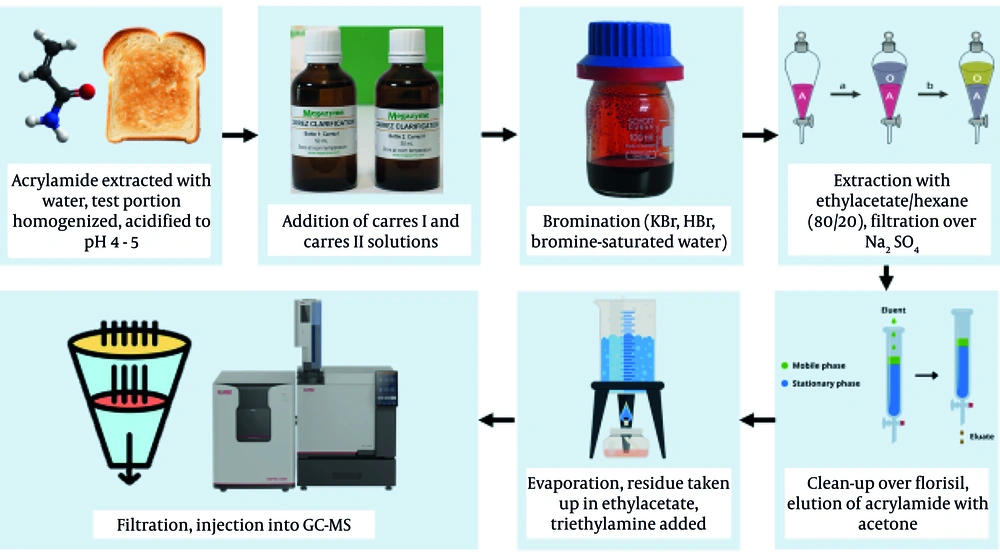
Sequence of steps for the analysis of acrylamide in foods by GC-MS
Figure 4.

Sequence of steps for the analysis of acrylamide in foods by GC-MS

9. Food Safety Measures of Heat-Formed Contaminants

The Rapid Alert System for Food and Feed (RASFF) records information regarding safety issues associated with food and feed items. Data from the monitoring of products and recalls are proposed to protect public health. The contaminated products are notified based on contaminant type, country, and defined category of products. The implementation of protocols, data management, and efficient risk management is crucial for tracing and controlling food product safety. Table 2 provides information on recent food recalls of some major heat-formed contaminants alarmed by the RASFF during 2020 to 2024.

Table 2.The Notification of Some Major Heat-Formed Contaminants Alarmed by the Rapid Alert System for Food and Feed During 2020 to 2024
Notifications and CategoryFood type
Acrylamide
ConfectioneryBiscuits, waffle cups, oatmeal, cookies
Cereals and bakery productsPotato chips
Prepared dishes and snacksBiscuits, corn waffle, rye flakes, crispy, extruded flatbread
Fruits and vegetablesVegetable crisps, chips
Cocoa and cocoa preparations, coffee and teaInstant coffee
Hydroxymethylfurfural
Honey and royal jellyForest bee honey
Furan
Prepared dishes and snacksBaby-Food
Cocoa and cocoa preparations, coffee and teaRoasted ground coffee
PAHs
Cocoa and cocoa preparations, coffee and teaChocolates
Dietetic foods, food supplements and fortified foodsGinseng extract, food supplement Spirulina
Fats and oilsOlive pomace oil. organic hemp oil, sunflower oil
Cereals and bakery productsRice cakes for infants and young children, rice wafers, unripe wheat. roasted wheat (freekeh) baby chocolate biscuits
Fish and fish productsSmoked fish
Dietetic foods, food supplements and fortified foodsValerian extract
Cocoa and cocoa preparations, coffee and teaChocolate powder, matcha tea powder
Herbs and spicesDried green jalapeno pepper, lovage root ground, garam masala, organic paprika powder, white pepper, sliced organic wild garlic, ginger powder, cinnamon, dried bay leaves, and paprika powder

Abbreviation: PAHs, polycyclic aromatic hydrocarbons.

10. Risk Assessments and Mitigation Strategies

The risk assessment of food contaminants is a multi-step process using toxicological and exposure data to protect public health (94). Human health risk assessments of contaminants in food involve the analysis of accurate content of hazardous compounds and the calculation of carcinogenic and non-carcinogenic risk in both adults and children (95, 96). Therefore, continuous monitoring of heat-formed contaminants in high-risk food items is necessary for estimating intake by individuals. On the other hand, the concentration of these trace contaminants in heat-processed food reflects the style of cooking and processing by producers or consumers. In terms of food security, hazard identification, hazard characterization, exposure assessment, and risk characterization are urgent (97, 98).

There are several practical strategies to mitigate the generation and occurrence of heat-formed contaminants in food. Mitigation strategies must be performed across the food supply chain, from agricultural practices to final cooking, to significantly reduce the formation of prominent contaminants such as acrylamide, furan, heterocyclic amines, and PAHs, as potential health concerns (99). Raw material supply is the primary step to control the composition of food materials. According to agronomical studies, the selection of potato and wheat varieties containing lower contents of free asparagine and reducing sugars (glucose, fructose) is considered the first acrylamide-reducing strategy.

Additionally, controlling the temperature (>8 °C) in sorting and storage of potatoes prevents the accumulation of reducing sugars (100). Some food preparation processes, such as meat marinating and the use of certain additives, can scavenge free radicals, which are precursors for the formation of some aromatic compounds. A key mitigation strategy is the reformulation and alteration of food recipes in both kitchens and industries. Also, controlling the two processing parameters of time and temperature is the most direct and effective factor in mitigating heat-formed contaminants in food (101-103).

Major helpful cooking practices include cooking carbohydrate-rich foods to a golden yellow, not a dark brown appearance, avoiding excessive frying and baking, using blanching or soaking for French fries or chips, using moist-heat methods (boiling, steaming, stewing), cooking before grilling, avoiding overheating of meat, and trimming and cleaning cooking equipment.

11. Conclusions

The application of thermal processes in food, particularly via the use of heat, possesses the capacity to give rise to the creation of perilous compounds, encompassing acrylamide, HMF, furan, HAAs, and PAHs. These process contaminants have the potential to be carcinogenic and exhibit acute or chronic toxicity. The formation of these contaminants can be influenced by factors such as the type of oil, refining conditions, and the presence of certain precursors. The concentrations of these contaminants in foods are typically low and may not pose a significant risk when consumed in moderation.

However, excessive consumption of specific foods or intensive heat treatment can increase the risk of exposure to these contaminants. The food industry and researchers continue to work on mitigating the formation of these process contaminants and lowering their levels in food products. Additional investigation is required to enhance comprehension regarding the formation, occurrence, and potential health risks associated with these process impurities in various food items.
Acknowledgments

Footnotes

References

  • 1.
    Barzegar F, Kamankesh M, Mohammadi A. Heterocyclic aromatic amines in cooked food: A review on formation, health risk-toxicology and their analytical techniques. Food Chem. 2019;280:240-54. [PubMed ID: 30642492]. https://doi.org/10.1016/j.foodchem.2018.12.058.
  • 2.
    Delgado-Andrade C, Mesias M, Morales FJ. Introduction to the Special Issue: New Frontiers in Acrylamide Study in Foods-Formation, Analysis and Exposure Assessment. Foods. 2020;9(10). [PubMed ID: 33096602]. [PubMed Central ID: PMC7589930]. https://doi.org/10.3390/foods9101506.
  • 3.
    Gökmen V. Acrylamide in thermally processed potato products. Potato Res. 2023;66(4):1315-29.
  • 4.
    Arnoldi A. Thermal processing and food quality. In: Richardson P, editor. Thermal Technologies in Food Processing. Amsterdam, Netherlands: Elsevier; 2001. https://doi.org/10.1201/9781439822999.ch8.
  • 5.
    Pankaj SK. Thermal processing of food. In: Ravishankar Rai V, editor. Advances in food biotechnology. Hoboken, New Jersey: John Wiley & Sons; 2015. p. 681-92.
  • 6.
    Kubo MT, Baicu A, Erdogdu F, Poças MF, Silva CL, Simpson R, et al. Thermal processing of food: Challenges, innovations and opportunities. A position paper. Food Rev Int. 2021;39(6):3344-69. https://doi.org/10.1080/87559129.2021.2012789.
  • 7.
    Mousavi M, Mahmoudpourb M, Yousefi M, Mortazavian AM. Strategies for reduction of acrylamide in fried potatoes and potato chips: a review. Middle East J Rehabil Health Stud. 2023;11(1). https://doi.org/10.5812/mejrh-132710.
  • 8.
    Liu X, Huang S, Chao C, Yu J, Copeland L, Wang S. Changes of starch during thermal processing of foods: Current status and future directions. Trends Food Sci Technol. 2022;119:320-37. https://doi.org/10.1016/j.tifs.2021.12.011.
  • 9.
    Nabih HK. Risk assessment of human carcinogenicity of acrylamide in food: way to reduce the predicted mitogenic side effects through mitigation strategy. In: Olubukola Oluranti B, editor. Food Security and Safety: African Perspectives. Princeton, New Jersey: Springer; 2021. p. 855-68.
  • 10.
    Khezerolou A, Alizadeh-Sani M, Zolfaghari Firouzsalari N, Ehsani A. Formation, properties, and reduction methods of acrylamide in foods: A review study. J Nutrit, Fasting Health. 2018;6(1 (Special issue on Food Safety)):52-9.
  • 11.
    Perez Locas C, Yaylayan VA. Origin and mechanistic pathways of formation of the parent furan--a food toxicant. J Agric Food Chem. 2004;52(22):6830-6. [PubMed ID: 15506823]. https://doi.org/10.1021/jf0490403.
  • 12.
    Ling B, Tang J, Kong F, Mitcham EJ, Wang S. Kinetics of Food Quality Changes During Thermal Processing: a Review. Food Bioprocess Technol. 2014;8(2):343-58. https://doi.org/10.1007/s11947-014-1398-3.
  • 13.
    Pan M, Liu K, Yang J, Hong L, Xie X, Wang S. Review of Research into the Determination of Acrylamide in Foods. Foods. 2020;9(4). [PubMed ID: 32331265]. [PubMed Central ID: PMC7230758]. https://doi.org/10.3390/foods9040524.
  • 14.
    Starski A, Kukielska A, Postupolski J. Occurrence of polycyclic aromatic hydrocarbons in human diet - exposure and risk assessment to consumer health. Rocz Panstw Zakl Hig. 2021;72(3):253-65. [PubMed ID: 34553879]. https://doi.org/10.32394/rpzh.2021.0178.
  • 15.
    Keramat J, LeBail A, Prost C, Soltanizadeh N. Acrylamide in Foods: Chemistry and Analysis. A Review. Food Bioprocess Technol. 2010;4(3):340-63. https://doi.org/10.1007/s11947-010-0470-x.
  • 16.
    Mottram DS, Wedzicha BL, Dodson AT. Acrylamide is formed in the Maillard reaction. Nature. 2002;419(6906):448-9. [PubMed ID: 12368844]. https://doi.org/10.1038/419448a.
  • 17.
    Rifai L, Saleh FA. A Review on Acrylamide in Food: Occurrence, Toxicity, and Mitigation Strategies. Int J Toxicol. 2020;39(2):93-102. [PubMed ID: 32013673]. https://doi.org/10.1177/1091581820902405.
  • 18.
    Pesce F, Ponzo V, Mazzitelli D, Varetto P, Bo S, Saguy I. Strategies to Reduce Acrylamide Formation During Food Processing Focusing on Cereals, Children and Toddler Consumption: A Review. Food Rev Int. 2023;40(1):185-211. https://doi.org/10.1080/87559129.2023.2164896.
  • 19.
    Maan AA, Anjum MA, Khan MKI, Nazir A, Saeed F, Afzaal M, et al. Acrylamide Formation and Different Mitigation Strategies during Food Processing – A Review. Food Rev Int. 2020;38(1):70-87. https://doi.org/10.1080/87559129.2020.1719505.
  • 20.
    Emadi A, Yousefi B, Eslami M, Abdolshahi A. Reduction of acrylamide formation in bread and fried potato products using probiotic microorganisms: a systematic review and dose–response meta-analysis. J Food Measurement Characterization. 2021;15(5):4277-87. https://doi.org/10.1007/s11694-021-00997-5.
  • 21.
    Filippini T, Halldorsson TI, Capitao C, Martins R, Giannakou K, Hogervorst J, et al. Dietary Acrylamide Exposure and Risk of Site-Specific Cancer: A Systematic Review and Dose-Response Meta-Analysis of Epidemiological Studies. Front Nutr. 2022;9:875607. [PubMed ID: 35548558]. [PubMed Central ID: PMC9082595]. https://doi.org/10.3389/fnut.2022.875607.
  • 22.
    Dybing E, Farmer PB, Andersen M, Fennell TR, Lalljie SP, Muller DJ, et al. Human exposure and internal dose assessments of acrylamide in food. Food Chem Toxicol. 2005;43(3):365-410. [PubMed ID: 15680675]. https://doi.org/10.1016/j.fct.2004.11.004.
  • 23.
    Quesada-Valverde M, Artavia G, Granados-Chinchilla F, Cortés-Herrera C. Acrylamide in foods: from regulation and registered levels to chromatographic analysis, nutritional relevance, exposure, mitigation approaches, and health effects. Toxin Rev. 2022;41(4):1343-73. https://doi.org/10.1080/15569543.2021.2018611.
  • 24.
    Liu Y, Wang Y, Zhang X, Jiao Y, Duan L, Dai L, et al. Chronic acrylamide exposure resulted in dopaminergic neuron loss, neuroinflammation and motor impairment in rats. Toxicol Appl Pharmacol. 2022;451:116190. [PubMed ID: 35917840]. https://doi.org/10.1016/j.taap.2022.116190.
  • 25.
    Heudorf U, Hartmann E, Angerer J. Acrylamide in children--exposure assessment via urinary acrylamide metabolites as biomarkers. Int J Hyg Environ Health. 2009;212(2):135-41. [PubMed ID: 18555743]. https://doi.org/10.1016/j.ijheh.2008.04.006.
  • 26.
    Choudhary A, Kumar V, Kumar S, Majid I, Aggarwal P, Suri S. 5-Hydroxymethylfurfural (HMF) formation, occurrence and potential health concerns: recent developments. Toxin Rev. 2020;40(4):545-61. https://doi.org/10.1080/15569543.2020.1756857.
  • 27.
    Kanar Y, Mazı BG. HMF formation, diastase activity and proline content changes in bee pollen dried by different drying methods. Lwt. 2019;113. https://doi.org/10.1016/j.lwt.2019.108273.
  • 28.
    Aktağ IG, Gökmen V. A survey of the occurrence of α-dicarbonyl compounds and 5-hydroxymethylfurfural in dried fruits, fruit juices, puree and concentrates. J Food Composition Analysis. 2020;91. https://doi.org/10.1016/j.jfca.2020.103523.
  • 29.
    Arribas-Lorenzo G, Morales FJ. Estimation of dietary intake of 5-hydroxymethylfurfural and related substances from coffee to Spanish population. Food Chem Toxicol. 2010;48(2):644-9. [PubMed ID: 20005914]. https://doi.org/10.1016/j.fct.2009.11.046.
  • 30.
    Ghazouani T, Atzei A, Talbi W, Fenu MA, Tuberoso C, Fattouch S. Occurrence of acrylamide, hydroxymethylfurfural and furaldehyde as process contaminants in traditional breakfast cereals: “Bsissa”. Food Control. 2021;124. https://doi.org/10.1016/j.foodcont.2021.107931.
  • 31.
    Ulbricht RJ, Northup SJ, Thomas JA. A Review of 5-Hydroxymethylfurfural (HMF) in Parenteral Solutions. Toxicol Sci. 1984;4(5):843-53. https://doi.org/10.1093/toxsci/4.5.843.
  • 32.
    Elmaogullari S, Kadan E, Anadol E, Gokceoglu A, Cetinkaya S, Yarim GF, et al. Effects of 5-Hydroxymethylfurfural on Pubertal Development of Female Wistar Rats. J Clin Res Pediatr Endocrinol. 2020;12(1):79-85. [PubMed ID: 31475510]. [PubMed Central ID: PMC7127893]. https://doi.org/10.4274/jcrpe.galenos.2019.2019.0080.
  • 33.
    Farag MR, Alagawany M, Bin-Jumah M, Othman SI, Khafaga AF, Shaheen HM, et al. The Toxicological Aspects of the Heat-Borne Toxicant 5-Hydroxymethylfurfural in Animals: A Review. Molecules. 2020;25(8). [PubMed ID: 32331408]. [PubMed Central ID: PMC7221839]. https://doi.org/10.3390/molecules25081941.
  • 34.
    Zhang XM, Chan CC, Stamp D, Minkin S, Archer MC, Bruce WR. Initiation and promotion of colonic aberrant crypt foci in rats by 5-hydroxymethyl-2-furaldehyde in thermolyzed sucrose. Carcinogenesis. 1993;14(4):773-5. [PubMed ID: 8472346]. https://doi.org/10.1093/carcin/14.4.773.
  • 35.
    Surh YJ, Liem A, Miller JA, Tannenbaum SR. 5-Sulfooxymethylfurfural as a possible ultimate mutagenic and carcinogenic metabolite of the Maillard reaction product, 5-hydroxymethylfurfural. Carcinogenesis. 1994;15(10):2375-7. [PubMed ID: 7955080]. https://doi.org/10.1093/carcin/15.10.2375.
  • 36.
    Schoental R, Hard GC, Gibbard S. Histopathology of renal lipomatous tumors in rats treated with the “natural” products, pyrrolizidine alkaloids and α, β-unsaturated aldehydes. J National Cancer Institute. 1971;47(5):1037-44.
  • 37.
    Batool Z, Xu D, Zhang X, Li X, Li Y, Chen Z, et al. A review on furan: Formation, analysis, occurrence, carcinogenicity, genotoxicity and reduction methods. Crit Rev Food Sci Nutr. 2021;61(3):395-406. [PubMed ID: 32146825]. https://doi.org/10.1080/10408398.2020.1734532.
  • 38.
    Kirkok S, Kibet J, Kinyanjui T, Okanga F. A mechanistic formation of phenolic and furanbased molecular products from pyrolysis of model biomass components. Prog Chem Biochem Res. 2022;5(4):376-90.
  • 39.
    Emektar K, Nur Kantekin-Erdogan M, Tekin A. Furan formation in some vegetable oils during heat treatments. Food Chem. 2022;386:132744. [PubMed ID: 35339089]. https://doi.org/10.1016/j.foodchem.2022.132744.
  • 40.
    Javed F, Shahbaz HM, Nawaz A, Olaimat AN, Stratakos AC, Wahyono A, et al. Formation of furan in baby food products: Identification and technical challenges. Compr Rev Food Sci Food Saf. 2021;20(3):2699-715. [PubMed ID: 33719191]. https://doi.org/10.1111/1541-4337.12732.
  • 41.
    Lee SM, Zheng LW, Jung Y, Hwang GS, Kim YS. Effects of hydroxycinnamic acids on the reduction of furan and alpha-dicarbonyl compounds. Food Chem. 2020;312:126085. [PubMed ID: 31896460]. https://doi.org/10.1016/j.foodchem.2019.126085.
  • 42.
    Crews C, Castle L. A review of the occurrence, formation and analysis of furan in heat-processed foods. Trends Food Sci Technol. 2007;18(7):365-72. https://doi.org/10.1016/j.tifs.2007.03.006.
  • 43.
    Kettlitz B, Scholz G, Theurillat V, Cselovszky J, Buck NR, O' Hagan S, et al. Furan and Methylfurans in Foods: An Update on Occurrence, Mitigation, and Risk Assessment. Compr Rev Food Sci Food Saf. 2019;18(3):738-52. [PubMed ID: 33336919]. https://doi.org/10.1111/1541-4337.12433.
  • 44.
    Authority EFS. Report of the CONTAM Panel on provisional findings on furan in food. EFSA J. 2004;2(12). https://doi.org/10.2903/j.efsa.2004.137.
  • 45.
    Bakhiya N, Appel KE. Toxicity and carcinogenicity of furan in human diet. Arch Toxicol. 2010;84(7):563-78. [PubMed ID: 20237914]. https://doi.org/10.1007/s00204-010-0531-y.
  • 46.
    Kuroda K, Ishii Y, Takasu S, Matsushita K, Kijima A, Nohmi T, et al. Toxicity, genotoxicity, and carcinogenicity of 2-methylfuran in a 90-day comprehensive toxicity study in gpt delta rats. Food Chem Toxicol. 2022;168:113365. [PubMed ID: 35970270]. https://doi.org/10.1016/j.fct.2022.113365.
  • 47.
    MacMahon S, Beekman J. 3-Chloro-1,2-propanediol (3-MCPD), 2-chloro-1,3-propanediol (2-MCPD) and glycidyl esters in infant formula: a review. Curr Opin Food Sci. 2019;30:67-72. https://doi.org/10.1016/j.cofs.2019.05.005.
  • 48.
    Stauff A, Schneider E, Heckel F. 2-MCPD, 3-MCPD and fatty acid esters of 2-MCPD, 3-MCPD and glycidol in fine bakery wares. Europ Food Res Technol. 2020;246(10):1945-53. https://doi.org/10.1007/s00217-020-03546-4.
  • 49.
    Tivanello RG, Capristo MF, Leme FM, Ferrari RA, Sampaio KA, Arisseto AP, et al. Mitigation Studies Based on the Contribution of Chlorides and Acids to the Formation of 3-MCPD, 2-MCPD, and Glycidyl Esters in Palm Oil. ACS Food Sci Technol. 2021;1(7):1190-7. https://doi.org/10.1021/acsfoodscitech.1c00084.
  • 50.
    Goh KM, Wong YH, Tan CP, Nyam KL. A summary of 2-, 3-MCPD esters and glycidyl ester occurrence during frying and baking processes. Curr Res Food Sci. 2021;4:460-9. [PubMed ID: 34296198]. [PubMed Central ID: PMC8281601]. https://doi.org/10.1016/j.crfs.2021.07.002.
  • 51.
    Kamikata K, Vicente E, Arisseto-Bragotto AP, Miguel AMRDO, Milani RF, Tfouni SAV. Occurrence of 3-MCPD, 2-MCPD and glycidyl esters in extra virgin olive oils, olive oils and oil blends and correlation with identity and quality parameters. Food Control. 2019;95:135-41. https://doi.org/10.1016/j.foodcont.2018.07.051.
  • 52.
    Syed Putra SS, Basirun WJ, Elgharbawy AA, Hayyan M, Al Abdulmonem W, Aljohani AS, et al. 3-Monochloropropane-1, 2-diol (3-MCPD): A review on properties, occurrence, mechanism of formation, toxicity, analytical approach and mitigation strategy. J Food Measur Characterizat. 2023;17(4):3592-615.
  • 53.
    Fattore E, Lanno A, Danieli A, Stefano S, Passoni A, Roncaglioni A, et al. Toxicology of 3-monochloropropane-1,2-diol and its esters: a narrative review. Arch Toxicol. 2023;97(5):1247-65. [PubMed ID: 36826474]. https://doi.org/10.1007/s00204-023-03467-7.
  • 54.
    Schultrich K, Frenzel F, Oberemm A, Buhrke T, Braeuning A, Lampen A. Comparative proteomic analysis of 2-MCPD- and 3-MCPD-induced heart toxicity in the rat. Arch Toxicol. 2017;91(9):3145-55. [PubMed ID: 28133701]. https://doi.org/10.1007/s00204-016-1927-0.
  • 55.
    Nadeem HR, Akhtar S, Ismail T, Sestili P, Lorenzo JM, Ranjha M, et al. Heterocyclic Aromatic Amines in Meat: Formation, Isolation, Risk Assessment, and Inhibitory Effect of Plant Extracts. Foods. 2021;10(7). [PubMed ID: 34202792]. [PubMed Central ID: PMC8307633]. https://doi.org/10.3390/foods10071466.
  • 56.
    Ozsarac N, Kolsarici N, Demirok Soncu E, Haskaraca G. Formation of heterocyclic aromatic amines in doner kebab cooked with different methods at varying degrees of doneness. Food Addit Contam Part A Chem Anal Control Expo Risk Assess. 2019;36(2):225-35. [PubMed ID: 30650036]. https://doi.org/10.1080/19440049.2018.1562230.
  • 57.
    Zamora R, Hidalgo FJ. Formation of heterocyclic aromatic amines with the structure of aminoimidazoazarenes in food products. Food Chem. 2020;313:126128. [PubMed ID: 31951882]. https://doi.org/10.1016/j.foodchem.2019.126128.
  • 58.
    Bellamri M, Walmsley SJ, Turesky RJ. Metabolism and biomarkers of heterocyclic aromatic amines in humans. Genes Environ. 2021;43(1):29. [PubMed ID: 34271992]. [PubMed Central ID: PMC8284014]. https://doi.org/10.1186/s41021-021-00200-7.
  • 59.
    Dong H, Xian Y, Li H, Bai W, Zeng X. Potential carcinogenic heterocyclic aromatic amines (HAAs) in foodstuffs: Formation, extraction, analytical methods, and mitigation strategies. Compr Rev Food Sci Food Saf. 2020;19(2):365-404. [PubMed ID: 33325180]. https://doi.org/10.1111/1541-4337.12527.
  • 60.
    Savas A, Oz E, Oz F. Is oven bag really advantageous in terms of heterocyclic aromatic amines and bisphenol-A? Chicken meat perspective. Food Chem. 2021;355:129646. [PubMed ID: 33892412]. https://doi.org/10.1016/j.foodchem.2021.129646.
  • 61.
    Wong SF, Low KH, Khor SM. Differential-based biosensor array for fluorescence-chemometric discrimination and the quantification of subtle chloropropanols by cross-reactive serum albumin scaffolding. Talanta. 2020;218:121169. [PubMed ID: 32797922]. https://doi.org/10.1016/j.talanta.2020.121169.
  • 62.
    Wang B, Li H, Huang Z, Kong B, Liu Q, Wang H, et al. Dynamic changes in the qualities and heterocyclic aromatic amines of roasted pork induced by frying temperature and time. Meat Sci. 2021;176:108457. [PubMed ID: 33618127]. https://doi.org/10.1016/j.meatsci.2021.108457.
  • 63.
    Gholizadah S, Mohammadi R, Soleimani D, Rezaei M, Ahanikamangar S, Mosalmanzadeh N, et al. Polycyclic aromatic hydrocarbons in grilled foods from Kermanshah province. Food Addit Contam Part B Surveill. 2021;14(4):287-94. [PubMed ID: 34342553]. https://doi.org/10.1080/19393210.2021.1960902.
  • 64.
    Sultana OF, Lee S, Seo H, Mahmud HA, Kim S, Seo A, et al. Biodegradation and Removal of PAHs by Bacillus velezensis Isolated from Fermented Food. J Microbiol Biotechnol. 2021;31(7):999-1010. [PubMed ID: 34024889]. [PubMed Central ID: PMC9705940]. https://doi.org/10.4014/jmb.2104.04023.
  • 65.
    Yousefi M, Khorshidian N, Hosseini H. In Vitro PAH-Binding Ability of Lactobacillus brevis TD4. Polycyclic Aromatic Compounds. 2021;42(7):4343-58. https://doi.org/10.1080/10406638.2021.1889624.
  • 66.
    Adeyeye SA. Polycyclic Aromatic Hydrocarbons in Foods: A Critical Review. Current Nutrition Food Sci. 2020;16(6):866-73. https://doi.org/10.2174/1573401315666190215112216.
  • 67.
    Mahmoudpour M, Pilevar Z, Javanmardi F, Taram F, Mousavi M. PAHs in toasted bread: determination using microwave-assisted extraction and dispersive liquid–liquid microextraction followed by high-performance liquid chromatography. Analytical Methods. 2018;10(20):2398-404. https://doi.org/10.1039/c8ay00475g.
  • 68.
    Wenzl T, Zelinkova Z. Polycyclic aromatic hydrocarbons in food and feed. Encyclopedia Food Chem. 2019:455-69.
  • 69.
    Sampaio GR, Guizellini GM, da Silva SA, de Almeida AP, Pinaffi-Langley ACC, Rogero MM, et al. Polycyclic Aromatic Hydrocarbons in Foods: Biological Effects, Legislation, Occurrence, Analytical Methods, and Strategies to Reduce Their Formation. Int J Mol Sci. 2021;22(11). [PubMed ID: 34199457]. [PubMed Central ID: PMC8199595]. https://doi.org/10.3390/ijms22116010.
  • 70.
    Palacios Colon L, Rascon AJ, Ballesteros E. Trace-Level Determination of Polycyclic Aromatic Hydrocarbons in Dairy Products Available in Spanish Supermarkets by Semi-Automated Solid-Phase Extraction and Gas Chromatography-Mass Spectrometry Detection. Foods. 2022;11(5). [PubMed ID: 35267346]. [PubMed Central ID: PMC8909477]. https://doi.org/10.3390/foods11050713.
  • 71.
    Mir-Michael M, Javanmardi F, Andishmand H, Momeni M, Mahmoudpour M. Vortex and Ultrasound-Assisted Surfactant-Enhanced Emulsification Microextraction for the Determination of Pesticide Residues in Honey using Gas Chromatography–Mass Spectrometry. J Analytical Chem. 2020;75(9):1153-61. https://doi.org/10.1134/s1061934820090142.
  • 72.
    Mousavi MM, Arefhosseini S, Alizadeh Nabili AA, Mahmoudpour M, Nemati M. Development of an ultrasound-assisted emulsification microextraction method for the determination of chlorpyrifos and organochlorine pesticide residues in honey samples using gas chromatography with mass spectrometry. J Sep Sci. 2016;39(14):2815-22. [PubMed ID: 27214344]. https://doi.org/10.1002/jssc.201600197.
  • 73.
    De Paola EL, Montevecchi G, Masino F, Garbini D, Barbanera M, Antonelli A. Determination of acrylamide in dried fruits and edible seeds using QuEChERS extraction and LC separation with MS detection. Food Chem. 2017;217:191-5. [PubMed ID: 27664625]. https://doi.org/10.1016/j.foodchem.2016.08.101.
  • 74.
    Norouzi E, Kamankesh M, Mohammadi A, Attaran A. Acrylamide in bread samples: Determining using ultrasonic-assisted extraction and microextraction method followed by gas chromatography-mass spectrometry. J Cereal Sci. 2018;79:1-5. https://doi.org/10.1016/j.jcs.2017.09.011.
  • 75.
    Pourmand E, Ghaemi E, Alizadeh N. Determination of acrylamide in potato-based foods using headspace solid-phase microextraction based on nanostructured polypyrrole fiber coupled with ion mobility spectrometry: a heat treatment study. Analytical Methods. 2017;9(35):5127-34. https://doi.org/10.1039/c7ay01506b.
  • 76.
    Saraji M, Javadian S. Single-drop microextraction combined with gas chromatography-electron capture detection for the determination of acrylamide in food samples. Food Chem. 2019;274:55-60. [PubMed ID: 30372978]. https://doi.org/10.1016/j.foodchem.2018.08.108.
  • 77.
    Cheng J, Zhang S, Wang S, Wang P, Su XO, Xie J. Rapid and sensitive detection of acrylamide in fried food using dispersive solid-phase extraction combined with surface-enhanced Raman spectroscopy. Food Chem. 2019;276:157-63. [PubMed ID: 30409579]. https://doi.org/10.1016/j.foodchem.2018.10.004.
  • 78.
    Ning F, Qiu T, Wang Q, Peng H, Li Y, Wu X, et al. Dummy-surface molecularly imprinted polymers on magnetic graphene oxide for rapid and selective quantification of acrylamide in heat-processed (including fried) foods. Food Chem. 2017;221:1797-804. [PubMed ID: 27979164]. https://doi.org/10.1016/j.foodchem.2016.10.101.
  • 79.
    Wu J, Feng T, Liang X, Yu C, Dong L, Du M, et al. Determination of HMF in Vinegar and Soy Sauce Using Two-Step Ultrasonic Assisted Liquid–Liquid Micro-Extraction Coupled with Capillary Electrophoresis-Ultraviolet Detection. Food Analytical Methods. 2017;11(2):479-85. https://doi.org/10.1007/s12161-017-1018-8.
  • 80.
    Habibi H, Mohammadi A, Kamankesh M. Hydroxymethylfurfural in fruit puree and juice: preconcentration and determination using microextraction method coupled with high-performance liquid chromatography and optimization by Box–Behnken design. J Food Measur Characterizat. 2017;12(1):191-9. https://doi.org/10.1007/s11694-017-9630-2.
  • 81.
    Verissimo MI, Gamelas JA, Evtuguin DV, Gomes MT. Determination of 5-hydroxymethylfurfural in honey, using headspace-solid-phase microextraction coupled with a polyoxometalate-coated piezoelectric quartz crystal. Food Chem. 2017;220:420-6. [PubMed ID: 27855921]. https://doi.org/10.1016/j.foodchem.2016.09.204.
  • 82.
    Sarafraz-Yazdi A, Abbasian M, Amiri A. Determination of furan in food samples using two solid phase microextraction fibers based on sol–gel technique with gas chromatography–flame ionisation detector. Food Chem. 2012;131(2):698-704. https://doi.org/10.1016/j.foodchem.2011.09.019.
  • 83.
    Hu G, Zhu Y, Hernandez M, Koutchma T, Shao S. An efficient method for the simultaneous determination of furan, 2-methylfuran and 2-pentylfuran in fruit juices by headspace solid phase microextraction and gas chromatography-flame ionisation detector. Food Chem. 2016;192:9-14. [PubMed ID: 26304314]. https://doi.org/10.1016/j.foodchem.2015.06.100.
  • 84.
    Habibi H, Mohammadi A, Hoseini H, Mohammadi M, Azadniya E. Headspace Liquid-Phase Microextraction Followed by Gas Chromatography–Mass Spectrometry for Determination of Furanic Compounds in Baby Foods and Method Optimization Using Response Surface Methodology. Food Analytical Methods. 2012;6(4):1056-64. https://doi.org/10.1007/s12161-012-9510-7.
  • 85.
    Xu X, Ren Y, Wu P, Han J, Shen X. The simultaneous separation and determination of chloropropanols in soy sauce and other flavoring with gas chromatography-mass spectrometry in negative chemical and electron impact ionization modes. Food Addit Contam. 2006;23(2):110-9. [PubMed ID: 16449052]. https://doi.org/10.1080/02652030500391929.
  • 86.
    Aeenehvand S, Toudehrousta Z, Kamankesh M, Mashayekh M, Tavakoli HR, Mohammadi A. Evaluation and application of microwave-assisted extraction and dispersive liquid-liquid microextraction followed by high-performance liquid chromatography for the determination of polar heterocyclic aromatic amines in hamburger patties. Food Chem. 2016;190:429-35. [PubMed ID: 26212992]. https://doi.org/10.1016/j.foodchem.2015.05.103.
  • 87.
    Canales R, Guinez M, Bazan C, Reta M, Cerutti S. Determining heterocyclic aromatic amines in aqueous samples: A novel dispersive liquid-liquid micro-extraction method based on solidification of floating organic drop and ultrasound assisted back extraction followed by UPLC-MS/MS. Talanta. 2017;174:548-55. [PubMed ID: 28738621]. https://doi.org/10.1016/j.talanta.2017.06.065.
  • 88.
    Chang C, Kao T, Zhang D, Wang Z, Inbaraj BS, Hsu K, et al. Application of QuEChERS Coupled with HPLC-DAD-ESI-MS/MS for Determination of Heterocyclic Amines in Commercial Meat Products. Food Analytical Methods. 2018;11(11):3243-56. https://doi.org/10.1007/s12161-018-1302-2.
  • 89.
    Karpavičiūtė D, Murkovic M, Vinauskienė R, Venskutonis R. Determination of non-polar heterocyclic aromatic amines in roasted coffee by SPE-HPLC-FLD. Chemical Papers. 2016;71(1):67-70. https://doi.org/10.1007/s11696-016-0039-x.
  • 90.
    Ghasemzadeh-Mohammadi V, Mohammadi A, Hashemi M, Khaksar R, Haratian P. Microwave-assisted extraction and dispersive liquid-liquid microextraction followed by gas chromatography-mass spectrometry for isolation and determination of polycyclic aromatic hydrocarbons in smoked fish. J Chromatogr A. 2012;1237:30-6. [PubMed ID: 22483095]. https://doi.org/10.1016/j.chroma.2012.02.078.
  • 91.
    Kamalabadi M, Mohammadi A, Alizadeh N. Simultaneous Determination of Seven Polycyclic Aromatic Hydrocarbons in Coffee Samples Using Effective Microwave-Assisted Extraction and Microextraction Method Followed by Gas Chromatography-Mass Spectrometry and Method Optimization Using Central Composite Design. Food Analytical Methods. 2017;11(3):781-9. https://doi.org/10.1007/s12161-017-1042-8.
  • 92.
    Petrarca MH, Godoy HT. Gas chromatography-mass spectrometry determination of polycyclic aromatic hydrocarbons in baby food using QuEChERS combined with low-density solvent dispersive liquid-liquid microextraction. Food Chem. 2018;257:44-52. [PubMed ID: 29622229]. https://doi.org/10.1016/j.foodchem.2018.02.135.
  • 93.
    Yu J, Zhu S, Pang L, Chen P, Zhu GT. Porphyrin-based magnetic nanocomposites for efficient extraction of polycyclic aromatic hydrocarbons from water samples. J Chromatogr A. 2018;1540:1-10. [PubMed ID: 29433823]. https://doi.org/10.1016/j.chroma.2018.02.006.
  • 94.
    Vali MH, Ashoorey F, Bahraminasab M, Abdolshahi A, Arab S. Association of History of Diabetes and Hypertension with Clinical Findings and Length of Hospital Stay in COVID-19 Patients. Middle East J Rehabil Health Stud. 2023;11(4). https://doi.org/10.5812/mejrh-139208.
  • 95.
    Marvdashti LM, Milani H, Abdolshahi A, Khodaei SM, Zad SS, Shariatifar N, et al. Evaluation of phthalate acid esters (PAEs) in kefir samples by using magnetic chitosan coated with polyaniline (Fe3O4@CHI@PANI)/GC–MS method: A health risk assessment study. Microchemical J. 2024;207. https://doi.org/10.1016/j.microc.2024.111801.
  • 96.
    Ebrahimi A, Emadi A, Arabameri M, Jayedi A, Abdolshahi A, Yancheshmeh BS, et al. The prevalence of aflatoxins in different nut samples: A global systematic review and probabilistic risk assessment. AIMS Agriculture Food. 2022;7(1).
  • 97.
    Sirot V, Riviere G, Leconte S, Vin K, Traore T, Jean J, et al. French infant total diet study: Dietary exposure to heat-induced compounds (acrylamide, furan and polycyclic aromatic hydrocarbons) and associated health risks. Food Chem Toxicol. 2019;130:308-16. [PubMed ID: 31102675]. https://doi.org/10.1016/j.fct.2019.05.009.
  • 98.
    Rietjens IM. Hazards and risks of process related contaminants in feed and foods of animal origin formed as a result of heating. In: Smulders FJ, Rietjens IM, Martin R, editors. Chemical hazards in foods of animal origin. Leiden, Netherlands: Brill; 2019. p. 263-80. https://doi.org/10.3920/978-90-8686-877-3_11.
  • 99.
    Bonwick GA, Birch CS. European regulation of process contaminants in food. In: Birch CS, Bonwick GA, editors. Food Chemistry, Function and Analysis Mitigating Contamination from Food Processing. Cambridge, UK: Royal Society of Chemistry; 2019.
  • 100.
    Alimentarius C. Code of Practice for the Reduction of Acrylamide in Foods. 2009. Available from: https://www.fao.org/input/download/standards/11258/CXP_067e.pdf.
  • 101.
    Staroszczyk H, Sikorski ZE. Chemical and Functional Properties of Food Components. Boca Raton, Florida: CRC Press; 2023. p. 419-32.
  • 102.
    van der Fels-Klerx HJ, van Asselt ED, van Leeuwen SPJ, Dorgelo FO, Hoek-van den Hil EF. Prioritization of chemical food safety hazards in the European feed supply chain. Compr Rev Food Sci Food Saf. 2024;23(6). e70025. [PubMed ID: 39379291]. https://doi.org/10.1111/1541-4337.70025.
  • 103.
    Yousefi M, Hosseini H, Khorshidian N, Rastegar H, Shamloo E, Abdolshahi A. Effect of time and incubation temperature on ability of probiotics for removal of polycyclic aromatic hydrocarbon in phosphate buffer saline. J Microbiol, Biotechnol Food Sci. 2022;12(1):e1918.

Crossmark
Crossmark
Checking
Share on
Cited by
Metrics

Purchasing Reprints

  • Copyright Clearance Center (CCC) handles bulk orders for article reprints for Brieflands. To place an order for reprints, please click here (   https://www.copyright.com/landing/reprintsinquiryform/ ). Clicking this link will bring you to a CCC request form where you can provide the details of your order. Once complete, please click the ‘Submit Request’ button and CCC’s Reprints Services team will generate a quote for your review.
Search Relations

Author(s):

Related Articles