
1. Background
Population aging has become one of the most significant demographic transformations worldwide. According to global projections, the number of individuals aged 60 years and older is expected to increase substantially in the coming decades, raising concern about the physical, psychological, and social well-being of older adults (1). Aging is accompanied by multiple life transitions, including retirement, declining physical functioning, chronic illness, bereavement, reduced independence, and changes in social roles. These transitions may affect emotional stability and psychological adaptation, making later life a period in which existential concerns become increasingly salient (2, 3). Among these concerns, death anxiety has emerged as an important mental health issue in geriatric populations.
Death anxiety refers to fear, apprehension, distress, or emotional discomfort associated with death, dying, and awareness of life’s finitude. Although some degree of death-related concern is considered a natural psychological response to awareness of mortality, excessive death anxiety may negatively affect psychological well-being and interfere with healthy aging (4, 5). In later adulthood, declining health, exposure to chronic disease, functional limitations, and increased confrontation with mortality-related events may intensify death-related fears (6). Consequently, death anxiety is often regarded as one of the most salient existential and emotional challenges among older adults.
Previous studies suggest that death anxiety has broad psychological, emotional, and functional consequences in older adulthood. Elevated death anxiety has been associated with emotional distress, depressive symptoms, helplessness, uncertainty, reduced life satisfaction, and lower psychological resilience (7-9). Individuals experiencing severe death anxiety may also exhibit avoidance behaviors, ineffective coping strategies, reduced engagement in social relationships, and difficulties with emotional regulation. Furthermore, unresolved fear of death may adversely affect mental health by increasing vulnerability to anxiety-related symptoms, reducing adaptive functioning, and impairing quality of life (10). These findings indicate that death anxiety is not merely an abstract existential concern but a multidimensional psychological phenomenon with practical implications for well-being and functioning in later life.
Death anxiety is influenced by various individual, social, and contextual factors. Prior literature has shown that poor physical health, frailty, reduced autonomy, chronic illness, fear of bodily decline, uncertainty about the future, and perceived loss of control may intensify mortality-related concerns among older adults (11, 12). In addition, psychological factors such as low self-esteem, maladaptive coping, impaired emotional regulation, and unmet life goals have been identified as contributors to heightened death anxiety (13). These findings emphasize that death anxiety is shaped by both internal psychological processes and external life circumstances.
Among social factors, loneliness and reduced social connectedness are particularly important in later life. Older adults often face widowhood, loss of close friends or family members, retirement-related social withdrawal, and decreased participation in community life. These experiences may contribute to feelings of isolation and existential vulnerability (14). Loneliness has been consistently associated with poorer mental health outcomes, including anxiety, depression, reduced life satisfaction, and impaired emotional adaptation in aging populations. Research further suggests that reduced mobility and lower social participation may increase feelings of dependency and emotional distress, thereby contributing to stronger death-related fears (15). In this context, loneliness may function as both a psychosocial stressor and an amplifier of existential concerns.
These challenges may be particularly significant among older women. Compared with men, older women often experience distinct psychological and social vulnerabilities associated with widowhood, caregiving burden, longer life expectancy, reduced financial independence, and changes in family or support structures (16). Social and cultural expectations may also shape how older women perceive aging, dependency, and mortality. As a result, they may experience death anxiety in ways shaped by emotional, relational, and contextual experiences. Existing evidence suggests that older women may report greater loneliness and emotional distress, both of which may contribute to heightened awareness of mortality and reduced psychological well-being (17).
At the same time, death anxiety should not be viewed solely as a pathological construct. Contemporary literature describes it as a multidimensional experience influenced by emotional regulation, coping capacity, spirituality, social relationships, and cultural beliefs (18). How individuals interpret mortality and manage death-related concerns may substantially influence adaptation, resilience, and life satisfaction. Studies examining psychosocial interventions suggest that adaptive coping strategies, emotional processing, acceptance, supportive relationships, and spiritual resources may reduce existential distress and promote better mental health outcomes in older adults (19, 20). These findings highlight the importance of understanding not only the presence of death anxiety but also the mechanisms through which individuals cope with it.
Despite growing research on death anxiety, several limitations remain in the literature. First, most existing studies have primarily used quantitative or intervention-based approaches that focus on measuring symptom severity or evaluating therapeutic outcomes. Although valuable, these approaches provide limited insight into how older adults themselves understand, interpret, and navigate death anxiety in their everyday lives (21). Second, relatively little attention has been paid specifically to older women, despite their distinct social and psychological experiences. Third, many studies have been conducted within Western or highly structured clinical contexts, which may not adequately reflect culturally embedded meanings of death anxiety in non-Western populations.
Given these gaps, qualitative exploration is needed to better understand how older women experience and cope with death anxiety within their lived realities. A grounded theory approach is particularly appropriate because it allows for the development of an empirically grounded explanation of coping processes emerging directly from participants’ experiences. Such understanding may contribute to theory development and inform culturally sensitive psychosocial and rehabilitation interventions aimed at improving emotional well-being in later life.
2. Objectives
The present study aimed to explore the coping strategies used by older women when confronting death anxiety and to develop a context-sensitive theoretical understanding of how these strategies are formed and maintained in their daily lives.
3. Methods
3.1. Study Design
This study employed a constructivist grounded theory approach to explore coping strategies used by older women experiencing death anxiety while residing in nursing homes. Constructivist grounded theory was selected because it enables researchers to generate an explanatory framework grounded in participants’ lived experiences, meanings, and social processes, particularly when theoretical understanding of a phenomenon remains limited (22). In this approach, knowledge is considered to be co-constructed through interaction between the researcher and the participant. Data collection and analysis occurred concurrently using constant comparative analysis, theoretical sensitivity, and progressive category development.
3.2. Participants and Sampling
Participants were recruited from elderly care centers in Tehran, Iran. Among 78 registered elderly care centers, five centers were randomly selected to increase institutional diversity and variation in participants’ experiences. Sampling occurred in two sequential stages, consistent with grounded theory methodology. Initially, purposive sampling was used to identify information-rich participants who met the inclusion criteria: female gender, nursing home residency, elevated death anxiety, cognitive capacity to participate, absence of severe psychiatric disorders, no major hearing or visual impairment affecting communication, and willingness to participate.
During screening, 30 women met the eligibility criteria. To maximize variation in age, family support, duration of institutional residence, and psychosocial coping experiences, 15 women were invited to participate. Three declined because of fatigue, health limitations, or lack of interest. Thus, 12 women participated in in-depth interviews, and none withdrew after enrollment. Following preliminary analysis, theoretical sampling was implemented to refine emerging categories and address conceptual gaps. Subsequent participant selection emphasized variation in family connectedness, spiritual beliefs, institutional adaptation, and perceived autonomy. This iterative process enabled deeper exploration of emerging concepts and strengthened theory development. Data collection continued until theoretical saturation was achieved. Saturation was determined when additional interviews no longer produced new conceptual properties, relationships, or explanatory dimensions and when existing categories became conceptually dense and stable.
3.3. Templer Death Anxiety Scale
Death anxiety was assessed during participant screening using the Persian version of the Templer Death Anxiety Scale (TDAS). The TDAS is a widely used self-report instrument designed to measure the intensity of death-related anxiety, conceptualized as the emotional and cognitive distress arising from awareness of one’s mortality (4). The scale consists of 15 dichotomous items (true/false), with total scores ranging from 0 to 15; higher scores indicate greater levels of death anxiety or thanatophobia. The TDAS was developed to provide a standardized and psychometrically sound measure of death anxiety for use in clinical and research settings, allowing reliable assessment across diverse populations. It is grounded in the assumption that fear of death is a fundamental existential concern influenced by psychological, demographic, and health-related factors. Empirical evidence has shown that higher TDAS scores are associated with increased psychological distress and reduced well-being, making it a useful screening tool in studies examining vulnerability to mortality-related anxiety. Participants scoring 8 or higher were considered to have elevated death anxiety and were eligible for inclusion. The TDAS was used solely as a purposive screening tool to identify individuals experiencing meaningful death-related anxiety relevant to the study focus; it was not used as a quantitative analytic measure. The Persian version of the TDAS has demonstrated acceptable psychometric properties, including adequate reliability and validity in Iranian populations (5). The questionnaire was administered individually during the recruitment phase before the qualitative interviews to ensure that all participants experienced clinically relevant levels of death anxiety.
3.4. Data Collection
Data were collected through semi-structured, in-depth, face-to-face interviews conducted in private rooms within the participating nursing homes. Privacy and confidentiality were ensured during each interview, and no individuals other than the interviewer and the participant were present. Interviews lasted between 50 and 90 minutes, with an average duration of approximately 65 minutes. No repeat interviews were conducted. With participants’ permission, all interviews were audio-recorded and transcribed verbatim immediately after completion. The interviewer reviewed the recordings alongside the transcripts to ensure transcription accuracy. An interview guide consisting of open-ended questions was developed based on the study objectives and relevant literature. Before formal data collection, the interview guide was pilot tested with two older women who met the inclusion criteria to assess question clarity and sensitivity. Minor modifications were subsequently made to improve comprehensibility and conversational flow. In accordance with grounded theory methodology, interview questions were also refined iteratively throughout the study to explore emerging concepts and categories in greater depth.
The interview guide included the following open-ended exploratory questions:
1) What are your thoughts about death and the end of life?
2) How has aging influenced your thoughts about mortality?
3) How do you usually cope with fear or anxiety related to death?
4) What role do family, faith, or daily life experiences play in managing these concerns?
Interview questions were modified iteratively to follow emerging categories, consistent with grounded theory. Field notes documented emotional responses, contextual observations, and non-verbal behaviors.
3.5. Research Team and Reflexivity
Interviews were conducted by the first author, a female researcher with doctoral-level training in counseling/psychology and prior experience in qualitative interviewing and grounded theory. The interviewer had no prior therapeutic, institutional, or supervisory relationship with participants and was independent of the participating care centers.
Given the constructivist orientation of the study, reflexivity was maintained throughout data collection and analysis. The researchers acknowledged that professional experience and sociocultural assumptions regarding aging, dependency, loneliness, and death anxiety could shape interpretation. To minimize bias, reflexive memos were written after each interview to document assumptions, emotional reactions, methodological decisions, and emerging interpretations. These memos were revisited during analysis.
3.6. Data Analysis
Data analysis was conducted concurrently with data collection using constant comparative analysis. The analytic process involved iterative stages of open coding, axial coding, and selective coding. During the initial phase, interview transcripts were analyzed line by line through open coding to identify salient meanings, emotions, actions, and social-psychological processes related to death anxiety in later life. Initial codes remained close to participants’ language to preserve experiential meaning and theoretical sensitivity. Analytical questions guiding this stage included: “What is happening here?”, “What concerns are participants expressing?”, and “How do older women interpret and manage death anxiety?”
As coding progressed, conceptually similar open codes were grouped through axial coding into higher-order subcategories based on relationships among conditions, meanings, coping responses, and consequences. Through constant comparison across interviews, subcategories were refined and organized into broader categories reflecting major dimensions of participants’ experiences. For example, concepts such as unfinished responsibilities, dependence on others, concerns about children’s future, and unresolved emotional attachments were integrated into the subcategory “unresolved life attachments,” which contributed to the broader category of “end-of-life tensions.” Selective coding was subsequently used to integrate all categories into a coherent explanatory model. Through this integrative process, the core category of “striving for existential security in later life” emerged as the central psychosocial process underlying participants’ experiences. The findings demonstrated that older women continuously negotiated death anxiety through psychological meaning-making, management of psychosocial vulnerabilities, adaptive coping strategies, and existential reinterpretation of life experiences. Memo writing was conducted throughout all analytic stages to document conceptual insights, emerging theoretical relationships, reflexive observations, and category development. Memos assisted in tracing the progression from initial codes to subcategories, categories, and the final grounded theoretical model. The coding process and emerging categories were independently reviewed by the second and third researchers, both experienced qualitative researchers. Differences in coding interpretation, category boundaries, or conceptual labeling were resolved through iterative discussion, re-examination of transcripts and participant quotations, and consensus-based refinement until theoretical coherence was achieved.
3.7. Rigor
Trustworthiness was established according to the criteria of credibility, dependability, confirmability, and transferability. Credibility was enhanced through prolonged engagement with the data, iterative interviewing and analysis, theoretical sampling, peer debriefing, and constant comparison of data across participants. Dependability was supported by maintaining a comprehensive audit trail documenting methodological decisions, coding procedures, analytic memos, and category development. Confirmability was strengthened through reflexive memoing, collaborative review of coding decisions, and grounding interpretations in verbatim participant quotations. Transferability was facilitated by providing rich descriptions of participant characteristics, institutional context, sampling procedures, and analytic processes. To further enhance credibility, selected summaries of findings and interpretations were returned to several participants for member checking to assess consistency between the researchers’ interpretations and participants’ intended meanings. Participants confirmed that the findings accurately reflected their experiences. Disagreements regarding coding structure, category boundaries, or theoretical interpretation were addressed through peer debriefing, repeated comparison with raw data, collaborative discussion among the research team, and refinement of conceptual definitions until analytic consensus was achieved.
3.8. Ethical Considerations
Ethical principles were strictly observed throughout the study. Participants received written and verbal explanations regarding the study aims, interview procedures, confidentiality measures, and the voluntary nature of participation. Written informed consent was obtained before participation, and verbal consent was reconfirmed before each interview. Participants consented to audio recording and verbatim transcription of interviews. Confidentiality was maintained by assigning pseudonyms and removing identifying information from transcripts and reports. Participants were informed of their right to withdraw from the study at any time without consequences. All participants consented to the anonymous use of their data for academic publication and dissemination purposes.
4. Results
The demographic characteristics of the participants are presented in Table 1. This study was conducted to explore coping strategies among older women. The analysis yielded 57 initial codes, which were progressively condensed into 12 subcategories and subsequently organized into five major categories: end-of-life tensions, meaning negotiation under existential uncertainty, relational anchoring and emotional support, adaptive psychological regulation, and reconstructing inner security. These categories collectively explained how participants interpreted death anxiety and developed coping responses to maintain existential balance in later life (Table 2).
Table 1.
Demographic Characteristics of the Participants
| Participant Codes | Education | Occupation | Age (y) | Number of Children | Marital Status |
|---|---|---|---|---|---|
| 1 | Bachelor’s degree | Teacher | 75 | 3 | Widow |
| 2 | Specialist in oral diseases | Dentist | 79 | 3 | Widow |
| 3 | High school diploma | Homemaker | 65 | 6 | Widow |
| 4 | Bachelor’s degree in economics | Teacher | 78 | 2 | Deceased spouse |
| 5 | Bachelor’s degree | Employee | 68 | 1 | Married |
| 6 | Bachelor’s degree | Aerospace employee | 72 | 1 | Widow |
| 7 | Experimental sciences diploma | - | 70 | - | Widow |
| 8 | - | Teacher | 76 | 3 | Married |
| 9 | Associate degree in business management | Employee | 67 | 2 | Married |
| 10 | High school diploma | Homemaker | 69 | 2 | Married |
| 11 | Associate degree | Homemaker | 65 | 2 | Married |
| 12 | High school diploma | Homemaker | 66 | 1 | Married |
Table 2.
Development of the Grounded Theory Model: Progression from Open Coding to Axial and Selective Categories
| Selective Coding (Categories) | Axial Coding (Subcategories) | Open Coding (Concepts) |
|---|---|---|
| End-of-life tensions | Unresolved life attachments | Lack of children’s independence |
| Unfinished tasks from the past | ||
| Dependence on people and material possessions | ||
| Worry about children’s future and fate | ||
| Death anxiety arising from limitations | Self-sufficiency and personal independence | |
| Physical limitations and disabilities | ||
| Heightened sensitivity and fear of harm | ||
| Sense of rejection | ||
| Need for care and support | ||
| Loss of attractiveness | ||
| Psychological processing of lived experience | Reactions to death-related narratives | Public superstitions and rumors |
| Belief in an afterlife | ||
| Experiences of others’ deaths | ||
| Lack of exposure to others’ dying process | ||
| Faith in God’s benevolence | ||
| Perception of aging and decline | ||
| Fear of postmortem accountability | ||
| Belief in the inevitability of death | ||
| Wholeness of lived experience | Satisfaction with achievements and abilities | |
| Feeling like an effective and adequate parent | ||
| Satisfaction with quality of life | ||
| Acceptance of destiny and fate | ||
| Regret over past mistakes and shortcomings | ||
| Dissatisfaction with principled parenting | ||
| Dissatisfaction with past education/work | ||
| Sacrificing personal needs and desires | ||
| Dissatisfaction with marital life | ||
| Hardships and struggles in youth | ||
| Disruption of supportive and emotional bonds | Conflict with spouse | |
| Isolation and emotional withdrawal | ||
| Influence of others’ attitudes toward death | ||
| Living with hopeless individuals | ||
| Internalized processing of experience | Rumination in solitude | |
| Complaints about physical limitations | ||
| Comparing current abilities with the past | ||
| Waiting for death | ||
| Fear of dependence on others | ||
| Daily hardships overshadowing death anxiety | ||
| Modes of living with death anxiety | Active lifestyle | Enjoyable activities and hobbies |
| Physical activity | ||
| Healthy diet | ||
| Regular medical check-ups | ||
| Realistic striving for autonomy | Prioritizing oneself | |
| Physical and mental self-care | ||
| >Having no expectations of others | ||
| Acceptance of limitations | ||
| Strengthening social bonds | Consistent and healthy social interactions | |
| Emotional connection with grandchildren/children | ||
| Expanding one’s social circle | ||
| Recalling pleasant memories | ||
| Existential transformations | Existential satisfaction | Absence of financial concerns |
| Living in the present moment | ||
| Affection for humanity and nature | ||
| Forgiveness and patience | ||
| Acceptance and flexibility | ||
| Children’s happiness and success | ||
| Peace of mind about children’s future | ||
| Fulfilling life responsibilities | ||
| Personal agency and control |
4.1. Core Category: Striving for Existential Security in Later Life
Through constant comparative analysis, memo writing, and iterative category refinement, the core category of “striving for existential security in later life” emerged as the central psychosocial process underlying how older women experienced and managed death anxiety. This core category represented participants’ ongoing efforts to preserve emotional stability, meaning, autonomy, and psychological reassurance while confronting aging, mortality, loneliness, dependency, and uncertainty. All categories and subcategories were theoretically integrated around this central phenomenon.
4.2. End-of-Life Tensions
Interviews with older women indicated that the final stage of life was associated with a set of pressures and concerns that participants described as “end-of-life tensions.” These tensions were linked, on the one hand, to unresolved attachments and unfinished tasks from the past and, on the other hand, to physical limitations and feelings of fragility in relation to the present and future. Participants explained that this period is when individuals confront themselves, their past, and the current state of their body and mind, an encounter that provides a context for the emergence of death anxiety. End-of-life tensions comprised two main aspects: unresolved life attachments and death anxiety arising from limitations.
4.2.1. Unresolved Life Attachments
A substantial proportion of end-of-life tensions stemmed from unresolved attachments and preoccupations. Older women noted that certain responsibilities, worries, or unfinished emotional matters remained salient, such as attachment to children, ongoing emotional needs, unfinished tasks, dependency on possessions, or unresolved feelings about the past. These incomplete attachments included children’s lack of independence, unfinished past tasks, dependency on people and material possessions, and concern about children’s future and fate.
“Yes, in solitude, I think about this a lot, even at bedtime. When you go to sleep, you may think you might not wake up; it’s natural. Life and death coexist with us; we live with the awareness of death. But humans live with hope. I want to complete many of my tasks, to finish things so they don’t remain unfinished. But this is not entirely in my control. I don’t have the power to do it, though I wish I could” (Participant #6).
4.2.2. Death Anxiety Arising From Limitations
Another component of these tensions originated from physical limitations and declining abilities in old age. Older women reported that when they perceived their bodies as less capable than in the past, or when they required assistance with daily activities, their death anxiety intensified. These limitations included personal self-sufficiency and independence, physical limitations and disabilities, sensitivity and fear of harm, feelings of rejection, need for care and support, and loss of attractiveness.
“Yes, for example, other women, my friends, cannot even use a rideshare app like Snapp. I always go with them and tell them where to go, how, and when. I do these tasks for them. I also compare myself with them; some may be more independent than me, but compared to those around me, I feel more independent” (Participant #9).
4.3. Psychological Processing of Lived Experience
Past experiences accumulated over the years played a fundamental role in shaping death anxiety. How individuals reviewed, interpreted, and assigned meaning to past experiences could either exacerbate or alleviate death anxiety. Many participants explained that old age is a period in which people increasingly revisit their past, reflect on their experiences, and contemplate the meaning of life and death. This reflection and re-examination of the past was a key factor influencing their attitudes toward death. These factors included reactions to narratives of death, wholeness of lived experience, and residual psychological burdens.
4.3.1. Reactions to Narratives of Death
Some women noted that, from childhood and adolescence, they had been exposed to narratives about death from family, religion, society, or peers. Some of these narratives were frightening and punitive, whereas others were comforting and hopeful. Each individual’s reaction to these narratives was reactivated in old age. Participants stated that narratives involving threats or fear increased death anxiety; conversely, narratives conveying a kind and reassuring perspective made them feel calmer. Thus, how individuals engaged with these cultural and religious narratives played a role in shaping death anxiety. This engagement included rumors and popular superstitions, belief in the afterlife, experiences of death among close others, avoidance of confronting the dying process of others, faith in God’s benevolence, perception of aging and decline, fear of postmortem accountability, and belief in the inevitability of death.
“Everything ends completely. Honestly, I laugh at it; to me, religion seems like a joke. Night of the grave, purgatory, etc., no, life ends. These are illusions created so that people commit fewer sins, make fewer mistakes, and harm each other less. From my perspective, all of this is absolutely wrong; death is the end of everything” (Participant #10).
4.3.2. Wholeness of Lived Experience
Some older women reported that they sometimes felt their lives had reached a form of closure, meaning that what they had done over the years now held significance and allowed them to evaluate the overall quality of their lives. If individuals perceived their life experiences as complete or felt relatively satisfied with their life trajectory, death anxiety was reduced. Conversely, if they sensed unfinished tasks or lost opportunities, this feeling of incompleteness generated concern and anxiety about death. This interpretation of the past represented a critical element in the psychological processing of lived experience. These factors included satisfaction with possessions and abilities, feeling effective as a parent, satisfaction with quality of life, and acceptance of fate and destiny.
“For example, I used to take my daughter to piano classes and back. I am very satisfied with myself because I did my best, and perhaps this is why they achieved good grades at university, were able to pursue opportunities, and even migrated successfully. Thank God, their situation is very good, they easily found jobs and live comfortably. I attribute this to my own efforts” (Participant #4).
4.3.3. Residual Psychological Burdens
In some participants’ narratives, bitter experiences and unresolved past problems persisted as psychological burdens. In old age and at the end of life, these unresolved issues, such as youthful struggles, difficulties in marital life, losses, failures, or past mistakes, resurfaced. When reactivated in later life, they significantly affected the individual. Some women mentioned that these burdens occasionally returned during moments of solitude or at night, prompting more frequent reflection on death and the end of life. These residual psychological pressures contributed to increased death anxiety. According to participants, these psychological burdens included regret over past mistakes and failures, dissatisfaction with child-rearing practices, dissatisfaction with past educational and occupational conditions, sacrifice of personal desires and needs, dissatisfaction with marital life, and difficulties experienced during youth.
“I was seventeen when I had my first child. I grew up with the child, lived life with responsibilities, and faced many hardships. There were many things I didn’t know, but fortunately, I lived with my in-laws. For eleven years, we lived together in just one house; the children grew up—my child, my sister-in-law’s children, all together in the house. When we had meals, ten or twelve of us would gather around, facing some difficulties, but we told ourselves that a higher presence was watching over us, ensuring we didn’t make mistakes, and we tried to behave well according to their expectations” (Participant #1).
4.4. Psychosocial Challenges
In older adults’ narratives, psychosocial challenges emerged as factors that could complicate their ability to cope with death anxiety. These challenges included disruption in supportive and emotional bonds and internalized processing of experience.
4.4.1. Disruption in Supportive and Emotional Bonds
Disruption in supportive and emotional bonds occurred when individuals’ connections with family, friends, or peers had weakened. Some participants noted that children’s distancing, loss of close relatives, or reduced daily interactions led to feelings of loneliness and lack of support. This loneliness, particularly in later life, paved the way for increased existential concerns and intensified thoughts of death. These disruptions included marital conflict, isolation from emotional connections, influence by others’ attitudes toward death, and coexisting with pessimistic or hopeless individuals.
“He’s not a bad man, he’s not ill-natured, but you understand that he doesn’t place much value on women, and that part is upsetting. That’s all. I just told him: we’ve argued so many times about this. I know he’s not a bad person; he’s not mean-spirited, he’s kind. But this is simply his personality; he’s patriarchal, like the old generation. His mindset is still stuck in the past” (Participant #3).
4.4.2. Internalized Processing of Experience
“You gain energy from them, but if you see the same behavior at home, it can be very distressing. In my view, older adults sometimes think that just because they have become elderly, death is immediately awaiting them. But the period between becoming an older adult and actually passing away might last twenty or thirty years. This whole process can continue for a long time. They shouldn’t give in to the idea of being ‘old.’ They need to plan for themselves, nurture hope, and elevate the quality of their lives, in my opinion, because I myself follow this approach” (Participant #6).
4.5. Modes of Living with Death Anxiety
In this study, older adults employed a set of strategies to cope with death anxiety, each of which helped them adapt to fears and concerns related to the end of life. These strategies included an active lifestyle, realistic striving for independence, and strengthening social bonds.
4.5.1. Active Lifestyle
Many participants stated that maintaining activity through walking, performing daily tasks, managing household responsibilities, or pursuing enjoyable hobbies improved their emotional well-being. In their view, when the body is in motion and the mind is engaged, there is less opportunity to think about death, and physical abilities decline more slowly. Such activities fostered a sense of vitality, competence, and internal order, thereby reducing anxiety. Components of an active lifestyle included engaging in preferred activities and hobbies, physical movement and exercise, a healthy diet, and regular medical check-ups.
“It’s fine; I don’t mind. This is just another stage of life, and life goes on. I’m still active, I do sewing work, I work outside, and I feel good. I’m not dissatisfied that I’m getting older; I’m continuing my activities. Let’s see how long I can keep working. I plan to keep working as long as I am able; I don’t want to just stay at home” (Participant #11).
4.5.2. Realistic Striving for Independence
Some older adults noted that striving to maintain independence, to the extent possible and in proportion to their physical limitations, was one of the most important strategies for maintaining calm. Being able to carry out personal tasks, make decisions regarding their own lives, and rely less on others provided reassurance and a sense of self-worth. Components of realistic independence included prioritizing oneself, physical and mental self-care, avoiding expectations from others, and accepting one’s limitations.
“They take care of themselves. My father had diabetes; we used to hide sweets, but he would still find them and eat them. But these people take care of themselves a lot; even when we insist and offer them something to eat, they refuse. They say, ‘No, it harms me; I won’t eat it.’ I think self-management is very important. Maybe because I saw my own parents become very disabled, I just cannot accept that level of incapacity” (Participant #12).
4.5.3. Strengthening Social Bonds
Another group of participants described the positive effects of connecting with others. Maintaining close relationships with children and grandchildren, conversing with friends, or even engaging in simple daily interactions provided emotional support. These connections reduced feelings of loneliness and limited intrusive anxious thoughts. Many believed that being with others sustained their sense of meaning and hope and played an important role in reducing anxiety. These strengthening factors included continuous and healthy communication, emotional connection and recreation with children and grandchildren, expanding one’s social circle, and recalling pleasant memories.
“Now that it is autumn and schools have opened, our weekly routine is very simple. My granddaughter goes to school, and her parents bring her to our home and pick her up. Today they came around four-thirty to take her” (Participant #8).
4.6. Existential Transformations
In participants’ narratives, existential transformations emerged as outcomes of confronting and managing death anxiety and as internal changes formed through this experience. These transformations included existential satisfaction and existential assurance.
4.6.1. Existential Satisfaction
Existential satisfaction was evident when older adults, after years of life and reflection on the past, reached a sense of acceptance regarding their life trajectory. They reported feeling relatively content with what they had, the abilities they possessed, the roles they fulfilled, and the efforts they had made. This contentment generated inner calm and helped them view death with less anxiety. Components included financial peace of mind, living in the present moment, love for humanity and nature, forgiveness and patience, and acceptance and flexibility.
“I say no. One should never think like that. I advise her never to do so. I myself never think that way, and I advise my friends never to do so. As long as you see the sun, as long as the moon rises, as long as you wake up in the morning and you are alive, you must have hope because you are alive and living” (Participant #7).
“If people love one another, if we do not wish harm for each other or sabotage each other’s lives, negative thoughts will not come to us. When you think positively, when you love people and love nature, there is no reason for negative thoughts to follow you. Those who constantly seek conflict, conspiracy, or hatred do not get anywhere” (Participant #2).
4.6.2. Existential Assurance
Existential assurance referred to a sense of inner steadiness and confidence derived from religious beliefs, trust in divine mercy, acceptance of fate, or certainty about the natural course of life and death. Several older adults explained that relying on their faith, lived experiences, or personal conclusions enabled them to face the end of life with greater confidence and reduced anxiety. Components of existential assurance included the success and well-being of one’s children, peace of mind regarding their future, fulfillment of life responsibilities, and a sense of personal agency and control.
“I think now is a time when I have reached tranquility. The children are married, and I have never taken life too hard. My temperament has always been calm, and despite all the tensions that exist in every life, I have always believed that everything eventually passes. I always repeat to myself, ‘This too shall pass’” (Participant #9).
4.7. Grounded Theoretical Model
Figure 1 presents the revised paradigmatic grounded theory model, illustrating the dynamic relationships among causal conditions, contextual conditions, intervening conditions, action/interaction strategies, and consequences, all organized around the core category “striving for existential security in later life.”
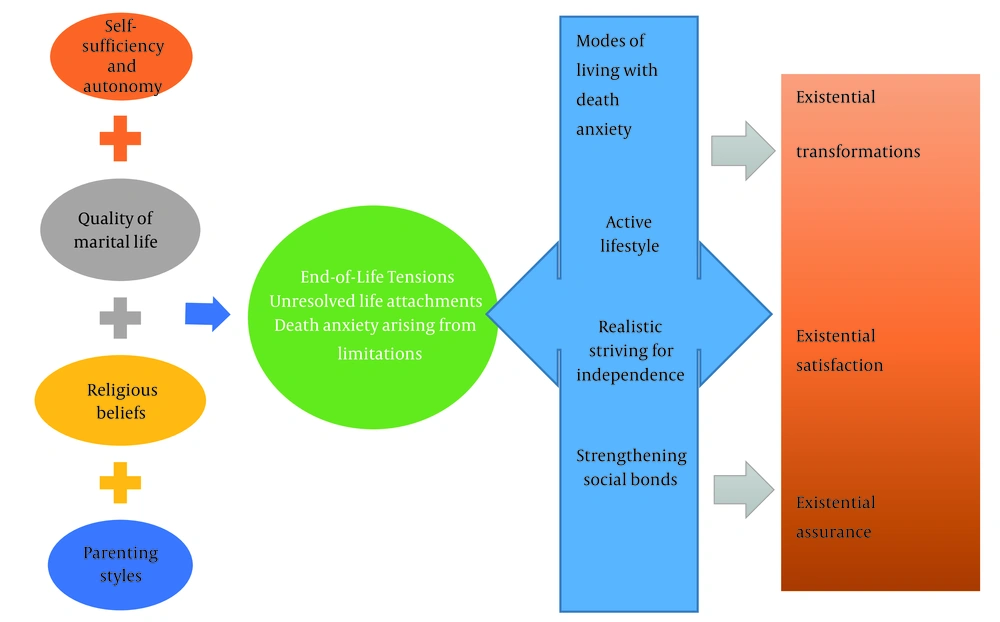
Figure 1.
Paradigmatic grounded theory model illustrating the process of “striving for existential security in later life,” including causal conditions, contextual conditions, intervening conditions, action/interaction strategies, and psychosocial consequences in older women experiencing death anxiety
4.7.1. Causal Conditions
Death anxiety emerged primarily through participants’ awareness of physical decline, chronic illness, frailty, aging-related dependency, unresolved life responsibilities, and proximity to mortality. Many women described fear associated not only with death itself but also with loss of autonomy, unfinished emotional attachments, and uncertainty about the future. For some participants, existential concerns were strongly linked to unresolved family obligations. One participant explained:
“I am not only afraid of dying. I am afraid of leaving before my children are emotionally secure” (Participant #6).
This statement reflected unfinished maternal responsibility, suggesting that death anxiety was frequently intertwined with relational attachment and perceived incompleteness rather than solely fear of mortality.
4.7.2. Contextual Conditions
These anxieties were shaped by broader contextual experiences, including institutional living, reduced family contact, loneliness, widowhood, declining mobility, and age-related social role changes. Living in nursing homes often intensified awareness of dependency and social isolation, influencing how women interpreted mortality.
Participants described how aging-related vulnerability was experienced not only physically but also socially and emotionally. Reduced independence and separation from familiar relationships contributed to heightened existential sensitivity.
4.7.3. Intervening Conditions
The extent to which participants managed death anxiety was influenced by several intervening conditions, including emotional resilience, family support, spiritual beliefs, prior life experiences, perceived autonomy, and trust in caregivers.
For some women, spirituality acted as a stabilizing resource. For others, spiritual uncertainty complicated coping. These variations suggested that coping was not uniform but was mediated by personal belief systems and emotional trust. Participant 10 stated:
“Sometimes I hear people say heaven gives peace, but I don’t always feel convinced. I still feel afraid” (Participant #10).
Rather than representing an absence of faith, this quote reflected existential ambiguity and disrupted spiritual reassurance. Although religious narratives were culturally familiar, they did not consistently provide emotional certainty. This contributed to the subcategory of disrupted spiritual reassurance within the broader category of meaning negotiation under existential uncertainty. Thus, spirituality functioned variably as both a coping facilitator and, at times, a site of unresolved existential questioning.
4.7.4. Action/Interaction Strategies
In response to death anxiety, participants actively employed multiple coping strategies aimed at preserving dignity, emotional control, and existential continuity. These strategies included meaning negotiation under existential uncertainty, relational anchoring and emotional support, and adaptive psychological regulation.
Participants frequently reinterpreted death through reflection, spirituality, acceptance, and life review. Reframing mortality allowed some women to reduce emotional threat and find symbolic continuity. Maintaining emotional ties with children, caregivers, peers, and social networks was also central to coping. Social connectedness often reduced feelings of isolation and reinforced emotional reassurance. Women also used emotional self-regulation strategies, such as acceptance, internal dialogue, realistic independence, routine maintenance, emotional distancing, and self-soothing. Several participants emphasized staying mentally and physically active as a way to maintain purpose and reduce intrusive fear. These strategies reflected intentional efforts to restore control amid perceived vulnerability.
4.7.5. Consequences
These adaptive processes resulted in different psychosocial outcomes. For many participants, coping strategies contributed to reduced emotional distress, greater acceptance of mortality, enhanced psychological resilience, existential reassurance, and improved perceived control.
This broader process was conceptualized as reconstructing inner security, whereby women gradually moved from vulnerability and uncertainty toward emotional calmness and existential adaptation. However, coping outcomes were not always complete or linear. Some women continued to experience unresolved ambiguity, particularly when family disconnection, physical decline, or spiritual uncertainty persisted. Therefore, existential security was understood as an ongoing negotiated process rather than a fixed endpoint.
4.7.6. Integration of Categories Around the Core Category
The five major categories were theoretically connected to the central process of striving for existential security in later life. End-of-life tensions reflected the psychological triggers of death anxiety, including frailty, dependency, and unfinished responsibilities. Meaning negotiation under existential uncertainty captured how participants interpreted mortality through spirituality, reflection, and existential questioning. Relational anchoring and emotional support represented the protective role of interpersonal connection in reducing isolation and strengthening reassurance. Adaptive psychological regulation described practical and emotional strategies used to maintain autonomy, control, and emotional stability. Finally, reconstructing inner security reflected the psychosocial consequences of these coping efforts, including acceptance, resilience, reassurance, and greater readiness to confront mortality. Collectively, these findings suggest that death anxiety among older women was not a passive emotional response but a dynamic psychosocial experience involving continuous negotiation among vulnerability, coping, and existential adaptation.
5. Discussion
The present grounded theory study extends understanding of death anxiety in later life by demonstrating that older women do not experience death anxiety as an isolated fear of mortality; rather, they navigate it through a dynamic psychosocial process shaped by aging-related vulnerabilities, unresolved life concerns, social relationships, reflective meaning-making, and adaptive coping responses. The substantive theoretical contribution of this study lies in explaining how older women move from end-of-life tensions toward existential security through ongoing psychological processing and adaptive coping, rather than merely identifying thematic categories. This finding strengthens grounded theory applications in gerontology by conceptualizing death anxiety as an evolving process of negotiation among vulnerability, meaning, and adaptation.
One of the central conditions influencing this process was end-of-life tensions, particularly unresolved attachments, physical decline, and fear of dependency. Participants described concerns related to unfinished responsibilities, emotional attachments, and unresolved interpersonal or practical issues that remained psychologically salient in later life. These concerns appeared to intensify awareness of mortality and vulnerability. Existing literature supports the role of biological aging, comorbidities, and socioeconomic limitations in increasing dependency and reinforcing mortality-related concerns (23). Beyond physical decline, psychological difficulties, such as hopelessness, reduced self-worth, loss of life purpose, and emotional distress, may further heighten existential insecurity in older adulthood (24). Consistent with prior research, the findings suggest that dependency may represent a more immediate threat than death itself, as older adults frequently fear becoming a burden to family members or losing autonomy and dignity (25). This concern is especially relevant among women in later life, who often occupy relational caregiving roles and may interpret dependency as a disruption of identity and responsibility. Similarly, social rejection and perceived inadequacy emerged as meaningful dimensions of vulnerability. Prior studies indicate that exclusion, loneliness, and reduced social belonging can intensify emotional insecurity among older adults (26). In line with broader evidence, physical illness, disability, social losses, and loneliness may collectively increase susceptibility to death anxiety (8). Within the present model, these vulnerabilities function as initiating conditions that activate deeper psychological engagement with mortality.
A second major process involved the psychological processing of lived experiences, through which participants interpreted death-related concerns using memory, belief systems, and life reflection. Older women described confronting death anxiety through ongoing reflection on achievements, regrets, losses, and unresolved emotional burdens. This suggests that death anxiety may not derive solely from anticipated mortality but also from perceived incompleteness or reinterpretation of life experiences. Spirituality emerged as an important interpretive resource within this process. Previous studies similarly indicate that spiritual experiences can reduce existential distress and influence coping with death-related concerns in later adulthood (27). Importantly, this process reflects how aging is subjectively interpreted rather than universally experienced. Participants’ reflections highlighted that personal meaning-making, shaped by prior experiences, beliefs, and internal narratives, strongly influenced how death was perceived and emotionally managed (28). This interpretation aligns with evidence suggesting that spirituality often functions as a framework for understanding uncertainty, adversity, and existential concerns, particularly during periods of crisis or loss (29). Older adults frequently rely on spiritual or existential resources to manage loneliness, distress, and mortality awareness (30). Such resources may support adaptation to physical decline and social loss, including bereavement or reduced interpersonal roles (31). In addition, positive spirituality can enhance perceived control, reduce helplessness, and reinforce psychological resilience (32). By helping individuals reconcile lived realities with a desired identity or life meaning, spirituality may also contribute to successful aging and life integration (33). Thus, psychological processing in this study functioned as a mediating mechanism through which death anxiety was interpreted, challenged, and transformed.
The third component of the grounded theory concerned psychosocial disruption and relational vulnerability. Reduced social support, distancing from family members, loss of meaningful relationships, and diminished social roles appeared to intensify emotional insecurity. These findings suggest that death anxiety may be amplified when aging is accompanied by relational fragmentation or perceived social invisibility. Prior studies have similarly shown that losses in social support, autonomy, status, resilience, and interpersonal connectedness may heighten vulnerability to death-related distress in older adulthood (34). For many participants, loneliness was not only a social condition but also an existential experience linked to diminished belonging and reduced emotional security. This interpretation aligns with evidence that strong relational bonds contribute to emotional stability, spiritual well-being, and perceived significance, whereas loneliness may reinforce helplessness and worthlessness (11). Compared with younger populations, whose death anxiety may often be linked to uncertainty about future identity or unfinished life goals, older adults may experience mortality concerns more directly through loss, dependency, and relational changes. Likewise, while previous studies involving older men often emphasize autonomy, productivity, or functional decline, the present findings suggest that older women may experience death anxiety more strongly through relational continuity, caregiving identity, and emotional attachment. These differences highlight the importance of gendered and developmental interpretations in gerontological research.
In response to these tensions, participants adopted adaptive ways of living with death anxiety, including maintaining activity, preserving realistic independence, strengthening interpersonal relationships, and engaging in meaning-centered coping. Rather than eliminating death anxiety, these strategies appeared to regulate its emotional impact and support continuity of self. Maintaining involvement in daily routines, hobbies, and purposeful activities helped reduce excessive cognitive preoccupation with death and reinforced engagement with life. Similarly, striving for independence within realistic physical limits appeared to preserve dignity, agency, and perceived competence. Social interaction with family members and trusted others also functioned as an important protective resource; however, unlike the original interpretation, the present findings do not suggest that the mere presence of others automatically reduces death anxiety. Instead, meaningful and emotionally supportive relationships appear to buffer loneliness and reinforce adaptive coping. Existing literature similarly indicates that loneliness negatively influences both psychological and physical well-being in older adults and may intensify death-related concerns (35). Participation in reflective, physical, or creative activities may further support emotional regulation, social engagement, and spiritual well-being (36). These findings suggest that adaptive coping is a relational and meaning-based process rather than a purely behavioral one.
The final outcome of this grounded theory process was existential transformation, characterized by greater acceptance, reassurance, emotional calmness, and readiness to confront mortality. Participants who were able to reinterpret life experiences, preserve agency, maintain supportive relationships, and construct meaning from aging-related losses reported greater inner stability and existential satisfaction. This finding represents the central explanatory outcome of the model: older women appear to move from vulnerability and unresolved tensions toward existential security through reflective adaptation and relational coping. Rather than suggesting that death anxiety simply declines with age, the findings indicate that acceptance may emerge when individuals reinterpret death within broader narratives of meaning, faith, identity, and life completion. Prior studies suggest that lower death anxiety in some older adults may reflect reframing of mortality, adaptation to decline, or acceptance of death as part of life’s continuity (37). However, the present study adds that this transition is neither passive nor universal; it is an active psychosocial process shaped by context, identity, and interpersonal meaning.
Recent evidence further supports the multifaceted and context-dependent nature of death anxiety, demonstrating that both therapeutic interventions and individual psychological resources may influence how individuals manage mortality-related distress. Studies conducted in clinical and high-stress populations have shown that non-pharmacological approaches, chronic illness experiences, and maladaptive cognitive-emotional patterns can significantly shape death anxiety, reinforcing the importance of adaptive coping, meaning-making, and psychosocial support as central mechanisms in managing existential distress across diverse contexts (38-40).
This study contributes theoretically by advancing a grounded explanation of how older women navigate death anxiety through a progression from end-of-life tensions, psychological processing, and psychosocial disruption to adaptive coping and existential transformation. Rather than presenting death anxiety as a static emotional outcome, the model conceptualizes it as a dynamic and relational process embedded within aging, gendered identity, and cultural meaning-making.
Despite these contributions, several limitations should be acknowledged. The study involved 12 older women residing in nursing homes and long-term care facilities in Tehran; therefore, the findings may not be transferable to older women living independently, older men, or individuals from other cultural and social contexts. In addition, as a qualitative grounded theory study, interpretations were based on self-reported narratives and may have been influenced by recall bias, selective disclosure, or social desirability. Finally, although the proposed theory offers an explanatory model for this sample, death anxiety may be experienced differently across gender, socioeconomic status, family structure, and cultural contexts, requiring further comparative and longitudinal research.
5.1. Conclusions
This grounded theory study demonstrates that death anxiety in older women is a dynamic psychosocial process rather than a simple emotional reaction to mortality or aging. The findings suggest that death anxiety emerges through the interaction of end-of-life tensions, unresolved attachments, physical decline, relational vulnerability, and reflective evaluation of lived experiences. The substantive theoretical contribution of this study lies in explaining how older women navigate death anxiety through ongoing psychological processing, adaptive coping, and meaning-centered responses that help transform existential distress into greater emotional stability and acceptance.
The findings further indicate that coping with death anxiety is shaped not only by aging-related challenges but also by the ability to maintain realistic independence, preserve meaningful social relationships, engage in reflective meaning-making, and reconstruct a sense of personal value despite physical and psychosocial limitations. Through this process, older women appear to move from vulnerability and uncertainty toward existential reassurance, life integration, and greater readiness to confront mortality.
Overall, the study highlights that death anxiety in later life should be understood as a context-dependent and relational phenomenon influenced by lived experiences, social connectedness, cultural meaning, and individual interpretation, rather than as a universal consequence of aging alone. These findings extend grounded theory applications in gerontology by offering an explanatory model of how older women actively negotiate death anxiety and seek existential security in later adulthood.
5.2. Suggestions and Rehabilitation in Practice
The grounded theory findings suggest that coping with death anxiety in older women is a dynamic process shaped by social connectedness, realistic independence, active engagement, emotional adaptation, and existential reassurance. Therefore, rehabilitation and psychosocial interventions should be tailored to these specific coping processes rather than relying on generalized supportive approaches.
First, because maintaining realistic independence emerged as an important coping strategy, rehabilitation professionals should design individualized interventions that support autonomy in daily functioning while accounting for age-related physical limitations. Encouraging participation in self-care, decision-making, and manageable daily responsibilities may help preserve dignity, self-efficacy, and a sense of personal control, which were closely linked to reduced existential distress.
Second, because active engagement with life functioned as a protective strategy against excessive preoccupation with death, rehabilitation services should promote structured participation in meaningful activities, such as physical exercise adapted to functional ability, recreational programs, creative hobbies, and purposeful daily routines. These interventions may strengthen emotional resilience and reduce psychological withdrawal associated with fear of aging and mortality.
Third, because social connectedness played a central role in the emotional management of death anxiety, psychosocial care programs should strengthen interpersonal support through targeted family involvement, peer-based support groups, and community-based interaction opportunities within residential or nursing home settings. Such relationship-focused interventions may reduce loneliness, reinforce belongingness, and improve emotional stability.
The findings also demonstrated that existential reassurance and reflective meaning-making were important in helping participants negotiate mortality-related concerns. Therefore, mental health and rehabilitation professionals should integrate culturally sensitive interventions, such as life-review therapy, meaning-centered counseling, grief processing, acceptance-based approaches, and spiritual or existential support, when appropriate. These strategies may help older women address unresolved regrets, interpersonal losses, and internal emotional burdens that intensify death anxiety.
Importantly, the present grounded theory indicates that coping with death anxiety is not a uniform process but rather a gradual movement toward existential adaptation shaped by personal narratives, aging experiences, and psychosocial resources. Accordingly, rehabilitation planning should adopt individualized, person-centered approaches that address both emotional and functional dimensions of later-life adjustment.
Future research should examine whether these coping processes differ across older men, community-dwelling older adults, and culturally diverse aging populations. Longitudinal and intervention-based studies may further clarify how autonomy, social bonds, and meaning-centered coping evolve over time and contribute to psychological well-being in later life.