1. Background
Postural control or postural stability is the ability to maintain equilibrium and orientation in a gravitational environment (1). It has been also defined as the ability to maintain an upright posture and to keep the center of gravity (COG) within the limits of the base of support in an unsteady environment (2, 3). An intact balance control strategy is necessary to prevent injury during physical activities such as sport activities (4); it has been shown that balance disturbance may increase the risk of injury during sport activities (5, 6). McGuine et al. have reported higher injury incidence in athletics with poor postural control (7). It has been suggested that balance control may be influenced by anthropometric parameters and somatotypes (8-10), which is an overview of the physical characteristics of the human body (11). The somatotype has been defined as the quantification of the shape and composition of the human body, according to the measurements of anthropometry, it has been expressed in a three-number rating representing endomorphy (fatness), mesomorphy (musculature), and ectomorphy (linearity), (11). There are some studies indicating the association between the type of somatotypes and health conditions (12, 13) as well as physical performance (14, 15). While no study has been done to investigate the somatotype effect on dynamic balance control, a few studies have investigated its effects on the static balance control (8-10). Allard et al. reported reduced standing posture stability of the ectomorphic group in comparison with the mesomorphic and endomorphic groups (8). They suggested low muscle component, an elevated position of the body center of mass, and high height to weight ratio are the main reasons for the poor stability of this population. These results were later confirmed by Farenc et al. study, which showed thinner subjects have larger sway amplitude of the COG (9). They found that ectomorphs demonstrated larger horizontal displacements of the COG and concluded that because of their less musculature structures, endomorphs present better postural control than ectomorphs do. In another study, mesomorphic population showed significantly smaller mean of center of pressure (COP) radius than other somatotypes did (10). They explained that better single leg postural stability in mesomorphic subject might be due to the significantly lower body height and higher proportion of muscular profile. However, some other studies reported poor correlations (16) or even no correlation between developmental factors (height, weight, and body mass index [BMI]) and the composite equilibrium score (17). Most of these studies focused on the static postural control while a dynamic postural control is an important factor to reduce the risk of injury during physical activities (6, 7). To the best of our knowledge, no studies had examined the influences of body composition on the balance control in dynamic situation; moreover, there were contradictory results from the few available studies about the effects of somatotype on postural control. Therefore, this study was designed to investigate the effects of somatotype on static and dynamic balance control quality as well as the rate of falling risk in university student young females who might take part in amateur sport activities.
2. Objectives
The purpose of this study was to find how dynamic and static postural control might be influenced by somatotype characteristics in young females.
3. Patients and Methods
3.1. Subjects
The proposal of this cross-sectional study was approved by the Ethical Committee of the Semnan University of Medical Sciences. A total of 141 nonathletic female university students were recruited from three different universities. All participants were healthy and had no musculoskeletal or neurologic disorders that might have affected their sense of balance control. All participants signed informed consent forms and were familiarized with the study’s procedure.
3.2. Anthropometric Measurements
For all anthropometric measurements, we followed standard International Society for the Advancement of Kinanthropometry procedure. The Heath-Carter method was used to determine the participants' somatotype (11). The method consists of ten anthropometric measurements including height, weight, four skinfolds, two girths, and two breadths. A stadiometer was used to measure stretch stature (height) to the nearest 0.1 cm. A calibrated balance beam scale was used to measure body mass that was rounded to the nearest 0.1 kg. BMI was calculated from these two measurements, using the following equation: weight (kg)/square of height (m2). The height to weight ratio (HWR), calculated by dividing height by the cube root of weight, was used in somatotyping. Sum of four skinfolds was calculated from measurements at the triceps, subscapular, suprailiac, and medial calf regions using skinfold caliper (Harpender, UK). All measurements including four skinfolds, girths (upper arm and calf), and breadth (humerus and femur), which have been shown very high reliable method to measure circumferences, breadths, and four skinfold thicknesses (18), were performed three times from the right side and the means of them was rounded to the nearest 1 mm. In order to calculate the anthropometric somatotype of each participant, the following equations were used:
A) Endomorphy = -0.7182 + (0.1451X) – (0.00068X2) + (0.0000014X3), where X = (sum of triceps, subscapular, and supraspinal skinfold) × (170.18/height).
B) Mesomorphy = (0.858 × humerus breadth) + (0.601 × femur breadth) + (0.188 × corrected arm girth) + (0.161 × corrected calf girth) − (height × 0.131) + 4.5, where corrected arm and calf circumferences are the respective limb circumferences minus the triceps and medial calf skinfolds, respectively.
C) Three equations were used to calculate ectomorphy according to the HWR:
a) If HWR was ≥ 40.74, then ectomorphy = (0.732 × HWR) − 28.58.
b) If 39.65 < HWR < 40.74, then ectomorphy = (0.463 × HWR) − 17.63
c) If HWR ≤ 39.65, then ectomorphy = 0.1.
Each participant was described by three numbers determining their morphological structure, which represent respectively endomorphic, mesomorphic, and ectomorphic components of somatotype. Then all participants were assigned to three groups according to the highest value of their somatotype components (8, 11).
3.3. Stability Assessment
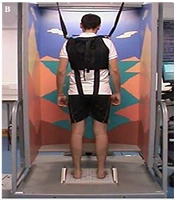
A Biodex Balance System (BBS) was used to evaluate dynamic and static balance indices. Its great reliability for evaluating dynamic and static postural balance has been reported in previous studies (19, 20). Its reliable measurements were indicated by r = 0.94 for overall stability index, r = 0.95 for anteroposterior stability index, and r = 0.93 for mediolateral stability index (21). The device uses a circular platform that is free to move in the anteroposterior and mediolateral axes simultaneously. The BBS allows up to 20° of foot platform tilt and calculates three separate measurements: mediolateral stability (MLSI), anteroposterior stability (APSI), and overall stability (OSI) indices, which indicate the postural sway in the anteroposterior, mediolateral, and overall directions, respectively. A higher score in each index, such as MLSI, indicates poor balance. It is believed that the OSI score is the best indicator of the overall patient ability to maintain balance on the free platform (22).
The static and dynamic balance tests were performed in single leg standing and bilateral standing, respectively. In order to measure the MLSI, APSI, and OSI, a technician who was unaware of the experimental groups asked the subjects to step onto the BBS platform with bare feet and assume a comfortable position. The foot position on the platform varied among the subjects. The exact position of the feet was detected by the graded surface of the platform and recorded in the software for further correction. The subjects were asked to maintain their foot position on the platform throughout the test session. Before starting the test procedure, participants were trained for one minute for adaptation to the test procedure. Then, all participants performed three test conditions in a systematic order from a simple task to a difficult task: 1) single leg static test, with both eyes open and eyes closed, alternatively on left and right limb; 2) bilateral standing dynamic test, with both eyes open and closed; and 3) falling risk test.
During the static balance test, the platform was locked under the feet, while during the dynamic balance test the platform was unlocked with stability levels ranging progressively from six (most stable) to one (least stable). After the static and dynamic balance tests, falling risk index was immediately evaluated by BBS for all subjects. During the falling risk test procedure, the platform was unlocked and was completely free to move in all directions (no progressive change in resistance). In all stages of balance test conditions, the assessor instructed the participants to maintain their COP in the smallest concentric rings (balance zones) on the BBS monitor, named A zone. Each of the test conditions were repeated three times, each lasting for 20 seconds with 15 seconds rest interval. The OSI, APSI, and MLSI were calculated by the mean of COP displacement during three test trials. The APSI and MLSI were calculated by machine from COP displacement in a sagittal plane and frontal plane, respectively, while OSI was calculated by considering COP displacement in both anteroposterior (sagittal plane) and mediolateral (frontal plane) directions. All balance indices were normalized with subject’s height (stability index/subject’s height in meters) and expressed as mean ± SD (23).
3.4. Statistical Analysis
The normalized mean of static and dynamic OSI, APSI, and MLSI and falling risk were compared between experimental groups by one-way ANOVA. Post hoc Tukey's test with 95% confidence coefficients and α < 0.05 was performed to identify the groups that were statistically different from each other. SPSS 17.0 (SPSS Inc, Chicago, IL, USA) was used to analyze the recorded data.
4. Results
The mean of participants age, weight, and height was 20.6 ± 1.6 years, 60.1 ± 10.9 kg, and 165.9 ± 5.4 cm. all the 141 participants underwent familiarization and base line testing. Table 1 presents the basic anthropometric measurements and somatotype components of the participants. Endomorphic subjects had significantly higher weight and BMI than other somatotypes did (P < 0.0001) while ectomorphic subjects showed significantly higher height and HWR in comparison to somatotype subjects (P < 0.0001). Considering the small difference of 0.4 unit between the endomorphic and the mesomorphic component and the higher difference of 1.6 to 1.9 between those components and the ectomorphic component, the whole group can be described as endomorphic-mesomorphic (Table) 1. All subjects were grouped according to the somatotype component with the highest value. There were 51 subjects in the endomorphic, 43 subjects in the mesomorphic, and 47 subjects in the ectomorphic groups. The value of the dominant somatotype component was above four and significantly higher than that of two other components in each somatotype group (F, 80.17-176.70; P < 0.0001) (Table 1). Anthropometric measurements showed significantly higher body weight (F, 43.47; P = 0.0015) and lower body height (F, 42.21; P = 0.0018) in endomorphs than in others, while ectomorphs had smaller BMI values (F, 84.29; P < 0.0001) than endomorphs and mesomorphs did (Table 1). Table 2 presents the values of static balance indices. Statistical analysis of COP sway during static single leg standing test revealed no significant difference in balance indices between different types of somatotype in eyes open condition. However, the endomorphs had significantly higher postural sway than the mesomorphs and ectomorphs in eyes closed condition, in term of overall postural sway (F, 7.08; P < 0.01), anteroposterior postural sway (F, 5.31; P < 0.05), and mediolateral postural sway (F, 4.66; P < 0.05) (Table 2). The value of dynamic balance indices are shown in Table 3. During both eyes open and closed dynamic test conditions, significant higher postural sway was found in endomorphs in comparison to the other somatotype groups in terms of OSI, APSI, and MLSI (F, 5.24-12.28; P < 0.01). The falling risk index was significantly higher in endomorphs than in the ectomorphs and mesomorphs groups (F, 5.91; P = 0.003).
Table 1.
The Mean and standard deviation of Anthropometric Measurements and Somatotype Components for All Participants a
| All Subjects (n = 141) | Endomorphs (n = 51) | Mesomorphs (n = 43) | Ectomorphs (n = 47) | Somatotype F values | ANOVA P value | |
|---|---|---|---|---|---|---|
| Age, y | 20.6 ± 1.6 | 20.9 ± 1.9 | 20.5 ± 1.3 | 20.4 ± 1.5 | 1.31 | 0.272 |
| Height, cm | 165.8 ± 5.5 | 162.1 ± 5.2b | 165.3 ± 4.4 | 169.9 ± 4.2 | 42.21 | 0.0018 |
| Weight, kg | 60.4 ± 10.9 | 68.6 ± 12.5 | 60.6 ± 9.1b | 52.8 ± 3.9 | 43.47 | 0.0015 |
| BMI, kg/m2 | 21.1 ± 4.4 | 26.1 ± 4.7 | 22.2 ± 3.1 | 18.3 ± 0.9c | 84.29 | 0.0001 |
| HWR | 42.5 ± 2.8 | 39.9 ± 2.5 b | 42.2 ± 1.8 | 45.3 ± 0.8 | 130.85 | 0.0001 |
| Endomorphic | 4.7 ± 1.4 | 5.6 ± 1.5 | 5.1 ± 1.1d | 3.3 ± 0.4 | 80.17 | 0.0001 |
| Mesomorphic | 4.4 ± 2.3 | 4.2 ± 1.3 | 6.9 ± 2.1 | 2.3 ± 0.8c | 140.50 | 0.0001 |
| Ectomorphic | 2.8 ± 1.6 | 2.5 ± 1.1b | 1.29 ± 1.1 | 4.6 ± 0.6 | 176.70 | 0.0001 |
a Abbreviations: BMI, body mass index; and HWR, height to weight ratio.
b Significant differences between endomorphs and mesomorphs as well as ectomorphs.
c Significant differences between ectomorphs and endomorphs as well as mesomorphs.
d Significant differences between mesomorphs and endomorphs as well as ectomorphs.
Table 2.
| Endomorphic (n = 51) | Mesomorphic (n = 43) | Ectomorphic (n = 47) | Somatotype F value | ANOVA P value | |
|---|---|---|---|---|---|
| OSI ± EO | 0.54 ± 0.3 | 0.51 ± 0.3 | 0.45 ± 0.2 | 1.55 | 0.215 |
| APSI ± EO | 0.39 ± 0.2 | 0.34 ± 0.2 | 0.33 ± 0.2 | 1.16 | 0.316 |
| MLSI ± EO | 0.31 ± 0.2 | 0.27 ± 0.1 | 0.26 ± 0.1 | 1.95 | 0.145 |
| OSI ± EC | 1.97 ± 1.0 c | 1.62 ± 0.5 d | 1.51 ± 0.6 e | 7.08 | 0.001 |
| APSI ± EC | 1.53 ± 1.0 c | 1.21 ± 0.4 d | 1.17 ± 0.5 e | 5.31 | 0.006 |
| MLSI ± EC | 1.21 ± 0.4 c | 0.85 ± 0.2 d | 0.84 ± 0.1 e | 4.66 | 0.009 |
a Abbreviations: OSI, overall stability index; APSL, anteroposterior stability index; MLSI, mediolateral stability index; EO, eyes open; and EC, eyes closed.
b The balance indices were normalized with subject’s height (stability index/subject’s height in meters) and expressed as mean ± SD.
c Significant differences between endomorphs and mesomorphs as well as ectomorphs.
d Significant differences between mesomorphs and endomorphs.
e Significant differences between ectomorphs and endomorphs.
Table 3.
| Endomorphic (n = 51) | Mesomorphic (n = 43) | Ectomorphic (n = 47) | Somatotype F Value | ANOVA P Value | |
|---|---|---|---|---|---|
| OSI ± EO | 1.45 ± 0.8 c | 1.01 ± 0.3 d | 0.84 ± 0.1 e | 9.85 | 0.0001 |
| APSI ± EO | 1.04 ± 0.7 c | 0.71 ± 0.3 d | 0.59 ± 0.3 e | 8.69 | 0.0001 |
| MLSI ± EO | 0.79 ± 0.3 c | 0.57 ± 0.2 d | 0.56 ± 0.3 e | 5.24 | 0.007 |
| OSI ± EC | 7.99 ± 2.0 c | 5.27 ± 1.6 d | 5.85 ± 1.4 e | 12.28 | 0.0001 |
| APSI ± EC | 4.61 ± 1.5 c | 3.77 ± 1.4 d | 3.47 ± 1.1 e | 9.41 | 0.0001 |
| MLSI ± EC | 3.11 ± 1.0 c | 2.38 ± 0.9 d | 2.17 ± 0.6 e | 9.58 | 0.0001 |
| Falling Risk | 1.54 ± 0.6 c | 1.09 ± 0.5 d | 1.19 ± 0.4 e | 5.91 | 0.003 |
a Abbreviations: OSI, overall stability index; APSL, anteroposterior stability index; MLSI, mediolateral stability index; EO, eyes open; and EC, eyes closed.
b The balance indices were normalized with subject’s height (stability index/subject’s height in meters) and expressed as mean ± SD.
c Significant differences between endomorphs, mesomorphs, and ectomorphs.
d Significant differences between mesomorphs and endomorphs.
e Significant differences between ectomorphs and endomorphs.
5. Discussion
The process of maintaining the COG in the base of support has been known as the balance control process, which is used as an indicator for lower limb function assessment (1, 24). The intact balance control system is vital in preventing injury during the physical activities of daily life (4, 25). It has been stated that the ability of balance control and making postural alterations in response are essential to prevent injury during physical activities (26). Body types and somatotypes components are important factors that might affect the ability of balance control and the quality of postural sway (9). Although several studies have investigated the effect of somatotype components on the physical performance (27-29), little attention has been paid to the effect of somatotype components on postural stability (8, 10). To the best of our knowledge, this study was the first one that investigated the effects of somatotype components on the dynamic balance control in female college students, while most studies have investigated somatotype effect on postural control in static condition. Our results are important because of the high occurrence of sport injury among young college students (30); moreover, any disturbance in the balance control procedure might increase the risk of injury incidence during physical activities (5, 6). The results of this study might help to analyze the quality of balance performance in the dynamic and static situations according to the somatotype components of subjects. Our primary findings revealed that in comparison to endomorphs and mesomorphs, the postural sway indices have been increased in the endomorphic subjects in all anteroposterior and mediolateral directions during both static and dynamic balance measurements, except in static eyes open balance test condition. Higher falling risk index was another characteristic of endomorphic subjects. During double-leg or single-leg standing, it is necessary to use an integration of visual, vestibular, and proprioceptive inputs to plan and fulfill motor commands for maintaining the COG within the limits of the base of support (31). It has been shown that the vision inputs are important in short test duration and more destabilizing conditions (32). The results of the current study revealed higher postural sway in eyes closed condition than in eyes open condition when comparing different somatotypes. It has been stated that the visual information from the environment is the most reliable source of perceptual information for postural stability (33). This would be more valuable when the base of support is not stable, such as our unstable platform for dynamic balance test condition. In this situation, the increasing accuracy and consistency of eye movements and the ability to use and interpret the visual inputs are necessary to reduce postural sway, as was found in all balance tests among different somatotype groups. Although a few studies have examined somatotype differences on balance performance in static conditions (8-10), no study investigated the effect of somatotype components on the quality of balance control and postural sway in dynamic conditions, which is more compatible with the balance control during activities of daily life and sports. The results of the present study revealed that the endomorph subjects presented significantly larger postural sway in both open and eyes closed dynamic situations than the mesomorph and endomorph subjects did. Although the difference was not significant during eyes open static balance test, more difficult tasks such as eyes-closed balance test resulted in larger postural sway in endomorphs than in other somatotype components. Our findings were different from Allard and Farence’s studies, which reported that endomorphs presented better postural stability than ectomorphs did, and ectomorphs presented the worst balance control (8, 9). However, their findings were opposed by Lee and Lin’s study that stated mesomorphic children had significantly smaller mean radius of COP distribution during the eyes closed condition than endomorphic and ectomorphic children had (10). Our findings also confirmed some of the results by Lee and Lin, who showed better postural control in mesomorphs in comparison to endomorphs; however, their results that indicated the same quality of balance control in endomorphs and ectomorphs were opposed by our findings, which indicated better balance control performance by ectomorphs than by endomorphs. These differences between these findings might be related to the difference in task difficulty and ages of the studied groups (34). In fact, Lee and Lin used school-age children and simple task difficulty (static balance test), while we used dynamic balance test with high task difficulty for university-age females. The increased difficulty of balance control procedure may challenge balance control strategies in ectomorphs and endomorphs; the ectomorphs with lower BMI and weight could control postural sway and keep COP distribution in a smaller mean of radius than the endomorphs with higher BMI and heavier weight could. This may indicate that endomorph subjects with higher BMI and heavier weight and relatively less lower muscle torque and power (35) might not easily control postural sway in dynamic conditions in comparison with the mesomorphs with higher muscle mass and endomorphs with less BMI and weight. On the other hand, Allard at el. showed more postural sway in ectomorphs and concluded that being taller in ectomorphs is the main reason of such a difference between somatotype groups (8). However, normalizing the balance indices by the height of participants revealed higher postural sway in endomorphs than in ectomorphs and mesomorphs. This may indicate that endomorphs subject might not control COP displacement because of heavier weight and less muscle mass, while ectomorphs might easily control postural sway, because of less weight and BMI (10).
Our findings indicated higher falling risk index in endomorphic than in mesomorphs and ectomorphs, while no differences was found between mesomorphs and ectomorphs in term of falling risk index. It seems that ectomorphs with lower body weight and less muscle mass have less difficulty to control COP sway than endomorphs with higher weight and less relatively muscle torque and power do (35). On the other hand, mesomorphs with higher muscle mass might have better control over postural sway than endomorphs with higher weight and lower muscle mass do. However, endomorphs might not properly maintain the COP distribution in a small mean of radius because their less muscle mass could not control higher weight, especially in dynamic situation, which might cause higher challenge to control COP sway during standing on an unsupported board. These findings are contradictory to Allard at el. reports indicating that in comparison to the endomorphs, the elevated position of the body center of mass in the taller population might cause larger displacement of the COP (8). We used Bryant et al. method to normalize balance indices in each subject by dividing the mean of COP distribution by the subject’s height (23). We noticed that endomorphs presented larger COP displacement than other somatotypes did. Therefore, the higher COP sway in endomorphs could be due to greater body mass and less muscle mass, which makes controlling COP sway difficult, especially in dynamic situations (10).
The results of the present study revealed that the pattern of static and dynamic balance control in young adult females might be influenced by the somatotype components. It might be concluded that endomorph subjects are at higher risk of injury during sport activities, because of higher COP sway in unsupported situation. According to these findings, prescribing special balance exercise training for endomorphs before participating in any type of physical sport activity is recommended.