1. Background
The rapid rise in the prevalence of eating disorders involving being overweight and obese has led to one of the key health problems in the world (1, 2). Obesity has reached epidemic proportions globally with approximately 1.6 billion adults and at least 20 million overweight children under the age of five. The world health organization (WHO) further projects that by 2015, approximately 2.3 billion adults will be overweight and more than 700 million will be obese (1). In the study of Tekharf, the overall prevalence of obesity in adults was 18.6% in the year 1990 and ten years later in 2000, the prevalence was 21.9% in Turkey (3).
Obesity causes many different problems. Obese people are at increased risk for morbidity and mortality associated with multiple acute and chronic medical conditions, such as diabetes mellitus, cardiovascular disease, hypertension, and hyperlipidemia and some cancers in adulthood (4, 5). In addition, research shows that obesity is associated with a number of psychosocial consequences including poor self-esteem, teasing, verbal abuse and some social problems (6, 7).
The most important causes of obesity are decreased physical activity and increased intake of energy-dense foods that are high in fat and sugars but low in vitamins, minerals and other micronutrients (1). In addition to these factors, many genetic, physiological, psychological and socio-cultural factors also contribute to the causes of obesity (1).
University students comprise the first post-puberty group in early adulthood. They suddenly face new challenges, which include leaving the family, getting used to a new environment, and taking responsibility for choice of meal themselves. Many of them eat their meals and snacks outside of their home, consuming fast food and other cheap energy sources, spending more time at a desk or TV/internet, and they often do not eat a regular breakfast (8-10). The demands and changes inherent in university life and living far from the family increase the risk of disordered eating (11, 12). Not only are there risks for weight gain, the emphasis at this age on appearance, body image and social acceptance are important, and many young people, especially girls, can develop unhealthy weight control behaviors such as fasting, skipping meals, taking laxatives or diet pills and food restriction and smoking (13, 14). Therefore, achieving and managing effective weight control in young people is important.
For young people, the cognitive restructuring process has been proven to be a useful tool in changing eating habits and developing weight control management skills (15). Multicomponent lifestyle intervention that includes a healthy eating plan and increased physical activity and support for behavioural change is the mainstay of weight management. This process aims to develop healthy eating habits and improve physical activity and planned exercise. Methods include self-monitoring with nutritional education and motivational interviews for healthy weight loss, controlling factors, which stimulate appetite, reducing portion sizes, avoiding food from unnecessary energy sources, and learning to control eating behavior in stressful situations. The cognitive restructuring process is an important part of the process of weight control and involves understanding the importance of increasing physical activity and the implementation of a healthy diet program (15, 16).
The transtheoretical model (TTM) was developed by Prochaska and Diclemente in 1982 based on social learning theories, and was revised over time (17-19). The TTM is meant to change many problematic behaviors, such as smoking and alcohol consumption, inactivity and eating disorders (20-24).
The TTM can be applied to both the treatment of obesity and its prevention through promoting healthy lifestyles in both the general population and at-risk groups. There is growing interest in applying this model to both the treatment of obesity and its prevention. Studies have shown that using the TTM for weight management is beneficial as an intervention and can be tailored to the patient’s level of readiness for change (25, 26). A Study by Johnson et al. suggests that TTM-based multiple behavior intervention is effective for weight management (26).
According to the TTM, different therapeutic processes are more effective at different SOC. In health care, it is important to meet the patient at their level of readiness when counseling about health behaviors change. During the change process, the consultant firstly assesses patient’s stage of readiness to change, their efficacy, barriers to change etc. Next, motivational guidance is used to help motivate individuals from one stage into another. During motivational interviews, the individual is assessed according to their level of readiness for change and their own personal needs at the time (17-20).
The study of Hawkins et al. showed that the majority of individuals with problematic behaviors are pre-intent or under intent (27). Obese people are likely to be in the earlier SOC to adopt cognitions and behaviors that lead to healthier diets and exercise programs (28). Obese people might return to their initial stage of change after a failed attempt. In order to effectively deal with the challenges presented by excess weight and obesity, it is important to understand more about motivations for losing weight, predictors of weight loss, and weight loss intentions of young people.
Healthy People 2020 stated that permanent lifestyle changes must include healthy dietary habits, decreased sedentary behavior and more physical activity in order for individuals to maintain weight loss (29). Therefore, obesity management and control is a multi-dimensional approach and requires integration and cooperation between health care teams. Such teams may include physicians, nurses, dietitians and physiotherapists.
2. Objectives
The aim of this study was to asses the effect of a stage matched multicomponent lifestyle intervention on weight control of university students.
3. Patients and Methods
3.1. Hypothesis
1. The body mass index (BMI) scores of participants under the scope of TTM will decrease a statistically significant degree when compared to these scores before the intervention and the scores of the control group.
2. Self-efficacy scale (SES) scores of participants under the scope of TTM will decrease a statistically significant degree when compared to before the intervention and the control group.
3. The health promotion lifestyle profile (HPLP) scores of the participants under the scope of TTM will decrease a statistically significant degree according to the situation before the intervention and in comparison to the control group.
3.2. Method
Design: Pre-post test with control group design was used.
Setting: The study was conducted at Kafkas university, Kars, eastern province of Turkey.
3.3. Sample and Randomization
The sample size was calculated with the paired sample t-test and it was determined that the participants would give a power of 85%, and α = 0.05 and standard deviation = 5, difference = 3. Calculations were performed with two groups and calculated for each group of 50 people (30).
For the research process, by taking into account the losses, 110 individuals were included in the study. Both the intervention and control groups consisted of 55 people each, with a total of 110 participants. The students’ baseline information, sociodemographic details and health histories were collected before randomization. The final year students of Kafkas university in the Kars health high school department were used to assist with the selection of the students. All university departments were contacted by health sciences students, and overweight or obese students, who were willing to participate in all phases of the study were identified. In this way, results of the surveys found 110 students with similar basic variables. Randomisation was by a random-numbers table and participants were randomly assigned to the intervention (n = 55) and control groups (n = 55). However, for various reasons during implementation, the intervention (3) and the control groups (4) had some student drop outs, and the study was eventually completed with 103 students; 52 students in the intervention and 51 in the control group. Intervention and control groups had similar basic charecteristisc. The intervention group listened to motivational interviews and participants were also given information about exercise and diet programs, whereas the controls were only followed-up.
3.4. Sample Inclusion Criteria
After fat/obese students were identified, the criteria of the world health organization (WHO) were followed and students with a BMI between 25 and 39.9 were included in the intervention (1). Also students with cardiac problems or psychiatric problems and those who were not willing to participate in the study were excluded.
3.5. Intervention
The framework of the TTM included stages of change, self-efficacy, decisional balance, and processes of change. The stages of change (SOC), which was the focus of this study, is the main part of the TTM and consists of five phases: precontemplation, contemplation, preparation, action and maintenance. In the first stage, precontemplation, individuals are not ready to realize a behavior needs changing, therefore they have no desire to change it within the next six months. In the contemplation stage, individuals are considering changing their behavior within the next six months but may still be ambivalent about change. In the preparation stage, they acknowledge that change is necessary and they are ready to make a behavior change within one month. The action stage encompasses active change of behavior between one day to six months’ time. Relapse is high risk at this stage. The maintenance stage is a continuation of the action stage for six or more months. However, these periods may vary depending on the individiuals’ level of self-efficiacy and readiness. Some individuals relapse or recycle through previous steps and may even return to precontemplation. The nature of this cycle is its fluidity, allowing for progression and regression while changing behavior (19, 31).
Therefore, a public health nurse, two internal nurses, senior nursing students taking public health nursing courses, nutritionist, and sports lecturers all worked together on this study. To the best of our knowledge this was the first study that analyzed weight control behaviors in Turkish University Students using TTM and a multidisciplinary approach. In addition, because the studies aimed at nutritional problems of university students in Turkey, they were mostly descriptive, while the current intervention study had a different importance.
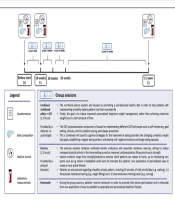
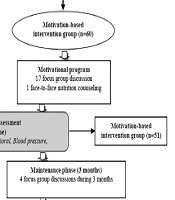
In this study, the intervention group (n = 52) attended eight individual sessions and three group sessions over two months, and the control group (n = 51) did not receive any intervention. During these interventions, according to the level of the change in the students, the students were motivated to continue on to the next level (Gulnaz Karatay and Yeliz Akkus). The students who were having difficulties getting motivated for change, and who were feeling depressed, were interviewed face-to-face. However, the interview content was able to be adjusted according to the needs of students. Motivational interviews were used to help the students progress through the stages of change. The goal was to assist students in becoming more self-reliant and self-efficient. Thus the study focused on the perceived barriers and how they could be overcome. In addition, in order to maintain contact and increase the motivation of the students, an “obesity group” was created on a social networking site, and the students participating in the study were invited to join the group. Through this networking site, related information and videos were shared. Moreover, in order to increase cognitive awareness, an obesity booklet entitled “healthy young people, healthy community” was prepared and distributed to the students in the intervention group. After the study was completed, the same booklet was also distributed to the control group.
This study was carried out on 27 final-year students within the context of public health nursing courses provided at the nursing department of Kafkas university of Kars health college. Each student was assigned to work with four overweight/obese students; two were in the intervention group and two in the control group. Nursing students provided support for the selection of the students, who would participate in the intervention. They also helped with the medical checkups, distributed educational materials and invited people to interview and exercises programs.
3.6. Intervention Plan
The first meeting with the students consisted of checking the vital signs, doing anthropometric measurements, discussing the requirements of the study and interview, determining the stage of change, the implementation of related tests, measuring blood pressure, and making referral to the hospital to undergo a cardiological examination. The last meeting included checking of vital signs, doing the antropometric measurements, discussion about the previous test results (Table 1).
Table 1.
Motivational Talks Was Conducted for the Intervention Group Using the Following Plan
| Stage | Description |
|---|---|
| Pre-contemplation stage | |
| II. Interview | Discussing the students’ health perceptions, talking about problem solving methods related to health, encouraging students to define or express what they saw as their health problems and making recommendations to read about obesity. |
| III. Interview | Speaking with the students about body image; giving them an opportunity to express their feelings about obesity; discussing the relationship between obesity and health/illness; understanding the risks of obesity for the near and distant future; giving educational booklets prepared by the researchers on this subject to the students; allowing students five minutes to think about the question “how do you see yourself in terms of health five or ten years later or even at an old age?” and providing them an opportunity to express what they think; and speaking with the student about eating habits |
| Contemplation stage | |
| IV. Interview | Speaking about diet and exercise programs; understanding benefits and challenges/obstacles perceived in the weight-loss process; asking participants to assess their nutritional and eating habits, talking about perceived barriers to exercising; understanding the losses and gains regarding weight loss; writing five reasons for losing weight (homework). |
| Preperation stage | |
| V.-VI. Interview | Encouraging the candidate to participate in the diet and exercise program, reviewing the diet and exercise program, talking about the failing aspects, talking about the methods of coping with stress and its association with nutrition habits. |
| Action Stage | |
| VII.-VIII. Interview | Reviewing diet and exercise programs, talking about the obstacles perceived about the change of behaviors, discussing appropriate solutions, speaking about short-term benefits of the program, the assessment of maintaining behavior changes; evaluation of the changes occuring in the students. |
3.7. Dietary Intervention
The students, who were thought to be ready for change, were referred to a dietician and an individual diet program was prepared for each one by Baris Ozturk. The diet program emphasized the importance of increasing the consumption of fruits, vegetables, water and pulp. Recommendations were to also limited to sugar and fat intake, to reduce portion size and avoid unnecessary energy sources. At the beginning and end of the study, BMI was calculated by measuring the students’ weight and height by Baris Ozturk.
3.8. Physical Activity
In order to balance the energy intake of the students, part of our study plan was to implement a regular exercise program for the participants. The schedule was at least three days a week for thirty-minute sessions. The sessions included muscle strengthening, aerobic exercise, and provision of instructions for home exercise. The prepared exercise program was begun in a low intensity manner and gradually its frequency and duration were increased. For this purpose, lecturer ND provided consulting and training for the students in the intervention group about exercise and specific exercises that the students could perform. Some options were discussed for working in a sports hall or other suitable places for physical activity, home exercises and outdoor exercises, and these were prepared for students in the intervention group. Students were expected to choose which exercises were suitable for themselves. The university sports hall was made available for group exercise activities, with the guidance of Nevzat Demirci and nursing students were encouraged for exercise activities. Illustrated guides were prepared for home exercises guiding students through an exercise routine from start to finish. Some students were unable to perform regular exercise, so this approach motivated and supported them to increase their daily physical activities. The students in the intervention group were required to undergo a cardiological checkup to ensure that they would have no problems related to participation in a regular exercise program.
3.9. Instruments
Before and after the intervention, study data were collected using the socio-demographic features form (there is not validity and reliability in this study), stages of change short form, self-efficacy scale, eating habits questionnaire, exercise self-efficacy scale (ESS), health promotion lifestyle profile and body composition device.
Researchers prepared the socio-demographic features form by scanning related literature (1-3). This form contained 20 questions evaluating socio-demographic features of the students, features related to obesity, along with curriculum vitae and family history. Moreover, in order to plan a healthy diet for students participating in the intervention group, their eating habits were also evaluated with questions on the form.
3.9.1. Health Promotion Lifestyle Profile (HPLP)
The health promoting lifestyles of obese students were measured with the health promotion lifestyle profile (HPLP) developed by Pender et al. (1987). The Turkish version of the HPLP was prepared by Esin (1999) (32). In Esin’s study, the instrument was found to have a high internal consistency with alpha coefficient of 91 for the total instrument. Implementation of the scale required from eight to ten minutes. The HPLP includes six subscales: self-actualisation (thirteen items), which measures attitudes and expectations from life; health responsibility (ten items), which assesses paying attention to and accepting responsibility for one’s own health, being educated about health, and seeking professional assistance when necessary; exercise (five items), which measures regular exercise patterns; nutrition (six items), which assesses meal patterns and food choices; interpersonal support (seven items), which is concerned with a sense of intimacy and close relationship; and stress management (seven items), which quantifies the ability to cope with stress. In evaluation of healthy lifestyle behaviors, the total score obtained from the scale was regarded as criterion, and also each sub-group in the scale was able to be evaluated in itself.
3.9.2. Self-Efficacy Scale (SES)
Self-Efficacy Scale developed by Sherer and colleagues in 1982, is a Likert-type scale consisting of 23 items (33). Turkish validity and reliabilty studies were conducted in 1999 by Gozum and Aksayan. Cronbach’s Alpha was calculated as 81 and the reliability coefficient was calculated as r = 92. 2.,4.,5.,6.,7.,10.,11.,12.,14.,16.,17.,18.,20. Articles of the scale are scored in the opposite direction (34). Thus, at least 23 points can be obtained from the scale, and at most, 115 points are possible. An increase of total points obtained from the scale means an increase in the individual’s self-efficacy-sufficiency perception. The scale can be applied to adolescents and adults (34).
3.9.3. Exercise Self-efficacy Scale (ESS)
The Exercise Self-efficacy Scale measures the subject’s perceived exercise self-efficacy beliefs. The scale is a self-report measurement and consists of 18 self-efficacy items asking the subjects to indicate their confidence in performing physical activities and exercise. The Exercise Self-Sufficiency Scale was developed by Bandura, and in our country, validity and reliability studies were done with breast cancer patients by Bozkurt; the test-retest reliability coefficient was found as 0.968 (35, 36). The ESS scale consists of 18 items, which can be rated from 0% to 100%. The participants are scored according to the level or strength of their competence beliefs with a 100-point scale in 10 unit intervals from 0 (cannot be done) to 50 (can be done in mid-level precision) and 100 (can be done). Its internal consistency reliability was 0.94 (36).
3.9.4. The Stages of Change (Short Form)
The stages of change algorithm, which is the most important part of TTM, consists of a brief series of self-report questions assessing weight loss intentions and current activities. Individuals are classified to one of five distinct stages. The precontemplation stage includes those who have no intention of losing or controlling weight in the next six months. Individuals in the contemplation phase are not actively trying to lose or control their weight, yet are seriously considering doing so in the next six months. The action stage includes those who are actively trying to lose or control their weight or who have successfully done so but for less than six months. The maintenance stage includes those who have successfully maintained their weight loss for at least six months (18, 27).
The following short form was used for evaluating eating and activity behaviors:
1. I have no intention to change my eating habits or to make changes to a more active lifestyle.
2. I am thinking about making changes to a healthy diet and a more active lifesyle within the next six months.
3. I am making definite plans to start doing these within this month.
4. I have just begun these modifications within the past six months.
5. I have been doing them for more than six months.
3.9.5. Evaluation of Body Mass Index (BMI)
Body Mass Index is the most common measure used for classifying weight. It is calculated as a person’s weight in kilograms divided by the square of their height in metres. People aged 18 years and over are classified as overweight if they have a BMI of 25 kg/m2 or above and obese if they have a BMI of 30 kg/m2 or above. Baris Ozturk used the X-SCAN PLUS ΙΙ device to evaluate the BMI of the participants.
3.9.6. The Obesity Education Booklet
To support oral information given by the nursing students the obesity education brochure was developed by researchers Gulnaz Karatay, Yeliz Akkus and EK according to the current available literature (1, 4, 5, 30). This brochure was also distributed to the study participants to further explain the definition of obesity, risk factors, disease process, and the importance of healtly nutrition and exercise.
3.9.7. Biochemical Parameters
Because financial support was not available, only the Cholesterol, Triglycerides, High-Density Lipoprotein (HDL), Low-Density Lipoprotein (LDL) and Fasting Blood Glucose values of the students in the intervention group were checked both before and after the intervention.
3.9.8. Analysis
Descriptive statistics, chi-square and independent t-test were used to determine the similarity of the control group and intervention group in terms of control variables. The difference of BMI, ESS, SES and HPLP scores and mean fruit consumption of control and intervention groups were evaluated using independent sample t test before and after the intervention. Some blood parameters of students in the intervention group were evaluated using pairs sample t test. Also stage of change was evaluated using percantages.
3.9.9. Ethical Considerations
In 2009 - 2010, the Turkish Ministry of Health did away with local ethics committees for the entire country, and for that reason, formal ethical permission to conduct the study could not be obtained. Written and verbal permission was received from Kars health high school directorate and students. The criterion indicating that the students would participate in the study voluntarily was observed. Participants were informed of the study’s objective and were asked whether or not they would like to participate, and written permission was obtained from all those who agreed to participate.
4. Results
Intervention and control groups of this research had similar features, such as age, weight, gender, stage of change and familial obesity. Data regarding the students were as follows; the intervention group had a mean age of 22.15 (2.12) and weight of 85.13 (2.12), 65.4% were male, 57.7% at the stage of change, and 42.5% had familial obesity. The control group mean age was 22.39 (12.41), weight 82.88 (10.92), 74.5% were male, 39.2% at stage of completion, and 39.2% had familial obesity.
When the control and intervention groups were compared before and after the intervention, the BMI (t = 3.59, P = 0.011) and SES (t = 2.024, P = 0.049) differences were found to be statistically significant in favor of the intervention group. However, although there was a change in favor of the intervention group in the ESS (t = 1.07, P = 0.297) score, there was no significant difference (Table 2) (HPLP (t = 3.160, P = 0.020).
Table 2.
The Change of Body Mass Index, Excercise Self-efficacy Scale and Self-Efficacy Scale Scores of the Students
| Scores | Intervention (N = 52) | Control (N = 51) | Significance Testa | |
|---|---|---|---|---|
| X ± SD | X ± SD | t | P Value | |
| BMI | ||||
| First | 30.21 ± 3.46 | 28.28 ± 2.70 | 3.140 | 0.020 |
| Last | 29.62 ± 3.38 | 28.37 ± 2.60 | 1.943 | 0.055 |
| Difference | 0.58 ± 1.08 | -0.08 ± 0.78 | 3.59 | 0.011 |
| ESS | ||||
| First | 67.59 ± 35.22 | 61.16 ± 52.90 | 0.73 | 0.470 |
| Last | 74.65 ± 4.71 | 60.07 ± 28.59 | 2.43 | 0.011 |
| Difference | 7.05 ± 29.72 | -1.09 ± 46.02 | 1.07 | 0.297 |
| SES | ||||
| First | 60.19 ± 6.85 | 61.17 ± 7.30 | -0.699 | 0.486 |
| Last | 62.47 ± 7.17 | 61.47 ± 7.80 | 0.674 | 0.502 |
| Difference | 2.27 ± 4.94 | 0.29 ± 5.19 | 2.024 | 0.049 |
aIndependent sample t test.
Abbreviations: BMI, body mass index; ESS, exercise self-efficacy scale; SES, self-efficacy scale.
A larger number of students in the intervention group reported replacing high fat foods with low fat alternatives, such as fruits and vegatables. At the beginning of the intervention, there was no difference between the amount of fruit consumption in both the intervention and control groups. However, at the completion of the intervention, students’ average daily fruit consumption in the intervention group was 1.50 (1.95), whereas the average of the control group was 0.68 (1.39). The difference was statistically significant (t = 2.45, P = 0.05, df = 99).
The change stage of the students was evaluated with the adaptation to diet and exercise program. When the intervention began, 42.3% of the intervention group and 60.8% of the control group were at the intent stage. During the second evaluation, 32.7% of the intervention group had progressed to the preparation stage and 25.0% of the intervention group had moved into the stage of action. In the second evaluation, 58.9% of the control group had progressed to the intent stage, and 13.7% of the control group had moved into the preparation stage. During the last meeting included, it was found that while 40.4% of the intervention group had maintained certain behaviors, such as diet and exercise, 9.8% of the control group had also begun to modify their diet and exercise to a more healthy lifestyle (Table 3).
Table 3.
The Stages of Change in Students During the Interventiona
| Evaluation | Stage of Obesity Control | |||
|---|---|---|---|---|
| Pre-Contemplation | Contemplation | Preperation | Action | |
| First | ||||
| Intervention | 22 (42.3) | 30 (57.7) | NA | NA |
| Control | 31 (60.8) | 20 (39.2) | NA | NA |
| Second | ||||
| Intervention | 5 (9.6) | 17 (32.7) | 17 (32.7) | 13 (25.0) |
| Control | 14 (27.4) | 30 (58.9) | 7 (13.7) | NA |
| Third | ||||
| Intervention | 9 (17.3) | 16 (30.8) | 6 (11.5) | 21 (40.4) |
| Control | 14 (27.5) | 26 (51.0) | 6 (11.7) | 5 (9.8) |
aValues are expressed as No. (%).
Abbreviation: NA, not available.
5. Discussion
This study examined the effectiveness of TTM-based intervention program on obesity control in university students. It explored the relationships between the stages of change and the processes of change, eating and exercise efficacy. To the best of our knowledge, this is the first research that describes a theoretically and statistically based definition for weight loss in young people. In addition, working in cooperation with different professional groups was a very important advantage. However, the most important limitation of our study was that the students came from different ethnic backgrounds, geographical regions and different cities. Furthermore, the long-term effects of the study cannot be followed because the active application and intervention was done in the summertime, and some students returned to their family while some others graduated. Moreover, because most students remained in the dormitory, it was difficult for them to stay on the diet. Our study determined that 65.4% of the students were slightly overweight or they were at risk in terms of health. When the health problems caused by obesity are considered, this rate is quite high. Therefore, this study focused on weight control for university students.
In our study, 21 cases of the intervention group (40.4%) progressed through the four stages of change. During the first evaluation, 57.7% of the students were in the contemplation stage. O’Connell and Velicer examined the stages of change for weight loss of undergraduate and graduate students in the United States (29). Slightly more than half of them (52.9%) were at the contemplation stage, 17.9% were at the action stage, and 14.6% were at both precontemplation and maintenance. In a Korean study, the adolescents were categorized into three stages of change: 42.1% (n = 183) in precontemplation, 43.0% (n = 187) in contemplation, and 14.9% (n = 65) in action and maintenance (37). The remain in the dorms, the lack of time for physical activity and an unusual life style in between reasons non-maintain of change were expressed by students.
Our study found that while the BMI score of the students in the intervention group decreased in a positive way, the self-efficacy score increased in a positive direction. It is difficult to compare these results to previous studies due to differences in the research design. Reasons for this include the length of intervention and in this study the students were used as change agents. However, in many studies performed with adolescents, it has been reported that TTM has a positive effect on smoking cessation, weight control and exercise behaviors (37-39). Therefore, our study indicated that use of TTM leads to an increase in self-efficacy.
Also, in this study, a diet and exercise program was applied to the intervention group. The diet program was individualized for each student and allowed for some flexibility. This study aimed to consider the financial situations and nutrition habits of the students. The goal was to reduce portion sizes and to increase fiber and liquid consumption. This flexibility was needed in order to increase students’ adaptation and motivation during the study. Teixeira et al. showed that adopting a flexible dietary restraint pattern is critical for sustained weight loss (40). In addition, our study showed that the students’ average fruit and vegetable consumption increased. Similarly, in Neumark-Sztainer’s study, the results indicated that when they applied their ‘New Moves’ school-based programs to reduce students’ weight issues, there was an increase in students’ fruit and vegetable concumption (41).
It is important to develop health studies, which offer the potential for individuals to improve and control their own health in order to live healthier lives. It is therefore necessary to educate others on how they can develop a health-conscious lifestyle, ways in which they can protect their health, and which risky behaviors to avoid. In our study it was determined that the HPLP total score in the intervention group increased significantly when compared with the control group. This increase was thought to be the result of the effects of informational and motivational interviews.
In a similiar way, individual exercise programs were created for the students, and students in the intervention group were advised to exercise at least three times per week. During the study, the majority of the students adapted well to an exercise program. This was likely because at certain times the student nurses and study participants exercised together, and this may have increased the students’ motivation to remain in the program. The students received an illustrated exercise brochure, and this probably helped increase their motivation to continue exercising. Another study further confirmed that the exercise programs done together with nurses’ supervision were effective (37).
Young people need motivation to develop healthy lifestyle behaviors. The key in making any health-promoting behavior change requires motivation to do so. By assuming that each individual has the power to execute change in their lives, motivational talks aim to change behavior by using the individual’s own resources (19, 42). According to Velicer et al. 80% of the participants were in the pre-contemplation or contemplation stage (43). At the beginning of this study, all participants in the intervention and control groups were found to be in either the pre-contemplation or contemplation stage. To help them progress to the action stage, discussions were held about the various stages of change and the strategies that need to be followed at each stage. In order to motivate the individual for change of behavior, certain skills are needed to be developed. These included learning about empathy, understanding the origins of problematic behaviors, resolving lapses in their motivation to make changes, and developing self-efficiacy. While making changes, resistance can be expected, yet, this does not mean that the individuals are actually against making any changes (44). The underlying causes and reasons for their resistance to change should be discussed with the individuals. This study showed that a lack of time for diet and exercise, poor cooking skills, and low income or lack of purchasing power were important factors related to resisting change. Efforts were then made to understand the underlying reasons for resistance and obstacles to change as seen by the students. Later, alternative solutions were discussed and suggested for the students. By the end of the study, nearly half of the intervention group was ready to proceed to the action stage. However, no significant change was seen in the behavior of the control group.
5.1. Conclusion
Results of this study determined that when the motivation of overweight and obese students increased using the stage of change, their BMI decreased. These findings will provide useful information to help in the development of a tailored weight control program specific to the stages of change for students. It has been suggested that the nurses use the Transtheoretical model to achieve changes in behavior of overweight or obese individuals. However, larger samples and different societies are needed to indicate the long-term effect of the Transtheoretical model on obesity management.