
1. Background
Patients with life-threatening conditions and requiring comprehensive care are admitted to the intensive care unit (ICU) around the world (1, 2). In some cases, the capacity of these wards is completed and thus, the patients are forced to wait at the other hospital wards, especially in the emergency department. A delay in the transfer of the patients from the emergency department to the ICU will lead to a prolonged hospital stay and increased mortality (3). One of the major reasons for the completion of capacity in the ICUs is the hospitalization of patients who are incurable and at their end-of-life. These groups of patients need to spend their end-of-life comfortably (4). Shigeko Izumi and et al. (2012), propose the definition of end-of-life care as “to assist persons who are facing imminent or distant death to have the best quality of life possible till the end of their life regardless of their medical diagnosis, health conditions, or ages (5).”
Terminal nursing care includes many nursing activities, such as; pain, sign and symptom management, assisting patients and families during the death and dying process, culturally sensitive practices, and ethical decision making (6). About 80% of the patients with cancer and AIDS as well as those with progressive diseases in the nervous, respiratory, and cardiovascular systems are part of this group of patients (7). Some statistics show deaths for about 22% of ICU patients in the United States and between 22% and 37.4% in Iran (8-10); some of whom did not need to receive additional intensive care before their death. However, there are several reasons for doing terminal care in ICUs, including the willingness of patients and their families to receive specialized care at the end of life (11), failure to provide appropriate end-of-life services in some parts of the hospital such as the emergency department (12), inability of some doctors to accurately predict the future status of patients (4), and inappropriate palliative care for patients at the end of life (13). Nevertheless, the cost of providing ICU services to the patients (14) and the serious need of some other patients who are likely to benefit from ICU services drive the medical team in some cases to make a decision on releasing the ICU patients who are not hoping to survive (3, 14). Therefore, it is essential that the discharging of patients from ICUs be done carefully and based on solid evidence.
The use of predictive scoring systems is one of the methods to manage the admission and discharging patients from the ICU. About three decades ago, the predictive scoring systems have been employed to measure the severity of the disease and to determine the prognosis of patients admitted to ICUs and other departments, such as emergency departments (15, 16). Also, these systems are applied to determine the chance of patients’ survival (17). Assistance in clinical decision-making and judgment are other benefits of using these systems (18).
Nine equivalents of nursing manpower use score (NEMS) is one of the scoring systems used in some studies to determine the severity of the status of patients in the ICU (19, 20). This system was developed by Miranda et al., in 1997. The NEMS scores have a proven correlation with the severity of the disease; thus, a higher score indicates a lower chance of patient survival (21). Moreno et al., (2001), indicated that the patients with a defective organ and a higher sequential organ failure assessment (SOFA) score had a higher NEMS score (20). Ebrahimian et al., (2017), showed an increasing trend in NEMS scores in deceased ICU patients and a decreasing trend in the discharged patients with a better general health (22). Therefore, this study was conducted to investigate the application of NEMS to identify patients at the end stages of life.
2. Methods
2.1. Sample and Setting
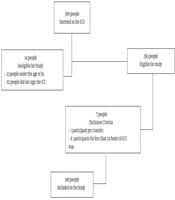
This study was a descriptive design that lasted from February 2016 to March 2017. The study population included all patients admitted to medical ICUs at the Imam Reza hospital in Mashhad, Iran. As we used logistic regression analysis in this study, the study sample size was determined to be 10 times more than the number of items (23). The number of variables, i.e., the predictors, was equal to 9; therefore, 90 patients were needed. This number represents the minimum sample size required. However, for increasing the strength of the study, 415 samples were taken. The research sample was necessary information in the medical records of patients that were admitted in the ICU. Therefore, of the 642 patients admitted to the ICU, the medical records of 415 patients were gathered. The samples were selected purposefully and non-randomly among ICU patients in this hospital. The main inclusion criteria were existence of complete information on patients’ medical records. Also, the patients who had been deceased or discharged prior to the first 24 hours of admission, and those who had been discharged with their informed consent or had been transferred to other care centers to continue treatment were excluded from the study.
2.2. Data Collection
Data collection tools included demographic, disease-related, and NEMS questionnaires. The demographic and disease-related questionnaires involved variables such as age, sex, length of stay in the ICU, frequency of hospitalization in the ICU, and diagnosis of the disease. The NEMS scale is also one of the tools used in ICUs in several studies to determine the severity of illness and workload of nurses (24, 25). This system evaluates nine nursing care activities that were performed by the nurses for the patients. On this scale, each activity will receive a separate score depending on the involvement degree of the nurse. These activities include the following item: the patient’s baseline monitoring, i.e. the hourly record of vital signs, as well as the calculation of uptake, excretion, and fluid balance (9 points), administration of intravenous drugs, with the exception of vasoactive and inotropic drugs (6 points), support of patient by mechanical ventilation or auxiliary ventilation more than or equal to 2 hours per shift (12 points), supplemental ventilation care, spontaneous breathing through the endotracheal tube and hyperbaric oxygen therapy (3 scores), administration of any vasoactive drug (7 points), prescription of more than one vasoactive/inotropic drug and continuous intravenous injection regardless of type and dose (12 points), dialysis (6 points), special interventions inside the ICU, such as the use of pacemaker, cardioversion and endotracheal intubation and emergency procedures (5 points), and specific interventions outside of the ICU, such as diagnostic or surgical procedures requiring discharge from the ICU and spending more time (6 points). The minimum and maximum scores obtained from NEMS were 3 and 66, respectively.
After selecting the samples, their demographic and disease-related characteristics were recorded, and admission NEMS score was determined for them. Subsequently, the patients’ NEMS scores were calculated and recorded at 8 pm daily. The recorded daily scores were used to calculate the relative mortality rate of patients based on NEMS. Moreover, the last calculated NEMS score for patients was used to detect their need for terminal care. The sampling was ended when the fate of the patients was determined. In this study, the patients based on their fate were divided into two groups. The first group included the patients who were transferred from the ICU to other wards with a satisfactory health status, and the second group included the patients who were deceased in the ICU. The last NEMS score considered for each patient was the score that was calculated at 8pm before the last day of decision-making for them. For example, if the patient died at 10 am on Tuesday, the NEMS score at 8pm on Monday was considered as the last score.
2.3. Data Analyzing
The data were analyzed by the SPSS software version 16. Descriptive statistics (frequency, mean and standard deviation) and inferential statistics (Cox regression) were used at 95% interval confidence.
2.4. Ethical Considerations
This study was approved by the Ethics Committee of Semnan University of Medical Sciences, Semnan, Iran (No: IR.SEMUMS.REC.1394.182). The researchers initially obtained the permission of hospital administrators following the presentation of the approval of the research ethics committee.
3. Results
The mean age of the patients was 42.83 ± 20.60 years. The samples consisted of 233 (56.1%) males and 182 (43.9%) females. A total of 145 (34.9%) patients were admitted to the ICU for the first time. The mean length of stay in the ICU was 6.82 ± 4.89 days. In addition, 240 (57.84%) of patients were under mechanical ventilation. Furthermore, 295 (71.09%) of the patients were discharged from the hospital and 120 (28.91%) of patients died (Table 1).
Table 1.
Demographic Variables and Hospitalization Dataa
| Variables | Frequency |
|---|---|
| Age, y | 42.83 ± 20.60 |
| The average length of stay in critical care unit, day | 6.82 ± 4.89 |
| Critical care unit hospitalization history | |
| Yes | 145 (34.9) |
| No | 270 (65.1) |
| Gender | |
| Male | 233 (56.1) |
| Female | 182 (43.9) |
| Use mechanical ventilation | |
| Yes | 81 (19.9) |
| No | 334 (80.5) |
| Outcome of patients | |
| Discharge from hospital | 295(71.1) |
| Re-admission to critical care unit | 9 (2.2) |
| Death in hospital | 111 (26.7) |
aValues are expressed as No. (%) or mean ± SD.
The mean NEMS scores of the patients were 25.00 ± 7.50 on the first day after admission to the ICU. In the last day of staying in the ICU, the mean NEMS score was 22.91 ± 9.97. The relative risk of death in the ICU was 1.027 (95% CI = 1.015 - 1.042). The calculated relative risk showed that the risk of death of the ICU patients increased by 2.7% per unit increase in the NEMS scores. These findings demonstrated that all patients with the NEMS≥38 have 100% chance of death. In the study period, according to the results, all patients with NEMS ≥ 38 died, however, all patients who had a NEMS score of ≤ 15 were discharged from the ICU with a satisfactory health status. Furthermore, the death rate was 22.1% in the15 ≤ NEMS ≥ 34 scores. The relative mortality risk of the ICU patients based on each NEMS score was obtained from the product of NEMS scores in the relative risk of death after discharge (2.7%). Accordingly, the patients admitted to the ICU were divided into three-colored groups. The first group (green label) included the patients with the mortality risk of less than 41%. The second group (red label) included the patients with the mortality risk between 41% and 100%, and the third group (black label) included the patients with the mortality risk of 100%. The first group consisted of patients who recovered relatively and was discharged from the ICU due to medical treatment and nursing care that was performed in the ICU. This group of patients benefited completely from the ICU services. The second group included the patients with a high mortality rate; a number of patients died in this group, and some were alive. All patients in the third group died. These patients did not benefit from ICU services (Table 2).
Table 2.
Patient’s Mortality Risk Leveling in the Intensive Care Unita
| Mortality Groups | Patient Status | NEMS Score in ICU | Mortality Risk Leveling, % (NEMS*RR(2.7)) | |
|---|---|---|---|---|
| Death | Discharge | |||
| Group 1 | 0 (0) | 0 (0) | ≤ 14 | ≤ 37.8 |
| 0 (0) | 21 (100) | 15 | 40.5 | |
| Group 2 | 17 (11.98) | 125 (88.02) | 18 | 48.6 |
| 1 (100) | 0 (0) | 20 | 54 | |
| 0 (0) | 1 (100) | 21 | 56.7 | |
| 0 (0) | 2 (100) | 22 | 59.4 | |
| 5 (45.45) | 6 (54.55) | 23 | 62.1 | |
| 5 (33.33) | 10 (66.67) | 24 | 64.8 | |
| 3 (33.33) | 6 (66.67) | 25 | 67.5 | |
| 1 (50) | 1 (50) | 26 | 70.2 | |
| 27 (24.10) | 85 (75.90) | 27 | 72.9 | |
| 2 (33.33) | 4 (66.67) | 29 | 78.3 | |
| 2 (25) | 6 (75) | 30 | 81 | |
| 4 (28.58) | 10 (71.42) | 32 | 86.4 | |
| 3 (30) | 7 (70) | 33 | 89.1 | |
| 22 (66.67) | 11 (33.33) | 34 | 91.8 | |
| Group 3 | 3 (100) | 0 (0) | 38 | 102.6 |
| 13 (100) | 0 (0) | 39 | 105.3 | |
| 2 (100) | 0 (0) | 40 | 108 | |
| 1 (100) | 0 (0) | 42 | 113.4 | |
| 6 (100) | 0 (0) | 44 | 118.8 | |
| 1 (100) | 0 (0) | 45 | 121.5 | |
| 1 (100) | 0 (0) | 50 | 135 | |
| 1 (100) | 0 (0) | 56 | 151.2 | |
Abbreviations: ICU, Intensive Care Unit; NEMS, Nine Equivalents of Nursing Manpower Use Score; RR, Relative Risk.
aValues are expressed as No. (%).
4. Discussion
The terminal care is one of the big challenges for intensive care staff. There is no uniformity in various standard ICUs to care for the patients who spend their end-of-life. Additionally, the perception of a medical team from terminal care is not the same (26). The inability of the medical team to predict the fate of patients may be one of the reasons for different ways of dealing with such patients. Perhaps if all members of the medical team know that the patient will surely die in the next few days, they will not carry out many invasive and diagnostic procedures for the patient. The predictive tools seem to be useful in deciding how to terminal care. Based on the evidence, this study attempted to demonstrate how to use NEMS for identifying the patients in need of terminal care.
In the present study, the mean admission NEMS score was 25.00 ± 7.50. To confirm the findings of this study, Rothen (1999), in Switzerland, showed that the mean NEMS score was 26 for the ICU patients (25). Carmona-Mongea et al., (2013), in Spain, reported that the mean NEMS score in the patients was 26.25 (24). This finding reveals that the workload of nurses working in the ICUs in Iran is almost similar to other countries in the world, as well as the NEMS scale is suitable for determining workload and estimating the severity of the condition in the ICUs patients in Iran.
In the present study, the relative mortality risk of the patients in ICUs was 1.027. This indicates that the mortality risk of the patients increases by 2.7% per unit increase in the NEMS scores. The researchers found no study on the relative mortality rate of NEMS scores for ICU patients. Some studies have examined the NEMS scores in two groups of deceased and survived patients. Ebrahimian et al., (2017), found a direct correlation between the mean NEMS scores and mortality rates in patients admitted to ICUs, thus, higher admission NEMS scores suggests a possible increase in mortality (22). Miranda et al., (1997), showed that the NEMS score has a proven correlation with the severity of the disease. This means that a higher score indicates a lower chance of surviving (21).
According to the present study, none of the patients with NEMS scores below 18 died, and none of the patients with NEMS scores of over 34 survived. In this regard, Urbanetto et al., (2013) in Brazil, exhibited that the mean admission NEMS score was 30.75 in the deceased ICU patients and 20.48 in the discharged patients (27). As we can see, in the study of Urbanetto, the difference in the scores between the deceased and survived patients was almost close to our results. This means that the NEMS can be used to identify patients in need of terminal care. In the United States, Pendergast et al., (1999) conducted a study on 5910 deaths in 131 ICUs. They reported that 1544 (23%) patients were under complete ICU care and also CPR at the terminal care, 1430 (22%) cases were under complete ICU care but not CPR, the life-saving measures were stopped for 797 (10%) cases, and the life-saving measures was abandoned in 2139 (38%) cases (26). They have not mentioned the causes of stopping or taking life-saving measures. This suggests that there is no uniform action in the ICUs to decide whether life-saving measures are needed for patients or not, and doctors act based on personal experiences or in accordance with the hospital routines. However, our study results provide an evidence-based criterion to the treatment team members in order to decide more strongly on continuing or discontinuing the life-saving interventions for the ICU patients.
As a limitation to the present study, participating nurses did not have the same clinical experience. Therefore, they may differ in the implementation of care procedures. This may affect the mortality risk in patients who received different levels of nursing services.
4.1. Conclusion
The present study presented a numerical criterion (NEMS>34) for identifying the patients at the end stages of life. However, further studies should be carried out in this area to argue on the exact NEMS score requiring life-saving measures in ICU patients.