
1. Background
Arbaeen is a major religious ritual for Shiite Muslims, commemorating Imam Hussein (PBUH) and his companions (1). Each year, millions of pilgrims travel to Karbala, making it one of the largest peaceful gatherings worldwide. Given the scale, safeguarding the health of attendees is crucial (2). The World Health Organization defines a mass gathering as any organized or spontaneous event attracting large crowds to a specific location for a set time, requiring careful planning and resource management (3). Such events pose risks of infectious and non-infectious diseases that can affect both individuals and the wider community (4).
Women are considered a high-risk group during mass gatherings and are more likely than men to face various health problems (5). For example, at events like the Hajj, respiratory infections affect 50% to 93% of pilgrims, and diarrhea impacts about 23% (6). Similarly, gastrointestinal and respiratory diseases are common in large gatherings in West Africa. During the Arbaeen pilgrimage, long-distance walking and global participation expose pilgrims to multiple risks. Poor hygiene in food preparation and insufficient rest and sanitation facilities increase the risk of gastrointestinal and respiratory illnesses (2, 7). Women specifically face challenges such as infectious diseases from overcrowding, physical injuries, limited access to gender-sensitive healthcare, heat-related illnesses, and difficulties managing chronic conditions. Inadequate health knowledge may worsen these issues. To address them, better medical services, health education, improved sanitation, and female healthcare providers are needed (8).
A study explored the experiences of 25 female Arbaeen pilgrims, aged 22 to 68. The analysis identified five key themes in how women construct their identities: Escaping daily fatigue, finding meaning in voluntary hardship, linking bodily experiences to war memories, resisting everyday objectification, and achieving spiritual growth through altruism. By connecting their journey to Ashura’s suffering, these women actively reinterpret and reshape their identities.
Key medical care during mass gatherings like Arbaeen includes preventive medicine, public health measures (such as food and water safety), timely access to the injured, triage, patient tracking, onsite treatment, and proper transportation (3). A study by Al-Ansari et al. found nasal discharge and coughing to be the most common respiratory symptoms among pilgrims, with diarrhea reported by 12.6% (5). Azizi et al. identified water pollution, food contamination, poor handwashing, and hygiene as leading causes of gastrointestinal illness (9). Additionally, Soltani et al. reported that Iraq’s healthcare system faces significant challenges during Arbaeen, including infrastructure gaps, poor planning, and low participant preparedness, underscoring the need for better assessment and planning to improve health outcomes (10). Although women make up half of the Arbaeen pilgrims, there is limited information on the specific challenges they face.
2. Objectives
The present qualitative study aims to fill that gap by exploring the health challenges encountered by women during the Arbaeen pilgrimage, drawing on insights from both female pilgrims and healthcare providers, with the goal of identifying effective solutions.
3. Methods
3.1. Participants and Settings
This qualitative study, using a content analysis approach, aimed to explore the medical challenges faced by women during the Arbaeen pilgrimage. The participants included 25 women aged 18 to 64 who had taken part in the pilgrimage. To ensure maximum diversity, factors such as education, age, number of Arbaeen pilgrimages, occupation, income, marital status, number of children, and social status were considered, with participants selected across all strata. Additionally, 12 healthcare providers — healthcare professionals including doctors, nurses, midwives, emergency medical staff, and obstetricians — with at least two years of relevant experience and prior participation in Arbaeen were included. Their contact details were obtained from Hajj and Pilgrimage Organization and Iranian Red Crescent Society.
3.1.1. Inclusion and Exclusion Criteria
The inclusion criteria for women aged 18 to 64 were having walked in the Arbaeen pilgrimage at least once, willingness to participate in research, and reporting no physical or mental illnesses. For healthcare providers, the inclusion criteria included having at least two years of experience, willingness to participate in research, and participation in a previous Arbaeen pilgrimage.
3.2. Sampling Method
With the assistance of Hajj and Pilgrimage Organization, a list of all women participating in Arbaeen was compiled, and participants were randomly selected using a random number table. Women who met the inclusion and exclusion criteria and agreed to participate were interviewed by telephone through purposive sampling. This process was carried out from March 2024 to June 2024 and continued until data saturation was reached. The sampling method for healthcare providers followed the same approach as for the women. As a qualitative research, there was no predetermined sample size, so sampling proceeded until data saturation was achieved.
3.3. Data Collection
Various methods were used to collect data, including semi-structured interviews, observations, audio recordings, transcription, note-taking during interviews, and reviewing available documentary evidence. The in-depth interviews began with semi-structured questions — for example, women were asked, “How did you experience the Arbaeen march? Did you face any specific challenges? If so, how did you address them?” Participants’ responses guided the flow of the interviews and the questions asked. When a participant deviated from the topic, the interviewer gently redirected the conversation using questions based on the participant’s statements. Probing questions such as “Could you please elaborate?”, “Can you give an example?”, and “What happened next?” were used to clarify key concepts. Healthcare providers were asked questions like: “What medical problems do women generally face during the Arbaeen pilgrimage?” and “What services are available to them?” Probing questions were also used with this group. Interviews lasted on average between 40 and 70 minutes. All interviews were audio-recorded with participants’ written consent. Sampling continued until data saturation was reached, meaning no new codes emerged. After saturation, two more women and two healthcare providers were interviewed with no new codes identified.
3.4. Data Analysis
In the present study, conventional content analysis was used to analyze the data, based on the steps suggested by Grandheim and Lundman. Analysis began concurrently with data collection. In the first step, after each interview, the interviews were transcribed verbatim in Word 2018 software and entered into MAXQDA10 software. The entire interview was considered the unit of analysis. To gain a comprehensive understanding, all interview texts were read several times, and any ambiguities were clarified through follow-up phone calls with the interviewees. In the second step, the entire text of the interviews was divided into meaningful units, and the key concepts were summarized in the text. In the third step, the summary of the meaningful units was condensed and labeled with appropriate codes. Coding began simultaneously with the interviews. In the fourth step, the codes were categorized into subcategories and categories based on their similarities and differences. Finally, in the fifth step, themes were extracted based on the underlying meanings in the text.
3.5. Data Validity and Rigor
To ensure data validity and rigor, Lincoln and Guba’s criteria (credibility, transferability, confirmability, dependability, and authenticity) were applied.
3.5.1. Credibility and Trustworthiness
To enhance the credibility of the data in this study, several strategies were employed. Prolonged engagement was maintained by spending sufficient time collecting data, ensuring continuous involvement, and building trust with participants. Member checking was conducted by sharing interview transcripts and extracted codes with participants to confirm that the findings accurately reflected their experiences. Additionally, an external review was carried out, where two reproductive health experts reviewed and agreed upon the interview transcripts, codes, subcategories, and categories derived from the interviews. Triangulation of data collection methods was also implemented by combining different approaches such as in-depth individual interviews and observations. Furthermore, the interviewer underwent training courses on interviewing techniques and qualitative content analysis prior to conducting the interviews to ensure the necessary skills.
3.5.2. Transferability
In this study, to enhance transferability, a maximum variation sampling technique was used, considering factors such as age, education, employment status, and social class. Additionally, the findings of this study were discussed and compared with those of other studies as another method to assess the fit of the data. Women experiencing the Arbaeen pilgrimage who met the study criteria but were not participants were also involved to confirm the codes, subcategories, categories, and themes. Furthermore, rich and detailed descriptions of the process and how the qualitative phase was conducted were provided to increase transferability, enabling other researchers to understand how the results were achieved.
3.5.3. Confirmability
The researcher set aside personal thoughts and assumptions throughout all stages of the research — including data collection, analysis, and variable formation — and documented the process meticulously so that an external reviewer could examine the research steps and data codes. To achieve this, transcripts of several interviews along with the subcategories and categories were provided to two reproductive health experts familiar with qualitative analysis, and their agreement on the development process of the subcategories and categories was assessed.
3.5.4. Dependability
To enhance the dependability of the data, the researcher ensured that all participants were asked the same questions within the same domain. To meet this criterion, all interviews were audio-recorded and transcribed verbatim. Additionally, the research team employed an external reviewer. Specifically, the interviews were independently coded by two reproductive health specialists to identify any discrepancies in coding. The team also used a code-recode method during the analysis, meaning that a portion of the data was coded, and after at least two weeks, the same data was coded again. The results of the two coding sessions were then compared. Dependability was confirmed by achieving consistent codes.
3.5.5. Authenticity
To ensure authenticity, the research objectives were clearly explained to participants, and informed consent was obtained. Ethical conduct was maintained in interactions with women and healthcare providers.
3.6. Ethical Considerations
Ethical principles were explained to participants, including informed consent, the purpose of the research and its procedures, confidentiality, no financial burden for participants, and the right to withdraw from the study at any time without penalty. This research was approved by Iranian Red Crescent Society with the ethics code IR.RCS.REC.1403.022.
4. Results
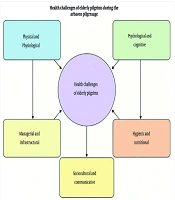
In this study, 25 women and 12 healthcare providers were interviewed, and the demographic characteristics of these participants are presented in Tables 1. and 2. The presentation of interview results and data analysis led to 1025 initial codes and 171 merged codes. After reviewing and categorizing these codes, two main themes were identified: Medical and health challenges and strategies for addressing medical and health challenges (Figure 1).
Table 1.
Demographic Characteristics of Women Participants
| Variables | No. (%) |
|---|---|
| Marital status | |
| Single | 4 (16) |
| Married | 20 (80) |
| Widowed | 1 (4) |
| No. of Arbaeen trips | |
| 1 | 5 (20) |
| 2 - 4 | 4 (16) |
| More than 4 | 16 (64) |
| Job status | |
| Housewife | 15 (60) |
| Employed | 8 (32) |
| Student | 2 (8) |
Table 2.
Demographic Characteristics of Health Care Providers
| Variables | No. (%) |
|---|---|
| Educational status | |
| Bachelor’s degrees | 4 (33.34) |
| Master’s degrees | 3 (25) |
| MD | 3 (25) |
| PhD | 2 (16.66) |
| Work experience (y) | |
| Less than 10 | 2 (16.66) |
| 10 - 20 | 5 (41.66) |
| More than 20 | 5 (41.66) |
| Job status | |
| Medical staff | 6 (50) |
| Medical doctor | 3 (25) |
| Disaster manager | 1 (8.34) |
| Faculty | 2 (16.66) |
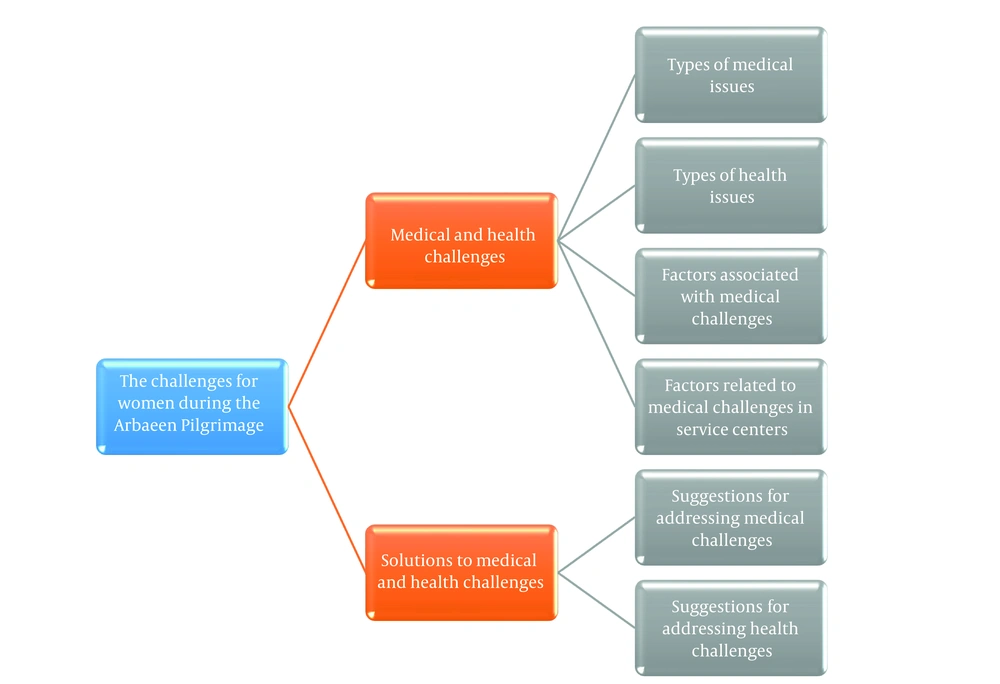
Figure 1.
Concept of the challenges for women during the Arbaeen pilgrimage
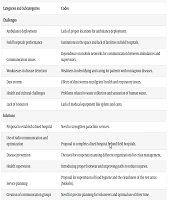
The theme of medical and health challenges consisted of four categories: (1) Types of medical challenges; (2) types of health challenges; (3) factors associated with medical challenges; and (4) factors related to medical challenges in service centers. The theme of strategies for addressing medical and health challenges included two categories: (1) Suggestions for medical challenges; and (2) suggestions for health challenges.
The category types of medical challenges encompassed nine subcategories: Cardiopulmonary diseases and related symptoms, gastrointestinal diseases and related symptoms, musculoskeletal diseases and related symptoms, urinary-reproductive diseases and related symptoms, skin diseases and related symptoms, general diseases and related symptoms, menstrual issues and related symptoms, challenges of pregnant women and related symptoms, and medical emergencies and urgent conditions.
The category types of health challenges included three subcategories: Environmental health, personal hygiene, and nutritional hygiene. The category factors associated with medical challenges had two subcategories: Complications arising from medical challenges and the necessity of resolving medical issues. The category factors related to medical challenges in service centers consisted of four subcategories: Shortages (e.g., equipment, personnel, etc.) in service centers, satisfaction with service provision, dissatisfaction with service provision, and types of service-providing centers. The category suggestions for medical challenges was divided into four subcategories: Management, resource allocation, staffing increase, and planning. The category suggestions for health challenges included three subcategories: Public education, media campaigns (e.g., via radio and television), and mosque-based advertising (Table 3).
Table 3.
The Medical Challenges for Women During the Arbaeen Pilgrimage
| Themes | Categories | Subcategories |
|---|---|---|
| Medical and health challenges | Types of medical issues | Cardiopulmonary diseases and related symptoms |
| Gastrointestinal diseases and related symptoms | ||
| Musculoskeletal diseases and related symptoms | ||
| Genitourinary diseases and related symptoms | ||
| Skin diseases and related symptoms | ||
| General diseases and related symptoms | ||
| Menstrual issues and related symptoms | ||
| Pregnancy-related issues and symptoms | ||
| Emergencies and medical urgencies | ||
| Types of health issues | Environmental hygiene | |
| Personal hygiene | ||
| Nutritional hygiene | ||
| Factors associated with medical challenges | Complications arising from medical issues | |
| Need for resolving medical issues | ||
| Factors related to medical challenges in service centers | Shortages (e.g., equipment, staff) in service centers | |
| Satisfaction with services provided | ||
| Dissatisfaction with services provided | ||
| Types of service centers | ||
| Solutions to medical and health challenges | Suggestions for addressing medical challenges | Management |
| Resource allocation | ||
| Workforce enhancement | ||
| Planning | ||
| Suggestions for addressing health challenges | Public education | |
| Media campaigns (TV and radio) | ||
| Mosque campaigns |
4.1. Types of Medical Issues
The category includes nine subcategories covering cardiopulmonary, gastrointestinal, musculoskeletal, genitourinary, skin, general, menstrual, pregnancy-related issues, and medical emergencies. One of the medical issues most participants referred to was gastrointestinal disease. "I experienced severe nausea after drinking tap water." (Participant No. 25, 18 years old). "A common problem for pilgrims during mass gatherings like Arbaeen is gastrointestinal illness, often caused by food poisoning. They need to be careful with their diet." (Participant No. 5, 30 years of experience in medical emergencies).
Heat rash in the groin was another common issue among women, categorized under skin diseases. Most women mentioned it as a significant medical problem. "Heat rash in the groin was a problem during the Arbaeen walk." (Participant No. 12, 42 years old). "Almost all women suffered from severe heat rash. Yes, it affected them a lot, causing multiple problems for women." (Participant No. 7, midwife with 25 years of experience).
One of the primary concerns for women during Arbaeen was menstruation, frequently mentioned by participants: "I’m very worried that I might get my period during this pilgrimage and won’t be able to perform the rituals, even though I’ve taken pills." (43-year-old married woman). "Most women of reproductive age take birth control pills to stop menstruation." (Midwife with 25 years of experience).
Most healthcare providers emphasized issues faced by pregnant women and the need for special attention to their condition: "Pregnant women are a high-risk group and require special attention to their problems." (Obstetrician-gynecologist with 30 years of experience).
4.2. Types of Health Issues
This category consists of three subcategories: Environmental hygiene, personal hygiene, and nutritional hygiene. Environmental hygiene was a significant topic in the statements of most participants and healthcare providers. "The cleanliness in the tents was poor, and I felt an unpleasant smell." (51-year-old married woman). "Environmental hygiene is crucial for the health of pilgrims." (Nurse with 18 years of experience).
Personal and nutritional hygiene were other important issues mentioned by participants. "Women lacked proper bathing facilities, which resulted in very poor personal hygiene." (23-year-old single woman). "We got our food from the tents during the Arbaeen pilgrimage, and we really didn’t know how cleanly it was prepared." (42-year-old married woman). "Maintaining hygiene in cooking, preparing, and storing food is essential to prevent illnesses." (Emergency medicine doctor, Deputy of Education and Research, Iranian Red Crescent Society, with 12 years of experience).
4.3. Factors Associated with Medical Challenges
This category consists of two subcategories: Complications arising from medical issues and the Need for resolving medical issues. Participants emphasized the complications arising from medical problems and the importance of addressing these issues promptly. "I had respiratory problems, felt heaviness in my chest due to the hot weather, and my condition worsened." (50-year-old married woman). "I experienced spotting due to taking birth control pills." (20-year-old single woman). "Because of the large crowd during the Arbaeen pilgrimage, those with medical issues might experience complications, and their problems need to be resolved." (Vascular surgeon, head of Iranian Red Crescent Society, with 30 years of experience).
4.4. Factors Related to Medical Challenges in Service Centers
This category consists of four subcategories: Shortages (e.g., equipment, staff) in service centers, Satisfaction with services provided, dissatisfaction with services provided, and types of service centers. Most participants pointed out shortages (e.g., equipment, staff, etc.) in healthcare facilities. "When I wasn’t feeling well, there was no doctor to check on me." (48-year-old married woman). "A lack of equipment, such as ambulances, is a major issue that needs attention." (Nurse with 18 years of experience).
Satisfaction with the services provided was frequently mentioned by women. "The staff’s behavior was excellent, and I was very satisfied." (53-year-old married woman). "I was very happy with the medical services I received." (23-year-old single woman). The variety of service providers was another key topic highlighted by informants. "Service centers for pilgrims include organizations such as Iranian Red Crescent Society, charities, universities, and others." (Nurse with 25 years of experience).
4.5. Suggestions for Addressing Medical Challenges
This category consists of four subcategories: Management, resource allocation, workforce enhancement, and planning. These subcategories were critical points emphasized by participants. "Since many people from different countries come for Arbaeen, their management is very important." (20-year-old single woman). "A proper budget should be allocated in advance to provide necessary resources." (Medical emergency worker with 30 years of experience). "Increasing healthcare staff is one of the key aspects of ensuring people’s health." (Vascular surgeon, head of Iranian Red Crescent Society, with 30 years of experience). "I think more doctors, nurses, midwives, and medical staff are really needed for Arbaeen." (48-year-old married woman). "Planning for Arbaeen should be done accurately with the help of experienced and skilled individuals." (Human resources manager with 18 years of experience).
4.6. Suggestions for Addressing Health Challenges
This category includes three subcategories: Public education, media campaigns (TV and radio), and mosque campaigns. Most participants highlighted public education, media campaigns, and mosque-based outreach. "One of the easiest ways to reduce harm to people is through education." (Emergency medicine doctor, deputy of education and research, Iranian Red Crescent Society, with 12 years of experience). "I wish they had told us beforehand what we’d need for Arbaeen so I could have brought it with me." (51-year-old married woman). "Media and mosques play a significant role in informing the public." (Midwife with 25 years of experience). "I wish healthcare staff would come to mosques and teach us what to do during Arbaeen and what items to bring." (42-year-old married woman).
5. Discussion
This study is the first to qualitatively explore the medical challenges faced by women during the Arbaeen pilgrimage and to propose strategies for addressing them. Women experience a variety of health issues during the event, often linked to environmental, personal, and nutritional hygiene factors. Participants highlighted that improving healthcare service centers could help mitigate these challenges. Both women and healthcare providers emphasized that effective management, comprehensive planning, public education, and accurate information dissemination are critical to overcoming these problems.
Medical issues emerged as a major theme in the interviews. Similar to other large gatherings, the Arbaeen pilgrimage is often linked to an increase in infectious and communicable diseases, mainly due to poor hygiene practices (11, 12). Gastrointestinal illnesses are common during Arbaeen, often caused by cultural dietary differences and inadequate hygiene in food preparation and distribution. Respiratory diseases also occur frequently, largely because of dust exposure and the contagious nature of infections in crowded settings. Additionally, inappropriate footwear and long periods of walking often result in foot blisters and related injuries (13, 14).
Keshavarz et al. highlighted menstrual challenges as a significant issue for women at sacred sites, noting that many use contraceptive pills to delay menstruation, which can cause side effects such as spotting, nausea, and vomiting (15). Our study similarly identified cardiac and respiratory diseases, gastrointestinal problems, musculoskeletal disorders, genitourinary issues, skin conditions, general symptoms, menstrual difficulties, and complications during pregnancy as common health concerns, consistent with previous research.
Another key concept identified in this study was the health challenges women face during the pilgrimage. Gorji et al., in their ethnographic study of Iranian Arbaeen pilgrims in Iraq, noted that the temporary and mobile nature of the pilgrimage lifestyle leads to reduced attention to personal hygiene and bathing. Pilgrims often consume food that is not hygienically prepared and feel less responsible for maintaining hygiene, seeing themselves as guests. This neglect causes discomfort among participants (16). Similarly, our study found that women reported challenges related to environmental, personal, and nutritional hygiene.
Participants and healthcare providers also highlighted factors contributing to medical problems during the pilgrimage. As a large-scale event, Arbaeen carries risks of medical complications, especially for those with pre-existing conditions. Crowded conditions can cause issues such as shortness of breath or injuries like fractures (17). In emergencies, immediate onsite first aid is crucial before transferring individuals to appropriate healthcare facilities (3, 11).
Participants also highlighted challenges related to medical service centers, including inadequate healthcare infrastructure during the pilgrimage, which hampers effective service delivery (17). Soltani et al. emphasized the necessity of providing adequate equipment and facilities to effectively support pilgrims and highlighted the importance of increasing medical resources (10). Yousefian et al. pointed out that strategic planning and efficient allocation of resources are vital to addressing shortages of essential medical supplies, medications, and equipment. They also noted the absence of trauma centers and isolation rooms in border provinces, posing significant risks for managing emergencies and infectious diseases (18).
To address these challenges, participants suggested various health and medical recommendations, emphasizing management, planning, and education. Effective coordination between ministries and health organizations is essential to ensure compliance with international health regulations and to strengthen comprehensive planning and collaboration prior to large-scale events like the Arbaeen pilgrimage (17). A key challenge during the pilgrimage is the lack of awareness about personal and public health, including proper nutrition and hygiene practices (2, 19). Informing patients and their families about potential health risks associated with mass gatherings is crucial (20).
The influence of religious leaders and clergy can play a powerful role in promoting health-conscious behaviors. Incorporating health messages into religious teachings can help cultivate a culture of responsibility and self-care among pilgrims (17). Women face various medical challenges during the Arbaeen pilgrimage, including infections due to overcrowding, injuries from long-distance walking, limited access to female-sensitive healthcare, heat-related illnesses, and difficulties managing chronic medications. A lack of health knowledge can further exacerbate these problems. Addressing these issues requires improved medical facilities, health education, better sanitation, and the availability of female healthcare providers (8).
Women may face more challenges during large religious gatherings like Arbaeen due to several interrelated factors. Firstly, gynecologic issues such as menstrual cycles, pregnancy, and menopause can create unique health needs and complications that men do not experience. These include menstrual discomfort, delays in menstruation often managed with contraceptive pills, pregnancy-related complications, and higher vulnerability to infections due to physiological differences. Secondly, psychological differences, including a higher prevalence of anxiety and stress disorders among women, may affect their physical health and coping mechanisms in crowded, high-pressure environments. Additionally, women often take on caregiving roles during such events, caring for children, elderly family members, or other pilgrims, which increases their physical and emotional burden and risk of exhaustion or injury (15-17).
Focusing on women’s health in these events is vital because it affects not only the women themselves but also their families and communities. Addressing their specific needs ensures safer, more effective healthcare, supports their participation, and promotes overall well-being during mass gatherings.
5.1. Conclusions
The findings of this study indicate that women encounter numerous medical and health challenges during the Arbaeen pilgrimage. It is imperative to address their needs and ensure the provision of adequate healthcare services. Effective resource allocation, comprehensive management and planning, public education, and the strategic utilization of mosques and national media to promote self-care are all essential components in alleviating these challenges. It is recommended that further research be conducted on self-care education for women before the Arbaeen pilgrimage, focusing on its effects on various aspects of health through an intervention study. The findings of such research could then be utilized in policymaking and resource allocation.
5.2. Limitations
One limitation of this study is its qualitative design, which may limit the generalizability of the findings. Nevertheless, the researchers mitigated this limitation by maintaining strict accuracy and rigor in data collection and analysis. One potential bias in this study is that data collection may rely on recall bias. The researcher attempted to minimize this issue as much as possible by utilizing skilled interviewers and employing probing questions.