
1. Introduction
Mass gatherings such as the Hajj pilgrimage pose unique challenges for mobility-impaired individuals, particularly those using wheelchairs (1, 2). In high-density environments, unintended collisions between wheelchairs and pedestrians can result in physical injuries and psychological distress (3). Despite the scale of such events, limited attention has been given to the ergonomic and crowd-related risks associated with wheelchair use (4).
During rituals such as Tawaf and Sa’i, where thousands of people move simultaneously in confined circular or linear paths, controlling the speed and direction of wheelchair movement becomes extremely difficult (4, 5). The absence of designated pathways for wheelchair users, lack of warning signage, and insufficient training for caregivers or volunteers significantly increase the risk of wheelchairs striking the lower limbs of standing individuals (6). These collisions, especially in crowd densities exceeding critical thresholds (more than 5 persons per square meter), can result in physical injuries such as bruising, joint inflammation, or even fractures (7). Beyond physical harm, such incidents may also cause psychological effects including anxiety, fear of re-entering crowded zones, and disruption of the pilgrim’s spiritual experience (8).
While previous studies have addressed general musculoskeletal injuries during Hajj, there is a lack of focused reporting on wheelchair-related pedestrian trauma in high-density zones. This case report aims to fill that gap by highlighting a specific incident and analyzing its ergonomic and psychological implications. Given the importance of preserving human dignity and enabling equal access to religious rituals, a multidisciplinary investigation into these types of injuries is essential. This phenomenon must be analyzed through various lenses: crowd engineering to understand movement behavior in dense environments, ergonomics to assess the design and impact of wheelchairs in crowded spaces, and physiology to identify the physical and psychological consequences of collisions. The aim of this study is to present a documented case of lower limb injury caused by wheelchair impact during the Hajj pilgrimage, and to offer a comprehensive analysis that leads to practical recommendations for improving safety and the overall experience of pilgrims in mass religious events.
2. Case Presentation
A 58-year-old male pilgrim from Indonesia sustained a soft tissue injury to his left ankle after being struck by the front wheel of a manual wheelchair during Tawaf. The incident occurred in a zone with crowd density exceeding 5.5 persons/m² (9). Clinical examination revealed mild swelling, ecchymosis, and pain during dorsiflexion. Radiography ruled out fracture, and the patient was diagnosed with Grade I contusion and mild ligament strain.
Timeline: The patient was assessed within 30 minutes of the incident, treated conservatively with rest and analgesics, and followed up after 48 hours and again one week later. He reported persistent psychological discomfort, including anxiety and fear of re-entering crowded zones.
2.1. Epidemiological Context
According to a 2024 study, musculoskeletal injuries during Hajj are common, with wheelchair-related trauma contributing significantly to the burden, especially in zones like Haram and Al-Jamarat. Falls and collisions account for over 80% of reported injuries, with lower limb trauma being predominant (4).
The anatomical location of the injury and the mechanism of wheelchair-pedestrian collision are shown in Figure 1.
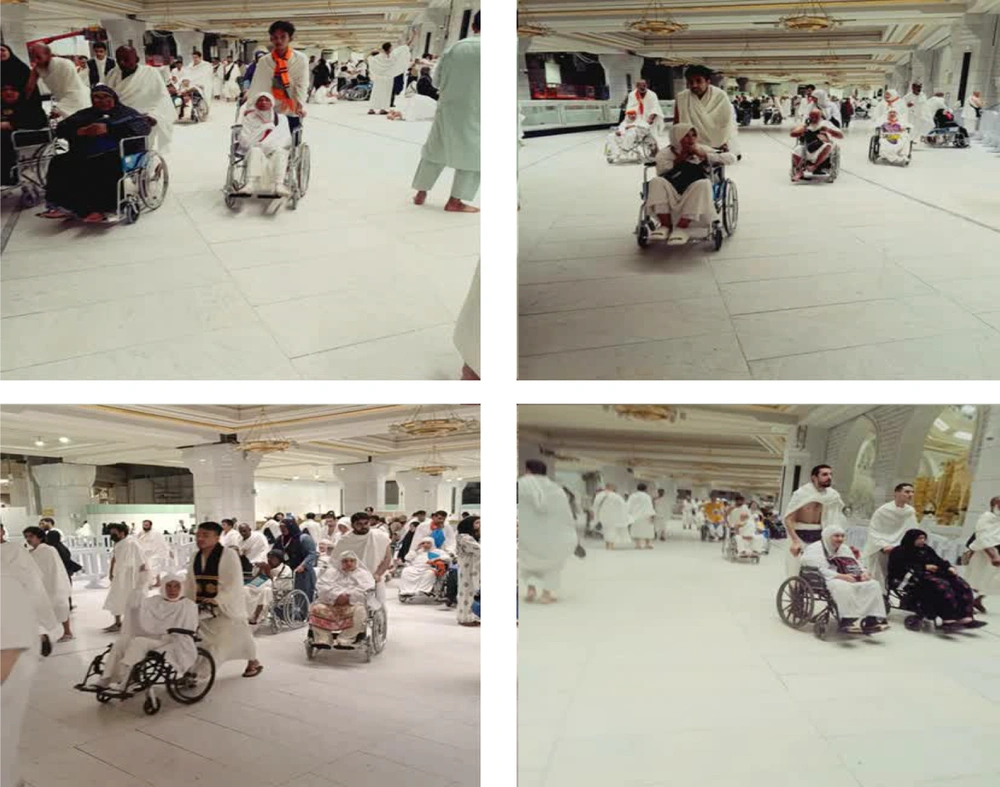
Figure 1.
Wheelchair-related left ankle injury during Hajj
3. Discussion
3.1. Crowd Dynamics
3.2. Ergonomic Risk
Manual wheelchairs exert concentrated force at the front axle, especially during sudden stops or turns. The lack of standardized ergonomic design for mass gathering contexts exacerbates injury potential.
3.3. Psychological Impact
Studies show that non-fatal incidents in mass gatherings can lead to acute stress, anxiety, and avoidance behavior (2). The patient exhibited signs of situational anxiety and reduced participation in rituals post-incident.
3.4. Public Health Implications
This case underscores the need for targeted safety protocols for wheelchair users and pedestrians in pilgrimage zones. Training, zoning, and crowd flow optimization are essential.
3.5. Recommendations
3.5.1. Short-Term / Operational-Level
-Designated wheelchair lanes during Tawaf
-On-site ergonomic training for volunteers
-Real-time crowd density monitoring
3.5.2. Long-Term/Policy-Level
-Integration of ergonomic standards in wheelchair design for mass gatherings
-Psychological support units for trauma victims
-Inclusion of mobility safety in Hajj planning protocols
3.6. Conclusions
This case highlights a specific and underreported risk in mass gatherings: wheelchair-pedestrian collisions. By integrating crowd dynamics, ergonomic analysis, and psychological impact, the report contributes to a more holistic understanding of pilgrim safety. Future research should explore scalable interventions and policy frameworks to mitigate such risks.