


1. Background
Results from various studies strongly suggest that community-based health promotion plays a crucial and promising role in improving health outcomes; however, its full potential remains underrealized. A systematic review of global community-based health promotion programs found that 75% of the studies reported improvements in health behaviors, access to health services, health literacy, or health status. Nonetheless, many large-scale programs demonstrated only limited changes at the population level, likely due to methodological challenges and intervention limitations. The review concluded that while community-based interventions hold promise, greater emphasis on proximal outcomes and capacity building within communities is necessary to maximize their impact (1).
Historical and contemporary initiatives, such as the North Karelia project and others targeting cardiovascular disease and chronic conditions, have shown feasibility and moderate success in influencing health behaviors through multi-level strategies involving education, policy changes, and community participation (2-4). Despite this potential, several large-scale community health promotion programs have achieved only modest effects on population health status, except for notable successes like HIV prevention programs. This highlights that while community-based approaches are conceptually robust and widely supported, translating them into sustained, broad population-level changes remains challenging (5).
Community engagement in health promotion strengthens social networks, empowers families, and enhances perceived health, underscoring the importance of community-based strategies (6). Social participation fosters belonging and social cohesion (7, 8), reduces loneliness and isolation, improves mental health through emotional support, and nurtures a sense of community (9). It also provides opportunities for skill development, whether through formal education, professional training, or informal social gatherings, thereby supporting personal growth and equipping individuals with tools for independent living (10). Furthermore, social participation often involves physical activities that improve health and reduce risks of disabilities and chronic illnesses (11).
Active social involvement promotes community integration, challenges stereotypes, and encourages inclusivity. It empowers individuals to advocate for themselves and others, fostering mutual support (12, 13). Social participation also benefits family members and caregivers by reducing stress and enhancing overall well-being (14, 15). For people with disabilities, it is vital for emotional health, self-esteem, and skill development (16, 17). Among older adults, social participation correlates with better quality of life, increased longevity, and reduced risks of depression and dementia (18, 19).
Developing social participation involves engaging in activities that foster connections, build relationships, and increase community involvement, Examples include book clubs, cooking classes, team sports leagues, volunteer groups (10), fitness programs, cultural and creative activities such as art workshops, photography clubs, music lessons, theater performances, association events, local festivals, concerts, skill-based workshops, and public speaking clubs aimed at enhancing communication and networking skills (20-24).
Recent studies demonstrate that artificial intelligence (AI) significantly contributes to promoting social participation by enhancing community interaction through interactive communication platforms. Tools such as chatbots and virtual assistants facilitate real-time discussions between researchers and community members, enabling easier feedback collection and prompt response to concerns (25, 26). Moreover, AI analyzes data on community members’ preferences and behaviors, allowing more effective, personalized communication that fosters inclusivity and increases participation rates (27). The AI can also predict future trends and patterns in community interactions by analyzing historical data, supporting proactive planning and optimized project delivery to better meet community needs (28, 29). Additionally, AI algorithms help optimize resource allocation by evaluating community needs and available resources, ensuring efficient use and prioritization of pressing issues (25, 30).
However, despite these advantages, significant challenges persist concerning the global nature and contextual relevance of AI models. Foundational AI models may emphasize scalability over local context, which risks undermining participatory approaches that require cultural sensitivity and contextual adaptation (30, 31). Nonetheless, when implemented thoughtfully, AI can enable more agile, inclusive, and effective participatory activities in community development planning (28).
In summary, evidence supports the critical role of community-based health promotion in improving health behaviors and outcomes. Yet, to fully realize its potential, programs must overcome methodological challenges, invest in community capacity building, and implement sustained, multi-level interventions tailored to the specific contexts of communities. Social participation is essential for strengthening social bonds, enhancing health outcomes, and fostering personal development. It contributes to creating a more inclusive and supportive society by promoting social skills and community engagement.
The AI holds pivotal potential in advancing social participation by increasing interaction, facilitating personalized communication, and optimizing resource allocation. However, addressing the challenges related to AI’s global scope and ensuring its contextual and cultural relevance is crucial for its effective use.
2. Objectives
This study was conducted to explore the role of AI in fostering social participation to enhance community-based health.
3. Methods
3.1. Study Design and Ethical Approval
This study employed a qualitative content analysis approach (32) and was conducted in Tehran. Prior to data collection, ethical approval was obtained from the Iran University of Medical Sciences Ethics Committee (IR.IUMS.REC.1402.709). The study adheres to the consolidated criteria for reporting qualitative research (COREQ) guidelines for qualitative research reporting.
3.2. Participant Selection and Recruitment
Participants were selected through purposive sampling, ensuring diverse representation from experts with relevant experience in AI, health, and social sciences. The sample included:
- Experts and researchers in AI
- Policymakers and managers from governmental and non-governmental organizations
- Social psychologists and social science scholars
- The AI developers and engineers
- Members of various social groups, including students and the general public
- Managers of digital technologies and social platforms
In total, 28 participants were interviewed, with recruitment continuing until data saturation was achieved. Inclusion criteria included:
- Relevant experience in social engagement or digital health
- Ability to communicate verbally (absence of major physical or cognitive impairments)
- Willingness to participate and share experiences
3.3. Informed Consent and Ethical Safeguards
Written informed consent was obtained after a detailed explanation of the study's purpose, procedures, risks, and benefits. Verbal consent was reconfirmed at the start of each interview. Participants were assured of confidentiality and anonymity; pseudonyms were used in transcripts and reporting.
3.4. Data Collection
Semi-structured interviews were conducted in-person or online, based on participant preference. Sessions lasted 45 to 90 minutes and were audio-recorded with permission, then transcribed verbatim. Open-ended questions guided the interviews, such as, “How can AI be utilized to enhance social participation and promote community-based health?” Follow-up probing questions were used to deepen insights. Interviews progressed from general to specific topics, and participants were invited to add any additional thoughts.
3.5. Data Analysis: Thematic Coding and Validation
Data analysis followed the Graneheim and Lundman qualitative content analysis method (32), involving:
- Immersive repeated reading of transcripts
- Identification of meaning units and open coding
- Grouping codes into subcategories and broader themes
- Interpretation within the study’s theoretical framework
To enhance validity and reduce bias, two independent coders separately coded transcripts, then met regularly to discuss discrepancies and reach consensus, ensuring inter-coder reliability and analytic rigor. NVivo software facilitated data management and coding documentation.
3.6. Trustworthiness and Rigor
Multiple strategies ensured credibility, dependability, confirmability, and transferability (33, 34):
- Triangulation through multiple coders and consensus discussions
- Member checking by sharing preliminary interpretations with participants
- Audit trail documenting all research stages
- Reflexivity via reflective memos to monitor researcher bias
No ethical concerns arose; participants could withdraw at any time without penalty.
3.7. Reflexivity and Researcher Positionality
The multidisciplinary research team (experts in AI, social sciences, and public health) engaged in regular interdisciplinary discussions and peer debriefings to mitigate bias. Reflective memos documented how researchers’ disciplinary perspectives and personal assumptions potentially influenced data interpretation. For example, AI specialists prioritized technological innovation, whereas social scientists emphasized community context and equity — discussions between these viewpoints enriched analysis and ensured balanced interpretation. This reflexive approach supported analytic transparency and ethical rigor.
3.8. Member Checking and Participant Validation
Preliminary findings were shared with a subset of participants to obtain feedback and validate thematic interpretations. This process enhanced accuracy and resonance. Limitations in member checking due to participant availability were transparently reported, recommending future studies enhance this step.
3.9. Community and Ethical Oversight
An advisory panel with community representatives and independent ethics consultants periodically reviewed study procedures, data interpretation, and dissemination plans. This collaborative oversight ensured that AI analyses remained grounded in community needs and ethical principles.
3.10. Use of Artificial Intelligence in Research Process
While the study prioritized human-centered qualitative methods, AI tools supported audio transcription and preliminary data organization. Specifically, we used (specify tool, e.g., Otter.ai or similar) for automated transcription, which facilitated initial data handling but required thorough manual correction to ensure accuracy and capture qualitative nuance. All coding, thematic analysis, and interpretation were performed manually by researchers to maintain depth and rigor. This balanced technological efficiency with critical human judgment.
3.11. Use of the Consolidated Consolidated Criteria for Reporting Qualitative Research Guidelines Checklist in Reporting
The COREQ framework guided transparent, high-quality reporting. This checklist covers 32 criteria across three domains: Research team reflexivity, study design and analysis, and findings reporting. Adhering to COREQ improved structural coherence and rigor. However, implementing COREQ presented challenges: For instance, capturing the nuances of interdisciplinary collaboration and AI-related methodological complexities extended beyond COREQ’s primarily health research focus. The framework occasionally required adaptation to fully reflect the study’s mixed disciplinary nature, highlighting a need for expanded guidelines in interdisciplinary qualitative research.
All research stages — including participant recruitment, interview guide development, transcription, and coding — were reported transparently. Thematic analysis followed Braun and Clarke’s framework with NVivo for data management. Independent dual coding enhanced internal validity. The completed COREQ checklist is provided as Appendix 1 in Supplementary File to enable verification of methodological rigor.
4. Results
This study included 28 participants (64% male, 36% female) aged between 21 and 60 years. Educational levels varied: Twenty-five percent held a bachelor’s degree, 54% a master’s, and 21% a doctorate. Participants came from diverse professional backgrounds including AI specialists (25%), social psychologists (7%), technology developers (14%), data analysts (21%), managers/executives (21%), and social activists/researchers (11%). Their work experience ranged from 1 to over 16 years, ensuring a broad range of insights. This diversity enriched the study by capturing multiple perspectives on AI’s role in promoting social participation and community health. These demographic characteristics are summarized in Table 1.
Table 1.Demographic Characteristics of the Participants (N = 28)
| Characteristics | No. (%) |
|---|---|
| Gender | |
| Male | 18 (64) |
| Female | 10 (36) |
| Age group (y) | |
| 21 - 30 | 6 (21) |
| 31 - 40 | 9 (32) |
| 41 - 50 | 9 (32) |
| 51 - 60 | 4 (14) |
| Education level | |
| Bachelor’s degree | 7 (25) |
| Master’s degree | 15 (54) |
| Doctorate | 6 (21) |
| Specialization/role | |
| AI expert | 7 (25) |
| Social psychologist | 2 (7) |
| Technology developer | 4 (14) |
| Social data analyst/consultant | 6 (21) |
| Manager/executive | 6 (21) |
| Social activist/researcher | 3 (11) |
| Relevant experience (y) | |
| 1 - 5 | 7 (25) |
| 6 - 10 | 10 (36) |
| 11 - 15 | 7 (25) |
| 16 | 4 (14) |
Abbreviation: AI, artificial intelligence.
After conducting 28 interviews, no new information emerged, indicating that data saturation had been reached. As a result, the researcher concluded the data collection process at this point. Thematic analysis of the interviews led to the identification of several key themes and related subthemes, reflecting participants’ views on how AI can enhance social participation in the context of community-based health promotion. These findings are summarized in Table 2.
Table 2.Key Themes and Subthemes Identified in the Study
| Main Themes | Subthemes |
|---|---|
| Civic engagement and democratic participation | AI for civic education and public awareness; AI for political and electoral participation; AI for sentiment analysis and public feedback; AI for social accountability and citizen oversight; AI for ethics and fairness in civic participation |
| Social innovation and equity | AI for community-driven social innovation and inclusive volunteering; AI to promote social cohesion and reduce polarization by addressing systemic inequities; AI for strengthening volunteerism and community networks; AI for fostering social trust and reducing misinformation; AI for promoting health equity and addressing health disparities |
| Health and well-being | AI for behavioral nudging and health-promoting habits; AI for mental health inclusion and community belonging; AI for personalized public health campaigns; AI for enhancing community-based healthcare delivery; AI for monitoring and improving social determinants of health; AI for community-driven health innovation |
| Technological infrastructure and data management | AI for information delivery, translation, and accessibility; AI for real-time social problem solving; AI for data integration and interoperability across public services; AI for enhancing digital and financial literacy in communities; AI for building smart cities and urban health systems |
| Crisis management and resilience | AI for crisis management, public health, and collective action; AI for community resilience and disaster preparedness; AI for real-time monitoring of public health and safety; AI for enhancing social security and safety systems; AI-enabled early mental health crisis interventions within community response frameworks |
| Environmental sustainability and community development | AI for environmental health and community sustainability; AI for monitoring and improving environmental justice; AI for strengthening local community empowerment and civic engagement; AI for real-time social problem solving |
| Accessibility and inclusion | AI for removing barriers to political and social participation for marginalized groups; AI for language and translation services for public platforms; AI for personalizing accessibility solutions for diverse communities; AI for facilitating cultural and intergenerational engagement |
| Public awareness, advocacy, and social movements | AI for supporting social movements and advocacy initiatives; AI for amplifying marginalized voices in civic discourse; AI-supported storytelling for community empowerment; AI for ethical storytelling and advocacy campaigns; AI for public discourse and promoting democratic participation |
Abbreviation: AI, artificial intelligence.
Understanding the role of AI in enhancing social participation for community-based health promotion requires a nuanced, interdisciplinary approach that integrates digital innovation, civic engagement, and health equity. This study involved 28 participants from diverse demographic, professional, and experiential backgrounds, enriching the qualitative data and offering a comprehensive view of AI’s applications across societal levels.
4.1. Clarification of Themes and Policy Implications
To address concerns of thematic overlap and enhance conceptual clarity, each theme within the framework is explicitly defined with a distinct focus and operational boundaries. For example, “Social Innovation and Equity” emphasizes community-driven solutions targeting systemic inequalities and fostering social cohesion, whereas “Accessibility and Inclusion” focuses specifically on removing structural and cultural barriers faced by marginalized populations. Similarly, “Health and Well-being” concentrates on advancing individual and collective health outcomes, including mental health promotion, while “Crisis Management and Resilience” pertains to acute emergency responses and AI-enabled mental health interventions in crisis contexts.
This clarified framework is designed to inform policymakers and program designers in developing AI-driven strategies that are context-sensitive and tailored to community-specific needs. Illustrative examples include:
- Civic engagement: Deployment of AI-powered educational platforms to enhance political literacy and stimulate broader public participation.
- Social innovation and equity: Utilization of predictive analytics to identify underserved groups and optimize volunteer mobilization and resource allocation.
- Accessibility and inclusion: Implementation of adaptive AI technologies, such as real-time language translation and personalized accessibility tools, to facilitate inclusive participation.
- Crisis management and resilience: Integration of AI-based early warning systems and mental health support platforms to improve community preparedness and response effectiveness.
By distinctly delineating these thematic domains and linking them to actionable policy interventions, the framework offers a robust and practical roadmap for leveraging AI to promote equitable and effective community-based health promotion through enhanced social participation. Building on the diversity of participant experiences, eight discrete thematic domains emerged, each representing a unique dimension of AI’s potential in supporting social participation and public health. While acknowledging natural interconnections among themes, conceptual boundaries are maintained to elucidate distinct operational mechanisms and corresponding policy implications.
Participants included AI specialists, social psychologists, technologists, policymakers, civic activists, and community leaders. Their diverse perspectives — reflecting practical experience ranging from 1 to over 16 years — contributed to the identification of eight core themes. These themes encapsulate both theoretical insights and applied knowledge, bridging academic understanding with real-world practice and policy considerations.
4.1.1. Civic Engagement and Democratic Participation
The AI technologies possess significant potential to revitalize democratic processes by facilitating informed decision-making, enabling inclusive dialogues, and enhancing public participation in governance. Applications span AI-powered political education tools, sentiment analysis for public feedback, and real-time participatory platforms.
Participant insights:
- "AI tools can help citizens better understand policies and encourage more people to take part in elections and public debates." (Participant: Male, 41 - 50 years, master’s, social data analyst)
This reflects how AI enhances political literacy and motivation, contributing to more representative democratic engagement.
- “AI tools enabled us to visualize electoral trends in real time, showing where participation was low and guiding targeted outreach — this kind of insight made our civic education events more effective and data-driven.” (Participant: Female, 31 - 40 years, master’s, manager/executive)
Here, AI’s role as a decision-support system is highlighted, providing actionable intelligence that improves resource allocation and outreach effectiveness.
- “When citizens see predictive maps of community concerns generated by sentiment analysis, they feel their voice matters — it sparks conversations that were previously absent in local councils.” (Participant: Male, 45 - 35 years, master’s, social data analyst)
This illustrates AI’s capacity to democratize information and empower marginalized voices, fostering greater social accountability and trust in governance.
4.1.2. Social Innovation and Equity
The AI plays a crucial role in fostering innovative, community-driven solutions that address systemic inequalities. Through the use of predictive analytics, inclusive design, and volunteer coordination tools, AI amplifies the voices of marginalized populations and promotes equitable access to social and health-related resources.
Participant insights:
- "Through predictive tools and inclusive platforms, AI enables marginalized communities to voice their needs and co-create solutions." (Participant: Female, 38 - 48 years, doctorate, social activist/researcher)
This highlights AI’s capacity to empower underserved groups by facilitating participatory problem-solving.
- "Using AI platforms, we could identify volunteer shortages in underserved neighborhoods — and then co-develop solutions with community leaders. It transformed reactive aid into proactive equity planning." (Participant: Female, 33 - 43 years, doctorate, social activist/researcher)
This example underscores how AI enables data-driven, forward-looking approaches to resource allocation and community engagement.
- "Algorithmic dashboards revealed which demographics were being left out of our campaigns — we adjusted processes in real time to ensure more balanced inclusion." (Participant: Male, 45 - 50 years, master’s, social volunteer coordinator)
This demonstrates AI’s utility in monitoring equity in real time, allowing organizations to adapt interventions dynamically.
4.1.3. Health and Well-being
The AI significantly enhances both individual and public health outcomes by enabling personalized health messaging, community health monitoring, and early intervention. Its applications are especially impactful in mental health promotion and fostering equitable access to care and well-being.
Participant insights:
- "We use AI to identify behavioral patterns and tailor health messages, especially for mental health outreach." (Participant: Male, 28 - 35 years, master’s, AI expert)
This points to AI’s role in customizing health communications based on behavioral data, improving the relevance and effectiveness of outreach.
- "By applying AI-driven behavioral nudges, we saw upticks in participation in physical activity programs — the feedback loop between prediction and action was remarkably powerful." (Participant: Female, 30 - 44 years, bachelor’s, community health worker)
Here, the impact of AI-driven nudges on encouraging healthier behaviors is clearly demonstrated.
- "AI-enhanced mental health platforms provided timely prompts to users in distress — this reduced crisis calls by 18% in one pilot community." (Participant: Male, 24 - 30 years, master’s, AI expert)
This example illustrates AI’s potential to facilitate early mental health interventions, reducing strain on crisis services.
4.1.4. Technological Infrastructure and Data Management
Robust technological infrastructure and seamless data integration systems are critical for the successful implementation of AI applications. These include interoperable platforms, ethical data governance frameworks, and equitable access to digital tools, which together form the foundation for sustainable and impactful civic technology.
Participant insights:
- "A reliable digital infrastructure is essential. Without interoperable systems, community-level AI applications lose their impact." (Participant: Male, 51 - 60 years, doctorate, manager/executive)
This emphasizes that without system compatibility, the full potential of AI-driven community solutions cannot be realized.
- "Implementing an interoperable data hub allowed different NGOs to share anonymized community data securely — this led to coordinated campaigns that were more efficient and cohesive." (Participant: Female, 43 - 50 years, doctorate, data governance specialist)
This example illustrates how shared data ecosystems foster collaboration and amplify the effectiveness of interventions.
- "Without ethical data frameworks integrated in the AI pipeline, we risk reinforcing biases — our community review board insisted on transparent models before deployment." (Participant: Male, 54 - 60 years, PhD, manager/executive)
This example highlights the necessity of ethical oversight to prevent bias and ensure fairness in AI deployment.
4.1.5. Crisis Management and Resilience
The AI enhances the capacity for timely and effective responses during public crises, such as pandemics and natural disasters, by enabling real-time monitoring, optimized resource allocation, and early warning systems. Moreover, AI supports long-term community resilience through participatory planning and preparedness activities.
Participant insights:
- "AI helped us monitor and coordinate community responses during the pandemic, especially in underserved areas." (Participant: Female, 45 - 55 years, bachelor’s, social psychologist)
This example demonstrates AI’s role in coordinating equitable crisis responses.
- "During a flood alert, our AI dashboard aggregated real-time sensor data and community reports — we could pre-position medical kits before roads were cut off." (Participant: Male, 33 - 40 years, master’s, disaster response coordinator)
This is an example of AI enabling proactive resource management.
- "AI-enabled simulations helped us rehearse pandemic scenarios with local volunteers — this led to quicker mobilization when actual cases appeared." (Participant: Female, 44 - 50 years, bachelor’s, social psychologist)
This example shows how AI-powered training strengthens community preparedness and resilience.
4.1.6. Environmental Sustainability and Community Development
Leveraging environmental data, AI promotes sustainable urban planning, equitable resource distribution, and climate resilience. It encourages community engagement in ecological decision-making through accessible, actionable insights that empower local stakeholders. Participant insights:
- "Using environmental data and AI, we identified urban heat islands and engaged communities in green space planning." (Participant: Male, 23 - 30 years, master’s, technology developer)
This example illustrates how AI helps translate environmental data into participatory urban solutions.
- "Our AI model highlighted air quality hotspots near schools — we then engaged parents and students in tree-planting projects in those zones." (Participant: Male, 30 - 40 years, master’s, environmental technologist)
This example shows AI’s role in targeting interventions that improve environmental justice.
- "When residents saw AI-generated maps of water stress, they joined community-led recycling and conservation workshops — the data gave them ownership of solutions." (Participant: Female, 40 - 50 years, master’s, urban planner)
This example highlights how AI can foster environmental stewardship by making data relatable and actionable for communities.
4.1.7. Accessibility and Inclusion
The AI technologies can significantly reduce barriers to political, social, and health participation for people with disabilities, language minorities, and marginalized groups. Inclusive innovations such as real-time translation and adaptive user interfaces are essential enablers of meaningful participation. Participant insights:
- "Speech-to-text tools and real-time translation helped us include non-native speakers in public meetings." (Participant: Female, 26 - 36 years, master’s, manager/executive)
This indicates how language technologies enhance inclusivity in civic spaces.
- "Real-time captioning and translation in local council meetings allowed non-native speakers to contribute — for the first time, we heard voices that were usually silent." (Participant: Female, 33 - 43 years, master's, manager/executive)
This demonstrates the transformative effect of accessible communication technologies on participation equity.
- "AI-adaptive interfaces made health apps usable for visually impaired users — engagement rose by 40% in these groups." (Participant: Male, 42 - 52 years, doctorate, accessibility engineer)
This shows the practical impact of adaptive design on improving health service access.
4.1.8. Public Awareness, Advocacy, and Social Movements
The AI-powered media analysis and storytelling tools bolster advocacy by tracking public sentiment, identifying emerging trends, and amplifying marginalized voices. These technologies empower grassroots movements to strategically influence policy and public discourse.
Participant insights:
- "We used AI-powered media analysis to track public sentiment and refine our advocacy strategies in real time." (Participant: Male, 50 - 60 years, master’s, social activist/researcher)
This reflects AI’s utility in enhancing the responsiveness of advocacy campaigns.
- "Our advocacy campaign used AI media-analysis to identify the most resonant narratives — we then crafted messages that doubled social media engagement overnight." (Participant: Male, 45 - 50 years, master’s, social activist/researcher)
This demonstrates how AI can optimize communication strategies for greater impact.
- "Storytelling tools powered by AI helped local youth share their community needs — the council actually invited them to present at city hall." (Participant: Female, 27 - 37 years, bachelor’s, youth advocate)
This highlights AI’s role in empowering underrepresented groups to engage in policy dialogue.
The diverse participant pool — comprising 64% males and 36% females, ages 21 to 60, spanning technologists, policymakers, social scientists, and community leaders — provided a rich, multidimensional understanding of AI’s role in community health promotion. This diversity allowed for a nuanced exploration of AI’s opportunities and challenges across different societal sectors.
The study’s findings reveal AI as a multifaceted socio-technical system capable of transforming social participation by fostering inclusive, informed, and coordinated collective action across domains such as democratic engagement, health equity, mental well-being, and environmental sustainability. Participants emphasized that AI’s effectiveness hinges not only on its technical capabilities but also on intentional, ethical, and context-sensitive design aligned with community priorities. A recurring insight is that AI must be embedded within participatory frameworks guided by principles of equity, transparency, and accessibility to truly enhance social cohesion and community resilience.
Achieving this requires cross-sector collaboration among technologists, public health experts, policymakers, and civil society actors to ensure AI solutions are responsive to local contexts, mitigate structural inequalities, and build public trust. When developed and deployed through inclusive processes, AI holds transformative potential as an enabler of healthier, more connected, and socially empowered communities.
4.2. Conceptual Relationships Among the Eight Main Themes
A dynamic, circular framework emerged from the analysis, illustrating how the eight main themes identified in this study operate as an interdependent and cyclical system. Rather than functioning as isolated domains, these themes interact in a continuous loop, reinforcing one another to collectively advance the goal of enhancing social participation in community-based health promotion.
Figure 1 visualizes this circular relationship, divided into four interconnected conceptual clusters, each representing a key function of AI within the ecosystem of participatory health and social systems. The clockwise flow of the arrows in the model indicates an ongoing, iterative process — suggesting that improvements in one domain can drive progress in others, creating a virtuous cycle of engagement, innovation, equity, and resilience.
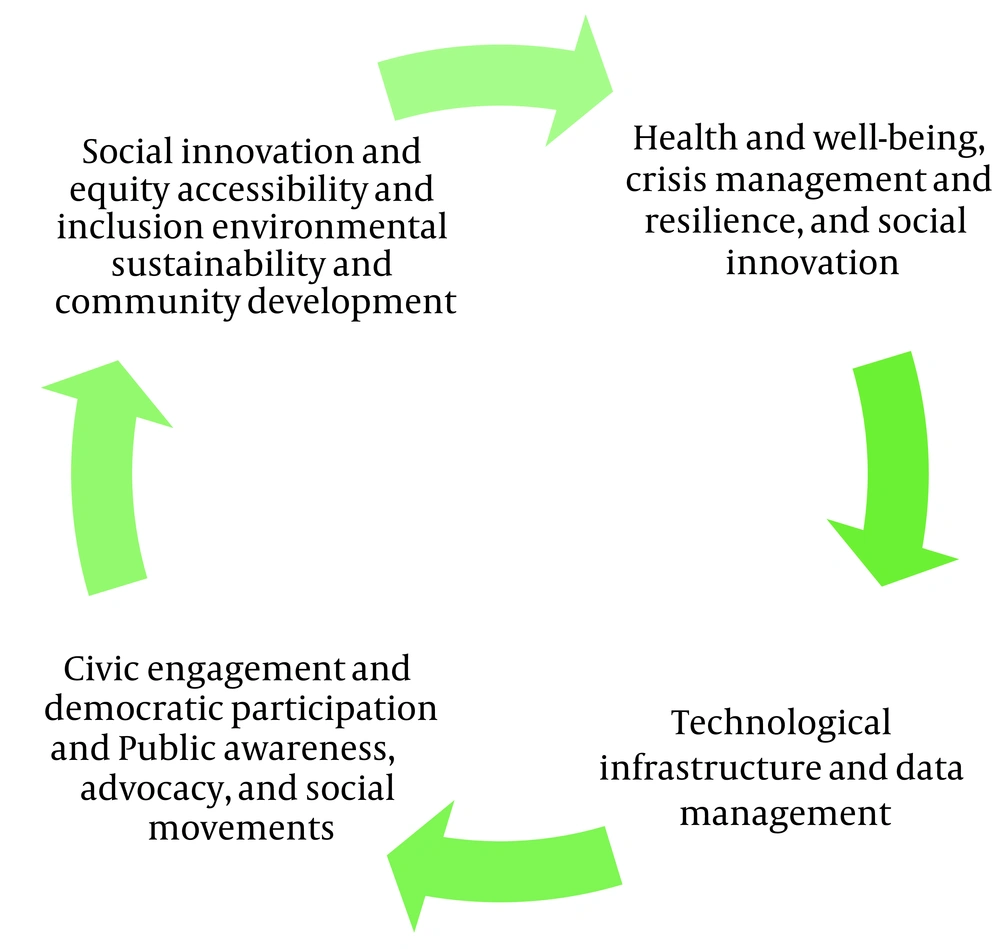
Figure 1.
Conceptual framework of the interconnected roles of artificial intelligence (AI) in enhancing social participation for community-based health promotion
4.2.1. Infrastructure as the Enabler
- Technological infrastructure and data management form the foundational layer of the system. Without reliable, ethical, and inclusive digital infrastructure — including internet access, interoperable platforms, and data governance frameworks — AI applications in any domain remain constrained.
- Participants emphasized that digital literacy and equitable access are prerequisites for inclusive AI deployment and meaningful participation.
4.2.2. Pathways to Participation and Empowerment
- Civic engagement and democratic participation, along with public awareness, advocacy, and social movements, represent mechanisms for activating informed, empowered communities.
- The AI tools such as sentiment analysis, participatory dashboards, and real-time civic education platforms enhance these processes by promoting transparency, public voice, and accountability.
- These components foster two-way communication between citizens and institutions, strengthening democratic and participatory governance.
4.2.3. Social and Environmental Justice Drivers
- Social innovation and equity, accessibility and inclusion, and environmental sustainability and community development represent AI’s role in addressing structural inequalities and building inclusive, sustainable futures.
- These themes are mutually reinforcing: For instance, sustainable development requires inclusive design, and equity analytics depend on accessible platforms and disaggregated data.
- Participants highlighted how AI-driven mapping, translation tools, and algorithmic audits were used to amplify marginalized voices and improve decision-making at the local level.
4.2.4. Health and Community Resilience as Core Outcomes
- At the heart of the framework are health and well-being, crisis management and resilience, and intersecting elements of social innovation.
- These domains reflect how AI can be deployed for predictive health analytics, behavioral nudging, mental health outreach, and disaster preparedness, especially in underserved areas.
- As participants noted, community-centered AI systems that prioritize public health outcomes are key to building resilient and responsive social systems in the face of crises.
Figure 1 depicts a circular model with four main thematic clusters, interconnected through directional arrows. This design captures the cyclical and interactive nature of AI’s role in community-based health promotion. By moving through this loop — from infrastructure to participation, to justice, and ultimately to health outcomes — AI acts as a socio-technical enabler, bridging digital innovation with civic empowerment and public well-being. The model highlights the need for inclusive, context-aware, and ethically grounded AI strategies that can adapt to local realities while advancing broader goals of equity and participation.
These eight themes collectively form an integrated and dynamic conceptual network. AI not only enhances each theme individually but also serves as a catalyst at their intersections, driving the development of healthier, more inclusive, and resilient communities. A deep understanding of these interconnections is essential for designing effective policies and interventions that foster sustainable, community-driven outcomes.
5. Discussion
This study fills a significant gap in existing research by focusing specifically on how AI can enhance social participation and community-based health — a domain often overlooked in favor of purely technical discussions. We foreground equity analytics and the potential of AI to enable fair access to resources and participatory opportunities, distinguishing our work from studies with mainly engineering or technical foci. Additionally, by citing recent publications in leading journals such as JMIR over the past two to three years (35-37), we strengthen the empirical foundation and situate our contribution within the most current scholarship.
5.1. Key Themes and Critical Reflection
5.1.1. Civic Engagement and Democratic Participation
Findings and earlier studies agree that inclusive civic engagement and democratic governance are essential for AI to fulfill its promise in health promotion. Tools like sentiment analysis, participatory dashboards, and citizen science (e.g., “Our Voice”) empower citizens and allow communities to influence health policy (38, 39). However, there are limitations: Many initiatives are context-specific and may not scale uniformly; power imbalances persist that can reduce real influence for marginalized groups. Moreover, ethical issues around data ownership and transparency are under-explored in existing work (38, 39).
5.1.2. Social Innovation and Equity
The literature confirms that AI, coupled with frameworks for social innovation and equity, can reduce health disparities and enable culturally sensitive digital health solutions (38, 40, 41). Co-design with marginalized communities enhances trust and relevance (42, 43). Nonetheless, caution is needed: Innovation without strong community input risks reinforcing existing inequities. Data bias, underrepresentation, or overlooking socio-cultural norms may lead to interventions that are ineffective or even harmful in some settings (44, 45).
5.1.3. Health and Well-being
The AI applications (personalized messaging, behavior change, real-time analytics) show promise in improving health outcomes and resilience (38, 46). Tools like chatbots and advanced language models help combat misinformation and improve health literacy (38, 43, 47). But actual benefit depends on access, trust, and literacy. Populations lacking digital literacy or reliable connectivity may not gain the same advantages, potentially widening health gaps rather than narrowing them.
5.1.4. Technological Infrastructure and Data Management
Strong infrastructure, robust data governance, interoperability, and secure systems are foundational for all other themes (48-50). Regions with weaker infrastructure face major barriers to implementation. Ethical and security concerns, however, must be addressed: Ensuring privacy, guarding against data misuse, and transparency about AI models. Without these, even well-designed systems may fail socially or morally.
5.1.5. Crisis Management and Resilience
The AI can greatly improve emergency detection, resource allocation, and real-time decision support (51), and assist with simulation and preparedness efforts (52). Yet in crisis settings, the risk of misuse, lack of oversight, or rapid deployment without proper validation can lead to harm — if AI models are poorly tested or misaligned with local context.
5.1.6. Environmental Sustainability and Community Development
The AI can support environmental monitoring, urban planning (green spaces, heat island mitigation), and community empowerment around ecological decisions (53, 54). Critical considerations include the environmental cost of running large AI systems (energy consumption), and access inequities — environmental AI tools may be available in high-resource areas but not where they are often needed most.
5.1.7. Accessibility and Inclusion
The AI may remove language, mobility, sensory, and literacy barriers if design is inclusive (55); frameworks like EDAI promote embedding inclusion throughout design and deployment (56). However, many AI systems still underrepresent voices of those with disabilities, rural dwellers, or other marginalized groups in both design and data. Legal, infrastructural, and policy barriers remain substantial.
5.1.8. Public Awareness, Advocacy, and Social Movements
The AI amplifies advocacy by enabling public awareness campaigns, analyzing public sentiment, countering misinformation, and supporting community mobilization (27, 38). Potential drawbacks include the possibility of algorithms being manipulated, biases in which narratives are amplified, and communities lacking control over how data about them is used.
Beyond summarizing themes, this study integrates findings within broader theoretical and policy debates. We draw on theories of participatory governance, justice, and socio-technical systems to show how AI is not merely a tool but part of a system that can either mitigate or exacerbate structural inequalities depending on its design and implementation. Compared to earlier work that often reports success stories without critical evaluation, our research provides a more balanced view — highlighting both promise and risk, and urging ongoing empirical validation, ethical oversight, and policy frameworks to ensure equitable outcomes.
In conclusion, this study confirms the multifaceted potential of AI to enhance social participation and improve health outcomes at the community level — through civic engagement, innovation, resilience, and inclusion. Crucially, realizing this potential depends on recognizing limitations: Algorithmic bias, digital exclusion, ethical risks, and context specificity. For policy and practice, the implications are clear: Design participatory, fair, transparent AI systems; invest in infrastructure; monitor outcomes critically; and ensure marginalized populations are not merely beneficiaries, but active partners in shaping AI for health.
5.2. Conclusions
This study provides a comprehensive understanding of the transformative role of AI in enhancing social participation for community-based health promotion. Drawing from the perspectives of interdisciplinary experts, the findings demonstrate that AI is not merely a technological tool but a strategic enabler of inclusive, participatory, and health-oriented social systems. The AI’s contribution to civic engagement and democratic participation is especially impactful. By creating accessible, interactive, and transparent platforms, AI facilitates informed and active citizenry, strengthening democratic processes. These platforms enable real-time feedback, broaden civic discourse, and support evidence-based decision-making at the community level.
The integration of AI into social innovation and equity initiatives highlights its potential to address structural inequalities, particularly for marginalized populations. Through data-driven needs assessments, inclusive design, and community co-creation, AI fosters interventions that are context-sensitive, culturally relevant, and socially just. This positions AI as a critical agent for advancing health equity and social justice.
In the domain of health and well-being, AI emerges as a key facilitator of personalized care, early intervention, and population health management. Applications such as behavioral nudging, mental health outreach, and community-driven health platforms empower communities to actively shape their health outcomes.
At the core of these advancements lies the imperative of robust technological infrastructure and ethical data governance. Secure, interoperable, and equitable systems are foundational to realizing AI’s promise, emphasizing the need for sustained investment in digital capacity-building and cross-sector collaboration.
The AI also plays a pivotal role in crisis management and community resilience. Its ability to synthesize large-scale real-time data enables anticipatory action, rapid resource mobilization, and sustained recovery efforts during public health crises and environmental disasters, thus strengthening both immediate response and long-term adaptive capacity.
Furthermore, AI supports environmental sustainability and community development by facilitating data-informed planning, optimizing resource use, and enabling participatory governance. When aligned with local knowledge and sustainability principles, AI can catalyze innovations that promote ecological justice and healthier living environments.
The study further underscores the essential role of accessibility and inclusion. The AI can dismantle barriers to civic and health participation when systems are co-designed with attention to people with disabilities, language minorities, and underserved populations. Inclusive AI design ensures participation is meaningful and empowering, not merely nominal.
Finally, in public awareness, advocacy, and social movements, AI offers powerful tools for narrative building, sentiment analysis, and strategic mobilization. These capabilities enhance grassroots organizations’ and community leaders’ efforts to advocate for change, hold institutions accountable, and foster collective action.
In summary, while AI holds immense potential to advance social participation as a cornerstone of community-based health promotion, realizing this potential demands intentional, ethical, and participatory implementation strategies. Policymakers, technologists, and community stakeholders must collaborate to align AI development with principles of equity, transparency, and collective well-being.
5.3. Future Directions and Policy Implications
5.3.1. Policy and Socio-technical Design
The findings highlight the need for policy frameworks that explicitly prioritize equity, transparency, and inclusiveness when integrating AI into health and social participation programs. Multi-stakeholder collaborations involving community representatives, AI developers, social scientists, and health professionals are essential to co-design AI tools that reflect community values and address local needs.
5.3.2. Long-Term Monitoring and Evaluation
Continuous and longitudinal monitoring mechanisms should be established to assess AI’s impact on social participation and community health outcomes over time. Incorporating both quantitative and qualitative metrics will enable adaptive policy-making and program adjustments in response to emerging challenges and opportunities.
5.3.3. Ethical Governance and Data Privacy
Embedding robust ethical oversight into AI applications related to community health is critical. This includes addressing algorithmic bias, data privacy concerns, and ensuring data security. Developing clear ethical guidelines and participatory governance models will help build public trust and ensure legitimacy.
5.3.4. Development of Participatory Frameworks
Creating participatory frameworks that actively engage marginalized and vulnerable groups is necessary to empower communities, foster collective ownership, and prevent the exacerbation of existing social inequalities.
5.3.5. Interdisciplinary Collaboration
Promoting and incentivizing interdisciplinary research and practice is vital for bridging the gap between technical AI innovation and social health goals. Cross-sector collaborations leveraging diverse expertise will facilitate sustainable, equitable, and socially responsive AI integration.
5.4. Limitations and Control Methods
This study offers valuable insights into AI’s role in enhancing social participation for community-based health promotion, yet several limitations should be acknowledged. The relatively small and purposively selected sample (28 participants) with limited demographic diversity constrains the generalizability of the findings, despite the inclusion of interdisciplinary experts to enrich thematic depth. Future research would benefit from larger, more diverse samples to enhance representativeness. Additionally, the geographic focus of the study may limit cultural and contextual applicability, although the emphasis on universal themes such as equity and civic engagement supports broader relevance. Cross-cultural investigations are recommended to explore contextual variations in AI’s social impact.
The study’s broad, interdisciplinary approach prioritized conceptual insights over technical specificity, leaving the comparative effects of distinct AI technologies unexplored. Moreover, participants’ professional backgrounds may introduce expert-centric biases that underrepresent the lived experiences of marginalized groups; thus, future work should employ participatory methodologies centered on community voices. The cross-sectional design restricts assessment of long-term AI impacts, highlighting the need for longitudinal studies to evaluate sustained effects on health equity and social cohesion.
While qualitative methods provided depth and nuance, their inherent limitations in statistical generalizability remain. This was mitigated through rigorous coding, triangulation, and peer review, yet mixed-method approaches could further strengthen future research. Ethical concerns such as privacy, algorithmic bias, and surveillance were acknowledged but warrant deeper investigation within justice-oriented frameworks to ensure AI respects community autonomy and digital rights.
Finally, the rapid evolution of AI technologies poses challenges to the longevity of findings. This study addressed this by focusing on enduring principles — such as inclusion, transparency, and empowerment — while recognizing the need for ongoing research adaptation. Overall, despite typical qualitative research constraints, the study’s methodological rigor and interdisciplinary perspective provide a strong foundation for future, more inclusive, and methodologically diverse investigations in the dynamic field of AI and community health.


