
1. Context
Mass gatherings have long been recognized as challenging environments for public health systems because of the combination of high population density, extensive mobility, environmental exposures, and increased pressure on healthcare and emergency response services (1, 2). Religious pilgrimages, sporting events, festivals, and other large public gatherings can facilitate the rapid spread of infectious diseases, increase the likelihood of crowd-related injuries, and strain local health infrastructure, particularly when preparedness and surveillance systems are limited (1, 3). These challenges became even more evident during and after the COVID-19 pandemic, which highlighted the importance of rapid surveillance, early outbreak detection, and coordinated operational responses in large-population settings (4, 5).
Among contemporary mass gatherings, the Arbaeen pilgrimage represents one of the largest annual human gatherings worldwide. Millions of pilgrims travel long distances over several days, often under conditions of extreme crowd density, environmental heat stress, temporary accommodation, and variable access to healthcare services. Conventional approaches to mass-gathering health management are often insufficient to address rapidly changing crowd dynamics and real-time health threats in very large gatherings (3).
In recent years, advances in artificial intelligence (AI), machine learning (ML), digital epidemiology, and computer vision technologies have created new opportunities to improve public health monitoring and operational decision-making during mass gatherings. A growing body of literature has examined AI-based approaches for crowd surveillance, abnormal behavior detection, crowd density estimation (6), disease forecasting (7), and emergency medical services (EMS) planning (8, 9). Deep learning models, such as convolutional neural networks (CNNs), graph convolutional neural networks, and recurrent neural network architectures, have shown promising performance in analyzing complex visual and temporal data generated in crowded environments (8, 10). Several studies conducted during the Hajj pilgrimage have demonstrated the potential of AI-driven crowd density estimation systems to monitor overcrowding and support crowd safety management (11, 12). Other investigations have examined AI-assisted surveillance methods to identify abnormal or violent crowd behavior and improve situational awareness in dense public settings (8, 9).
AI can help tailor public health frameworks to the epidemiological and operational realities of Arbaeen. Therefore, this review aimed to synthesize current evidence on AI and ML applications relevant to mass gatherings to better understand how existing AI applications can contribute to mass-gathering health management, identify major functional and operational gaps in the literature, and propose an integrated framework adapted to the unique characteristics of the Arbaeen pilgrimage.
2. Evidence Acquisition
2.1. Study Design
This study was conducted in 2026 at the Iran University of Medical Sciences as a structured scoping review to map current applications of artificial intelligence (AI) and machine learning (ML) in mass-gathering health management and to identify their potential applicability to the Arbaeen pilgrimage context.
This review followed the Joanna Briggs Institute (JBI) guidelines for scoping reviews and was reported in accordance with the PRISMA-ScR guidelines. Because the review was exploratory and the included studies used different methods, we did not conduct a formal critical appraisal or risk-of-bias assessment, as recommended by JBI (13, 14).
Given the emerging, multidisciplinary, and methodologically heterogeneous nature of the available literature, a scoping review approach was considered more appropriate than a conventional systematic review or meta-analysis. The review was designed to identify major technological domains, operational functions, implementation gaps, and the public health implications of AI-based systems in mass gatherings.
2.2. Search Strategy
A structured literature search was performed between January and March 2026 using the following electronic databases: PubMed, Scopus, Web of Science, and Google Scholar. The search strategy combined controlled vocabulary terms and free-text keywords related to artificial intelligence, machine learning, public health surveillance, crowd monitoring, emergency preparedness, predictive analytics, and religious mass gatherings. Representative search combinations included terms such as “artificial intelligence AND mass gathering,” “machine learning AND Hajj,” “crowd surveillance AND deep learning,” “predictive modeling AND public health preparedness,” and “digital epidemiology AND pilgrimage.” The reference lists of relevant studies were also manually screened to identify additional eligible publications.
Search terms were developed in stages, starting with the review objective and refining them after initial PubMed searches. To maximize retrieval, we included both controlled vocabulary (Medical Subject Headings [MeSH], when relevant) and free-text terms. Synonyms and related terms were identified by reviewing keywords, titles, abstracts, and indexing terms in key articles and by examining earlier studies on artificial intelligence, public health surveillance, and mass gatherings. Boolean operators (AND/OR) were used, and the search syntax was tailored for each database.
The complete PubMed search strategy is provided in Appendix 1 to facilitate reproducibility of the review.
In addition to searching electronic bibliographic databases, we conducted a limited gray literature search using Google Scholar. We manually checked the reference lists of relevant publications to identify studies that might not be indexed in the main databases. Conference abstracts, dissertations, reports, and other non-peer-reviewed documents were screened when relevant. However, only peer-reviewed full-text articles that met the eligibility criteria were included in the final synthesis to ensure methodological consistency.
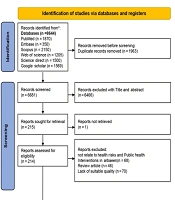
The initial search identified 326 records, including 92 from Scopus, 81 from PubMed, 67 from Web of Science, and 86 from Google Scholar.
2.3. Eligibility Criteria and Study Selection
Studies were considered eligible if they reported the application of AI, ML, deep learning, or computational intelligence approaches in mass-gathering or population-scale public health settings. Eligible studies included applications in crowd surveillance, behavioral monitoring, disease prediction, emergency medical service optimization, syndromic surveillance, digital epidemiology, and healthcare operations management. Religious gatherings, sporting events, festivals, epidemic settings, and large-scale public events were considered relevant operational contexts.
Studies without a substantial AI component, studies focused exclusively on unrelated clinical applications, and publications lacking operational or public health relevance to mass gatherings were excluded. Only peer-reviewed English-language publications were included. After title and abstract screening, the full texts of potentially relevant studies were reviewed. A total of 20 studies were ultimately included in the final synthesis based on methodological relevance and applicability to AI-enabled public health management in mass gatherings.
Gray literature sources were reviewed during the search; however, only those meeting the eligibility criteria for peer-reviewed scientific publications were included in the formal synthesis.
2.4. Study Screening and Selection
The literature search identified 326 records in PubMed, Scopus, Web of Science, and Google Scholar. After removing 74 duplicates, 252 unique articles remained for title and abstract screening.
Two reviewers independently screened all records using the predefined eligibility criteria. Disagreements were resolved through discussion until consensus was reached.
After title and abstract screening, 46 articles were considered potentially eligible and were reviewed in full. Of these, 26 were excluded because they did not focus on artificial intelligence in mass-gathering health, were not relevant to public health management, or were methodological reports without real-world AI application.
Ultimately, 20 studies met all criteria and were included in the final qualitative analysis.
2.5. Data Extraction and Synthesis
Two reviewers independently extracted data using a standardized form developed for this study. Extracted information included the study setting and design, AI methods, mass-gathering context, operational domain, public health function, main findings, and relevance to the Arbaeen pilgrimage. Any discrepancies were resolved through discussion until agreement was reached.
The synthesis was conducted in three analytical stages. First, a descriptive synthesis of study characteristics was performed to summarize the overall landscape of AI applications in mass gatherings. Second, a function-level synthesis categorized studies by their dominant operational role, including detection and surveillance, predictive analytics, and response or decision support systems. Third, a gap-oriented conceptual synthesis was conducted to identify structural limitations in current AI applications and to develop a proposed integrated AI-enabled public health framework for the Arbaeen pilgrimage.
To develop Table 1, two investigators independently reviewed each included study to identify its primary functional role in the AI-enabled public health process. Studies were grouped by their main operational function: detection and surveillance, prediction and forecasting, or response and decision support. Using a standard data extraction form, we also collected details on the main problem addressed, data sources, AI methods, key outputs, public health impact, and any reported limitations. Disagreements regarding study classification or data extraction were resolved through discussion until both investigators agreed.
Table 1.
Function-Level Synthesis of AI Applications in Mass Gatherings
| ID | Studies | Core Problem | Data Used | AI / Analytical Method | Functional Layer | Primary Output | Public Health Contribution | Key Limitation |
|---|---|---|---|---|---|---|---|---|
| 1 | Behera, 2023 (9) | Limited understanding of complex crowd dynamics in dense environments | Surveillance video datasets | Deep Graph Convolutional Neural Network (Graph CNN) | Detection + Behavioral Characterization | Crowd movement and behavioral patterns | Supports real-time situational awareness and crowd safety monitoring in high-density gatherings | Limited validation in real-world operational mass gatherings |
| 2 | Habib, 2021 (8) | Delayed identification of abnormal or violent crowd behavior | Surveillance video streams | Deep Convolutional Neural Network (CNN) | Detection | Behavioral anomaly alerts | Enables early detection of potentially dangerous crowd activities to support injury prevention and security response | Performance affected by environmental variability, occlusion, and lighting conditions |
| 3 | Bhuiyan, 2021 (11) | Overcrowding and crowd crush risk during Hajj pilgrimage | Hajj surveillance video datasets | Deep CNN | Detection | Real-time crowd density maps | Supports early identification of overcrowding hotspots and crowd safety risk reduction | Dataset restricted to Hajj-specific crowd structures |
| 4 | Bhuiyan, 2022 (10) | Need for accurate automated crowd density classification | Hajj crowd image datasets | Fully Convolutional Neural Network (FCNN) | Detection + Classification | Density stratification (low/moderate/high risk) | Enables automated overcrowding warning systems for pilgrimage management | Not integrated with healthcare or emergency response systems |
| 5 | Tripathi, 2021 (16) | Identification of violent or hazardous crowd activity | Surveillance feeds from dense crowds | CNN-based deep learning | Detection | Suspicious activity and violence detection | Supports public safety surveillance and rapid identification of hazardous crowd conditions | Limited external validation across diverse crowd environments |
| 6 | Bhuiyan, 2022 (12) | High-density crowd risk estimation in pilgrimage settings | Hajj image datasets | Deep Dilated CNN | Detection + Classification | High-resolution crowd density estimation | Enhances risk stratification and monitoring of extreme crowd congestion | Limited evidence for real-time operational deployment |
| 7 | Gazzawe, 2024 (20) | Crowd congestion and inefficient mobility during Hajj | Traffic flow and mobility datasets | AI optimization algorithms | Monitoring + Operational Optimization | Crowd flow and congestion optimization | Reduces congestion-associated risks and improves mobility safety in pilgrimage environments | Operational scalability and real-time adaptability require further evaluation |
| 8 | Yom-Tov, 2014 (17) | Delayed outbreak detection in mass gatherings | Internet search queries and social media data | Digital epidemiology and syndromic surveillance analytics | Surveillance | Early outbreak signals | Demonstrates feasibility of internet-based early warning systems for infectious disease surveillance during mass gatherings | Limited specificity and lack of direct clinical validation |
| 9 | Elsheikh, 2021 (7) | Need for forecasting epidemic spread | COVID-19 epidemiological time-series data | Long Short-Term Memory (LSTM) deep learning | Prediction | Epidemic forecasting curves | Supports epidemic preparedness and anticipatory public health planning | Developed outside mass gathering operational settings |
| 10 | Allgaier, 2019 (22) | Emergency medical service overload during mass gatherings | Historical event and EMS datasets | Statistical predictive modeling + ML approaches | Prediction + Planning | EMS demand prediction | Supports healthcare resource allocation and preparedness planning during large events | Limited integration with real-time surveillance systems |
| 11 | Ragab, 2023 (19) | High patient influx and healthcare data complexity in emergency departments | Hospital emergency department datasets | Machine learning classification models | Monitoring + Clinical Surveillance | Automated patient classification | Supports syndromic monitoring and early recognition of healthcare surges during high-volume events | Primarily hospital-based and not crowd-integrated |
| 12 | Singh, 2025 (2) | Extreme healthcare demand during mega-religious gatherings | Operational emergency healthcare system data | Digital healthcare systems and operational technologies | Response + Operational Management | Emergency healthcare coordination | Demonstrates integration of technology-assisted emergency care delivery in large-scale religious gatherings | Limited AI-driven predictive integration |
| 13 | Suryanarayanan, 2021 (4) | Monitoring large-scale public health interventions | Global policy and intervention datasets | Natural Language Processing (NLP) + machine learning | Surveillance Intelligence | Public health intervention monitoring | Enables AI-assisted tracking of non-pharmaceutical interventions and public health responses | Indirect relevance to operational mass gathering management |
| 14 | Guru Rao, 2025 (21) | Fragmented public health surveillance systems | Multi-source health information systems | Ontology-based semantic AI framework | Integrated Intelligence Architecture | Structured surveillance interoperability | Proposes a layered semantic framework for integrated population health intelligence systems | Conceptual framework with limited operational deployment evidence |
| 15 | Song, 2022 (23) | Need for rapid disease detection during outbreaks | Clinical and epidemiological datasets | XGBoost machine learning | Prediction + Detection | Diagnostic feature identification | Supports early disease detection and outbreak-related diagnostic analytics | Not specifically designed for mass gathering contexts |
The findings from these analyses were summarized in three evidence tables and subsequently integrated into a conceptual operational framework illustrating interactions among the surveillance, prediction, and adaptive response layers within a continuous AI-driven public health system.
3. Results
3.1. Characteristics of Included Studies
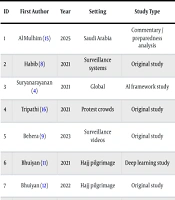
Table 2 summarizes the characteristics of the studies included in this review, with a focus on the application of artificial intelligence (AI) and machine learning (ML) approaches in mass-gathering environments and the associated public health and operational challenges. The included literature covers religious mass gatherings such as Hajj and Arbaeen, large-scale sporting events, music festivals, epidemic surveillance contexts, emergency healthcare systems, and crowd-monitoring infrastructures.
Table 2.
Characteristics of Included Studies on Artificial Intelligence Applications in Mass Gatherings and Public Health Systems Relevant to Arbaeen
| ID | First Author | Year | Setting | Study Type | AI / ML Method | Mass Gathering Context | Health Domain | Key Application | Epidemiological / Operational Contribution | Relevance to Arbaeen |
|---|---|---|---|---|---|---|---|---|---|---|
| 1 | Al Mulhim (15) | 2025 | Saudi Arabia | Commentary / preparedness analysis | Digital AI systems | FIFA World Cup | Emergency preparedness | AI-supported health security planning | AI in large-scale event preparedness, surveillance coordination, and emergency response planning | High |
| 2 | Habib (8) | 2021 | Surveillance systems | Original study | Deep CNN | Crowd monitoring | Crowd safety surveillance | Abnormal behavior detection | violent or abnormal crowd activities recognition in dense environments | High |
| 3 | Suryanarayanan (4) | 2021 | Global | AI framework study | NLP + machine learning | Public health interventions | Surveillance intelligence | Policy monitoring | AI-assisted monitoring of non-pharmaceutical interventions | Medium |
| 4 | Tripathi (16) | 2021 | Protest crowds | Original study | CNN framework | High-density crowd settings | Crowd health surveillance | Crowd risk tagging | tagging and identification of risky crowd conditions | High |
| 5 | Behera (9) | 2023 | Surveillance videos | Original study | Deep Graph CNN | Crowd surveillance | Crowd analytics | Crowd characterization | real-time characterization of crowd behavior and movement dynamics for safety monitoring | Very High |
| 6 | Bhuiyan (11) | 2021 | Hajj pilgrimage | Deep learning study | CNN | Pilgrimage crowd | Crowd safety | Crowd density estimation | Provides real-time density estimation | Very High |
| 7 | Bhuiyan (12) | 2022 | Hajj pilgrimage | Original study | Fully Convolutional Neural Network (FCNN) | Pilgrimage crowd | Safety monitoring | Density classification | crowd density stratification for congestion prevention | Very High |
| 8 | Bhuiyan (10) | 2022 | Hajj pilgrimage | Original study | Deep Dilated CNN | Pilgrimage crowd | Crowd monitoring | Density image classification | high-density crowd classification | Very High |
| 9 | Elsheikh (7) | 2021 | Saudi Arabia | Forecasting study | LSTM deep learning | Epidemic population | Infectious disease prediction | COVID-19 forecasting | time-series forecasting for epidemic trend prediction | Medium |
| 10 | Singh (2) | 2025 | India | Observational / operational report | Digital health technologies | Mahakumbh pilgrimage | Emergency healthcare systems | Pilgrim healthcare management | role of technology-supported emergency care systems | Very High |
| 11 | Yom-Tov (17) | 2014 | Mass gatherings | Observational study | Internet data mining | Festivals and Hajj | Digital epidemiology | Outbreak detection | syndromic surveillance and infectious disease detection using social media and search engine data | High |
| 12 | Spaepen (18) | 2023 | Music festival | Observational study | Health service data analytics | Electronic dance music festival | EMS systems | EMS burden analysis | Quantifies the impact of large festivals on emergency medical services and surrounding healthcare systems | Medium-High |
| 13 | Ragab (19) | 2023 | Saudi Arabia hospitals | ML classification study | Machine learning | Emergency department crowds | Syndromic surveillance | Patient classification | classification and monitoring of healthcare data | Medium-High |
| 14 | Gazzawe (20) | 2024 | Hajj transportation systems | Optimization study | AI optimization algorithms | Pilgrimage mobility | Crowd flow management | Traffic congestion reduction | optimization of crowd mobility and traffic flow | Very High |
| 15 | Mondal (5) | 2022 | Global | Exploratory review | Emerging digital technologies | Pandemic and mass gathering settings | Public health response | Technology-enabled pandemic control | outbreak control and mass gathering risk reduction | Medium |
| 16 | González-Alcaide (3) | 2020 | Global | Systematic analysis | Data analytics | Population surveillance | Public health surveillance | Surveillance systems | large-scale population surveillance and digital epidemiology systems | High |
| 17 | AlFattani (1) | 2021 | Saudi Arabia | Review | System-level public health analysis | Hajj-related preparedness context | Pandemic preparedness | Public health strategies | Highlights coordinated preparedness and infection-control strategies | High |
| 18 | Guru Rao (21) | 2025 | Multi-domain | Framework study | Ontology / semantic AI | Public health systems | Health intelligence | Semantic surveillance architecture | public health intelligence architecture integrating heterogeneous health data streams | High |
| 19 | Allgaier (22) | 2019 | Mass gathering events | Predictive modeling study | Statistical + ML models | Special event medicine | EMS preparedness | Resource prediction | prediction of emergency medical demand and allocation of medical resources | High |
| 20 | Song (23) | 2022 | COVID-19 setting | Machine learning study | XGBoost | Epidemic surveillance | Disease detection | Diagnostic marker prediction | early disease identification in outbreak settings | Medium |
AI-enabled approaches are used to enhance health surveillance, crowd safety, emergency preparedness, and operational decision-making in mass-gathering contexts. Across these studies, a wide spectrum of computational methods has been employed. A substantial proportion of the literature concentrates on several interrelated thematic domains, including crowd density estimation and flow analysis, anomaly and abnormal behavior detection, predictive modeling of health-related events and service demand, optimization of emergency medical services (EMS), and digital epidemiology and surveillance systems.
Among the contexts studied, religious mass gatherings, particularly the Hajj pilgrimage, represent the most extensively investigated setting for the application of AI technologies. Research in this domain has primarily focused on crowd safety management, congestion mitigation, surveillance system development, and healthcare preparedness under extreme population densities. In addition, several studies have examined the integration of wearable sensing technologies, mobile health tools, and AI-assisted clinical and operational decision-support systems to enhance real-time response capabilities during large-scale events. These findings suggest that AI technologies can support more proactive and adaptive public health interventions by enabling continuous, data-driven monitoring and predictive analytics.
However, despite these methodological and technological advances, the literature exhibits considerable heterogeneity in research objectives, operational settings, data sources, and levels of system implementation. The relevance assessment indicates that studies focusing on crowd surveillance, density estimation, mobility analytics, emergency response optimization, wearable sensing systems, and pilgrimage-related AI applications are most applicable to the Arbaeen context. These insights provide the conceptual and methodological foundation for the subsequent thematic synthesis and support the development of an integrated AI-enabled public health framework tailored to large-scale religious mass gatherings.
3.2. Function-Level Synthesis of AI Applications in Mass Gatherings
The function-level synthesis of high-relevance studies indicates that artificial intelligence (AI) applications in mass-gathering health contexts can be conceptually organized into three interrelated functional layers: (I) detection and surveillance, (II) prediction and forecasting, and (III) response and decision support. However, the current evidence base demonstrates an uneven distribution of research activity across these layers, suggesting that AI development in this domain remains functionally segmented rather than systemically integrated.
3.2.1. AI Applications in Detection
Detection-oriented tasks, such as those in crowd monitoring and surveillance settings, are the focus of most studies. These applications primarily address the real-time identification of crowd density conditions, overcrowding risks, abnormal or violent behaviors, and spatial risk patterns in high-density settings using deep learning architectures. Outputs typically include crowd density heatmaps, behavioral classification labels, or anomaly detection alerts. From a public health systems perspective, these AI applications are primarily optimized for signal detection and situational awareness but do not extend to translating these signals into coordinated public health actions.
3.2.2. AI Applications in Predictive Analytics
Predictive and forecasting models represent the second functional layer and include deep learning approaches such as Long Short-Term Memory (LSTM) networks, classical time-series models such as the AutoRegressive Integrated Moving Average (ARIMA) model, and ensemble machine learning methods such as XGBoost. These models are primarily applied to forecasting infectious disease trends, estimating emergency medical service (EMS) demand, and predicting crowd flow dynamics and congestion patterns. Consequently, although predictive capability is increasingly available, its operational translation into public health action remains limited.
3.2.3. AI Applications in Response and Decision-Support Systems
The smallest proportion of studies addresses the response and decision-support layer. These include AI-based frameworks for EMS resource allocation, hospital surge capacity planning, and operational decision-support systems in clinical or emergency management contexts. However, these studies are largely at a simulation or conceptual level, with limited empirical validation or real-world deployment in mass-gathering environments. Furthermore, weak integration between predictive outputs and response mechanisms is common, limiting applicability in dynamic operational settings.
3.2.4. System-Level Gap: Lack of Functional Integration
The absence of integrated AI systems that operationally connect the three functional layers—detection, prediction, and response—represents a structural gap across the reviewed studies, underscoring the need for real-time public health governance.
3.2.5. Summary of Findings
Results indicate that AI applications in mass gatherings are predominantly detection oriented, whereas in complex mass-gathering contexts such as the Arbaeen pilgrimage, real-time surveillance, forecasting, and coordinated response must operate as a unified system (Table 1).
3.3. Proposed AI-Enabled Public Health Framework for Arbaeen
The structural gaps identified in current artificial intelligence (AI) applications for mass-gathering health management motivate the proposal of an integrated AI-enabled public health framework tailored to the Arbaeen pilgrimage. Accordingly, the proposed framework conceptualizes Arbaeen public health management as a continuous, AI-driven operational intelligence ecosystem composed of interconnected surveillance, predictive, and adaptive response layers operating within a closed-loop architecture.
The proposed approach comprises five layers: 1) an integrated real-time multimodal surveillance layer, 2) a predictive public health intelligence layer, 3) an adaptive response and operational decision-support layer, 4) a closed-loop end-to-end AI architecture, and 5) an Arbaeen-specific contextual layer, as presented in Table 3.
Table 3.
Proposed AI-Enabled Public Health Framework for Arbaeen Based on Identified Gaps in the Literature
| Proposed Domain | Identified Gap in Current Literature | Proposed AI-Enabled Solution for Arbaeen | Relevant Technologies and Models | Expected Public Health and Operational Impact |
|---|---|---|---|---|
| Real-time Integrated Surveillance Systems | isolated functions | multi-source surveillance ecosystem | Deep CNN, Graph CNN, computer vision analytics, anomaly detection algorithms, IoT-enabled surveillance systems, mobility analytics | Early identification of overcrowding, hazardous crowd behavior, environmental stressors, and emerging health threats; enhanced real-time situational awareness and rapid risk detection |
| Predictive Public Health Intelligence Linked to Operations | rarely connected to operational preparedness or emergency response workflows | transforming real-time surveillance data into operational forecasts | LSTM networks, ARIMA forecasting models, machine learning prediction algorithms, spatiotemporal risk modeling, dynamic risk stratification systems | Early prediction of infectious disease transmission, heat-related illness, EMS demand surges, crowd congestion hotspots, and high-risk temporal or geographical zones |
| Adaptive Response and Decision-support Systems | underdeveloped, largely simulation-based, and insufficiently evaluated in real mass gathering environments | adaptive real-time decision-support systems | AI optimization algorithms, decision-support systems, intelligent EMS dispatch models, resource allocation algorithms, AI-assisted triage systems | Improved EMS deployment efficiency, accelerated triage prioritization, optimized emergency resource utilization, reduced operational delays, and enhanced response coordination |
| Integrated End-to-End AI Operational Architecture | poor interoperability and fragmented operational structures | unified end-to-end AI-driven operational architecture integrating detection, prediction, and response layers within a continuous adaptive feedback cycle | Interoperable AI platforms, integrated health information systems, federated data architectures, adaptive feedback learning models, cross-system interoperability frameworks | Continuous public health intelligence generation, coordinated risk management, system-wide operational efficiency, and enhanced multi-agency collaboration |
| Contextual Adaptation to Arbaeen Conditions | lack adaptation to the epidemiological, environmental, and logistical realities of Arbaeen | AI systems adapted to prolonged pilgrimage movement, extreme crowd density, temporary healthcare infrastructures, and variable communication conditions | Mobile health technologies, lightweight AI models, edge computing systems, cloud-based scalable infrastructures, wearable-assisted monitoring systems | Improved feasibility, sustainability, scalability, and real-world operational effectiveness of AI implementation during Arbaeen mass gatherings |
4. Conclusions
Artificial intelligence (AI) technologies are increasingly being incorporated into mass-gathering health management, including crowd surveillance, behavioral monitoring, outbreak detection, and emergency preparedness. However, a major limitation is that many systems remain stand-alone and task-specific, with insufficient integration into comprehensive public health operational frameworks.
Surveillance-oriented AI systems use deep learning and computer vision approaches to estimate crowd density, detect abnormal behavior, and monitor crowds in real time (8, 12, 16). In particular, studies conducted in Hajj settings demonstrated that convolutional neural networks (CNNs), graph-based neural networks, and density-classification models can effectively identify overcrowding conditions and potentially reduce the risk of crowd crush incidents (10, 11). Similar findings have been reported in recent reviews of deep learning–based crowd management systems (24). The emphasis on surveillance-oriented AI applications may reflect the greater maturity and accessibility of computer vision technologies compared with more complex decision-support systems. Crowd surveillance algorithms can be trained using publicly available image datasets and tested in controlled settings. In contrast, public health response systems must function across healthcare services, emergency management, and public authorities. This difference may explain why AI has advanced more rapidly in detection tasks than in supporting operational decisions.
Similar concerns have been raised in the broader public health AI literature, where insufficient interoperability among surveillance systems, healthcare services, and emergency management structures remains a major implementation challenge (25). Another important finding was the relatively limited operational integration of predictive analytics (7, 22, 23). Predictive approaches were particularly valuable in the contexts of infectious disease preparedness and emergency medical service (EMS) planning.
Nevertheless, most predictive models were developed without direct incorporation into operational decision-making systems. Predictive tools are important in public health, but they improve health outcomes only when their forecasts lead to action. For example, predicting disease spread, crowding, or EMS demand is useful when it informs resource allocation, staff assignment, or preventive measures. This review shows that translating predictions into action remains a major challenge for current AI systems used at mass gatherings and should be a key focus for future improvement.
This gap between predictive capability and operational implementation has also been identified (25, 26). Consequently, although predictive intelligence is increasingly available, its practical contribution to adaptive public health management remains underdeveloped. The review further demonstrated that only a limited number of studies addressed operational response optimization, EMS redistribution, clinical decision support systems, or surge capacity management (2, 15, 22). The limited focus on operational response likely reflects the complexity of implementing AI in real-world emergency management systems. Surveillance algorithms can be developed and tested using historical data, but response-focused AI requires coordination among multiple stakeholders, including healthcare providers, emergency medical services, public health authorities, and incident command systems. Integrating these organizations and their technologies remains challenging in most mass-gathering settings. This may help explain why response applications are less advanced than surveillance technologies.
Recent literature on AI-assisted disaster triage and emergency management suggests a need to transition from experimental AI models to deployable operational systems (6, 26). The proposed AI-enabled framework for Arbaeen was therefore developed to address this structural limitation by integrating a closed-loop public health intelligence architecture.
The Arbaeen pilgrimage creates complex epidemiological and logistical conditions. AI-based digital surveillance can improve the situation; however, important ethical and governance considerations, such as privacy, surveillance ethics, algorithmic bias, data ownership, and transparency (24), remain.
The findings indicate that improving artificial intelligence for mass-gathering health requires more than increasing the accuracy of individual algorithms. Greater public health benefits are expected when surveillance, prediction, and operational response are integrated into interoperable decision-support systems that facilitate real-time, evidence-based interventions. For Arbaeen, this approach is especially important because the long duration of the pilgrimage, shifting crowds, and geographically dispersed healthcare services require continuous coordination across multiple organizations rather than isolated technological solutions.
4.1. Strengths and Limitations
This study has several important strengths. First, it focused on the application of artificial intelligence to mass-gathering public health. Second, it categorized AI applications into surveillance, predictive, and response domains, thereby enabling the identification of structural gaps across existing systems. Third, it highlighted that AI technologies may support future public health preparedness for complex mass gatherings such as Arbaeen. Finally, it provides direction for future operational research and the development of AI systems in pilgrimage health management.
The study has several limitations, including heterogeneity in methodologies, AI models, operational settings, study objectives, and outcome measures. Another important limitation is the relatively small number of studies specifically addressing prolonged religious pilgrimages. Consequently, further operational and implementation-focused research is needed to evaluate the feasibility, scalability, and effectiveness of AI-enabled public health systems in real-world pilgrimage environments.
A limited gray-literature search was also included to improve the comprehensiveness of the review. However, the final synthesis focused only on peer-reviewed publications to ensure methodological consistency and maintain scientific quality.
4.2. Conclusions
Artificial intelligence is playing an increasingly important role in mass-gathering health management by supporting crowd monitoring, risk prediction, emergency planning, and decision-making. However, most current AI tools remain poorly integrated, often operate in isolation, and are rarely deployed together in real-world religious mass gatherings.
Building on these findings, this study proposes an integrated AI-enabled public health framework designed for the specific needs of the Arbaeen pilgrimage. The framework focuses on real-time monitoring across multiple data sources, predicting public health risks, supporting adaptive decision-making, and learning from ongoing feedback, all within a single system.
In practice, this framework could help public health authorities, emergency medical services, pilgrimage organizers, and policymakers improve preparedness, allocate resources more efficiently, enhance crowd safety, identify health threats earlier, and respond more effectively to emergencies during the Arbaeen pilgrimage. It may also provide a useful model for AI-supported health management at other large religious or mass gatherings and for evaluating the scalability of integrated AI-enabled public health systems in real-world settings.