
1. Background
Surgery is one of the most important events in modern life (1). More than 310 million major surgical procedures are performed annually worldwide (2). Most adult patients undergoing surgery have family members beside them (3). In addition, patients’ families have first-hand and valuable information about the patient’s wishes and requests (4). However, families experience high stress due to waiting time of opration, not being aware of the patient’s condition, and not being at the patient’s bedside. Experiencing an emergency patient situation is highly stressful for the family. The level of stress the family experiences during surgery is equal to the level of stress the patient himself/herself experiences (1).
Nurses, as the first line of contact with patients and their families, might ignore the fears, worries, and sufferings that families feel. Therefore, they will not be able to correctly identify the needs (and expectations) of families (5). Nurses who are aware of their patients and their families’ expectations can have a positive effect on their satisfaction with nursing care (6). Nurses should ask families about their needs and should not guess needs based on prior knowledge (4). Meeting expectations can cause satisfaction, and unfulfilled expectations indicate a need to improve services. Unrealistic expectations indicate that there is a need for better counseling to avoid unreasonable expectations of the healthcare delivery system (7). Moreover, failure to meet expectations reduces care satisfaction (8).
A literature review shows that efforts have been made to demonstrate family needs or expectations to date (7, 9-12); however, there is a lack of qualitative research evidence (13-16) in this area. The term “expectations” encompasses several concepts and consists of different aspects of healthcare delivery (17). Studies with qualitative methodologies on explaining family needs and expectations can clarify the meaning of concepts, such as feeling hopeful, paying attention to the patient, and receiving respectful responses from staff. Reaching these concepts requires a deep understanding of the family’s viewpoint of concepts, such as hope, concern, and respect (14). Therefore, a qualitative study is needed to achieve the aim of the present study because the purpose of qualitative studies is to discover the complex concepts that nurses, patients, and other healthcare providers face (15). Accordingly, a qualitative research approach was chosen using content analysis (18).
2. Objectives
The present study was aimed to explain the expectations of the families of patients undergoing surgery.
3. Methods
Since the researchers aimed to discover the meaning of the expectations of the families of patients undergoing surgery and identify the expectations of families, they chose the qualitative research approach with the conventional content analysis method. The research population included the families of patients undergoing surgery. Individuals were selected as the main participants provided that a family member was soon undergoing surgery, was currently undergoing surgery, or had a short period after surgery. The sampling method was purposive sampling. Sampling ended when no new categories appeared. In-depth and semi-structured personal interviews and open questions were used to collect the data. The interviews were conducted by the first author (M.A.). The interviews were conducted with 25 patients’ family members. Three nurses and one surgeon were also interviewed to increase the validity of the study. The interviews were conducted at the hospital, mainly in surgery wards (i.e., the natural location of the experience of surgical phenomenon for the families). The consent of interviewees and hospital management was obtained. The interviews were recorded and transcribed up to 24 hours after the interview. The interviews lasted 30 to 60 minutes. A total of 29 interviews were conducted. All the interviews were conducted in Tehran, Iran, and in private and public hospitals. The interviews were conducted in 2019.
The interview started with a general question: “What is your experience or feeling about your family member’s surgery?” and continued with questions such as the following:
“What effect does the family member surgery have on your life?”
“What do you expect from the surgery of your family member?”
“What do you expect from a nurse, doctor, or hospital?”
Box 1 shows interview questions. Probing questions, such as “can you explain more about it?” and “what do you mean by this sentence?”, were also used. Data collection was completed when all categories were finished, and no new categories appeared.
Box 1.
Interview Guide
| Questions |
|---|
| Questions for Family |
| What is your experience or feeling about your family member’s surgery? |
| What effect does the family member surgery have on your life? |
| What do you expect from the surgery? |
| What do you expect from a nurse, doctor, or hospital? |
| Questions for Nurses and Surgeon |
| What do families expect from surgery? |
| What effect does surgery have on families? |
| How does the family experience surgery? |
| What does the family expect from a doctor, nurse, or hospital? |
Data analysis was started immediately after the first interview and continued simultaneously with the data collection process. The analysis model used in this study was the Elo and Kyngas model (18). The process involved open coding, category-making, and abstraction. Open coding was conducted by writing notes and titles in the text and then reading them. Important points were noted at the margin of the text to describe all the dimensions of the content in question. Then, the notes were collected and written on the coding sheets. Subsequently, the list of categories was determined. The purpose was to compress the data and reduce its quantity by grouping similar data. The categories were then identified by deductive content analysis and by data interpretation. Abstraction was also conducted by a general descriptive statement of the subject of research through creating categories. The naming of the categories was performed with words that represented the content of the category. The subcategories were classified together to form the main categories. The process of abstraction continued to the extent that it was reasonable and feasible.
This study used Graneheim and Lundman’s approach to data trustworthiness. Graneheim and Lundman recommend three criteria for establishing the data’s trustworthiness: Credibility, dependability, and transferability (19). The aim of trustworthiness was to support the argument that the inquiry’s findings are worth paying attention to. The trustworthiness of content analysis results depends on the availability of rich, appropriate, and well-saturated data. Improving the trustworthiness of content analysis started with thorough preparation before the study. Various techniques were used to increase the credibility of the findings. An attempt was made to observe maximum variation in sampling. Member check was also performed. The researchers tried to prevent their suppositions from affecting the interpretation of the findings. There was a long-term engagement with the data. The researchers tried to select the best sentences as the primary codes. To increase the dependability of the findings, the researchers asked an external researcher to comment on the data. To increase the transferability of the findings, the results were given to individuals who were not included in the study sample but had family surgery experiences, and the findings were compared and confirmed.
Memos were also used to complete the data and clarify the concepts. Accordingly, while categorizing the data and coding them, the raw data that were ambiguous were noted by the researcher and then further explored in subsequent interviews. Table 1 shows a sample memo, and Table 2 shows an example of data analysis.
Table 1.
A Sample Memo
| Sample Memo | |
|---|---|
| Meaning unit | “- I think that I have to respect her/him a lot in order to take care of my patient. I am afraid the nurse will stumble on me because I had an experience in a public hospital. I am afraid the nurse stumbles and does not do my job.” |
| Memo | What behavior has been observed in the nurse that the family is afraid of the nurse’s stubbornness and does not dare to express opinions and criticisms? |
Table 2.
An Example of Data Analysis
| Main Category | Generic Category | Subcategory | Sub-sub-category | Meaning Unit |
|---|---|---|---|---|
| Endless confusion | Struggle to calm down | Choosing spirituality | Reliance to God | “What can be done? You can only take refuge in God. Whatever God wants will happen.” |
| Endless confusion | Struggle to be seen | Fearing | Fear of protesting due to stubbornness/negligence of the nurse after the protest | “- I think that in order for the nurse to take care of my patient, I have to respect her a lot. I am afraid the nurse will stumble on me because I had an experience in a public hospital. I am afraid the nurse stumbles and does not do my job.” |
4. Results
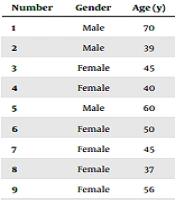
Most of the participants were female and were the wives, mothers, sisters, or children of patients. Most of the interviews were conducted after surgery. Most of the respondents were in the middle age group. The average age of the patients’ family members was 45 years. Table 3 shows the characteristics of the study participants.
Table 3.
Characteristics of Participants (n = 29)
| Number | Gender | Age (y) | Relationship with the Patient | Type of Surgery | Interview Time: Before, After, and During Surgery |
|---|---|---|---|---|---|
| 1 | Male | 70 | Brother | Femur fracture | After |
| 2 | Male | 39 | Spouse | Breast cancer | After |
| 3 | Female | 45 | Child | Spinal canal stenosis | During |
| 4 | Female | 40 | Sister | Cesarean section | After |
| 5 | Male | 60 | Father | Cleft palate repair | After |
| 6 | Female | 50 | Sister | Hysterectomy | After |
| 7 | Female | 45 | Sister | Leg fracture | After |
| 8 | Female | 37 | Sister | Leg fracture | After |
| 9 | Female | 56 | Child | Hemorrhoids | After |
| 10 | Female | 25 | Child | Pelvic fracture | After |
| 11 | Female | 41 | Child | Laminectomy | During |
| 12 | Male | 77 | Spouse | Laminectomy | During |
| 13 | Male | 48 | Spouse | Cervical herniated disc | After |
| 14 | Female | 36 | Sister | Cesarean section | After |
| 15 | Male | 35 | Spouse | Cesarean section | After |
| 16 | Female | 55 | Child | Pelvic fracture | After |
| 17 | Female | 33 | Child | Leg fracture | Before |
| 18 | Female | 51 | Sister | Hysterectomy | After |
| 19 | Male | 30 | Child | Hysterectomy | After |
| 20 | Female | 47 | Mother | Cesarean section | After |
| 21 | Female | 40 | Sister | Cesarean section | After |
| 22 | Female | 62 | Sister | Bowel surgery due to cancer | After |
| 23 | Female | 60 | Mother | Ovarian cysts | Before |
| 24 | Female | 33 | Child | Bone structure repair | After |
| 25 | Male | 26 | Child | Bone structure repair | After |
| 26 | Female | 33 | Nurse | ||
| 27 | Male | 24 | Nurse | ||
| 28 | Female | 28 | Nurse | ||
| 29 | Female | 42 | Physician |
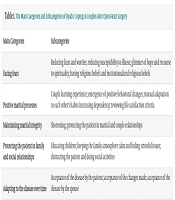
After conducting 29 interviews, 811 primary codes without overlap, 446 primary codes with overlap, 36 subcategories, 11 generic categories, and 4 main categories were extracted (Table 4).
Table 4.
Obtained Subcategories, Generic Categories, and Main Categories
| Main and Generic Category | Subcategory |
|---|---|
| 1- Endless confusion | |
| (a) Struggle to be optimistic | Fantasy expectations; magnified hope |
| (b) Trapped in a cage of tension | Bitter acceptance of surgery; being swallowed by ambiguous circumstances; self-blame |
| (c) Struggle to calm down | Choosing spirituality; ignoring worry; aimless and scattered look for information; looking forward to the end; looking for help; involuntary recalling of past memories |
| (d) Struggle to be seen | Fearing; always being ignored |
| (e) Lasting disappointment | Intentional ignorance of the family; meaninglessness expectations |
| 2- Giving the family a share in the care | |
| (a) Family control over the care | Notifying the family of all the care details; obtaining information from the family; access to the healthcare team |
| (b) Valuing the comments of family | Pain control as the basis of care; doing things well |
| 3- Exaggerated focus on obvious behaviors | |
| (a) Fear of not seeing cooperation | Absence of care coordination; teamwork skills failure |
| (b) Seeking sympathy | Being wishful for the nurse’s friendliness; trying to empathize with the nurse; desire to play the advocate role by the nurse; trying to trust the nurse; hope for the physician’s compassion; considering the patient as a human being |
| 4- Accepting the existence of the family | |
| (a) Permanent connection with the patient | Always be informed of the patient’s condition; a constant presence at the patient’s bedside |
| (b) Pleasant environment | Tolerable atmosphere; comfort; financial concerns; privacy; controlling obvious mistakes |
4.1. Main Category 1: Endless Confusion
This main category is about the difficult conditions that the family experiences. They face high stress and, at the same time, try to be seen; however, the effort is usually unsuccessful. Generic categories include the struggle to be optimistic, trapped in a cage of tension, struggle to calm down, struggle to be seen, and lasting disappointment.
(a) Struggle to be optimistic: Subcategories include fantasy expectations and magnified hope. Sometimes, the families consider the surgery a miracle. They have bizarre expectations of surgery, some of which might not be met after surgery.
“I expect that surgery makes my patient as he was before.” (P. 19, a family member)
If the surgery does not meet the expectation, the family will not accept such a result.
(b) Trapped in a cage of tension: Subcategories include bitter acceptance of surgery, being swallowed by ambiguous circumstances, and self-blame. Sometimes, families are hesitant to accept the surgery. This, along with the inherent unpleasantness of the surgery, makes most of them unhappy with their decision. Sometimes, the family’s sense of being forced to accept surgery ends with unreasonable decisions.
“Sometimes the families are forced to accept the surgery, it can make their condition worse.” (P. 26, a nurse)
Family experiences emotions, such as “prolonged moments during surgery” (P. 18), “being overwhelmed by stress” (P. 9), and “a sense of helplessness” (P. 13). Sometimes, families blame themselves for an incident that has harmed the patient or necessitated surgery.
“Sometimes, I feel guilty. My mother fell ill due to her children.” (P. 24, a family member)
(c) Struggle to calm down: Subcategories include choosing spirituality, ignoring worry, aimless and scattered looking for information, looking forward to the end, looking for help, and involuntary recalling of memories. One of the most common ways to reduce stress is to choose spirituality. Sometimes, the family tries to deny, ignore or forget the surgical event, and therefore relieves the stress. Education received from a physician and nurse or sometimes searching the Internet can reduce or even increase stress. Additionally, when the surgery is finished and the patient leaves the operating room, family stress is greatly reduced.
“I am happy to see the patient when she comes out of the operating room, and I see her healthy, now I am happy.” (P. 19, a family member)
The family considers healthcare team behavior as one of the ways to reduce stress and expects the nurse/physician to somehow contribute to reducing stress.
“Nurses gave us good feeling and hope.” (P. 24, a family member)
Almost all participants in the hospital recall their experiences with the hospital settings, especially bad ones.
“We were in hospital A. They had heart surgery. Nursing was awful.” (P. 1, a family member)
(d) Struggle to be seen: Subcategories include fearing and always being ignored. Nurses and physicians do not give families the opportunity to express reasonable demands. Sometimes, the family is afraid of expressing a protest. They do not find a supporter and are concerned about losing the services they receive.
“I always have to thank because the nurse does not care about me. Maybe, the nurse stubbornly does not do my job.” (P. 7, a family member)
Many participants pointed out that the nurse or physicians explicitly ignored family needs.
“We have to beg the nurses to take care of our patients.” (P. 22, a family member)
(e) Lasting disappointment: Subcategories include intentional ignorance of the family and meaningless expectations. The nurse’s failure to meet the family’s needs, the belief that the family should not expect, and ignoring the family cause the family to feel hopeless. Some participants compare Iranian nurses to those in other countries.
“I myself have never been in medical centers abroad, but I have heard many times that in overseas hospitals, staff and nurses are very kind.” (P. 9, a family member)
In addition, there is a myth that the family must not have expectations.
“What do I need here? I am just looking after my patient.” (P. 1, a family member)
4.2. Main Category 2: Giving the Family a Share in Care
The family expects to be involved in the care, to be asked for their opinion, and to be informed of all details. Generic categories include family control over the care and valuing the comments of the family.
(a) Family control over care: Subcategories include notifying the family of all the care details, obtaining information from the family, and having access to the healthcare team. Many families were unhappy with the treatment plan; they believed the family was not involved in the decisions.
“They must let us know about our patient’s condition.” (P. 21, a family member)
The family would like to receive any care information about their patient and the necessary instructions.
“We were not told that there was a pain control pump.” (P. 14, a family member)
Moreover, the family expects the nurse to be always available in the ward.
“At the night shift, all nurses slept.” (P. 1, a family member)
(b) Valuing the comments of the family: Subcategories include pain control as the basis of care and doing things well. The matter that greatly increases family stress is the uncontrolled pain after surgery or even before and the lack of pain relief.
“I want the patient not to have pain. This is the biggest problem after the surgery.” (P. 2, a family member)
However, the family’s unfamiliarity with the pain relief and the nurse’s authority to administer painkillers disrupts the nurse-family interaction.
“The family thinks that the patient should sleep all the first night after surgery comfortably.” (P. 26, a nurse)
In addition, the nurse’s proficiency is fully monitored by the family, and even the family states that postoperative care is more important than the surgery itself. Primary care is also important.
“Cleanliness care, using the bedpan, cleaning the blood coming from the surgery cut, and bed linen... These are important.” (P. 2, a family member)
Moreover, families have some expectations from physicians, including postoperative visits, anesthesiologist and consultant physician visits, considering the pain, and educating.
4.3. Main Category 3: Exaggerated Focus on Obvious Behaviors
This main category shows that the family judges and makes decisions based on what they see, such as the obvious and visible behaviors of health service providers. A lack of effective interactions within the healthcare team gives a sense of insecurity in the family and the patient. Additionally, the family tries to gain sympathy in a usually unsuccessful attempt. Generic categories include fear of not seeing cooperation and seeking sympathy.
(a) Fear of not seeing cooperation: Subcategories include the absence of care coordination and teamwork skills failure. Nurses’ lack of effective interaction with physicians is very evident, and families can easily realize it. Nurses also emphasized this issue.
“The doctor shouts, instead of thank us. He thinks we did not do the orders correctly.” (P. 26, a nurse)
In addition, unprofessional behaviors of the nursing staff, such as incomplete care transfer, were reported by the families.
(b) Seeking for sympathy: Subcategories include feeling wishful for the nurse’s friendliness, attempt to empathize with the nurse, desire to play the advocate role by the nurse, attempt to trust the nurse, hope for the physician’s compassion, and considering the patient as a human being. The codes suggest that nurses need to change their behavior to establish new relationships with the family and depart from the previous stereotyped patterns. Perceiving carelessness, violence, and disrespect are major barriers to effective nurse-family interaction and deprive families of their confidence. Nevertheless, nurses find themselves unable to meet much of the family’s expectations.
“There are so many expectations of families that the nurse cannot meet.” (P. 27, a nurse)
Families try to understand the nurse.
“Nurses are overworked individuals, with low pay and many duties.” (P. 8, a family member)
On the other hand, nurses have multiple roles, including advocacy and counselor roles.
“I think you should calm the patient down. Nurse should tell the family that we care for the patient.” (P. 26, a nurse)
The nurse’s proficiency, job experience, the way he/she communicates with the family, and the nurse’s decisiveness are the factors that play a crucial role in establishing a good relationship.
“You have to introduce yourself. You should tell the families that if you have a problem, inform me. Interaction is essential.” (P. 26, a nurse)
The family needs to trust the physician to receive the attention and affection of the physician and to be well-mannered behaved.
“When you support the patient and the family psychologically, the patient recovers sooner.” (P. 29, a surgeon)
The last subcategory is expecting a humanistic attitude from healthcare providers.
“I expect the hospital staff to not see the patient as a tool or a repetitive thing.” (P. 7, a family member)
4.4. Main Category 4: Accepting the Existence of the Family
This main category implies that the hospital setting must be designed in a way that at least one family member can constantly stay beside the patient, and the comfort of the family is also important. Generic categories include a permanent connection with the patient and a pleasant environment.
(a) Constant connection with the patient: Subcategories include always being informed of the patient’s condition and constant presence at the patient’s bedside. Physical contact between the family and the patient reduces their stress.
“I expect the hospital to understand. The nurses understand that the patient needs me to be there.” (P. 2, a family member)
One of the reasons for the family is the lack of trust in the nurse.
“I came here to look after my patient. I feel if I sleep, you do not care for my patient.” (P. 1, a family member)
In addition, the family tends to be involved in care in some way.
“I massage her when she has pain. When she has a fever, I always keep a cool napkin. I have a feeling that I can alleviate the pain.” (P. 18, a family member)
(b) Pleasant environment: These codes are about the physical setting and managerial matters, including tolerable atmosphere, comfort, financial concerns, privacy, and controlling apparent mistakes. Many hospitals have old, unreconstructed, gray, and dark buildings. Non-clean sheets and clothes, an unclean environment, and messed up beddings are the things that upset the family. Many hospitals are overcrowded. There is also constant noise pollution throughout the day and night.
“The space must be much happier. Everything is dark here. It has no sense of life.” (P. 14, a family member)
Many hospitals do not have assigned space for families. There are no chairs or beds available for relaxation, or they are not comfortable if they are available.
“We sat down in the lobby since the morning we arrived. There is no waiting room to sit there.” (P. 14, a family member)
Family facilities, such as access to tea, warm food, and a place to pray, are not anticipated or, if available, have minimal quality. All the above-mentioned items make the hospital environment frustrating, boring, and tedious.
“If I want to stay the night, I do not know where to rest.” (P. 3, a family member)
Hospital expenses are also a preoccupation for families.
“I just expected it to be less expensive.” (P. 9, a family member)
Many families would like their patient’s nurse to be the same gender or the male staff to inform them before entering the room.
“It is very different the nurse is a woman or a man. Sometime, we had a sick woman. I wanted to care for her. I felt like her family member who was a man would not like me to do it.” (P. 27, a nurse)
Some families have previous experiences with medical mistakes and are worried about their repetition. On the other hand, nurses find themselves defenseless against a doctor or hospital management.
“When I work in two or three shifts continuously, the risk of mistakes increases. When I make a mistake, they should not blame me because I am exhausted.” (P. 27, a nurse)
5. Discussion
The findings of the present study showed the main expectations of the families of patients undergoing surgery. Overall, it is up to the nurses to meet a large part of the family’s expectations because the nurse spends most of his/her time with them and has an understanding of the care environment that other staff lack (13).
The findings of the first main category showed that the family is in considerable confusion, anxiety, and chaos. Families unrealistically try to be optimistic about the surgery, bear a high level of stress, and at the same time, try to be seen and control their emotions. Considering the family based on the systemic theory, the stress of the family members is transferred to each other. Therefore, it is necessary to reduce it. On the other hand, the family tries to get close to health service providers, especially nurses, to express their wishes and expectations and, through them, to experience better feelings; nevertheless, in most cases, this effort is not successful. Sometimes, the family and nurses think that the duty of nurses and other hospital staff is only focused on the patient, and they have no duty regarding the family. Finally, the family’s unsuccessful efforts disappoint them because they are constantly rejected or ignored, which definitely adds to their stress.
Studies showed that the nurse is a specialized coordinator of patient care, and the main role is to meet the patient’s and the family’s needs individually and prepare them for the scheduled procedure and postoperative recovery. As a result, nursing care can positively impact patient and provider satisfaction, patient safety, quality of care, and cost savings (20). Another study of the family of critically ill children showed that the primary need of families is psychological care, especially in the early stages of injury or illness (21). Researchers also emphasized that there is a communication gap between the nurse, the patient, and the family. They showed that the presurgical environment in which patients and families interact is a complex, multidimensional environment. On the other hand, family members or patients deal with multiple individuals from different medical professions. Additionally, a patient undergoing surgery has several risk factors, which adds to the complexity of the situation (13).
The findings of the second main category refer to having a share in care by the family. The family tends to be involved in care in such a way that it has a sense of control over care. They would like to know all the details related to their patient’s treatment process. If they are not told about the treatment process, it adds to the family’s confusion. Families would also like to inform the care team of all the details about their patient history to ensure that the care is being provided well. Part of their contribution to care is to have regular and continuous access to care team staff, including nurses and doctors.
The second part of the main category is that the family expects their opinion to be included in patient care. The most critical issue here is to control the pain. The pain of the patient causes the family to be very upset. In other words, according to the families, the essential part of care is pain control. A large part of their satisfaction is based on pain control or the complete painlessness of the patient. The family considers the best type of care to be the care after which the patient does not feel any pain. At the same time, they expect care to be provided well, in their opinion. The criterion of “doing things well” here is their opinion, not compliance with the professional standards desired by the nurse or doctor. They judge “wellness” with their own mind.
There are numerous studies that recommend that the family be considered part of the patient’s life and health. Family support and presence reduce the negative emotions of a hospitalized patient. Nurses also have a special place for family and patient participation in care (22). A study showed that family participation in patient care activities improves the psychosocial, emotional, and physical outcomes of patients. However, there is limited information about the types of participation activities (e.g., communication with the care team, involvement in decision-making, and physical care of the patient) preferred by (23). Therefore, recognizing family needs and expectations can help facilitate their participation in care. The literature also emphasizes the valuable role of family members as the holder of valuable information about the patient’s medical condition and medical history (24).
The third main category shows that families strongly focus on what they see and observe. The family thinks, decides, judges, plans, and feels based on observable events and behaviors. Part of what is exposed to them is the behavior of healthcare workers, including nurses and doctors. This means that the family focuses more on the behavior of two groups of healthcare workers, and the behavior of these two groups is more important to them unconsciously. According to families, the part of the care that is seen expresses all that happens in the hospital. The literature also emphasizes the defects in team communication between the staff of different care groups before, during, and after surgery and considers them to be a contributing factor in increasing the complexity of the care environment for the patient and family (13).
The second part of this theme is the family’s attempt to receive a sense of empathy, which again occurs based on observable behaviors. Again, the family focuses on the behavior of the nurse and the doctor, especially the nurse. Based on that, they judge whether they receive the sense of kindness, compassion, attention, and, ultimately, the empathy they need. One study showed that it is necessary to improve the relationship between family members and healthcare workers in hospitals. Hospital staff needs to have a spontaneous role in initiating communication (24). A study was performed on patients’ families admitted to intensive care units. The results of the aforementioned study showed that due to the special circumstances of the patients hospitalized in the intensive care unit (i.e., the high-stress tolerance), their families need the special support of physicians and nurses, and such a need is usually forgotten as part of care. Proper communication with physicians and nurses enables them to make more informed decisions about their patients (25).
The fourth main category shows that the hospital staff should accept the presence of the family in the hospital. It means that they do not neglect the family, the needs of the family are important to them, and they provide facilities that benefit the presence of the family. The family tends to be in constant contact with the patient. They should always be at the patient’s bedside physically and get updated with the details of the treatment process at any moment. The second part of the main category is to provide facilities for the family to feel better about being in the hospital and make the environment pleasant. These facilities do not have only a physical dimension. However, they also have other dimensions, such as economic and psychological. In the psychological aspect, reducing mistakes and providing a sense of privacy for the family and the patient gives the family a sense of security. Although the physical dimension is also crucial, resting and renewing the physical strength of the family leads to a better caring role by the family.
The two terms “patient-centered approach” and “family-friendly hospital” can help explain the concepts here. A look at the literature revealed that patient-centered approaches are gaining significance in today’s healthcare industry, and patient-centeredness is a commonly used concept that is generally associated with healthcare quality. Patient-centered approaches cover various dimensions and aims, such as architectural and spatial designs. A literature review also shows that the hospital environment itself has an impact on patient’s well-being and recovery process. Therefore, new concepts, such as therapeutic environments, healing spaces/environments, supportive design, and hospitality health capes, have emerged (26). Part of the patient-family-friendly hospital program is the design of training classes, which were mentioned in a study, suggesting that regular nursing or hospital education classes for the patient and family can help reduce the risks or complications of surgery in addition to enriching family-acquired information (27). The need for education has also been addressed in other studies Providing pre-initiated therapeutic information enhances family and patient knowledge about the care process, improves continuity of care, and increases care satisfaction (3).
In the end, families expect to be heard and supported. This issue requires that healthcare staff spends time. The communication skills of the family and staff need to be strengthened, although time constraints and shortages at the hospital prevent this issue (3). Finally, a literature review indicates that the scope of surgical nursing research is limited, and there is ambiguity about many aspects of care, especially its psychological aspects (28). Considering that surgical intervention is a stressful situation for patients (27), studies similar to the present study can help enrich surgical nursing research. Overall, meeting the needs and expectations should lead to better compliance and coordination between the patient, family, and healthcare provider because it increases care satisfaction, and the patient and family will be more likely to receive treatment (17).
5.1. Study Limitations
The stress of the families and the in-hospital interview, which is inherently stressful, might affect their interviews or responses. There was also restricted access to some articles in full text. Also this study was conducted only on family members of patients undergoing surgery and cannot be generalized to other families.
5.2. Conclusions
Families seem to be coming apart at the seams. Their expectations and needs are determined by several factors, such as past experiences, predefined expectations, healthcare team interaction, experienced stress, and patient preoperative morbidity. Some of their expectations might not be met. Sometimes, their expectations and needs are considered unimportant. They need to be seen, heard, considered, understood, and accepted by the healthcare team, especially nurses.