1. Background
In recent years, the emergence of numerous problems in societies has resulted in psychological, financial, and occupational pressures on nurses. Consequently, nurses' work duties have been neglected, leading to a reduction in the quality of hospital services. Missed care encompasses various aspects of clinical, administrative, and emotional conditions with patients that have been delayed or left incomplete (1). According to information published by the Ministry of Health, approximately 13.5% of patients experience adverse situations during their hospitalization, some of which are related to nurses as a crucial part of the healthcare team. Estimates show that up to 44% of these incidents can be prevented (2). Missing nursing care (MNC) hinders the provision of comprehensive care at the required level for patients (3). The National Institute for Health and Care Excellence (NICE) considers missed care a "red flag" that serves as a serious warning regarding nursing shortages (4).
Several factors contribute to missed care, as identified in numerous studies. The findings indicate that severe mental disorders and clinical consequences significantly impact nurses' work duties (5). A 2015 study highlighted the influence of factors such as financial resources, human resources, and communication on missed nursing care (6). In a 2016 cross-sectional study by Zaharorud Dehghan, material resources accounted for an average of 82.2%, while human resources accounted for an average of 26.3% as the primary causes of missed nursing care (7). Winset et al. believed that staff shortages, emergency situations, and increased patient admissions and discharges contribute to the omission or forgetting of care (8). Additionally, teamwork and hospital characteristics are often overlooked factors in nursing care. In a 2009 statement, the World Health Organization emphasized the significance of patient-centeredness and its impact on nurses, particularly regarding payment conditions (9).
Ausserhofer et al. stated that care related to the mental dimension of patients tends to be more neglected than the physical dimension (10). Statistics reveal that Italy and the United States have the highest rates of missed nursing care (11). Sometimes, care is forgotten due to nurses' lack of knowledge and awareness of specific situations and patients' needs (12). In their thesis, Bragadottir highlighted essential examples of forgotten nursing care, such as oral and dental hygiene, patient feeding, and assistance with mobility and walking (9). Neglecting work in nursing services for patients is a key factor contributing to the increasing number of nurses leaving their jobs (13). Moreover, studies have identified some of the most significant complications in nursing, including falls from beds, pressure ulcers, hospital-acquired injuries, medication errors, and increased susceptibility to illness (13). One of the most important complications of missed nursing care includes falls from beds, which cause pressure ulcers, hospital infections, side effects from medication errors, and ultimately, an increased likelihood of prolonged patient hospitalization (14-16).
Additionally, the results of researchers' studies indicate the emergence of a global problem due to neglected nursing care (11), which necessitates an international platform to address this issue. Therefore, this research aims to compare the findings of previous studies regarding the factors and conditions that lead to nurses neglecting their duties toward each patient over the years... to... and to provide necessary solutions to reduce it. This study was conducted to determine the degree of neglect in nursing care and the related factors. For this purpose, the results of previous research studies can be utilized.
2. Objective
This review examines the results of 24 studies conducted on missed nursing care and its related factors.
3. Methods
This article is an integrative review study on the topic of missed nursing care and its contributing factors among nurses. It includes a summary of articles by other authors, extracting the results of previous research. The review encompasses articles published from 2014 to 2023. The steps of conducting an integrative review, based on Russell's model, are as follows:
1. Identifying the problem, objective, and research question.
2. Reviewing articles with similar titles and screening the most relevant ones.
3. Evaluating the data.
4. Analyzing the data.
5. Interpreting and presenting the obtained results.
3.1. Revealing the Problem, Objective, and Research Question
Referring to the issues mentioned in the introduction and in line with the objective of understanding the factors causing neglected nursing care, two questions were formulated to address the goals of this study:
1. What are the barriers leading to missed nursing care?
2. When are nurses more likely to forget their duties?
3.2. Reviewing Articles with Similar Titles and Screening Their Relevance
International articles were obtained using English keywords and searching in the "MeSH" section of the NBC site. The search included terms such as "missed nursing care," "nurse's work environment," "nurse workload," and "misscare survey." Electronic databases including PubMed, ScienceDirect, Sci-Hub, Scopus, Google Scholar, and Wiley, as well as domestic databases such as Civilica and Magiran, were searched. The inclusion criteria for data entry were articles, dissertations, and books, while internal and non-English articles were excluded (Figure 1).
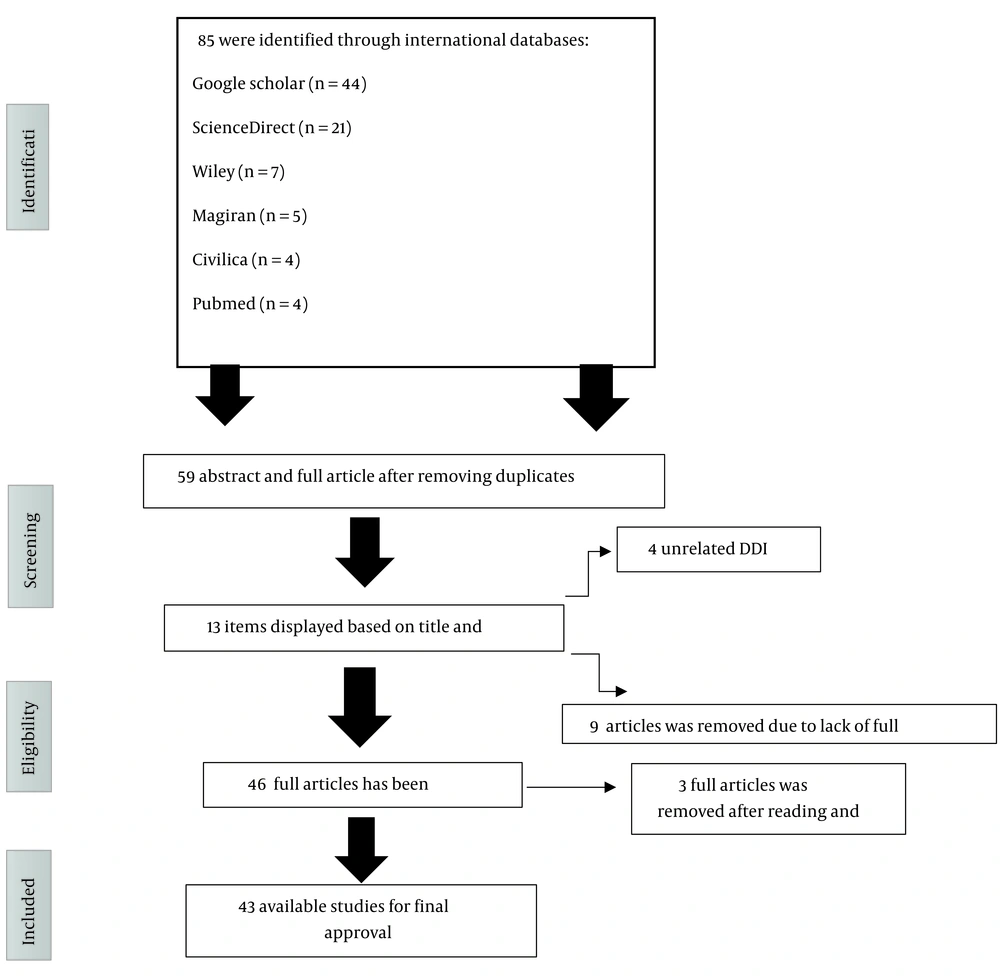
Figure 1.
Article selection method through prisma
3.3. Data Evaluation
To screen and evaluate the materials, a research team was formed, including an assistant professor of nursing at Islamic Azad University, Najaf Abad branch, who was responsible for supervising the submitted materials and guiding the team. Additionally, the first author analyzed the texts and wrote the summaries.
3.4. Final Data Analysis
After a thorough examination of all the final materials and extraction of key sentences, the results from the articles and theses were compared and summarized in this review article.
3.5. Findings
During the initial stage of the search using the mentioned keywords, an article was identified but ultimately excluded due to a lack of response. Finally, a percentage of Farsi articles and a percentage of English articles were included to address the research questions and objectives of the article (Table 1).
Table 1.
Factors Affecting Forgotten Nursing Care
| Author Name | Study Method | Sample Size | Information of the Author/Place of Study/Purpose of the Article | Evaluation Questionnaire | Average Ageresponse | Analysis Tool | Sample Selection Criteria | Results |
|---|---|---|---|---|---|---|---|---|
| Kalisch and Xie (17) | Descriptive-Sectional | 3143 RN–943 NA | University of Michigan, Ann Arbor, USA/Investigating factors affecting the amount of nursing care lost | MISSCARE/Conducting the NTS psychometric test | No results | Factor analysis with Varimax rotation/Pearson correlation coefficient/multiple regression | (1) Age | Human resources, such as lack of personnel, accounted for 85% of the factors contributing to non-attendance at the care conference. Material resources were responsible for 56% of the cases. Communication and personality characteristics, as well as lack of job satisfaction, accounted for 31.8% of the reasons. Oral and dental care was a factor in 25.5% of the cases. Glucose monitoring had an impact on 97.6% of the cases, while checking vital signs accounted for 95.8% of the factors. |
| (2) Sex | ||||||||
| (3) The amount of work per day | ||||||||
| (4) Education | ||||||||
| Moreno-Monsiváis et al. (6) | Descriptive correlation | 160 nurses | Doctora en Filosofía, Universidad Autónoma de Nuevo León, México/investigating the effective factors in the amount of missed care | Misscare Nursing Survey | 18 - 25 Years 36%, 41 - 50 20.7% | SPSS 17/Pearson correlation test/Kruskal-Wallis test | (1) Age | Human factors play a significant role in various aspects of healthcare. Based on the information provided, the following percentages represent the impact of specific human factors; (1). Number of employees: The number of employees is responsible for 50% of the observed effects; (2). Lack of sufficient equipment and communication factors, such as lack of support from team members: These factors contribute to 35.6% of the observed effects; (3). Unbalanced allocation of patients: The unbalanced allocation of patients accounts for 40.6% of the observed effects; (4) Excessive duties for hospitalized and discharged patients: Excessive duties for hospitalized and discharged patients contribute to 36.9% of the observed effects. |
| (2) Sex | ||||||||
| (3) Education | ||||||||
| (4) Work history | ||||||||
| (5) Work shift | ||||||||
| Ball et al. (18) | Cross-sectional study | 10174 nurses | PhD student from England NIHR CLAHRC England/on 10171 nurses in 79 Swedish hospitals/survey of care not performed by nurses | (1) RN4CAST | 40 years/70% | Multilevel logistic regression A: Poisson regression B: Combined model logistic regression/SPSS 20 | (1) Nurses in the last work shift | Based on the information provided, it is reported that more than 70% of nurses did not perform some necessary care during their last shift. Furthermore, the number of care missed varied based on two factors: shift time and the number of patients assigned to each nurse. Specifically, when the number of patients per nurse was between 6 and 10, the percentage of necessary care not performed increased to 50%. This suggests that as the workload increases, with more patients to care for, the likelihood of missed care also increases. |
| (2) Nurses Work Index scale | (2) Nurses who regularly take care of the patient | |||||||
| (3) PES-NWI | ||||||||
| Hassona and El-Aziz (19) | Descriptive-correlation | 216 nurses | Egypt: Zagaziq University/In the case of 216 nurses in the special care department of Egypt Hospital, regarding the communication between nurses and nurses in the care that was not done. | (1) Demographic information sheet | 34.7 years/51.85 | IBM SPSS 21 | (1) At least one year of work experience | The results showed that insufficient nurses, the condition of the patient and the unavailability of drugs when needed are the factors that cause the loss of forgotten nursing care. |
| (2) Nurse-to-Nurse Cooperation Scale (NNC) | ||||||||
| (3) Missed Nursing Care Questionnaire (MISSCARE) | ||||||||
| (2) Eligibility-Age-Sex | ||||||||
| Lake et al. (20) | Cross-sectional study | 2187 nurses | Penn nursing professor/2187 NICU nurses in 223 hospitals in 4 states of the United States of America/Relationship between work environment and overwork with missed care | PES_NWI | 39% | Logistic regression/stata corp 12/1 | (1) Having a BSN degree | More than half of pediatric nurses reported that they did not perform 1.5 nursing care activities in the previous shift, which was higher in poorer areas and areas with poor environmental conditions, as well as about 70% of missed care per additional patient. has increased and the amount of nursing care lost in pediatric nurses is 53% and in adult nurses is 73%. |
| (2) Work experience | ||||||||
| Hernández-Cruz et al. (21) | Descriptive correlation | 71 nurses | MSc, Professor, Facultad de Enfermería, Universidad Autónoma de San Luis Potosí, San Luis Potosí, Mexico/Investigating factors affecting the increase in the amount of missed nursing care | MISSCARE | 21 - 25 years 35.2% , 26 – 30 years 45.1% | SPSS 20/descriptive statistics/Spearman correlation/simple linear/linear regression | (1) Age, especially young people( | The lack of human resources, such as a labor force and an increasing number of patients, communication resources like the unavailability of nurses when needed, and material resources such as the unavailability of medicine and equipment, contribute to an increase in lost nursing care. |
| (2) Sex | ||||||||
| (3) Focus on the will to have at least a bachelor's degree | ||||||||
| (4) Focusing on people with at least | ||||||||
| (5) Years of work experience | ||||||||
| Siqueira et al. (22) | Cognitive-cross-sectional | 330 nurses | PhD, RN, Hospital Universitário, Universidade Federal da Grande Dourados, Dourados, MS, Brazil/misscare brazil | MISSCARE BRAZIL | 39.9 years | SPSS 17/Spearman's coefficient/Cronbach's alpha/Intraclass correlation coefficient (ICC)/AMOS VERSION 16 | (1) Age | Material resources, human factors such as the |
| (2) Sex | ||||||||
| (3) At least one month of work experien ce | ||||||||
| (4) Level of education | workforce, communication relationships such as management and leadership, and mood and personality dimensions are all influential factors in the occurrence of lost nursing care. | |||||||
| Bragadóttir et al. (9) | Cross-sectional | 527 nurses | Faculty of Nursing, School of Health Sciences, University of Iceland,Reykjavik, Iceland/Investigating the relationship between hospital units and hospitals with individual characteristics in missing nursing care | MISSCARE survey-icelandic/nursing teamwork survey-icelandic | Under 24 years 28%,35 – 44 years 25.1%,45 - 54 years 29.1%, 55 years or older 17.8%/ 93% | IBM SPSS 22/Pearson correlation coefficient/regression correlation descriptive statistics | (1) Age | Several factors were considered effective in increasing missed nursing care, including the type of hospital department where the nurse works, age, duties of nurses, quantity of nurses in contact with patients, and their personality and performance characteristics. |
| (2) Sex | ||||||||
| (3) Job title | ||||||||
| (4) Number of working hours per week | ||||||||
| (5) Work history | ||||||||
| Bragadottir and Kalisch (23) | Cross-sectional description | 925 nurses | Faculty of Nursing, University of Iceland and Landspitali University Hospital,Reykjavik, Iceland / Check for missed nursing care as an omission error | MISSCARE survey-icelandic | X < 34 35/5%,24 - 35 32/2%,45 - 54 25/9%,55 < x 6/3% | SPSS 24/Pearson correlation coefficient | (1) Age | Lack of motivation, material resources, workforce and job satisfaction leads to the loss of nursing care of the skin - teaching the patient about the disease - evaluating the effectiveness of the drug - re-evaluating the patient - oral care and cleaning the patient. |
| (2) Sex: mostly women | ||||||||
| (3) Work experience in the departm ent | ||||||||
| (4) Education | ||||||||
| Liu al. (24) | Cross-sectional | 1542 nurses | Guangzhou, China, a study in southern China/1542 nurses in 23 hospitals in China/The relationship between burnout and missed care | MASLACH Burnout Questionnaire/MASLACH and Jackson Human Services Survey | mostly young nurses/92.3% | SEM structural equation for multivariate multiple regression analysis/SPSS 20/SSEM in MPLUS1 version for hypothetical survey model | Mostly with less than 5 years of experience | The working environment, both directly and indirectly, along with the high workload of nurses and nurse burnout, have been identified as influential factors in increasing the level of forgetfulness among nurses. |
| Park et al. (25) | Descriptive | 31,650 nurses | Assistant Professor School of Nursing, University of Kansas, Kansas City, KS, USA/……بنویس | NDNQI/PESNWI | No result | Multilevel logistic regression/Groskal Wallis/STATA 14 | (1) Age | Human factors and job burnout contribute to insufficient patient monitoring, a reduction in patient skin care, a lack of necessary training for the patient and their family, as well as the loss of timely prescription adherence and forgetfulness in oral and dental care. |
| (2) Sex | ||||||||
| (3) Work histor y | ||||||||
| (4) Work shift | ||||||||
| (5) Level of education | ||||||||
| Blackman et al. (26) | Cross-sectional | 959 nurses in Cyprus-467 nurses in Italy-7097 nurses in Australia | School of Nursing & Midwifery, Flinders University, Adelaide, SA, Australia / Measuring the beliefs of Cypriot, Italian, and Australian nurses regarding missing nursing care in their work environment. | MISSCARE/BERNCA | X < 25 5%,X < 35 47%,X < 45 21%,X < 55 12%,X < 65 13%,65 < x 2% | Analysis using Winsteps/Rasch analysis | (1) Age usually under 35 | A study conducted on nurses in Australia, Cyprus, and Italy revealed that the lack of nursing care resulted in various issues, including inadequate monitoring of vital signs, increased risk of nosocomial infections, poor wound management, patient falls, failure to adhere to hand hygiene practices, inadequate blood glucose level control, and insufficient emotional support provided to patients. |
| (2) Focus on at least a bachelor's degree | ||||||||
| (3) Focus on at least 5 years of work experience | ||||||||
| Drach-Zahavy and Srulovici (27) | Cross-sectional multicenter | 290 nurses | Sherrill Nursing Department, Haifa University, Israel/290 intensive care unit nurses/Assessing the relationship between the role of nurses' personal responsibility in nurses' personality and lost care | Questionnaire of 22 cases of missed care (misscare)/characteristics with a questionnaire of 44 items of 5 types | 38.63 years | Spss23/0/4- point Likert Scale | (1) Age | Evidence suggests a significant relationship between missed nursing care and personality traits, such as conscientiousness, agreeableness, openness, and neuroticism. These traits directly impact nursing duties. |
| (2) Sex | ||||||||
| (3) Job status | ||||||||
| (4) Work history | ||||||||
| Khajooee et al. (28) | Cross-sectional description | 300Nurses | Instructor of Razi Nursing and Midwifery Faculty, Kerman University of Medical Sciences/300 nurses of the Internal-Surgical Department of Visa and Emergency Care/Evaluation of forgotten care and factors related to it | MISSCARE/Blackman | 31.75 years | SPSS 20 | (1) Have at least 6 month s of work | |
| (2) At least a bachelor's degree in nursing | ||||||||
| Zeleníková et al. (29) | Cross-sectional | 134 nurses from the Czech Republic92 nurses from Slovenia | Department of Nursing and Midwifery, Faculty of Medicine, University of Ostrava, Czech Republic / Comparison of the amount and nursing care lost | MISSCARE | X < 25 10.6%,25 - 34 19.5%,35 - 44 31.4%,45 - 54 26.1%,55 - 64 12.4%/77.93% | ANOVA/chi-square/pearson test | (1) Focusing on women | A survey conducted on Czech and Slovenian nurses revealed that factors such as skin care, emotional support, oral care, patient education, patient assessment, glucose monitoring, vital signs, and hand washing contribute to job dissatisfaction. Furthermore, the lack of teamwork exacerbates these issues, increasing their prevalence. |
| (2) Education | ||||||||
| (3) Age | ||||||||
| (4) Work shift | ||||||||
| Chegini et al. (30) | Cross-sectional | 215 nurses | National Institute for Health Research, Tehran University of Medical Sciences, Tehran, Iran/Investigating the effective factors in the increase of lost nursing care | MISSCARE | 51.2% of people aged 25 to 34 years/85% | IBM SPSS statistics for windows, version 24/logistic regression | (1) Age | Factors such as patient load, patient age, communication, and teamwork contribute to the occurrence of lost nursing care. Specifically, discharge training to the patient accounts for 83.3% of cases, emotional support for the patient and family accounts for 68.4%, teaching the patient about the disease accounts for 62.8%, and checking vital signs accounts for 22.3%. |
| (2) Sex | ||||||||
| (3) At least one year of polishing work | ||||||||
| (4) Education | ||||||||
| (5) Working full time or part time | ||||||||
| Mandal et al. (31) | Cross-sectional-descriptive-correlation-quasi-experimental | From 71 to 33,657 nurses | School of Nursing, Sri Ramachandra Institute of Higher Education and Research, Chennai, India / A systematic review of factors influencing missed nursing care | MISSCARE/TU-7/TU-7 modified/TU-13/BRENCA/NEWRI (52 items)/PIRNCA | No information | Pearson correlation/regression coefficient | (1) Age | The characteristics of the hospital, available resources, insufficient staffing, lack of cardiology services, length of patient hospitalization, and personal characteristics such as beliefs contribute to a lack of emotional support, patient and family education, oral and dental hygiene, and self-care. |
| (2) Sex | ||||||||
| (3) Work experience | ||||||||
| Kalankova et al. (32) | Cross-sectional | 549 nurses | Faculty of Medicine in jessenius, Martin, Slovak Republic / no information | MISSCARE/MNC Scale/CBI/Adverse Patient Events (APE) Scale | 29.8 + -7.8 | 1- 6-point Likert Scale 2- Regression3-IBM CORP | (1) Mostly people with work experience under 5 years | The results indicate that factors such as inadequate staffing levels in the department, a high volume of patients, working in specialized environments, longer patient hospitalization durations, job burnout, and stress are influential in increasing the occurrence of lost nursing care. |
| (2) Sex | ||||||||
| (3) Age | ||||||||
| Lima et al. (33) | Cross-sectional | 267 nurses | Federal University of Goyas, Faculty of Nursing,Brazil./Evaluation of neglected nursing care and factors related to them | MISSCARE -BRAZIL | 43 years/78% | SPSS 24/pearsons chi-square/ fishers exact test | (1) Higher educat ional level | The primary factors contributing to lost nursing care were the shortage of nursing personnel and the increasing number of patients. Consequently, certain essential tasks such as assisting patients in getting out of bed, participating in group discussions, providing emotional support to patients and their families, maintaining oral and dental hygiene, and recommending changes in lying positions every two hours were neglected. |
| (2) Work shift | ||||||||
| (3) Gender | ||||||||
| (4) Working in the department for at least one month | ||||||||
| Karimi er al. (34) | Descriptive | 146 nurses | From Iran, study in Tehran, Iran/146 nurses with BSN degree and 6 months of work experience | MISSCASRE | 52.1 years | SPSS 16 | (1) Nurse with BSN degree | This research demonstrated that human factors, material resources, and communication have a significant impact on lost nursing care in the emergency department. |
| (2) 6 months of work experience | ||||||||
| Kim and Chae (35) | Descriptive | 120 nurses | Seoul korea, south korea/120 nicu ward nurses/prevent missed nicu ward care | MISSCASRE | 28.5 years | Multiple linear regression/SPSS 25 | (1) Having at least one worki ng year | Due to the high workload of nurses and a lack of time, all participants in the study reported missing at least one activity. |
| (2) Age above 18 years | ||||||||
| Yacoubi et al. (36) | Cross-sectional | 196 nurses | Health Management Research Center, Tehran-Iran/196 nurses from 11 hospital departments/workgroup relationship with missed care | Group work questionnaire/MISSCASRE | Approximately 33 years | Linear regression with SPSS 18/Pearson correlation tests | (1) Age from below 25 years and above | The results show that when teamwork increases, nursing care loss is reduced. |
| (2) Sex | ||||||||
| (3) Work experience of at least 6 months | ||||||||
| (4) Work shift | ||||||||
| (5) Job position | ||||||||
| Nobahar et al. (37) | Descriptive-cross-sectional - analytical - multicenter | 200 nurses | Semnan, Iran/200 ICU intensive care nurses/relationship between carthymia and moral sensitivity with missed care | MISSCARE/Lutzen Moral Sensitivity Questionnaire (L-MSQ)/teamsteps team comprehension questionnaire (t-TPQ) | 32.7 + -5.65 years/82.74% | 5-point Likert Scale for scoring/IBM SPSS/Pearson's correlation coefficient/multiple regression/demographic checklist | Help from ward supervisors to identify eligible people | Factors such as Kartimi (presumably a specific term or concept) were found to have a direct relationship with moral sensitivity and were effective in reducing forgetfulness among nurses. Additionally, the age of nurses was found to have a negative relationship with their work accuracy. |
| AL-Manaizel and Al-Zaru (38) | Descriptive-cross-sectional | 181 years | University of Jordan / Study on 181 Jordanian nurses/The relationship between nurses' job satisfaction and missed nursing care | MISSCARE A: Size of missing nursing care (MNC) B: Reasons for missing nursing care (MNC)/Demographic forms/Work environment satisfaction questionnaire (NWSQ)/Demographic information | 29.6 + -4.04 years/97.3% | Analysis by electronic software G*POWER version 3.0/SPSS 26/multiple linear regression | (1) Bachelor's degree or higher | According to the obtained statistics, the satisfaction rate of Jordanian nurses with their work was found to be 50.45 ± 9.09. Factors such as time constraints, inadequate material resources, lack of sufficient drugs, and limited opportunities for working outside the unit were identified as factors that negatively affect nursing care. |
| (2) One year working experience in special care departm ent | ||||||||
| (3) Proficiency in English |
4. Results
4.1. The Extent of Forgetfulness in Nursing Care
Nursing care that has been forgotten can be delayed, partially completed, or completely neglected. Forgotten nursing care is also referred to as non-nursing care or unfulfilled nursing care (37). Precisely determining this forgotten nursing care has become a major challenge in the field of nursing. The calculation of forgotten nursing care in any environment varies according to hospital conditions and facilities. Studies have found that the amount of forgotten nursing care reported by nurses in different sectors ranges from 1.5% to 73%. In 2017, Lake showed that for each additional patient, the rates of missed nursing care increased by 53% for children's nurses and 73% for adult nurses (20).
Studies also show that the amount of missed care varies depending on the shift time and the number of patients. When the patient-to-nurse ratio increased from 6 to 10, nurses forgot 50% of the necessary nursing care. Ball et al. showed that when the number of nurses is nearly doubled, the rates of missed nursing care are reduced by 50% (18).Numerous studies have observed that missed care occurs consistently and is not dependent on the country, type of hospital, size, or location (1, 31).
4.2. Causes of Missed Nursing Care
According to the studies, the causes of missed nursing care include factors that can lead to lapses in providing care. These factors can be categorized into three groups: Material resources, human resources, and communication (6, 9, 17-24). Additionally, factors such as teamwork (9, 23, 29-31, 38, 39), personality traits (9, 22, 27, 31), lack of time (35), lack of facilities and equipment in the department (6, 17, 19, 21, 22, 39), burnout (24, 25, 32, 40), and length of hospitalization (31, 32) were found to have a significant impact on missed care.
4.2.1. High Workload
Human factors are significant contributors to forgotten care among nurses, increasing both mental and physical pressure on them. When the patient load in a department is high, nurses may not have the opportunity to provide certain types of care due to the heavy workload, often caused by a shortage of nurses. Sometimes, these types of care are considered lower priority and are subsequently forgotten. Numerous studies have confirmed this finding and identified high workload and nurse shortage as influential factors contributing to the neglect of nursing care (6, 9, 17-24, 28, 30, 32-35).
4.2.2. Poor Communication and Lack of Coordination
The lack of cooperation and coordination among nurses and other members of the healthcare team affects effective communication. When team members collaborate and combine their roles and skills, individual performance improves, and errors and work overload are reduced. Several studies indicate that teamwork enhances job sensitivity among nurses, leading to a decrease in the occurrence of missed care. This includes the division of tasks among team members and the utilization of their experiences and assistance (9, 23, 29-31, 36, 38, 39). Promoting teamwork and equitable task allocation among nurses are significant factors in improving cooperation. According to Rezaei et al., (40) their study demonstrated that teamwork enhances job satisfaction, and motivation, and reduces job pressure on nurses.Effective communication within the nursing work environment, whether with other healthcare team members or patients, is crucial for advancing therapeutic interventions and patient care. It is an essential element and can be divided into three categories: Poor communication with healthcare team members, imbalanced work regulations, and lack of support from other healthcare team members, including inadequate patient handover from the previous shift. Effective communication with patients fosters trust and acceptance of the treatment process (6, 21, 22, 29, 34). On the other hand, ineffective communication with healthcare team members, imbalanced work arrangements, lack of support, and improper patient handover from the previous shift are considered causes of neglected nursing care (34).
4.2.3. Lack of Facilities and Equipment in the Department
The lack of adequate facilities in hospitals, such as insufficient bed capacity for admitting patients and creating disorganization, as well as a shortage of essential medical supplies and specific drugs, negatively impacts the quality of nurses' work and contributes to missed nursing care. Various studies have demonstrated that the scarcity of medications in hospital wards is one of the three significant factors contributing to an increase in neglected nursing care (6, 17, 19, 21, 22, 34, 39). Missed nursing care specifically relates to patient assessment, medication administration, and patient nutrition (19).
4.2.4. Personality Traits
Personality traits are another factor that can impact the occurrence of missed nursing care, as indicated by various studies (9, 22, 27, 31). In a study examining conscientiousness, agreeableness, and openness, neuroticism was also identified as a personality trait influencing the likelihood of forgetting nursing care. Risk perception and accountability play a crucial role in the occurrence of missed care. Individuals with a more critical mindset tend to learn from their mistakes and strive to avoid repeating them in the future when they receive feedback or warnings. This characteristic is directly related to career and professional motivation, making individuals more inclined to engage in collaborative activities. Nurses who possess openness and positive moral characteristics are more motivated to fulfill their clinical responsibilities (27).
4.2.5. Lack of Time
Time has consistently been a significant factor influencing people's lives. Insufficient time increases the pace of work and may result in carelessness or the intentional or unintentional omission of tasks. In a study, the lack of time within the nursing work environment was identified as one of the most critical factors contributing to an increase in neglected nursing care, compromising the quality of service delivery and even posing a risk to patients' lives (35). Therefore, increasing the workforce and adequately distributing patient assignments among nurses can help ensure that each nurse has sufficient time to care for their patients effectively.
4.2.6. Job Burnout
Job burnout is indeed a common phenomenon attributed to the continuous stress experienced by nurses. It encompasses a range of emotional, attitudinal, behavioral, psycho-physical, and organizational signs and symptoms (41). Factors such as excessive workload, demanding tasks, shift work, psychological pressures, lack of social support, and poor collaboration with other healthcare team members have all been identified as contributors to burnout among nurses over the long term. In the reviewed studies, job burnout has been recognized as one of the factors associated with the occurrence of missed nursing care (24, 25, 32, 41).
4.2.7. Length of Hospitalization
The length of hospitalization for patients has been identified as a factor that can contribute to the occurrence of missed nursing care. When a patient is hospitalized for an extended period, the attention of the healthcare team may shift more towards new patients, leading to decreased sensitivity toward the ongoing care of long-term patients. This phenomenon arises due to resource allocation priorities and the perception that new or special cases require more immediate attention (31, 32).
4.3. Missed Nursing Care
Factors contributing to neglected nursing care can impact various aspects of patient care, including skin care, patient education about their disease, evaluation of medication effectiveness, patient re-evaluation, and oral and hygiene care (9). Studies have also examined the prevalence of neglected nursing care in areas such as skin care, emotional support, mouth care, patient education, patient evaluation, glucose monitoring, vital sign monitoring, and hand hygiene (29). Neglected nursing care has been identified in several key areas, including inadequate patient monitoring, reduced attention to patient skin care, insufficient patient and family education, neglect of oral and dental care, inadequate rotation of patient positions, lack of self-care support, lack of affective support, poor vital sign monitoring, hospital-acquired infections, pressure ulcers, patient falls, and poor blood glucose level control (25, 26, 28, 31, 33).
Statistics on missed nursing care indicate that significant proportions of care are missed in areas such as patient discharge training (83.3%), emotional support for patients and their families (68.4%), patient education about their disease (62.8%), and vital sign monitoring (22.3%) during the time of patient discharge (30).
5. Discussion
In this review study, an attempt has been made to investigate neglected nursing care and related factors in hospital wards. Among the 24 studies included in the findings section, covering the years 2014 to 2023, many followed the PRISMA guidelines. Neglecting nursing care has been a constant issue throughout history, exacerbated by the increase in the number of patients and the lack of staff. This neglect endangers patient safety. The findings of the reviewed studies show that the largest share of neglected nursing care is attributed to factors related to material resources, human resources, and communication (6, 9, 17-35, 39).
Neglected care includes oral and dental care, skin care, patient and family education about the disease, and monitoring the patient's vital signs, such as blood pressure, temperature, pulse rate, and respiration. Additionally, inadequate monitoring of glucose levels is a factor contributing to increased missed nursing care. Teamwork between nurses and other members of the healthcare team (9, 23, 29-31, 36, 38, 39)improves individual performance, job satisfaction, reduces job pressure, and enhances motivation. In the long run, it leads to stress reduction and increased focus on the services needed by patients. Poor communication between healthcare team members and lack of support from other staff can lead to a decrease in the quality of the treatment process and increased inefficiency (6, 21, 22, 29, 34).Insufficient facilities in hospital departments, such as inadequate bed capacity, lack of necessary medical equipment, and specific drugs, directly contribute to increased missed nursing care (6, 17, 21, 22, 24, 39). Personality traits such as conscientiousness, agreeableness, openness, and neuroticism have also been identified as factors affecting the occurrence of neglected nursing care (9, 22, 27, 31). Additionally, a lack of time for thorough patient examination (35) and burnout among nurses, caused by factors such as excessive workload, difficult tasks, shift work, and mental pressures, contribute to neglected care (24, 25, 32, 41). The duration of hospitalization has also been identified as an effective factor in the incidence of neglected nursing care (31, 32). Age, gender, level of education, and work experience of nurses were considered by the authors in all studies. The Misscare questionnaire, related to the amount of missed nursing care, was used by the majority of authors. In the screening of reviewed articles, it was found that out of 24 articles, 3 were published in Persian and the rest in English. Based on the findings of these studies, it is necessary to investigate the factors affecting neglected nursing care in the workplace and to take measures to minimize their impact on nurses' activities. Obstacles during the compilation included the lack of access to the full text of articles and the lack of translations into Persian or English.
5.1. Conclusions
The data studies showed that nurses should prioritize missed clinical activities, and governments are obliged to reduce the factors affecting nurses' service activities by making the necessary preparations. Investigations indicated that high workload and lack of nursing personnel, along with material and communication resources, play the biggest roles in increasing missed nursing care. This leads to a lack of necessary training for discharge and training related to emotional support. The involvement of patient companions and the examination of patients' vital signs lead to a decrease in the quality of nurses' services, especially among nurses with less experience, lower levels of education, and more working hours per week. Factors such as poor communication among nurses, lack of facilities, personality traits such as conscientiousness, agreeableness, openness, and neuroticism, lack of time, length of patient hospitalization, and job burnout were identified as contributors to missed nursing care. It seems that enhancing the level of nursing personnel is a key intervention that can significantly improve the quality of services.