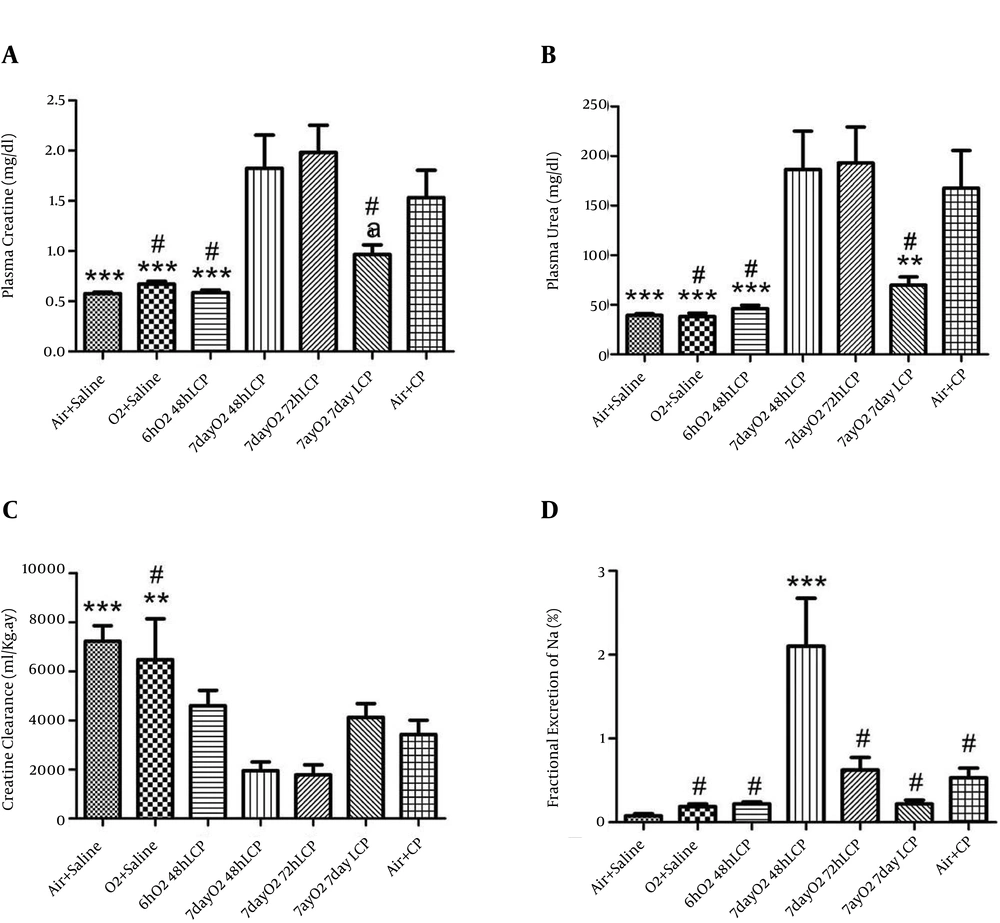
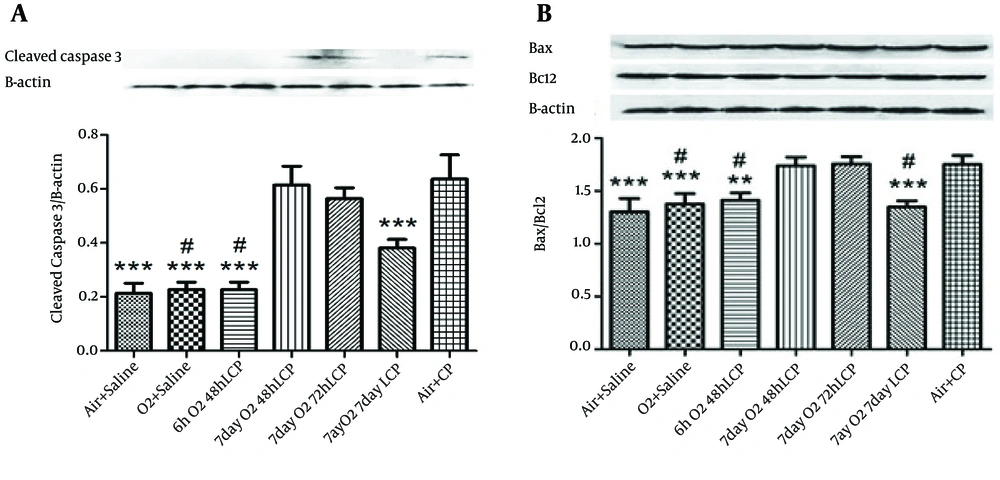
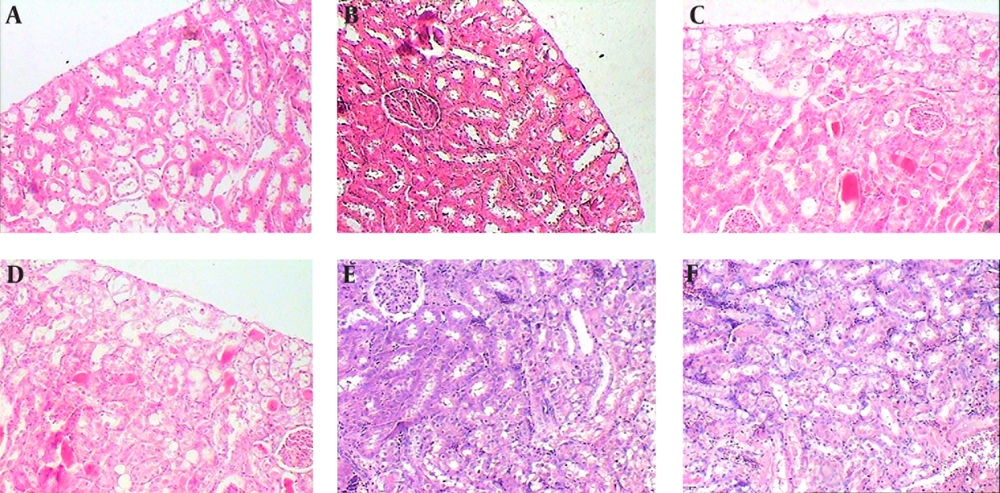
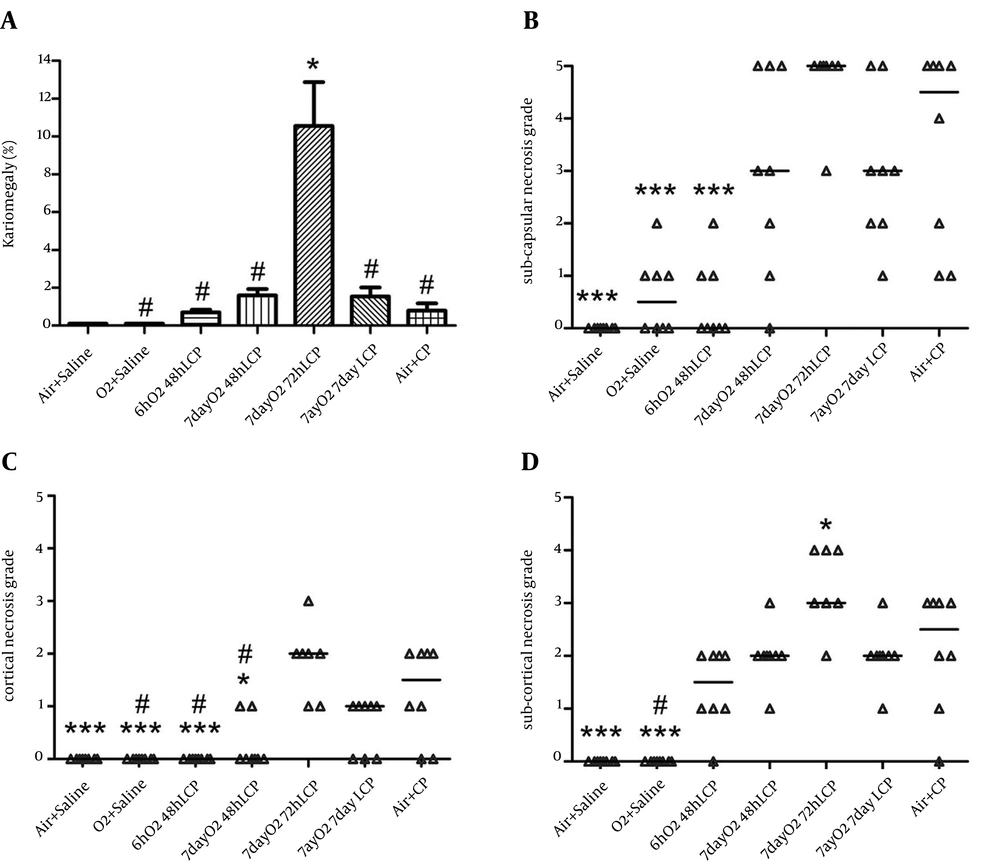
The present study in an in vivo rat model showed good protective effects of six-hour pretreatment with single dose of 80% O2 on CP-induced nephrotoxicity when CP was injected 48 hours after O2 administration. Pretreatment with intermittent six hours per day O2 for seven days had no protective effects and a few indicators of renal injury showed deterioration of kidney structure or function if CP was administered 48 hours or 72 hours after the last session of O2 administration. There were some degrees of protection against CP-induced renal injury when the interval between the last day of intermittent O2 and CP administration was increased to seven days. Nearly all measured parameters, i.e. renal function tests, histological injury scores, and gene expression of some indicators of cellular apoptosis, supported the above conclusion.
CP-induced renal cell death involves multiple pathways one of which is oxidant stress (
36). The proposed mechanism for this beneficial effect of hyperoxic pretreatment is upregulation of endogenous defense mechanisms against ROS-induced renal injury. Indeed sublethal elevated amount of ROS, which is a result of hyperoxic exposure (
37), will probably induce various protective mechanisms against ROS-induced injury in different organs. Our present data did not support the idea that these defense mechanisms are antioxidant enzymes like SOD, CAT, or GPx, because there were no significant upregulation of their activities in renal tissue of groups with protected kidneys. Of course a transient increased activity of these antioxidants and similar enzymes could be proposed, which might be disappeared on the day of assessments. Alternatively, other protective defense mechanisms such as heat shock proteins expression and anti-inflammatory mechanisms should be considered for future researches. The protective effect of O
2 pretreatment (single dose 0.5 to six hours or intermittent three hours per day for two days) was shown in our previous work with favorable results of all regimes, especially for the last mentioned protocol (
12). The protection in previous works was observed when administering CP 24 hours after O
2 (≥ 95%) exposure (
12) and the protective effect of a single-dose 80% O
2 pretreatment (for two hours) was observed only after 48 hours after O
2 pretreatment and disapeared after 72 hours (our unpublished data). Recently, the protective effects of hyperoxic preconditioning on hypoxia-induced apoptosis of mesenchymal stem cells has been reported (
23) and we showed the protective effect of pretreatment with O
2 on CP-induced injury of cultured human embryonic renal tubular cells (
38). In addition, Saadat et al. showed mild amelioration of CP toxicity by hyperoxic preconditioning in patient with solid tumors. They used intermittent exposure to 60% O
2 for two hours at 48, 24, and six hours before intravenous administration of CP and despite acute transient adverse effect on renal function, they reported improvement of renal function after 30 days (
39). It seems that enough hyperoxia-induced ROS production has a good triggering effect on protective mechanisms. Nevertheless, these mechanisms might be decreased or even reversed if the oxidative load by O
2 pretreatment is higher than a threshold level. Reduction of antioxidant pool due to prolonged or elevated level of ROS exposure might explain this paradoxical effect of single-dose versus intermittent hyperoxic pre-exposures.
Whether hyperoxia exposure has protective effects or is nonprotective and even deteriorative relates to the type of tissue and injury. For example, we did not find any protection against ischemia-reperfusion injury in rats kidney with single-dose 0.5-, one-, two-, three-, or six-hour O
2 exposure (
17,
18) but the protection was seen with five days of one hour per day (
17) or six days of 4 hours per day (
18) O
2 pretreatment. Similarly, intermittent six days of four hours per day O
2 pre-exposure had better ischemic-tolerance effects than a prolonged 24-hour one in a rat model of cerebral ischemia-reperfusion injury (
40). In addition, delayed cardioprotective effects of a single two-hour hyperoxic exposure was prolonged by intermittent exposure (three days of two hours per day) in Baharvand et al. study (
29). In this regard, daily hyperbaric O
2 therapy (60 minute at 2.5 atm for six days) reduced kidney injury (
41,
42) but twice daily hyperbaric O
2 therapy considerably augmented CP-induced acute renal failure (
41). Moreover, in agreement with some results of the present study, four days of four hour per day O
2 pretreatment had no protective effect against an eight-day course of gentamycin injections, but two hour per day for four days had good effects on both renal function and tubular necrosis scores (
43).
It has been well determined that CP activates the intrinsic mitochondrial pathway of apoptosis in renal epithelial cells, and Caspases including activated Caspase-3 has essential role in CP-induced apoptosis (
36). In our study, there was a high correlation between renal function results and renal tissue apoptosis markers, i.e. cleaved
Caspase-3 and
Bax/Bcl-2 ratio gene translation.
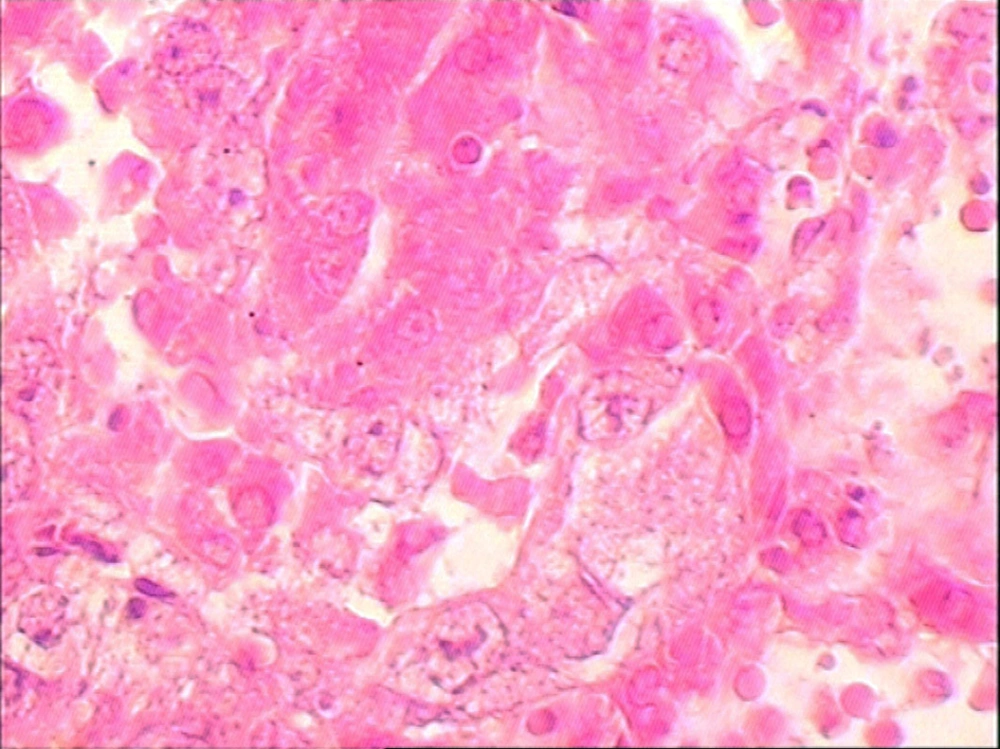
It has been determined that in vitro and in vivo administration of CP could largely increase both necrosis and apoptosis in renal tissue (
12,
44,
45). The highest degree of necrosis in renal cortex in present study was in subcapsular region with a median degree of 4.5 in a five-grade scale. Similar to apoptosis, O
2 pretreatment for either a single period of six hours or six hours per day for seven days was able to reduce this subcapsular necrosis score and necrosis grade in cortical and subcortical regions. However, the results were not as significant as those of apoptosis markers and some were insignificant.
Pre-exposure to O
2 with optimum method has considerable results in reducing CP-induced renal injury in animal studies and the results are largely encouraging for designing further clinical trials in patients with cancer. Although there are even some evidences in recent human studies about this beneficial effect of O
2 (
39), some protocols, especially intermittent ones, might have unpredicted deteriorating effects on renal function. Another important concern is that cytotoxic effects of CP are exerted through many common pathways between tumor cells and renal epithelial cells. Therefore, strategies that reduce CP-induced nephropathy might have some undesirable consequences that decrease the anti-tumor action of this useful drug (
36). It seems that additional in vitro and in vivo animal studies are needed to compare the possible protective effects of O
2 pretreatment between different tumoral and renal cells before designing additional human studies regarding protective effects of hyperoxic preconditioning on CP-induced renal injury. In addition, different nephrotoxic effects of CP in patients with diabetes and possibly other patients and its sex-related nature should be considered in any clinical study (
46,
47).
In conclusion, our data in an in vivo rat model showed favorable protective effects of single-dose six-hour O2 (80%) pretreatment on CP-induced nephrotoxicity. In addition, we concluded that protective or nonprotective effects of intermittent O2 pre-exposure (six hours a day for seven days) depend on the time interval between O2 and CP administration.