Hepatitis C virus (HCV), a hepatotropic and non-cytopathic RNA virus of the
Flaviviridae family, is considered one of the major causes of liver diseases, such as acute and consequently chronic hepatitis, liver cirrhosis, and hepatocellular carcinoma (HCC) (
1,
2). World Health Organization (WHO) has recently estimated that 58 million people live with chronic hepatitis C virus infection worldwide, and approximately 290,000 deaths from hepatitis C, mostly from cirrhosis and HCC, occurred in 2019 (
3). In HCV infection, both innate and adaptive arms of the immune system are engaged in the activation of antiviral immunity, and defects in each part of the immune system can lead to persistent virus replication in hepatocytes, which participates in the activation of inflammatory cells in the liver and promotes progressive liver fibrosis and damage (
4). Recognition of HCV RNA by the cytosolic RNA-binding proteins initiates the activation of antiviral responses (
5). Interferons, natural killer (NK) cells, NKT cells, dendritic cells (DCs), monocytes, and macrophages from the innate immune system, along with both CD4
+ and CD8
+ T cell subsets and T cells’ immunoregulatory cytokines from the adaptive immune response play crucial roles in defense against HCV infection (
5-
7). It has been proved that during viral infection, cytokines, as intercellular soluble proteins secreted by both innate and acquired immune/non-immune cells, contribute to viral clearance (
8). In the acute phase of HCV infection, several pro-inflammatory cytokines such as interleukin-1 (IL-1), IL-8, antiviral type 1 interferon (IFN)-alpha/beta, IFN-gamma, and IL-12 play important roles in the inhibition of viral replication (
8,
9). However, it has been observed that HCV can impair the balance of circulating pro-and anti-inflammatory cytokines and chemokines, and cause chronic infection, which triggers liver damage, hepatitis, and cirrhosis (
10).
Interleukin-38 (IL-1F10) has been characterized as a member of IL-1 superfamily and shares certain constructional characteristics with IL-1 receptor antagonist (IL-1Ra) (41% homology) and IL-36Ra (43% homology) as well. Hence, IL-38 can bind to the IL-36R and exert anti-inflammatory function by preventing the binding of IL-36R to agonist ligands and reducing inflammation (
11,
12). Amplification of multi-tissue cDNA using polymerase chain reaction (PCR) method disclosed the mRNA expression of IL-38 in a wide range of normal tissues, including fetal liver, spleen, thymus, heart, placenta, and particularly in the skin and tonsillar proliferating B cells (
12). Besides, association of IL-38 polymorphisms with susceptibility to psoriatic arthritis, rheumatoid arthritis, human cardiovascular disease, and ankylosing spondylitis has been reported in previous studies (
13,
14). A study was done on patients with systemic lupus erythematosus showed that IL-38 had protective anti-inflammatory activities, and silencing endogenous IL-38 in PBMCs resulted in a noticeable rise in the expression of pro-inflammatory mediators IL-6, chemokine (C-C motif) ligand 2 (CCL2), and a proliferation-inducing ligand (APRIL) (
15). However, the expression pattern and functional features of IL-38 in viral hepatitis, particularly HCV infection, remain vague and need to be explored in further research.
The conventional treatment landscape of HCV infection has been revolutionized with the advent of an oral direct-acting antiviral (DAA) regimen with a high rate of sustained virologic response (SVR) and short treatment duration (
16). Sofosbuvir (SOF) and daclatasvir (DCV) possess some inhibitory features against HCVNS5B polymerase and NS5A protein of HCV, respectively, and are utilized as Food and Drug Administration (FDA)-approved treatment for HCV-infected patients with 1 and 3 genotypes. Results from clinical practice of the SOF and DCV combined regimen in the treatment of Iranian with hepatitis C demonstrated a 98% SVR rate in both 1 and 3 genotypes (
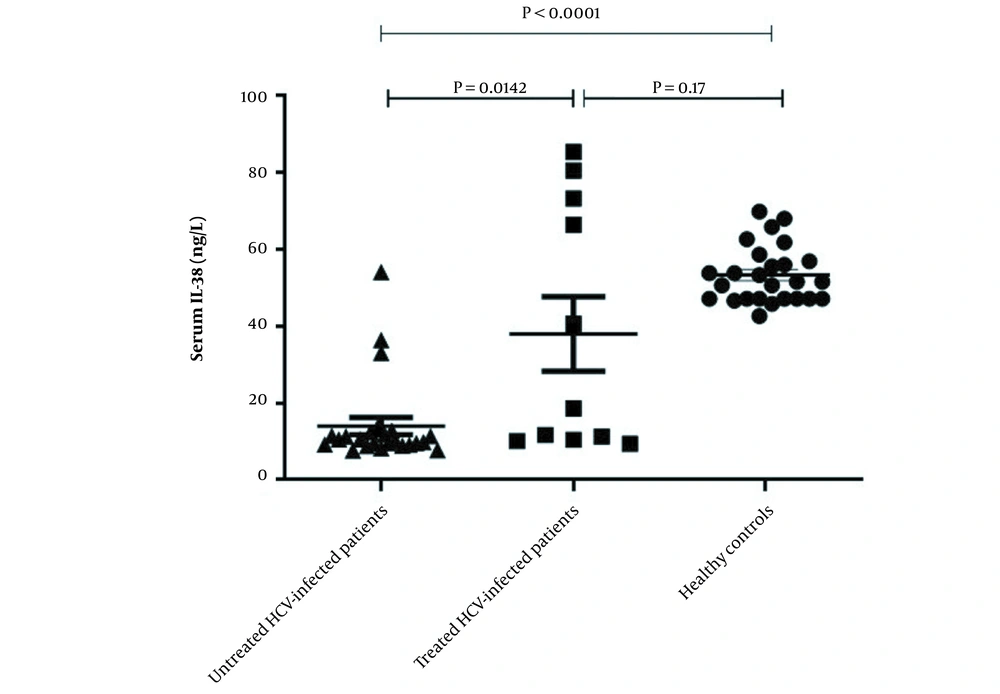
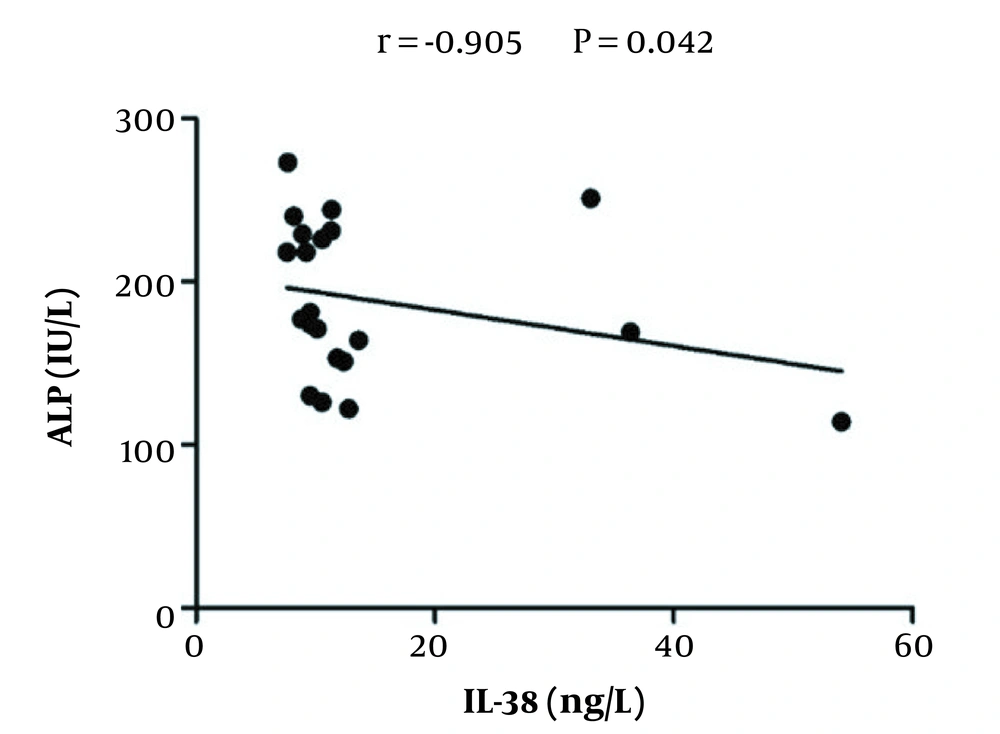
17). Analysis of the treatment outcomes from HCV-infected patients can help us to find the mechanism of viral-host interactions. To increase our knowledge about serum level of IL-38 in HCV-infected patients and recognize the effects of therapeutic regimen, we evaluated serum IL-38 level in HCV-infected patients before and after treatment with DAAs along with healthy subjects, as well as identified the correlation of IL-38 level with liver enzymes levels, including aspartate transaminase (AST), alanine transaminase (ALT), and alkaline phosphatase (ALP).