


1. Background
Although work history of the related attempt with inter-professional practice dates back to ancient Egypt, during the last several decades, and since 1970s some influential movements have been initiated towards participatory performance, and during the 1990s, it has penetrated in the healthcare system (1).
The complexity of problems related to health, high service cost, access to information technology, and willingness towards preventive medicine emphasizes on education and inter-professional practice in medicine (2). Therefore, proper preparation of medical students as a member of a professional team in healthcare systems, ensuring safe and high quality services for patients, and having technical skills is very important (3). Teamwork improves self-assertive performance of team members at inter-professional practice, and also increases self-confidence, knowledge, and ability of members in managing high risk conditions (4). Cooperation among specialists makes improvement at quality level, patient services, and access to social care (5).
Continuous care, thorough understanding patient problems, access to wide range of skills, mutual education, participation, understanding the role of other professions in medical care (6), reducing work load (7), reducing hospitalization time, reducing the chance of re-hospitalization, increasing the power of interaction and collaboration among physicians and service-providers, and reducing treatment costs (8) are some of the aforementioned benefits of teamwork in the healthcare system. In spite of some studies regarding this issue, there is still a need of more empirical evidence for better understanding of the relationship between teamwork and health outcomes. These studies require consistent and valid measurement instruments (9). Various kinds of instruments have been published, including those aimed at specific populations, or different domains.
For example, a version of the attitudes toward healthcare teams scale with 14 items on the five-point scale was developed by Curran et al. in 2010. This can be used to evaluate inter-professional education regarding the quality of care and teamwork (10).
Another tool introduced by Curren et al. (2008) consists of 14 items on a five-point scale that can be used to determine the effect of inter-professional education on quality of care. The two subscales for this tool are quality of care and time constraints (11).
Furthermore, an instrument with 21 items can be used to determine the attitudes of healthcare students on inter professional teamwork (12).
The modified version of the attitudes toward health care teams scale was developed by Hyer et al. and includes 21 items with a six-point Likert scale and can be used to understand attitudes of students towards inter professional teamwork (2000). This instrument consisted of three subscales for quality of care, costs of team care, and physician centrality (13).
For assessing the attitudes of subjects towards healthcare teams at different fields of worldwide research (14-16), several questionnaires have been used. Measurement instruments are in compliance with working conditions and healthcare systems.
In the current study, Hacket, Rode, and Cox’s (2015) scale (4) was used as a standard scale for psychometric process due to its several beneficial characteristics, such as attitudes toward healthcare teamwork scale for both inter professional or intra professional scale during the clinical education program. This instrument included not only the attitudes toward healthcare teams but also teamwork skills. Furthermore, the first section of this instrument was the modified version of three previous scales (12 to 14) used in this topic.
With respect to the work history of new age medical education in Iranian universities, the importance of teamwork is recognized in enhancing service quality, determining individual attitude towards teamwork, practical performance, assessing subjects’ attitude towards teamwork, amending inappropriate attitudes, and validating consistent instruments in this field. Therefore, the present research aimed at identifying the psychometric attitudes toward health care teams among Iranian students, for the first time.
2. Methods
This cross-sectional study was carried out among 100 orthopedic resident and 100 nursing students of Iran University of Medical Sciences, during year 2015 and 2016. The rules of thumb, such as five or ten participants per item, was used for the sample size calculation.
Convenience sampling method was used to select subjects. Earlier, a 15-item questionnaire was used in the assessment of attitude toward healthcare teamwork in medical sciences. The aforementioned questionnaire was developed by Hacket, Rode, and Cox (2015). Questions one to ten were scored on the basis of a Likert scale, i.e. from highly agreeable to highly disagreeable. Questions 11 and 12 were graded on the basis of weak, fair, good, very good, and excellent grades, and questions 13, 14, and 15 were scored on a different basis. For example, question 13 was scored on basis of never, seldom, sometimes, often, and more often grades, question 14 was scored on basis of grades, such as not important, of little importance, moderately important, and very important; and question 15 was scored on the basis of one to two times, three to four times , five to six times, seven to eight times, and nine times and above (4).
After obtaining permission from the main designer, the questionnaire was translated to Persian by two famous translators in both Persian and English literature. Then, it was compared to its original version and the gap between these two was removed. The statistical population of this research was medical sciences and nursing students. Content and face validities of the questionnaires were investigated by the experts’ panel (10 experts). Then, face validity was assessed by the subjects’ opinions. Content validity was assessed by the content validity ratio (CVR) and content validity index (CVI).
For this purpose, expert opinions were taken during CVR calculation to check whether an item is necessary for operating a construct in a set of items. The CVR Formula was
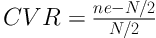
Equation 1.
where ne is the number of experts, who pointed to “essential” and N is the total number of experts. Then, the obtained score was compared to the Lawshe table. The acceptable level of CVR in the Lawshe table was determined to be 0.49 for 15 panelists; therefore, all items with CVR higher than 0.49 would remain in the instrument.
The CVI calculation was done based on panel rating on instrument items, which was related to its clarity and relevance for the underlying study construct, according to the theoretical definitions. For this purpose, experts were requested to rate each item for clarity and relevance. Then, ratings as relevant or clear (rating three or four) was divided by the number of experts. A CVI score of < 79% for each item was considered appropriate. If it was between 70% and 79%, it needed to be revised and less than 70%, it was omitted (16).
To determine the instrument’s reliability, test–re-test was used and for internal consistency, Cronbach’s alpha was determined by the SPSS software version 19. P values of 0.05 were considered significant.
For constructive validity, explanatory factor analysis (EFA) was conducted using data from 200 subjects. The researchers also conducted confirmatory factor analysis (CFA) using several models of fit indices with the LISREL software: comparative fit index (CFI), lewis index (TLI), root mean square error approximation (RMSEA), and standardized root mean square residual (SRMR). Furthermore, CFI and TLI values above 0.9, and RMSEA and SRMR below 0.08 were considered as acceptable fit.
3. Results
3.1. Demographic Characteristics
In general, 200 students with mean age of 31.08 (SD = 4.2) years participated in this study. Overall, 50% of students were male and 50% were female. Other characteristics of participants are shown on Table 1.
Table 1.Socio Demographic Characteristics of Samples
| Variables | No. (%) |
|---|---|
| Gender | |
| Male | 100 (100) |
| Female | 100 (100) |
| Age, y | |
| 20 - 24 | 10 (5) |
| 25 - 29 | 42 (21) |
| 30 - 34 | 82 (41) |
| 35 - 39 | 46 (23) |
| ≥ 40 | 20 (10) |
| Marital status | |
| Single | 110 (55) |
| Married | 90 (45) |
3.2. Face Validity
a) Qualitative phase: Five items required some corrections and expert’s desired matters were applied in the questionnaire.
b) Quantitative phase: All of the items were kept due to their high impact score.
3.3. Content Validity
a) Content validity index (CVR): The obtained results were compared with respect to the evaluation of 10 experts at this field and the existing criterion of the Lawshe table.
In this table, with respect to the number of experts and minimum content validity ratio (0.62), items, which were above 0.62 were kept. In this phase, one item was omitted.
b) Content validity index (CVI): In this study, items above 0.79 was kept and items between 0.6 and 0.79 were corrected. Four items not meeting these criteria were omitted.
3.4. Construct Validity
Factor analysis is one of the most reliable methods for determining the validity of construct, especially in the psychological field.
At first, the sampling adequacy was tested by Kaiser-Meyer-Olkin (KMO); a value of 0.666 was obtained. The minimum acceptable value was > 0.6 (13). Bartlett’s test was significant with X2 = 194.108, P < 0.001.
This study also attempted to use varimax and oblimin rotation to simplify data, and it became obvious that varimax rotation was compatible with the main instrument, and on this basis, three factors were extracted (Table 2).
Table 2.Exploratory Factor Analysis Pattern Matrix Loading for Attitudes Toward Health Care Scale
| Item | Questions | Factor 1 | Factor 2 | Factor 3 |
|---|---|---|---|---|
| 1 | Team attitude improves quality of services in patients | 0.568 | 0.243 | 0.172 |
| 2 | The first aim of the team is to help physicians in order to realize their treatment purposes for patients | 0.230 | 0.138 | 0.786 |
| 3 | Patients may be less satisfied with cares in teamwork | -0.148 | 0.872 | 0.020 |
| 4 | Having a plan for taking care of patients prevent some mistakes in providing health care | 0.151 | 0.763 | 0.161 |
| 5 | Health care experts who work as team members with each others are responsible against emotional and financial needs of patients | 0.733 | 0.57 | 0.176 |
| 6 | More often, the time needed for team sessions) can be obtained by spending less time on other things | 0.698 | -0.03 | 0.058 |
| 7 | Doctor is legally liable for decision making by team members | 0.333 | 0.266 | 0.431 |
| 8 | Doctors are the chief executives in a teamwork | 0.333 | 0.266 | -0.358 |
| 9 | Teamwork makes the process of providing health care be more efficient | 0.648 | 0.265 | 0.084 |
| 10 | Team works help experts become familiar with both patients and family care-givers needs. | 0.431 | 0.588 | -0.508 |
| 11 | Please grade your ability to work efficiently in an team with various discipline | 0.620 | -0.134 | 0.017 |
As for the factor loading per item, the arrangement of the first factor, called attitudes toward teamwork efficiency, consisted of a total of five items. The alpha for this factor was 0.715. The second factor, attitudes toward teamwork, consisted of three items. The alpha for this factor was 0.711 and third factor was called attitudes toward physician’s role in teamwork, which includes three items. The alpha coefficient of the third factor was 0.692 (Table 3).
Table 3.Labeling the Extracted Factors in This Study
| Factors | Factors Loading in Varimax Rotation |
|---|---|
| Attitudes toward teamwork efficiency | Item 1, item9, item6. Item5, item11 |
| Attitudes toward teamwork | Item3, Item4, Item10 |
| Attitudes toward physician role in teamwork | Item2, Item7, Item8 |
The total alpha coefficient of the scale was 0.702. According to the results of this study, the ICC was 0.936.
Then, confirmatory factors analysis (CFA) was used to confirm the extracted model. Based on CFA indices, the extracted factors and loading items, such as X2 = 1102.2, df = 490, and X2/df < 3, GFI (goodness of fit index) = 0.90, adjusted goodness of fit index (AGFI) = 0.91, RMSEA( root mean square error approximation) = 0.054 were confirmed.
4. Discussion
This study was done to determine validity and reliability of the attitudes towards the healthcare team questionnaire (ATHCT). The results indicated that the highest value (percentage) for the explained variance was 28.115 for the first factor, with eigenvalues of 3.093, 15.134 for the second factor, with eigenvalue of 1.665, and 11.44 for the third factor with eigenvalue of 1.259.
Hacket, Rode, and Cox (2015) also considered three factors of attitudes; such as attitude toward teamwork, attitudes toward team efficiency, and attitudes toward the role of physicians in teamwork (4). Fulmer et al. (2005) considered three factors of attitudes towards teamwork, work efficiency, and participatory (collaborative) role of physician in their 21-item questionnaire (14), which is completely in accordance with the present study. Curren (2010) studied 137 students in various fields in Canada and revealed two factors: Service quality and limited time in his questionnaire and the value of Cronbach’s alpha was 0.88 (10). Shaghayeghfard et al. (2012) considered four factors, including efficiency, group structure, the approach of team members towards each other, and teamwork process, in his study of the attitude of occupational therapy students towards teamwork in Shiraz (17). Two factors of attitudes towards efficiency and teamwork had some similarities with the current study.
Eventually, while confirming the extracted factors, the study of Forchuk and Vingilis (2008) should be considered. They emphasized on three factors of attitudes toward teamwork, the value of teamwork, and the attitudes of physician towards teamwork (18).
Heinemann et al. (15) considered two factors of service quality (14 items) and physician’s key role (six items) to design an instrument for studying attitudes towards the healthcare team. Both of them had good internal consistencies (α= 0.98) (15). Similarly, Kim and Ko (2014) emphasized that the attitudes toward the healthcare team should involve two aspects of quality of services and efficiency (19).
Tucker et al. (20) stated that the learners’ attitude toward teamwork creates a better learning environment. In spite of this issue, a positive approach towards teamwork among medical students was very low. Comparing the average of three factors, i.e. attitude toward teamwork efficiency (6.13), attitude toward teamwork (5.4), and attitude toward physician’s role in teamwork (5.35), the minimum average belonged to the attitude towards physician’s role (20).
Henderson (2012) believed that experts were concerned about losing their autonomy/ independency during the work/task. They believed that physicians may spend most of their life accumulating experience, and these experiences and travails within teamwork can be exposed to devastation. Therefore, they often have a negative attitude towards teamwork (21).
The current study findings indicated that 84% of participants believed that providing healthcare is only possible through efficient work and 69% believed that patients are satisfied with teamwork. Other studies also showed similar results (22, 23). In addition, 72.6% believed that teamwork can reduce medical error.
Mahfoozpoor and Mojdekar (24) stated that teamwork could help with better perception and providing better patient services. It can also correct possible shortcomings and may result in better understanding of errors.
Time limit is one of the factors considered in other studies (24). It is believed that teamwork requires more time to be spent on patient-related works. The results indicated that 77.5% believed that they could improve teamwork by spending less time on other methods.
The validity and reliability of this comprehensive instruments was observed for the first time in Iran and this was the strength of this study whereas using the convenience sampling method for data gathering was the limitation.
Ethical considerations: This study was conducted in accordance with the Helesiki declaration. A consent form was obtained from all participats after the explanation the purpose of study. The psychometric process was conducted after obtaining permission from the main designer of the questionnaire.
4.1. Conclusions
Results indicated that attitude toward health-care team tools (ATHCT) in Iran has good reliability and validity. This instrument, which was validated for the first time in Iran is applicable among all educational institutions due to its conciseness, fluency, and comprehensibility. Conformity (congruence) of these factors with the main instrument can have a vital role in assessing attitudes toward this field.


