1. Background
In recent decades, the medical management of chronic rheumatologic diseases has experienced many advances. In addition to medical treatments and necessary surgical treatments, non-pharmacological treatment has been a keystone in treating these patients. Recommendations for non-pharmacological treatments, for instance self-management, education, as well as information about the condition, the disease, and its treatments, are often considered in various approaches (1).
The use of complementary and alternative medicine (CAM) in the management of chronic diseases has increased in recent years, particularly rheumatologic diseases. Conventional treatments, or the current regimens, tend to decrease the pain and swelling of the joints and prevent, or at least decrease, the amount of expected disability. Reducing disease activity is related to the reduction of deformities and disabilities and improvement of the quality of life (2). Moreover, almost all of the treatments and medicines have shown some adverse effects, in some cases up to 30% (3). Thus, conventional therapies for many conditions in the spectrum of musculoskeletal and rheumatologic diseases are imperfect, costly, and to some extent harmful. Besides all these concerns, psychiatric and mental problems are often difficult for patients to express and for the physician to diagnose and treat with conventional therapies (4). It is believed that having a chronic disease is strongly linked with comorbidities such as depression, anxiety, and poor quality of life (5). Patients prefer more reasonable, safer, simpler, and more effective treatments, or additional therapies and supports (6). The overall influence of pain, in addition to physical disabilities, organ damage, the adverse effects of medications, and mental health issues all together have been cited as reasons for the increased use of CAM (4-6).
CAM includes a group of healthcare systems, practices, and products, which are not a part of conventional medicine (7). CAM remedies include herbal medicine, diets and vitamins, acupuncture, chiropractic care, folk medicine, massage, and spiritual healing (8, 9). Even with the notable distribution of CAM and the common belief that it is safe, little has been identified of its prevalence, possible advantages, adverse effects, and interactions with conventional treatments (7). In addition, CAM usage may be accompanied by possible risks such as reactivation of the disease, unpredicted complications, and even increased morbidities and mortalities (10, 11).
In the general population, there has been a worldwide rise in the use of CAM remedies. Since many CAM consumers may not divulge the use of CAMs to their physicians, physicians may have insufficient information about CAM consumption by their patients (12).
2. Objectives
Therefore, the importance of having thorough and precise data on the prevalence of CAM usage among rheumatologic patients cannot be ignored. In this study we evaluated the prevalence of CAM usage in patients referring to rheumatology clinics of Hafez hospital of Shiraz, in southwest Iran, in order to evaluate its popularity and the patients’ reasons for turning to CAM as an alternative, or even the main treatment, for their diseases.
3. Patients and Methods
3.1. Study Population
Between March 2013 and March 2014, patients with a definitive diagnosis of a chronic rheumatologic disease, who were referred to rheumatology centers of Shiraz University of Medical Sciences, were requested to participate in a survey on the use of CAM. In this cross-sectional study, 100 randomly selected patients with chronic rheumatologic diseases, including rheumatoid arthritis (RA), systematic lupus erythematosus (SLE), vasculitis, scleroderma, ankylosing spondylitis, polymyositis, and reactive arthritis, who were unaware of the objective of the survey, were recruited from rheumatology clinics or the rheumatology ward of Hafez hospital in Shiraz. Patients with no proven diagnosis, or who were not visited by rheumatologists for accurate diagnosis, were not included. All patients gave their separate written informed consent before participation in this study, and all data were kept confidential.
3.2. Study Protocol
We provided an anonymous questionnaire in simple Persian language that could be easily understood even by an inexperienced user. The questions were chosen based on data previously presented in the literature, our own clinical experience, and the statistical requirements. The questionnaire consisted of 15 questions, focusing on the demographic data of the patients such as age, sex, level of education (number of years spent in schools, college and other educational systems), living place, duration of the disease, as well as the types of CAM used, the reason for using CAM or stopping previous or concomitant treatments, and the person who recommended CAM to the patient. The screening form was filled out by a medical student, who was trained and involved in this research.
3.3. Ethics
The study protocol was approved by the medical ethics committee of Shiraz University of Medical Sciences (Code: 5618).
3.4. Statistical Analysis
Descriptive statistics were used to analyze the data. Bivariate associations between various characteristics of the patients and their CAM usage habits were conducted. Categorical variables were compared by using the Chi-square test. Continuous variables were compared by the Student’s t-test for independent samples. All tests of significance were two-sided, and P Values less than 0.05 were considered as significant. All analyses were performed using the SPSS 14.0 software package.
4. Results
In this study, a total of 100 eligible patients were surveyed. The mean age of the participating patients was 45.15 years (range: 14 - 83 years), and 84% were females. Diagnoses included 49 RA patients (49%), 31 SLE patients (31%), 11 scleroderma patients (11%), 5 vasculitis patients (5%), 1 ankylosing spondylitis patient (1%), 2 reactive arthritis patients (2%), 1 dermatomyositis patient (1%), 1 polymyositis patient (1%), 2 osteoarthritis patients (2%), and 1 low back pain patient (1%). The mean duration of the diseases was 8.26 months (range 0 - 35 months).
Eighty-seven patients (87%) reported using at least one form of CAM, among which 74 (85%) were females. Dietary supplements comprised the most frequent category of CAM among the patients (40%), followed by specific diet (36%). Fish oil (25%), massage therapy (20%), deep breathing exercise and meditation (16%), herbal remedies (11%), acupuncture (11%), homeopathy (4%), yoga (4%), and hypnotherapy (1%) were also used by the patients.
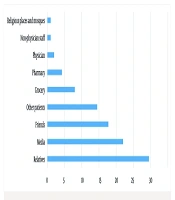
Channels through which the participants were introduced to CAM were: family physicians in 53 cases (26.6%), rheumatologists in 20 cases (10%), pharmacists in 3 cases (1%), naturopaths in 5 cases (2%), homeopaths in 2 cases (1%), and other ways in 116 cases (58%).
The most frequent reasons reported for discontinuing CAM and/or changing to another form of CAM were: inadequate response in 75 cases (63%), fear of possible adverse effects in 18 cases (15%), presence of actual adverse effects in 14 cases (12%), scarce results in 6 cases (5%), and being advised by a non-conventional medicine practitioner in 5 cases (4%).
Twenty-nine (33.3%) CAM users and 4 (30.8%) non-CAM users were smokers (P = 0.29). The mean age of CAM users and non-CAM users was 45.5 and 42.4 years, respectively (P = 0.61). The mean duration of the disease in CAM users was 8.64 months and in non-users was 6.51 months (P = 0.093). The mean education level of CAM users was 7.2 years and in non-CAM users was 6.3 years (P = 0.16). Seventy-six (87.4%) users and 10 (76.9%) non-users were married (P = 0.12). Fifty-two (89.7%) patients with more than 5 months disease duration were CAM users, and also 35 (83.3 %) of the patients with less than 5 months disease duration were CAM users, with no significant difference between the two groups (P > 0.05). Other factors such as age, sex, smoking, marital status, occupational status, living place, and birthplace were not significantly associated with CAM usage (P > 0.05).
The patients were divided into three age groups: 0 - 25 years, 26 - 50 years, and 51 - 83 years. Forty-six cases (53%) of CAM users belonged to the second group, 33 (38%) to the third group and 8 (9%) to the first group. These ratios had no noticeable contrast with non-CAM users (P > 0.05).
Eighty percent of the CAM users and all of the non-CAM users were attending the rheumatology centers regularly. Seventeen patients who had dropped out of follow-ups for more than one year and 70 (84.3%) regular visitors were CAM users. However, there was no significant role for CAM using in attending regular visits (P = 0.08).
Based on our results, the most common CAM remedy used in RA patients was a supplementary diet such as vitamins (40.8%), and in SLE it was a specific diet that was recommended by non-experts (37.8%).
5. Discussion
In the present study, the use of CAM in rheumatology patients with chronic diseases was investigated. The rate of CAM use was strikingly high, suggesting the unfulfilled needs of these patients while receiving specialized care. Our report also revealed that 87% of surveyed rheumatologic patients had tried CAM remedies. The most frequent CAM remedies in our study population were dietary supplements, such as vitamins, and some foods used as part of specific diets. After these, fish oil, massage therapy, deep breathing exercises and meditation, herbal remedies, acupuncture, homeopathy, yoga, and hypnotherapy were popular. Different types of modalities were chosen as popular CAMs in different locations, which could be related to culture, availability, cost, or advertising. The most common reason for CAM use was inadequate response to conventional therapy, especially in pain control, which reflects a shortcoming in the offerings of conventional medicine for rheumatologic patients. the national health interview survey (NHIS) was conducted in 2007 on a sample of non-institutionalized household civilians in the United States and revealed that the most frequently mentioned reasons for CAM usage were back pain (17.1% of adults surveyed), neck pain (5.9%), joint pain (5.2%), arthritis (3.5%), and other musculoskeletal symptoms (1.8%). Other studies of patients with chronic rheumatologic illnesses have linked CAM use with poorer physical ability, higher cumulative disease injury, and higher self-perception of disease activity (8). It has been suggested that cultural beliefs affect the expectations of patients about conventional medicine and their use of CAM, but studies carried out in communities where CAM use is popular have demonstrated a positive connection between the disease activity and CAM use (13).
Evidence shows that the popularity of CAM has increased quickly in the last three decades (12, 14). Many reports show that the most popular CAM remedy was herb or food supplements, and users believed high disease activity and poor physical and mental function were the reasons to use CAM (14, 15). So far, measuring socioeconomic status, including monthly income and education, has been considered as a predictor of CAM use in the general population (12). However, CAM consumers need to be investigated in more complicated ways, instead of being treated merely as a homogenous group with identical beliefs, motivations, and requirements. Openness to new experiences was accompanied with CAM use, generally, but may be most significant in the initial decision to seek or explore using CAM (16).
5.1. Limitations
The main limitation of this study was the evaluation of a particular clinic-based survey population that may favor a group of patients loyal to conventional medicine, which can lead to bias. Moreover, a great number of patients were from rural areas, where access to some CAM modalities, such as acupuncture and meditation, as well as practitioners, is restricted. This may lead to different epidemiological results compared to other studies, since various frequencies of using CAM remedies can be related to a patient’s location, culture, availability of CAM, costs and advertising.
5.2. Conclusion
It can be concluded that CAM use is popular in patients with chronic conditions such as rheumatologic diseases. People mostly turn to CAM due to their dissatisfaction with conventional remedies and also because of the psychosomatic burden of their illness, which leads them to look for other methods of treatment. Developing physicians’ knowledge about CAM can lead to improvements in their management plans, as well as to more research-based evidence on the benefits, limitations, and possible adverse effects of CAM.