
Introduction
Systemic lupus erythematosus (SLE) is an autoimmune and multisystemic disorder that affects different organs [1, 2]. The prevalence of this disease varies between different races, countries and various socioeconomic statuses [3] and the existence of SLE in women is 10 times more than men [4]. Although the main etiology of this disease is not entirely known, both genetic and environmental factors are known as effective events on its initiation and progression [5]. Genetic basis of SLE is very complex and it is very difficult to determine how many genes are involved in SLE initiation, progression and manifestations [6].
Interleukin-1 (IL-1) is a pro-inflammatory cytokine with widespread biological activities that plays an important role in inflammatory and immune-mediated diseases. This cytokine is regulated partly by interleukin-1 receptor antagonist (IL-1Ra) that inhibits IL-1 activity through binding to the IL-1 receptors without signal transduction. IL-1Ra as natural inhibitor of the pro-inflammatory effect of IL-1 is secreted by different cells such as immune cells, epithelial cells, and adiposities, which modulate a variety of IL-1, related immune and inflammatory responses [7]. Since IL-1Ra has anti-inflammatory effect, it could be a good choice for inflammatory and autoimmune disease treatment. In conformity, there are some reports on the possible effects of IL-1Ra polymorphisms with inflammatory and autoimmune diseases [7].
There are different polymorphisms in IL-1Ra gene but a variation in repeats of an 86bp tandem repeat (VNTR) polymorphism in intron 2, is the most studied polymorphism. This 86bp tandem repeat consist of 3 potential protein binding sites, that the number of repeats could change gene transcription and protein production [8]. There are a few reports about the association between this polymorphism and SLE initiation and progression. Therefore, the aim of the present study was to investigate whether VNTR polymorphism of the IL-1Ra gene is associated with SLE in South East of Iran.
Materials and Methods
Patients and sample collection: The project was approved by the Zahedan University of Medical Sciences Ethics Committee. This case- control study, conducted on 163 patients (13 men and 150 women) with SLE who were referred to rheumatology clinics of AliEbn-e-Abitaleb hospital in Zahedan from 2011 to 2013.
The control group consists of 180 age, sex and ethnically matched volunteers (14 men and 166 women) with negative ANA test who had no systemic disease and family relation with lupus patients. SLE patients have been diagnosed with systemic lupus erythematosus according to ACR 1998 criteria (American Rheumatology Association). A written informed consent was obtained from all participants.
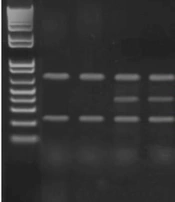
Genomic DNA extraction and genotyping: Blood samples were collected in 2 mL Na-EDTA tubes from patients and healthy controls. Genomic DNA was extracted from peripheral blood leukocytes by salting out method [9]. The 86 bp VNTR region of IL-1Ra gene was analyzed by polymerase chain reaction (PCR). Two oligonucleotide primers forward: 5'- CTC AGC AAC ACT CCT AT -3' and reverse: 5-' TTC CAC CAC ATG GAA C -3' based on flanking region of the IL-1Ra gene were used. PCR reaction was performed in a 25 μL final volume contained 25 pM of each primer, 0.1 mM of dNTP (Fermentas, Lithuania), 0.5 μg of genomic DNA, 1.5 mM of MgCl, 2 and 2.5 μL of PCR buffer and 1.5 unit of Taq DNA polymerase (Fermentas, Lithuania) according to the following protocol: initial denaturation at 94ºC for 4 min; 30 cycles of denaturation at 94°C for 45 s, annealing at 51°C for 30 s, and extension at 72ºC for 45 s; and final extension at 72°C for 5 min. PCR products were separated by electrophoresis on a 2.5% agarose gel and visualized by ethidium bromide staining. The IL-1Ra alleles were described as follow: allele 1, four repeats; allele 2, two repeats; allele 3, five repeats; allele 4, three repeats and allele 5, six repeats.
Statistical analysis: Data was analyzed using the statistical software SPSS-18 (SPSS, Chicago, IL). The differences between groups were analyzed by independent sample t-test, χ2 test or Fisher's exact test, whenever appropriate. Direct gene counting method was used to determine the allele frequency. The genotypes and alleles frequency were compared between SLE patients and controls by χ2 test and Fisher's exact test. The odds ratio (OR) and 95% confidence intervals (95% CI) were also estimated. Values of p<0.05 were considered statistically significant.
Results
Demographic data of SLE patients and control group are shown in table1. There were no significant differences for gender and ethnicity between SLE patients and controls. Moreover, there was no significant difference between the mean age between control group 32.1±11.7 years and SLE patients 32.6±8.6 years.
Dermomucus manifestations developed in 85% of SLE patients. Arthritis was found in 84% of patients, whereas neuropsychiatric manifestations were observed in 17% of patients. Lupus nephritis was developed with raised serum creatinine in 27% of patients.
The genotypes and alleles frequency of IL-1Ra VNTR polymorphism are shown in table 2. The frequency of 1/1 and 1/2 and 2/2 genotypes were 39.3, 44.2 and 11% in SLE patients and 40, 44.4 and 11.7% in healthy controls respectively which were not significantly different. We found higher frequency of 1/4 genotype in the SLE patients (5.5%) than healthy controls (0%) that were statistically different and risk of SLE was 2.1 times higher in individuals with 1/4 genotype (OR, 2.1 [95% CI, 1.8 to 2.5]; p=0.002). Moreover the frequency of 1/3 genotype was significantly higher in healthy controls than SLE patients and 1/3 genotype could have protective effect against SLE (OR, 0.53 [95% CI, 0.5 to 0.6]; p=0.046). We observed 3/2 genotype frequency only among healthy group however, this difference was not statistically significant.
SLE patients had a significantly lower frequency of allele 3 (OR, 0.52 [95% CI, 0.48 to 0.57]; p=0.01) and a higher frequency of allele 4 (OR, 2.1 [95% CI, 1.9 to 2.3]) compared with controls which was significant (p=0.001).
Furthermore the association between IL-1Ra genotypes and SLE manifestations was evaluated and no significant differences were observed (data not shown).
Table 1.
Demographic characteristics of SLE patients and controls
| Parameter | SLE N=163 | Controls N=180 | p-Value | χ2 | |
|---|---|---|---|---|---|
| Age (yr) | 32.6±8.6 | 32.1±11.7 | 0.68 | 0.04 | |
| Sex (male/female) | 13/150 | 14/166 | 0.6 | 0.04 | |
| Race N(%) | Persian | 82 (50) | 86 (48) | 0.36 | 0.27 |
| Balouch | 81 (50) | 94 (52) | |||
Table 2.
Genotypes and alleles frequency of IL-1Ra VNTR polymorphisms in SLE patients and controls
| IL-1Ra VNTR polymorphisms | SLE patients N=163 | Controls N=180 | p-Value | Odds ratio |
|---|---|---|---|---|
| Genotype N (%) | ||||
| 1/1 | 64 (39.3) | 72 (40) | Ref=1 | |
| 1/2 | 72 (44.2) | 80 (44.4) | 0.5 | 1 (0.6-1.6) |
| 1/3 | 0 (0) | 5 (2.7) | 0.046 | 0.53 (0.5 -0.6) |
| 1/4 | 9 (5.5) | 0 (0) | 0.002 | 2.1 (1.8-2.5) |
| 2/2 | 18 (11) | 21 (11.7) | 0.5 | 1 (0.5-2) |
| 3/2 | 0 (0) | 2 (1.1) | 0.3 | 0.53 (0.42-0.62) |
| Alleles, N (%) | ||||
| 1 | 209 (64.1) | 229(63.6) | Ref=1 | |
| 2 | 108 (33.1) | 124(34.4) | 0.4 | 1 (0.7-1.3) |
| 3 | 0 (0) | 7 (2) | 0.01 | 0.52 (0.48-0.57) |
| 4 | 9 (2.8) | 0 (0) | 0.001 | 2.1 (1.9-2.3) |
Discussion
In the present study we observed a significant association between 1/4 genotype of IL-1Ra VNTR polymorphism and SLE in South East of Iran. The risk of SLE in individuals with 1/4 genotype was 2.1 times higher than individuals with 1/1 genotype. Moreover the frequency of 1/3 genotype was significantly lower in SLE patients than healthy controls therefore this genotype could have protective effect on SLE susceptibility. The frequency of allele 4 was higher and the frequency of allele 3 was lower in SLE patients than healthy controls which both were statistically significant. However, we did not found any association between 2/2 genotype or allele 2 of IL-1Ra polymorphism and SLE susceptibility and manifestations. IL-1Ra is natural antagonist of IL-1 receptors which acts as a competitive inhibitor of IL-1. This anti-inflammatory cytokine occupies IL-1 cell surface receptors without signal transduction, therefore prevents inflammatory effects of IL-1 [7]. There are several reports about altered I-1Ra levels in different autoimmune disease such as RA [10] and SLE [11]. Results from using of neutralizing anti-IL-1Ra antibodies that increase endogenous IL-1Ra showed the natural anti-inflammatory effect of this protein in colitis, arthritis, and granulomatous pulmonary disease [7].
There is potential protein binding sites in an 86-bp sequence of IL-1Ra gene with different number of repeats that could influence IL-1Ra transcription and production [9]. The number of this VNTR copies varies from 2 to 6 in different persons. The frequency of the alleles differs among different ethnic or geographic populations, but allele 1 is more common than allele 2. The frequency of other alleles is very low [12].
It seems that distinct numbers of 86bp VNTR copies affect the transcriptional activity IL-1Ra gene. Some evidences show that individuals with 2/2 genotype of IL-1Ra had higher circulating IL-1Ra levels than subjects with other genotypes. Moreover Witkin et al. indicated that individuals with 2/2 genotype of IL-1Ra polymorphism have a more continued and more severe pro- inflammatory immune response than subjects with other IL-1Ra genotypes [13].
Different studies performed about the association between IL-1Ra VNTR polymorphism and SLE susceptibility. In contrast to results of present study, most studies demonstrated an association between allele 2 of the IL-1Ra VNTR polymorphism and SLE in different populations [8].
Liou et al. showed a relation between IL-1Ra that secreted by monocytes and serum CRP(C- Reactive Protein) with systemic lupus erythematous disease activity (SLEDAI) in Taiwan. They suggested that IL-1Ra assay may be used as a surrogate CRP in untreated lupus patients [12].
Brugos et al. reported higher IL-1Ra levels in active SLE patients with and without lupus nephritis (LN) in compare with healthy controls. IL-1Ra was significantly higher in patients with active LN than in patients with inactive LN therefore, SLE patients with higher IL-1Ra are at lower risk for developing nephritis [14].
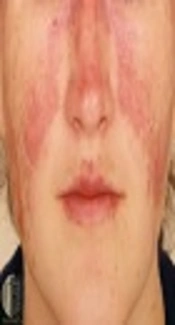
In one of the first reports about the association of IL-1Ra VNTR polymorphism and SLE, Danis et al. in Australia found a slight decrease in frequency of allele 2 in SLE patients compared with healthy controls and in patients with malar rash compared to those without this symptom [15].
In contrast, Suzuki et al. showed a higher frequency of IL-1Ra allele 2 in SLE patients than controls in Japanese patients [16].
Tjernström et al. in Sweden presented that allele 2 increased SLE risk moderately, nevertheless the occurrence of allele 2 and MHC class II variants DR17 and DQ2 together increased the risk of develop SLE near to sevenfold. They observed IL-1Ra polymorphism did not correlate with disease severity or LN. Serum level of IL-1Ra did not correspond to any specific IL-1Ra allele [17]. Indeed, there were no differences in the frequencies of IL-1Ra genotypes and alleles between cases and controls in D'Alfonso et al. [18] and Lee et al. [19] studies in Italy and Korea respectively. Huang et al. [20] indicated that IL-1Ra 2 frequency was significantly higher in SLE patients than in normal controls in Chinese population of Taiwan. However, there was no association between the IL-1Ra 2 frequency and clinical manifestations.
Our results are somewhat consistent with other studies in the southeastern United States and China. Parks et al. [21] indicated that allelic variation at IL-1Ra VNTR polymorphism was significantly associated with SLE in African Americans. Similar to our results, individuals who carriage IL-1Ra allele 3 were significantly less common in African-American cases than in controls and inversely associated with SLE. In contrast to our results they found that variation in IL-1Ra was not significantly associated with SLE in whites, although IL-1Ra allele 2 was more common in patients with SLE than controls. Indeed Tsai et al. [22] did not observe any association between IL-1Ra polymorphism and SLE. Furthermore they presented that IL-1Ra isoform 4 expression was higher and IL-1Ra isoform 1 was lower in SLE patients than normal controls, therefore IL-1Ra and its isoforms could be involved in the SLE pathogenesis.
As mentioned above, there was an association between allele 2 and SLE in Japan, Sweden and Taiwan [14, 17, 18]. However no association was observed between this polymorphism and SLE in Italy and Korea [19, 20]. Similar to present study Parks et al. [21] and Tsai et al. [22] reported different results about the effects of allele 3 and 4 on SLE susceptibility. This discrepancy is usual in association studies especially due to racial differences [12].
Our study suffered from some limitations for example low sample size, environmental conditions and different ethnic groups (Balouch and Fars) existing in south east of Iran. Therefore further investigations using a larger sample size and different ethnic groups are necessary to confirm the present findings.
In conclusion, we observed an association between allele 4 of IL-1Ra polymorphism and SLE. We found inverse association between allele3 and SLE too. Moreover our data did not support the IL-1Ra allele 2 as a genetic susceptibility marker for SLE disease.