
1. Background
Cancer is a serious health problem in developed and under-developed countries. Cancer incidence rate is increasing in children and adults in the global population (1). Cancer is the third cause of mortality in Iran after coronary heart disease and accidents (2).
Adult and pediatric cancer patients experience physical and psychological effects during treatment. Fatigue is a common and serious symptom for cancer patients. The effect of fatigue on the quality of life of cancer patients may be negative (3) and may influence the patient’s ability to complete treatment (4). Studies show that 90% of patients with cancer experience fatigue during the treatment process; and more than 50% of patients report fatigue even after the end of treatment (5). The study of fatigue in cancer patients is a global issue for researchers. Cancer-related fatigue is an important issue that increases stress and anxiety in patients and caregivers and is a common symptom in many types of cancers, which is often overlooked and not treated (6). Fatigue in patients with cancer is more severe and stable than healthy people and does not improve with sleep and rest. Cancer-related fatigue affects the ability and function of the patient in daily activities, delays the patient’s treatment, and in some cases, leads to a reduction in the survival of the individual (7). Fatigue is a multidimensional concept with several definitions: Physical dimension (lack of energy and need for rest), cognitive dimension (deficits in concentration and attention), and emotional dimension (lack of motivation or interest) (8).
Initially, it is important to define cancer-related fatigue (CRF). Cancer-related fatigue has been defined by the National Comprehensive Cancer Network as “a distressing, persistent, subjective sense of physical, emotional, and/ or cognitive tiredness or exhaustion related to cancer or cancer treatment that is not proportional to recent activity and interferes with usual functioning” (9). The cause of CRF has not been well-known until now. A better understanding of possible factors affecting fatigue in cancer patients may lead to the development of a structured intervention for patients. Carnitine deficiency in patients with cancer may promote the risk of chronic fatigue, which may be caused due to reduction in the use of long-chain fatty acids in energy metabolism (10), enhanced metabolic requirements, and treatment with medications that disrupt the metabolism of carnitine (3).
Considering that fatigue is considered as a multi-dimensional problem (sensory, physiological, affective and behavioral manifestations) (11), healthcare staff must have a complete understanding of fatigue to provide better services to reduce fatigue in patients with cancer in clinical settings. Therefore, it is necessary to have a reliable and valid tool to examine all aspects of cancer-related fatigue in adults with cancer. The best strategy for managing fatigue is identifying signs of fatigue. Therefore, before any treatment intervention, signs related to fatigue should be identified. There are a wide range of factors associated with cancer, such as socioeconomic factors (gender, level of education, occupation, etc.) and clinical features of the disease (stage of disease, type of cancer, treatment method, etc.).
2. Objectives
The aim of this study was to construct a reliable and valid questionnaire to examine cancer-related fatigue in adults with cancer.
3. Methods
3.1. Study Setting and Sample
This was descriptive-cross sectional study performed in Yazd. Patients, who participated in this study were patients with cancer that had referred to Shahid Sadoughi Hospital (Yazd/Iran) for the treatment of cancer. The sample size was calculated as 141 (based on CI = 95%, SD = 4.25 based on a similar study (12) and error estimation of the mean of 0.7). The sample size was increased to 150 patients due to the possibility of missing cases. Sampling was conducted based on the convenience sampling (availability sampling) method.
Inclusion criteria in this study included: (1) Confirmation of cancer in patients by the doctor, (2) beginning of the process of treatment, (3) age range over 18 years, and (4) consent to participate in this study. The patients, who failed to answer all the questions were excluded from this study. Researchers completed the questionnaires by a face-to-face interview with patients at Shahid Sadoughi Hospital.
3.2. Instrumentation
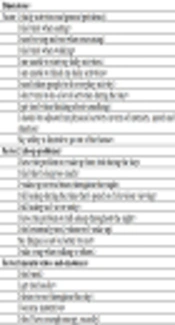
Data were collected by a researcher-made questionnaire. In this study, a questionnaire was designed to examine cancer-related fatigue. The questionnaire consisted of 24 items that were grouped to three categories: Daily activities and general problems (ten questions), sleep problems, (nine questions) mental states, and emotions (five questions). A four-point Likert-type range was used for scaling (0 = never, 1 = sometime, 2 = usually, and 3 = always).
The stages of the questionnaire design were as follows: (1) Study on definitions of cancer-related fatigue, (2) reviewing a number of questionnaires about fatigue, such as multidimensional fatigue inventory (MFI) and fatigue severity scale (FSS), (3) gathering the factors affecting cancer-related fatigue, (4) gathering a set of questions about cancer-related fatigue, (5) random distribution of questions in the questionnaire and grading scale, (6) assessing the face and content validity of the questionnaire, (7) collecting data by a face-to-face interview, (8) assessing the construct validity of the questionnaire, and (9) measuring the reliability of the questionnaire.
3.3. Statistical Analysis
The SPSS version 21.0 was used for Statistical analyses. The statistical analysis included descriptive statistics, t-test, analysis of variance (ANOVA), and Pearson’s correlation. The researchers used face validity (according to experts’ suggestions), content validity (calculating content validity ratio (CVR) and content validity index (CVI)), and construct validity (using factor analysis) to determine the validity of the questionnaire. The reliability of the questionnaire was determined using the Cronbach alpha coefficient and the test-retest method.
3.4. Ethical Considerations
This article was the result of a research project number 4612, approved by the research center of prevention and epidemiology of non-communicable disease, Shahid Sadoughi University of Medical Sciences. This study obtained a license from the research Ethics Committees of Shahid Sadoughi University of Medical Sciences, code IR.SSU.SPH.REC.1394.64.
4. Results
4.1. Assessment of Validity
Face validity was examined through suggestions of the expert panel. The panel of experts comprised of individuals with expertise related to this study. Each section of the questionnaire was allocated to a relevant specialist and they were asked to offer their suggestions for the clarity and content of the questions. Also, they were asked to give a score to each question (1 = accept, 0 = reject). According to the experts’ suggestions for the questions, unnecessary items were removed and required changes were made to the questionnaire. In addition, the clarity, relevance, and simplicity of questions were verified by the expert panel.
Content validity was assessed by calculating the CVR and CVI. For this purpose, the questionnaire was provided to 10 specialists and they were asked to choose one of the three options for each question, including “necessary”, “useful but not necessary” and “not necessary”; then CVR was calculated for each question. All professionals choose the “necessary” option for all the questions. Therefore, according to the number of specialists and the Lawshe’s formula, the CVR for all questions was obtained as one.
Then, CVI was calculated for all questions. The results showed that CVI for the entire questionnaire was 0.89. The results showed that face validity and content validity of the questionnaire was proper. In this phase, 27 questions were entered in the questionnaire. Finally, a four-point Likert-type scaling was used for scoring procedures (never = 0, sometimes = 1, usually = 2, always = 3). The questionnaire ranged from 0 to 100. In this study, the factor analysis method was used to test the construct validity of the questionnaire. The results of the factor analysis, dimensions of the questionnaire and questions of each dimension are shown in Table 1. After performing factor analysis, three questions were removed from the questionnaire. The final questionnaire had 24 questions. According to the results of factor analysis using principal components analysis, this questionnaire had three categories including: Daily activities and general problems (ten questions), sleep problems (nine questions), mental states, and emotions (five questions).
Table 1.
Factor Analysis Using Principal Component
| Dimensions | Factor Loading | Eigen Values | % of Variance | Cumulative, % |
|---|---|---|---|---|
| Factor 1 (daily activities and general problems) | 9.02 | 33.41 | 33.41 | |
| I feel tired when eating | 0.76 | |||
| I need to stop and rest when exercising | 0.76 | |||
| I feel tired when walking | 0.72 | |||
| I am unable to start my daily activities | 0.81 | |||
| I am unable to finish my daily activities | 0.77 | |||
| I need others people to do everyday activity | 0.71 | |||
| I don’t tend to do a lot of activities during the day | 0.56 | |||
| I get tired when thinking about something | 0.7 | |||
| I should be adjusted my physical activity in term of intensity, speed and duration | 0.64 | |||
| My ability is limited to go out of the house | 0.55 | |||
| Factor 2 (sleep problems) | 4.77 | 17.67 | 51.09 | |
| I have the problem to wake up from bed during the day | 0.68 | |||
| I feel that I sleep too much | 0.5 | |||
| I wakes up several times throughout the night | 0.62 | |||
| I fall asleep during the time that I spend on Television viewing | 0.89 | |||
| I fall asleep as I sit or study | 0.91 | |||
| I have the problem to fall asleep throughout the night | 0.71 | |||
| I feel extremely tired, whenever I wake up | 0.62 | |||
| My fatigue is not be better by rest | 0.66 | |||
| I take a nap when talking to others | 0.88 | |||
| Factor 3 (mental states and emotions) | 3.85 | 14.29 | 65.38 | |
| I feel tired | 0.85 | |||
| I get tired easily | 0.85 | |||
| I desire to rest throughout the day | 0.79 | |||
| I become inattentive | 0.61 | |||
| I don’t have enough energy, recently | 0.60 |
4.2. Assessment of Reliability
Researchers used two methods to assess the reliability of this questionnaire including: (1) Cronbach’s alpha coefficient method and (2) test-retest. According to Table 2, Cronbach’s alpha coefficients were more than 0.8 for all dimensions of the questionnaire. The alpha coefficient was 0.93 for the entire scale. The highest coefficient was for dimensions of daily activities and general problems. The dimension of sleep problems had the lowest coefficients.
Table 2.
Reliability Coefficients of Questionnaire
| Variables | ICC | Cronbach’s Alpha | P Value |
|---|---|---|---|
| Daily activities and general problems | 0.92 | 0.86 | < 0.001 |
| Sleep problems | 0.9 | 0.81 | < 0.001 |
| Mental states and emotions | 0.84 | 0.85 | < 0.001 |
| Total | 0.92 | 0.93 | < 0.001 |
The second method to test the reliability of the questionnaire was test-retest. For this purpose, initially, the questionnaire was completed by 40 patients. After four weeks, the questionnaire was completed again by the same patients. According to the result, ICC was in the range of 0.84 to 0.92; ICC was 0.92 for the total questionnaire. The ICC was close to one for all dimensions of the questionnaire, which indicated that reproducibility was high for all dimensions of the questionnaire (Table 2).
4.3. Association Between Fatigue and Clinical and Demographic Information
In this study, the average age of participants was 55.03 ± 9.38 years and the average duration of the cancer was 12.45 ± 6.94 months. The results showed that the total mean of fatigue was 53.44 ± 16.61 of the total score of 100. Furthermore, the mean of each dimension of the questionnaire were as follows: The mean of daily activities and general problems was 24.93 ± 9.1 from the total score of 44, the mean of sleep problems was 16.79 ± 6.9 from the total score of 36, and the mean of mental states and emotions was 11.53 ± 3.2 from the total score of 20. The results showed that 8.82 of patients had mild fatigue, 63.9% had moderate fatigue, and 27.2 % had severe fatigue. There were significant differences between the total mean of fatigue and gender (P = 0.015), job (P = 0.01), and economic status (P < 0.001).
5. Discussion
In this study, researchers designed a comprehensive questionnaire for investigating fatigue in cancer patients. Face validity of the questionnaire was assessed by professionals. Based on their suggestions about the clarity and content of suggestions, necessary changes in the questionnaire were made. Factor analysis method is one of the most common ways for measuring construct validity. Based on the factor analysis method, construct validity was confirmed and the dimensions of the questionnaire were extracted. Factor analysis, using principal components analysis, indicated that cancer-related fatigue questionnaire is a multidimensional instrument. Dimensions of the questionnaire included: Daily activities and general problems, sleep problems, mental states, and emotions. Other questionnaires that were previously used to evaluate fatigue were multi-dimensional tools. The questionnaire designed by Bektas and Kudubes’ study had four dimensions including: General problems sleep problems, treatment problems, and cognitive problems (13). Chronic fatigue syndrome (CFS) has three dimensions including physical, emotional, and cognitive dimensions (14). The multidimensional fatigue inventory (MFI) also has five dimensions, including general fatigue, physical fatigue, mental fatigue, reduced motivation, and reduced activity (15). Results of the present study about the multidimensional nature of the questionnaire were consistent with other studies (14, 16, 17). This shows that fatigue is not a one-factor problem, and its complexity requires a multi-factor questionnaire.
Determining the reliability of a questionnaire is one of the most popular methods in designing a questionnaire. Although having reliability is not a sufficient condition, it is required. In medical science, researchers use Cronbach's alpha coefficient for measuring the reliability of scales. If Cronbach’s alpha is close to one, it shows that the internal consistency between questions is greater; and questions have high homogeneity (18). In this study, Cronbach’s alpha was close to one for all dimensions of the questionnaire. Cronbach’s alpha for this questionnaire was in an excellent range (α ≥ 0.9). This indicates that the reliability of the questionnaire was acceptable.
Another method for assessing the reliability of the questionnaire in this study was test-re-test. One of the most common methods for ensuring the stability of an instrument over time is test-retest correlation. In other words, in this way, the same questionnaire is completed by the same people at different times. Then, the correlation between the result is examined and the consistency of the questionnaire is evaluated using the inter-class correlation coefficient (ICC) (18). The results showed that ICC obtained in this study was close to one for all dimensions. This showed that the questionnaire has a high repeatability. This result is similar to a study conducted in the field of fatigue in Turkey (1).
The results showed that fatigue was moderate in more than half of the patients. These results are consistent with the findings of some other studies (8, 19). In the study of Safaee et al. (20). 78% of patients with cancer experienced fatigue and in the study of Aston et al. (21) 68% of patients had different degrees of signs and symptoms of fatigue. The continuation of the disease and the application of different treatment methods and even the side effects of anticancer drugs may reduce the body’s physical capacity and increase fatigue with the onset of treatment in the patient.
5.1. Conclusions
This study showed that cancer-related fatigue questionnaire has an acceptable and suitable validity and reliability. Based on the results of this study, other researchers can use this valid and reliable questionnaire to investigate fatigue in patients with cancer aged 18 years and older. Also, considering that fatigue was an important and widespread problem in patients with cancer in this study, training of fatigue reduction techniques by the treatment team members is one of the effective measures to cope with fatigue in patients and their family members.