1. Background
The history of scientific and clinical analysis of brain from the perspective of language functions goes back to a very long time ago. Neurolinguistics is a branch of cognitive neuroscience, which forms a branch of a wider domain called nerves (1).
Dementia is one of the most common syndromes affecting the ages (2). Suffering from dementia puts much burden on the patients, families and society because it declines the patients daily functioning and leads to loss of independence and more dependence on the others. In fact, “dementia is an acquired, degenerative and usually progressive disorder in cognitive functioning that affects the consciousness content and is a result of a disorder in cortesus, under cortesus relations or both” (3). Furthermore, dementia is a progressive deterioration that despite the normal state of consciousness, the consciousness itself has a failure (4). AD (Alzheimer’s disease) is probably the most significant degenerative neurological disease due to its high prevalence and its being devastating (3).
“This disease, similar to another types of dementia begins slowly and within 1 to 3 years leads to brain dysfunction, inability to control the motor impairment and in the end to devastation and death” (5).
Deficit in short-term memory is usually the first symptom of AD (6). With the development of deficit in memory, the patient first loses his awareness of time and then his awareness of place (7). Paraphasia, logocolonia may also happen (8).
In addition, AD is a type of progressive dementia of which all the reasons that are reversible to health are totally rejected. Besides, AD is a slowly progressive disease that often appears after years of aphasia and Octozi and finally leads to problems in walking and pardysis (9).
From the epidemiological perspective, AD accounts for 50 to 60 percent of dementia cases. Also, AD is more common among women. 5 percent of the people above 65 years old between 10 to 20 percent of those above 80 suffer from AD (3, 10, 11). However, the reason of AD is still unknown, but “the existence of viruses, genetic factors and intolerable levels of Aluminium and immunity system deficiency are influential” (5).
Moreover, Harrison considers the death of nerve cells in the cortex of brain as the main pathological feature of AD and this leads to atrophy in brain. In this phenomenon the cerebral ventriculitis is also evident in AD patients, but it isn’t much severe (4).
One of the tests for diagnosing and confirming AD is MMSE (mini mental state examination) (12). This test was designed by Marchal Folestine in 1970 for screening brain dysfunction (13).
On the other hand, cohesion is one of the most significant concepts in discourse analysis. Discourse analysts believe that there are external elements between a text’s sentences and the context called cohesion devices. They create cohesion and semantic relation among the sentences and contribute to a better comprehension and interpretation of sentences as well as a proper perception of the speaker’s meaning (14).
As said by Dooley and Levinsohn, “cohesion can be defined briefly as the use of linguistic means to signal coherence”. Correspondingly, cohesive signals or ties “indicate how the part of the text with which they occur links up conceptually with some other part” (15). In this regard, morpho-syntactic patterns are grouped as one of the cohesion devices that encompasses consistency of inflectional categories, echoic utterances and discourse-pragmatic structuring. According to Dooley and Levinson, a sequence of clauses and sentences can indicate the consistency of inflectional categories such as tense markers in verbs of sentences (15). Also, Alborzi emphasizes on the mandatory of this device in sentences which is more tangible in narrative texts since the tense refers to the sequence of events in these texts (16). In sentences 1 and 2 (see all examples in supplementary file Appendix 1), the verbs, for example, ʃekӕst ‘broke’, gozɑʃtand, ‘(they) put’, ʃod ‘became’, kӕrdӕnd ‘(they) did’ show a consistency with the verb form in the past tense. This phenomenon demonstrates that they are the events within the main narrative order. While the verbs Ɂɑmӕdim ‘(we) came’ and mirim ‘(we) go, as well as the verbs mikonim ‘(we) do’ and poxtim ‘(we) cooked’ in sentences 3 and 4 display a miscellaneous sequence of simple present tense and simple past tense, actually inconsistency in verb inflection.
In addition, as far as echoic utterances are concerned, there is a kind of, the whole or in part, morpho-syntactic repetition. “An echoic utterance is one which copies all or part of an earlier utterance, and it is obvious that the speaker intends it to do so. The echoic utterance calls attention back to the earlier utterance in order to imply a comment about it” (15). In sentences 5 to 8, words like Ɂesme maen “my name, bamaʃin ‘by car’, Ɂesm-e ʃoma ‘your name’ and morde ‘dead’ refer to some examples of echoic utterances where some words are repeated; however, such repetitions are not fully carried out by the elderly with Alzheimer’s disease, as given in examples 7 and 9. Moreover, as to discourse-pragmatic structuring, only one pattern of this type, point of departure plus predication, has been investigated in this study. Points of departure are used “to link the following predication to something that the hearer is assumed to have already in his or her mental representation” (15). Similarly, the points of departure provide temporal or spatial situations for the expressions which follow them (15). In the examples 10 to 13, words like hӕftejepiʃ ‘last week’, salhabӕɁd ‘years later’ and Ɂӕlan ‘now’ show a discourse-pragmatic structuring in which the sentences are conjoined by temporal signals or markers. But the sentence 14 lacks such signals.
As for language disorders of patients with AD, some studies in English and a few in Persian have been carried out among which the following are reported.
Bates, Harris, Marchman, Wulfek and Kritchevsky have investigated making complex syntactic categories in AD patients and elderly control group’s speech. The results indicated grammatical problems in AD patients in a film description task. The problems did not occur clearly, the patients had problems in finding the best fit between grammatical forms and meaning (17).
Kempler, Curtissan and Jackso using conversational speech samples of AD subjects at the mild to severe stage, compared morpho-syntactical and lexical errors in patients and normed speakers. The results showed people with AD made more lexical than morphosyntactical errors. Also, they demonstrated that people with AD in comparison to normal speakers had similar functioning in using particular syntactical structures. Furthermore, the number of syntactic errors remained low despite the increases in dementia severity (18).
Furthermore, Ripich and Terrell analyzed cohesion devices in the speech of men and women suffering from AD in their longitudinal study. The results displayed people with AD had weak functioning, got worse with passage of time and the number of times using of cohesion devices decreased (19).
Ripich, Carpenter and Ziol analyzed a longitude study in conversational cohesion pattern in men and women with early to mid-stage AD and non-demented elderly. The results revealed significant ellipsis and conjunctions at 18 month post-entry. Likewise, as people with AD produced fewer and shorter utterance across time, their use of all cohesion devices decline (20).
Smith and Knight studied 25 patients with AD in De Flinders clinic in the University of Otego. The objective of this study was to analyze the automatic and controlled effects on memory processing in AD patients using process dissociation procedure. The patient group had fundamental deficits in controlling and remembering their memories as well as a decrease in their ability for automatic memory processing (21).
Khoddam also examined language properties of naming, comprehension, lexical extent and speech speed in elderly with Alzheimer. The result showed the patients had major problems in correctly naming and comprehending complex materials. They also spoke very slowly (22).
Malekzadeh et al. analyzed a 40 minute speech sample of six elderly people with AD and 6 elderly with ordinary speech in Persian language who had the same age, gender and education to carry out a comparative study. The results indicated the elderly with AD were different from the normal people in using grammatical and lexical cohesion devices. This group made more reference errors especially out of context than the normal group, also they used more repetition in using lexical cohesion devices (23).
St.-Pierre, Ska and Beland did a case study of cohesion deficiency in the speech of people with AD. The subjects were 29 people with AD and 29 normal people. The results displayed normal people produced more relevant utterances than irrelevant to the speech topic, while people with AD used relevant and irrelevant utterances equally (24).
Ahangar et al. investigated lexical relations device in speech of elderly Alzheimer patients and non-patients. They found that Alzheimer had a significant effect on the speech of the group with AD. In other words, there was a significant difference between the application of lexical relations device in the speech of the non-patients and elderly Alzheimer patients (25).
Since cohesion devices contribute to the semantic relationship between sentences and a better comprehension of the text, and considering the fact that one of the speech symptoms of the elderly with AD is giving reference to as a result of which the pronouns have no antecedent and the phrases are repetitive (26), it is significant to recognize the differences they have in perceiving and applying cohesion devices to get a better understanding and interpretation of their speech. Further, a small number of studies on the language problems of elderly patients with AD has been done. Therefore, such issues suffice to provide the reason and the necessity of launching the present research.
2. Objectives
The purpose of this study is to examine and compare the comprehension of types or sub-devices of morpho-syntactic patterns as a subset of the cohesion devices by people suffering from AD and the normal ones. Accordingly, it seeks to reject or confirm the hypothesis that there is no significant difference in the comprehension of types of morpho-syntactic patterns device in the speech of Persian elderly patients with AD compared to the normal elderly’s speech.
3. Methods
3.1. Study Design and Subjects
This descriptive-analytic and cross-sectional research explored the speech of 12 monolingual Persian speaking elderly, 74 to 90 years old women. Since the percentage of the elderly women with AD is more than that of men (see reference 4), and also the availability of more number of women rather than men in the given nursing homes, the women were selected to participate in present study. Correspondingly, such a selection contributed to the homogeneity of the research participants. Sampling and the investigation took 5 months. At first, 6 elderly with AD were selected using available sampling method from the patients living in the nursing home in Birjand and Qaen or those who referred to the psychiatrist. The criteria for elderly patients with AD to be included in the research were the satisfaction of the elderly and nursing home caregivers as well as the elderly people’s cooperation in conducting the research procedures. Correspondingly, the control group comprised 6 normal people who were matched through gender, age and education with the elderly with AD. MMSE was taken to ensure that the normal elderly didn’t have AD. Also, the psychiatrist, as the advisor of this study confirmed the normal elderly were in health status. To be sure of correct choice of the qualified participants, the authors employed sample screening as well; therefore, exclusion criteria were determined. Exclusion criteria, in accordance with psychiatrist recognition and existing information in the patients’ medical files, were having a higher education, the absence of the elderly in desired age range, the absence of blindness and deafness, the absence of any problem in speech and communication other than Alzheimer’s and lack of cooperation of the elderly in the research process. To gather the linguistic data, the free and descriptive speech of these people were recorded. After filling out the personal information questionnaire, an MMSE test, the standard of Alzheimer recognition, was used to verify the Alzheimer symptoms.
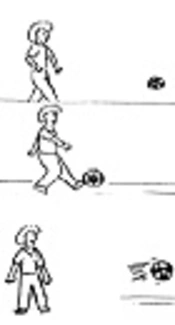
As for the permission of the subjects’ families to cooperate, one of the researchers or the psychiatrist explained how the research will be carried out. They then got verbal permission to record the speech of those 12 elderly. In order to omit factors causing anxiety or any spiritual pressure, the researchers made a close relationship with the elderly in advance. It should be noted that the elderly participated were not exposed to risk physically or socially. They were allowed to join in voluntarily. The researchers let the elderly to feel free to withdraw at any time they wished. Voice recording was done in a quiet room where one of the researchers, an elderly and the nurse were present. In the process of data gathering, the elderly people with and without AD spoke separately about everything he/she wished in free conversations. He/she also answered the questions about personal information (where are you from? what’s your name? etc.), past memories (when you were young, where did you travel? and so on), entertainments (which film do you like? etc.). Moreover, in the descriptive speech, some of the images were individually shown to both groups of the subjects, too. He/she was asked to explain the images (the story of “a sparrow” and the story of “cooperation at home”), and describe the recipe. As the elderly felt more comfortable with their nurses, they talked with them. Their voice was recorded by an MP3 player with Creative brand.
It is worth mentioning that all pieces of information collected in sampling via recording and testing was kept confidential. After data transcription, instances of morpho-syntactic patterns employed in the speech of both groups were extracted and then compared. All statistical information related to each group were separately provided in tables to be analyzed via SPSS software and an independent T-test.
3.2. Clinical Assessments
In this research, the MMSE test was performed on the subjects. The results indicated that the score of 22 can segregate the elderly with dementia. The psychiatrist of this study as one of the authors recognized the AD. He determined the severity of the disease via the MMSE test (scores more than 25 showed the normal, 10 to 19 mild Alzheimer and 10 sever Alzheimer with elusion).
4. Results
In this section, the results of the study on morpho-syntactic patterns device are introduced in terms of consistency of inflectional categories, echoic utterances, and discourse pragmatic structuring. Frequency, percentage and average of morpho-syntactic patterns device in the speech of two groups under study are also described, analyzed and compared by the independent T-test.
In this corpus study, the speech of 6 elderly with AD and 6 normal elderly with the age range of 74 - 90 years were studied and compared. The demographics information of the subjects are presented in Table 1.
Table 1.
Demographic Information of Elderly People
| Samples | Age | Gender | Education | Marital States |
|---|---|---|---|---|
| Alzheimer elderly | 89 | Female | First elementary school | Married |
| Alzheimer elderly | 76 | Female | Second elementary school | Married |
| Alzheimer elderly | 75 | Female | Third elementary school | Married |
| Alzheimer elderly | 83 | Female | First elementary school | Married |
| Alzheimer elderly | 72 | Female | Second elementary school | Married |
| Alzheimer elderly | 84 | Female | Second elementary school | Married |
| Normal elderly | 85 | Female | Third elementary school | Married |
| Normal elderly | 78 | Female | Forth elementary school | Married |
| Normal elderly | 81 | Female | Second elementary school | Married |
| Normal elderly | 77 | Female | Fifth elementary school | Married |
| Normal elderly | 84 | Female | First elementary school | Married |
| Normal elderly | 76 | Female | Third elementary school | Married |
In addition, MMSE scores were compared in the elderly group with AD and the control group by t- test. The t-test results showed a significant difference between the two groups in the MMSE test, P = 0.00, t = 22.48.
Besides, Kolmogorov-Smirnov test was used to verify the normality of the data. The results of this test showed that the distribution of data in all variables in the control group was normal (Consistency of inflectional categories in normal elderly P = 0.20, in Alzheimer elderly P = 0.20, Echoic utterances in normal elderly P = 0.11, in Alzheimer elderly P = 0.20, Discourse-pragmatic structuring, in normal elderly P = 0.11, in Alzheimer elderly P = 0.09). Therefore, t-test was used to examine the difference between the two groups in using of various types of morpho-syntactic patterns device.
As shown in Table 2, there is a considerable difference between the frequency and percent of morpho-syntactic patterns device subsets in the speech of the Alzheimer and normal elderly people.
Table 2.
Frequency and Percent of Morpho-Syntactic Patterns Device Subsets in the Speech of the Alzheimer and Normal Elderly People
| Morpho-Syntactic Patterns Device Subsets | Elderly Alzheimer’s Patients | Normal Elderly People | ||
|---|---|---|---|---|
| Frequency | % | Frequency | % | |
| Consistency of inflectional categories | 29 | 70.7 | 82 | 84.5 |
| Echoic utterances | 7 | 17.1 | 4 | 4.1 |
| Discourse-pragmatic structuring | 5 | 12.2 | 11 | 11.4 |
| Total | 41 | 100 | 97 | 100 |
In addition, as given in Table 3, the mean of the application of consistency of inflectional categories, echoic utterances and discourse pragmatic structuring ratio in the speech of both groups show a significant difference.
Table 3.
Median, Mean, Standard Deviation And Standard Error of Mean of Morpho-Syntactic Patterns Device Subsets in the Speech of the Alzheimer and Normal Elderly People
| Morpho-Syntactic Patterns Device Subsets | No. | Median | Mode | Mean ± SD | Std/ Error Mean |
|---|---|---|---|---|---|
| Consistency of inflectional categories | |||||
| Normal elderly | 6 | 13 | 7 | 13.67 ± 6.38 | 2.60 |
| Alzheimer elderly | 6 | 4.5 | - | 4.83 ± 4.12 | 1.68 |
| Echoic utterance | |||||
| Normal elderly | 6 | 0.5 | 0 | 0.67 ± 0.82 | 0.33 |
| Alzheimer elderly | 6 | 1 | 1 | 1.17 ± 1.16 | 0.48 |
| Discourse-pragmatic structuring | |||||
| Normal elderly | 6 | 1.5 | 1 | 1.83 ± 1.72 | 0.703 |
| Alzheimer elderly | 6 | 0.5 | 0 | 0.83 ± 0.983 | 0.401 |
| Total | |||||
| Normal elderly | 6 | 14.8 | 8 | 16.17 ± 7.14 | 2.91 |
| Alzheimer elderly | 6 | 7 | 7 | 6.83 ± 5.08 | 2.07 |
Correspondingly, as displayed in Table 4, the significance level of the comprehension of morho-syntactic patterns sub-sets employed by the elderly with AD and the normal elderly is meaningful. In line with this Table, as to the consistency of inflectional categories (P = 0.017). In echoic utterances (P = 0.41). Also, as for discourse pragmatic structuring (P = 0.245). So whereas the there is a significant relationship in the comprehension of the consistency of inflectional categories, there is not a significant relationship in the comprehension of echoic utterances and discourse-pragmatic structuring between the two groups of the subjects. Even so, the total significance level of the test (P = 0.026). Thus, there is totally a significant relationship between the comprehension of the sub-sets of morpho-syntactic patterns device by the Alzheimer and the normal elderly individuals. The performance of the elderly with AD and the normal elderly in using morpho-syntactic patterns separately have been presented in Tables 5, 6 and 7).
Table 4.
T-Test Results of Morpho-Syntactic Patterns Device Subsets
| Morpho-Syntactic Patterns Device Subsets | Levene’s Test for Equality of Variances | T | t-Test for Equality of Means | ||
|---|---|---|---|---|---|
| F | P Value | df | P Value | ||
| Consistency of inflectional categories | |||||
| Equal variances assumed | 1.56 | 0.239 | 2.85 | 10 | 0.017 |
| Equal variances not assumed | - | - | 2.85 | 8.55 | 0.020 |
| Echoic utterance | |||||
| Equal variances assumed | 0.537 | 0.481 | 0.859 | 10 | 0.411 |
| Equal variances not assumed | - | - | 0.859 | 8.94 | 0.413 |
| Discourse-pragmatic structuring | |||||
| Equal variances assumed | 0.455 | 0.515 | 1.23 | 10 | 0.245 |
| Equal variances not assumed | - | - | 1.23 | 7.95 | 0.252 |
| Total | |||||
| Equal variances assumed | 1.50 | 0.248 | 2.61 | 10 | 0.026 |
| Equal variances not assumed | - | - | 2.61 | 9.03 | 0.028 |
Table 5.
Consistency of Inflectional Categories
| Variables | Picture | Recipe | Speech | Total |
|---|---|---|---|---|
| Normal elderly | 2.00 | 3.00 | 12.00 | 17.00 |
| Normal elderly | 3.00 | 2.00 | 10.00 | 15.00 |
| Normal elderly | 2.00 | 2.00 | 20.00 | 24.00 |
| Normal elderly | 2.00 | 3.00 | 6.00 | 11.00 |
| Normal elderly | 0.00 | 1.00 | 7.00 | 8.00 |
| Normal elderly | 0.00 | 3.00 | 4.00 | 7.00 |
| Alzheimer elderly | 1.00 | 1.00 | 3.00 | 5.00 |
| Alzheimer elderly | 1.00 | 2.00 | 9.00 | 12.00 |
| Alzheimer elderly | 0.00 | 0.00 | 2.00 | 2.00 |
| Alzheimer elderly | 0.00 | 0.00 | 4.00 | 4.00 |
| Alzheimer elderly | 0.00 | 1.00 | 5.00 | 6.00 |
| Alzheimer elderly | 0.00 | 0.00 | 0.00 | 0.00 |
Table 6.
Echoic Utterances
| Variables | Picture | Recipe | Speech | Total |
|---|---|---|---|---|
| Normal elderly | 0.00 | 0.00 | 1.00 | 1.00 |
| Normal elderly | 0.00 | 0.00 | 1.00 | 1.00 |
| Normal elderly | 0.00 | 0.00 | 0.00 | 0.00 |
| Normal elderly | 0.00 | 0.00 | 0.00 | 0.00 |
| Normal elderly | 0.00 | 0.00 | 0.00 | 0.00 |
| Normal elderly | 1.00 | 0.00 | 1.00 | 2.00 |
| Alzheimer elderly | 0.00 | 0.00 | 2.00 | 2.00 |
| Alzheimer elderly | 1.00 | 0.00 | 2.00 | 3.00 |
| Alzheimer elderly | 0.00 | 0.00 | 0.00 | 0.00 |
| Alzheimer elderly | 0.00 | 0.00 | 1.00 | 1.00 |
| Alzheimer elderly | 0.00 | 0.00 | 1.00 | 1.00 |
| Alzheimer elderly | 0.00 | 0.00 | 0.00 | 0.00 |
Table 7.
Discourse-Pragmatic Structuring
| Variables | Picture | Recipe | Speech | Total |
|---|---|---|---|---|
| Normal elderly | 0.00 | 0.00 | 5.00 | 5.00 |
| Normal elderly | 0.00 | 0.00 | 1.00 | 1.00 |
| Normal elderly | 0.00 | 0.00 | 2.00 | 2.00 |
| Normal elderly | 0.00 | 1.00 | 0.00 | 1.00 |
| Normal elderly | 0.00 | 0.00 | 0.00 | 0.00 |
| Normal elderly | 0.00 | 0.00 | 2.00 | 2.00 |
| Alzheimer elderly | 0.00 | 0.00 | 2.00 | 2.00 |
| Alzheimer elderly | 0.00 | 0.00 | 0.00 | 0.00 |
| Alzheimer elderly | 0.00 | 0.00 | 0.00 | 0.00 |
| Alzheimer elderly | 0.00 | 1.00 | 1.00 | 2.00 |
| Alzheimer elderly | 0.00 | 0.00 | 0.00 | 0.00 |
| Alzheimer elderly | 0.00 | 0.00 | 1.00 | 1.00 |
5. Discussion
As the results of data analysis of the morpho-syntactic patterns device sub-sets in this study demonstrated, with reference to the consistency of inflectional categories, there was a significant difference between the comprehension of verb inflections in normal elderly and the ones with AD. In this regard, examples 1 and 2 revealed that the normal elderly employed correct verb inflections in tense consistency while, as given in example 3 and 4 the patients with AD didn’t use such consistency of verb inflections. In terms of echoic utterances as shown in examples 5 to 8, there was not a decisive difference between the results of the two groups of the subjects, as a result, the difference was so slight that it could be ignored. As to the third subset, discourse-pragmatic structuring (see examples 10 to 14), the difference was not so substantial as well. On the other hand, The analyzed and compared T-tests showed that there was totally a statistically significant difference between the comprehension of morpho- syntactic patterns device subsets in the speech of the normal elderly people and those with AD, that is, entirely, the significance level was 0.026 which was less than 0.05. Thus, as comprehension precedes the production or the usage of linguistic data, it seems that such a significant difference in the occurrence of morpho-syntactic patterns sub-devices in the speech of the two groups of subjects, in fact, gives rise to the idea that AD, because of the death of brain cells, can have an effect on the comprehension of these sub-devices, in turn, as one of the subdivisions of cohesion devices in the domain of discourse analysis. This result is in alignment with Aminoof who argues that Alzheimer which is diagnosable just after death can affect the brain structure (3).
Also, as the use of linguistic data can be considered as manifestations of what comprehended by the subjects, the results of this study are in line with some investigations in the field of language disorders of patients with AD. Bates et al. believe that the elderly with AD have grammatical errors because they have problems in finding the best fit for form and meaning (17). So, the results of the present study are in alignment with the results of the study by Bates et al. (17). Malekzadeh et al. also studied the cohesion devices on two groups of ordinary and Alzheimer patients and found out a big difference in applying devices in two groups (23). In fact, morpho-syntactic sub-devices are a type of text’s cohesion devices, thus the results of this research are in agreement with those of Malekzadeh et al. (23) as well, regarding the difference in using grammatical and lexical cohesion devices. Because, according to the conclusions of the present study, the elderly with AD have a weaker functioning in comprehending morpho-syntactic elements than the normal elderly. The results of this study are also consistent with the finding of Ripich and Terrell’s study. The analytical evidence obtained by these researchers show that the AD patients don’t use the cohesion devices properly in their speech (19). Such a consistency is due to the fact that the AD patients in the present study have a different functioning from the normal elderly in using morpho-syntactic devices as a type of cohesion device. The findings of this study in which the elderly with AD have problems in comprehending morpho-syntactic devices in general are in proportion to the finding of Ripich, Carpenter and Ziol (20), since in a longitudinal study, they concluded that the elderly with AD lose their ability to use the cohesion devices with passing of time. Moreover, the problems with the correct comprehension of subsets of morpho-syntactic patterns device by the elderly with AD correspond to the results of the work done by Ahangar, Jafarzadeh Fadaki and Sehhati (25). These researchers concentrated on study of the use of the lexical relations device including hyponymy (type of), part-whole, and collocation relations in the speech of elderly Alzheimer patients and non-patients. They held that Alzheimer had a substantial consequence on the speech of the group with AD (25). Thus, in accordance with aforementioned literature, the total results of the present study match up to the findings of some other considerable mentioned works in the domain of discourse analysis. Correspondingly, this study asserts that Alzheimer’s disease can affect the comprehension of cohesion devices, one of which is the morpho-syntactic patterns device.
Nevertheless, the findings of this study are not consistent with the findings of Kempler et al. (18), for the reason that they compared morpho-syntactical and lexical errors in AD patients and people with ordinary speech and concluded both groups had the same functioning in using syntactical structures, while the present study found differences in using morpho-syntactic sub-devices between the two groups. The reason of this contraction might be the small sample of the present study, since it is not possible to generalize the results to the whole population of the elderly with AD.
On the other hand, most of the patients with mid stage to severe AD, in the middle or final stage of the interview, spoke so slowly as if maundering. Henceforth, one of the researchers had to use an MP3 with a higher sound quality and spend many hours a day with patients. As the other limitation of the research worth mentioning, most of the patients’ sentences were defective and ungrammatical, as a result, it required much more time and effort to extract and analyze the exact data in the corpus under study.
This study was done on 6 patients with AD and 6 normal elderly, totally 12 people, so we suggest that the same study should be carried out on a bigger sample and the identified results be compared to attain more accurate and comprehensive information regarding this area of study.