1. Background
Hepatitis B virus (HBV) infection is a major public health problem worldwide. An estimation of about two billion people are infected with this virus around the world (1). Also, more than 360 million cases of chronic infection have been reported, with nearly 80 to 120 million cases occurring in sub-Saharan Africa (1, 2). Additionally, about 620 000 deaths each year are attributed to the consequences of HBV infection (http://www.who.int/immunization/topics/hepatitis/en/).
In sub-Saharan Africa, 44% of liver cirrhosis cases and 47% of hepatocellular carcinoma cases were attributed to HBV (3). HBV is easily transmitted through sexual, parenteral, and vertical routes (4). In endemic areas, a substantial number of HBV infected patients are coinfected with hepatitis C virus (HCV)/HBV and present a greater risk of advanced liver disease, cirrhosis, and hepatocellular carcinoma, compared to monoinfected patients (5).
Burkina Faso is a country with high HBV endemicity (prevalence > 8%) (6). In previous research, the prevalence of HBV infection was 14.5% in the general population and varied between 13% and 19% among blood donors (7, 8). Also, prevalence rates of 12.1% and 9.3% were reported among the staff of Nanoro health district and pregnant women in Ouagadougou, respectively (9, 10). Although a lower prevalence of HCV has been reported in Burkina Faso (8, 11), development of direct-acting antiviral drugs for the treatment of HCV-infected patients reveals the importance of screening (12).
Gaps in HBV vaccination policies were first addressed in 1992, when the world health organization (WHO) called for all countries to incorporate HBV vaccination into their national childhood immunization services. The HBV vaccination program came into effect around 2006 in Burkina Faso for children at 8 weeks after birth. However, since then, no actual HBV control strategy has been applied in the population.
Recently, WHO announced its strategy for prioritizing viral hepatitis. It called for actions to eliminate the disease in most parts of the world and control it in other regions by 2030 (13). Prevention seems to be the public health intervention with the greatest impact on the elimination of viral hepatitis (14). Despite the availability of effective and inexpensive vaccines, the general population remains uninformed about the risks and consequences of HBV infection. This in turn contributes to the reduced rate of health coverage and increased risk of HBV infection in the population.
Screening of undiagnosed people constitutes an important strategy in this area, as the majority of infected patients are unaware of its importance. Use of rapid diagnostic tests (RDTs) against HBV infection is advantageous, as it facilitates early management of patients, limits disease transmission, and recommends vaccination against HBV for uninfected cases (http://www.soshepatites.org /2016/07/27/ cp-jmh/). With this background in mind, development of awareness, screening, and vaccination campaigns can significantly reduce the prevalence of HBV infection in the general population.
2. Objectives
The current study aimed to sensitize, detect, and propose vaccination for people not infected with HBV. It also aimed to determine HBV/HCV coinfection and identify HBV markers in infected patients.
3. Methods
The present study was approved by the Institutional ethics committee of the center for biomolecular research pietro annigoni/laboratory of molecular biology and genetics (CERBA/LABIOGENE). This cross sectional study was conducted in Ouagadougou, Burkina Faso in July 2016 on the world hepatitis day. The study was carried out in collaboration with the “SOS Hepatitis Burkina” association during the awareness and screening campaign, which took place during July 10 - 29, 2016. The campaign was implemented in several localities in and around Ouagadougou (all boroughs of Ouagadougou, rural communes of Tanghin-Dassouri, Komsilga, and Koubri, and rural commune of Ziniare, ie, Loumbila).
We used the media (radio and television), advertisements, brochures, and conferences to raise awareness. Awareness focused on the routes of transmission, risk groups, symptoms, complications, and prevention against hepatitis virus infection. It preceded screening and involved the entire population. Participation was free and voluntary, and participants answered a questionnaire on age, sex, marital status, profession, and vaccination status for HBV.
The convenience sampling method was used in this study to select volunteers attending the campaign; the sampling process was preceded by individual counseling. All volunteers were included in this study, regardless of age, gender, profession, or social status. HBsAg-positive cases were excluded from the study. Informed consent from the participants was essential in this study.
Venous blood samples, collected from HBsAg-positive subjects, were centrifuged, and the plasma was stored at -20°C until further use. The HBV rapid test kit (ABON Biopharm Hangzhou Co. Ltd., China; sensitivity > 99.0%; specificity, 96.8%; accuracy, 98.3%) (15, 16) was used for the rapid diagnosis of HBsAg. In the laboratory, one-step HBV combo test (ABON Biopharm Hangzhou Co Ltd., China; sensitivity > 99.0%; specificity, 97.5%; accuracy, 97.8%) (15, 16) and HCV rapid test kit (ABON Biopharm Hangzhou Co. Ltd., China; sensitivity > 99.0%; specificity, 96.8%; accuracy, 98.3%) (17) were used to determine HBV markers (HBeAg, AbHBe, AbHBs, and AbHBc), as well as HCV antibodies in HBsAg-positive cases.
The results were presented to the participants during individual posttest counseling. Vaccination was recommended to HBsAg-negative cases, based on the absence of HBV vaccination history (AbHBc and AbHBs). Due to limited financial resources and lack of vaccine subsidies, we could not perform HCV screening for all the participants and were unable to vaccinate all HBsAg-negative subjects. Vaccinated cases received the first dose of HBV vaccine after screening. The second and third doses were administered at 1 and 5 months after the second dose, respectively.
The data were analyzed using SPSS version 21.0 and Epi Info version 7.0. Multivariate logistic regression analysis was performed, and the risk factors were estimated by odds ratio (OR). Chi square test was used for the comparisons, and P value ≤ 0.05 was considered statistically significant.
4. Results
4.1. Sociodemographic Characteristics of the Study Population
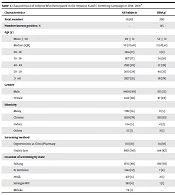
A total of 2207 individuals, including 1237 (56.0%) women and 970 (44.0%) men, aged 1-85 years (mean age, 31.4 ± 15.7 years), participated in this study. The majority of the subjects were in the age group of 21 - 30 years (27.7%, 612/2207), followed by the age group of ≤ 20 years (24.9%, 550/2 207). Considering the occupational status, the majority of the subjects were students (40.1%, 884/2207), followed by civil servants (23.1%, 509/2207) and informal sector workers (16.0%, 353/2207).
In terms of marital status, 55.6% (1226/2207) of the subjects were single, 43.0% (949/2 207) were married, and others were either divorced or widowed (Table 1). The participants were essentially from urban regions (96.2%). Among 2207 screened cases, 217 (9.8%) were HBeAg-positive (Table 1). HBsAg-positive cases were oriented by a gastroenterologist.
Table 1.Sociodemographic Characteristics of the Study Population
| Variables | No. (%) | Mean Age |
|---|---|---|
| Sex | ||
| Female | 1237 (56.00) | 31.50 ± 15.38 |
| Male | 970 (44.00) | 31.19 ± 16.05 |
| Age, y | ||
| ≤ 20 | 550 (24.90) | 12.37 ± 5.53 |
| 21 - 30 | 612 (27.70) | 25.84 ± 2.87 |
| 31 - 40 | 464 (21.00) | 35.28 ± 2.83 |
| 41 - 50 | 298 (13.50) | 45.29 ± 2.90 |
| > 50 | 283 (12.80) | 59.14 ± 6.97 |
| Profession | ||
| Trader | 194 (8.80) | 37.63 ± 11.21 |
| Student | 884 (40.10) | 17.62 ± 7.97 |
| Civil servant | 509 (23.10) | 42.95 ± 12.84 |
| Housewife | 267 (12.10) | 42.78 ± 12.87 |
| Informal sector worker | 353 (16.00) | 37.01 ± 11.29 |
| Marital Status | ||
| Single | 1226 (55.60) | 21.84 ± 10.76 |
| Divorced | 10 (0.50) | 48.80 ± 10.41 |
| Married | 949 (43.00) | 43.00 ± 12.35 |
| Widowed | 22 (1.00) | 53.23 ± 8.63 |
| Area | ||
| Rural | 83 (3.80) | 35.32 ± 14.62 |
| Urban | 2124 (96.20) | 31.21 ± 15.70 |
| Serology, HBsAg | ||
| Negative | 1990 (90.20) | 31.07 ± 15.97 |
| Positive | 217 (9.80) | 34.10 ± 12.32 |
| Vaccination status before screening | ||
| Unvaccinated | 2057 (93.20) | 32.12 ± 15.02 |
| Vaccinated | 150 (6.80) | 21.08 ± 20.25 |
4.2. Multivariate Analysis of Factors Associated with HBV Infection and Vaccination Status According to the Sociodemographic Characteristics of the Study Population
The multivariate analysis showed associations between HBV infection and age, sex, and vaccination status. However, only the age group of 21 - 30 years and vaccination status were found to be significant (P = 0.03, OR, 1.67; 95% CI, 1.04 to 2.69 and P = 0.003; OR, 5.69; 95% CI, 1.80 to 18.00, respectively). Nevertheless, the results showed that male sex is a risk factor for HBV infection (P = 0.003; OR, 1.53; 95% CI, 1.15 to 2.02). On the other hand, the age group of ≤ 20 years and students were found to be protective factors (P = 0.002 and P = 0.02, respectively) (Table 2).
Table 2.Multivariate Analysis of Factors Associated with HBV Infection and Vaccination Status Considering the Sociodemographic Characteristics of the Study Population (n = 2207)
| Variables | HBV Positive/Total | % | P Value | Odds Ratio (95% CI) | Vaccinated Yes/Total | % | P Value | Odds Ratio (95% CI) |
|---|---|---|---|---|---|---|---|---|
| Sex | ||||||||
| Female | 101/1237 | 8.16 | 0.003 | 0.65 (0.49 - 0.87) | 87/1237 | 7.03 | 0.756 | 1.06 (0.73 - 1.53) |
| Male | 116/970 | 11.96 | - | 63/970 | 6.49 | - | - | |
| Age, y | ||||||||
| ≤ 20 | 18/550 | 3.27 | 0.002 | 0.36 (0.19 - 0.68) | 93/550 | 16.91 | 0.001 | 7.32 (2.64 - 20.33) |
| 21 - 30 | 82/612 | 13.40 | 0.036 | 1.67 (1.04 - 2.69) | 10/612 | 1.63 | 0.056 | 0.42 (0.17 - 1.02) |
| 31 - 40 | 54/464 | 11.64 | 0.173 | 1.42 (0.86 - 2.36) | 13/464 | 2.80 | 0.030 | 0.44 (0.21 - 0.92) |
| 41 - 50 | 39/298 | 13.09 | 0.076 | 1.63 (0.95 - 2.78) | 14/298 | 4.70 | 0.216 | 0.63 (0.31 - 1.31) |
| > 50 | 24/283 | 8.48 | - | - | 20/283 | 7.08 | - | - |
| Profession | ||||||||
| Trader | 21/194 | 10.82 | 0.452 | 0.81 (0.47 - 1.40) | 9/194 | 4.64 | 0.46 | 1.43 (0.55 - 3.70) |
| Student | 76/884 | 8.60 | 0.019 | 0.63 (0.43 - 0.93) | 91/884 | 10.29 | 0.752 | 0.86 (0.35 - 2.14) |
| Civil servant | 51/509 | 10.02 | 0.170 | 0.74 (0.49 - 1.14) | 26/509 | 5.11 | 0.168 | 1.73 (0.79 - 3.79) |
| Housewife | 23/267 | 8.64 | 0.085 | 0.63 (0.37 - 1.07) | 15/267 | 5.62 | 0.511 | 1.34 (0.56 - 3.25) |
| Informal sector worker | 46/353 | 13.03 | - | - | 10/353 | 2.83 | - | - |
| Marital Status | ||||||||
| Single | 108/1226 | 8.81 | 0.492 | 2.03 (0.27 - 15.23) | 100/1226 | 8.16 | 0.94 | 0.92 (0.11 - 8.05) |
| Divorced | 1/10 | 10.00 | 0.564 | 2.33 (0.13 - 41.55) | 0/10 | 0.00 | - | - |
| Married | 107/949 | 11.27 | 0.340 | 2.67 (0.35 - 20.04) | 49/949 | 5.16 | 0.619 | 1.69 (0.22 - 13.25) |
| Widowed | 1/22 | 4.54 | - | - | 1/22 | 4.54 | - | - |
| Area | ||||||||
| Rural | 6/83 | 7.23 | 0.419 | 0.71 (0.30 - 1.64) | 12/83 | 14.45 | 0.001 | 3.05 (1.54 - 6.05) |
| Urban | 211/2124 | 9.93 | - | - | 138/2124 | 6.25 | - | - |
| Vaccinated | ||||||||
| No | 214/1843 | 10.40 | 0.003 | 5.69 (1.80 - 18.00) | - | - | - | - |
| Yes | 3/147 | 2.00 | - | - | - | - | - | - |
Abbreviations: CI, confidence interval; HBV, hepatitis B virus.
The vaccination rate before screening was 6.8% (150/2207) in the general population (females, 7.0%; males, 6.5%). The rates were higher among subjects in the age group of ≤ 20 years (16.9%), students (10.3%), and single subjects (8.2%). Also, vaccination coverage was statistically higher (P = 0.001) in rural areas (14.45%), compared to urban regions (6.25%) (Table 2).
4.3. Prevalence of HBV Markers and HCV in Terms of Sociodemographic Characteristics of the Study Population
Among 217 subjects tested positive for HBsAg, 101 (46.5%) and 116 (53.5%) cases were female and male, respectively (Table 3). The prevalence of HBV markers was 0.9%, 6.0%, 87.6%, and 100.0% for AbHBs, HBeAg, AbHBe, and AbHBc, respectively. However, the prevalence of HBeAg was higher among young people within the age range of ≤ 20 and 21 - 30 years (5.5%). Also, only 0.9% (2/217) of HBsAg-positive cases were found to have HCV/HBV coinfection (Table 3).
Table 3.Prevalence of HBV Markers and HCV Infection in Terms of Sociodemographic Characteristics of the Study Population (n = 217)
| Characteristics | HBV Markers | ||||
|---|---|---|---|---|---|
| HCV | AbHBs | HBeAg | AbHBe | AbHBc | |
| Pos/Neg | Pos/Neg | Pos/Neg | Pos/Neg | Pos/Neg | |
| Sex | |||||
| Female | 1/115 | 0/116 | 6/110 | 100/16 | 116/0 |
| Male | 1/100 | 2/99 | 7/94 | 90/11 | 101/0 |
| Age, y | |||||
| ≤ 20 | 0/18 | 0/18 | 4/14 | 13/5 | 18/0 |
| 21 - 30 | 1/81 | 1/81 | 8/74 | 69/13 | 82/0 |
| 31 - 40 | 0/54 | 1/53 | 0/84 | 48/6 | 54/0 |
| 41 - 50 | 1/38 | 0/39 | 1/38 | 38/1 | 39/0 |
| > 50 | 0/24 | 0/24 | 0/24 | 22/2 | 24/0 |
| Profession | |||||
| Trader | 0/21 | 0/21 | 0/21 | 19/2 | 21/0 |
| Student | 0/76 | 1/75 | 8/68 | 64/12 | 76/0 |
| Civil servant | 2/49 | 0/51 | 1/50 | 47/4 | 51/0 |
| Housewife | 0/23 | 0/23 | 0/23 | 22/1 | 23/0 |
| Informal sector worker | 0/46 | 1/45 | 4/42 | 38/8 | 46/0 |
| Marital status | |||||
| Single | 1/107 | 2/106 | 11/97 | 89/19 | 108/0 |
| Divorced | 0/1 | 0/1 | 0/1 | 1/0 | 1/0 |
| Married | 1/106 | 0/107 | 2/105 | 99/8 | 107/0 |
| Widowed | 0/1 | 0/1 | 0/1 | 1/0 | 1/0 |
Abbreviations: AbHBc, antibodies against hepatitis B core antigen; AbHBe, antibodies against HBeAg; AbHBs, antibodies against HBsAg; HBeAg, HBV “e” antigen; HBsAg, hepatitis B surface antigen; HBV, hepatitis B virus; HCV, hepatitis C virus; Neg, negative; Pos, positive.
4.4. Vaccination Rate After HBV Screening
Among 1990 HBsAg-negative subjects in this study, 628 (31.6%) cases, including 347 (17.4%) women and 281 (14.1%) men, were vaccinated. The number of vaccinated subjects and vaccination rate were significantly higher in women than men (P < 0.001) (Table 4).
Table 4.Vaccination Rates Following HBV Screeninga
| Characteristics | Total | Male | Female | P Value |
|---|---|---|---|---|
| Number of HBsAg-negative cases | 1990 | 854 (42.91) | 1136 (57.09) | < 0.001 |
| Number of vaccinated cases | 628 | 281 (44.75) | 347 (55.25) | < 0.001 |
| Vaccination rate, % | 31.56 | 14.12 | 17.44 | < 0.001 |
| Mean age, y | - | 30.77 ± 16.45 | 31.29 ± 15.61 | 0.478 |
aValues are expressed as mean ± SD or No. (%).
5. Discussion
In Burkina Faso, the prevalence of HBV infection varies between 9.3% (10) and 19.0% (8), depending on the sampling area. In this study, 9.8% of the general population were HBsAg carriers. This prevalence rate is lower than that reported in the general population of Burkina Faso in a previous study (14.5%) (8). It is also lower than the rates reported in blood donors from Nouna, Ouagadougou, and the national blood transfusion center of Burkina Faso (14.3%, 17.3%, and 12.9% respectively) (18, 19). However, the prevalence rate reported in the present study is similar to the rates among pregnant women in Burkina Faso (9.3% and 9.8%, respectively) (6, 10).
In general, the variations in prevalence rates could be explained by the size and type of the study population and other socioeconomic characteristics. It should be also mentioned that voluntary participation in a screening program includes self-selection bias. The observed discrepancies could be also explained by the limitations of serological tests, considering their inability to detect HBsAg in some cases (with several molecular explanations) (20). Also, with low HBsAg expression, it is often possible to find a person undetectable by this antigen, but positive for AbHBc with a very low viral load (21-23). Consequently, sole evaluation of HBsAg may not be the optimal strategy to define the state of a carrier in a study population.
In the present study, after multivariate analysis, HBV infection was significantly associated with age (21 - 30 years) and vaccination status. The prevalence of HBV infection in this age group remains high (13.4%), although it is lower than the rates found in previous studies among young people of Gabon and Burkina Faso (22.2% and 16.3%, respectively) (8, 24). This high prevalence rate could be explained by the extent of risky sexual behaviors in young people, use of nonsterile syringes, customary scarification rites, elimination of girls, and circumcision of boys with soiled blades.
The study also reported a high prevalence of HBV (11.3%) among married versus single subjects (8.8%); this could in fact increase the risk of HBV transmission in the population. The high prevalence rates found in the age groups of 31 - 40 and 41 - 50 years in this study (11.6% and 13.1%, respectively) could be explained by the fact that most of exposure to HBV was associated with the patient's promiscuity (9, 25).
The overall rate of vaccination coverage before screening was very low in the present study (6.8%); also, more vaccination coverage was found in rural than urban areas; this could be explained by the differences in the population of these areas. On the other hand, the rate of vaccination coverage was 49.1% (27/55) in children aged < 5 years (5) and 19.9% (93/550) in the age group of < 20 years (20). Increasing vaccination coverage among children and young people could be due to the impact of vaccination policies, adopted by the Ministry of Health of Burkina Faso to prevent HBV infection in children since 2006 through the expanded program on vaccination (EPV), which recommends anti-HBV vaccination for all children at 8 weeks after birth.
In the present study, the prevalence of HBV infection was 0.0% (0/27) in vaccinated children and 3.6% (1/28) in unvaccinated children, aged < 5 years (05). The vaccination coverage rate of 31.6% (628/1990) in the population against HBV after screening is tangible evidence, indicating that promotion of awareness and screening campaigns can reduce the prevalence of infection in the population. It should be noted that the vaccines were paid for, except in the EPV group. Nevertheless, the vaccination rate is low due to the high cost of vaccine (32 - 42 Euros for the 3 doses), which remains inaccessible to a large part of the population, despite the subsidy efforts.
Furthermore, multivariate analysis showed that unvaccinated cases against HBV had almost a 6-fold increased risk of HBV infection (OR, 5.7; 95% CI, 1.8 to 18.0), compared to vaccinated cases. This clearly shows that further efforts are needed to improve vaccination coverage of the general population, youths in particular, in order to reduce the risk of infection.
Due to limited financial resources, HCV screening was restricted to HBV-positive cases in this study. The study reported a low prevalence of HCV (0.9%, 2/217) among HBsAg-positive individuals. However, other studies have reported prevalence rates of 4.0% and 6.3% in Koudougou blood donors and regional blood transfusion centers of Burkina Faso, respectively (7, 26). The prevalence rates ranging between 2.0% and 5.4% have been also reported among pregnant women in Ouagadougou (6, 11, 27, 28).
Coinfection with HBV/HCV is possible, considering the common route of parenteral transmission (29). HBV/HCV coinfection is responsible for multiple liver damages, ranging from minor histological disorders to cirrhosis and hepatocellular carcinoma (30). It also contributes to poor treatment of HBV infection if not diagnosed early.
In the present study, HBeAg was detected in 6.0% (13/217) of the population. It was mainly found in young people (12/88) in the age group of ≤ 30 years. This prevalence rate is lower than the prevalence reported among pregnant women in Burkina Faso in previous studies (11.1% and 31.4%, respectively) (31, 32). However, other studies have shown that presence of HBeAg is a risk factor for HBV transmission and chronicity (33, 34). The variations in HBeAg rates could be explained by the differences in the study populations.
In the current study, AbHBc was detected in 100.0% (217/217) of HBsAg-positive subjects. This prevalence rate is higher than the values reported among blood donors from Nouna and Ouagadougou (69.6% and 76.4%, respectively) (18). The observed differences could be explained by the fact that our study population was biased due to the selection of HBsAg-positive cases. However, detection of AbHBc antibodies is now recognized as a marker of exposure to HBV or is suggestive of occult HBV infection (35-37).
5.1. Conclusions
The present study reported an HBsAg prevalence of 9.8% in the study population. The vaccination rate before screening was very low. Based on the findings, the vaccination coverage against HBV infection after screening was 31.6%. This clearly shows that development of awareness and screening campaigns on HBV can increase the vaccination coverage in the population. However, further efforts must be made to raise awareness and promote vaccination to improve vaccination coverage in the general population.