
Fulltext
The full text of this article is available on the PDF file.
Journal of Medical Education for Future Demands
Former Title: Journal of Medical Education | The Official Journal of School of Medical Education and Learning Technologies
Authors
Background: The concept of interdisciplinarity that we recognize today, was initially formed in
1920 in the United States. During this period, the United States Social Science Research Council
expressed its interest in interdisciplinary research. Interdisciplinarity is a multidimensional word with
various meanings and interpretations. It is considered as the newest unknown critical, educational,
and organizational concept in the modern academic environment. In this study, we defined
interdisciplinarity and the characteristics of the underlying concepts to present an analytical definition
of the concept of interdisciplinarity.
Methods: Walker and Avant’s concept analysis method was used. This method is a systematic approach
often used for analyzing relatively new concepts. In order to obtain and extract the applications of
interdisciplinarity and its defining characteristics, we searched different databases and used keywords.
Five main domains that form the defining structure of interdisciplinarity were emerged. Those domains
include nature, integration, method, goal, and levels of interdisciplinarity.
Results: We identified five domains major of “ interdisciplinarity: “nature,” “integration”, “method”,
“goal”, and “levels” of interdisciplinarity. Based on the defining attributes a definition is formulated
for the concept of interdisciplinarity.
Conclusion: This study, achieving a simple and elegant concept, resolved the differences between the
different perspectives in this field and helped us design the theoretical and practical model.
© 2019, Author(s). This open-access article is available under the Creative Commons Attribution 4.0 (CC BY 4.0) International License (https://creativecommons.org/licenses/by/4.0/), which allows for unrestricted use, distribution, and reproduction in any medium, provided that the original work is properly cited.
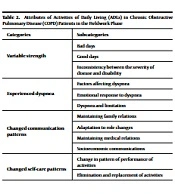
Monjazebi F, Zamanzadeh V, Najafi F. Activities of Daily Living in Patients with Chronic Obstructive Pulmonary Disease: A Hybrid Concept Analysis. Med Surg Nurs J. 2023;12(2):e145282. doi: https://doi.org/10.5812/msnj-145282
Ghajarzadeh M, Mohammadifar M, Safari S. How to Define an Author? Awareness of Authorship Criteria. Anesth Pain Med. 2013;3(1):226-7. doi: https://doi.org/10.5812/aapm.10877
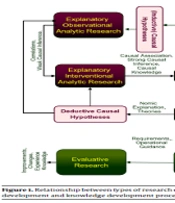
Yazdani S, Shirvani A, Heidarpoor P. A Model for the Taxonomy of Research Studies: A Practical Guide to Knowledge Production and Knowledge Management. Arch Pediatr Infect Dis. 2021;9(4):e112456. doi: https://doi.org/10.5812/pedinfect.112456
Andarvazh MR, Afshar L, Yazdani S. Hidden Curriculum: An Analytical Definition. J Med Edu. 2017;16(4):e105592. doi: https://doi.org/10.22037/jme.v16i4.18061
Alavi SS, Jannatifard F, Eslami M, Rezapour H. Evaluation of diagnostic criteria of DSM-IV-TR for diagnosis of internet addiction disorder. Zahedan J Res Med Sci. 2011;13(6):e93833. doi:
More by these authors
Last Update: 2 weeks ago
Last Update: 2 weeks ago
Last Update: 2 weeks ago
Last Update: 4 days ago