Fulltext
The body of the article can be found in the PDF file.
Journal of Medical Education for Future Demands
Former Title: Journal of Medical Education | The Official Journal of School of Medical Education and Learning Technologies
Authors
Introduction: The increase in simulation training across the range of medical education offers a potential route to train non-technical skills and knowledge. More recently, there has been a move towards the use of computer based, including virtual reality, simulation. However, studies evaluating the efficacy of computer based simulation training have used inconsistent methodology, limiting the capacity to construct an overview.The goal of this study is to systematically review the existing literature and carry out a meta-analysis of the existing randomised controlled trials, evaluating the efficacy of computer based simulation on non-technical skills and knowledge, with sub analysis between doctors in training and those in continuing medical education.Methods: A scoping search identified the relevant search terms, followed by a comprehensive database search of literature from 2007 until the present on MEDLINE, PubMed, CINHAL, ERIC, BEI, PsychINFO, Proquest Dissertations & Theses and Educational Abstracts databases with hand searching the table of contents of major medical education journals. The inclusion criteria were randomised controlled trials for the meta-analysis and cohort studies for the systematic review, with subjects being postgraduate doctors using a computer based simulation for training and education.Results: This review found evidence to support the utilisation of computer based simulation for nontechnical skills and knowledge and understanding domains.Discussion: Using computer based simulation offers an opportunity to enhance non-technical aspects of practicing doctors in a safe and effective manner. More high quality controlled studies are required to enable the demarcation of training boundaries.
© 2019, Author(s). This open-access article is available under the Creative Commons Attribution 4.0 (CC BY 4.0) International License (https://creativecommons.org/licenses/by/4.0/), which allows for unrestricted use, distribution, and reproduction in any medium, provided that the original work is properly cited.
Vahednasiri A. Simulation-Based Clinical Education in The Operating Room: A Review Study. Educ Res Med Sci. 2024;13(1):e137775. doi: https://doi.org/10.5812/ermsj-137775
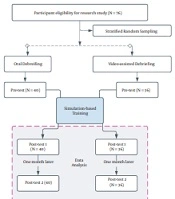
Ahmady S, Masoumain Hosseini T. Effectiveness of Video-assisted Debriefing Versus Standard Oral Debriefing Following Screen-based Simulation (CyberPatient TM) Training. J Med Edu. 2022;21(1):e127021. doi: https://doi.org/10.5812/jme-127021
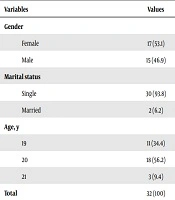
Merajikhah AM, Imani B, Nowruzi N. The Comparison of the Effects of Multimedia Tools and Traditional Methods on Neurosurgery Learning. Educ Res Med Sci. 2020;9(1):e100355. doi: https://doi.org/10.5812/erms.100355
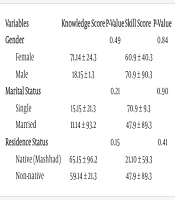
Rajabi F, Ahmady S, Rezvani Kakhki B, Habibi A, Sadeghi M, et al. A Comparative Study of Trauma Management Education Using Traditional and Combined Methods with Instructional Videos on the Knowledge and Skills of Medical Students. J Med Edu. 2024;23(1):e142424. doi: https://doi.org/10.5812/jme-142424

Kelleci M, Taskin Yilmaz F, Aldemir K. The Effect of High Fidelity Simulation Training on Critical Thinking and Problem Solving Skills in Nursing Students in Turkey. Educ Res Med Sci. 2018;7(2):e83966. doi: https://doi.org/10.5812/erms.83966
Last Update: 4 days ago
Last Update: 4 days ago
Last Update: 4 days ago
Last Update: 1 day ago