
1. Background
Airway management, which is of particular importance in emergency departments (EDs), aims to ensure communication between the lungs and the external environment; through this communication, the lungs can be ventilated and aspiration of gastric contents can be prevented (1). In almost all cases, safe airway management is a priority in clinical care (2-4). Endotracheal intubation is an essential skill in operating rooms, EDs, and intensive care units (ICUs) to safely secure a patient’s airway (5). Rapid confirmation of correct tube placement is also important, because incorrect positioning is associated with adverse outcomes, such as fatal arrhythmias, cardiac arrest, cerebral edema, and aspiration of gastrointestinal secretions (6).
Endotracheal intubation is associated with incorrect or displaced tubing in 6% to 25% of cases. Accordingly, the American Heart Association (AHA) guidelines recommend thorough assessment of tube placement as soon as it is inserted (7). The best primary approach to confirm correct tube placement is observation of tube passage through the vocal cords, followed by assessment based on chest and epigastric auscultation, which is used for confirmation of correct placement (8, 9). Although no single confirmation technique is completely reliable, continuous waveform capnography, along with clinical evaluation, has been recommended to detect expiratory CO2 as the most reliable method for confirming correct tube placement.
Owing to the false positive and negative results of waveform capnography, studies to confirm corret tube placement need to be complemented by another method to confirm intubation (10-12). The confirmation technique should be learned and practiced easily to reduce hypoxia duration due to misplacement and to prevent complications, such as vomiting and aspiration. Ultrasound can be used as a reliable method for confirmation, without any limitations (6). Recent studies have suggested that ultrasound can indirectly assess endotracheal tube (ETT) placement by observing the diaphragm movement (13, 14) and may be used as a confirmation technique.
2. Objectives
This study aimed to compare the diagnostic accuracy of ultrasonography using suprasternal and subxiphoid methods to confirm the correct placement of ETT compared to capnography.
3. Methods
In this cross-sectional study, which was approved by the Ethics Committee of Mashhad University of Medical Sciences (IR.MUMS.MEDICAL.REC.1398.637), a total of 66 patients requiring intubation, who were referred to three academic hospitals of Mashhad University of Medical Sciences (Emam Reza, Ghaem, and Hasheminejad hospitals) from October 2018 to October 2019, were enrolled based on the inclusion criteria. The study objectives were explained to the patients’ legal guardians, and they were enrolled in the study after obtaining informed consent. The inclusion criteria were patients over 18 years, who required prophylactic airway management with endotracheal intubation in the ED. On the other hand, the exclusion criteria were as follows: (1) an abnormal airway anatomy, (2) difficult intubation, (3) cardiorespiratory arrest, (4) significant cervical trauma, (5) cervical abnormality, and (6) tracheal or endobronchial lesions.
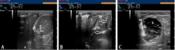
An emergency medicine physician assistant, during an anesthesia rotation, performed patient intubation. Another assistant responsible for the project performed suprasternal ultrasounds with a curvilinear probe on the suprasternal area; within two seconds after intubation, its accuracy was determined. The tube passage through the trachea created the Comet tail sign, hyperechoic shadow, bullet sign, and circular hypodense space on ultrasound. However, if the tube was in the esophagus, no hypodense space was seen, or the ETT tube was observed outside the trachea.
Immediately after suprasternal sonography, the assistant performed subxiphoid sonography with a diaphragmatic motion within five seconds, and information was recorded. It should be emphasized that two individuals performed intubation and sonography independently and that neither of them were aware of the other person’s performance to avoid biased results. Along with ultrasound, other methods of ETT placement confirmation, including observation of tube passage through the vocal cords by a clinician, capnography, and auscultation (all three methods), were used as the gold standards, and the results were recorded.
If all or two of the three methods, including capnography, were positive (confirmation of correct tube placement), the result of the gold standard method was considered positive; other results were considered negative. If the result of the gold standard method was positive and correct tube placement was confirmed by suprasternal or subxiphoid sonography, the result was considered true positive; however, if it was not confirmed by sonography, it was considered a false negative result. If the tube was placed correctly, the patient's treatment process continued. Otherwise, after correction, treatment continued according to the standard protocol. The patients’ demographic data form (i.e., age, sex, BMI, history of smoking, and diabetes) was also completed and recorded.
3.1. Sample Size and Statistical Analysis
The sample size of this study was determined based on a study by Lahham et al. (15) at an alpha of < 0.05, with an accurate intubation rate of 70% according to previous studies. At an ultrasound sensitivity of 97%, an approximate sample size of 64 patients was measured, and finally, 70 patients were recruited considering a 10% dropout rate:
Descriptive statistical methods, such as mean, standard deviation, frequency, and frequency percentage, were used to describe the data. Sensitivity, specificity, positive predictive value, (PPV), negative predictive value (NPV), positive likelihood ratio, and negative likelihood ratio were also measured to evaluate the diagnostic value of ultrasonography relative to capnography. The diagnostic odds ratio (DOR) was also calculated to evaluate the performance of ultrasound compared to capnography. Statistical analysis was performed in STATA version 12 (StataCorp LLC, College Station, TX, USA), and the significance level was considered to be less than 0.05.
4. Results
In this study, 66 patients who were intubated in the ED, including 42 (63.64%) males and 24 (36.36%) females, were evaluated. The patients’ mean age was 62.92 ± 18.45 years. Overall, 13 (25%) patients had hypertension, 10 (19.23%) had diabetes mellitus, 10 (19.23%) had ischemic heart disease (IHD), 7 (13.46%) had a cerebrovascular accident (CVA), 6 (11.54%) had chronic obstructive pulmonary disease (COPD), 2 (3.85%) had chronic kidney disease (CKD), and 2 (3.85%) had celiac disease. Besides, 37 (56.06%) patients were smokers, and 24 (36.36%) cases were addicts (Table 1). The patients were intubated due to loss of consciousness in 48 (72.72%) cases, due to apnea in 11 (16.66%) cases, and due to respiratory distress in 7 (10.61%) cases.
Table 1.
Demographic Data, Comorbidities, and Intubation Cause of the Patients
| Demographic Variables | Total | Percentage (%) |
|---|---|---|
| Sex | ||
| Male | 42 | 63.64 |
| Female | 24 | 36.36 |
| Medical history | ||
| HTN | 13 | 25 |
| IHD | 10 | 19.23 |
| Diabetes mellitus | 10 | 19.23 |
| CVA | 7 | 13.46 |
| COPD | 6 | 11.54 |
| CKD | 2 | 3.85 |
| Celiac disease | 2 | 3.85 |
| Smokers | 37 | 56.06 |
| Addicts | 24 | 36.36 |
| Intubation cause | ||
| Loss of consciousness and decreased SPO2 | 48 | 72.72 |
| Apneustic respiration | 11 | 16.66 |
| Respiratory distress | 7 | 10.61 |
Abbreviations: HTN, hypertension; IHD, ischemic heart disease; CVA, cerebrovascular accident; COPD, chronic obstructive pulmonary disease; CKD, chronic kidney disease; CPR, cardiopulmonary resuscitation; SpO2, peripheral venous oxygen saturation.
The sensitivity and specificity of suprasternal sonography for confirming correct ETT placement were 98.33% and 66.67% compared to the gold standard, respectively. The PPV and NPV of suprasternal sonography were estimated at 96.72% and 80%, respectively. In this study, the positive and negative likelihood ratios of suprasternal sonography were 1.497 and 1.459, respectively, and the DOR of suprasternal sonography was 1.026 relative to the gold standard (Table 2).
Table 2.
Diagnostic Values of Suprasternal and Subxiphoid Ultrasounds Relative to Capnography for Confirming the Accuracy of Intubation
| Diagnostic Test | Gold Standard | Sensitivity (%) | Specificity (%) | PPV (%) | NPV (%) | LR+ | LR- | DOR | |
|---|---|---|---|---|---|---|---|---|---|
| Positive | Negative | ||||||||
| Suprasternal sonography | 98.33 | 66.67 | 96.72 | 80 | 1.49 | 1.45 | 1.026 | ||
| Positive | 59 | 2 | |||||||
| Negative | 1 | 4 | |||||||
| Subxiphoid sonography | 80 | 83.33 | 97.95 | 29.41 | 0.97 | 0.94 | 1.024 | ||
| Positive | 48 | 1 | |||||||
| Negative | 12 | 5 | |||||||
Abbreviations: PPV, positive predictive value; NPV, negative predictive value; LR+, positive likelihood ratio; LR-, negative likelihood ratio; DOR, diagnostic odds ratio.
The sensitivity and specificity of subxiphoid sonography were 80% and 83.33% compared to capnography, respectively. The PPV and NPV of sonography, relative to the gold standard method, were 97.95% and 29.41%, respectively. Besides, the positive and negative likelihood ratios of subxiphoid sonography, relative to the gold standard, were 0.971 and 0.948, respectively, indicating the low positive likelihood ratio for subxiphoid ultrasonography (Table 2). Also, the DOR and accuracy of subxiphoid sonography, relative to the gold standard, were 1.024 and 80.30%, respectively.
5. Discussion
Intubation is the definitive tool to secure the airway safely (15). This study evaluated 66 patients who were intubated in the ED. The sensitivity and specificity of suprasternal sonography for confirming correct ETT placement were 98.33% and 66.67% relative to the gold standard, respectively. In retrospective studies, incorrect placement of ETT was reported in 6% to 28% of intubated cases. Accordingly, the AHA guidelines recommend complete assessment of tube placement as soon as the ETT is placed (16). The present study was designed to evaluate the diagnostic value of ultrasound for confirming the accuracy of intubation. The results revealed that ultrasound, using both supernatural and subxiphoid methods, had good diagnostic values for confirming proper ETT placement. Generally, sonography is an available tool in EDs, which can be a proper alternative to imaging techniques and even capnography (17, 18). This modality has been also accepted for confirming the accuracy of intubation in previous studies.
In a study by Ahmadi et al., ultrasound was confirmed as a secondary tool for confirming the accuracy of intubation; its sensitivity and specificity in their study were 97% and 100%, respectively, compared to GlideScope (6). In the current study, the sensitivity and specificity of sonography using the supernatural method were 98.33% and 66.67%, respectively, while the sensitivity and specificity of the subxiphoid method were 80% and 83.3%, respectively; these findings are consistent with the results of the study by Ahmadi and colleagues. Moreover, Zamani Moghadam et al. compared ultrasound with different methods, including pulse oximetry, aspiration, and direct laryngoscopy, and showed that sonography had sensitivity, specificity, PPV, and NPV of 96%, 88%, 98% and 78%, respectively (9).
Moreover, researchers have shown that ultrasound has a positive likelihood ratio of 64 and a negative likelihood ratio of 0.2, which is consistent with the results of the current study (9). Besides, a study by Rahmani et al. found sonographic signs, such as the snowstorm sign in 96% of cases, bullet sign in 32% of cases, bilateral and unilateral lung sliding in 84% and 9.3% of cases, respectively, and no findings in 6.7% of cases (19). They described sonography as a rapid and reliable tool to confirm correct ETT placement, which is in line with the results of a study by Werner et al. and the current study (8). Another study also reported positive and negative likelihood ratios of 26.98 and 0.08, respectively (14).
To the best of our knowledge, the best way to confirm correct ETT placement is a clinician’s observation of tube passage through the vocal cords. The findings of the present study, similar to previous studies, showed that supernatural sonography is a reliable tool to confirm the ETT position. However, further relevant studies and comparison with other methods seem necessary. It should be also noted that other factors in the ED can influence the choice of a diagnostic tool. Overall, sonography is a user-friendly and practical diagnostic tool, which is being increasingly used by physicians.
5.1. Limitations and Suggestions
One limitation of this study was the small sample size; therefore, it is suggested to conduct further studies with a larger sample size. Future studies can be also carried out based on diaphragmatic movement assessment for one-lung ventilation, as it can be a very practical tool in crowded EDs, where auscultation of the lungs cannot be carried out accurately.