
1. Background
Cleft lip and palate are the most common congenital anomalies occurring when a baby’s lip or mouth does not form properly (1, 2). The overall prevalence is 1 in 800 births worldwide. The cause of cleft lip and palate is still unknown but can be related to genetic and environmental factors (3-5). A cleft palate affects almost all facial functions except vision (5). There are various opinions about the time of cleft palate repair. Most surgeons perform this surgery between the ages of 6 and 12 months, while others perform it between the ages of 12 and 18 months (6). Efforts to preserve blood during surgery, especially in large surgeries with heavy bleeding or pediatric surgery, have become increasingly important in recent years. Bleeding is also one of the most common complications of cleft palate repair surgery (7, 8). This complication mostly occurs during surgery and before the removal of the endotracheal tube, but sometimes it can also occur after surgery, requiring the patient to be returned to the operating room, along with re-intubation and hemostasis (9, 10). One way to reduce bleeding is to control the pain, which prevents high blood pressure and increased bleeding. In ear, nose, and throat (ENT) surgery, controlling bleeding is crucial for a better view due to the small size of the surgical field. Almost all patients with primary cleft palate repair are under 1 year of age. Accordingly, bleeding is a relatively common and significant complication in these patients during and after surgery. Although the amount of bleeding is small in these patients, it can cause great risks to their health. For instance, due to the limited vision of the surgeon, bleeding can prolong the operation and thus lead to more blood loss. In this regard, various methods, including controlled hypotension, proper positioning, and injection of vasoconstrictor and other drugs (such as desmopressin), are used to reduce the amount of bleeding (11). Also, the surgeon usually injects local anesthetic and epinephrine before repairing the cleft lip and palate to reduce pain and bleeding (12). Because some of these methods, such as controlled hypotension, cannot be used in children, appropriate methods should be used for this age group. Phenylephrine, as an α-adrenergic receptor agonist, is capable of preventing bleeding in perioperative ENT surgeries by its vasoconstrictive effect. It is especially useful in patients with hypotension and tachycardia. Phenylephrine is a synthetic catecholamine that primarily stimulates alpha-1 adrenergic receptors with only a partial response to norepinephrine release. Phenylephrine has minimal effect on beta-adrenergic receptors. The dose of phenylephrine required to stimulate alpha-1 receptors is much lower than the dose that stimulates alpha-2 receptors (13). In addition to causing hypertension, phenylephrine can reflexively reduce the heart rate.
Phenylephrine is a selective α1-adrenergic receptor agonist, increasing systemic vascular resistance and arterial pressure. While intravenous α1 receptor activity has been scientifically validated in most clinical settings, phenylephrine is considered an enhancer of cardiac afterload but does not increase cardiac preload (14, 15). However, while the beneficial effect of phenylephrine on blood pressure is well known, it is generally assumed that phenylephrine has no effect on cardiac output, but in most cases, it reduces cardiac output due to increased additional load (16). Various studies have been performed on the effect of vasoconstrictors on blood flow and bleeding. In one of these studies, the effect of these drugs on increasing cerebral blood flow was investigated, indicating that phenylephrine and epinephrine increase blood flow to the middle cerebral artery (17).
2. Objectives
This study aimed to evaluate the effect of phenylephrine nasal drops first on the amount of bleeding during cleft palate surgery in children aged 6 months to 2 years and second on the surgeon satisfaction with the amount of bleeding in the surgical site.
3. Methods
This controlled, randomized, double-blind, clinical trial was approved by the Ethics Committee of Iran University of Medical Sciences (IR.IUMS.FMD.REC.1399.462) and registered on the Iranian Clinical Trials Registry website (IRCT20170301032837N4). This study was conducted from September 2020 to August 2021 on children aged 6 months to 2 years who were referred to Hazrate Fatemeh Plastic and Reconstructive Surgery Hospital affiliated with Iran University of Medical Sciences. The patients were candidates for general anesthesia for reconstructive cleft palate surgery. The patients who visited the reconstructive surgery clinic and decided to perform the operation were referred to the anesthesia clinic. In the anesthesia clinic, the patients were subjected to physical examinations and necessary tests by a member of the research team. Then, after adequate explanations and obtaining informed consent, the children who met the inclusion and exclusion criteria participated in the study. Inclusion criteria include candidates for cleft palate surgery, the age range of 6 months and 2 years, weight between 7 and 12 kg, and lack of drug sensitivity. Exclusion criteria include blood and coagulation diseases, other congenital anomalies, heart surgery, and malignant hyperthermia.
3.1. Sample Size
The sample size was calculated based on similar studies and using G power software. Considering the 20% loss, the final volume was calculated by 18 people in each group and a total of 36 people (Figure 1).
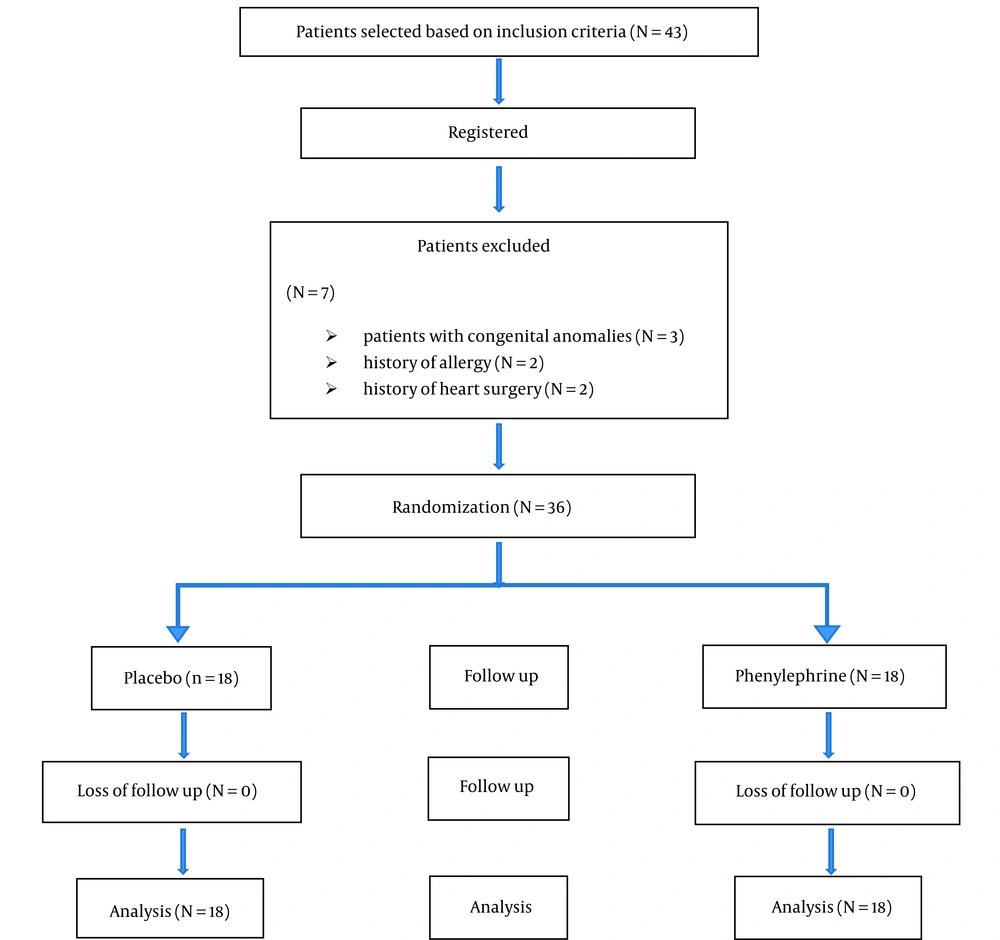
Figure 1.
Participants’ selection based on the inclusion and exclusion criterion
3.2. Randomization and Blinding
We used the block randomization method through 9 blocks of 4. Excel software was used to generate random orders inside each block. When each participant’s intervention was determined, patients were assigned a unique 4-digit code. One anesthetist prepared the drop container and was the only one who knew about the content of the container. All other members of the anesthesia team, the surgeon, and the patients were blinded. Also, the data analyzer received the groups as group A (phenylephrine) and group B (placebo); thus, this study was double-blind.
3.3. Procedure
First, demographic and contextual information (such as age, gender, and weight) were examined. Patients were then evaluated for preoperative hemoglobin, heart/blood/coagulation diseases, history of malignant hyperthermia, and preoperative coagulation tests. Patients were excluded from the study if they did not meet the inclusion criteria. After obtaining consent and explaining the purpose of the study, all of them were monitored in the operating room (pulse oximetry, non-invasive blood pressure measurement, and electrocardiogram). All patients in both groups had the same anesthesia method.
For premedication, patients were given midazolam (0.05 mg/kg) and fentanyl (2 μg/kg). Thiopental sodium (5 mg/kg) and atracurium (0.5 mg/kg) were used to induce anesthesia. Also, 1 MAC isoflurane (1.2 V%) and N2O were applied to maintain anesthesia. Capnography monitoring was used during the operation, and EtCO2 was kept in the range of 38 to 42 mmHg.
Since the patient’s type of breathing and the amount of intrathoracic pressure affect the amount of bleeding in head and neck surgeries, we used the Mapleson breathing system and A/C breathing mode for all patients in both groups. After induction of anesthesia, in the intervention group, 1 drop of 0.25% phenylephrine per 10 kg of body weight was poured into each nostril. In the control group, in the same position, the same amount of placebo was poured into the nostrils. All samples were selected from the patients of a surgeon skilled in lip and palate surgery, and all cases were operated on by him.
During surgery, all patients underwent standard monitoring of blood pressure, heart rate, pulse oximetry, and capnography. The heart rate and systolic and diastolic blood pressures were recorded before the intervention and 15 minutes after the intervention.
At the end of the operation, the amount of blood in the suction canister was recorded, blood-contaminated gauzes were counted and weighed, and the total amount of bleeding in each patient was calculated.
Also, the surgeon’s assessment of bleeding using the Boezaart scale (18) and the surgeon’s satisfaction in terms of surgical field quality using a 5-point Likert scale were recorded.
3.4. Data Analysis
SPSS version 32 (SPSS Inc, Chicago, Ill, USA) was used for statistical analysis. The basic characteristics of the 2 groups were assessed by a Student t test. The chi-square test was used to compare 2 quantitative variables in the 2 groups. A significance level of 0.05 was considered statistically significant.
3.5. Ethical Considerations
Before the patients participated in the study, it was sufficiently explained to their parents that participating in the study was completely optional. Informed consent was obtained from the parents of the participants. It should be noted that in the process of conducting this study, no additional costs were imposed on patients. Also, the information on the checklists was considered confidential, and the results were published. The research was conducted according to the principles of the Declaration of Helsinki.
4. Results
A total of 36 children were included and divided into 2 groups. Descriptive characteristics of patients (such as age, sex, and weight) and their comparison in the intervention and control groups are given in Table 1. There was no significant difference in age, sex, and weight in patients with cleft palate surgery in the intervention and control groups (P < 0.05; Table 1).
Table 1.
Frequency Distribution of Demographic Characteristics a
| Variables | Group | P Value* | |
|---|---|---|---|
| Intervention | Control | ||
| Age (mo) | 15.77 ± 5.01 | 16.94 ± 5.68 | 0.766 |
| Sex | 0.486 | ||
| Male | 9 (50) | 6 (33.3) | |
| Female | 9 (50) | 12 (66.7) | |
| Weight (kg) | 10.86 ± 2.64 | 10.88 ± 2.8 | 0.613 |
a Values are expressed as mean ± SD or No. (%).
Changes in the heart rate and systolic and diastolic blood pressures in both groups were measured and recorded first before the intervention and then 15 minutes after starting surgery. The mean and comparison of these variables in the 2 groups are shown in Table 2. No significant difference was found in changes in the heart rate and systolic and diastolic blood pressures between the 2 groups (P < 0.05; Table 2).
Table 2.
Changes in the Heart Rate and Systolic and Diastolic Blood Pressures
| Variables | Group | P Value | |||||
|---|---|---|---|---|---|---|---|
| Intervention | Control | ||||||
| Minimum | Maximum | Mean ± SD | Minimum | Maximum | Mean ± SD | ||
| Systolic blood pressure | 0.122 | ||||||
| Before intervention | 90 | 107 | 97.05 ± 7.4 | 85 | 100 | 97.16 ± 2.5 | |
| 15 minutes after intervention | 70 | 98 | 84 ± 8.7 | 80 | 97 | 84.88 ± 3.5 | |
| Diastolic blood pressure | 0.581 | ||||||
| Before intervention | 50 | 80 | 59.16 ± 7.3 | 45 | 62 | 55.44 ± 6.1 | |
| 15 minutes after intervention | 40 | 75 | 47.55 ± 5.2 | 40 | 70 | 46.61 ± 5.4 | |
| Heart rate | 0.137 | ||||||
| Before intervention | 110 | 140 | 130.33 ± 11.9 | 120 | 160 | 133.88 ± 12.8 | |
| 15 minutes after intervention | 100 | 136 | 117.55 ± 6.8 | 100 | 148 | 116.27 ± 12.89 | |
The mean volume of bleeding based on the total weight of gauzes and suctioned blood during surgery was 13.36 ± 14.71 mL in the intervention group, while it was 33.22 ± 21.9 mL in the control group. A statistically significant difference was found between the 2 groups in the mean volume of bleeding (P = 0.0016).
Based on the chi-square test, a comparison of surgeon satisfaction in terms of surgical field quality showed that 12 patients (66.6%) in the intervention group were in the “completely satisfied” category, followed by 6 (33.3%) in the “satisfied” category. In the control group, 9 patients (50%) were in the “satisfied” category, and 9 (50%) were in the “neutral” category. A statistically significant difference was found between the 2 groups in terms of satisfaction with the surgical field quality (P = 0.0068; Figure 2).
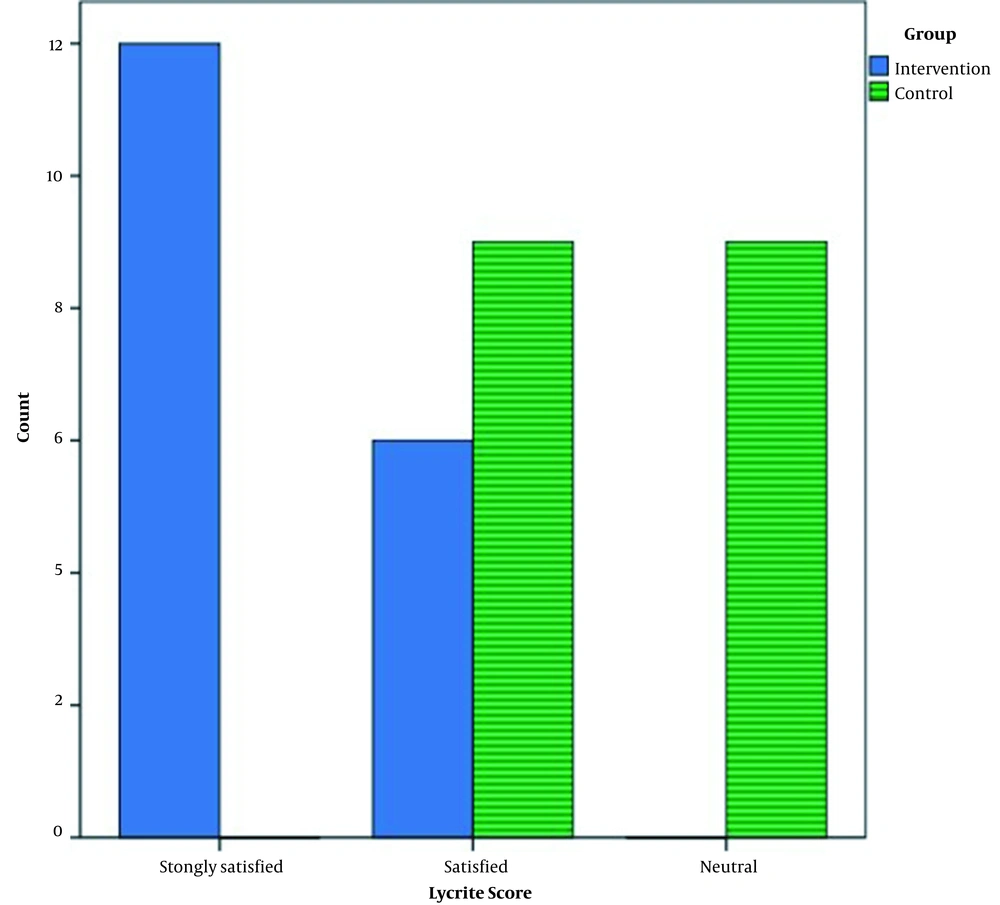
Figure 2.
Comparison of surgeon satisfaction in terms of surgical field quality
Table 3 compares the bleeding rate between the study groups based on the Boezaart scale. The results showed that the median bleeding score was significantly lower in the phenylephrine group than in the control group (P = 0.0043).
Table 3.
Comparison of Bleeding Based on the Boezaart Scale a
| Bleeding | Very Heavy Bleeding | Severe Bleeding | Moderate Bleeding | Little Bleeding | Mild Bleeding | No Bleeding |
|---|---|---|---|---|---|---|
| Intervention | - | - | 2 (11.1) | - | 4 (22.2) | 12 (66.6) |
| Control | - | 3 (16.6) | 7 (38.8) | 2 (11.1) | 5 (27.7) | 1 (5.6) |
| P value | 0.0043 |
a Values are expressed as No. (%).
During the study, none of the participants suffered complications from the intervention, and neither were excluded from the study due to side effects and complications. More details are given in the discussion section.
5. Discussion
One of the most important parameters in surgical research, in which various experimental techniques are evaluated, is intraoperative bleeding (5). Therefore, this study aimed to investigate the effect of phenylephrine nasal drops on the amount of bleeding during reconstructive surgery for cleft palate in children aged 6 months to 2 years.
Based on our results, there was no significant difference in height, weight, and gender between the 2 groups (P > 0.05). Because phenylephrine is an alpha-adrenergic receptor agonist and a vasoconstrictor through topical administration, it can increase blood pressure in patients and, on the other hand, cause reflex bradycardia. This is why regular monitoring of blood pressure and heart rate in these children is so important. In our study, while performing regular monitoring during surgery, a comparison was made between the heart rate and systolic and diastolic blood pressures before the intervention and 15 minutes after starting surgery. Considering that the mucosal uptake of phenylephrine can cause systemic vasoconstriction, hypertension, and reflex bradycardia in 1 to 2 minutes by acting on alpha-adrenergic receptors, it was very important to compare these parameters during the first 15 minutes. Hemodynamic evaluation of patients showed that changes in the heart rate and systolic and diastolic blood pressures before the intervention and 15 minutes after starting surgery in the 2 groups were not significantly different. To prevent hypertension and subsequent reflex bradycardia in children under 25 kg, prescribed phenylephrine should be less than 500 μg or less than 20 μg/kg. Considering that 1 drop (usually 50 μL) of 0.25% phenylephrine contains 125 μg of the drug, the lack of hemodynamic complications can be justified, and this dose would be safe for children in this age group.
The mean bleeding volume based on the total weight of gauzes and suctioned blood during surgery was statistically significant between the intervention and control groups (P = 0.0016). According to the Boezaart scale, the median bleeding score was significantly lower in the Phenylephrine group than in the control group (P = 0.043).
As the results of this study show, the local effect of phenylephrine on the rate of bleeding in the intervention group is significantly different from the control group, both the quantitative studies (i.e., the amount of blood in the suction canister, the calculation of blood gauzes and weighing them) and the qualitative evaluations (Boezaart and Likert scales), emphasized the positive effects of phenylephrine drops on the rate of bleeding.
In 2017, Hassanzadeh Taheri et al. investigated the effect of phenylephrine spray in rhinoplasty under general anesthesia (19). They randomly included 200 patients with nasal fractures who were referred to Valiasr Hospital in Birjand City between 2014 and 2015. The patients were randomly divided into intervention and control groups. The intervention group was given phenylephrine spray twice before anesthesia. The mean systolic blood pressure was significantly higher in the intervention group than in the control group. Also, the bleeding volume during surgery was significantly lower in the intervention group than in the control group. However, there was no significant difference in postoperative bleeding volume, pain intensity, and need for tampons in the groups. They found that phenylephrine spray could play an important role in reducing surgical complications by reducing intraoperative bleeding. However, it was not recommended for patients with heart disease because of increased systolic pressure. The results of their study are in line with our study. They found that the rate of intraoperative bleeding was lower in people who received phenylephrine spray before surgery than in controls; thus, they concluded that the use of phenylephrine spray could significantly reduce the complications of intraoperative bleeding (19).
Alhaddad et al. in the United States investigated the effect of phenylephrine as a substitute for cocaine for nasal stenosis before rhinoplasty in a randomized trial (20). They randomly divided patients aged 18 to 65 years into intervention and control groups. The intervention group (29 patients) received 0.5% phenylephrine, and the control group (26 patients) received 4% cocaine. The findings of this study showed that the amount of bleeding in the intervention group was approximately 50 mL, and in the control group, it was 62.5 mL. Their results are consistent with the results of our study.
On the other hand, in the present study, surgeon satisfaction in terms of surgical field quality was assessed using a 5-point Likert scale. The results showed a significant difference between the 2 groups. According to the Likert scale in the intervention group, the surgeon was satisfied in 33.3% and strongly satisfied in 66.7% of surgeries, indicating the optimal effectiveness of phenylephrine drops in the intervention group.
Alimian and Mohseni used the Likert scale to assess surgeon satisfaction in terms of the operating field, finding that surgeon satisfaction was much higher in the intravenous tranexamic acid group than in the control group (21).
Although the sample size in this study was determined based on similar studies and statistical formulas by a statistician, we intended to conduct a study on a larger number of children with cleft palate anomaly, which, unfortunately, due to the coincidence of the study with the COVID-19 pandemic and a decrease in elective reconstructive surgeries, we did not reach this goal, which can be mentioned as a limitation in the study. This limitation was compensated by a strong point, which was the performance of all surgeries by a very skilled surgeon in repairing cleft lip and palate abnormalities.
5.1. Conclusions
The rate of bleeding during cleft palate surgery was lower in patients who received phenylephrine drops than in those who did not receive phenylephrine drops. Therefore, nasal phenylephrine drops can be used to control bleeding in this type of surgery.