
1. Background
Surgery and anesthesia are often associated with increased patient stress and anxiety (1). Perioperative patient anxiety is a common problem encountered in regional anesthesia procedures with various impacts (2). Also, postoperative pain affected the surgery and delayed postoperative recovery (3). Numerous factors can influence perioperative patient anxiety, including the type of surgery, perception of loss of control, fear of postoperative pain, and changes in body image (2).
Perioperative anxiety is a form of anxiety that occurs from the preoperative period to the postoperative period. This incident is reported to occur in 32% of elective surgery patients (3, 4). Studies have shown that high anxiety is associated with the need for higher doses of anesthesia and postoperative analgesia. This condition can lead to increased hospital stays, drug consumption, and costs (4). Patient anxiety levels are also influenced based on previous surgical experience, age, gender, education level, congenital generalized anxiety disorder, and extent of surgery (4).
Regional anesthesia has a good analgesic effect that allows patients to get early rehabilitation and get out of the hospital faster (5, 6). The regional anesthetic technique is chosen to avoid general anesthesia’s potential risks and disadvantages, particularly regarding upper airway control (7). However, the concept of “hearing and seeing everything” in the operating room can be a source of great anxiety and discomfort for patients under regional anesthesia. It can modulate pain perception, reducing satisfaction and increasing the likelihood of regional anesthesia failure (1, 5, 7). The study by Dove et al. reported that fear of pain and seeing surgery are the leading causes of anxiety in patients under regional anesthesia (8). Similar research results were also reported by Haugen et al. that seeing technical equipment, surgical instruments, monitor sounds, and surgeon conversations during surgical procedures increases the anxiety of patients undergoing surgical procedures under regional anesthesia (1).
There are various methods to reduce anxiety, such as the distraction method proven to reduce anxiety and pain levels and increase patient satisfaction outside the operating room (9, 10). Immersive virtual reality (IVR) is a potential non-pharmacological distraction method to reduce anxiety in patients undergoing surgery (9, 11, 12).
Immersive virtual reality created a virtual environment that allows patients to interact and be “immersed” in the virtual world to reduce patient anxiety (12). This method aims to increase the tolerance for anxiety through inhibitory learning mechanisms and allow patients to adapt to virtual situations and apply them in real situations. Theoretically, inhibitory learning mechanisms emerge when anxiety suppression is achieved by neurobiological adjustment of the prefrontal motor cortex, amygdala, and hippocampus (13, 14). Immersive virtual reality can modulate the activation of several brain areas, particularly the anterior cingulum cortex, insula, and tonsils involved in attention and pain pathways (9).
Alaterre et al. conducted a virtual reality for peripheral regional anesthesia (VR-PERLA) study and reported that the distraction method with IVR could reduce anxiety levels and increase satisfaction significantly in patients undergoing surgery with peripheral nerve blocks (9). The long-term benefits of IVR and the hemodynamic effects of distraction techniques in using IVR in regional anesthesia with neuraxial block surgery have yet to be studied extensively (9, 15). Currently, there is not much information about the effect of reducing patient anxiety, the potential for increasing long-term satisfaction, and the hemodynamic benefits of distraction techniques with IVR in surgery under regional neuraxial anesthesia.
2. Objectives
This randomized, single-blind clinical trial aimed to examine the effect of IVR on the anxiety of patients undergoing regional anesthetic surgery.
3. Methods
3.1. Study Design
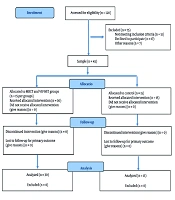
A total of 30 participants referred to Dr. Kariadi General Hospital (Indonesia) from October 2021 to December 2021 were enrolled in this randomized, single-blind clinical trial. The patients were divided into virtual reality (VR) and control groups (n = 15 in each group). The patients were blinded to group assignment. Informed consent was obtained from all patients willing to participate in this study.
3.2. Research Subject
The inclusion criteria were as follows:
(1) Male and female aged 18 - 50 years;
(2) Graduated from high school/equivalent;
(3) American Society of Anesthesiologists (ASA) physical status I - II;
(4) Patients who are going to have lower abdominal or lower extremity surgery under regional anesthesia combined with spinal epidural neuraxial block;
(5) No previous surgery history;
(6) No history of epilepsy, psychiatric disorders, or claustrophobia and having visual acuity > 6/60;
(7) Patients with moderate to severe anxiety scores (Spielberger State-Trait Anxiety Inventory (STAI) score > 38).
The exclusion criteria were as follows:
(1) Patients with shock or other major anesthetic or surgical complications during the procedure;
(2) Patients who refused to participate in the study;
(3) Regional anesthetic needle insertion > 2 times;
(4) VR device (Oculus Quest VR) that is damaged or error during the surgery process;
(5) Patients who dropped out of this study.
3.3. Randomization
The randomization process was performed using numbers randomized by an internet-based computer program (www.randomization.com). The numbers were placed in a sealed envelope. The sealed envelope was opened when the patient arrived at the pre-operation room; then, the patient asked to take one of the papers containing a number. The intervention was given to the subjects selected through randomization. The surgeons and patients reported their satisfaction scores after the surgery was completed. The surgeons who reported their satisfaction scores and the outcome assessor who measured the anxiety and satisfaction scores were blinded to group assignment.
3.4. Ethical Approval
Ethical clearance was obtained from RSUP Dr. Kariadi Hospital, Semarang, Indonesia, as the institutional ethics clearance committee (Ethical Clearance No. 929/EC/KEPK-RSDK/2021).
3.5. Anesthesia Protocol
Monitoring was performed on all subjects during surgery in both groups, including electrocardiography, non-invasive blood pressure, oximetry, and heart rate monitoring. Blood pressure, respiratory rate, and heart rate were measured every 5 minutes, and oxygen saturation (SpO2) was monitored continuously. Premedication was given to the control group using midazolam (0.02 mg/kg BW; maximum of 2.5 mg) (16, 17).
Regional anesthesia used in this study combined with spinal epidural and intrathecal injection. The combination used is 0.5% hyperbaric bupivacaine (12 - 15 mg) intrathecally. If the surgery was more than 120 minutes, we used 0.5% isobaric bupivacaine (8 - 12 mL) via epidural catheter 100 minutes after induction incrementally. After anesthesia induction, the VR group was given an IVR intervention for 30 minutes with a 5-minute rest period until the procedure was completed. Then, all patients were monitored in the recovery room for 30 minutes. Unlike the control group, the VR group did not receive premedication. Oxygen was supplied at 3 L/min via nasal cannula in both study groups from anesthesia induction until the procedure was completed.
3.6. VR Group
The VR group did not receive premedication. Once the regional anesthetic induction was completed, they received an IVR intervention using Oculus Quest VR via a head-mounted device and earphones. During the IVR setup process, patients saw meditative 3D videos from Real VR Fishing software and listened to soothing nature sounds for 30 minutes. Every 30 minutes, the patient was given a break for 5 minutes before being given another IVR intervention until the procedure was completed. If, before 30 minutes, there was a patient who felt uncomfortable and wanted to stop using VR, it was recorded in the research report.
3.7. Control Group
The control group was not given IVR intervention. This group was given premedication midazolam (0.02 mg/kg BW; maximum of 2.5 mg) intravenously as an anxiolytic before anesthesia induction, at least 5 minutes before the procedure started after regional anesthesia induction.
3.8. Sample Size
The sample size was calculated using the using the unpaired t-test sample size formula. In a previous study, the level of anxiety during surgery with regional anesthesia was 6.19 as SD (18). Based on the sample calculation of standard deviation in a previous study in a previous study, this study obtained a minimum sample size of 8 subjects in each group. To anticipate the loss of experimental samples due to dropout, a total of 30 patients were assigned to 2 groups (n = 15 in each group).
3.9. Research Variable
At the beginning of the data collection, 32 patients participated in this study, but during the surgery process, 2 patients were excluded from this study. One patient experienced massive bleeding in hypovolemic shock due to surgical bleeding, and 1 patient was excluded because the VR device had an error during the procedure; thus, 30 patients met the inclusion criteria whose data were collected and analyzed. The data collected included age, gender, demographics, physical status, and duration of surgery, which were obtained from the operating report of the hospital’s medical records. The main variable in this study was patient anxiety measured using STAI-6, which is a shortened version of the original STAI (known as the Indonesian version of STAI) (18). Spielberger State-Trait Anxiety Inventory 6 has 6 questions and only takes a few minutes to complete the questionnaire (Appendices 1 and 2).
A previous study found that STAI-6 was highly correlated with the full version of STAI, and the correlation coefficients are consistently greater than 0.90. This shortened version of the STAI is sensitive to fluctuations in state anxiety. STAI-6 has fewer questions that are acceptable to the subject and gives comparable results to those obtained using the full form of the STAI. In conclusion, this 6-item version of the STAI is reliable and valid (19, 20).
STAI-6 consists of 6 questions with a Likert scale consisting of 4 values (1 = none, 2 = low, 3 = moderate, and 4 = high)
The anxiety levels of all patients were measured 4 times:
(1) Baseline data were measured 1 day before the scheduled elective surgery when the patient was in the inpatient ward);
(2) During the pre-operation in the pre-operation room);
(3) Thirty minutes after the start of surgery and anesthesia induction;
(4) After the surgical procedure was completed in the recovery room
Other variables analyzed were the hemodynamics of the patients during surgery: systolic pressure, diastolic pressure, mean arterial pressure, and pulse rate, which were recorded and analyzed statistically. The level of patient and surgeon satisfaction was also measured by a satisfaction questionnaire, which was measured by a Likert scale after completing the surgical procedure.
The incidents of patient discomfort during surgery and patient requests to stop watching VR programs were recorded. Side effects (such as hypotension, desaturation, bradycardia, tachycardia, asthenopia, nausea, and drowsiness) were recorded during surgery. Hypotension was defined as a decrease in mean arterial pressure to < 55 mmHg or a decrease of up to 20% from baseline. Bradycardia was described as a heart rate < 50 beats/min or a reduction of 20% from baseline. Hypotension was treated with ephedrine (5 mg) and bradycardia with atropine (0.5 mg) intravenously. Asthenopia was defined as eye fatigue due to intense use in the VR group.
After the procedure, the patient was transferred to the recovery room. The patient was asked to complete a questionnaire to assess the satisfaction level, which was on a Likert scale.
3.10. Statistical Analysis
To assess the mean of anxiety scores, differences in anxiety scores, hemodynamic monitoring, and satisfaction levels of patients and surgeons between the IVR and control groups, an independent t test was used for normally distributed data. If the data were not normally distributed, the Mann-Whitney test was used. Continuous variables were assessed for normality using the Shapiro-Wilk test. Normally distributed variables were expressed as mean ± SD.
To assess patients’ anxiety scores alteration in the IVR group and the control group, paired t-test was used for normally distributed data. In Table 1, the categorical variables analyzed by the chi-square test are expressed as percentages or proportions. P values less than 0.05 were considered statistically significant.
Table 1.
Side Effects of Anesthesia Induction a
| Side Effects | Control Group (Midazolam) (n = 15) | VR Group (n = 15) | P Value b |
|---|---|---|---|
| Hypotension | 2 (13) | 3 (20) | 0.624 |
| Desaturation | 0 (0) | 0 (0) | – |
| Bradycardia | 0 (0) | 0 (0) | – |
| Tachycardia | 0 (0) | 0 (0) | – |
| Asthenopia | 0 (0) | 0 (0) | – |
| Nausea Vomitus | 1 (7) | 2 (13) | 0.543 |
| Drowsiness | 10 (67) | 8 (53) | 0.456 |
Abbreviation: VR, virtual reality.
a Values are expressed as No. (%).
b Chi-square test
4. Results
Thirty patients who met the inclusion criteria underwent regional anesthesia for surgery. They were randomized into 2 groups. Before anesthesia induction, the control group received midazolam (0.02 mg/kg BW; maximum of 2.5 mg) intravenously as an anxiolytic. The VR group received an IVR intervention using Oculus Quest VR 5 minutes before the surgical procedure (16, 17).
The anxiety levels of all patients were measured 4 times: (1) Baseline data were measured 1 day before the scheduled elective surgery when the patient was in the inpatient ward; (2) during the pre-operation in the pre-operation room; (3) thirty minutes after the start of surgery and anesthesia induction; and (4) after the surgical procedure was completed in the recovery room. Side effects in both groups were assessed and follow-up before induction, immediately after induction, 15 minutes after induction, and 30 minutes after the start of surgery. Antiemetic ondansetron (4 mg) was given intravenously if the patient had nausea and vomiting. An intravenous injection of ephedrine (10 mg) was given if hypotension occurred. An intravenous injection of atropine sulfate (0.5 mg) was given if there was bradycardia. Patient and surgeon satisfaction was assessed after the surgical procedure was completed.
In this study, none of the patients in the VR group asked to stop using VR during surgery, and no rescue medication was given to the groups. There were no missing data in our study variables. Patient characteristics are shown in Table 2.
Table 2.
Demographic and Clinical Characteristic Data a
| Variables | Control Group (Midazolam) | VR Group | P Value |
|---|---|---|---|
| Age (y) | 34.47 ± 10.32 | 32.00 ± 7.91 | 0.469 b |
| Gender | 0.666 c | ||
| Male | 12 (80) | 11 (73) | |
| Female | 3 (20) | 4 (27) | |
| ASA | 0.690 c | ||
| I | 10 (67) | 11 (73) | |
| II | 5 (33) | 4 (27) | |
| Surgery duration | 111.67 ± 18.387 | 108.00 ± 19.803 | 0.603 b |
Abbreviations: VR, virtual reality; ASA, American Society of Anesthesiologists.
a Values are expressed as mean ± SD or No. (%).
b Independent t test
c Chi-square test
According to Table 3, there was no significant difference between patient demographics and ASA physical status. In addition, there was no significant difference between the 2 groups in the duration of surgery.
Table 3.
Perioperative Patients’ Anxiety Score
| Anxiety Score | Control Group | VR Group | P Value | ||
|---|---|---|---|---|---|
| Mean ± SD | Median (Min - Max) | Mean ± SD | Median (Min - Max) | ||
| Baseline | 32.13 ± 5.84 | 33 (20 - 43) | 31.73 ± 3.63 | 33 (27 - 40) | 0.823 a |
| Preoperative | 46.67 ± 4.01 | 47 (40 - 53) | 49.33 ± 5.08 | 50 (40 - 57) | 0.122 a |
| During surgery | 37.40 ± 5.44 | 37 (27 - 47) | 33.60 ± 4.12 | 33 (27 - 40) | 0.040 a, b |
| Postoperative | 34.00 ± 5.79 | 33 (23 - 43) | 29.40 ± 4.25 | 30 (23-37) | 0.020 a, b |
Abbreviation: VR, virtual reality.
a Independent t test
b Significant (P < 0.05)
The baseline anxiety score was measured when the patient was in the inpatient ward the day before surgery. The results showed no statistically significant difference between the control and VR groups in anxiety scores (P > 0.05). Table 3 shows an increase in preoperative anxiety scores in both groups. The mean preoperative patient anxiety score was 46.67 ± 4.01 in the control group and 49.33 ± 5.08 in the VR group. Both groups had high anxiety scores. However, there was no significant difference between the 2 groups (P > 0.05).
Anxiety scores decreased in both groups during surgery, with a statistically significant difference between the 2 groups (P < 0.05). Anxiety scores were lower in the VR group (33.60 ± 4.12) than in the control group (37.40 ± 5.44).
Also, the anxiety scores of the postoperative patients in the recovery room decreased in both groups, with a statistically significant difference between the 2 groups (P < 0.05). Lower anxiety scores were found in the VR group (29.40 ± 4.25) than in the control group (34.00 ± 5.79).
The IVR intervention and midazolam premedication significantly reduced the patient’s anxiety score (Table 4). The effect of IVR vs midazolam in reducing anxiety scores preoperatively in the pre-operation room compared to the time in the operating room showed statistically significant results with a higher mean in the VR group (15.73 ± 4.72) than in the control group (9.27 ± 5.23). Statistical analysis showed that IVR could statistically reduce anxiety scores better than midazolam (P < 0.05). Therefore, IVR can significantly lower anxiety scores than midazolam (P < 0.05).
Table 4.
Differences in Preoperative and Intraoperative Patients’ Anxiety Scores
| Variables | Anxiety Score Differences | P Value a | P Value b | |
|---|---|---|---|---|
| Mean ± SD | Median (Min - Max) | |||
| Control group | 9.27 ± 5.23 | 10 (0 - 17) | 0.001 c, d | 0.001 c, e |
| VR group | 15.73 ± 4.72 | 16 (10 - 23) | 0.001 c, d | |
Abbreviation: VR, virtual reality.
a Comparisons of anxiety score differences in each group
b Comparisons of anxiety score differences between control and VR group
c Paired t test
d Significant
e Independent t test
4.1. Hemodynamic Monitoring
Table 5 compares systolic blood pressure, diastolic blood pressure, mean arterial pressure, and heart rate data between the 2 groups at 3 different times; however, there is no statistically significant difference between the 2 groups (P > 0.05).
Table 5.
Comparisons of Blood Pressure Between the 2 Groups a
| Variables | Control Group (Midazolam) | VR Group | P Value |
|---|---|---|---|
| Systolic blood pressure | |||
| Before induction | 127.87 ± 9.37 | 123.53 ± 10.95 | 0.254 b |
| 15 minutes after induction | 103.93 ± 14.86 | 100.60 ± 11.23 | 0.693 c |
| 30 minutes after induction | 110.47 ± 11.64 | 114.33 ± 12.27 | 0.384 b |
| Diastolic blood pressure | |||
| Before induction | 75.73 ± 6.93 | 71.60 ± 8.74 | 0.162 b |
| 15 minutes after induction | 68.47 ± 8.66 | 67.73 ± 9.39 | 0.826 b |
| 30 minutes after induction | 68.27 ± 8.04 | 69.33 ± 10.68 | 0.760 b |
| MAP | |||
| Before induction | 93.11 ± 5.86 | 88.90 ± 8.80 | 0.135 b |
| 15 minutes after induction | 80.29 ± 10.37 | 78.69 ± 9.81 | 0.740 c |
| 30 minutes after induction | 82.34 ± 8.48 | 84.32 ± 10.84 | 0.581 b |
| Heart rate | |||
| Before induction | 88.20 ± 7.13 | 87.00 ± 10.37 | 0.715 b |
| 15 minutes after induction | 78.60 ± 8.39 | 76.93 ± 8.05 | 0.583 b |
| 30 minutes after induction | 78.20 ± 8.52 | 80.07 ± 7.78 | 0.536 b |
Abbreviations: VR, virtual reality; MAP, mean arterial pressure.
a Data are presented as mean ± SD.
bt test
c Mann-Whitney test
4.2. Side Effects
Table 1 shows side effects during the study, such as hypotension, nausea, and drowsiness. Two and 3 patients had hypotension in the control and VR groups, respectively. One and 2 patients had nausea in the control and VR groups, respectively. Ten and 8 patients had drowsiness in the control and VR groups, respectively. There was no significant difference between the 2 groups in side effects (P > 0.05).
4.3. Patient and Surgeon Satisfaction
Using the Mann-Whitney test, Table 6 shows the results of the satisfaction questionnaire. It was found that the level of patient satisfaction was significantly higher in the VR group, with a score of 8 (8 - 9), compared to the control group, with a score of 7 (7 - 8). The 2 groups had a statistically significant difference (P = 0.033). However, no significant difference was found in the level of surgeon satisfaction, with a VR score of 8 (8 - 8), compared to the control group, with an r score of 8 (7 - 8).
5. Discussion
5.1. Perioperative Anxiety
This single-blind randomized clinical trial compared the effects of premedication IVR and midazolam in patients undergoing surgery under combined spinal epidural (CSE) regional anesthesia. The results showed a significantly lower anxiety score in the VR group than in the control group (P = 0.04). The mean anxiety score during surgery in the operating room significantly decreased in the control and VR groups (P < 0.05).
Anxiety scores were significantly lower in the VR group than in the control group before and during surgery (P = 0.01). The level of patient satisfaction was significantly higher in the VR group than in the control group (P = 0.024). There was no statistical significance between the 2 groups in vital signs, side effects, and surgeon satisfaction.
IVR is a non-pharmacological therapy. As a distraction technique, IVR has the potential to reduce anxiety in patients undergoing surgery (9, 11, 12). IVR uses computer-generated auditory and visual stimuli to create an illusionary presence or the perception of virtual objects in the physical world. The greater the illusion the patient feels, the greater the degree of immersion and distraction, resulting in reduced patient anxiety (11).
According to Theingi et al., there are 3 essential elements in an IVR intervention: Immersion, presence, and agency (21).
Immersion is an illusory feeling that causes physical and psychological immersion in a virtual environment. The degree of immersion is affected by objective factors, such as the technical specifications of the VR system hardware and software. In this study, the VR devices used are Oculus Quest hardware and Real Fishing VR software, containing videos of meditative natural scenery. Mindfulness meditation activities are used to manage anxiety. However, the brain mechanisms involved in relieving meditation-related anxiety remain unexplained. Meditation to reduce anxiety was associated with activation of the anterior cingulate cortex, ventromedial prefrontal cortex, and anterior insula. Oculus Quest and Real Fishing VR devices help patients to experience mindfulness meditation (21-23).
Presence measures how the patient feels integrated into the virtual environment; this is more subjective because it depends on the user and the context of the experience using VR. In addition, presence is also influenced by the hardware used; better graphics allow users to experience a more realistic VR experience. The smaller, more practical, and lighter weight of the Oculus Quest also helps create a presence experience for users. The Oculus Quest is a wireless device with a wider field of view and higher screen resolution that significantly enhances the VR experience. Although all the patients had never used VR before, the IVR intervention could effectively reduce patient anxiety (21, 24, 25).
The higher levels of immersion, presence, and agency make the VR illusion more real and increase the ability to change the subject’s perception (21). These 3 elements influence each other and play an essential role in reducing patient anxiety.
In this study, hemodynamic parameters were measured before induction and 15 and 30 minutes after induction. In general, the hemodynamics of patients after induction of anesthesia changed due to the sympatholytic effect of regional anesthetic drugs; hemodynamic parameters were compared between the 2 groups to determine whether there were differences in hemodynamic responses (26). There were 2 interventions in this study. The control group received premedication midazolam (0.02 mg/kg BW; maximum of 2.5 mg) intravenously as an anxiolytic before induction of anesthesia; in addition, premedication was performed at least 5 minutes before the start of the procedure. The treatment group received IVR, administered during surgery after anesthesia induction. Both interventions can affect patients’ hemodynamic changes after anesthesia induction; thus, the researcher wanted to compare whether there were hemodynamic differences between the 2 intervention groups.
There was no significant difference between the 2 groups in hemodynamic monitoring, such as systolic blood pressure, diastolic blood pressure, MAP, and heart rate. This result is in line with the study by Sun et al., showing that the intravenous administration of midazolam (0.02 mg/kg BW) is effective as an anxiolytic and has minimal effect on cardiorespiratory and desaturation events (27). Alaterre et al. demonstrated that VR was associated with minimal hemodynamic changes in blood pressure and pulse rate during surgery and reduced tachycardia incidence (9).
A common manifestation of regional anesthesia is a decrease in blood pressure. The cardiovascular response to spinal anesthesia results from sympathetic nerve block induced by intrathecal local anesthetics. The sympathetic block causes a total loss of venous tone, leading to a decrease in cardiac output and a reduction in blood pressure (28, 29). In this study, we found a decrease in systolic and diastolic blood pressure means and MAP after anesthesia induction in both groups. However, there was no significant difference between the 2 groups.
5.2. Patient and Surgeon Satisfaction
Measurements of patient satisfaction are now universally acknowledged as essential elements of high-quality medical care. The level of patient satisfaction was significantly higher in the VR group than in the control group because the patient got a pleasant experience from VR that makes them feel more comfortable during the surgery. This is in accordance with the study by Alaterre et al., reporting that an IVR protocol in the operating room as an adjuvant to regional peripheral nerve block anesthesia could effectively improve patient satisfaction and reduce perioperative anxiety. Therefore, IVR is necessary to improve the quality of current health services (9, 30). However, the level of surgeon satisfaction did not differ in both groups. Based on interviews conducted with the surgeons, it was stated that in both groups no problems were found that interfered with the surgery.
5.3. Impact of VR on Reducing Patient Anxiety
The results showed that VR effectively reduced perioperative patient anxiety and increased patient satisfaction. VR has a significant potential impact on medical practice (especially as a non-pharmacological therapy) by reducing pain and anxiety that usually occurs in patients undergoing surgical procedures. Therefore the application of VR can be a non-pharmacological solution that provides many benefits for healthcare system. It could reduce the use of sedation and opioids, the side effects of drugs, postoperative recovery time, and health care costs (31).
5.4. Limitations of the Study
This study did not use a standardized satisfaction questionnaire, and the assessment of intraoperative patient anxiety was done only once 30 minutes after the start of surgery. However, this study used standardized anxiety assessment tools, though the parameters were subjective.
5.5. Conclusions
IVR intervention can reduce the anxiety of patients undergoing surgery under regional anesthesia and increase patient satisfaction. IVR is better than midazolam premedication in reducing perioperative patient anxiety.