1. Background
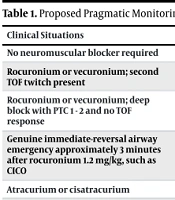
Sugammadex is a modified gamma-cyclodextrin used for the rapid reversal of rocuronium-induced neuro muscular block (NMB). It was used in our institute from 2011 till 2014 on unrestricted manner due to its superior reversal and because of its subsidized cost. The removal of cost subsidies in June 2014 has led the South Australian (SA) formulary committee together with SA anaesthesia representatives to develop guidelines for the state wide use of Sugammadex in a restricted manner.
There are a broad range of indications for Sugammadex use. It is indicated as a rescue therapy in emergency “cannot intubate, cannot oxygenate” situations following rocuronium or vecuronium induced neuromuscular blockade and in clinical situations such as premature termination of procedure after a profound depth of neuromuscular blockade, inadequate reversal with neostigmine and contraindications to other reversal agents. It is also indicated when significant comorbidities exist which would require an unequivocal reversal of neuromuscular blockade (e.g. myasthenia gravis, morbid obesity, significant COAD or restrictive lung disease, major cardiovascular disease). Sugammadex is generally safe, although there have been recent reports of anaphylaxis including one in our institution (1-10). Its side effect profile has not been well characterised due to a paucity of large audits exploring this issue (11, 12).
2. Objectives
The aim of this audit is to assess the impact of restricting use of Sugammadex on anaphylaxis, postoperative outcomes such as nausea and respiratory issues at a major teaching hospital in Australia.
3. Methods
A retrospective database case note audit study covering the period January 1st to December 31st 2014 was conducted at the teaching hospital in Australia. Patients who had endotracheal intubation for any surgery were included in the audit. Non- intubated patients (e.g. laryngeal mask airway use or regional anaesthesia) were excluded. Patients who were intubated and transferred to intensive care and patients with incomplete data on the anaesthetic or recovery chart on their medical records were also excluded. The operating room information system (ORMIS) and medical records were used to obtain information about time in the operating theatre and post-anesthesia care unit (PACU) along with data concerning selected patient outcomes such as postoperative nausea, oxygen desaturation and other side effects (e.g.: dryness of mouth, shakes, breathing difficulty and coughing). PACU time was the time of arrival to ready to discharge on fulfilling recovery discharge criteria. Desaturation was defined as an event documented by the nursing staff in the ORMIS or on the recovery chart with an SPO2 below 93%. Information concerning Sugammadex usage (number of vials) and their cost during the period was obtained from TQEH pharmacy.
Inclusion criteria: Patients who had endotracheal intubation for any general surgery. Exclusion criteria: Non intubated patients (e.g. laryngeal mask airway use or regional anaesthesia), patients with incomplete data and patients who were transferred to the intensive care unit (ICU). Ethics approval was obtained from human research ethics committee as a quality assurance audit with permission to undertake and publish this study.
3.1. Statistical Analysis
Continuous measures (theatre time, recovery time and age) were summarized using means with standard deviations. Categorical and binary variables (ASA, desaturation and nausea) were presented as percentages. Comparisons across time were made using the Wilcoxon (Mann-Whitney) test for continuous variables and the Pearson’s Chi-square test for categorical/binary measures. All tests were two-tailed and significance was assessed at the 5% alpha level. The analyses were completed using SAS v9.3 (SAS Institute Inc., Cary, NC, USA).
4. Results
Following exclusion of 19 ICU patients and 275 patients with incomplete data, case notes were available for 1347 patients in the unrestricted period (January - June, 2014) and for 1302 patients in the restricted period (July - December, 2014). Sugammadax dose across the audit period ranged from 100 mg to 400 mg with a median of 200 mg. Its usage dropped from 1830 vials (200 mg) during the first 6 months of 2014 to 843 vials during the latter half of the year, representing a 54% drop in use decrease in consumption. The cost of a vial of sugammadex was $180 AUD and Neostigmine $1.80 AUD.
There were no significant differences between the time periods with respect to patient characteristics (Age, ASA) or side effects (PACU oxygen de-saturation, Nausea) (Table 1). Mean time in theatre was likewise similar across the time periods; however, mean recovery time was significantly longer during the restricted period (P < 0.0001). Case note records revealed that 11 patients in unrestricted and 7 in the restricted group were not reversed with 50% of them having mild O2 desaturation events during recovery. Other side effects reported in PACU were shakes, coughing, restlessness, muscle twitching, breathing difficulty in both groups. While a higher rate of muscle twitching and breathing difficulty was observed in the restricted group, the numbers were too small for analysis.
Table 1.
Showing Demographic Data and Perioperative Times of Patients
| Variable | Unrestricted (n) 1347 | Restricted (n) 1302 | P Value |
|---|---|---|---|
| Age (mean ± SD) years | 55.27 ± 19.31 | 54.53 ± 18.89 | 0.250 |
| Theatre | |||
| Time (mean ± SD) min | 135.18 ± 81.59 | 136.88 ± 75.70 | 0.135 |
| Recovery | |||
| Time (mean ± SD) min | 105.22 ± 67.94 | 123.99 ± 98.13 | < 0.0001 |
| ASA, % (n) | 0.644 | ||
| ASA 1 | 52.67 (256) | 47.33 (230) | |
| ASA2 | 49.61 (639) | 50.39 (649) | |
| ASA 3 | 51.67 (417) | 48.33 (390) | |
| ASA 4 | 51.47 (35) | 48.53 (33) | |
| PACU oxygen | |||
| Desaturation, % (n) | |||
| Yes | 54.55 (18) | 45.45 (15) | 0.670 |
| Nausea, % (n) | |||
| Yes | 55.56 (20) | 44.44 (16) | 0.570 |
| Other side effects | |||
| Shakes, % (n) | 26.94 (2) | 0 | |
| Coughing, % (n) | 13.47 (1) | 13.47 (1) | |
| Restlessness, % (n) | 13.47 (1) | 0 | |
| Muscle twitching, % (n) | 13.47 (1) | 0 | |
| Breathing difficulty, % (n) | 0 | 113.47 (1) | |
| Anaphylaxis, % (n) | 0 | 113.47 (1) |
Over the past 5 years, there have been 3 cases of anaphylaxis in our facility including 1 that one patient suffered from anaphylaxis during the restricted audit period. This was associated with an overall Sugammadex usage of 15070 doses.
5. Discussion
The prevalence of side effects was similar during the restricted and unrestricted periods indicating that the unrestricted use of Sugammadex is safe. However, the higher cost of Sugammadex ($180AUD /200 mg vial) when compared to Neostigmine (< $2 AUD equal) makes it a less favourable option in terms of health expenditure. We found that recovery time was significantly longer during the restricted period and it is not immediately clear whether this will offset any savings attained by switching to Neostigmine. However, given the cost differential between the two agents, we believe that this is unlikely.
There are no clear clinical indications to favour Sugammadex over Neostigmine since the latter is also safe with no risk of anaphylaxis and negligible risk of allergy. Furthermore, an earlier study reported that Neostigmine did not result in longer anaesthesia times, operating times or time spent in a post anaesthetic care unit (13). Theatre time did not differ across the periods in our study which is consistent with their findings. We also found that PACU oxygen desaturation, post-operative nausea and PONV rates did not change as a result of restricting Suggamadex use,but there was an increased incidence of muscle twitching and breathing difficulty in restricted group.Our findings are consistent with a systematic reviewby Abad-Gurumeta (14); however, these differences did not emerge in a recent Cochrane systematic review (15).
As previously reported, our study showed an increase in recovery time during the restricted period. It is not clear whether this was due to change in reversal agent as delays in recovery time are multifactorial. These can equally be caused by patient factors or by systemic factors like staffing shortages.
When the patient is breathing well, some anaesthetists prefer to avoid the use of reversal agents. This can lead to mild desaturation events although these are easily managed without major adverse events by increasing O2 flow for a short period. Nonetheless, the possibility of such events remains, particularly in airway surgery. In our study the majority of the non-reversal patients had mild desaturation events in the PACU.
The limitations of the study are: it’s retrospective nature, incomplete retrieval of information from electronic data and case notes, and a single centre study with many confounding factors related to type of surgery and data quality. The undocumented possibility of unreported incidents in theatre or recovery is possible, however, this is beyond the scope this study.
While the incidence of Sugammadex-related anaphylaxis is not known, available evidence suggests that it is quite low. Over the past 5 years, there have been 3 cases of anaphylaxis in our facility including 1 that occurred during the restricted audit period. Our data place the incidence at 1 case per 5000 doses (3 cases from 15000 doses). Other studies have reported incidence rates between 1 in 3500 and 1 in 13000 cases (1). Thus, the risk of anaphylaxis appears to be negligible; however, we make no recommendations as to whether it should be used in a restricted or non-restricted manner. One of the benefits of sugammadex is Rocuronium dosing can be done closer to the completion of surgery and due to rapid recovery there may be reduction in theatre anaesthetic time. This time saving may further reduce hospital costs. Though Neostigmine may have side effects of nausea but it’s cheaper and safer in regards to anaphylaxis occurrence.
5.1. Conclusion
Except reduced recovery time during unrestricted period, restricting the use of Sugammadex has had minimal impact on clinical outcomes. The 54% reduction in usage during the restricted period translates to a reduction in overall health-care expenditure and since Neostigmine represents a safe and cheaper alternative, its use still remains a standard practice in our facility.