
1. Background
Staphylococcus aureus stands as one of the leading culprits behind nosocomial infections, capable of causing severe and invasive diseases (1). A majority of the strains encountered in healthcare settings are methicillin-resistant S. aureus (MRSA) variants, rendering them impervious to all beta-lactam antibiotics (2). The rise of MRSA has presented a significant therapeutic challenge, primarily due to the mounting resistance of these bacteria, particularly in healthcare-acquired infections (3, 4).
Staphylococcus aureus can naturally inhabit the skin’s surface in individuals, with 20 - 40% of the general population carrying it in their anterior nostrils. Healthcare providers who are asymptomatic carriers represent a pivotal means through which this organism can spread within the hospital (5).
Virulence genes play a crucial role in producing toxins and other factors that intensify the severity of diseases. The presence of specific virulence genes, such as toxic shock syndrome toxin-1 (tsst-1), alpha-toxin (hla), and panton-valentine leucocidin (pvl), has been linked to heightened pathogenicity and the potential for severe infections.
Panton-Valentine leukocidin, originating from the pvl gene, encodes a cytolytic toxin that triggers the entry of cations and subsequent neutrophil destruction by forming pores. Due to its ability to induce leukocyte lysis, leukocidin can serve as a virulence factor, leading to a reduction in leukocyte populations within the host’s body. Toxic shock syndrome toxin-1 (TSST) belongs to the pyrogenic toxin superantigen (PTSAg) group. Superantigens exert their influence by stimulating T cells through interaction with the variable region on the T-cell receptor (TCR) and class II major histocompatibility complex molecules (MHC class 2). Following activation, T cells release cytokines, including interleukin 1 and tumor necrosis factor-alpha (TNF-α), resulting in both shock and tissue damage (6, 7).
2. Objectives
In this study, an in-depth examination of S. aureus nasal carriage was conducted among healthcare providers in an intensive care unit (ICU). The primary focus was on antibiotic resistance profiles and the distribution of virulence genes. This knowledge holds the potential to contribute to the prevention of the spread of S. aureus and the enhancement of patient care outcomes.
3. Methods
3.1. Sampling and Detection of Staphylococcus aureus
In this cross-sectional descriptive study, after obtaining approval from the Ethics Committee of Dezful University of Medical Sciences, Dezful, Iran, 120 healthcare workers in the Special Care Department of Ganjavian Dezful hospital were screened for S. aureus.
3.1.1. Inclusion and Exclusion Criteria
The study included medical professionals, such as physicians, nurses, students, and other ICU personnel, who willingly agreed to participate. Individuals who did not provide consent or were experiencing a respiratory tract infection during the sample collection period were excluded based on the established criteria. A trained research assistant collected nasal swabs from both nostrils using 2 sterile cotton swab sticks, one for each nostril. Each swab stick was moistened with sterile saline solution and inserted approximately one centimeter into each nostril. The swab stick was then rotated five times along the inner wall of the ala and nasal septum. After collection, the swab stick was placed in a test tube container sealed with cotton wool and promptly sent to the microbiology laboratory for culture on mannitol salt agar and blood agar media (Merck, USA). Standard microbiological procedures, including Gram staining, catalase, coagulase, and mannitol fermentation on mannitol salt agar (Merck, USA), were performed to detect S. aureus (8). Information about healthcare workers, such as age, gender, occupational role, duration of professional experience, antibiotic use in the last three months, and history of a specific disease, was recorded.
3.2. Antibiotic Susceptibility Testing
Antibiotic susceptibility testing (AST) was conducted for all isolates following the guidelines of the Clinical and Laboratory Standards Institute (CLSI) using disk diffusion (DD) and minimum inhibitory concentration (MIC) methods (9). The DD method involved testing with gentamicin (10 µg), rifampicin (5 µg), levofloxacin (5 µg), ciprofloxacin (5 µg), cefoxitin (30 µg), trimethoprim/sulfamethoxazole (1.25/23.75 µg), quinupristin/dalfopristin (15 µg), clindamycin (2 µg), erythromycin (15 µg), penicillin (10 U), and linezolid (30 µg) (BD, USA). Minimum inhibitory concentration testing was conducted for teicoplanin, daptomycin, and vancomycin antibiotics. Cefoxitin disks (30 µg) (BD, USA) were used to detect MRSA using the DD method. Staphylococcus aureus ATCC 25923 served as the control strain (10).
3.3. Polymerase Chain Reaction Analysis
Deoxyribonucleic acid (DNA) was extracted from bacterial cells using a boiling method. Primers specific to the uni (PCR control), tsst-1, pvl, hla, and mecA genes were synthesized by Metabion in Germany (Table 1). Each gene was amplified through polymerase chain reaction (PCR), and the resulting products were analyzed by electrophoresis on agarose gel.
Table 1.
Oligonucleotide Primers Used in This Study
| Sequence Name | Sequence (5’ → 3’) | Annealing | Amplicon Length, bp | References |
|---|---|---|---|---|
| uni F | CCAGCAGCCGCGGTAATACG | 60 | 996 | - |
| uni R | ATCGGTTACCTTGTTACGACTTC | |||
| hla F | CGGTACTACAGATATTGGAAGC | 55 | 744 | (11) |
| hla R | TGGTAATCATCACGAACTCG | |||
| pvl F | GGAAACATTTATTCTGGCTATAC | 55 | 502 | (11) |
| pvl R | CTGGATTGAAGTTACCTCTGG | |||
| tsst-1 F | TTATCGTAAGCCCTTTGTTG | 54 | 398 | (11) |
| tsst-1 R | TAAAGGTAGTTCTATTGGAGTAGG | |||
| mecA F | AGAAGATGGTATGTGGAAGTTAG | 55 | 584 | (10) |
| mecA R | ATGTATGTGCGATTGTATTGC |
3.4. Statistical Analysis
Data analysis was performed using WHONET 2020 and IBM SPSS software (version 21). Qualitative variables were described using frequency and percentage. The chi-square test was employed to analyze the data, with a significance level set at P < 0.05.
4. Results
A total of 120 healthcare provider specimens were collected, comprising 32 (26.7%) males and 88 (73.3%) females. The age of the study participants ranged from 22 to 63 years. Detailed demographic data are presented in Table 2.
Table 2.
Characteristics of the Healthcare Workers a
| Variables | Total | Staphylococcus aureus Nasal Carrier | P-Value | MRSA Nasal Carrier |
|---|---|---|---|---|
| Age (y) | - | |||
| Median (range) | 33 (22 - 63) | 41 (24 - 63) | 35 (29 - 47) | |
| Gender | 0.223 | |||
| Male | 32 (26.7) | 6 (18.8) | 2 (6.3) | |
| Female | 88 (73.3) | 9 (10.2) | 2 (2.3) | |
| Occupational role | 0.729 | |||
| Physician | 10 (8.3) | 0 | 0 | |
| Student | 3 (2.5) | 0 | 0 | |
| Nurse | 72 (60) | 7 (9.7) | 2 (2.8) | |
| Nurse’s aide | 35 (29.2) | 7 (20) | 2 (5.8) | |
| Duration of professional experience | 0.213 | |||
| 1 - 6 months | 6 (5) | 0 | 0 | |
| 6 - 12 months | 5 (4.2) | 0 | 0 | |
| > 1 year | 109 (90.8) | 15 (13.8) | 4 (3.7) | |
| Using antibiotics in the last three months | 0.713 | |||
| Yes | 42 (35) | 6 (40) | 1 (2.4) | |
| No | 78 (65) | 9 (60) | 3 (97.6) | |
| History of a special disease | 0.543 | |||
| Immunosuppression | 0 | 0 | 0 | |
| Diabetes | 2 (1.7) | 0 | 0 | |
| Recent sinusitis | 1 (0.8) | 0 | 0 | |
| None | 109 (90.8) | 15 (13.8) | 4 (3.7) | |
| Total | 120 (100) | 15 (12.5) | - | 4 (3.3) |
Abbreviation: MRSA, methicillin-resistant Staphylococcus aureus.
a Values are expressed as No. (%) unless otherwise indicated.
Fifteen samples (12.5%) tested positive as carriers of S. aureus, with 40% (n = 6) being male and 40% (n = 6) having a history of antibiotic use in the past 3 months. Among the strains, 26.6% (n = 4) were identified as MRSA. The overall rate of nasal colonization by MRSA amounted to 3.3%. The collected findings strongly suggest that 20% (7/35) of nurse’s aides investigated were carriers of S. aureus in their nasal cavities. However, based on the obtained results (P-value), it can be concluded that the presence of S. aureus nasal carriers was not significantly associated with gender, occupational role, duration of professional experience, recent antibiotic usage, or a history of any specific ailment.
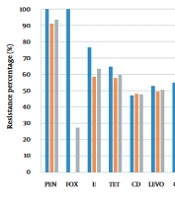
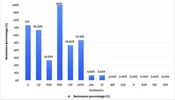
The results of the AST for the S. aureus isolates are depicted in Figure 1. The data demonstrated that the resistance patterns of these isolates toward erythromycin were observed in 73% of cases; nevertheless, resistance to penicillin was 100%. Furthermore, clindamycin, ciprofloxacin, levofloxacin, cefoxitin, gentamicin, and cotrimoxazole exhibited a resistance pattern of 66.6%, 46.6%, 53.3%, 26.6%, 6.6%, and 6.6%, respectively. All strains showed sensitivity to rifampin, linezolid, vancomycin, daptomycin, quinupristin-dalfopristin, and teicoplanin.

Figure 1.
Antimicrobial resistance profiles of Staphylococcus aureus isolates (Abbreviations: E, erythromycin; CD, clindamycin; FOX, cefoxitin; PEN, penicillin; CIP, ciprofloxacin; LEVO, levofloxacin; GM, Gentamycin; TS, trimethoprim/Sulfamethoxazole; RIF, rifampin; LZD, linezolid; V, vancomycin; DAP, daptomycin; TEC, teicoplanin; SYN, quinupristin-Dalfopristin).
The PCR product specific to the uni gene was detected in all isolates. Additionally, all four MRSA strains harbored the mecA gene. The hla gene was detected in 66.6% of S. aureus strains; nonetheless, neither the tsst-1 nor pvl genes were observed in any of the isolates (Figure 2).

Figure 2.
Agarose gel electrophoresis of polymerase chain reaction (PCR) products; lane M, DNA size marker, 100 bp; lanes 1 and 2, hla (744 bp); lanes 3, 4, and 5, mecA (584 bp); negative template control (NTC); lanes 6, 7, 8, and 9, uni (996 bp).
5. Discussion
5.1. Frequency of Staphylococcus aureus
The prevalence rate of S. aureus in the present study was slightly lower than in similar studies conducted in Iran (12.5% vs. 19.2%, 22.5%, 21.5%, and 24%) (12-14). The rate of MRSA carrier cases was 26.6%. However, the prevalence of MRSA cases among all samples was 3.3%, which aligns closely with the findings of other studies (15). The prevalence of different Staphylococcus isolates can be crucial in determining the appropriate antibiotic coverage against these species. In accordance with the 2016 Infectious Diseases Society of America (IDSA) guidelines on hospital-acquired pneumonia (HAP) and ventilator-associated pneumonia (VAP), if more than 10 - 20% of isolated S. aureus strains are MRSA, empiric treatment for these strains should be considered (16). Therefore, this issue holds significant clinical importance when deciding the best treatment regimen. The recommendation is to consider MRSA treatment for HAP/VAP cases of ICU patients in this medical center.
5.2. Frequency of Toxin Genes
The mecA gene encodes a protein known as a penicillin-binding protein with low affinity (PBP2a), responsible for S. aureus resistance to methicillin and many beta-lactam drugs (17, 18). The prevalence of mecA and hla genes in S. aureus strains has varied in various studies, likely due to multifactorial factors (environmental factors, ethnic differences, and antibiotic use). In the current study, similar to Hoseini Alfatemi et al.’s study, the hla gene had the highest frequency among all S. aureus strains (19). The mecA gene was present in all MRSA strains in the current study. In a study by Jafari-Sales et al., over 51% of MRSA strains were observed to contain the mecA gene (20). Given the frequency of these genes in the present study, we believe that the presence of the mecA gene might indicate high antibiotic resistance, particularly to beta-lactams, and these strains require increased attention as they might lead to more severe and aggressive diseases. Additionally, understanding the expression of these genes and the status of staphylococcal strains can enhance treatment strategies for S. aureus infections.
The detection of tsst-1 and pvl genes is clinically significant because their expression can be associated with severe infections caused by this organism, such as severe pneumonia and toxic shock syndrome (21). In Tabassum et al.’s study, 49% of MRSA strains in the normal population and 46% in pathogenic MRSA strains carried the pvl gene, raising public health concerns (22). In another study, 19% of S. aureus strains were observed to be pvl-positive (23).
In two studies conducted in Nigeria and Ethiopia, 67% and 13% of clinical samples encoded the test-1 gene, leading to resistance to various antibiotics (24, 25). However, in the current study, neither the pvl nor tsst-1 genes were detected in any of the strains. The difference might be related to the selection of samples from healthy carriers or the small size of the sample pool.
5.3. Antibiotic Susceptibility Testing
Currently, MRSA poses a global health threat. Treating these infections is increasingly challenging, necessitating prolonged hospitalization, and is associated with elevated mortality rates (26, 27). Improper antibiotic usage ranks among the most critical factors contributing to antibiotic resistance (28). Reports from the World Health Organization reveal that in most countries, over 51% of antibiotics are used inappropriately or at inadequate dosages (29). Given variations in microbial resistance patterns, conducting continuous studies to investigate these patterns in different countries is crucial. In this study, all S. aureus strains demonstrated sensitivity to vancomycin, teicoplanin, linezolid, rifampin, quinopristin-dalfopristin, and daptomycin, with no resistance observed to these drugs. It is recommended to reserve these options solely for cases involving MRSA strains, with AST results guiding treatment decisions.
Quinolones (levofloxacin and ciprofloxacin) have historically been considered effective drugs for S. aureus infections. However, in recent years, due to their excessive and improper use, resistance to quinolones among S. aureus strains has increased (30, 31). In the current study, relatively high resistance to quinolones was noted (46.7% for ciprofloxacin and 53.3% for levofloxacin). Although quinolones remain a suitable choice for treating S. aureus infections, it is imperative to always consider microbial susceptibility results. Moreover, given the substantial resistance observed in this study, it is not recommended to use penicillin, clindamycin, or erythromycin for the treatment of S. aureus infections at this treatment center. It appears that this pattern of microbial resistance is linked to the heightened expression of the mecA and hla genes.
Several studies have failed to establish a significant relationship between individuals' career status and their occupational roles (13, 32). However, a study conducted by Rahimi-Alang et al. in the hospitals of Gorgan, Iran, reported a significant association between a healthcare provider’s role and their carrier status (14). In the present study, although no statistically significant difference was observed between occupational roles and S. aureus carriers (P = 0.42), it appears that nurses and nurse’s aides might play pivotal roles in transmitting S. aureus organisms to patients in ICUs. These results might be connected to the duration of work shifts and the consistency of presence in this ward. Regular training for this group on standard precautions, particularly emphasizing hand hygiene principles, is of utmost importance.
In this study, there was no statistically significant relationship between the duration of professional experience and being a carrier of S. aureus (P = 0.78). However, one noteworthy finding was that all asymptomatic carriers had more than one year of experience. The aforementioned results might be influenced by the relatively small sample size in this study. Similar studies have also failed to establish a significant relationship between individuals’ length of professional experience and being carriers of S. aureus (12).
It appears that there could be a connection between the duration of professional experience among ICU staff and the likelihood of being a carrier. Therefore, it is advisable to conduct routine screenings for asymptomatic carriers of S. aureus among all healthcare providers with a history of more than one year of service in the ICU. Additionally, avoiding prolonged stays in this ward might prove effective in controlling these conditions.
5.4. Conclusions
In conclusion, this study offers valuable insights into the prevalence, antibiotic resistance profiles, and distribution of virulence genes among healthcare providers carrying S. aureus in their nasal passages within an ICU setting. These findings underscore the necessity for ongoing surveillance and the implementation of infection control strategies to mitigate the risk of S. aureus transmission and associated infections in healthcare settings. It is recommended that ICU staff with more than one year of work experience undergo regular screening for asymptomatic carriers of S. aureus and receive treatment if colonization is detected in the anterior nostrils.
5.5. Limitations
This study did not include the determination of the clonal lineage of the isolated S. aureus. Another significant limitation of the current investigation was the lack of testing for mupirocin, an agent recommended for eradicating staphylococci nasal carriage.