1. Background
Toxocariasis as a helminthic infectious disease is caused by Toxocara canis and Toxocara cati nematodes (1) inhabited in canine and feline small intestine as definitive hosts, respectively (2).
Humans may be accidentally infected by larva stage of parasite through consumption of embryonated eggs with vegetables, food, geophagia (3), and chicken or cow livers (4).
Since parasite cannot be maturated in humans, after hatching egg in the intestine, larva migrates to organs and tissues (5). Clinical manifestation of human toxocariasis is usually asymptomatic (2, 4). Nevertheless, visceral larva migrants (VLM) and ocular larva migrants (OLM) as two major syndromes of toxocariasis in human can be detected (6, 7). VLM signs are recognized by fever, hepatomegaly, splenomegaly, respiratory symptoms, muscle pain, hypergammaglobulinemia, and eosinophilia (2, 7, 8). Toxocariasis caused by latent or long-standing exposure to infective larvae may also lead to central nervous system involvement, such as seizure, myelitis, and encephalopathy (9, 10).
It is unlikely that Toxocara can be diagnosed by biopsy in the contaminated organs; therefore, its diagnosis is based on immunological tests such as the enzyme-linked immunosorbent assay (ELISA) and Western blot (8, 11). Due to high sensitivity and specificity of ELISA (2), this technique is commonly used to detect Toxocara antibodies in human blood (6, 12).
This zoonotic disease is global (13) and its prevalence is higher in tropical and developing countries (8, 14). Seroprevalence of toxocariasis is reported 2.3% - 86% in different parts of the world (7), which is 15.8% in Iranian population (13).
Moreover, toxocariasis is known as a parasitic disease, which can cause eosinophilia (15). Different studies are performed to evaluate anti-Toxocara antibody in patients with eosinophilia, and prevalence of toxocariasis in patients with eosinophilia was highly reported in Iran and world (15-20).
Due to high level of anti-T. canis in different communities of the world and existence of Toxocara spp. egg in public park soil in different parts of Iran that indicates potential source for human infection (21-23), and due to the lack of information about the outbreak in military personnel and their families, the current study was designed.
2. Objectives
The current study aimed at investigating the anti-T. canis IgG in military personnel and their families with eosinophilia referred to a military hospital in Tehran, Iran, from 2015 to 2016.
3. Methods
3.1. Serological Assay
In the current cross sectional study, among individuals (military personnel and their families) referred to a military hospital in a two-year period (2015 - 2016) for any medical problems, 179 patients with eosinophilia > 5 % in complete blood count (CBC) test, using automatic blood cell counter, were selected for anti-T. canis IgG testing.
After obtaining informed consent and filling out the questionnaire including demographic characteristics (age, gender, place of residence, occupation, education, history of contact with pets), anti-T. canis IgG was detected in their sera using ELISA technique with commercially ELISA kit (IBL, German company) according to the manufacturer’s instructions. Values < 9U were interpreted as negative, 9 - 11 U as equivocal, and > 11 U as positive. Data were analyzed using chi-square test with SPSS version 18. P value < 0.05 was considered as significant.
3.2. Ethical Considerations
Informed consent was obtained from all participants after obtaining a written permission from head of the laboratory in Baqiyatallah hospital and explaining the study objectives to participants.
4. Results
The total seroprevalence of T. canis infection was 11.7%. Out of 179 patients, 58.6% were male (M/F ratio = 1.4) and males were the most infected individuals (71.4%) compared with females.
Mean age of patients was 51.32 ± 17.79 years; ranged 24 to 87.
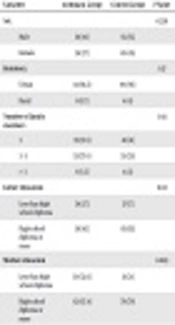
Majority of seropositive patients (60%) were undereducated and 58% of them were living in rural areas. Demographic characteristics of T. canis infection among patients with eosinophilia are shown in Table 1.
Table 1.
Demographic Characteristics of Toxocara canis Infection in Patients with Eosinophilia
| Variable | Number | Seropositive Ratea | p-value |
|---|---|---|---|
| Gender | 105 | 15 (71.43) | 0.2 |
| Males | 74 | 6 (28.6) | |
| Females | |||
| Contact with pet | 179 | 19 (1.05) | 0.02 |
| Residency | 0.3 | ||
| Urban | 75 | 7 (9.34) | |
| Rural | 104 | 14 (13.4) |
aValues are expressed as No. (%).
After statistical analysis, a relationship was observed between the level of education (P = 0.01) and history of pet contact (P = 0.02), and anti-T. canis IgG. There was no significant relationship between Toxocara seroprevalence and age, gender, occupation, and place of residence (P > 0.05).
5. Discussion
To the authors` best knowledge, it was the first study conducted on military personnel and their families in which 11.7% of the patients with eosinophilia were also positive for anti-T. canis IgG. There was significant relationship between pet contact and level of education, and anti-T. canis IgG.
Among parasitic diseases, Toxocariasis may be the most common reason for eosinophilia, especially in the developing countries (15, 24, 25).
Numerous researches were performed to investigate Toxocara seroprevalence among different communities worldwide, which reported distinct seroprevalence. Due to geophagia habit in young children and poor hygiene, most studies were conducted to evaluate Toxocara infection in schoolchildren with different results due to the geographic location of studies (1, 4, 6, 26-28); in other words, their incorrect habit caused susceptibility to Toxocara infection and high seroprevalence in this age group.
In researches, positive correlation was observed between anti-Toxocara IgG Ab and urticaria in children (29) and adults (30, 31).
In researches conducted on patients' sera with eosinophilia in Korea from 2001 to 2005, blood donors in Brazil, Turkey, and a number of cities in Iran such as Babol, Mashhad, Ahvaz ,and Arak, 68%, 46.3%, 32.2%, 23%, 22.5%, 19%, and 16% of the subjects were positive for anti-T. canis IgG, respectively, (17, 18, 20, 21, 24, 32, 33) that were inconsistent with the current study results (11.7%). The variation of results may be due to climate differences since Toxocara eggs need humid and warm weather for maturation.
In dissimilar studies conducted in different parts of Korea, high prevalence of anti- Toxocara IgG Ab in individuals with (65.2%) and without eosinophilia (51.2%) was reported, which indicated possibility of toxoxcariasis in eosinophilic cases. Also, the Toxocara seroprevalences differed a lot from the current study results, which indicate weather differences (16, 34).
About 72% of seropositive patients in the current study were male that was in concordance with most studies (3, 5, 8, 15, 16, 35, 36). Naturally, the military males are more tending to infection compared to females.
In the current study, there was a significant relationship between pet contact and level of education, and anti-T. canis IgG antibody, which was consistent with the results of studies performed in Netherlands, Mashhad, and Arak (11, 21, 33). This can be due to unawareness of undereducated individuals of transmission ways such as contact with pets, which can contaminate humans. However, pet raising was not related to Toxocara seropositivity in a study on the prevalence of toxocariasis in asymptomatic Korean adults (34).
Almost 13% of seropositive individuals were living in rural areas and there was no association between place of residence and Toxocara seropositivity. This result was in discordance with the results of studies in Korea and Babol (20, 34), but unlike the study performed in Korea on patients with eosinophilia of unknown origin (16).
Armed forces are more susceptible to Toxocara infection due to battlefield and operational environment and the current study also confirmed it. Drinking contaminated river water and lack of access to clean water and soap for hand washing during and after operations in some situations are risk factors for Toxocara infection. Despite the relatively high Toxocara seroprevalence in the studied individuals, there are less than the average prevalence reported by other studies in Iran since the current study population was almost from urban military personnel and their families referred to a military hospital for any medical problems with almost the same access to health facilities. Based on these outcomes, seroprevalence of toxocariais was remarkable in military personnel, which reflects the importance of studying Toxocara infection in such groups due to occupational exposures to infectious agents. Since toxocariasis can be considered as a probable cause of eosinophilia, anti-T. canis antibody test is recommended in eosinophilic cases. Increasing military personnel awareness about Toxocara transmission ways and training to wash hands after contact with soil and avoid drinking contaminated water are strategic, which could lead to reduction of the infection.
It is the first report on the prevalence of Toxocara canis in military personnel and their families with eosinophilia.
The limitations and weak points were that the patients referred to this hospital were sometimes nonmilitary persons; the results of the current study cannot be generalized to all military families.