Introduction
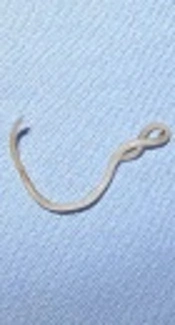
Human toxocariasis is an accidental parasitic disease due to infection by larval stages of Toxocara canis and T. cati, the common roundworms of dogs and cats, respectively [1, 2]. The mature forms live in the upper intestinal tract of their definitive hosts and can produce about 200,000 eggs per day excreting into the environment via their hosts’ feces [3]. Toxocara eggs usually become infective within 2 to 5 weeks and have been isolated in backyard soil, parks, playgrounds, and other public places around the world [2, 3]. Human beings become infected by ingesting either embryonated eggs from soil, dirty hands or raw vegetables and these eggs hatch to release larvae that penetrate the small intestine, enter the circulatory system, and invade several organs, including liver, heart, lungs, eyes, brain and other tissues. In most cases, their migration causes an intense inflammatory response and eosinophilia [2, 3]. Visceral larva migrans (VLM) and ocular larva migrans (OLM) are two primary clinical syndromes associated with toxocara infection. VLM is a severe systemic form of toxocariasis, characterized by high eosinophilia, hypergammaglobulinemia, fever, hepatosplenomegaly, and lung involvement and affect mainly children [3, 4]. OLM is due to intraocular infection and their manifestations include chorioretinitis, optic papillitis, endophthalmitis and keratitis and can lead to permanent partial or complete loss of vision [3]. VLM and OLM are reported in the medical literature for many years, but there are discrepancies among the low frequencies of disease and the high values of seroprevalence reported in apparent healthy people. This gives an idea about the existence of other forms of toxocariasis, whose clinical forms are very unspecific and distinct of classic VML and OLM syndromes [3, 5].
In helminthic diseases, moderate to severe eosinophilia occurs as a pathophysiologic response to the parasitic infection [6], and it has been recognized that toxocariasis might be the main cause of eosinophilia, regardless of the presence of signs and symptoms or organ injuries [7]. However, a peripheral eosinophilia is not always specific for toxocariasis [3]. There are many studies about prevalence of toxocariasis among people especially in children in literatures, because of their habit to play with soil and not to wash their hands. For example Sajjadi et al. studied about toxocariasis in children from Shiraz [8]. In order to know the association among peripheral eosinophilia, clinical signs and symptoms, and serology of toxocara, the aim of present study is to measure anti toxocara antibodies in schoolchildren with chronic cough and eosinophilia in rural area of Shiraz, Iran in 2011.
Materials and Methods
This cross sectional study was carried out from May to August 2011, a total population of 610 children (310 male and 300 female) were evaluated and their mean age was 8.35±1.49 years old (range 6-12 years old), (randomized cluster sampling) school children participate in a gratuitous health promotion carried out in the district of survey rural area of Shiraz, a city in southwest Iran, as part of the community health promotion services. This health promotion included medical, parasitological and immunological examinations.
Additionally, all the participants were previously interviewed using an individual clinical-epidemiological questionnaire plus a free informed consent signed by their parents. The anamnesis data, clinical signs and symptoms (lung involvement, bronchospasms, bronchitis, asthma, chronic weakness, hepatomegaly and splenomegaly, rash, abdominal pain, muscle pain, strabismus, retinitis, visual loss, convulsions and other signs of central nervous system involvement); epidemiological data and risk factors (age, sex, ownership of dogs or/and cats, their presence within the home, presence of house gardens and its use in child games, use of public parks, history of pica and/or geophagia). The clinical interview, the individual questionnaire, as well as the use of biological fluid samples stocked at our institution had the approval of the Ethical Research Committee of the Faculty of Medicine. Among them, children having chronic cough (cough with duration of two weeks or more) other than tuberculosis were asked to refer to infectious diseases clinic for further evaluation. One hundred fifteen children were enrolled and routine laboratory exams performed included CBC (complete blood count) eosinophil absolute count and intestinal parasites. Values above 500 eosinophils/mm3 and 1000 eosinophils/mm3 were considered as eosinophilia and hypereosinophilia respectively [9-11].
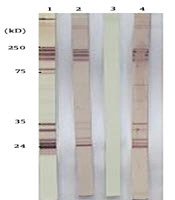
Then, children with chronic cough from the child school population interviewed were analyzed by a toxocara ELISA-IgG test (see below) and the total frequency for anti-toxocara antibodies was 1.47% (9/610). Result of the ELISA test conceived by positive or negative. The toxocara ELISA-IgG test was carried out according to procedures of Roldán et al. [12]. The test was done at a serum dilution of 1:200. The cut-off value was set by the mean optical density (OD) of the negative reference serum, plus three standard deviations. Serum samples with OD above of cut-off value were considered as positive. Additionally, all positive sera were serially two-fold diluted to determine antibody concentration by titration. Other epidemiological data collected by a questionnaire and analyzed with 95% confidence interval using SPSS-17 software.
Results
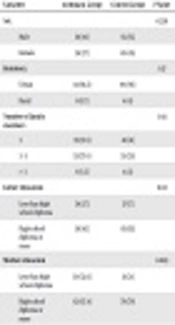
Out of total 610 children, 80 (13.11%) had chronic cough. Three children had tuberculosis. Finally 80 children enrolled in this analysis. Demographic characteristics, eosinophilia and frequency of intestinal parasites are described in table 1. Amid 80 children, 12 (13.11%) were hypereosinophilic, among them 5 (6.25%) presented with hypereosinophilia. Intestinal parasites were detected in 22 (27.5%) of those 3.75% were hypereosinophilic, none of them were hypereosinophilic. Only 9 children (11.25%) had anti-toxocara antibodies. Frequency of anti-toxocara antibodies in hypereosinophilic was 66.66% whereas in hypereosinophilic was 43.34%. Table 2 describes distribution of serology for toxocara according to gender, age and intestinal parasites.
Table 1.
Demographic characteristics, eosinophilia and frequency of intestinal parasites in school children of rural area of Shiraz, Iran
| Variables | N (%) |
|---|---|
| Age (yr) | |
| 6-8 | 11 (13.75) |
| 9-11 | 29 (36.25) |
| 12-15 | 40 (50) |
| Sex | |
| Male | 49 (61.25) |
| Female | 31 (48.75) |
| Eosinophilia(more than 500 /mm3 ) | 12 (15) |
| Intestinal parasites | |
| Ascaris lumbericoides | 3 (3.75) |
| Enterobius vermicularis | 9 (11.25) |
| Entomeoba hitolytica | 4 (5) |
| Giardia lambelia | 6 (7.5) |
Table 2.
Distribution of serology for toxocara according to age, sex, location of living, intestinal parasites and hyper eosinophilia in eosinophilic school children of rural area of Shiraz, Iran
| Variables | Serology for toxocara | |
|---|---|---|
| Positive, N (%) | Negative, N (%) | |
| Age (yr) | ||
| 6-8 | 3 (27.27) | 8 (72.72) |
| 9-11 | 5 (17.24) | 24 (82.75) |
| 12-15 | 1 (2.5) | 38 (97.5) |
| Sex | ||
| Male | 5 (10.63) | 42 (89.37) |
| Female | 4 (12.12) | 29 (87.88) |
| Parasite infection | ||
| Positive | 2 (2.5) | 20 (25) |
| Negative | 7 (8.75) | 51 (63.75) |
| Hypereosinophilia (more than 1000 /mm3) | ||
| Positive | 4 (80) | 1 (10) |
| Negative | 2 (28.57) | 5 (71.42) |
Discussion
Toxocara infection among a number of 610 school children in present study was 11.25%. Serology examinations were done in children who had chronic cough. Prevalence of toxocariasis in children at the age of 9-11 was higher than others and in males was more than females.
Human toxocariasis is still a poorly diagnosed disease, especially in places with conditions, which favors its development, and it is largely unknown either to health professionals or the general population. Present study showed that frequency of anti-toxocara antibody is 11.25% that is lower than that described by Sajjadi et al. [8], with 25.6% in Shiraz (Iran), Aguiar-Santos et al. [10], with 39% in Brazil and Hayashi et al. [13], with 84.6% in Indonesia. Although it is known that allergic, malignant and infectious diseases can cause an increase of eosinophils in peripheral blood, it is accepted that the most common cause of eosinophilia are parasitic infections. The parasitic diseases causing strong eosinophilia are schistosomiasis, flariasis, trichinosis, toxocariasis, and fasciolosis [13-16]. Furthermore, it is known that eosinophilia is very associated with toxocariasis in pediatric patients but there have been few studies about the relationship between toxocariasis and eosinophilia. On the other hand, the children with negative serology also presented a mild eosinophilia, which might be due to another tissue parasitic infection or an early toxocara infection without positive serology, a possible allergy (also frequent in pediatric patients) or other unknown causes. Since the presence of peripheral eosinophilia is one of the laboratory criteria for presumed toxocara infection [17, 18], it should be stated that the present sample population had a greater chance of having anti toxocara antibodies. In this study there was no significant gender difference in toxocara antibody, that is consistent with Aguiar-Santos et al. and Sajjadi et al. and reports [8, 10]. Our study presents no significant age difference in toxocara antibody frequency, that was consistent with Sajjadi et al. report, but differed from that of Santos who showed significant age difference. All previous reports described the highest seropositivity of toxocara in hypereosinophilic [9-11, 18, 19]. Although in our study the highest seropositivity was also found in hypereosinophilic, but statistically it is not significant, that was consistent with Sajjadi et al. [8] report. In conclusion, the presence of eosinophilia and the risk factors evaluated in this population were frequently associated to human toxocariasis. Human toxocariasis is a parasitic zoonosis with a wide range of unspecific clinical characteristics that has up to the present received little attention by the health communities [20]. Further studies will be required to ascertain the contribution of this parasitic disease to the overall morbidity of such populations.
Magnaval et al. reported that poor personal hygiene as well as consumption of raw vegetables grown in contaminated kitchen gardens may result in chronic low-dose infections [3].
Many studies have shown that the risk factors are very important in the epidemiology of toxocariasis, mainly the presence of dogs and cats living together with the people. However, in this study, we have not found some relationship between playing with dogs or cats, in agreement with other reported studies [21] but contradicting the findings by Chieffi et al. and Schantz et al., who have reported a higher frequency of infection in individuals who were in contact with dogs [22, 23].
Hypereosinophilia, hyperleukocytosis, sometimes ESR and gammaglobulin elevation are biological changes commonly found in toxocariasis, most studies conducted on children [24, 25].
The frequency of human toxocariasis found in the present study could be the result of various factors, but doubtless, the most important are the rural and social characteristics of the district of location with an extended area without paved streets and a deficient daily cleaning, with a medium percentage of population with unsatisfied basic needs and a high proportion of dogs living in the streets.