
1. Background
Chronic kidney disease (CKD) is a major public health problem worldwide (1). The severity of CKD can be classified into different stages. End-stage renal disease (ESRD) is the final stage of renal failure, characterized by a decrease in glomerular filtration rate (GFR) to less than 15 mL/min (2). The CKD, a main cause of mortality and morbidity in non-communicable chronic diseases, has a global prevalence between 11% and 13% (3, 4). According to the Third National Health and Nutrition Examination Survey (NHANES III), it was estimated that 3% of the total US population over 12 years of age had creatinine levels above 1.5 mg/dL (5). Previous studies reported that Asia has the highest prevalence of CKD, with the prevalence in Iran ranging between 5% and 15%, and in some cases, higher than 23% (6).
Cardiovascular disease, hypertension, and diabetes are related to a greater incidence of CKD (7, 8). Patients with CKD need treatments that restore kidney function, such as peritoneal dialysis, hemodialysis, and renal transplant (2). Currently, hemodialysis is the most common method of treatment, and it filters plasma electrolytes at high concentrations, particularly addressing metabolic and hypocalcemia acidosis (9), and removes excess materials and toxic substances from the internal environment of the body (10). Although patients with CKD have been treated successfully with hemodialysis in recent years, dialysis centers follow a reliable and simple standard feature to assess the effectiveness and adequacy of the treatment (11).
Recently, cardiovascular disease and insufficient dialysis have been the main reasons for death in patients undergoing hemodialysis. In Arak, 80% of hemodialysis patients, 96% in Bushehr, and 87% in Abadan have reported insufficient hemodialysis. Therefore, determining the adequacy of dialysis in patients undergoing hemodialysis can contribute to the development of better healthcare (10). Dialysis adequacy predicts mortality in hemodialysis patients. Studies suggest that there is less mortality in patients with kidney disease when there is adequate and effective hemodialysis treatment (12).
In general, the urea reduction ratio (URR) and Kt/V are commonly used to assess dialysis adequacy and effectiveness. Kt/V is determined using the following parameters: Clearance of urea (K), duration of dialysis (T), and distribution of urea (V) (13). Evidence has shown that if URR is more than 65% or the rate of Kt/V reaches 1.2, this is effective in improving the prognosis of dialysis patients (10).
Provincial-level epidemiological studies are generally rare across the country. While national data on the prevalence of CKD in Iran is available, regional epidemiological insights — especially from underserved areas such as Birjand and Tabas in South Khorasan province — are limited. As primary referral centers for hemodialysis in the region, these facilities play a critical role in patient care.
2. Objectives
Given the importance of dialysis adequacy in reducing hospitalization rates, lowering mortality, and enhancing patient outcomes, this study was undertaken to evaluate dialysis adequacy and its associated factors among patients at the Birjand and Tabas dialysis centers. The investigation addresses a significant gap in the literature, particularly considering the lack of prior studies and the central role of these centers within the Birjand University of Medical Sciences network.
3. Methods
This study was conducted after obtaining ethical approval (IR.BUMS.REC.1402.409) from the Research Deputy of Birjand University of Medical Sciences and following necessary coordination with the hemodialysis centers in Birjand and Tabas. This descriptive cross-sectional study was performed on patients referred to these hemodialysis centers from February to December 2023. The study population included all patients referred to the hemodialysis center for hemodialysis during the mentioned period and comprised 184 hemodialysis patients in Birjand and Tabas centers. The study used a census sampling method, examining all eligible hemodialysis patients (n = 184) in Tabas and Birjand centers. Given the small, manageable population, this approach ensured comprehensive data collection, minimized sampling bias, and provided a complete representation of the target group in these locations. Inclusion criteria included patients aged ≥ 18 years with confirmed CKD, on hemodialysis for at least 3 months. Informed consent and complete medical records were required for inclusion. A 'complete' record included demographic data (age, sex, marital status, education, employment), CKD cause, dialysis duration, pre-/post-dialysis weight, blood pressure, and lab results (urea, creatinine) for Kt/V and URR calculations. Patients with acute kidney injury, non-adherence to dialysis, severe comorbidities (e.g., cancer, heart failure), pregnancy, or cognitive impairment were excluded. Of approximately 200 potentially eligible patients, 184 met the inclusion criteria and were enrolled, with no loss to follow-up.
Data were collected using a questionnaire developed by Alipour et al. (14). A pilot reliability analysis of this questionnaire yielded a Cronbach's Alpha of 0.74 (n = 20), indicating acceptable internal consistency in this initial phase. The questionnaire included variables such as age, gender, age at the initiation of hemodialysis, hours of hemodialysis per week, duration of each session, pre- and post-hemodialysis weight, urea and creatinine levels before and after hemodialysis, underlying causes of CKD, and blood pressure before and after hemodialysis. Blood pressure (systolic and diastolic) was measured using a standardized automated sphygmomanometer. Pre-dialysis readings were taken after 5 - 10 minutes of rest, just before treatment, while post-dialysis readings were recorded within 30 minutes after session completion. All measurements were obtained from the non-fistula arm with patients seated to ensure consistency and selected blood markers. A portion of the data was extracted from patients' medical records. To collect more accurate information, patients and their caregivers were contacted, and in some cases, the researcher visited the hemodialysis unit to gather data directly from patients. When data for certain patient variables were unavailable, the necessary information was obtained from the patients themselves. Data regarding deceased patients were exclusively retrieved from archived medical records.
The adequacy of dialysis was calculated based on Kt/V (urea clearance) and the URR Index. The calculation of Kt/V was done using the following formula (10).
Where ln is the natural log, R is the blood urea nitrogen (BUN) ratio after dialysis to before dialysis, UF is the filtration volume in liters, and W is the patient’s weight after dialysis in kilograms. A Kt/V equal to 1.2 indicates optimal adequacy of hemodialysis, between 0.9 and 1.2 indicates unfavorable adequacy, and less than 0.9 is considered insufficient dialysis.
The URR Index can be assessed by measuring the BUN level before and after dialysis (8). It is calculated as follows (10):
A urea removal ratio equal to 65% indicates optimal adequacy of hemodialysis, between 55% and 65% indicates an unfavorable adequacy percentage, and less than 55% is considered insufficient hemodialysis. While data were collected for all 184 participants, information regarding the underlying cause of CKD was unavailable for 8 (4.3%) patients. Analyses about the etiology of CKD were thus conducted on the 176 (95.7%) valid cases.
The collected data were analyzed using SPSS version 20. Quantitative variables, such as Kt/V, URR, blood pressure, and laboratory parameters, were summarized using mean ± standard deviation. Categorical variables were reported as frequencies and percentages. Associations between dialysis adequacy (Kt/V, URR) and predictors (e.g., age, sex, literacy) were assessed using independent t-tests and chi-square tests. Correlation analyses were performed to evaluate relationships between continuous variables, such as age, weight, and dialysis adequacy indices. To account for potential confounders like age, sex, and comorbidities, variables were analyzed separately or stratified where appropriate. To minimize possible sources of bias, data collectors were trained to ensure consistency in data collection. A validated questionnaire was used, and missing data were addressed by cross-referencing medical records with patient interviews. The sample size included all eligible patients (n = 184) attending the dialysis centers during the study period, ensuring sufficient power to detect significant associations.
3.1. Statistical Analysis
Although multivariate regression analysis can offer stronger evidence for causal relationships, this study primarily utilized bivariate analyses (including t-tests, chi-square tests, and correlation analyses) as an initial epidemiological exploration in these underserved regions. This methodological choice was guided by three key considerations: (1) The exploratory and descriptive nature of the study, (2) limitations in sample size that may affect the stability of multivariate models, and (3) the primary aim of characterizing basic epidemiological patterns rather than establishing causality. Future research should incorporate multivariable logistic regression to adjust for potential confounders — such as age, sex, education, employment status, and underlying comorbidities — when investigating predictors of dialysis adequacy.
4. Results
A total of 184 patients were included in the study, of which 130 (70.7%) were male. Among the participants, 92 (50.0%) were over 60 years old, 68 (37.0%) were aged between 30 and 60 years, and 24 (13.0%) were under 30 years. Regarding educational background, 40 (21.7%) patients were illiterate, and 48 (26.1%) were employed. For 176 (95.7%) patients, the underlying causes of CKD were identified. Among these, the most common causes were hypertension combined with diabetes (61 cases, 34.7% of valid cases), diabetes alone (34 cases, 19.3% of valid cases), and hypertension alone (27 cases, 15.3% of valid cases). Other causes were identified in 54 patients (30.7% of valid cases).
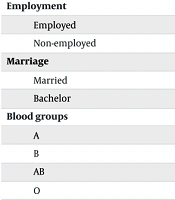
Table 1 summarizes all patients' baseline demographic and clinical characteristics, categorized by the underlying cause. As shown in Table 1, the proportion of older individuals, men, illiterate individuals, unemployed individuals, and married individuals was significantly higher in the group with combined hypertension and diabetes than in other groups (P < 0.05). A total of 184 patients were included in the study. Underlying causes of CKD were identified for 176 (95.7%) patients, with 8 (4.3%) cases having missing data for this variable. For this table, patients were categorized into two primary groups based on their underlying cause: "Diabetes and Hypertension" (n = 61), and "Other Causes" (n = 115), where "Other Causes" includes patients with hypertension alone (n = 27), diabetes alone (n = 34), and other unspecified causes (n = 54). Percentages within each 'Diabetes and Hypertension' and 'Other Causes' group are calculated based on the respective column totals for that demographic variable (Table 1).
Table 1.
Baseline Demographic and Clinical Characteristics of Patients Categorized by the Underlying Cause of Chronic Kidney Disease a
| Variables | Values | Group Under Review | P-Value | |
|---|---|---|---|---|
| Diabetes and Hypertension | Other Causes | |||
| Education | 0.0001 | |||
| Illiterate | 40 (21.7) | 10 (16.94) | 30 (26.1) | |
| Literacy | 144 (78.3) | 51 (83.6) | 85 (73.9) | |
| Age (y) | 0.0001 | |||
| < 30 | 24 (13.0) | 4 (6.6) | 16 (13.9) | |
| 30 - 60 | 68 (37.0) | 27 (44.3) | 41 (35.7) | |
| > 60 | 92 (50.0) | 58 (50.4) | 30 (49.2) | |
| Sex | 0.0001 | |||
| Male | 130 (70.7) | 47 (77) | 79 (68.7) | |
| Female | 54 (29.3) | 14 (23) | 36 (31.3) | |
| Employment | 0.0001 | |||
| Employed | 48 (26.1) | 13 (21.3) | 35 (30.4) | |
| Non-employed | 136 (73.9) | 48 (78.7) | 80 (69.26) | |
| Marriage | 0.0001 | |||
| Married | 146 (79.3) | 51 (83.6) | 87 (75.7) | |
| Single | 38 (20.7) | 10 (16.4) | 28 (24.3) | |
| Blood groups | 0.06 | |||
| A | 23 (24.7) | 6 (26.1) | 17 (24.3) | |
| B | 30 (32.3) | 5 (21.7) | 25 (35.7) | |
| AB | 13 (14) | 2 (3.3) | 11 (15.7) | |
| O | 27 (29.0) | 10 (43.5) | 17 (24.3) | |
| Smoking | 0.0001 | |||
| No | 1 (0.5) | 0 (0) | 1 (0.9) | |
| Yes | 183 (99.5) | 61 (100.0) | 114 (99.1) | |
| Dialysiscenter | 0.02 | |||
| Tababs | 40 (21.7) | 21 (17.2) | 19 (35.2) | |
| Birjand | 144 (78.3) | 101 (82.8) | 35 (64.8) | |
a Values are expressed as No. (%).
No statistically significant association was observed between the underlying cause of CKD and other demographic factors, such as blood group (P > 0.05). However, the distribution of CKD causes differed significantly by gender (P < 0.05). Additionally, Table 1 indicates that the distribution of causes varied significantly by age group (P < 0.05). Hypertension and diabetes were the primary causes of kidney failure in patients aged over 60 years (50.4%). In contrast, other causes were more prevalent in patients under 30 years and those between 30 and 60 years.
The results showed that the mean systolic blood pressure before, during, and after, as well as diastolic blood pressure before and after, were higher in kidney disease patients in the "Diabetes and Hypertension" group. Statistically significant differences were observed in these variables between the "Diabetes and Hypertension" group and the "Other Causes" group (P < 0.05). Additionally, hemoglobin levels demonstrated a statistically significant difference between the two mentioned groups (Table 2). However, no statistically significant differences were observed in other key outcome parameters recorded for kidney disease patients between the "Diabetes and Hypertension" group and the "Other Causes" group (Table 2).
Table 2.
Status of Important Consequence Parameters of People in Two Groups Based on Diabetes, Hypertension, and Other Causes a
| Variables | Values | Group Under Review | P-Value Independent t-Test | |
|---|---|---|---|---|
| Diabetes and Hypertension | Other Causes | |||
| Before weight | 63.00 ± 0.76 | 64.53 (1.23) | 62.67 (1.01) | 0.152 |
| After weight | 60.83 ± 0.77 | 62.28 (1.27) | 60.65 (1.02) | 0.18 |
| Before systole pressure | 121.30 ± 1.46 | 122.80 (1.92) | 116.08 (2.25) | 0.03 |
| After systolic pressure | 115.30 ± 1.71 | 116.72 (2.24) | 108.91 (2.55) | 0.02 |
| Systolic pressure during | 116.68 ± 1.77 | 118.64 (2.30) | 109.91 (2.73) | 0.01 |
| Before diastolic pressure | 73.25 ± 0.95 | 74.94 (1.29) | 69.50 (1.37) | 0.01 |
| Diastolic pressure during | 70.65 ± 1.02 | 71.58 (1.39) | 67.83 (1.53) | 0.11 |
| After diastolic pressure | 71.71 ± 0.96 | 74.87 (1.17) | 65.25 (1.56) | 0.0001 |
| Hemoglobin | 11.32 ± 0.12 | 11.93 (0.15) | 11.35 (0.10) | 0.001 |
| Before urea | 106.69 ± 2.61 | 105.87 (2.53) | 103.43 (3.86) | 0.85 |
| After urea | 18.92 ± 0.39 | 18.60 (0.63) | 18.37 (0.47) | 0.86 |
| Creatinine | 7.01 ± 0.17 | 6.98 (0.26) | 6.86 (0.23) | 0.42 |
| Kt/V | 1.35 ± 0.01 | 1.34 (0.02) | 1.34 (0.02) | 0.36 |
| URR | 65.01 ± 0.66 | 66.04 (0.61) | 63.90 (1.02) | 0.44 |
Abbreviation: URR, urea reduction ratio.
a Values are expressed as mean ± standard error or No. (%).
This study showed that most patients had adequate and desirable hemodialysis based on Kt/V and URR indices. According to the Kt/V and URR indices, 153 and 131 patients, respectively, were classified in the desirable adequacy category for hemodialysis, which represented the highest frequency compared to other categories. Only 7.1% of patients were classified as having inadequate hemodialysis, and for 18 patients, the quality of hemodialysis was undesirable according to the Kt/V Index (Table 3). These findings indicate a relatively favorable performance of the hemodialysis process in the study group.
Table 3.
Distribution of Patients Based on Indicators of Optimal, Undesirable, and Insufficient Dialysis a
| Quality Index | Kt/V | URR |
|---|---|---|
| Optimal adequacy of hemodialysis | 153 (83.2) | 131 (71.2) |
| Adverse adequacy of hemodialysis | 18 (9.8) | 40 (21.7) |
| Insufficient hemodialysis | 13 (7.1) | 13 (7.1) |
| Optimal adequacy of hemodialysis | Kt/V > 1.2 | URR > 65 |
| Adverse adequacy of hemodialysis | 0.9 < Kt/V < 1.2 | 55 < URR < 65 |
| Insufficient hemodialysis | Kt/V < 0.9 | URR < 55 |
Abbreviation: URR, urea reduction ratio.
a Values are expressed as No. (%).
The correlation between the rate of hemodialysis adequacy indicators (Kt/V and URR) variables in the present study is shown in Table 4. Based on the findings in Table 4, the variables of age, weight before and after hemodialysis, as well as urea levels after hemodialysis, showed a statistically significant correlation with at least one of the two hemodialysis adequacy indices (Kt/V or URR; P ≤ 0.05). However, no statistically significant relationship was found between hemoglobin levels and the hemodialysis adequacy indices (P ≥ 0.05).
Table 4.
Correlation Between the Adequacy of Hemodialysis (Kt/V and Urea Reduction Ratio) and Quantitative Variables
| Variables | Kt/V | URR | ||
|---|---|---|---|---|
| Correlation Coefficient | P-Value | Correlation Coefficient | P-Value | |
| Age | -0.25 | 0.001 | -0.17 | 0.02 |
| Before weight | -0.21 | 0.004 | -0.15 | 0.04 |
| After weight | -0.22 | 0.002 | -0.16 | 0.02 |
| Creatinine | 0.030 | 0.98 | 0.05 | 0.48 |
| Before urea | 0.07 | 0.29 | 0.04 | 0.52 |
| After urea | -0.03 | 0.96 | 0.17 | 0.01 |
| Hemoglobin | 0.04 | 0.55 | 0.04 | 0.55 |
Abbreviation: URR, urea reduction ratio.
Based on the independent group comparison test presented in Table 5, the mean and standard deviation of the Kt/V and URR variables for hemodialysis patients showed statistically significant relationships with the qualitative variables in the study, including gender, education level, employment status, and marital status (P < 0.05). However, no statistically significant relationship was found between smoking history and the adequacy of hemodialysis (P > 0.05). According to Table 5, the results indicate that the mean Kt/V and URR indices were significantly higher in women and unmarried individuals. Nonetheless, no significant difference in the URR Index was observed across different dialysis centers. Outcomes (Kt/V and URR) were analyzed for all participants and stratified by subgroups (e.g., age, sex, underlying causes) to explore differences.
Table 5.
Average and Standard Deviation of Kt/V and Urea Reduction Ratio of Hemodialysis Patients Based on Qualitative Variables
| Variables | Kt/V | URR | ||
|---|---|---|---|---|
| Mean ± Standard Deviation | P-Value | Mean ± Standard Deviation | P-Value | |
| Sex | 0.005 | 0.006 | ||
| Female | 1.4 ± 0.29 | 68.7 ± 7.5 | ||
| Male | 1.3 ± 0.24 | 64.6 ± 9.6 | ||
| Education | 0.0001 | 0.0001 | ||
| Illiteracy | 1.2 ± 0.26 | 61.09 ± 9.6 | ||
| Literacy | 1.4 ± 0.24 | 67.1 ± 9.6 | ||
| Employment | 0.01 | 0.005 | ||
| Employed | 1.3 ± 0.24 | 62.6 ± 9.7 | ||
| Non-employed | 1.4 ± 0.26 | 66.9 ± 8.8 | ||
| Marriage | 0.0001 | 0.003 | ||
| Married | 1.3 ± 0.25 | 64.7 ± 9.5 | ||
| Single | 1.5 ± 0.26 | 69.7 ± 6.9 | ||
| Smoking | 0.94 | 0.81 | ||
| Yes | - | - | ||
| No | 1.3 ± 0.26 | 65.8 ± 9.3 | ||
| Dialysis centers | 0.003 | 0.62 | ||
| Tabas | 1.2 ± 0.20 | 65.1 ± 6.7 | ||
| Birjand | 1.4 ± 0.26 | 65.9 ± 9.8 | ||
Abbreviation: URR, urea reduction ratio.
5. Discussion
This study aimed to comprehensively assess CKD patients undergoing dialysis in the Birjand and Tabas centers. The study investigated demographic characteristics, underlying causes of the disease, and the adequacy of dialysis treatments. Findings emphasize the importance of evaluating hemodialysis quality and identifying influencing factors. Results indicated that hemodialysis quality was associated with numerous factors, except for a history of smoking. Additionally, the study revealed a high prevalence of kidney disease among individuals aged 60 years and older in the "Other Causes" group. Although hemoglobin levels can be interpreted as a general indicator of patient status, results showed no direct correlation with hemodialysis adequacy. The findings of this study can be utilized to enhance the quality of hemodialysis services and provide improved care for kidney patients.
One of the critical variables examined in this study was patients' literacy level. Literacy, as a significant factor influencing patient education processes, plays a pivotal role in enhancing the quality of life and dialysis treatment efficacy. These variables influence patients’ ability to understand complex medical information, adhere to treatment protocols, and engage effectively in self-care. Consequently, considering patients' literacy levels and designing tailored educational programs is essential for improving treatment outcomes and enhancing the quality of life of dialysis patients. Data analysis indicated that 78% of the study participants were literate, which may have contributed to better treatment adherence and outcomes. Statistical analyses also indicated a significant correlation between literacy level and dialysis performance indicators, such as Kt/V and URR. These findings contrast with the results of Hojjat's study, where the majority of hemodialysis patients were low-literate. The observed differences in the results of these two studies may be attributed to differences in the study populations, literacy assessment tools, or other related factors (15).
Numerous studies have highlighted the significant roles of hypertension and diabetes mellitus in the development of CKD. Hadian et al. reported these two factors as the most common causes of CKD in their study population (16). Similarly, Malekmakan et al., in a study conducted in Fars province, identified hypertension and diabetes as the most prevalent causes of CKD (17). The findings of Zhang et al. in China are consistent with these results, as glomerulonephritis, hypertension, and diabetes were identified as the most common causes among hemodialysis patients (18).
The present study indicates a significant association between blood group B and the risk of developing kidney disease, particularly in individuals with established risk factors such as diabetes and hypertension. These results suggest that factors associated with blood group B may predispose individuals of this blood type to kidney disease. The findings of Hekmat et al. corroborate these results, revealing a higher prevalence of blood group B among hemodialysis patients (19). Our study contributes to the growing body of evidence suggesting a potential link between blood group B and increased susceptibility to kidney disease.
The observed association between blood group B and CKD warrants cautious interpretation. While our findings suggest a higher prevalence of blood group B among CKD patients, particularly those with diabetes and hypertension, its biological plausibility remains to be fully elucidated. Proposed mechanistic hypotheses include potential differences in inflammatory marker expression associated with blood group antigens, altered endothelial function impacting renal microcirculation, and variations in coagulation cascade activity that might influence disease progression. This finding should be considered preliminary due to our small sample size and the possibility of population stratification. Validation in larger, multi-ethnic cohorts with genetic controls is essential before drawing clinical implications.
This study reveals that the CKD patient population was predominantly composed of individuals aged 60 years and older. Data analysis indicates that the majority of patients were married, literate, and unemployed. Moreover, the study found a significant gender difference, with a higher prevalence of CKD among males. The concentration of the disease in individuals over 60 years suggests a strong correlation between advancing age and CKD incidence. This finding is likely attributable to age-related physiological changes and an increased prevalence of risk factors such as hypertension, diabetes, and other chronic diseases. These results align with previous studies, including those by Khoshhal et al., which identified advanced age and male sex as significant risk factors for CKD (20). Hadian et al.'s study also reported similar findings, indicating a significantly higher prevalence of CKD among males (16). However, the results of this study contrast with some other studies that reported a higher prevalence of CKD in females (21).
Similar to the findings of Hojjat (15), the present study demonstrated a significant correlation between gender and the Kt/V Index, a measure of dialysis adequacy. Results indicated that women, on average, had higher Kt/V values than men. This finding may be attributed to several factors, most notably the generally smaller body size and lower muscle mass in women, which result in a reduced urea distribution volume (V). Given that Kt/V is inversely proportional to V, a smaller distribution volume typically yields a higher Kt/V for a given dialysis dose (Kt). Moreover, differences in physical activity levels and dietary adherence between men and women may also contribute to the observed gender disparity.
Furthermore, while the present study revealed that most patients achieved adequate Kt/V and URR values, Hojjat reported a lower quality of dialysis (15). Our findings of high dialysis adequacy, with most patients achieving Kt/V ≥ 1.2, contrast with regional studies (17), where only 32.1% of patients reached Kt/V ≥ 1.2, possibly due to differences in dialysis frequency, patient management, or healthcare infrastructure. Furthermore, differences in patient characteristics, such as a potentially healthier cohort in our study compared to other regional studies, might also contribute to the observed higher adequacy rates. This highlights the importance of patient selection criteria in interpreting dialysis adequacy results across different studies.
This study has several limitations. Its cross-sectional design precludes establishing causality between sociodemographic factors and CKD outcomes. The sample size (n = 184), while sufficient for the study objectives, was drawn from two urban dialysis centers, potentially introducing selection bias; however, this was minimized by including all eligible patients via census sampling. The absence of routine laboratory testing at the dialysis centers limited a comprehensive assessment of patient health, and unmeasured confounders, such as precise dietary habits, levels of medication adherence (especially for blood pressure and diabetes management), and the exact duration or 'vintage' of dialysis, may have influenced results. These factors could overestimate or underestimate associations, depending on their distribution.
While our findings likely reflect urban hemodialysis populations in comparable Iranian healthcare settings, they may not generalize to rural areas due to differences in healthcare access, resources, and patient demographics that could substantially impact dialysis outcomes. Given the rising incidence of advanced kidney disease, future research should explore longitudinal designs to assess causality, investigate prognostic factors, and strengthen screening and early intervention systems to reduce disease burden and improve patients’ quality of life.
5.1. Conclusions
In conclusion, this study provides valuable insights into the epidemiological patterns of CKD patients in Birjand and Tabas, highlighting significant demographic factors associated with the disease and dialysis adequacy. The findings underscore the need for targeted interventions that address the unique challenges faced by older, less educated, and unemployed patients. Moreover, the observed high adequacy of hemodialysis treatment is encouraging and suggests that ongoing efforts to optimize dialysis care are yielding positive results.