


1. Context
2. Objectives
3. Methods
3.1. Study Selection
3.2. Quality Assessment of Studies
3.3. Inclusion Criteria
3.4. Exclusion Criteria
3.5. Data Extraction and Quality Assessment
3.6. Outcomes
3.7. Statistical Analysis
4. Results
4.1. Study Selection
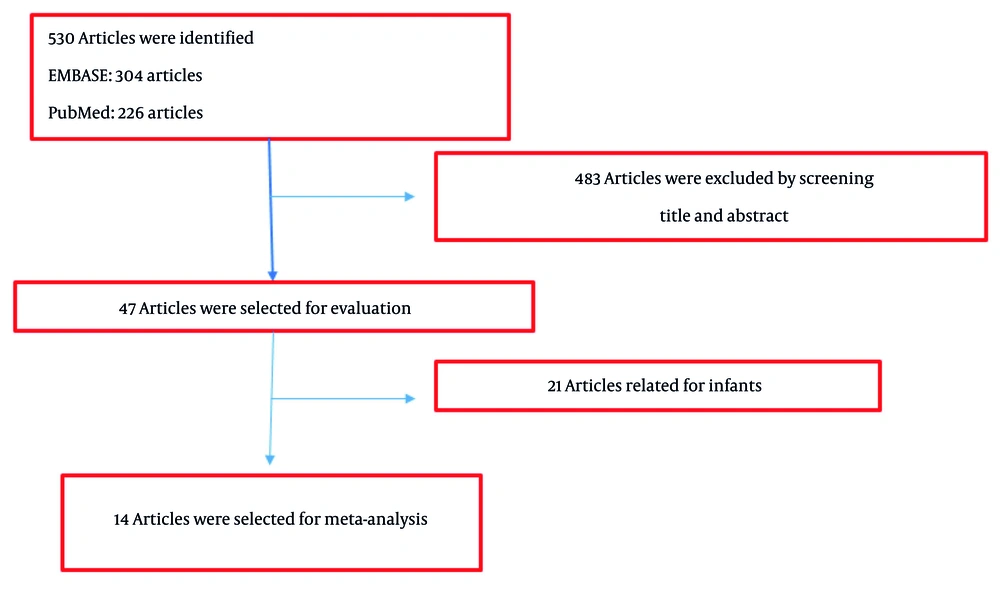
The flowchart of research selection for conducting current meta-analysis
| Authors, Year, Ref. | Study Design | Dose/Drug | Age | Main Findings |
|---|---|---|---|---|
| Cheng et al. (2007) (15) | RCT | 263 μg/day - lenograstim | 49 - 61 | The drug failed to affect mortality rate of severe sepsis patients. |
| Ishikawa et al. (2000) (16) | RCT | 2 μg/kg - lenograstim | 51 - 54 | The drug improved inflammatory responses in septic patients. |
| Meisel et al. (2009) (17) | RCT | 4 µg/kg - GM-CSF | 63 - 64 | GM-CSF administration for sepsis patients resulted in shorten ICU stay length and mechanical ventilation. |
| Presneill et al. (2002) (18) | Randomized phase II trial | 3 µg/kg - rGM-CSF | 45.6 - 62 | rGM-CSF did not affect mortality rate of severe sepsis patients; rGM-CSF activated neutrophils. |
| Root et al. (2003) (19) | RCT | 300 µg/day -filgrastim | 58.9 - 60 | Filgrastim failed to affect mortality rate of severe sepsis patients. |
| Rosenbloom et al. (2005) (20) | RCT | 3µg/kg/d - sargramostim | 56 - 63 | Sargramostim improved microbial resolution of infection without affecting vital organ function. |
| Schefold et al. (2010) (21) | RCT | 4 µg/kg - GM-CSF | 62 - 63 | GM-CSF improved anti-bacterial defense by decreasing IDO activity and catabolites related to the kynurenine pathway. |
| Stephens et al. (2002) (23) | RCT | 300 µg - G-CSF | - | G-CSF reduced mortality rate of septic shock patients and recommended as adjunctive therapy for septic shock. |
| Stephens et al. (2008) (22) | RCT | 263 µg/day - lenograstim | 48.9 - 51.0 | G-CSF failed to affect the outcomes of septic shock patients. |
| Tanaka et al. (2001) (24) | RCT | 2 µg/kg - lenograstim | 49 - 54.8 | Lenograstim improved inflammatory responses without affecting lung function. |
| Vacheron et al. (2023) (13) | RCT | 125 μg/m2 - sargramostim | - | Sargramostim failed toa affect sepsis patients’ outcomes including mortality and ICU-acquired infection. |
| Weiss et al. (1996) (25) | RCT | 1 µg/kg/day - filgrastim | - | Filgrastim improved neutrophils function and reduced inflammatory responses. |
| Weiss et al. (2003) (26) | RCT | 1 µg/kg/day - filgrastim | 63 - 64 | Filgrastim increased neutrophil counts and CD64 expression. |
| Wunderink et al. (2001) (27) | RCT | 300 µg - filgrastim | 49 - 56 | Filgrastim administration to septic shock and sepsis patients was safe. |
Abbreviations: RCT, randomized controlled trial; G-CSF, granulocyte-colony stimulating factor; ICU, intensive care unit.
4.2. Meta-Analysis of Outcomes
4.2.1. Mortality
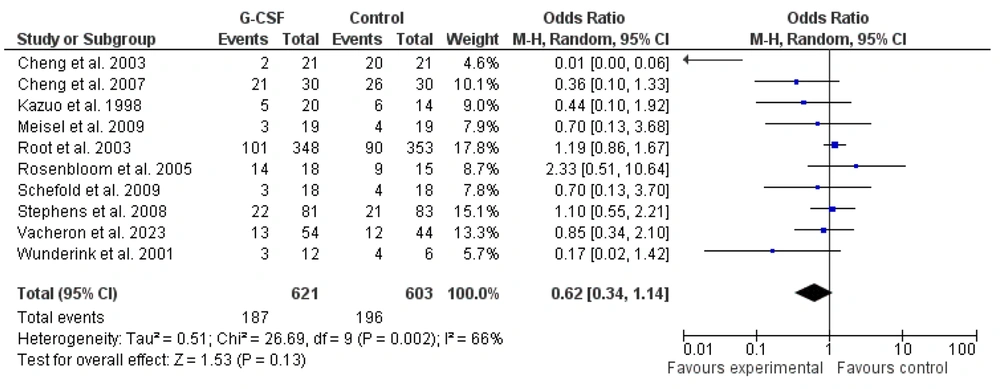
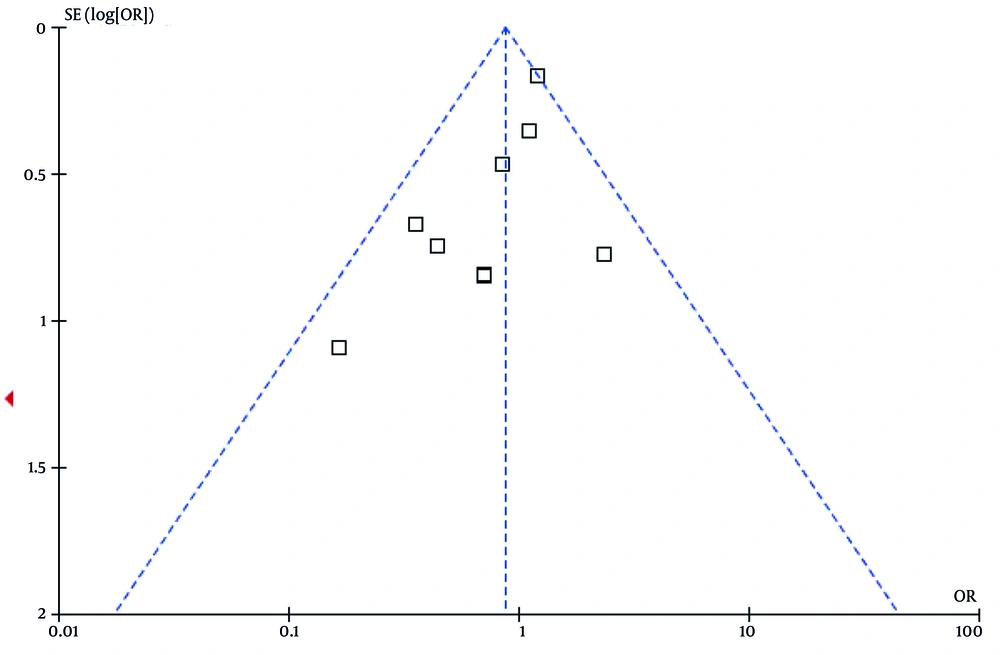
Funnel plot the effects of granulocyte-colony stimulating factor (G-CSF) administration on mortality rate of sepsis and septic shock patients admitted to intensive care unit (ICU)
4.2.2. APACHE II Scores
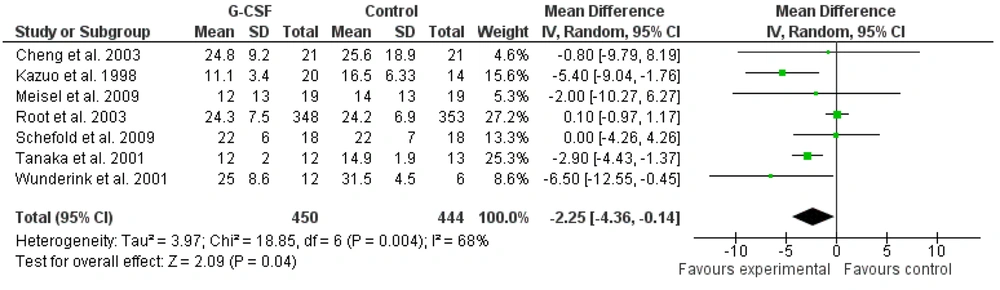
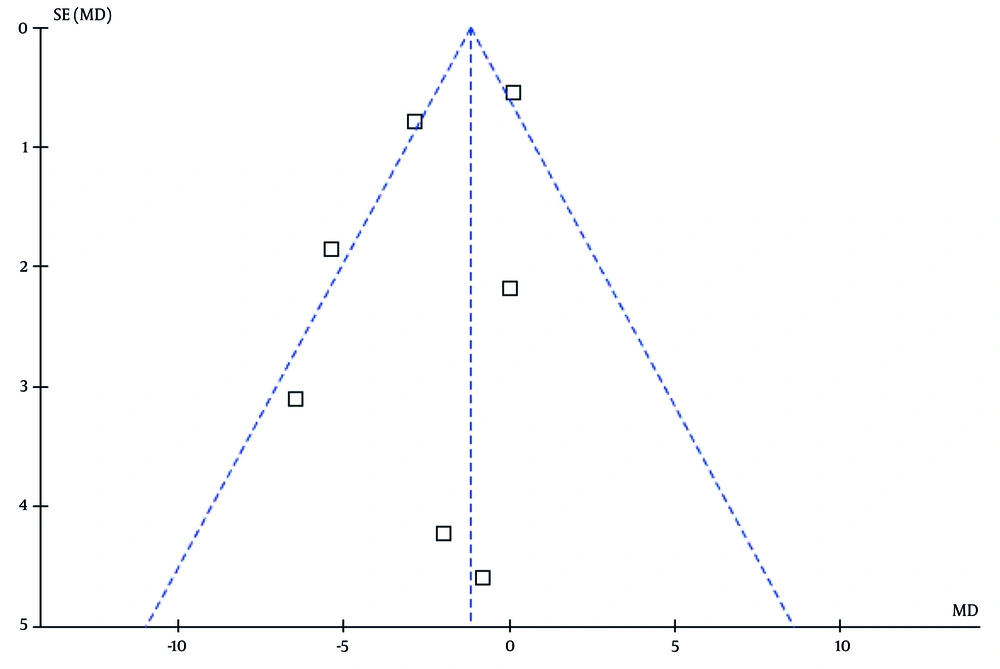
Funnel plot of the effects of granulocyte-colony stimulating factor (G-CSF) administration on APACHE II scores of sepsis and septic shock patients admitted to intensive care unit (ICU)
4.2.3. Sequential Organ Failure Assessment Scores
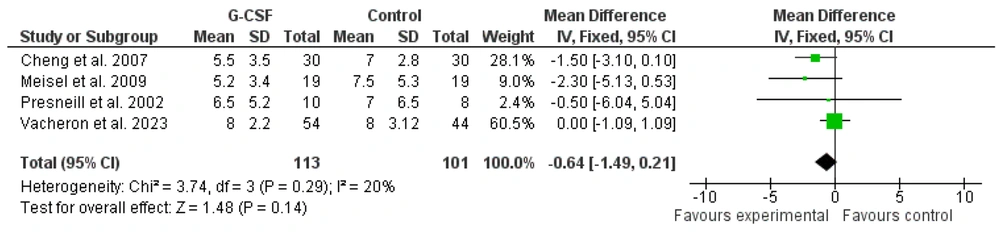
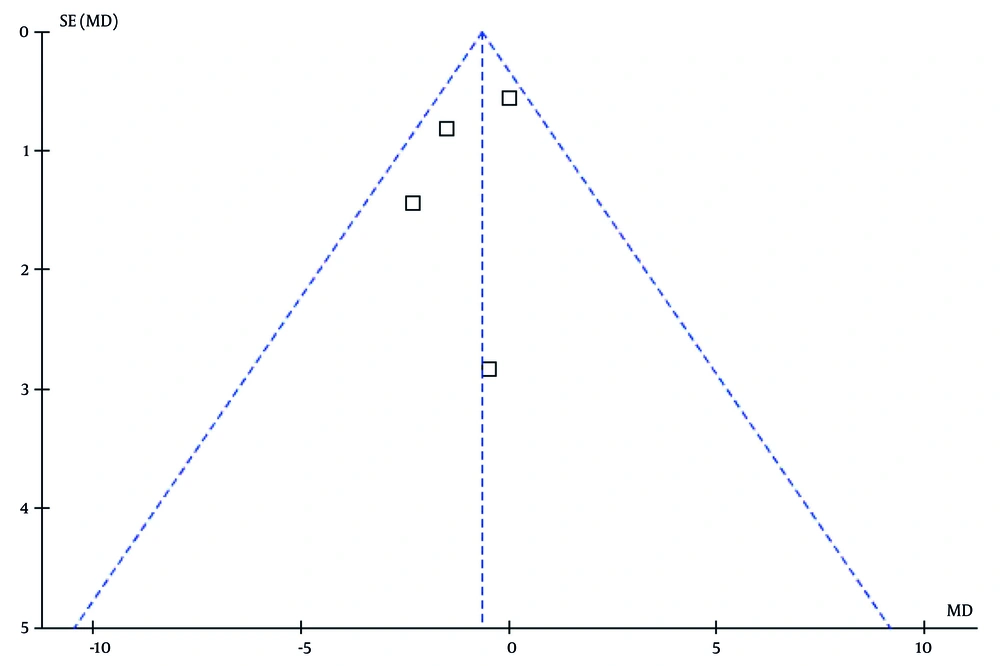
Funnel plot of the effects of granulocyte-colony stimulating factor (G-CSF) administration on sequential organ failure assessment (SOFA) II scores of sepsis and septic shock patients admitted to intensive care unit (ICU)
4.2.4. Intensive Care Unit Stay Length
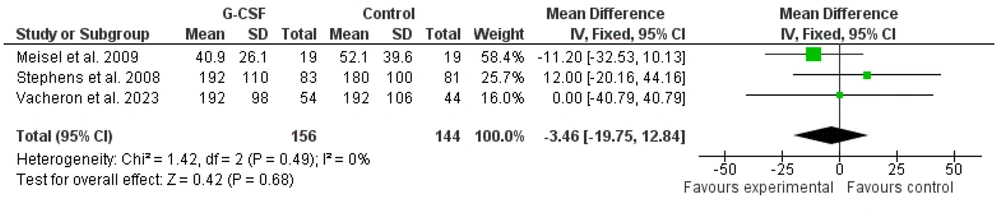
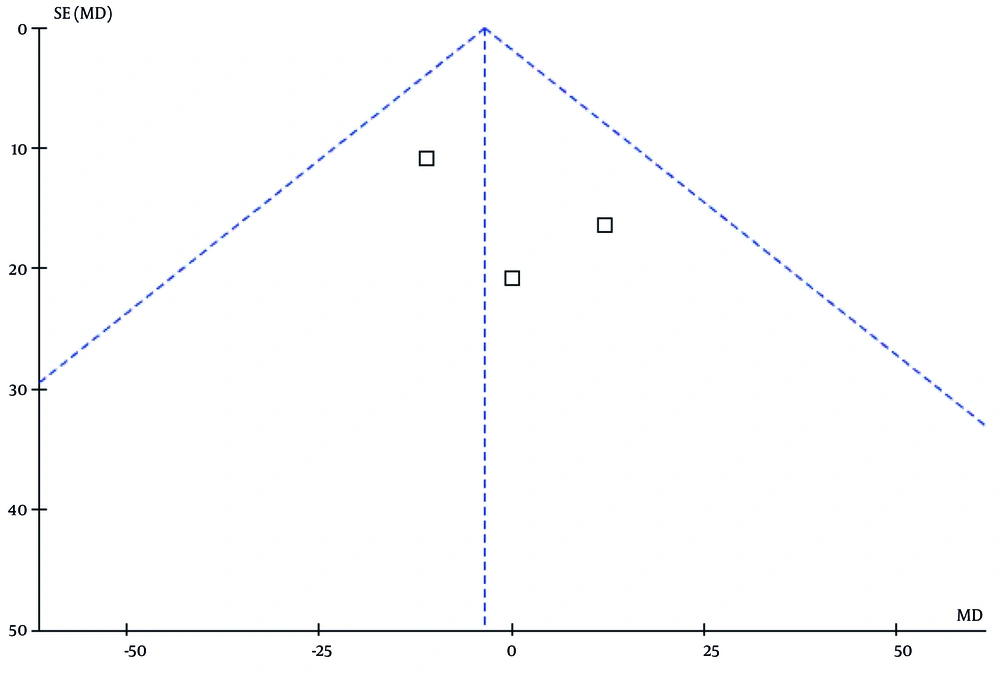
Funnel plot of the effects of granulocyte-colony stimulating factor (G-CSF) administration on intensive care unit (ICU) stay length (hours) of sepsis and septic shock patients admitted to ICU


