
1. Context
Despite the large number of preterm newborns requiring hospitalization in NICUs, mortality rates among these infants have declined in recent decades, highlighting the critical role of advances in perinatal and neonatal intensive care (1). According to World Health Organization reports, global neonatal deaths decreased from 5.2 million in 1990 to 2.3 million in 2023, underscoring the increasing importance of improving the quality of intensive neonatal care, rather than focusing on survival alone.
Hospitalization of infants in NICUs is a highly stressful experience for parents. Although stress is a natural and adaptive response to threatening situations, prolonged and intense stress can lead to adverse physical and psychological outcomes (2). Parents of hospitalized infants frequently experience anxiety, fatigue, and sleep disturbances, which may negatively affect parent–infant bonding and communication with healthcare providers (3). High stress levels can also limit parents' ability to actively participate in care and decision-making, potentially prolonging treatment and increasing the workload of healthcare professionals (4). Evidence suggests that effective parental involvement in infant care and reinforcement of the parental role are among the most important factors in reducing parental stress.
NIDCAP is a comprehensive, family-centered approach designed to support the developmental needs of preterm and high-risk infants hospitalized in NICUs (5). By minimizing overstimulation and promoting close parent–infant relationships through parental presence, individualized caregiving, and optimization of the NICU environment, NIDCAP aims to promote physiological stability and recovery in preterm infants (6, 7).
Given the limited awareness and implementation of this approach in some settings, including Iran, the present study aimed to review the development and application of NIDCAP globally and nationally, with particular attention to its potential role in reducing stress and anxiety among parents of infants hospitalized in NICUs.
2. Evidence Acquisition
This study was conducted as a narrative review to provide an overview of the existing evidence on NIDCAP and its effectiveness in reducing parental stress in NICUs.
A comprehensive literature search was performed using keywords, including Newborn Individualized Developmental Care and Assessment Program, NIDCAP, NICU, neonatal intensive care, neonatal care, developmental care, stress, anxiety, parents, and parental, based on MeSH. The search was conducted in ScienceDirect, PubMed, Magiran, and Google Scholar, without time or language restrictions, and included all publications available up to December 2024. Keywords were searched in article titles and abstracts.
The screening process was conducted in three stages. First, the titles and abstracts of retrieved records were screened for relevance to the study objective. Second, the full texts of potentially relevant articles were reviewed to determine eligibility. Third, the reference lists of included articles were manually searched to identify additional relevant studies that may have been missed during the electronic search.
The inclusion criteria were as follows: 1) studies addressing the use of NIDCAP in NICU settings, 2) studies evaluating parental stress, anxiety, or related psychological outcomes, and 3) availability of the full text. Because the research topic is emerging and the number of publications is limited, all study designs relevant to the study aim were considered eligible. The exclusion criteria were dissertations, conference papers, letters to the editor, and articles without accessible full texts.
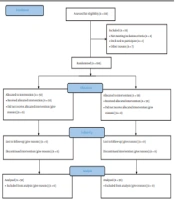
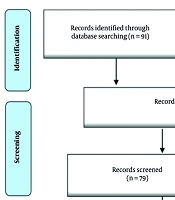
In total, 95 articles were initially identified. After screening, 32 articles that directly addressed the main research question, "Is the use of NIDCAP in NICUs effective in reducing parental stress?", were included in the final analysis (Figure 1).
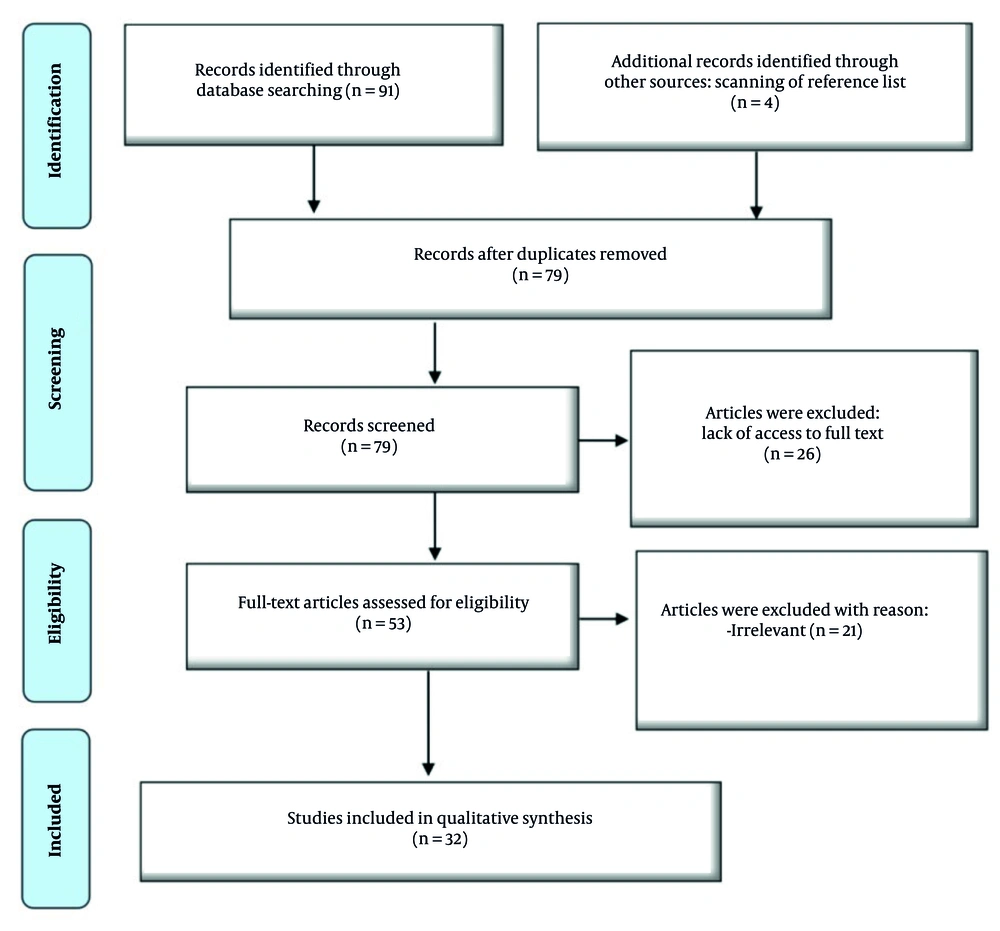
Figure 1.
Flowchart of the articles' selection process
To enhance the rigor of the review, two researchers independently examined the titles, abstracts, full texts, introductions, methods, results, discussions, and references of the selected articles. Ethical considerations and publication-related principles were observed throughout the review process.
Finally, the collected data were categorized and summarized, and the results are presented in Tables 1 and 2.
Table 1.
Impacts of NIDCAP Implementation on Iranian Articles
| Author, Year | Title of Article | Results | Reference |
|---|---|---|---|
| Arshadi-Bostanabad, 2019 | Neonatal intensive care unit nurses' perceptions and knowledge of newborn individualized developmental care and assessment program | NIDCAP is an evidence-based model providing individualized, developmentally supportive care, primarily for preterm infants in the NICU. | 6 |
| Mirlashari, 2019 | Nurses' and Physicians' Experiences of the NIDCAP Model Implementation in Neonatal Intensive Care Units in Iran | NIDCAP provides an environment that contributes to greater energy for infant growth, helps maintain physiological stability, and facilitates infant recovery. | 7 |
| Hosseini, 2019 | Developmental care in neonatal wards and NICU | NIDCAP significantly improves early and late prognosis in this group of neonates. | 17 |
| Ramezani, 2014 | Family-centered care in neonatal intensive care unit: a concept analysis | NIDCAP has an effective influence on relationships between parents and health care staff. | 23 |
| Rasti Borujeni, 2020 | Unmet Needs for Healthy Newborns' Mothers in Hospital Care | This care is a vital factor for successful family-centered care and creates effective, continuous relationships among family members, physicians, and nurses. | 25 |
| Sadeghi, 2016 | Spiritual needs of families with bereavement and loss of an infant in the neonatal intensive care unit | NIDCAP has several beneficial effects on infants. | 29 |
| Reihani, 2014 | The effect of spiritual self-care training on feeling of comfort in mothers of hospitalized preterm infants | NIDCAP affects mothers' feelings and promotes comfort among mothers. | 31 |
| Heidari, 2015 | An exploration of the viewpoints of parents and nurses on care provision in neonatal intensive care units | NIDCAP alleviates parental stress and anxiety while enhancing feelings of calm and security by fostering close parent-infant bonds, promoting effective collaboration with the medical team, and involving parents in care decisions. | 35 |
Table 2.
Impacts of NIDCAP Implementation on Non-Iranian Articles
| Author, Year | Title of Article | Results | Reference |
|---|---|---|---|
| McAnulty, 2010 | Effects of the Newborn Individualized Developmental Care and Assessment Program (NIDCAP) at age 8 years | Neonatal neurobehavioral and physiological outcomes reliably predict favorable brain function at age 8 years, and evidence suggests that NIDCAP interventions have lasting effects into the school years. | 5 |
| Als, 2003 | A three-center, randomized, controlled trial of individualized developmental care for very low birth weight preterm infants: medical, neurodevelopmental, parenting, and caregiving effects | Individualized developmental care may provide significant benefits for very low birth weight infants and their parents across a variety of clinical settings. | 8 |
| Als, 2009 | Newborn individualized developmental care and assessment program (NIDCAP) | NIDCAP reduces intensive care stress, preserves the parent-infant bond, and supports development and self-regulation, thereby enhancing neurodevelopment, health, and quality of life as a cost-effective and humane NICU care model. | 9 |
| Als, 1982 | Toward a synactive theory of development: Promise for the assessment and support of infant individuality | The synactive model helps identify key early developmental elements and guides targeted interventions for differentiation or regulation difficulties, with brief assessment methods and examples of environmental structuring. | 10 |
| Acevedo, 2017 | The philosophy of the developmental centered care of the premature infant (NIDCAP) | Although NIDCAP cannot currently be recommended as standard care for preterm infants, many of its individual interventions are justified based on common sense, sensitive caregiving, and respect for the child and family. | 11 |
| Als, 1998 | Developmental care in the newborn intensive care unit | Developmental care provides a comprehensive framework integrating caregiving with social and physical factors in the NICU, aiming to optimize each infant's stability, organization, and functional competence. | 12 |
| Ohlsson, 2013 | Newborn individualized developmental care and assessment program (NIDCAP) | The foundation of NIDCAP is grounded in the synactive theory of neurobehavioral development. | 13 |
| Moody, 2017 | Early initiation of NIDCAP reduces length of stay | NIDCAP improves parental satisfaction, minimizes developmental delays, and decreases length of stay, thereby reducing hospitalization costs. | 14 |
| Abromeit, 2003 | NIDCAP as a model for clinical music therapy interventions with premature infants | NIDCAP-based music therapy for preterm infants emphasizes individualized care, balanced sensory stimulation, and parental involvement, with guidelines for recorded and multimodal music use. | 15 |
| Mosqueda, 2013 | Staff perceptions on NIDCAP during its implementation in two Spanish neonatal units | Most assessments of infant well-being and parental involvement were positive. Minor concerns included time demands, nurses' conditions, and unit lighting. Neonatologists rated NIDCAP more favorably than nurses. | 16 |
| Ashbaugh, 1999 | Developmental Care Teams in the Neonatal Intensive Care Unit | The approach to developmental care varies across NICUs, and implementation as outlined by NIDCAP is unusual. Practical guidelines for use and funding of developmental care teams are needed. | 18 |
| Kleberg, 2007 | Mothers' perception of NIDCAP as compared to conventional care | Early NIDCAP intervention appears to strengthen mother-infant closeness regardless of birth weight or health. Higher maternal anxiety in the NIDCAP group may reflect stronger early bonding during hospitalization. | 19 |
| Griffiths, 2019 | Australian Neonatal Nurses' Perceptions of Neurodevelopmental Care | Given NIDCAP's role in providing educational and consultative support in NICUs, understanding the impact of location and country-specific factors is essential for effective, individualized, neurodevelopmentally supportive, family-centered care. | 20 |
| Altimier, 2016 | The neonatal integrative developmental care model: advanced clinical applications of the seven core measures for neuroprotective family-centered developmental care | The Neonatal Integrative Developmental Care Model uses neuroprotective interventions to support optimal neural development, promote overall growth, and prevent disabilities. | 21 |
| Peng, 2009 | Relationships between environmental stressors and stress biobehavioral responses of preterm infants in NICU | This research highlights the importance of recognizing preterm infants' biological stress responses, enabling early interventions to prevent serious physiological or pathological changes. | 22 |
| Chertok, 2014 | Interventions to reduce stress among mothers of infants in the NICU | This study underscores the importance of recognizing preterm infants' stress responses to environmental stimuli, enabling early interventions to prevent serious physiological or pathological complications. | 24 |
| Johnson, 2020 | Neonatal and early infant development | Infant brains develop and organize rapidly in NICUs and are profoundly influenced by the environment and experience. | 26 |
| Browne, 2011 | Developmental care for high-risk newborns: emerging science, clinical application, and continuity from newborn intensive care unit to community | Research from basic science, clinical studies, and environmental design shows that caregiving environments affect brain development and that professional caregivers play a key role in providing supportive interventions for infants and families. | 27 |
| Alemdar, 2020 | The Effect of Individualized Developmental Care Practices in Preterm Infants | Individualized developmental care based on these interventions can support preterm infants, and breast milk odor may facilitate the transition to breastfeeding. | 28 |
| Oehler, 1991 | Meeting Development Needs of Infants in NICUs | The Neonatal Integrative Developmental Care Model employs neuroprotective interventions to support neural connectivity, promote overall development, and prevent disabilities. | 30 |
| Toivonen, 2018 | Close Collaboration with Parents intervention improves family-centered care in different neonatal unit contexts: a pre-post study | Educational interventions for neonatal unit staff enhanced family-centered care, while the Close Collaboration with Parents program fostered effective parent-staff partnerships. | 32 |
| Silveira, 2018 | Early intervention program for very low birth weight preterm infants and their parents | A continuous and global early intervention at home performed by low-income families is better than standard care for very preterm infants, and this type of program may be applicable elsewhere. | 33 |
| Wielenga, 2006 | How satisfied are parents supported by nurses with the NIDCAP model of care for their preterm infant? | Parents were significantly more satisfied with care given according to NIDCAP principles than with traditional care for their premature infants. | 34 |
| Sannino, 2016 | Support to mothers of premature babies using NIDCAP method: a non-randomized controlled trial | NIDCAP is an effective program for promoting mothers' involvement in infant care, which may support infants' short-term neurofunctional development. | 36 |
3. Results
A total of 95 articles were identified in the initial database search. After duplicate, irrelevant, and inaccessible full-text articles were removed, 32 studies were included in the final review. The results were organized into three main domains: 1) the development, status, and use of NIDCAP worldwide; 2) the status and implementation of NIDCAP in Iran; and 3) the effects of NIDCAP on parental stress and anxiety in NICU settings.
3.1. Development, Status, and Use of NIDCAP Worldwide
NIDCAP was developed in the early 1980s by Heidelise Als, based on neurobehavioral and neurophysiological studies of preterm infants, who are at increased risk of cognitive, emotional, and self-regulation difficulties. The program emphasizes individualized, developmentally supportive care guided by careful observation of infant behavior and collaboration with parents (5, 8).
The theoretical foundation of NIDCAP is grounded in synactive theory, which conceptualizes infant behavior as the interaction of multiple functional systems and provides a framework for tailoring care to each infant's developmental capacity (9, 10). Based on this theory, infant behaviors are classified into 5 categories according to infant function: 1) motor system, 2) autonomic system, 3) state and sleep/wake, 4) attention/interaction system, and 5) self-regulatory system. The term "synaction" refers to how system interaction processes work with or influence one another. In Als' view, infant development occurs in 3 safe environments: the mother's womb, the parents' arms, and society or the community. These 3 environments should provide the security necessary for newborn brain development so that infants, children, adolescents, and adults can become healthy members of the community (10). A preterm newborn is separated prematurely from the safe environment of the mother's womb and, rather than being in the second safe environment of the parents' arms, is hospitalized in the NICU. This separation may cause stress because the 5 systems needed for self-regulation and interaction are not yet fully developed in preterm infants (11). Such infants require greater environmental support and different goals than term infants (12-14).
Internationally, NIDCAP has increasingly been recognized as a structured approach to improving developmental outcomes and promoting family involvement in NICU care (15, 16). Studies conducted in various countries have reported that infants receiving NIDCAP-based care experience shorter hospital stays, a reduced risk of chronic lung disease, and lower rates of developmental delay compared with those receiving conventional care (5, 8).
3.2. Status and Use of NIDCAP in Iran
The first NIDCAP workshop in Iran was held in November 2013 as an international-national training program on individualized developmental care for newborns in NICUs in Isfahan. This workshop was conducted to train Iranian instructors in this care model and to improve the physical and emotional health of high-risk infants. Approximately 40 nurses and physicians introduced by the Ministry of Health were selected for this 5-day workshop to assess the latest methods for simulating care provided in NICUs and in the mother's womb. The workshop was led by the Neonatal Health Department of the Ministry of Health and Medical Education, funded by the United Nations International Children's Emergency Fund (UNICEF), and conducted in collaboration with the International Federation for Individualized and Developmental Care for high-risk newborns in NICUs at Isfahan University of Medical Sciences. The workshop professors were Prof Heidelise Als, an infant neuropsychology specialist from Harvard University and founder of infant behavioral sciences and NIDCAP for high-risk infants worldwide, and Dr Nick Conneman, a neonatologist from Erasmus University and chief of the NICU at Sophia Children's Hospital in Rotterdam, the Netherlands. The workshop was also held at Al-Zahra Hospital in Tabriz and Hafeziyeh Hospital in Shiraz. The NIDCAP program is currently being implemented in 4 centers in Iran: Mahdiyeh Hospital and Vali-Asr Hospital in Tehran, Al-Zahra Hospital in Tabriz, and Hafeziyeh Hospital in Shiraz (17).
3.3. Impacts of NIDCAP on Stress and Anxiety Among Parents of Infants Hospitalized in the NICU
NICUs have a unique environment because of the complex nature of care provided in these units, the use of advanced and diverse devices to support the lives of highly fragile and vulnerable infants, and the stress imposed by the accuracy and sensitivity required in NICU care. Accordingly, appropriate relationships should be established in NICUs. Key factors such as positive teamwork and changes in the care team's attitudes toward the long-term presence of parents and their engagement in care procedures can change the stressful atmosphere of the NICU, making it a setting in which infants, parents, nurses, physicians, and other medical team members can develop and experience high-quality care.
The family-infant-medical team triangle is a vital component of the developmental care approach, and poor management of this triangle may contribute to adverse consequences for infant development (18-20). The most fundamental issue in establishing a positive atmosphere in NICUs is changing the philosophy that governs hospitals and wards with respect to parental presence. The NIDCAP-based approach considers parents to be inseparable members of the medical team (21). Replacing a care-centered approach with family-centered care can result in a major shift in developmental and individualized care for newborns (22). This care encompasses the continuous presence of parents in the NICU, their effective interaction and relationship with health care staff, and their active participation in medical decision-making and procedures (7, 23). A vital factor for successful family-centered care is an effective and continuous relationship among family members, physicians, and nurses. Reflection plays a crucial role in achieving this goal. When reflection is used to build relationships with colleagues, families, and infants, it can create a positive environment in which individuals understand communication well. Such an environment is free of reparative medical care or behaviors that may have harmful effects or implications (6, 24-26). In addition to the major advantages of such care for infants, including more rapid growth and development among premature infants, other benefits include effective pain control during painful procedures, higher arterial oxygen levels, lower oxygen requirements, improved nonnutritive sucking patterns, reduced restlessness and crying, and fewer heart and respiratory rate changes (26-32).
NIDCAP reduces stress and anxiety and increases calmness and a sense of security in parents by fostering close parent-infant relationships; active and continuous attendance and skin-to-skin contact; effective relationships between parents and medical team members; parental involvement in decision-making; and improved parental knowledge about accurate care in the hospital, at discharge, and at home (5, 33-35). Sannino and colleagues (36) conducted a study on the effect of NIDCAP on mothers and premature infants in NICUs using the Nurse-Parent Support Tool (NPST) at discharge. Infants' motor, visual, and auditory development was investigated using a Neuro-Functional Assessment (NFA) at 3 months. The results showed that mothers and infants in the NIDCAP group had higher scores (36).
4. Conclusions
Preterm birth, accounting for approximately 8% to 10% of all deliveries, represents a complex biological and psychosocial challenge for infants and their families. Although advances in neonatal care have markedly improved survival rates, preterm infants remain at increased risk for neurodevelopmental difficulties, particularly those born at very low gestational ages or birth weights (37, 38). Importantly, developmental outcomes are shaped not only by biological vulnerability but also by environmental and relational factors.
Transactional models of development emphasize the bidirectional influence between infants and parents, suggesting that the stressful conditions surrounding preterm birth may moderate long-term developmental trajectories (38). Parents of preterm infants often experience shock, helplessness, and psychological distress during prolonged NICU hospitalization, which can interfere with the establishment of early parent-infant relationships and the transition to parenthood (39).
Within this context, NIDCAP provides a theoretically grounded and clinically structured framework that addresses both infant neurodevelopment and parental well-being. Rather than focusing solely on medical stabilization, NIDCAP integrates individualized behavioral observation, environmental modification, and family engagement to reduce infant stress and support regulatory capacity. The program’s emphasis on parental involvement directly targets modifiable environmental stressors that contribute to parental anxiety and emotional burden.
The comprehensive NIDCAP approach was developed based on expectations and practical experience in a typical NICU environment. The NIDCAP model aims to create a relationship-based, developmentally supportive care environment for preterm infants and their families. The theory proposes that care implementation that accounts for infants’ thresholds for disorganization can improve long-term outcomes. The intervention is based on 4 assumptions:
1) Detailed observation of infant behavior during daily caregiving interactions provides an important basis for recommendations on how best to minimize stress and optimize infant development.
2) Caregiving staff benefit from supportive education in implementing such recommendations.
3) Caregiving staff benefit from supportive education in collaborating with the infant and the infant’s family.
4) The results and adaptations of care may lead to better outcomes in infant medical well-being, neurobehavioral functioning, and parent functioning.
Evidence reviewed in this study suggests that NIDCAP may reduce parental stress by enhancing parents’ understanding of infant cues, increasing their participation in care, and fostering collaborative relationships with health care providers (40). These mechanisms likely contribute to improved parental confidence, emotional regulation, and coping capacity, which in turn may positively influence infant outcomes. Thus, the benefits of NIDCAP extend beyond immediate clinical indicators to encompass broader psychosocial dimensions of neonatal care.
In conclusion, NIDCAP represents a promising developmental and family-centered approach with demonstrated benefits for infants, parents, and health care systems. Despite these positive outcomes, the implementation of NIDCAP remains limited in Iran. Therefore, programs should be designed to familiarize medical teams with this emerging approach, which has substantial positive outcomes for infants, families, medical teams, and health care systems. Unfortunately, this approach has not been adequately introduced or implemented in Iran. Accordingly, NIDCAP-based care in NICUs should receive greater attention. Increased educational initiatives and institutional support are recommended to facilitate broader adoption of this approach in NICUs. Limitations of the present review include restricted database coverage and the exclusion of gray literature.