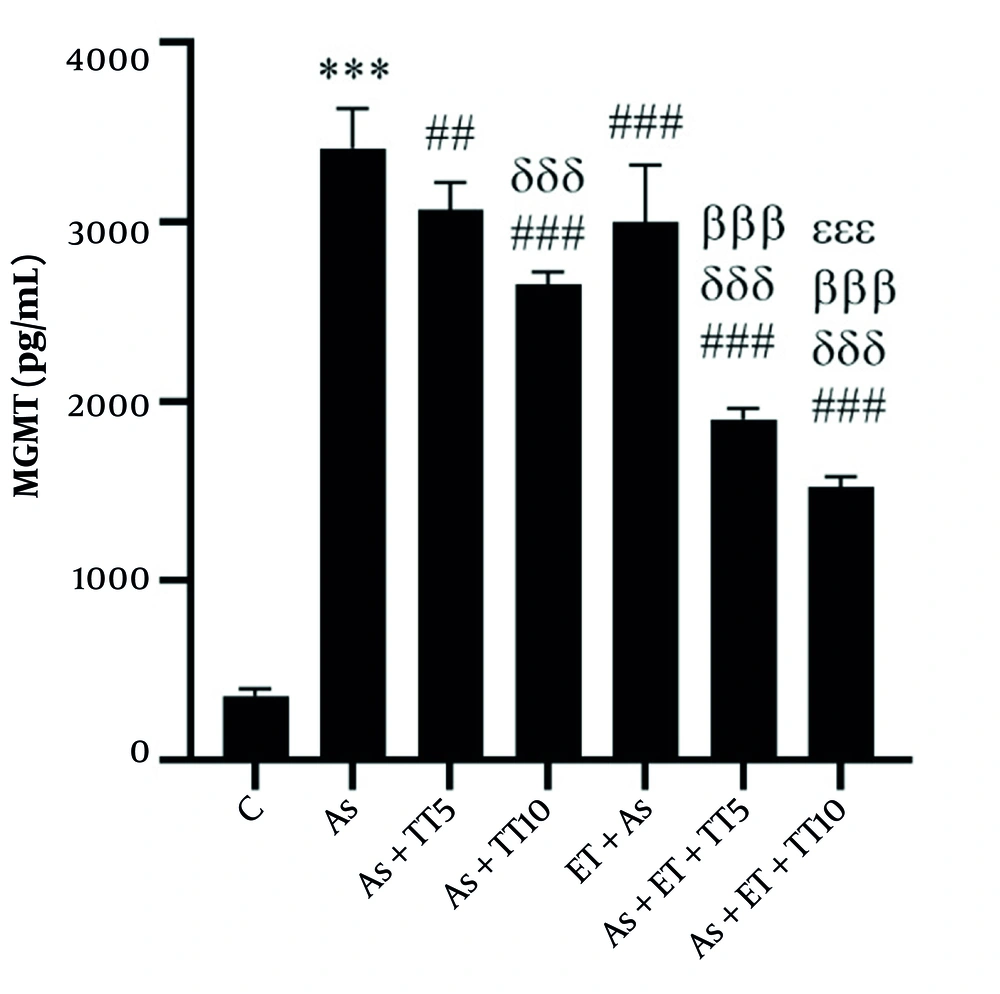
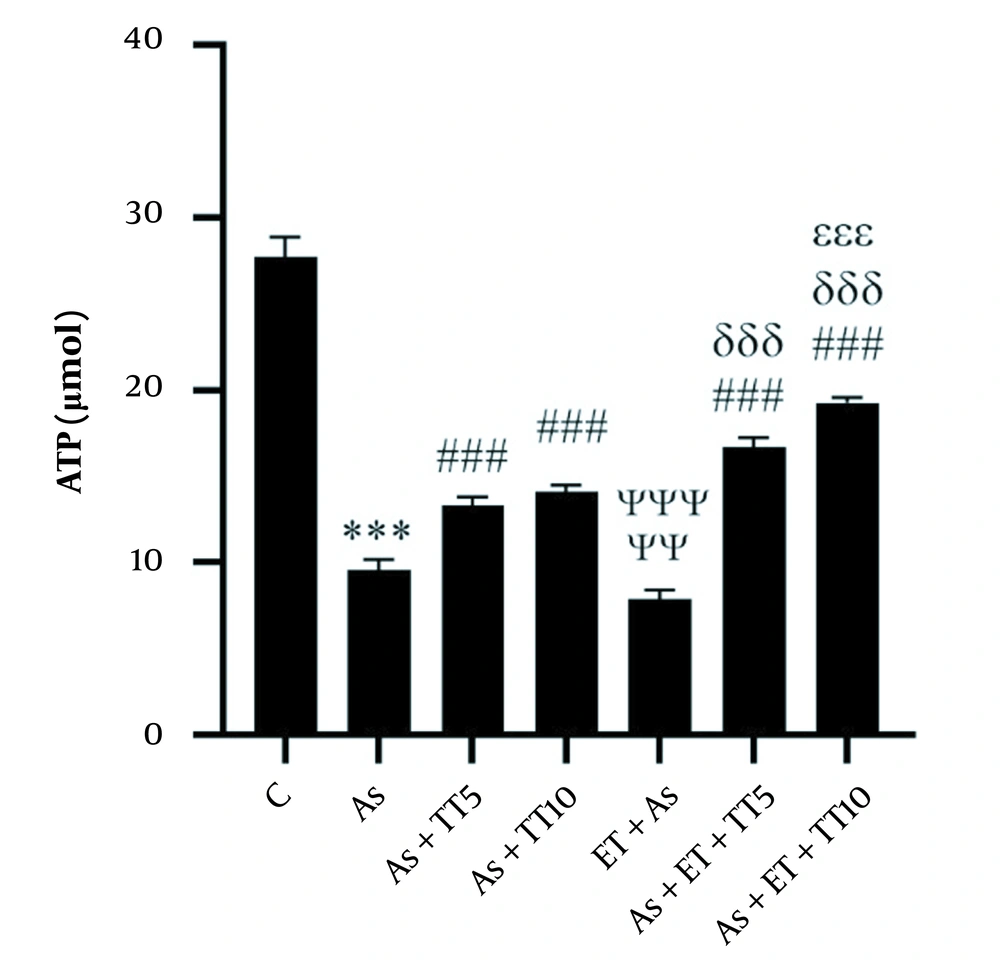
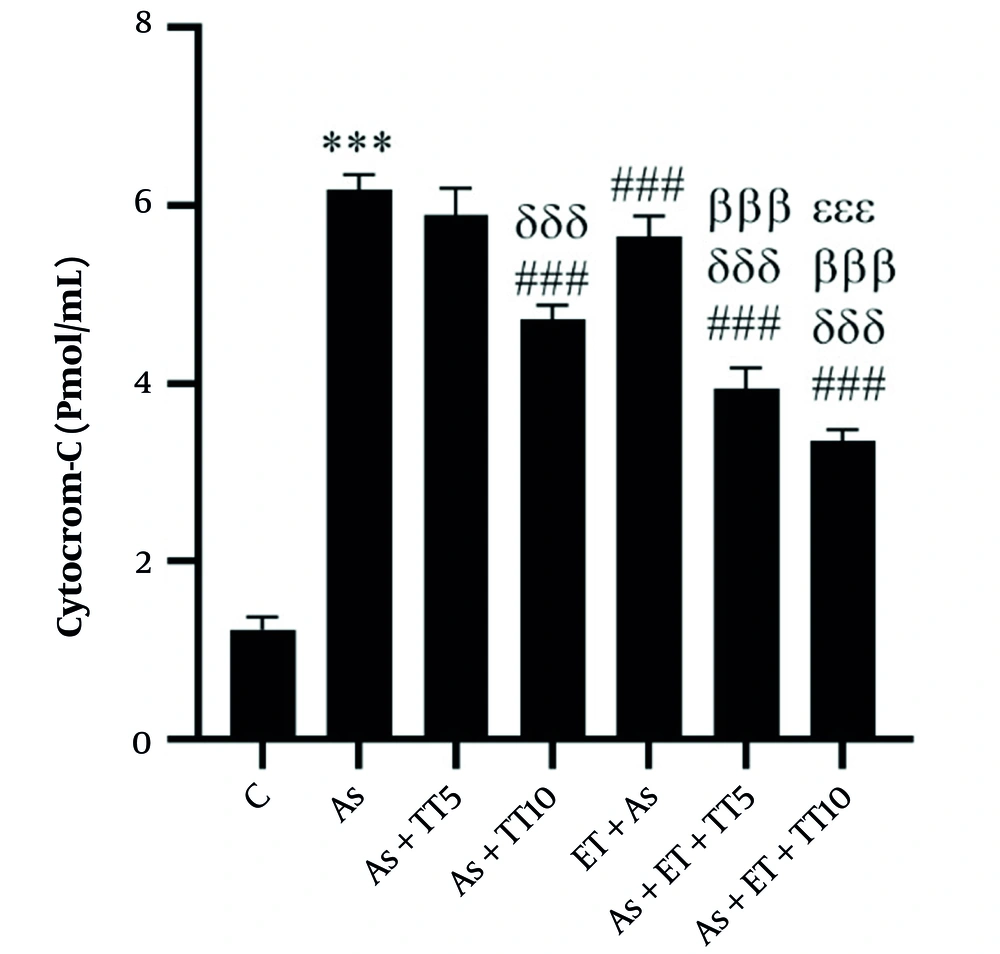
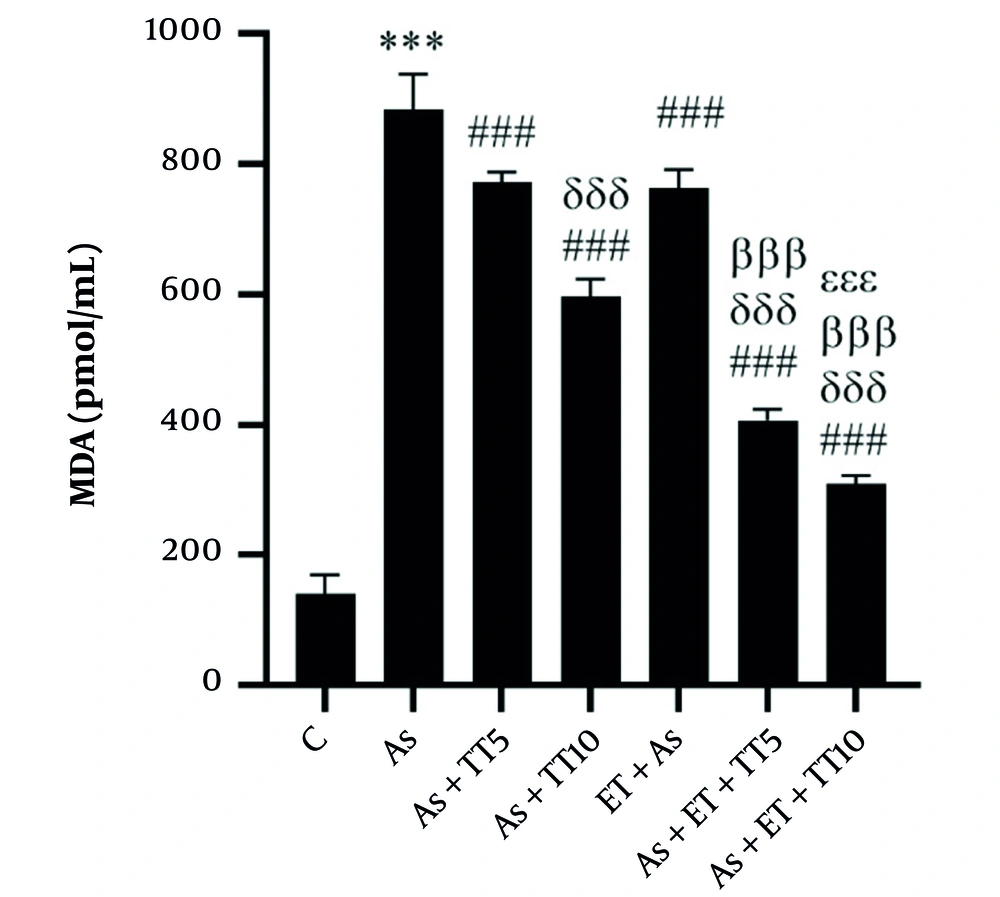
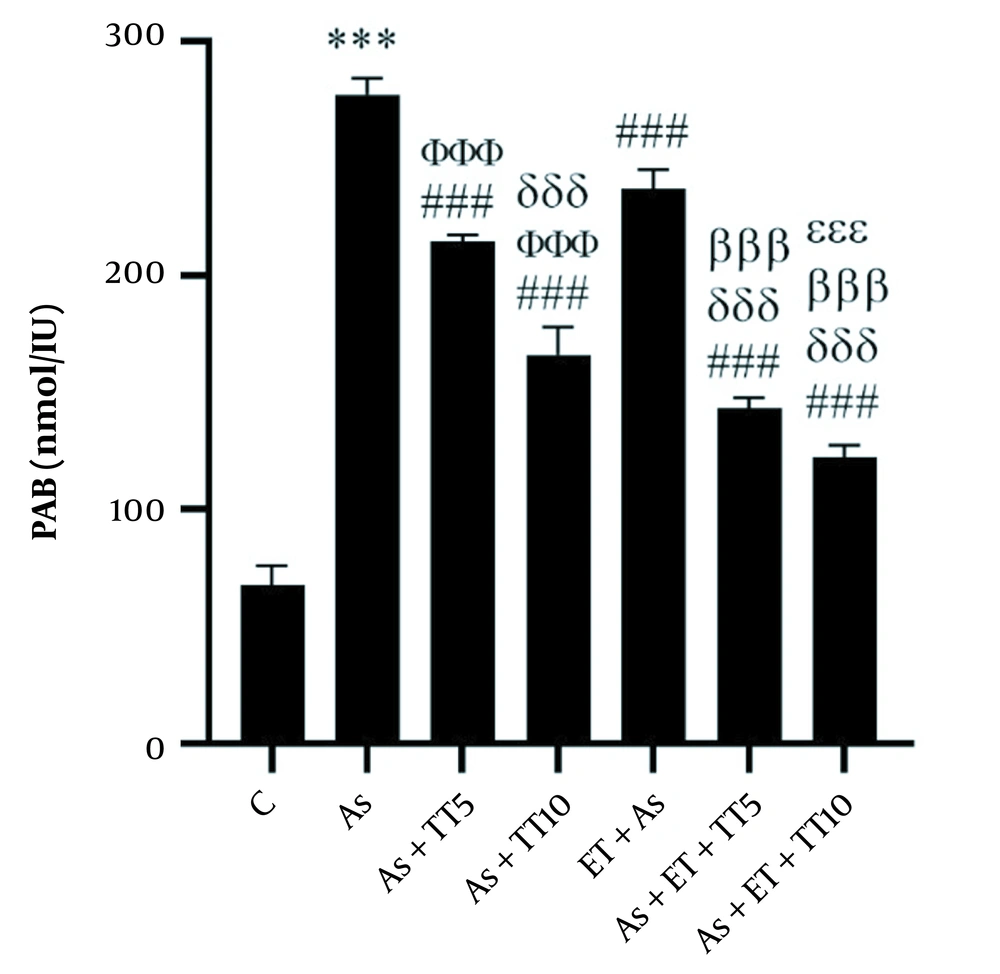
Histological evaluation of the renal tissue of rats showed that As increased MGMT, Cyt-C, MDA, and PAB and decreased renal ATP, which confirmed the renal damage, induced by As in rats. Therefore, the next comparisons were made with As group, as a successful sample of renal injury. This finding is consistent with previous studies, indicating nephrotoxicity and impaired renal function induced by As in rats (
19,
20). Clinical research has also shown the association of kidney injury with environmental exposure to As (
21). This effect is speculated to be generated by ions replacing phosphates in cells and binding to biological molecules to increase ROS (
3). The increased radical dimethyl As and decreased antioxidants result in DNA damage, increased peroxidases and isoprostanes, and increased levels of cellular MDA levels (
2). Mitochondrial complexes I and III, in the electron transfer chain, are sensitive to the increased O
2- ions and inhibition of succinate dehydrogenase. NAD(P)H oxidase disrupts the process of uncoupling oxidative phosphorylation and causes damage to the mitochondrial membrane, which results in the release of Cyt-C, activation of miR-199a-5p, HIF-1α and COX-2, and impairs DNA methylation (
3).
In this study, two interventions were considered, ET and TT. The five interventional groups were compared to show the effect of each intervention alone and in combination. The results showed that ET decreased renal Cyt-C, MDA, PAB, and MGMT in rats exposed to As, which indicates the favorable effect of exercise on oxidative stress in the body, which is in line with previous in vivo and in vitro studies (
22,
23). As suggested, the effect of exercise on increased ATP levels and reduced Cyt-C, MDA, and PAB release is induced by regulating the renin-angiotensin-aldosterone system (
24), reducing oxidative stress in apoptotic TNF receptors (
25), reducing Cyt-P4A, increasing eNOS, activating NADPH oxidase (
7), improving fat metabolism, regulating minerals, and increasing mitochondrial membrane stability (
24,
26). The decrease in ATP levels following exercise is also speculated to be caused by the increased ADP/ATP ratio, which leads to increased cell charge, followed by the activation of biological mechanisms, which leads to increased nuclear transcription pathways and DNA repair (
7,
24,
26). The results of our study are in line with another research, indicating modulation of the increased MGMT by exercise (five sessions of ET per week for eight weeks), decrease in Cyt-C, and increase in ATP and cardiac PAB in rats poisoned with hydrogen peroxide (H
2O
2) (
26). High-intensity interval training also increased the expression of SOD and catalase and decrease renal Tnfrsf1b in rats with renal impairment (
25), which is in line with the results of the present study. Others have also shown that eight weeks of exercise can inhibit oxidative stress and xanthine oxidoreductase activity, increased 20-hydroxyeicosatetraenoic acid and Cyt-P4A, while it has no effect on NAD(P)H in rats with salt-sensitive hypertension (
7). Although the parameters measured differ from that of the present study, this study is in line with our results, considering the favorable effect of exercise on oxidative stress.
In addition to exercise, we also measured the solitary and synergistic effect of another intervention, namely TT, in two different doses to identify its effect on the studied biomarkers of oxidative stress and the most appropriate dose for this purpose. The results showed that TT5 and TT10 increased ATP levels and decreased renal MDA, PAB, and MGMT in rats, with a greater effect observed in the TT10 group compared with TT5. The main protective effect of TT against nephrotoxicity may be related to the antioxidative effects of this plant, namely inhibiting the release of calcium and Cyt-C by reducing blood nitrogen-urea (BUN) and creatinine, reducing KIM-1 and liver fatty acid-binding protein (L-FABP), and increasing GSH expression (reduced glutathione), catalase, and SOD in renal tubules, which improve oxidative phosphorylation and increase ATP in renal tissue (
27). Activation of p38 mitogen-activated protein kinase (MAPK) also leads to activation of nuclear respiratory factor (NRF)1/2 that leads to increased expression of DNA repairing genes (
28). Researchers indicated in one study that receiving 100, 200, and 300 mg/kg TT reduced the kidney damage markers, in a dose-dependent manner and enhanced the expression of antioxidants in the renal tissue of rats with renal impairment (
27). Although the prescribed dose is much higher than that in our study, the general results are similar, identifying the favorable effect of TT on oxidative stress in the kidney of rats. In another study, seven weeks of TT administration (5% of the body weight) to laboratory rats increased the expression of SOD and glutathione peroxidase (GPx) and decreased thiobarbituric acid, BUN, and creatinine in rats with renal impairment (
29). These results are also consistent with that of the present study; however, the measured biomarkers differed. Moreover, another study showed that TT at a dose of 2,000 mg/kg increased p38 MAPK expression and antioxidants and decreased damage to the renal nephrons (
28). These results are also consistent with the results of our study, indicating the favorable effect of TT on renal damage, most possibly related to the anti-oxidative effect of this plant.
In addition, the evaluation of the synergistic effect of exercise and TT showed that the combination of ET and TT resulted in a greater effect on the measured parameters (decreasing MGMT, Cyt-C, MDA, PAB, and increasing ATP), as ET + TT5 had a greater effect than TT5 and TT10 alone. Also, the higher dose of TT (
10) resulted in the greatest effect, when combined with EE (EE + TT10). As discussed, exercise reduces exogenous oxidative stress, the mechanism of which has been described earlier. Furthermore, the anti-oxidative mechanism of TT has also been described. Therefore, the combination of ET and TT results in synergistic effects on reducing apoptotic markers and oxidative stress. Others have also shown that ET along with receiving 1,250 mg/kg TT increased insulin-like growth factor (IGF)-1 and protects the skeletal muscle from injuries caused by strenuous exercise (
13). It has also been demonstrated that the interaction of ET and TT also improves body composition and performance (
30). These results are also consistent with that of the present study, indicating the synergistic effect of ET and TT.
Besides the strengths and novelty of this research, it had some limitations as well, including the figure, used to measure the variables, as measuring the markers along with pathological evaluations would result in more reliable findings.
5.1. Conclusions
The results of this study showed that ET and TT resulted in the reduction of the oxidative stress biomarkers and an increase in ATP, in renal tissue of rats with As-induced renal damage, both alone and synergistically; a greater effect was observed in a higher dose of TT and when combined with ET. The significant effect of TT on reducing renal damage in rats suggests this plant is a potent anti-oxidative to be used in future clinical trials, preferably in combination with exercise.