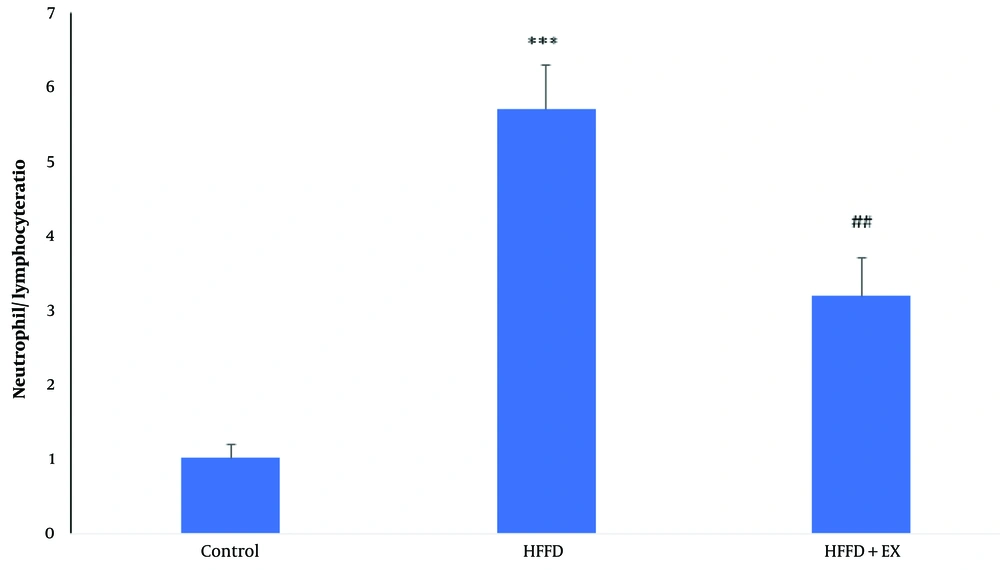
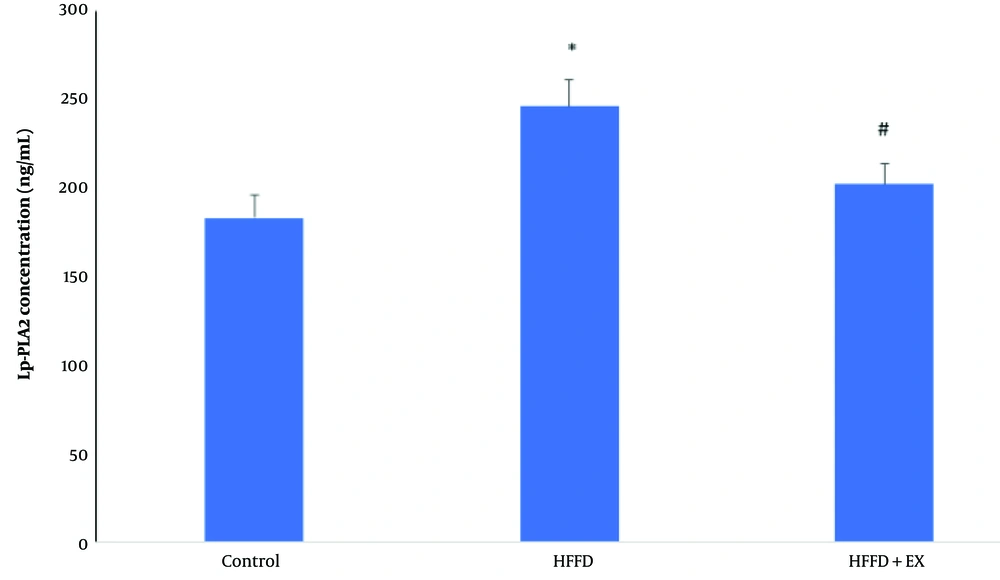
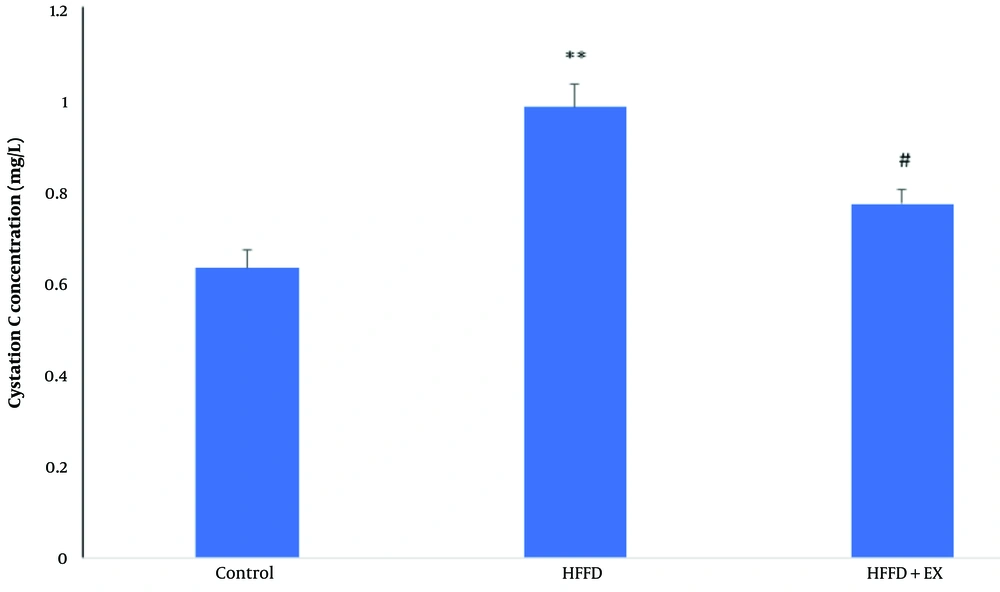
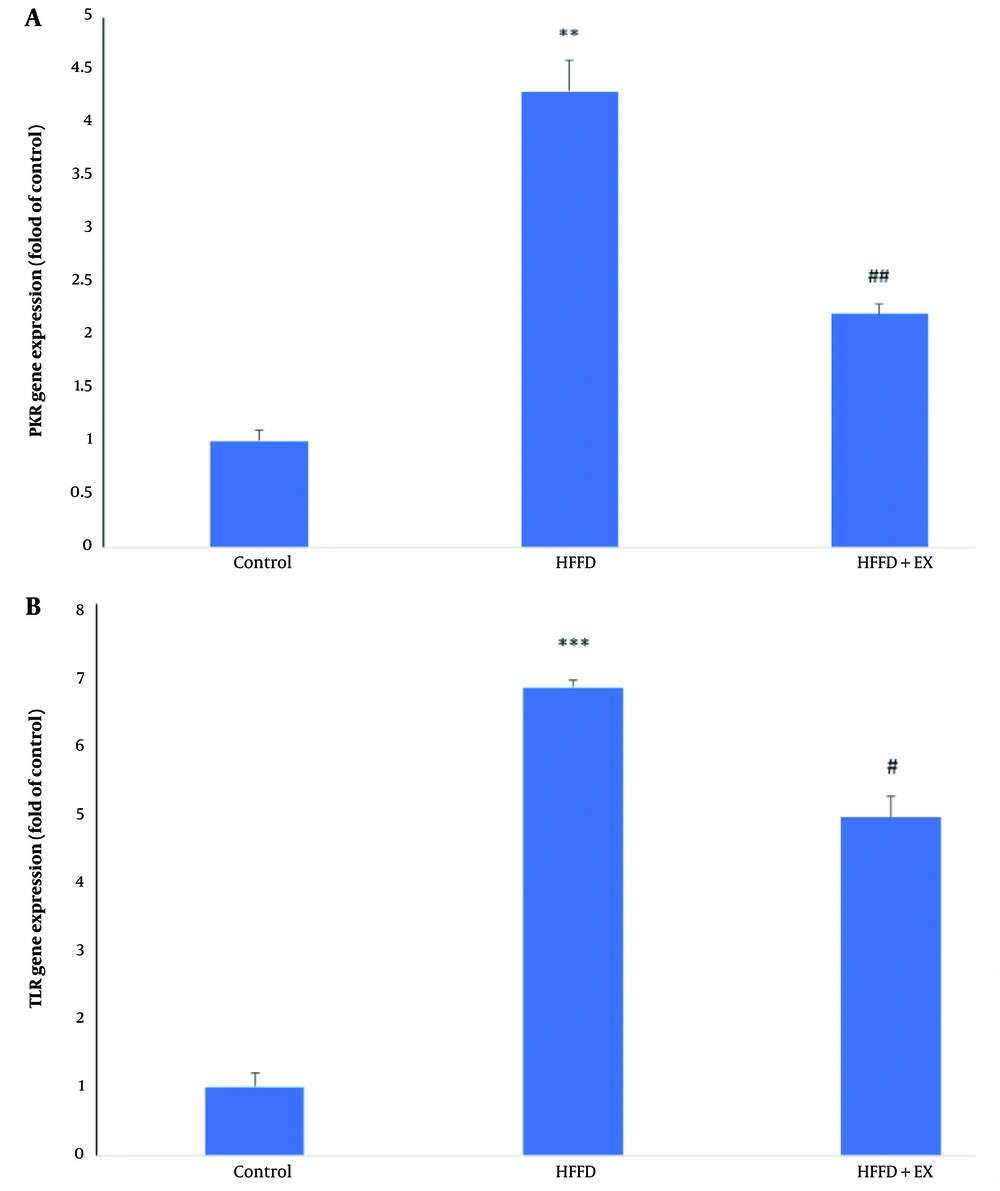
The current research findings show a noteworthy distinction in cystatin C, Lp-PLA2 concentration, and the neutrophil/lymphocyte ratio between the normal and obese groups. This suggests that consuming high-fat food with high fructose content induces inflammatory disorders in obese rats. Moreover, the high-fat/fructose diet led to a significant increase in TLR and PKR gene expression compared to the control group. The aforementioned inflammatory biomarkers showed improvement in the obese rats after 6 weeks of exercise.
Obesity, insulin resistance, and fatty liver disease are risks associated with the excessive consumption of a HFD and fructose. Fructose is a prevalent monosaccharide found abundantly in the human diet (
15). However, unlike glucose, which is metabolized throughout the body, fructose is primarily metabolized in the liver. The presence of fructose affects weight control (
16). When fat is combined with fructose, it leads to greater fat storage and weight gain compared to when either fat or fructose is consumed separately. The blocking of leptin signaling causes a preference for high-fat foods, resulting in rapid weight acquisition and fat accumulation (
17).
A diet high in fat and fructose increases oxidative stress levels. Mitochondrial oxidative stress hinders both mitochondrial β-fatty acid oxidation (through enol-CoA hydratase inhibition) and the tricarboxylic acid cycle (by blocking aconitase), resulting in reduced ATP production via oxidative phosphorylation (
17). The main effect is the inhibition of AMP-activated kinase (AMPK), a key player in ATP regeneration during times of low energy. By metabolizing fructose, the KHK-C pathway lowers ATP levels within cells (
18). Leptin resistance is not caused by HFDs but by ingested or endogenous fructose. Leptin resistance is affected by fructose, but weight gain is worsened by high-fat and energy-dense diets in animals with leptin resistance (
19).
The cardiac tissue of rats shows significant changes in the expression of the
PKR gene after six weeks of aerobic exercise with a high-fat/fructose diet. The
PKR or EIF2AK2 gene, a serine-threonine kinase, is a crucial player in cellular processes like translation, transcription control, apoptosis regulation, and inflammation (
20). Interferons, viral infection, high cholesterol diet, cytokines, pathogens, radiation, heme limitation, ER stress, and mechanical stress activate signal transduction (
21). Due to its catalytic activity,
PKR can directly couple with the metabolic pathway and play a role in pathogen recognition. In virus-infected cells,
PKR is activated and inhibits protein synthesis and apoptosis through phosphorylation of the α subunit of eukaryotic initiation factor 2 (eIF2α), which induces an immune response (
22). Activation of
PKR, a protein kinase, occurs when there is double-stranded RNA induced by viral interferon and pro-inflammatory cytokines such as TNF-α, IL-1, and IFN-γ (
23). P
rotein kinase R’s functions are determined by the proteins involved in signaling. Activated
PKR influences various pathways involving transcription factors like IRF3, NF-κB, c-Jun, and ATF2, regulating inflammation and immunity (
24).
Furthermore, the findings from the present research demonstrate a notable variation in TLR gene expression within the cardiac tissue of rats across all groups. The TLR gene expression level was significantly elevated in the high-fat/fructose diet group compared to the control rats. In contrast, there was a statistically significant decrease in TLR gene expression in the obese rats that underwent a high-fat/fructose diet plus aerobic exercise.
Toll-like receptor are found on the plasma membrane of immune cells like macrophages and dendritic cells. They play a crucial role in activating innate immunity and regulating inflammation (
25). Toll-like receptor activation leads to signaling cascades that induce the production of proinflammatory cytokines and type I interferons. The increases in cytokines cause fever, pain, and inflammation, while the interferons mediate antiviral responses.Toll-like receptors operate through two signaling pathways: The adapter protein TRIF activates transcription factors IRF3 and IRF7, which induce the cellular immune response caused by the virus, while the other pathway involves the adapter protein MyD88, which stimulates transcription factor NF-κB and activates AP-1, leading to the expression of inflammatory cytokines (
26). The
TLR homodimer complexes with two MD-2 receptor cores in the form of two copies of
TLR4-MD-2. They then bind to ligands such as LPS to generate two copies of the
TLR4-MD-2-LPS complex. When this complex appears on the cell membrane, the MyD88-dependent signaling pathway is activated (
27). The early-phase expression of NF-κB and the production of inflammatory cytokines occur through this signaling pathway. Interactions between cytoplasmic proteins MyD88 and TIRAP and
TLR4 receptors happen when ligands bind to the receptors (
28). MyD88 and TIRAP, in turn, form a signaling cascade that includes the IRAK4 kinase, activates IRAK1, and, as a result of binding these two kinases, activates TRAF6. This then activates TAK1, followed by IKKα (IKK1) and IKKβ (IKK2), leading to the formation of a trimer with p50 and p63 proteins, activating NF-κB. The phosphorylated and active NF-κB protein enters the cell nucleus, causing the expression of pro-inflammatory cytokine genes such as TNFα and IL-6 (
29). TAK1 activates INK and triggers the AP1 protein, which leads to pro-inflammatory cytokine production in the nucleus. Studies have indicated that exercise can influence the
TLR receptor, which plays a role in multiple cardiovascular diseases (
30). Toll-like receptor plays a crucial role in inflammatory and apoptotic processes in cardiac tissue, contributing to the development of cardiovascular diseases.
In summary, the findings of this research showed that inducing obesity in rats with a high-fat/fructose diet increases the expression of PKR and TLR genes in the cardiac tissue, which was consistent with significant increases in cystatin C, Lp-PLA2 concentration levels, and the neutrophil/lymphocyte ratio. Also, the results showed that aerobic exercise reduces the expression of PKR and TLR genes in the cardiac tissue of obese rats, which was associated with a decrease in inflammatory biomarkers. Therefore, it is suggested that aerobic exercise can be considered a preventive and treatment strategy for cardiovascular problems in obese patients.